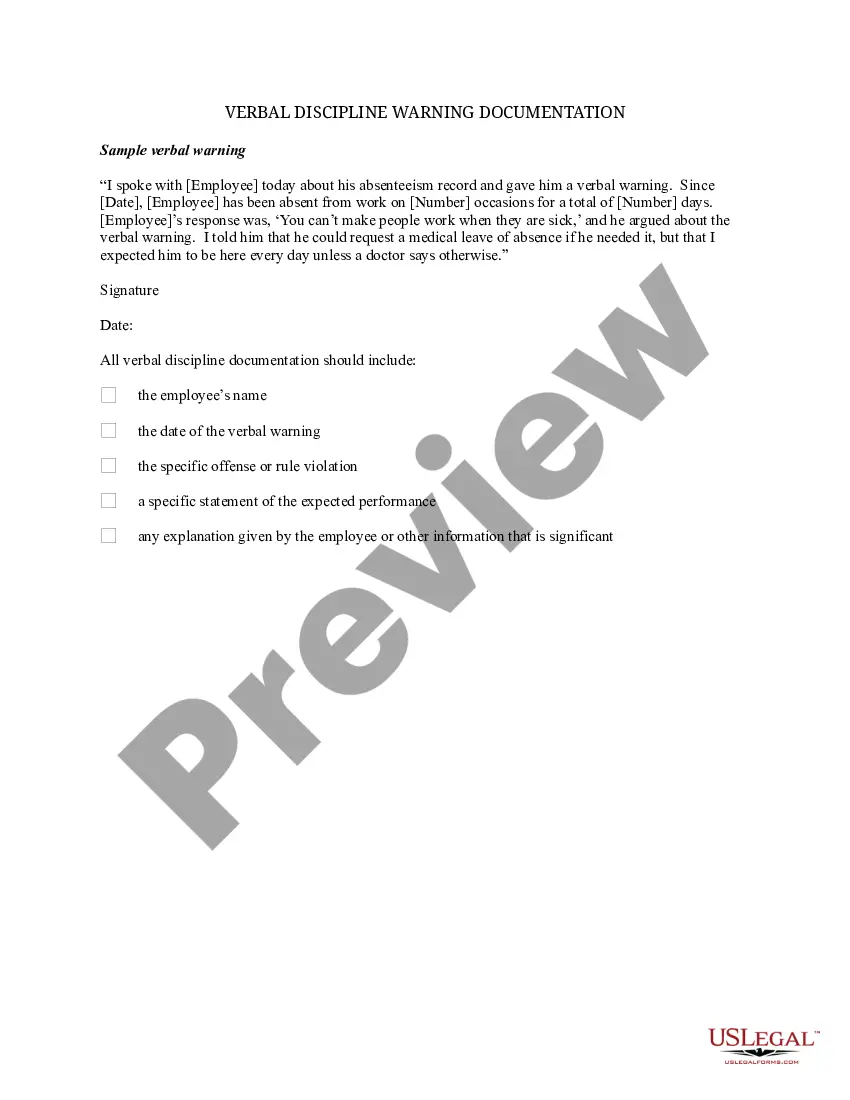
Verbal Warning Letter For Absenteeism
Description
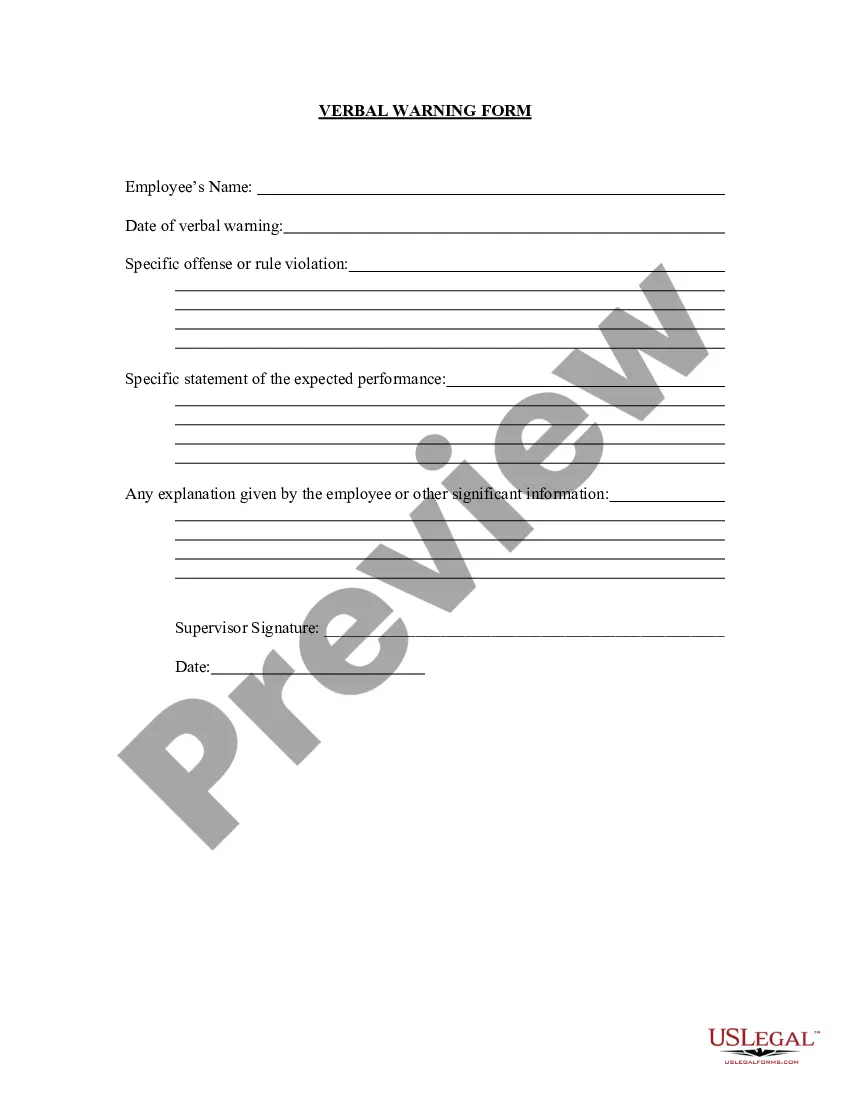
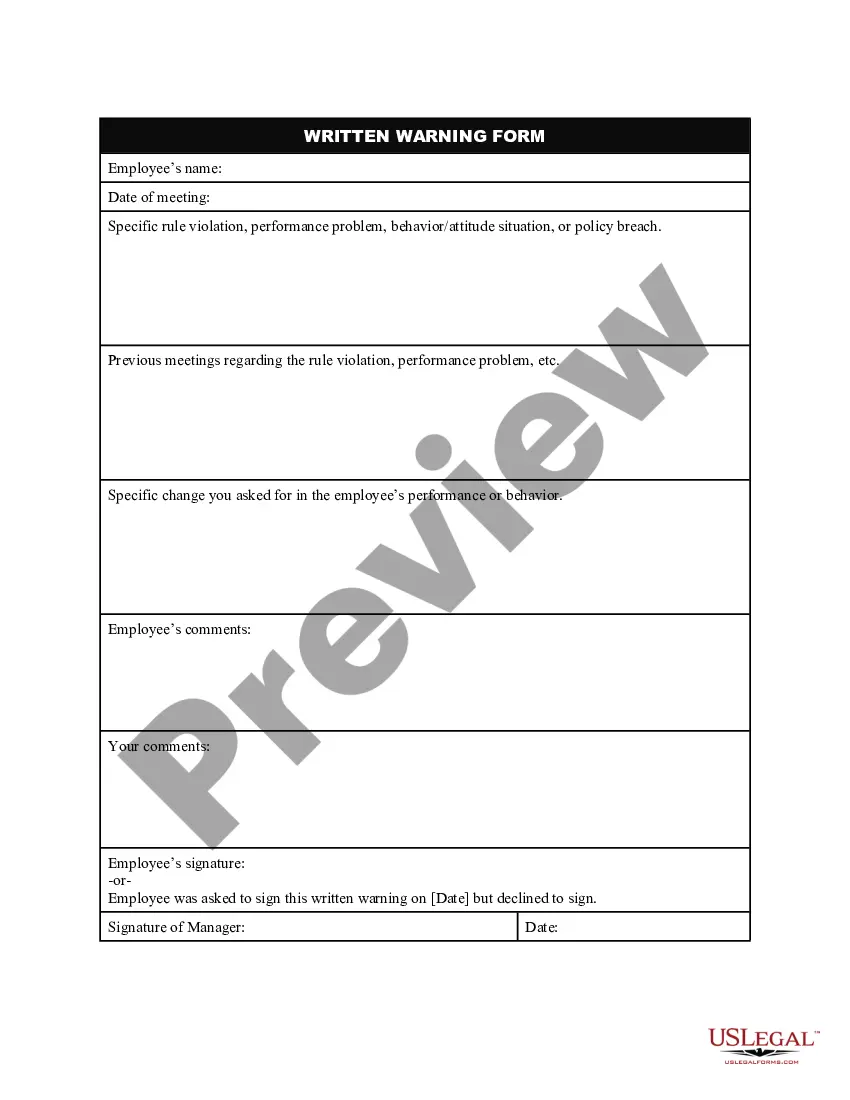
Get your form ready online
Our built-in tools help you complete, sign, share, and store your documents in one place.
Make edits, fill in missing information, and update formatting in US Legal Forms—just like you would in MS Word.
Download a copy, print it, send it by email, or mail it via USPS—whatever works best for your next step.
Sign and collect signatures with our SignNow integration. Send to multiple recipients, set reminders, and more. Go Premium to unlock E-Sign.
If this form requires notarization, complete it online through a secure video call—no need to meet a notary in person or wait for an appointment.
We protect your documents and personal data by following strict security and privacy standards.

Make edits, fill in missing information, and update formatting in US Legal Forms—just like you would in MS Word.

Download a copy, print it, send it by email, or mail it via USPS—whatever works best for your next step.

Sign and collect signatures with our SignNow integration. Send to multiple recipients, set reminders, and more. Go Premium to unlock E-Sign.

If this form requires notarization, complete it online through a secure video call—no need to meet a notary in person or wait for an appointment.

We protect your documents and personal data by following strict security and privacy standards.
Looking for another form?

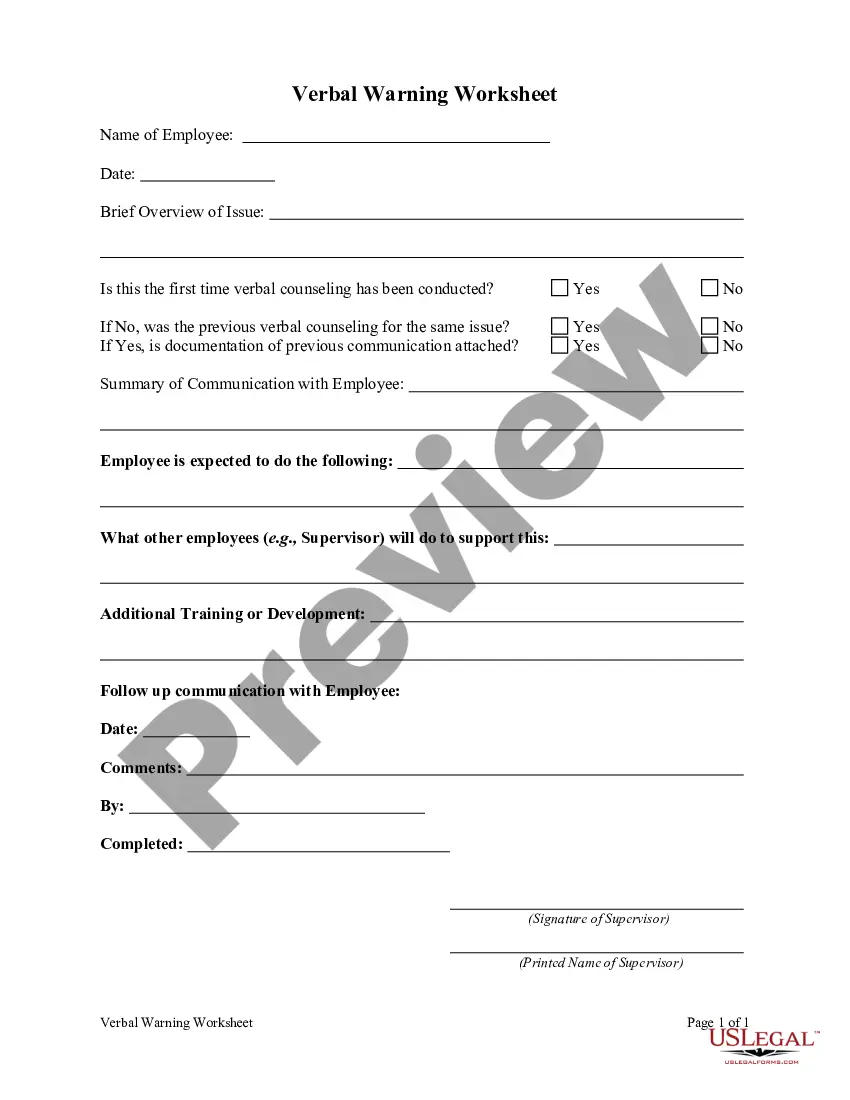
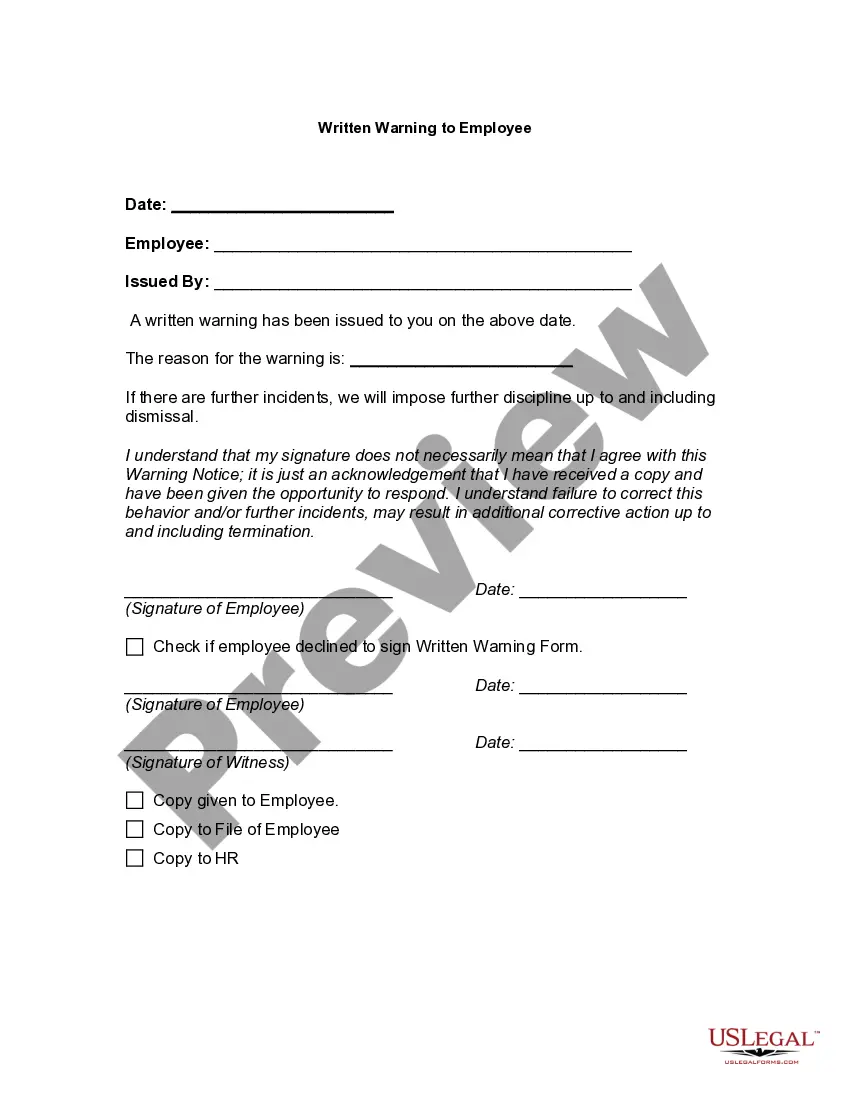
How to fill out Verbal Discipline Warning Documentation Checklist?
Creating legal documents from the ground up can frequently be daunting.
Certain situations may require extensive research and significant financial investment.
If you’re looking for a simpler and more cost-effective method of drafting a Verbal Warning Letter For Absenteeism or any other forms without unnecessary complications, US Legal Forms is readily available.
Our online repository of over 85,000 current legal forms encompasses nearly every aspect of your financial, legal, and personal matters.
However, before going straight to download the Verbal Warning Letter For Absenteeism, consider these suggestions: Review the form preview and details to ensure you have located the document you need. Verify that the template you choose meets the specifications of your state and county. Select the appropriate subscription plan to acquire the Verbal Warning Letter For Absenteeism. Proceed to download the form, then complete it, certify it, and print it out. US Legal Forms boasts a solid reputation and more than 25 years of experience. Join us today and make document handling easy and efficient!
- With just a few clicks, you can promptly obtain state- and county-specific forms meticulously prepared for you by our legal professionals.
- Utilize our platform whenever you require dependable and trustworthy services to easily find and download the Verbal Warning Letter For Absenteeism.
- If you're already familiar with our services and have an existing account, just Log In, select the form you need, and download it or access it again later in the My documents section.
- Not yet registered? No worries. Setting up an account and browsing the catalog is quick and effortless.
Form popularity
FAQ
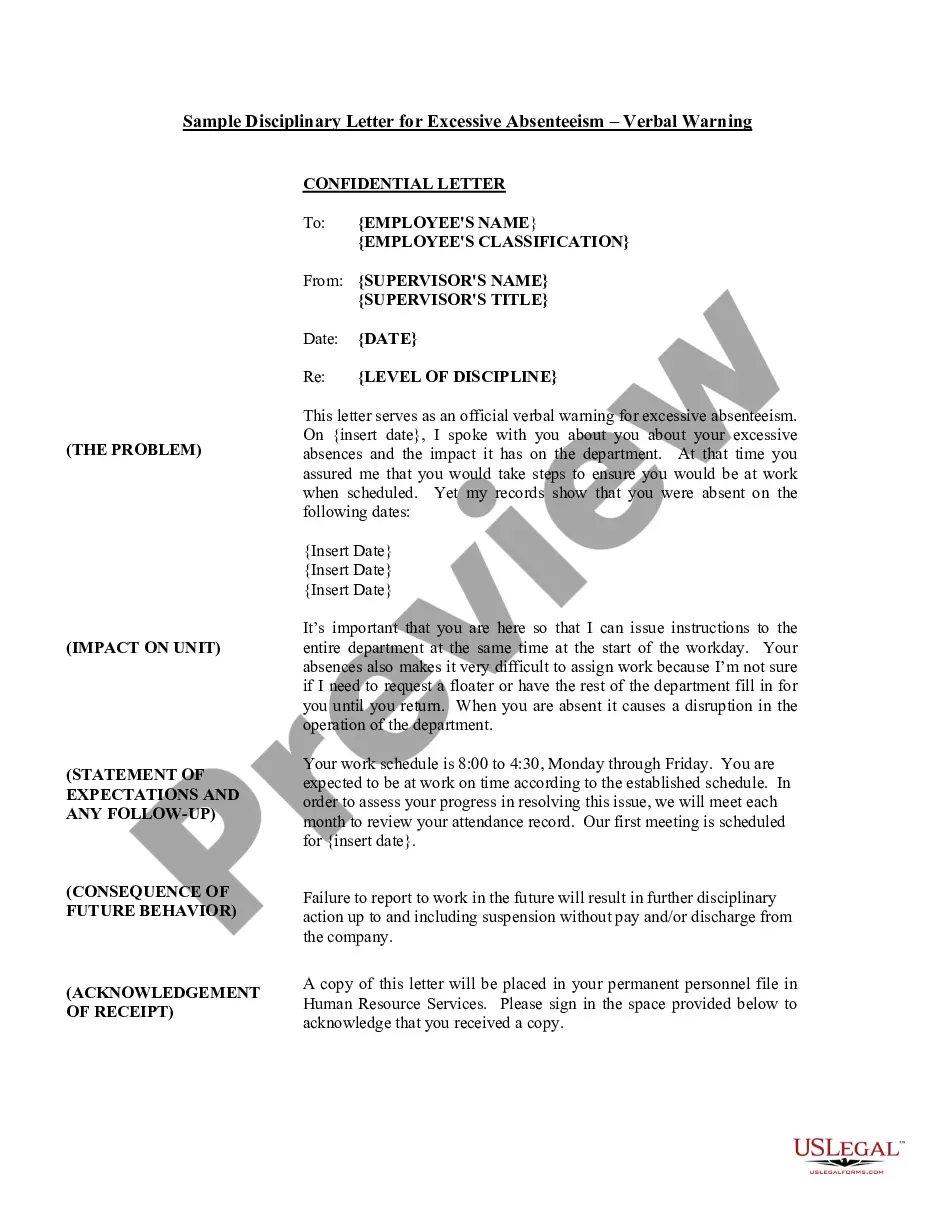
To write a warning for excessive absenteeism, start by clearly stating the reason for the warning and detailing the employee's attendance record. Include specific dates and instances of absenteeism, and reference any previous discussions about attendance. Conclude the letter by outlining expectations for future attendance and the consequences of continued absenteeism. Using a professional template, such as those available on US Legal Forms, can simplify the process and ensure you cover all necessary points.
You can issue a verbal warning based on consistent undesirable behaviors, including excessive absenteeism. If an employee frequently fails to meet attendance expectations, it provides reasonable grounds for the warning. When you approach the conversation, it's essential to focus on the specific attendance issues and any relevant company policies. Implementing a verbal warning letter for absenteeism can help clarify the expectations for improvement.
Generally, verbal warnings do not appear on an employee's formal record unless they escalate into more severe disciplinary actions. However, it’s wise to keep a record of all verbal warning letters for absenteeism for future reference. This documentation can help track recurring issues and demonstrate an employer's commitment to addressing attendance problems. Clear documentation can also support fair practices if further action is required.
Employers may take various disciplinary actions for excessive absences, starting with a verbal warning letter for absenteeism. If the issue continues, further actions could include written warnings, suspension, or even termination, depending on company policies. The disciplinary process typically aims to correct behavior while ensuring fair treatment for all employees. It’s important for companies to document these actions clearly to maintain a fair and consistent approach.
A warning letter for excessive absenteeism serves as a formal document that notifies an employee about their frequent absences from work. This letter outlines the attendance issues and emphasizes the importance of regular attendance. By providing a clear record of the problem, the letter can help facilitate a constructive conversation between the employer and the employee. Utilizing a verbal warning letter for absenteeism can be an effective first step in addressing attendance concerns.
Giving a verbal warning for attendance should be approached with care and professionalism. Start the conversation by explaining the reason for the meeting, then discuss the employee's attendance record. Reinforce the importance of regular attendance in a clear manner, and consider sending them a written verbal warning letter for absenteeism summarizing your discussion.
Writing a warning on absenteeism should focus on the specific behaviors exhibited by the employee. Clearly outline the dates of absence and any previous communications regarding the issue. Ensure the warning addresses the importance of attendance and encourages the employee to take corrective actions while also providing a roadmap for future improvement.
When crafting a verbal warning for absenteeism, be direct yet supportive. Start by discussing the employee's absences and the impact on the team, and express your intention to help them improve. Document your conversation through a follow-up email or letter to create a record, positioning it as a formal verbal warning letter for absenteeism.
Writing a termination letter for excessive absenteeism involves clear communication of the decision made. Reference the employee's absence history, any prior verbal warnings, and cite the company policy on attendance. A well-structured letter should express that the decision is based on established guidelines to ensure clarity and fairness.
A written verbal warning typically addresses specific performance issues, such as absenteeism. For example, the letter might include details about the employee's record, noting how many days they have missed. It should clearly state expectations and consequences, serving as a documented reminder that excessive absenteeism could lead to further disciplinary action.