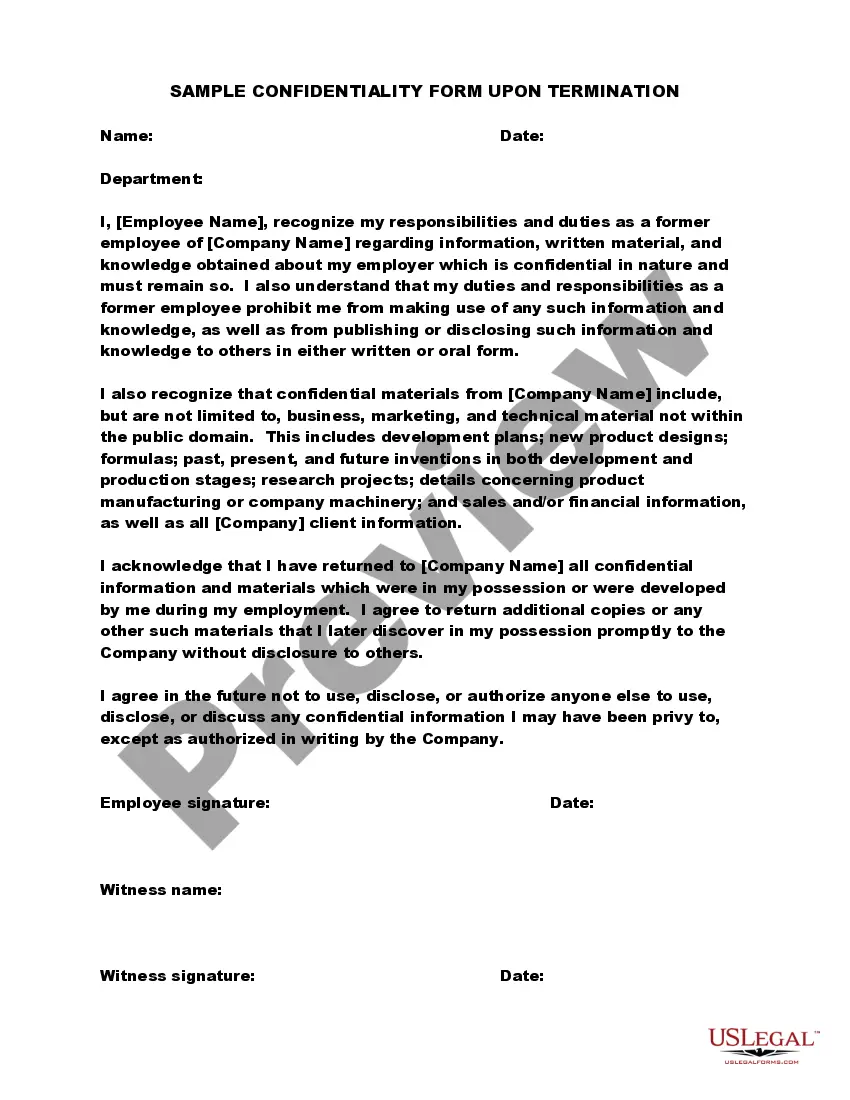
Sample Confidentiality Statement For Email
Description
Get your form ready online
Our built-in tools help you complete, sign, share, and store your documents in one place.
Make edits, fill in missing information, and update formatting in US Legal Forms—just like you would in MS Word.
Download a copy, print it, send it by email, or mail it via USPS—whatever works best for your next step.
Sign and collect signatures with our SignNow integration. Send to multiple recipients, set reminders, and more. Go Premium to unlock E-Sign.
If this form requires notarization, complete it online through a secure video call—no need to meet a notary in person or wait for an appointment.
We protect your documents and personal data by following strict security and privacy standards.

Make edits, fill in missing information, and update formatting in US Legal Forms—just like you would in MS Word.

Download a copy, print it, send it by email, or mail it via USPS—whatever works best for your next step.

Sign and collect signatures with our SignNow integration. Send to multiple recipients, set reminders, and more. Go Premium to unlock E-Sign.

If this form requires notarization, complete it online through a secure video call—no need to meet a notary in person or wait for an appointment.

We protect your documents and personal data by following strict security and privacy standards.
Looking for another form?






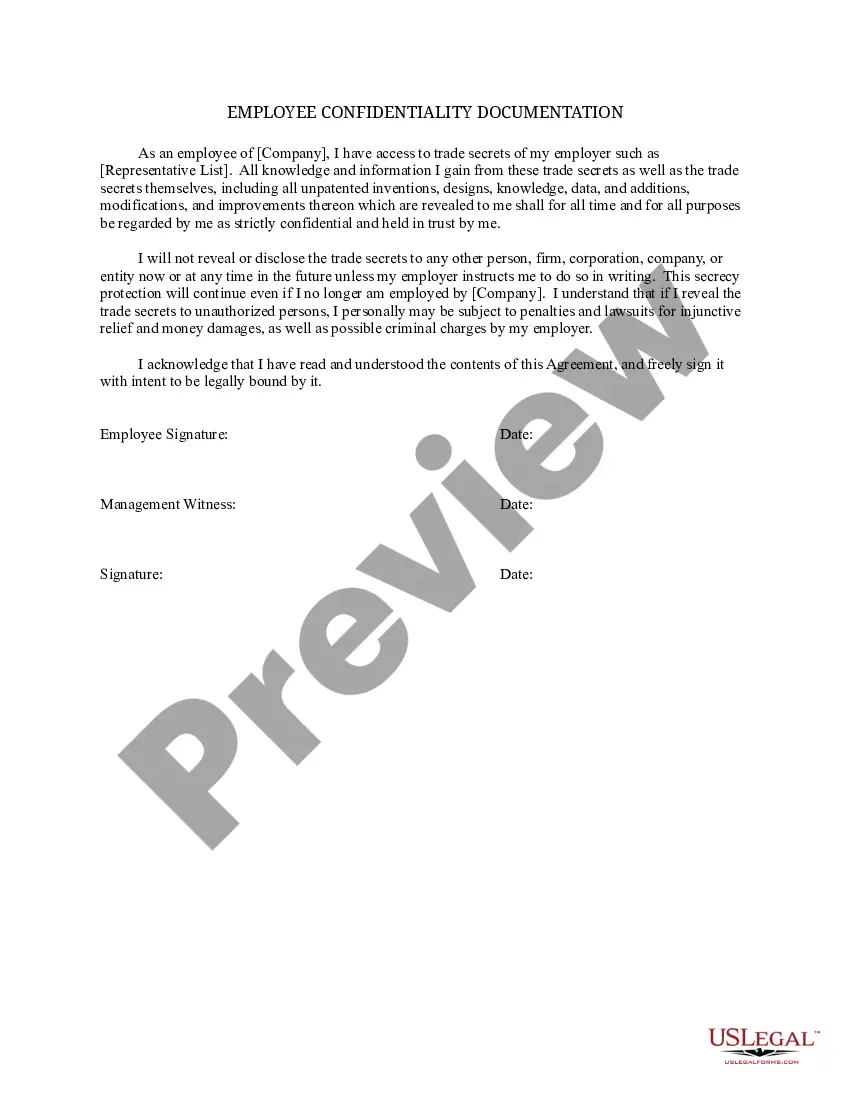
How to fill out Sample Confidentiality Form Upon Termination?
Securing a reliable source for the latest and most suitable legal templates constitutes a significant part of navigating bureaucracy.
Selecting the correct legal documents demands accuracy and careful attention, which is why it is crucial to obtain samples of Sample Confidentiality Statement For Email solely from trustworthy sources, such as US Legal Forms. An incorrect template can squander your time and delay your circumstances.
Eliminate the stress associated with your legal documents. Explore the comprehensive US Legal Forms catalog to discover legal templates, assess their applicability to your needs, and download them instantly.
- Utilize the catalog navigation or search bar to find your template.
- Access the form’s description to verify if it meets your state's and area's requirements.
- Preview the form, if available, to confirm that it is indeed the one you need.
- Go back to search and seek the suitable template if the Sample Confidentiality Statement For Email does not fulfill your needs.
- If you are certain of the form’s relevance, download it.
- If you are a verified customer, click Log in to verify and access your chosen forms in My documents.
- If you do not possess an account yet, click Buy now to acquire the form.
- Select the pricing option that meets your needs.
- Proceed to registration to complete your acquisition.
- Finalize your purchase by choosing a payment method (credit card or PayPal).
- Pick the document format for downloading Sample Confidentiality Statement For Email.
- After obtaining the form on your device, you may edit it using the editor or print it and complete it by hand.
Form popularity
FAQ
Writing a simple confidentiality statement involves creating a direct and clear message that indicates the information is confidential. You can start with a statement like, 'This email contains confidential information intended only for the recipient.' Using a sample confidentiality statement for email as a guide will make it simpler to draft your statement. Finally, include a note advising the recipient to notify you if they receive the email by mistake.
In a confidential email, it's important to clearly state the purpose and intent of the message. You should open with a reference to the confidentiality of the information, following it with the key details that need protection. Using a sample confidentiality statement for email can aid in effectively communicating your message's sensitive nature. Lastly, close with a reminder about keeping the information within the intended audience.
To effectively add a confidentiality notice in your email, begin by placing a clear statement at the bottom of your message. You can use a sample confidentiality statement for email to ensure your message is legally recognized. This notice should inform recipients about the confidential nature of the email and advise them not to share its contents with unauthorized individuals. Remember, including this notice helps protect your sensitive information.
A straightforward example of a confidentiality statement in an email might say, 'This email contains confidential information. Please refrain from sharing it without proper authorization.' Utilizing a sample confidentiality statement for email can help you structure a statement that suits your needs while ensuring adequate protection for your sensitive information.
An example of a confidentiality email disclaimer could include a message like, 'This email and any attachments are confidential and intended for the recipient only. If you received this communication in error, please notify the sender and delete it immediately.' You can find various sample confidentiality statement for email templates online, which would serve as a good reference for crafting your disclaimer.
To add a confidentiality statement to an email, simply place the statement at the bottom of the message, just before your signature. This approach ensures the statement is easily seen by the recipient. Consider using a widely accepted sample confidentiality statement for email to maintain professionalism and clarity. This addition can greatly enhance your email's security.
To write a confidentiality statement in an email, start by clearly stating that the content is confidential and intended only for the recipient. Use simple language to express the importance of privacy, and include a brief explanation of potential consequences if the message is shared. You can use a sample confidentiality statement for email as a guide to ensure your wording is clear and effective.
A HIPAA disclaimer for email typically begins with a sentence indicating that the email may contain protected health information. It should clearly state that the email is intended only for the designated recipient and unauthorized disclosure is prohibited. Additionally, it might encourage the recipient to notify the sender if the email was received in error. Incorporating a sample confidentiality statement for email can strengthen your compliance efforts with HIPAA regulations.
To write a confidentiality statement for email, start by clearly stating the purpose of the email and the sensitive information it contains. Include a note that reminds recipients not to share this information with unauthorized individuals. Make sure your statement emphasizes the importance of maintaining confidentiality and provides contact information for questions. Utilizing a sample confidentiality statement for email can help ensure you cover all necessary elements.