Privacy Rights As A Tenant
Description
Get your form ready online
Our built-in tools help you complete, sign, share, and store your documents in one place.
Make edits, fill in missing information, and update formatting in US Legal Forms—just like you would in MS Word.
Download a copy, print it, send it by email, or mail it via USPS—whatever works best for your next step.
Sign and collect signatures with our SignNow integration. Send to multiple recipients, set reminders, and more. Go Premium to unlock E-Sign.
If this form requires notarization, complete it online through a secure video call—no need to meet a notary in person or wait for an appointment.
We protect your documents and personal data by following strict security and privacy standards.

Make edits, fill in missing information, and update formatting in US Legal Forms—just like you would in MS Word.

Download a copy, print it, send it by email, or mail it via USPS—whatever works best for your next step.

Sign and collect signatures with our SignNow integration. Send to multiple recipients, set reminders, and more. Go Premium to unlock E-Sign.

If this form requires notarization, complete it online through a secure video call—no need to meet a notary in person or wait for an appointment.

We protect your documents and personal data by following strict security and privacy standards.
Looking for another form?






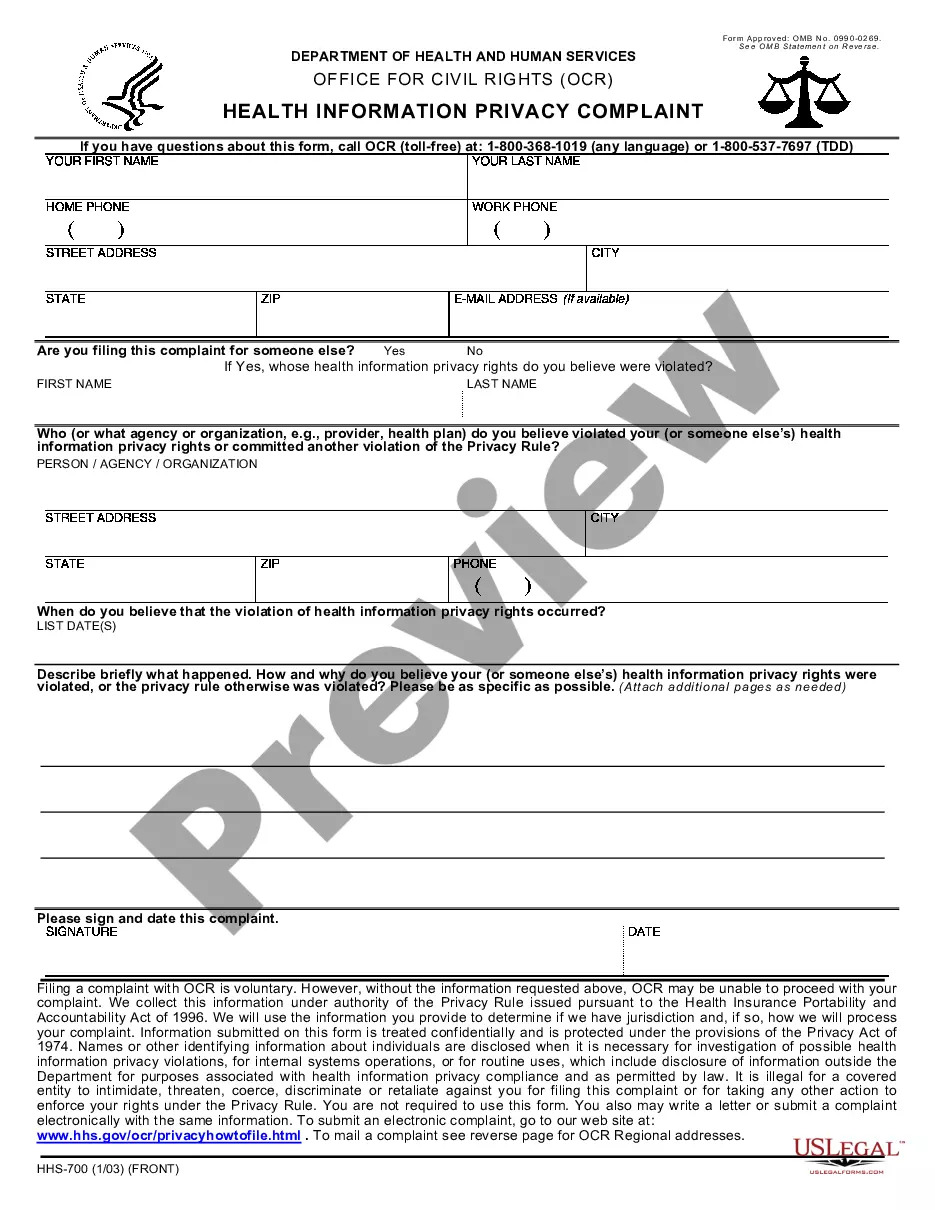
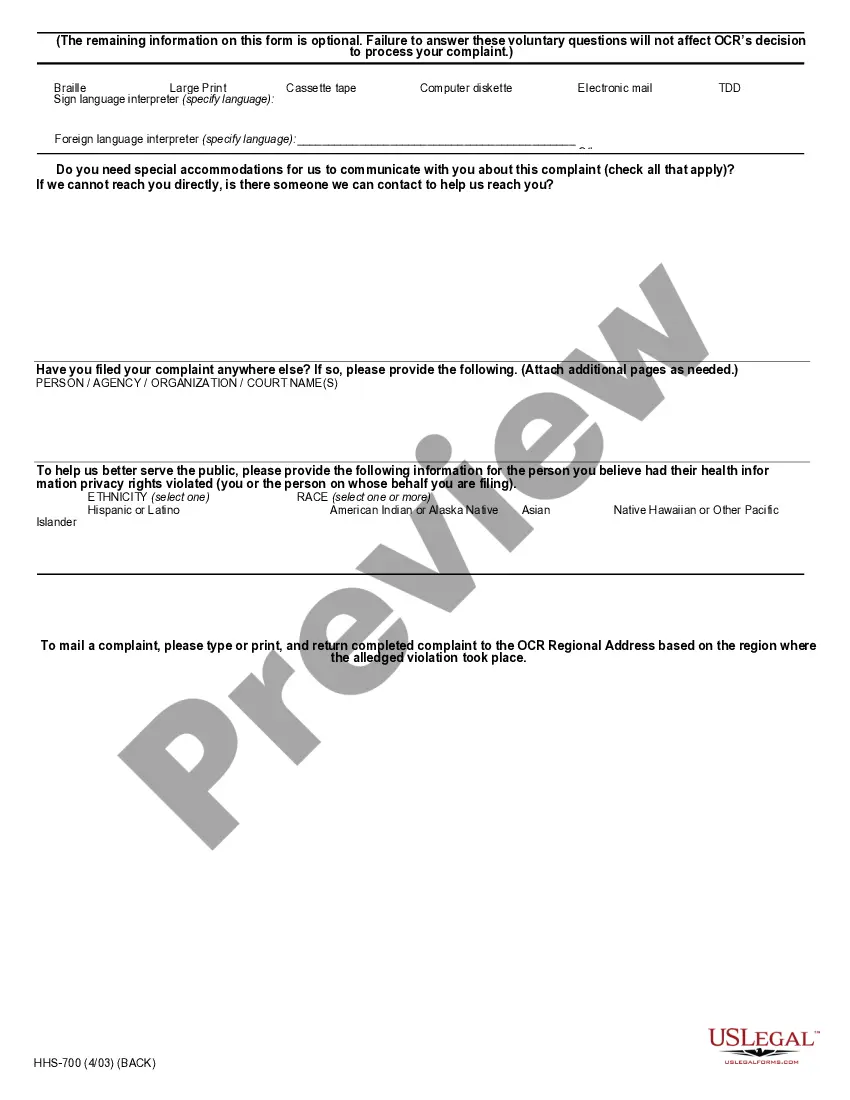
How to fill out Health Information Privacy Complaint For Filing With Dept. Of Health And Human Services Office Of Civil Rights?
Legal administration can be daunting, even for proficient professionals.
When you are looking for a Privacy Rights As A Tenant and lack the opportunity to spend searching for the correct and current version, the processes might be taxing.
US Legal Forms meets any needs you may have, from personal to business documents, all in one location.
Utilize cutting-edge tools to complete and manage your Privacy Rights As A Tenant.
Here are the steps to follow after downloading the form you need: Verify it is the correct document by previewing it and checking its details.
- Gain access to a valuable resource pool of articles, guides, handbooks, and materials related to your situation and requirements.
- Save time and energy searching for the documents you require, and utilize US Legal Forms’ advanced search and Preview feature to find and retrieve Privacy Rights As A Tenant.
- If you are a member, Log In to your US Legal Forms account, search for the document, and obtain it.
- Visit the My documents section to review the documents you have previously downloaded and organize your folders as needed.
- If it’s your first encounter with US Legal Forms, create an account and gain unlimited access to all the advantages of the library.
- A robust online form repository could be a transformative solution for anyone wishing to navigate these circumstances successfully.
- US Legal Forms stands out as a leader in online legal forms, offering more than 85,000 state-specific legal documents accessible to you at any time.
- With US Legal Forms, you can access state- or county-specific legal and organizational documents.
Form popularity
FAQ
First, document any instances of suspected spying to establish a pattern of behavior. Then, communicate your concerns with your landlord, as they may not be aware of their actions. If the behavior continues, consider seeking legal advice or resources from platforms like uslegalforms to understand your rights and options in protecting your privacy rights as a tenant.
Landlords should refrain from discussing one tenant's issues with others, as this can violate privacy rights as a tenant. Confidentiality is crucial in a rental agreement, and gossiping can lead to misunderstandings and a hostile environment. If you feel your privacy is not being respected, addressing it directly or seeking advice can be beneficial.
In Missouri, landlords cannot enter a tenant's unit without proper notice, which typically requires 24 hours’ notice unless there is an emergency. Additionally, they cannot retaliate against tenants for asserting their privacy rights as a tenant, such as reporting unsafe living conditions. Being aware of these restrictions helps ensure that both landlords and tenants maintain a respectful living environment.
Yes, spying on tenants is generally illegal and can violate their privacy rights as a tenant. Landlords must respect the boundaries set by law, which often include giving notice before entering a rental property. Familiarizing yourself with local laws can protect both your rights and your peace of mind as a tenant.
This game often revolves around managing properties and tenants while gathering information about their behaviors. Players assume the role of a landlord who monitors tenant activities, creating strategies to enhance property management. Engaging in activities like spying can violate privacy rights as a tenant, highlighting the importance of understanding these rights in real life.
Even without a written lease in New Jersey, landlords cannot evict you without following legal procedures. They must provide a notification based on the tenancy type, and even in informal arrangements, you still retain certain privacy rights as a tenant. Remember, if you're facing potential eviction, you have options to challenge the process. The US Legal Forms platform can guide you through understanding your rights and preparing necessary documents.
In New Jersey, the notice period for a landlord to evict a tenant varies based on the reason for eviction. Typically, if you have a month-to-month lease, they must provide 30 days’ notice, but this can change based on specific circumstances like lease violations. Understanding the timeline and procedures involved helps you prepare and maintain your privacy rights as a tenant effectively. If you face eviction, consider consulting resources available on platforms like US Legal Forms.
In New Jersey, landlords cannot unlawfully enter your rental property without notice, nor can they retaliate against you for exercising your privacy rights as a tenant. Landlords must also follow proper legal channels before evicting a tenant, which means they cannot simply change locks or remove tenants without a court order. Knowing these restrictions can empower you to stand up for your rights.
Tenants in New Jersey enjoy several privacy rights as a tenant that protect them from unfair treatment. This includes the right to a safe and habitable living environment, the right to privacy within their rental unit, and the right to due process before eviction. Additionally, tenants have the right to organize their living conditions and may not face retaliation for exercising their rights. Understanding these protections can help ensure you are treated fairly.
To protect yourself as a tenant, it is vital to understand your rights, especially regarding your privacy rights as a tenant. Keep a record of all communications with your landlord, and consider drafting a formal rental agreement if one does not exist. Educating yourself about local tenant laws can also empower you in various situations. For comprehensive legal forms and assistance, platforms like US Legal Forms can be a great resource.