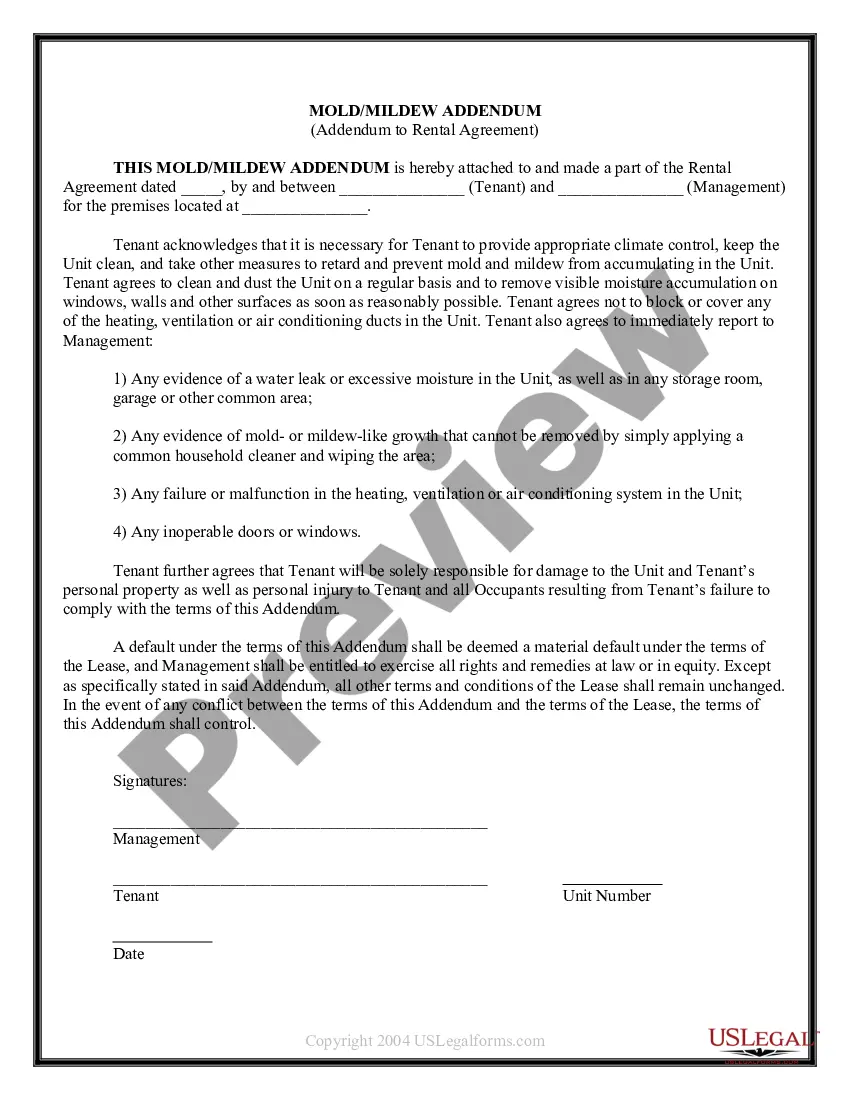
Apartment With Mold And Mildew
Description
Get your form ready online
Our built-in tools help you complete, sign, share, and store your documents in one place.
Make edits, fill in missing information, and update formatting in US Legal Forms—just like you would in MS Word.
Download a copy, print it, send it by email, or mail it via USPS—whatever works best for your next step.
Sign and collect signatures with our SignNow integration. Send to multiple recipients, set reminders, and more. Go Premium to unlock E-Sign.
If this form requires notarization, complete it online through a secure video call—no need to meet a notary in person or wait for an appointment.
We protect your documents and personal data by following strict security and privacy standards.

Make edits, fill in missing information, and update formatting in US Legal Forms—just like you would in MS Word.

Download a copy, print it, send it by email, or mail it via USPS—whatever works best for your next step.

Sign and collect signatures with our SignNow integration. Send to multiple recipients, set reminders, and more. Go Premium to unlock E-Sign.

If this form requires notarization, complete it online through a secure video call—no need to meet a notary in person or wait for an appointment.

We protect your documents and personal data by following strict security and privacy standards.
Looking for another form?


Form popularity
FAQ
In an apartment with mold and mildew, responsibility for cleaning mold often falls on landlords and tenants. Landlords must provide a safe living environment and address mold issues promptly if they arise. However, tenants should also report mold problems when they first notice them. Understanding the lease agreement can clarify responsibilities, and using the resources from US Legal Forms can guide you through any legal concerns.
To effectively eliminate mold in an apartment with mold and mildew, use a solution that combines water and detergent. Bleach can remove mold on non-porous surfaces, but it may not penetrate porous materials like drywall. Consider using commercial mold removers that specifically target spores, ensuring complete destruction of mold. Remember, prevention is key, so keep your apartment dry and well-ventilated to minimize future growth.
The timeline for experiencing health effects from mold exposure can vary, but symptoms can begin within hours to days. Individuals may feel noticeably worse in a short amount of time when living in an apartment with mold and mildew. Factors such as personal health, type of mold, and level of exposure can influence this timeline. If you suspect mold in your apartment, it's best to take action immediately.
Living in an apartment with mold and mildew can indeed lead to health issues. Exposure to mold can cause respiratory problems, allergic reactions, and other serious health concerns. Vulnerable individuals, such as those with asthma or weakened immune systems, are at even greater risk. Taking steps to remove mold is crucial to protect your health and well-being.
Cleaning your apartment after mold contamination requires a systematic approach. Start by identifying and addressing the source of moisture, as this is essential to prevent mold from returning. Use a mixture of water and detergent to scrub affected areas thoroughly. If you find extensive mold growth, consider using professional services to manage cleanup safely, especially if your apartment has significant mold and mildew.
If you notice a sudden onset of respiratory issues or allergic reactions, mold in your apartment may be the culprit. These symptoms can include headaches, fatigue, and difficulty breathing. To verify, observe if symptoms improve when you leave your apartment or during periods of less humidity. Seeking advice from a qualified mold inspector can provide clarity about potential health risks.
Recognizing that mold is affecting your health involves paying attention to your symptoms. Common signs include persistent coughing, sneezing, or skin irritations. If you live in an apartment with mold and mildew, these symptoms may worsen when you are indoors. Consulting a healthcare professional can help identify whether mold exposure is the cause.
Yes, mold behind a wall can definitely affect you if you live in an apartment with mold and mildew. It can release spores into the air, which may cause allergic reactions or respiratory issues. Identifying and treating the mold is essential for maintaining a healthy home environment.
Sleeping in an apartment with mold and mildew is not safe, especially for those with allergies or respiratory problems. Mold exposure can lead to various health concerns over time. Taking steps to remove the mold with professional help can create a healthier living space for all residents.
Sleeping in a room with mold on the wall is not safe, as it can contribute to poor air quality and health issues. Mold can release harmful spores that you may inhale during sleep, worsening respiratory conditions. It is important to address mold issues promptly to ensure a safe sleeping environment.