Sexual Harassment With Women
Description
Get your form ready online
Our built-in tools help you complete, sign, share, and store your documents in one place.
Make edits, fill in missing information, and update formatting in US Legal Forms—just like you would in MS Word.
Download a copy, print it, send it by email, or mail it via USPS—whatever works best for your next step.
Sign and collect signatures with our SignNow integration. Send to multiple recipients, set reminders, and more. Go Premium to unlock E-Sign.
If this form requires notarization, complete it online through a secure video call—no need to meet a notary in person or wait for an appointment.
We protect your documents and personal data by following strict security and privacy standards.

Make edits, fill in missing information, and update formatting in US Legal Forms—just like you would in MS Word.

Download a copy, print it, send it by email, or mail it via USPS—whatever works best for your next step.

Sign and collect signatures with our SignNow integration. Send to multiple recipients, set reminders, and more. Go Premium to unlock E-Sign.

If this form requires notarization, complete it online through a secure video call—no need to meet a notary in person or wait for an appointment.

We protect your documents and personal data by following strict security and privacy standards.
Looking for another form?





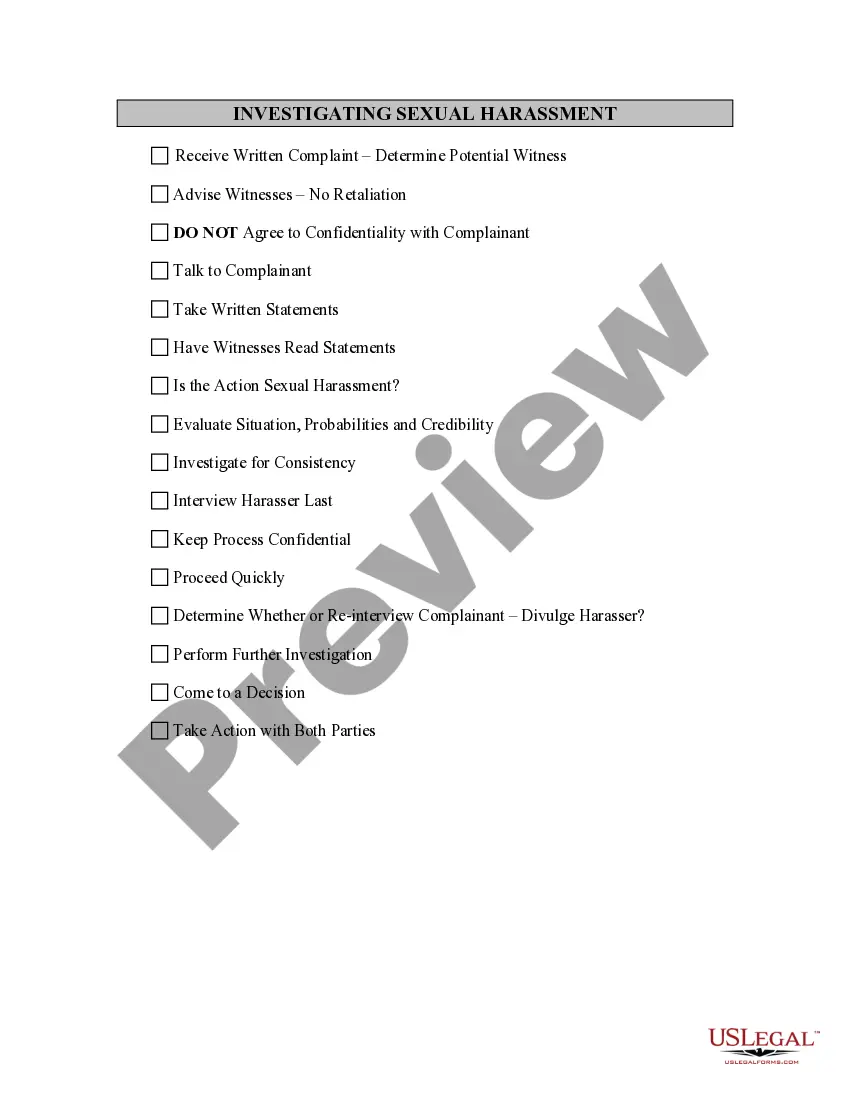
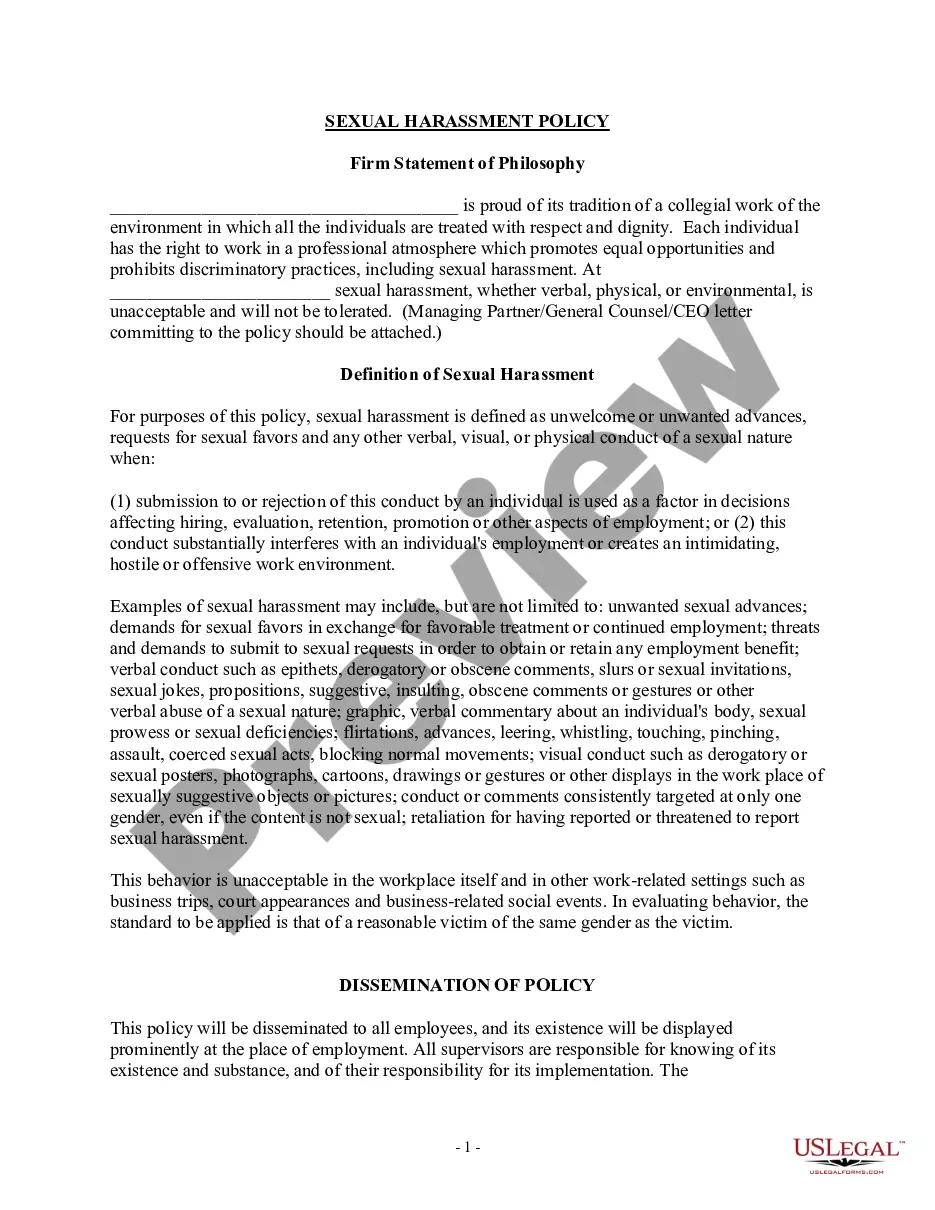
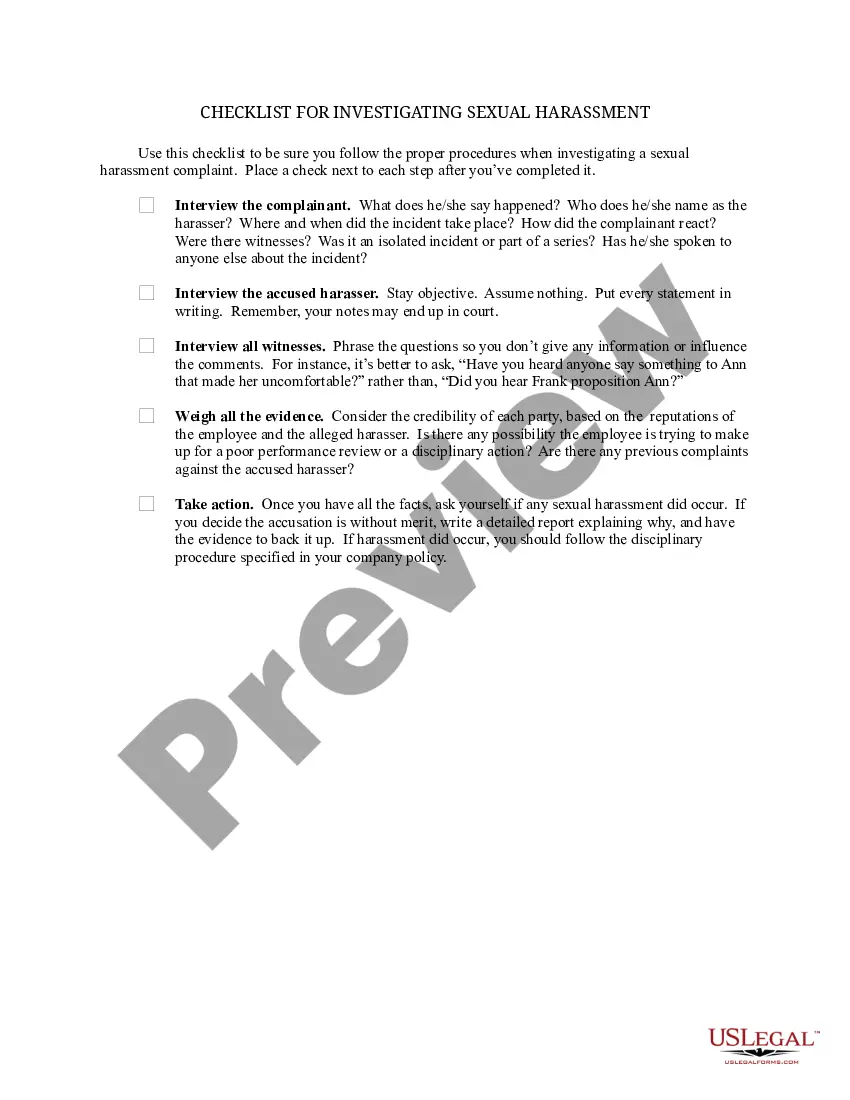
How to fill out Investigating Sexual Harassment Checklist - Workplace?
- Log in to your US Legal Forms account if you’re a returning user. Confirm your subscription status is active or renew it if necessary.
- Preview the required form. Check the description to ensure it matches your legal needs and complies with local jurisdiction requirements.
- Search for alternative templates if necessary. Use the search bar for relevant documents that suit your situation.
- Select your document. Once you've found the correct template, click the 'Buy Now' button and choose your preferred subscription plan.
- Complete your purchase. Enter your payment details using either a credit card or PayPal for a smooth transaction.
- Download your completed form. Save the document to your device, and access it anytime from the 'My Forms' section of your account.
Using US Legal Forms ensures you have access to a vast collection of over 85,000 legal documents that are easy to fill and edit. With premium expert support available, you can confidently navigate through even the toughest legal requirements.
Take the first step towards your legal needs today. Empower yourself with the right resources and browse our library to start creating your essential documents.
Form popularity
FAQ
Writing about harassment requires a careful approach to convey your experience accurately. Begin by defining the specific behavior you faced, especially regarding sexual harassment with women. Use straightforward language to describe events and emotions associated with the harassment. You can leverage US Legal Forms to obtain resources that will help organize your thoughts and present your case professionally.
To start a harassment statement effectively, open with a clear and concise introduction that identifies the nature of the harassment. State that you are addressing instances of sexual harassment with women to set the context. This approach establishes the seriousness of your statement and prepares the reader for the details that follow.
Examples of harassment statements involve personal accounts detailing inappropriate comments, unwanted advances, or hostile environments. For instance, you might write about a specific incident where someone made an inappropriate remark about your appearance. These statements should be factual and highlight the impact of sexual harassment with women. US Legal Forms offers examples to guide your writing.
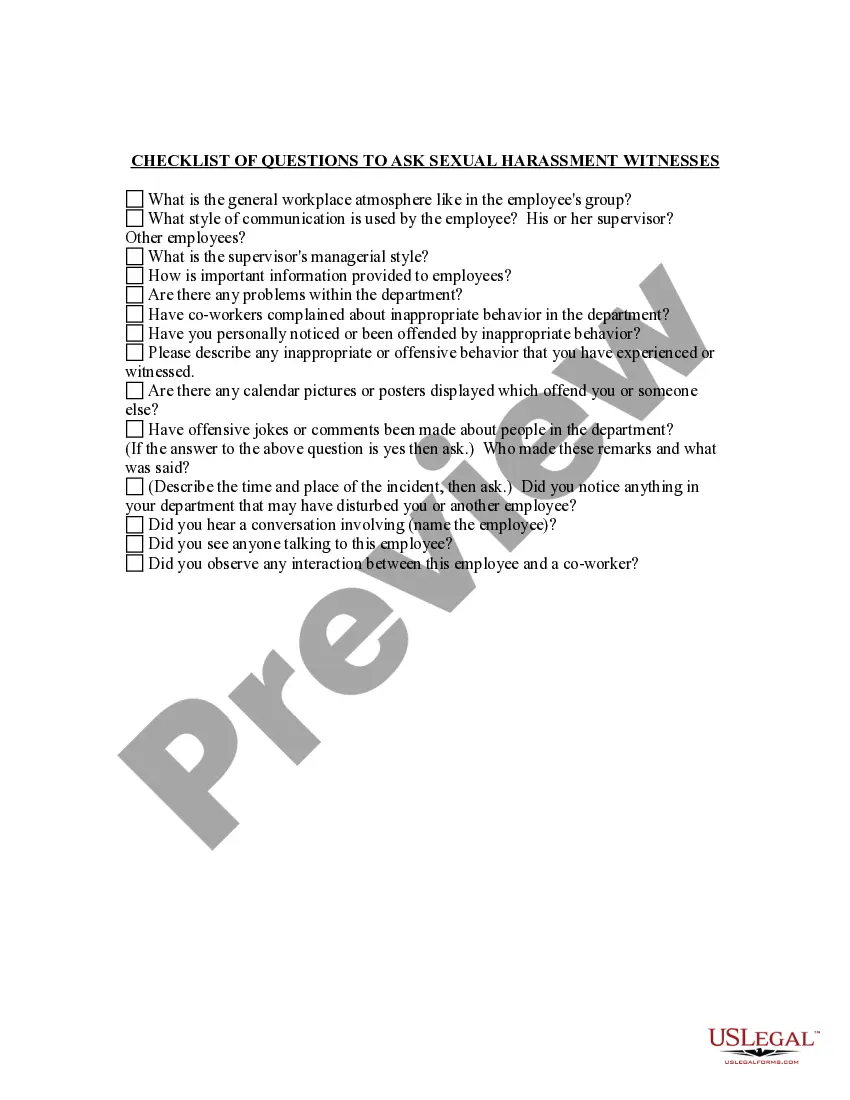
When writing a harassment statement, focus on clarity and detail. Begin with a straightforward introduction that summarizes your experience of sexual harassment with women. Include specific incidents, noteworthy interactions, and any witnesses who can support your claims. Utilizing US Legal Forms can assist you in finding the right format and language.
To write a formal complaint about sexual harassment with women, begin by clearly stating the facts. Describe the behavior you experienced, mentioning dates, times, and locations. It’s important to articulate how the harassment affected you and any steps you took to address the issue. US Legal Forms provides templates to help you craft a thorough complaint.
Many women choose not to report sexual harassment due to fear of retaliation or disbelief. Others may feel ashamed or unsure if the behavior qualifies as harassment. Some worry about the potential consequences on their career or personal relationships. Addressing these feelings and understanding that support is available, like from UsLegalForms, can empower individuals to speak out and seek justice.
When you report sexual harassment with women, the response typically involves an investigation by the appropriate authorities. This process may include interviews, gathering evidence, and potentially taking disciplinary action against the harasser. It's important to know that you have rights during this process, and support resources, like those provided by UsLegalForms, can guide you on what to expect and how to navigate it.
Reporting sexual harassment with women is vital for multiple reasons. Firstly, it helps create a safer environment for everyone by holding offenders accountable. Additionally, by reporting, you may encourage others who are facing similar situations to come forward, leading to systemic change. Your actions can highlight the seriousness of the issue and drive organizations to implement better policies.
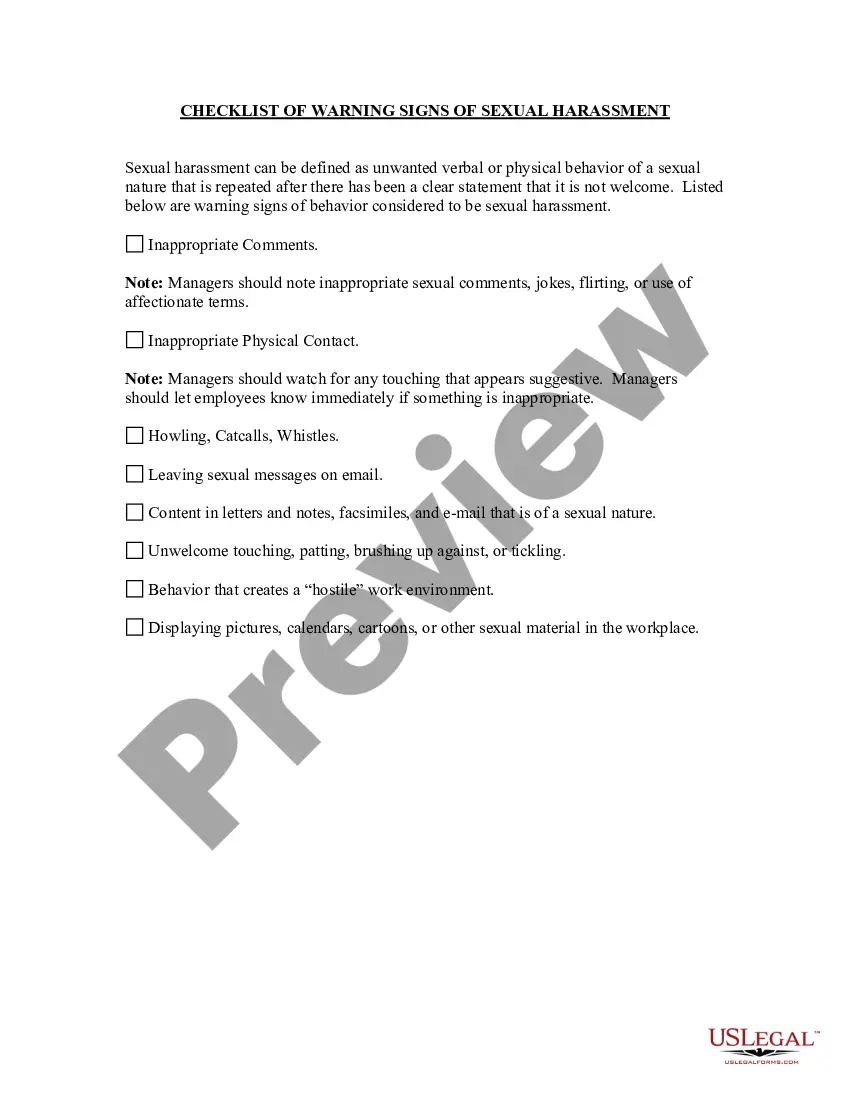
If you find yourself in a situation involving sexual harassment with women, it's crucial to address it promptly. Start by documenting each incident, including dates and details. Next, consider speaking to the harasser directly, if safe to do so, or reach out to a trusted friend or colleague for support. Reporting the behavior through the appropriate channels can help ensure your concerns are taken seriously.
Dealing with a man harassing you requires a strategic approach. Start by setting clear boundaries and clearly indicate that his behavior is unwanted. It's vital to keep a record of his harassment for future reference. If the situation escalates, use resources like US Legal Forms to obtain documents and guidance for formal complaints or protective measures.