Sexual Harassment With Men
Description
Get your form ready online
Our built-in tools help you complete, sign, share, and store your documents in one place.
Make edits, fill in missing information, and update formatting in US Legal Forms—just like you would in MS Word.
Download a copy, print it, send it by email, or mail it via USPS—whatever works best for your next step.
Sign and collect signatures with our SignNow integration. Send to multiple recipients, set reminders, and more. Go Premium to unlock E-Sign.
If this form requires notarization, complete it online through a secure video call—no need to meet a notary in person or wait for an appointment.
We protect your documents and personal data by following strict security and privacy standards.

Make edits, fill in missing information, and update formatting in US Legal Forms—just like you would in MS Word.

Download a copy, print it, send it by email, or mail it via USPS—whatever works best for your next step.

Sign and collect signatures with our SignNow integration. Send to multiple recipients, set reminders, and more. Go Premium to unlock E-Sign.

If this form requires notarization, complete it online through a secure video call—no need to meet a notary in person or wait for an appointment.

We protect your documents and personal data by following strict security and privacy standards.
Looking for another form?








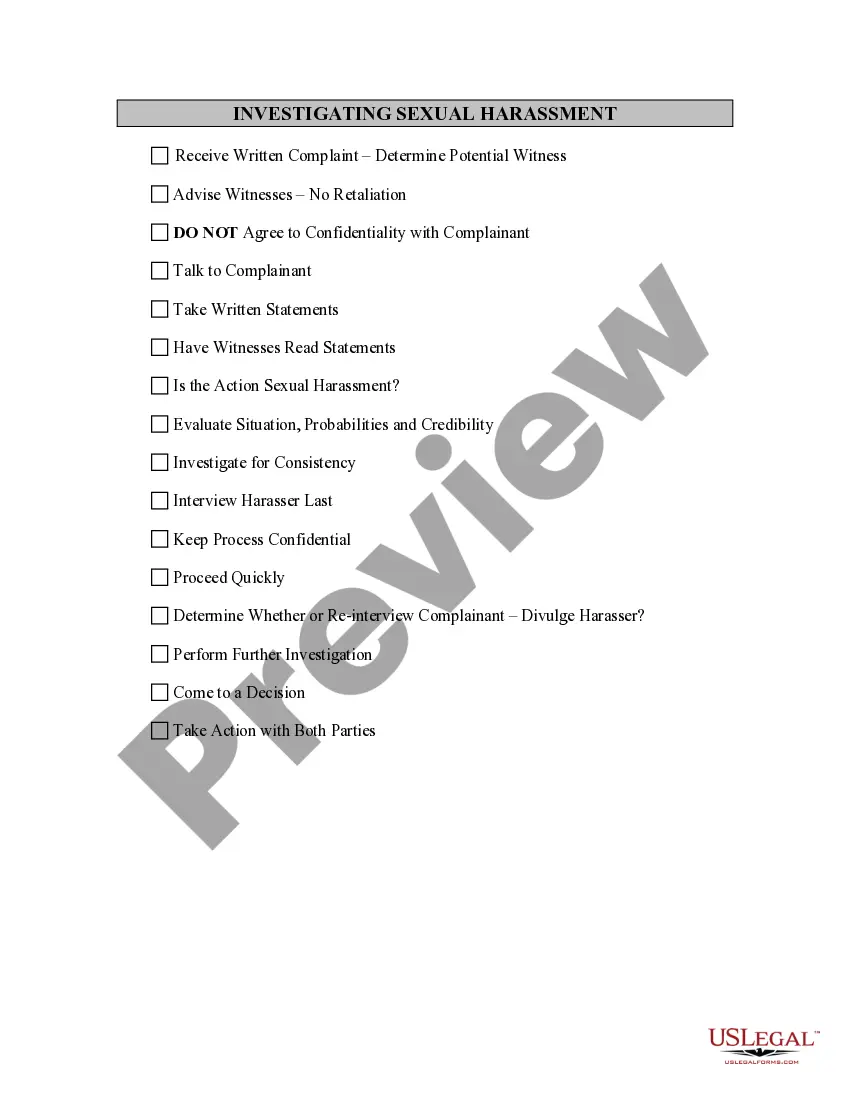
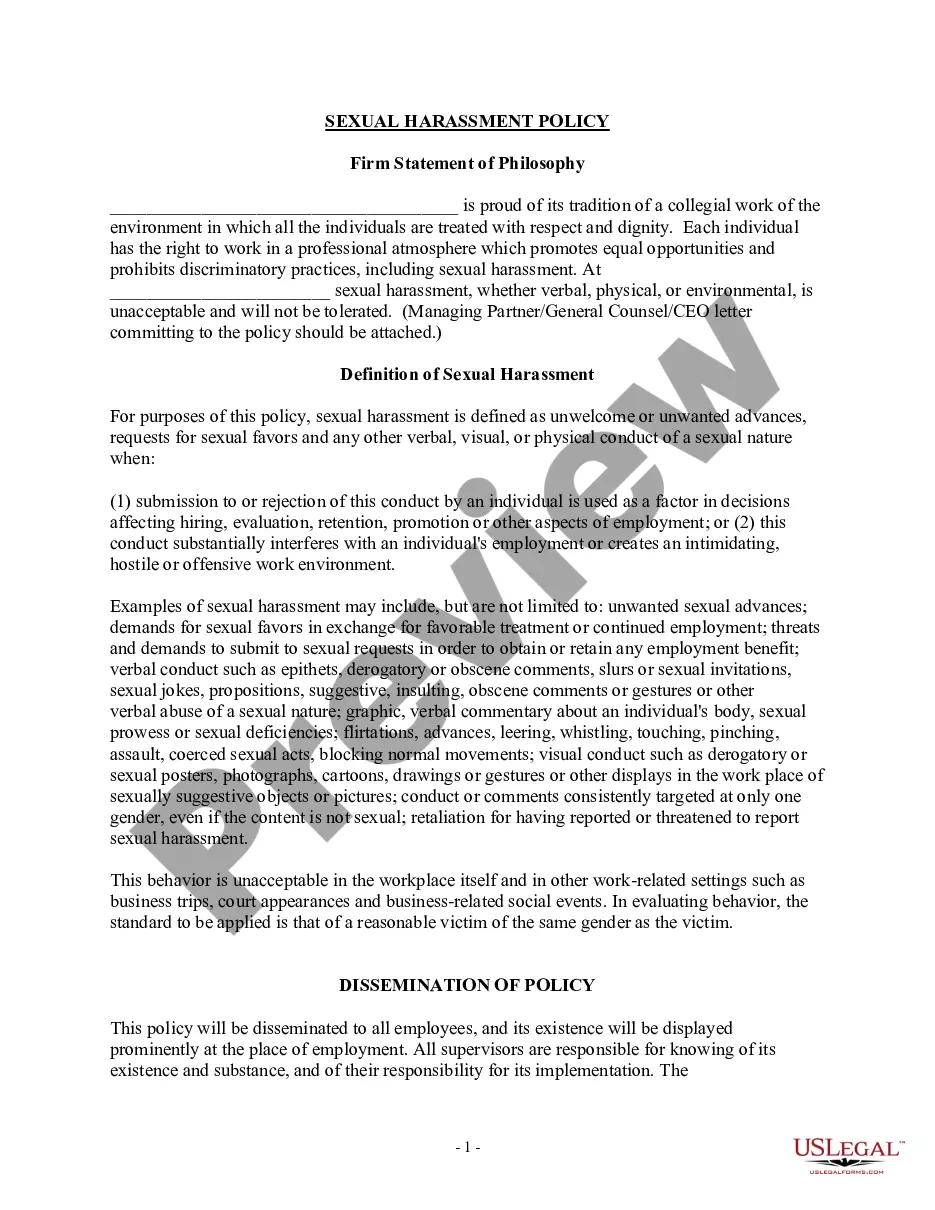
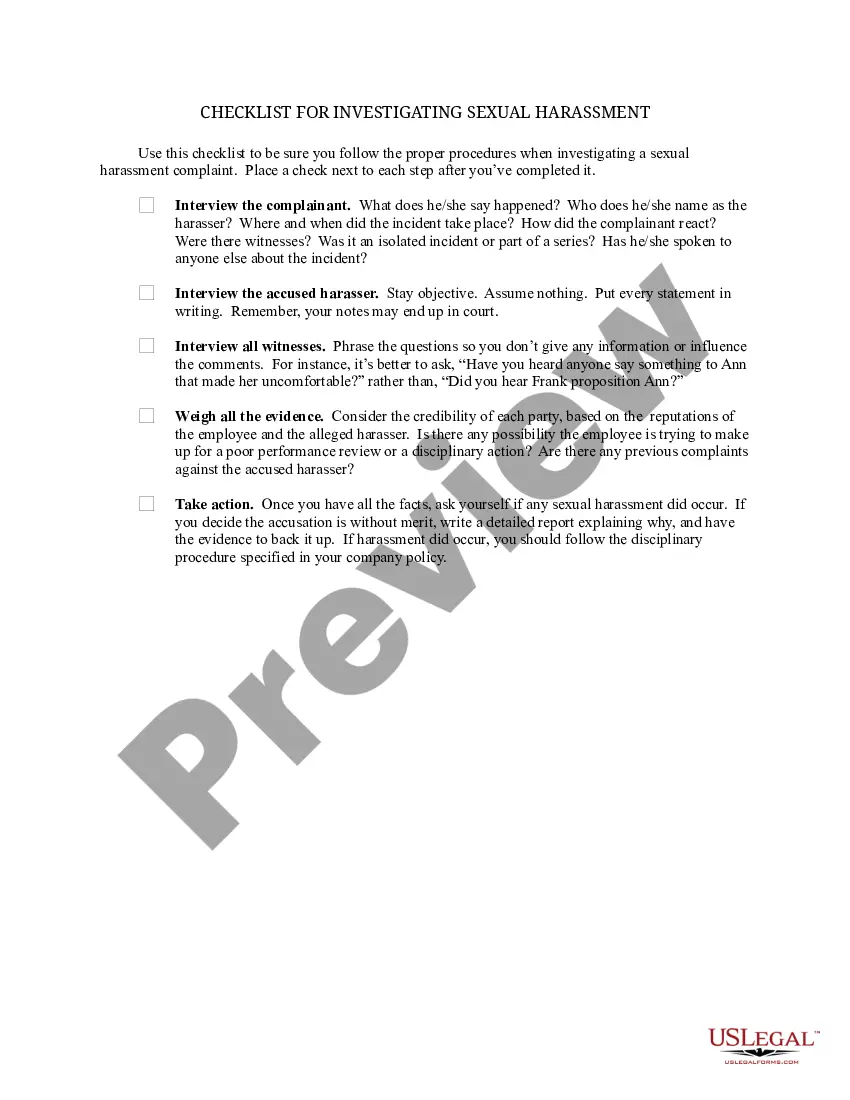
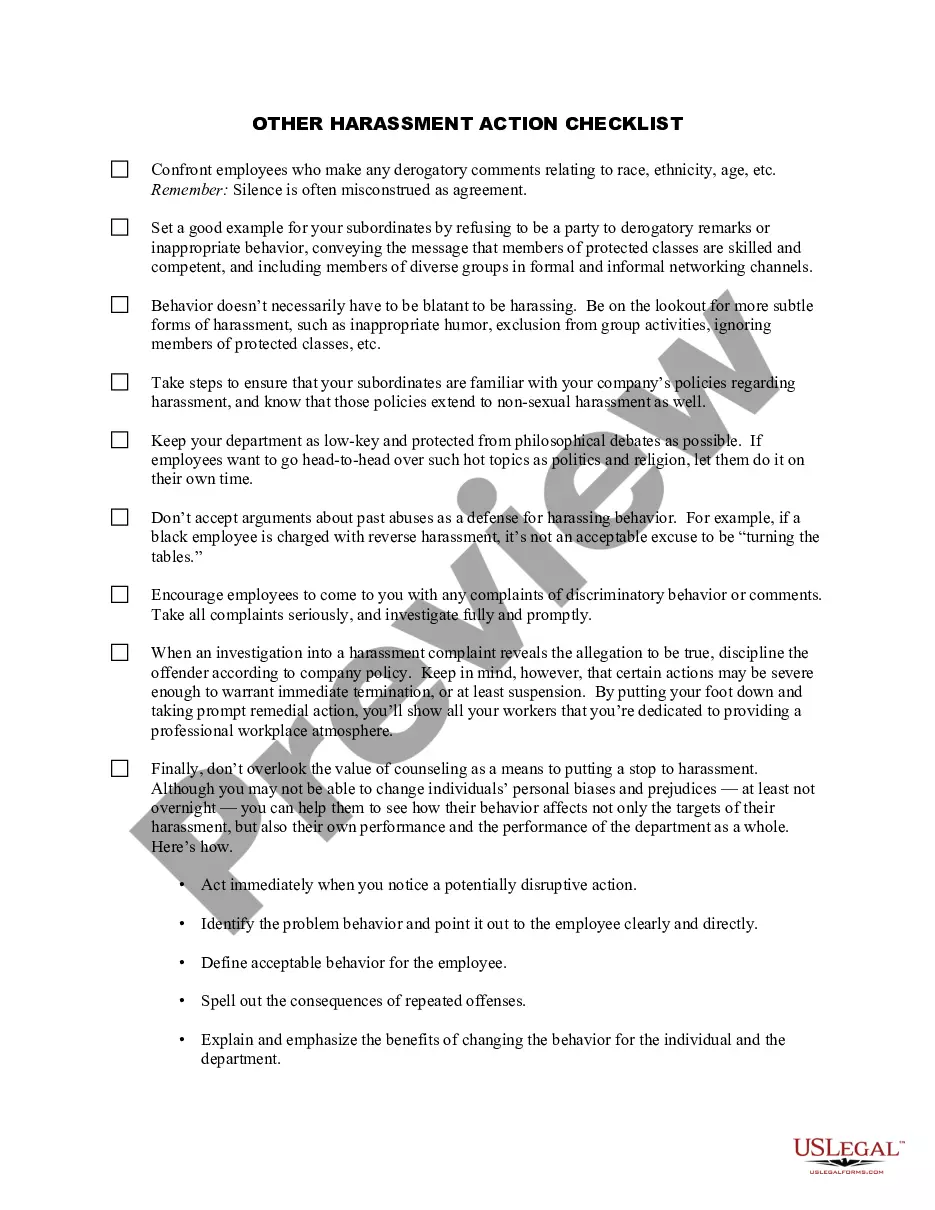
How to fill out Investigating Sexual Harassment Checklist - Workplace?
- Log in to your US Legal Forms account. If you are a new user, complete the registration process first.
- Browse through the extensive library to find the specific legal form that corresponds to your needs. Utilize the preview mode to ensure it meets your requirements.
- If you're unable to find the right form, use the Search tab to look for alternatives that may fit your jurisdiction.
- Select your desired document and click on the Purchase button to choose a suitable subscription plan.
- Follow through with payment using your credit card or PayPal account to finalize your subscription.
- Once the payment is confirmed, you can download your form directly to your device and access it anytime from the My Forms section.
US Legal Forms empowers users with a vast collection of legal documents that are easy to fill out and edit. This ensures you get the right forms without hassle, allowing you to focus on your case.
Start today by accessing US Legal Forms and ensure your legal rights are protected. For assistance or further inquiries, reach out to our premium experts for guidance.
Form popularity
FAQ
To report someone for harassment, start by documenting specific incidents and gather any evidence you might have. Bring your report to a trusted authority, such as HR or management, depending on the situation. Being clear and detailed about your experience can strengthen your case. You can also use the resources on the US Legal platform to learn more about the process of reporting sexual harassment with men.
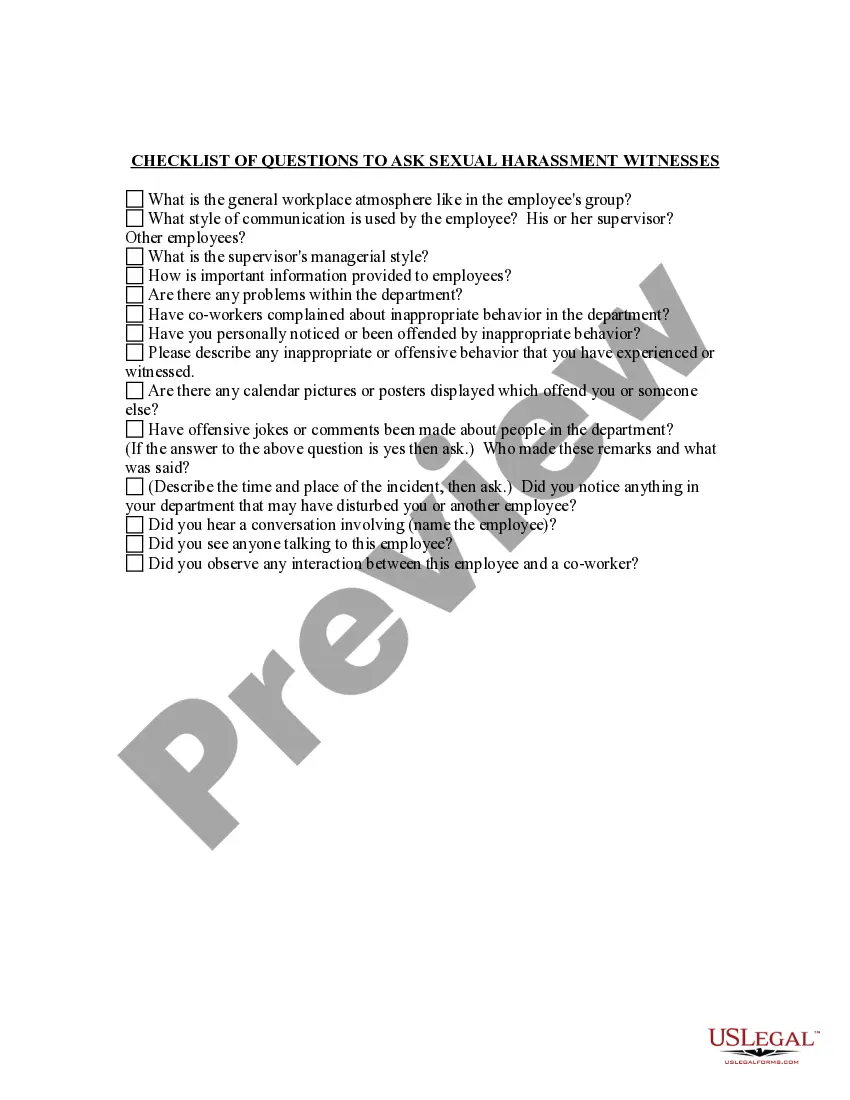
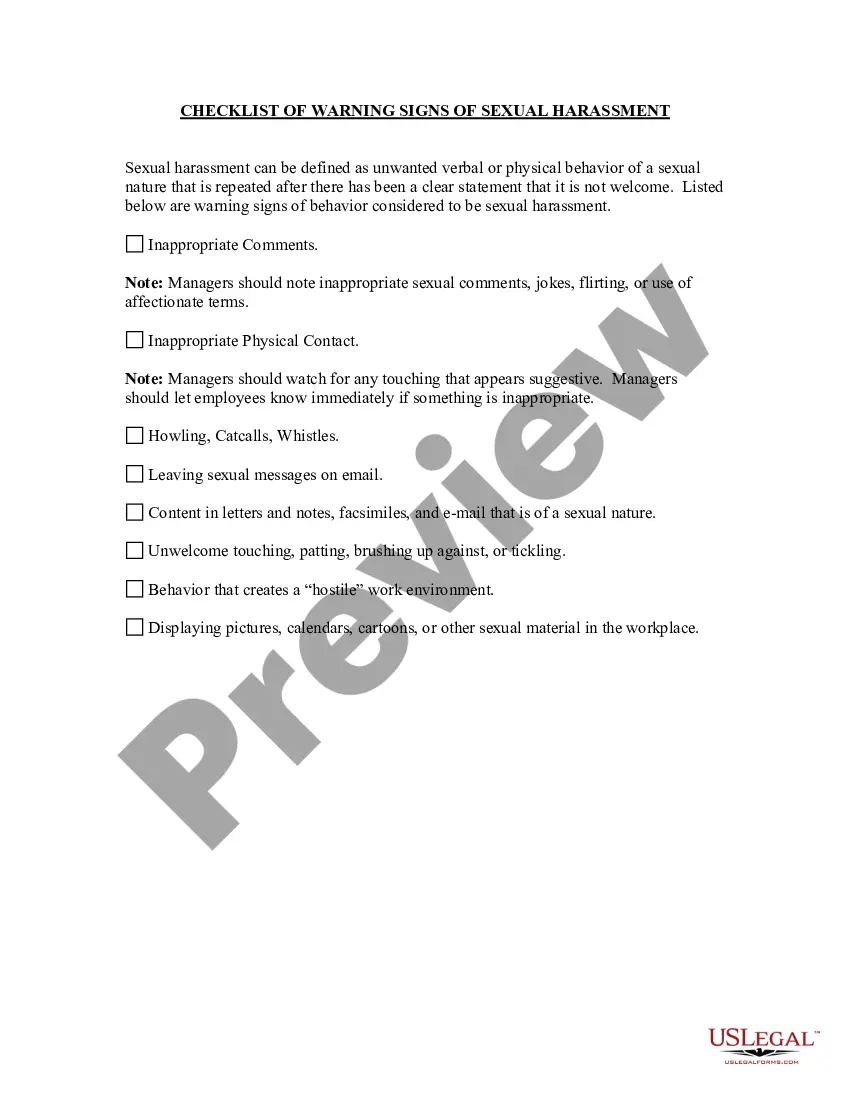
Harassment encompasses a range of unwanted behaviors, including unwanted advances, inappropriate comments, or sharing offensive materials. It is critical to recognize that sexual harassment with men can take many forms, both physical and verbal. Understanding what constitutes harassment can empower you to take action. The US Legal platform has resources that can clarify these behaviors, helping you identify if you are experiencing harassment.
Reporting harassment can be an important step towards stopping it. By bringing the issue to attention, you not only protect yourself but also help others who might be facing similar situations. Institutions often take harassment seriously, particularly in cases of sexual harassment with men. Using the US Legal platform can provide guidance on how to proceed with a report, ensuring your voice is heard.
If someone won't stop harassing you, it is crucial to assert your boundaries clearly. Communicate directly that their behavior is unwanted, and document any incidents to create a record. Seeking support from friends, family, or a counselor can provide emotional guidance. Additionally, consider using the US Legal platform, which offers resources on handling sexual harassment with men effectively.
Yes, men can sexually harass other men. Gender does not determine the possibility of harassment; it can occur in any workplace, regardless of the individuals involved. If you find yourself in this situation, it's crucial to recognize that harassment is unacceptable and to take appropriate steps to address it. The US Legal Forms platform offers resources and guidance for dealing with sexual harassment with men.
If you experience sexual harassment at work as a man, it is essential to take action. Start by documenting the incidents, noting dates, times, and witnesses. Next, report the harassment to your supervisor or human resources department. Seeking legal advice can also help you understand your rights and options regarding sexual harassment with men.
While women statistically report higher rates of harassment, men still experience significant instances of sexual harassment. The idea that sexual harassment with men is less prevalent can be misleading and harmful. Each case must be evaluated individually, recognizing that men can face victimization as well. Understanding these dynamics is essential for comprehensive prevention strategies.
Victims of harassment can be individuals of any gender, age, or background. Sexual harassment with men is a significant part of this conversation that often receives less attention. All victims deserve support and validation, irrespective of their gender identity. Creating safe environments for all individuals helps combat this pervasive issue.
Men can be victims of harassment, and this situation needs more awareness. Sexual harassment with men often goes underreported due to stigma and societal beliefs. By acknowledging male victims, we contribute to a broader understanding of harassment in our society. Platforms like US Legal Forms can provide resources for men seeking help.
Yes, men can certainly be harassed too. Sexual harassment with men occurs in various environments, including workplaces and social settings. It is vital to understand that harassment can affect anyone, regardless of gender. Recognizing this issue allows for a more inclusive approach to addressing sexual harassment.