Harassment For Women
Description
Get your form ready online
Our built-in tools help you complete, sign, share, and store your documents in one place.
Make edits, fill in missing information, and update formatting in US Legal Forms—just like you would in MS Word.
Download a copy, print it, send it by email, or mail it via USPS—whatever works best for your next step.
Sign and collect signatures with our SignNow integration. Send to multiple recipients, set reminders, and more. Go Premium to unlock E-Sign.
If this form requires notarization, complete it online through a secure video call—no need to meet a notary in person or wait for an appointment.
We protect your documents and personal data by following strict security and privacy standards.

Make edits, fill in missing information, and update formatting in US Legal Forms—just like you would in MS Word.

Download a copy, print it, send it by email, or mail it via USPS—whatever works best for your next step.

Sign and collect signatures with our SignNow integration. Send to multiple recipients, set reminders, and more. Go Premium to unlock E-Sign.

If this form requires notarization, complete it online through a secure video call—no need to meet a notary in person or wait for an appointment.

We protect your documents and personal data by following strict security and privacy standards.
Looking for another form?





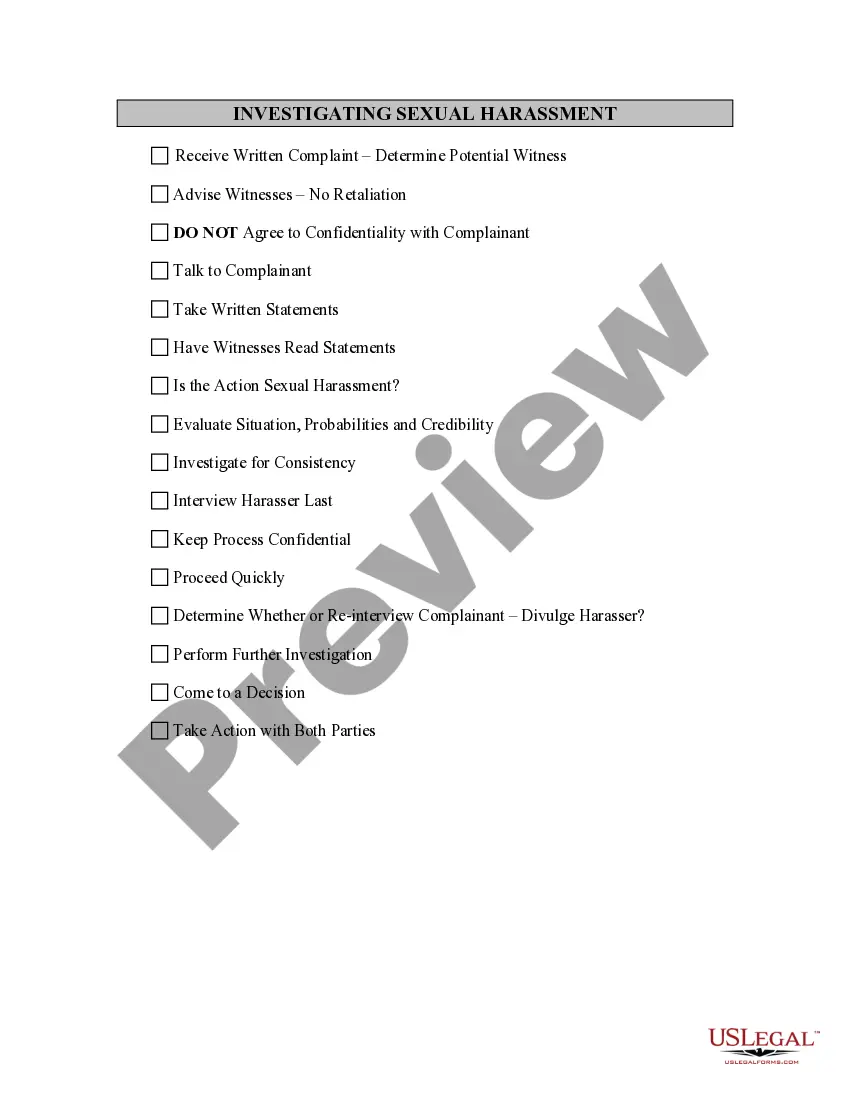
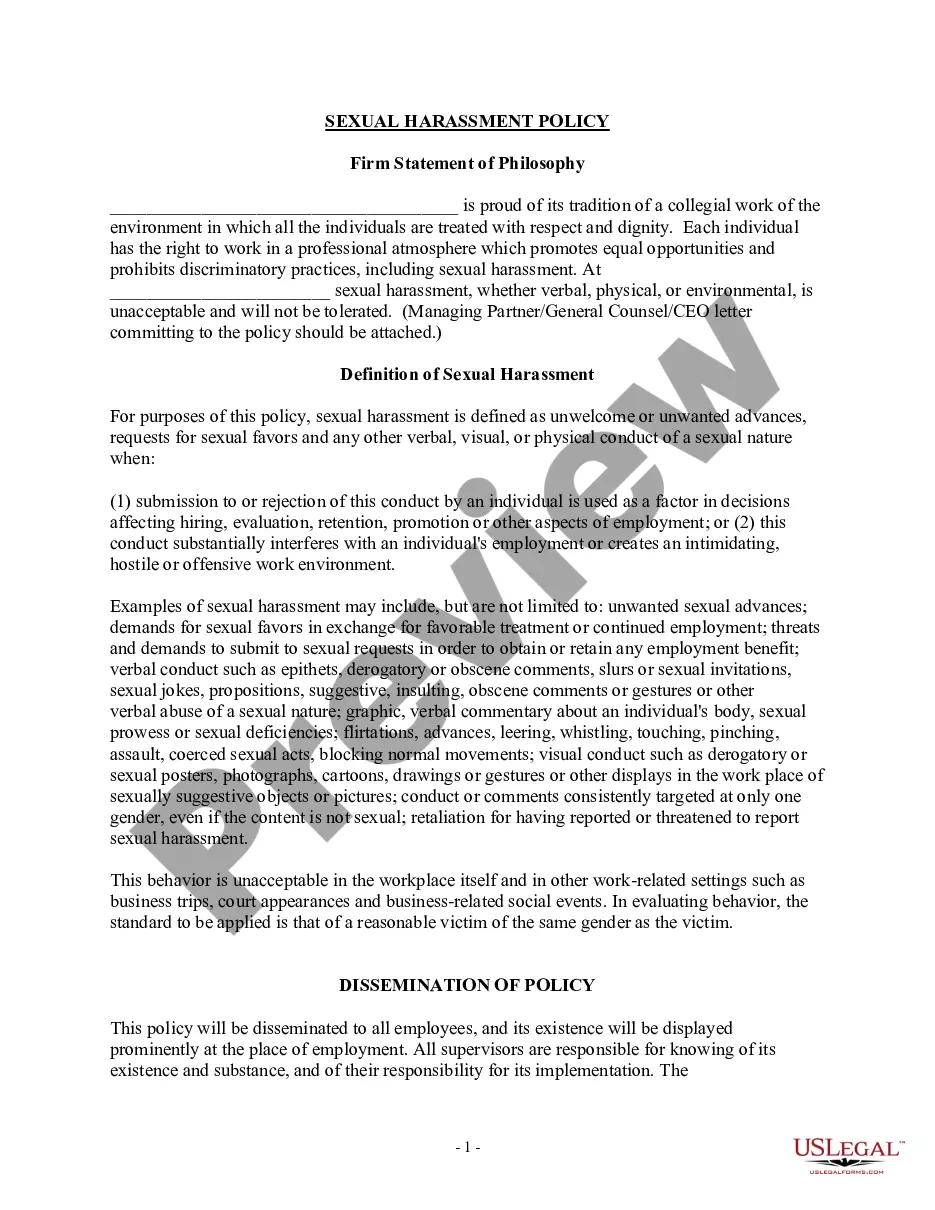
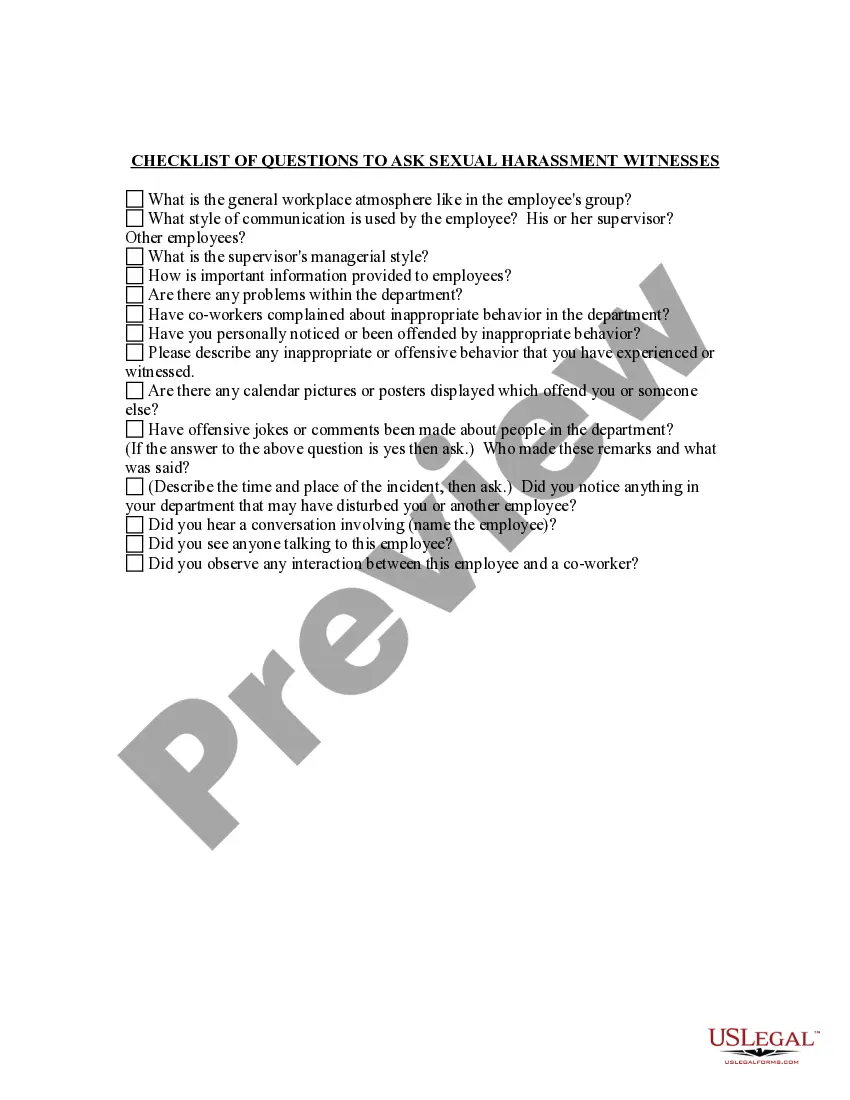
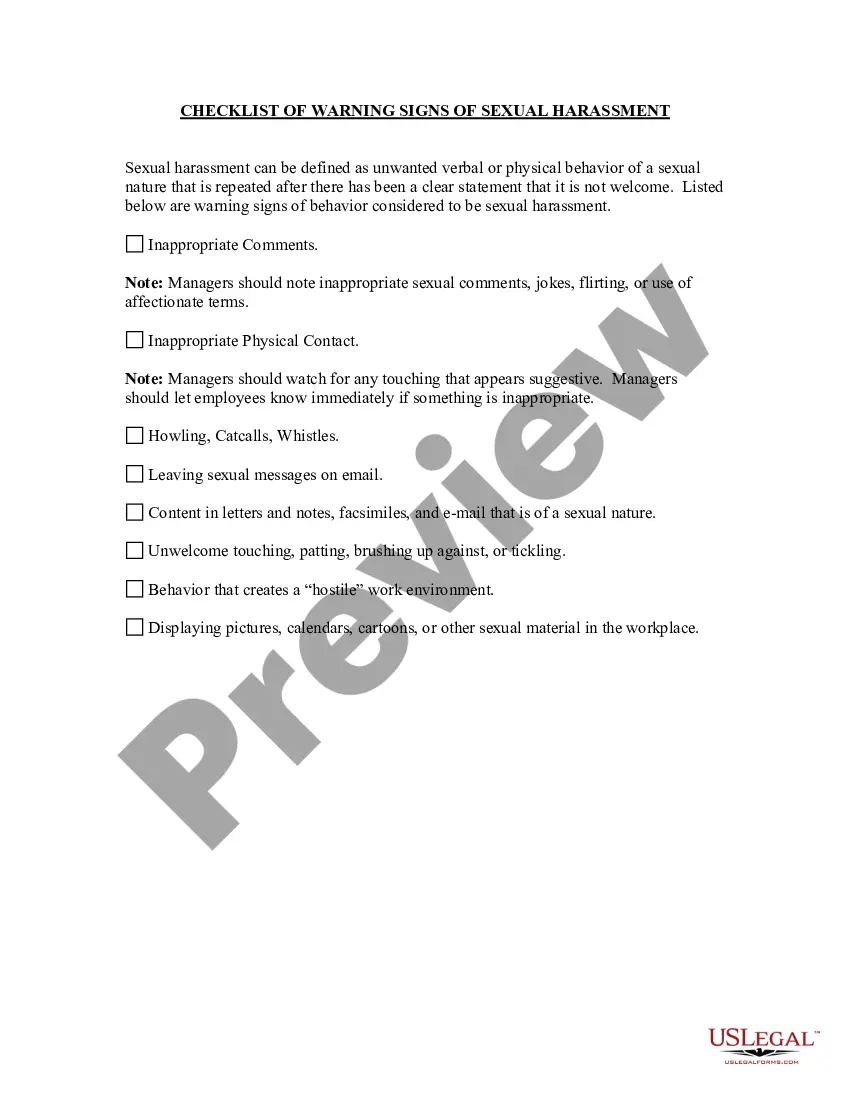
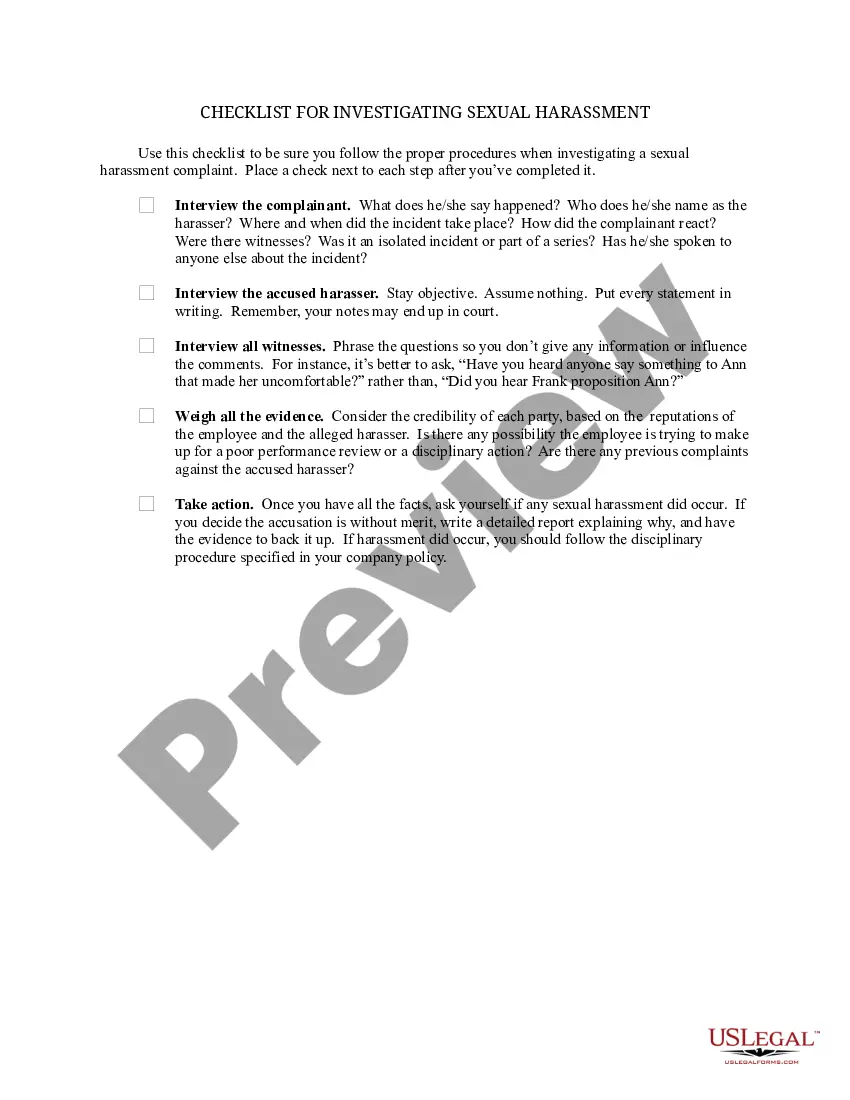
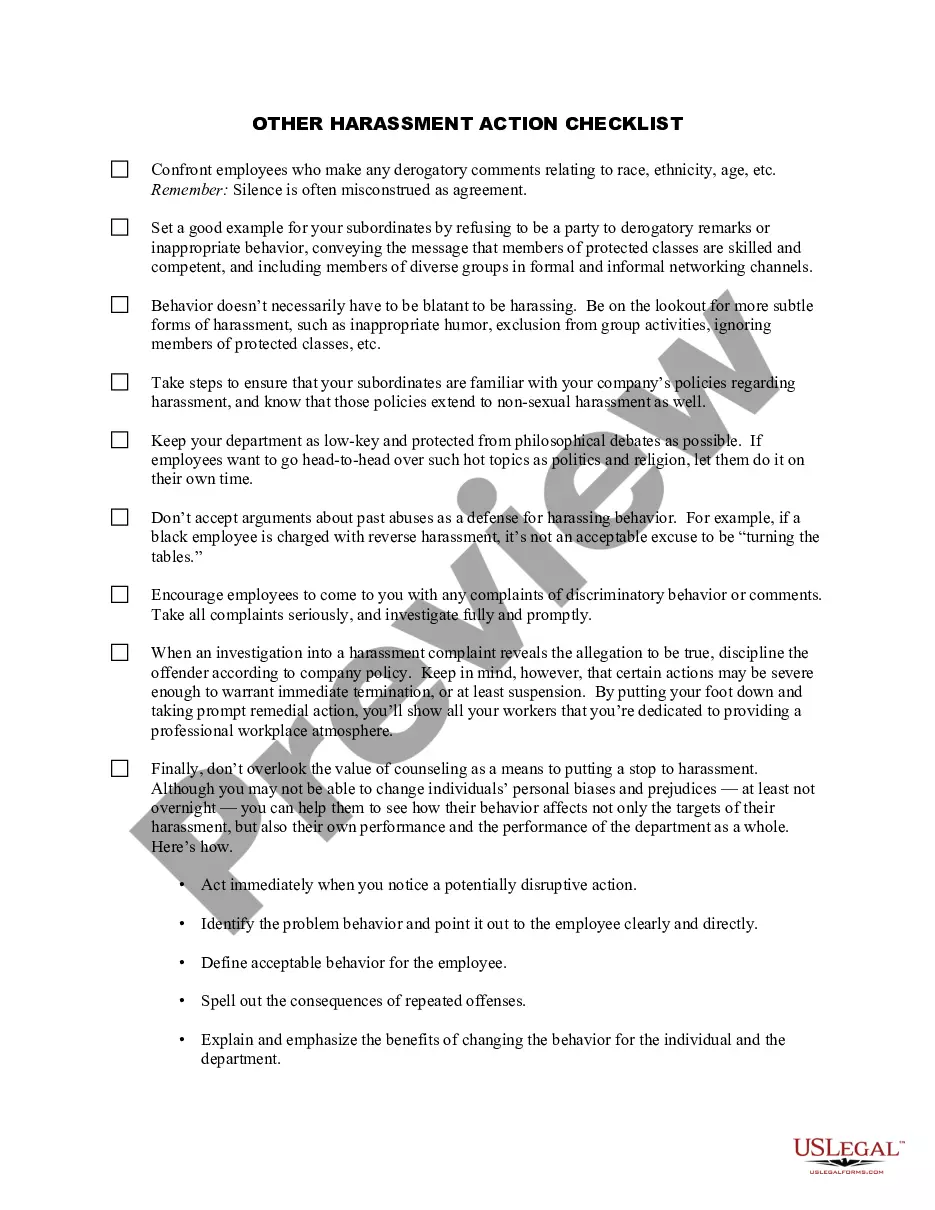
How to fill out Investigating Sexual Harassment Checklist - Workplace?
- Begin by visiting the US Legal Forms website and log in to your account if you're a returning user. Ensure your subscription remains active to access the required documents.
- If you're new, browse through the extensive library to find the specific form that pertains to your situation. Utilize the Preview mode to confirm it meets your local requirements.
- If necessary, use the Search feature to locate an alternative form, ensuring it accurately addresses your needs.
- Once you’ve identified the correct form, click on the Buy Now button. Select your preferred subscription plan and complete your registration for full access.
- Provide your payment details, either via credit card or PayPal, to finalize your purchase.
- After the transaction, download the document to your device for easy access. You can also revisit it anytime through the My Forms section in your profile.
In conclusion, US Legal Forms simplifies the process of obtaining essential legal documents, streamlining the experience for both those facing harassment and legal professionals. By leveraging its extensive resources, individuals can ensure their legal documentation is thorough and accurate.
Start your journey towards effective legal documentation today by visiting US Legal Forms!
Form popularity
FAQ
Behaviors qualify as harassment when they involve unwanted, aggressive actions that create a hostile environment. This can include verbal comments, physical actions, or other behaviors that intimidate or demean individuals. Understanding what constitutes harassment for women is essential for recognizing and addressing such issues effectively.
To write a formal complaint about harassment, begin with a clear statement of your purpose. Detail the incidents, including dates, times, and individuals involved, and describe how those actions affected you. A well-structured complaint, potentially crafted with the help of USLegalForms, demonstrates your professionalism and seriousness in addressing harassment for women.
Reporting harassment is crucial for both personal well-being and creating safer environments. By reporting, you take a stand against inappropriate behavior and support the wider community in addressing such issues. Plus, utilizing platforms like USLegalForms can simplify the reporting process and ensure your voice is heard.
When writing about harassment, aim for clarity and sensitivity. Describe the situation factually, including who was involved, what occurred, and how it made you or others feel. Use direct language to explain why the actions were harmful, especially in the context of harassment for women, to foster understanding and support.
Starting a harassment statement should begin with a clear declaration of the issue at hand. You might say, "I am writing to formally address an incident of harassment that occurred on date." Be sure to keep your tone respectful and focused on the facts, emphasizing the seriousness of harassment for women.
Examples of harassment statements typically include a description of inappropriate comments, unwanted advances, or repeated unwanted contact. You might state, for example, "On March 5th, I received numerous unsolicited text messages from a coworker, which I found distressing." Tailoring your examples to the context of harassment for women ensures clarity and context.
To write a harassment statement, start by clearly outlining the events that led to the allegation. Maintain a professional tone while addressing the specific behaviors that constitute the harassment for women, if applicable. Include dates, locations, and any witnesses present. A structured statement shows your commitment to resolving the issue.
When you face allegations of harassment, take them seriously. Acknowledge the claims and understand their impact on the individual involved. Document the details of the incident and seek legal advice when necessary. Engaging with a service like USLegalForms can guide you through the process and help you draft appropriate responses.
Dealing with harassment can be challenging, but there are effective strategies you can employ. Firstly, clearly communicate that the behavior is unwanted and must stop. If the harassment persists, documenting incidents is vital for any future legal action. Many women have found assistance through resources like USLegalForms, which offer guidance on filing complaints and protecting your rights.
In Illinois, harassment refers to behaviors such as intimidation, stalking, or any unwanted communication that disrupts your peace and safety. Women experiencing harassment may face situations involving threats or repeated unwanted contact. The law provides protections, recognizing that such activities can lead to significant emotional distress. If you find yourself in this position, USLegalForms can help you take the necessary legal steps.