Salaried Guidelines With Pto
Description
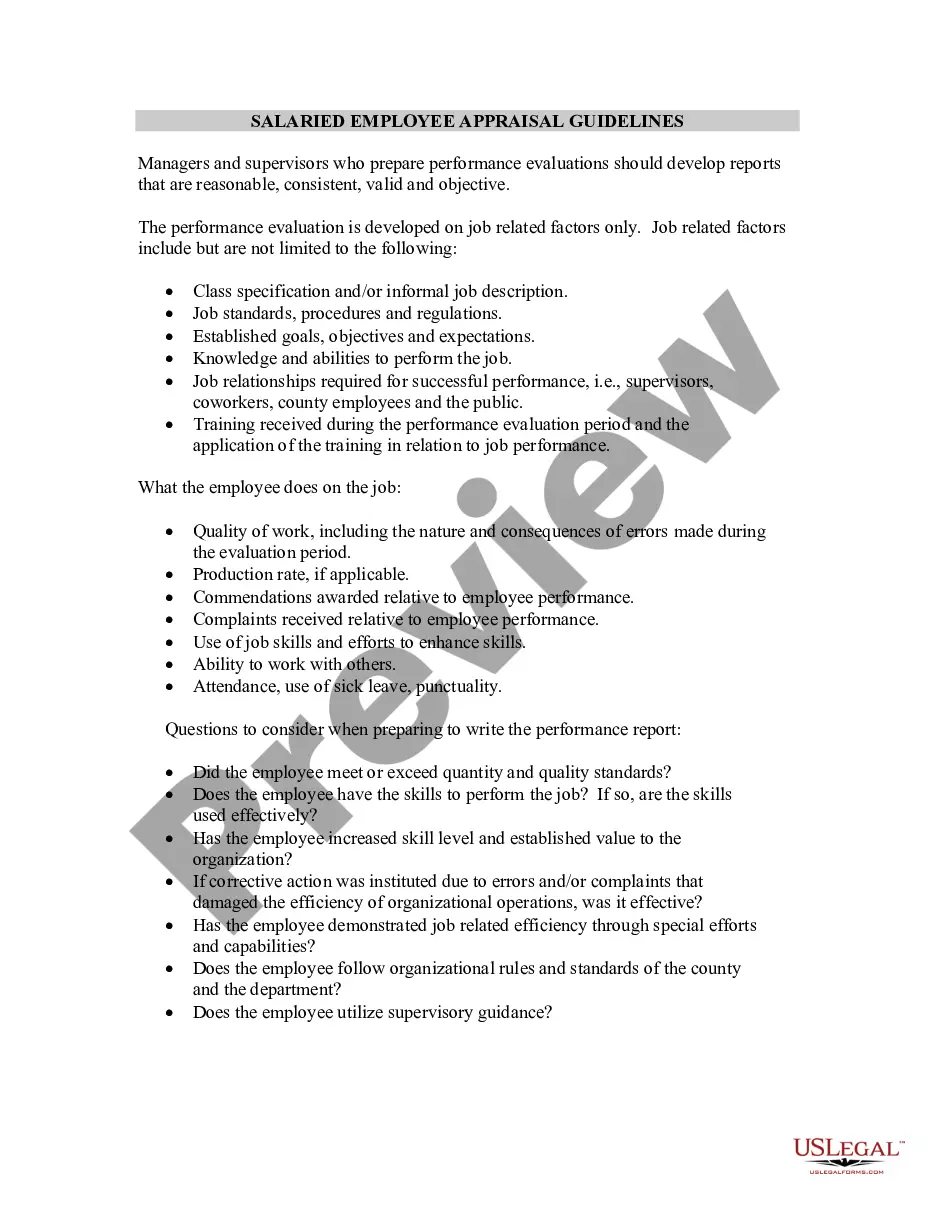
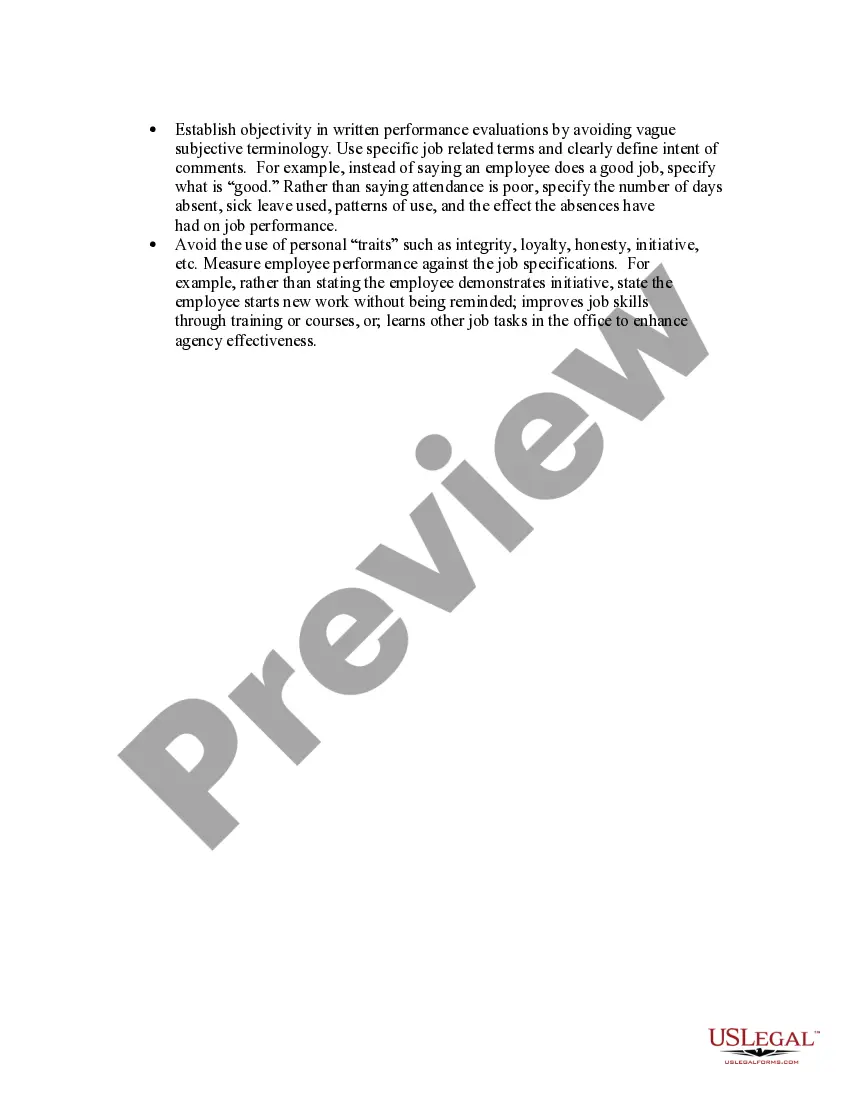
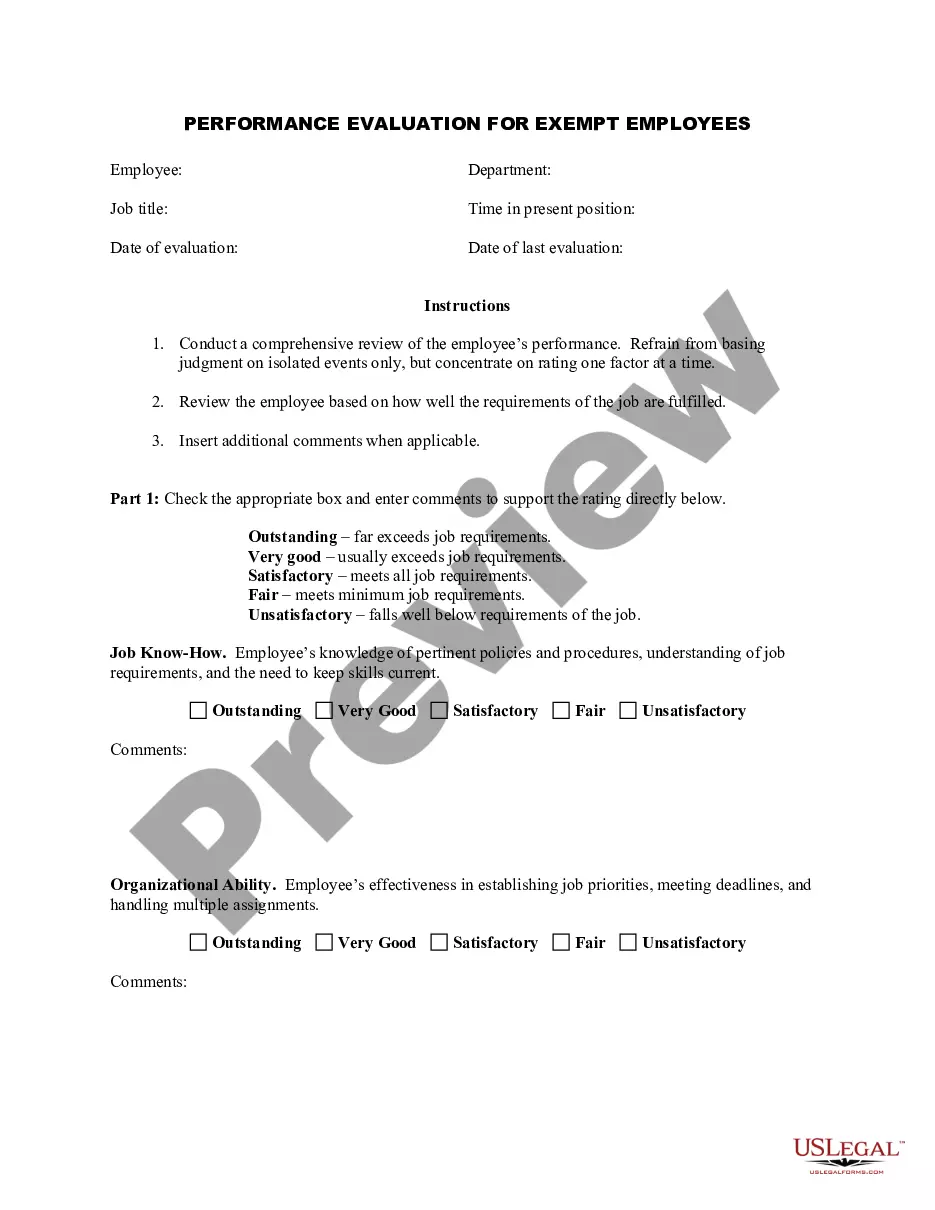
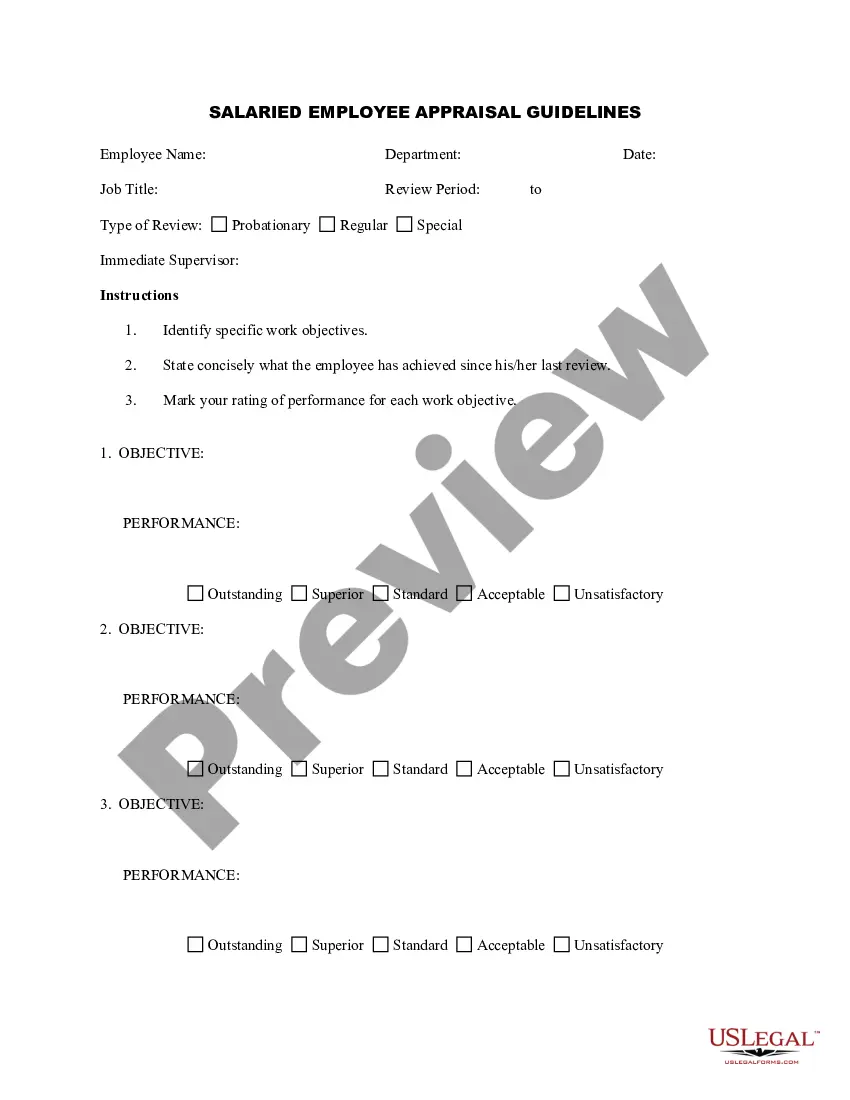
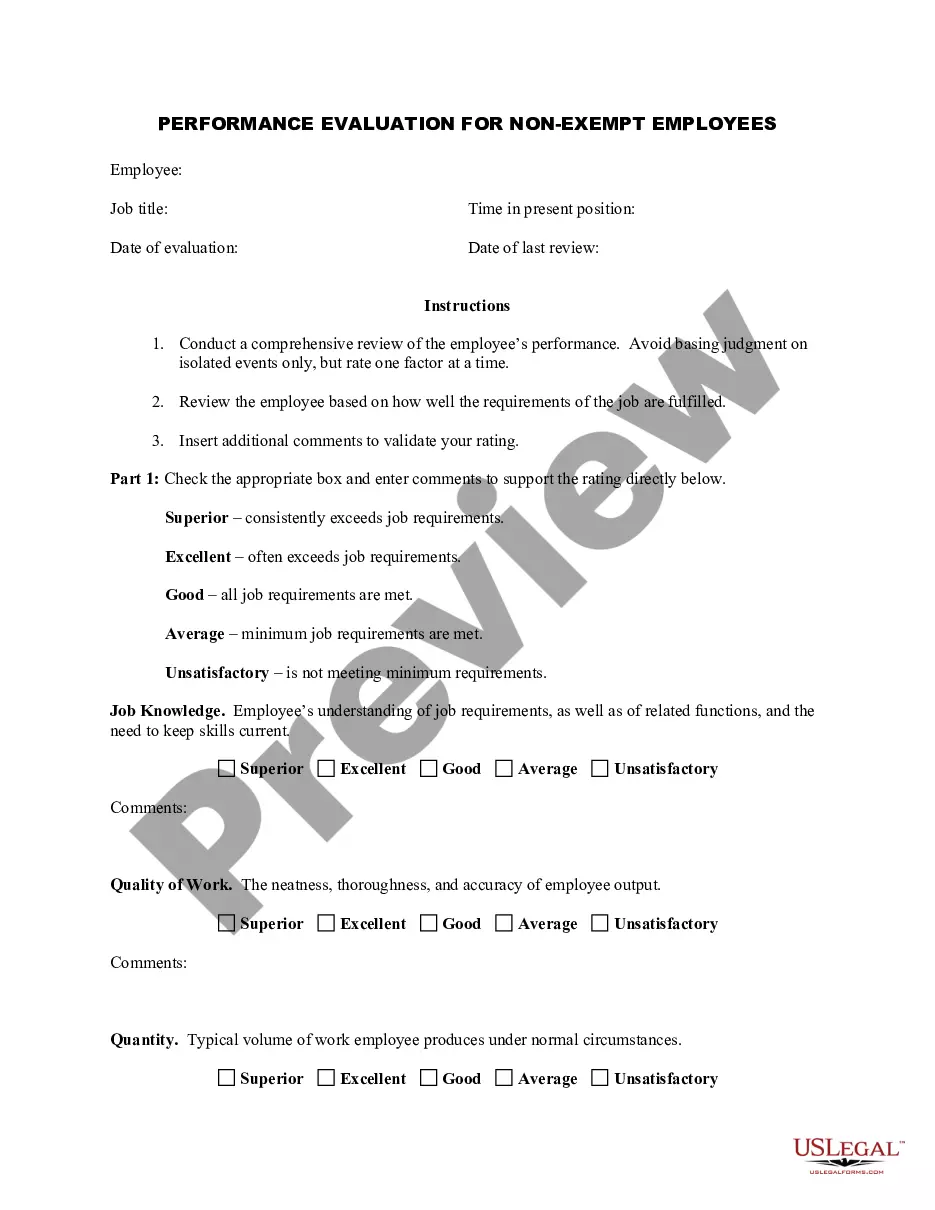




How to fill out Salaried Employee Appraisal Guidelines - General?
Whether for corporate objectives or for individual issues, everyone must confront legal matters at some point in their lives. Completing legal documents necessitates meticulous care, beginning with selecting the correct form template.
For instance, if you choose an incorrect version of the Salaried Guidelines With Pto, it will be rejected upon submission. Thus, it is vital to obtain a trustworthy source of legal documents like US Legal Forms.
Once it is saved, you can fill out the form using editing software or print it and complete it manually. With an extensive US Legal Forms catalog available, you never need to waste time searching for the right template online. Take advantage of the library's straightforward navigation to find the suitable form for any situation.
- Acquire the required template by utilizing the search bar or catalog browsing.
- Review the document’s details to ensure it aligns with your circumstances, state, and county.
- Select the document’s preview to examine it.
- If it is the wrong file, return to the search feature to locate the Salaried Guidelines With Pto template you require.
- Download the document when it suits your needs.
- If you own a US Legal Forms account, click Log in to access previously stored documents in My documents.
- If you do not have an account yet, you can obtain the form by clicking Buy now.
- Choose the appropriate payment option.
- Complete the account registration form.
- Select your payment method: you may use a credit card or PayPal account.
- Choose the file format you desire and download the Salaried Guidelines With Pto.
Form popularity
FAQ
Paid time off (PTO) is a human resource management (HRM) policy that provides employees with a pool of bankable hours that can be used for any purpose. Also known as personal time off, the acronym PTO is generally used to describe any period of time that an employee is paid while taking leave from work.
An employee can then use the PTO hours to take vacations, stay home when sick or when a child is sick, or take care of appointments during work time or other personal reasons.
How do I fill out a time off request? Employee's full name. Date of request. Date of time-off requested. Reason for time off. Employee's and manager's signature. Approval or denial confirmation.
The accrual amount is often based on an employee's tenure with the company. An employee can then use the PTO hours to take vacations, stay home when sick or when a child is sick, or take care of appointments during work time or other personal reasons.
A paid time off (PTO) policy is necessary for your business once you hire employees. It's part of your employee benefits plan that governs sick leave, vacation and personal time for you and your workers. It designates a specific amount of time to be treated as paid hours that employees can use at their discretion.