Salaried Employee
Description
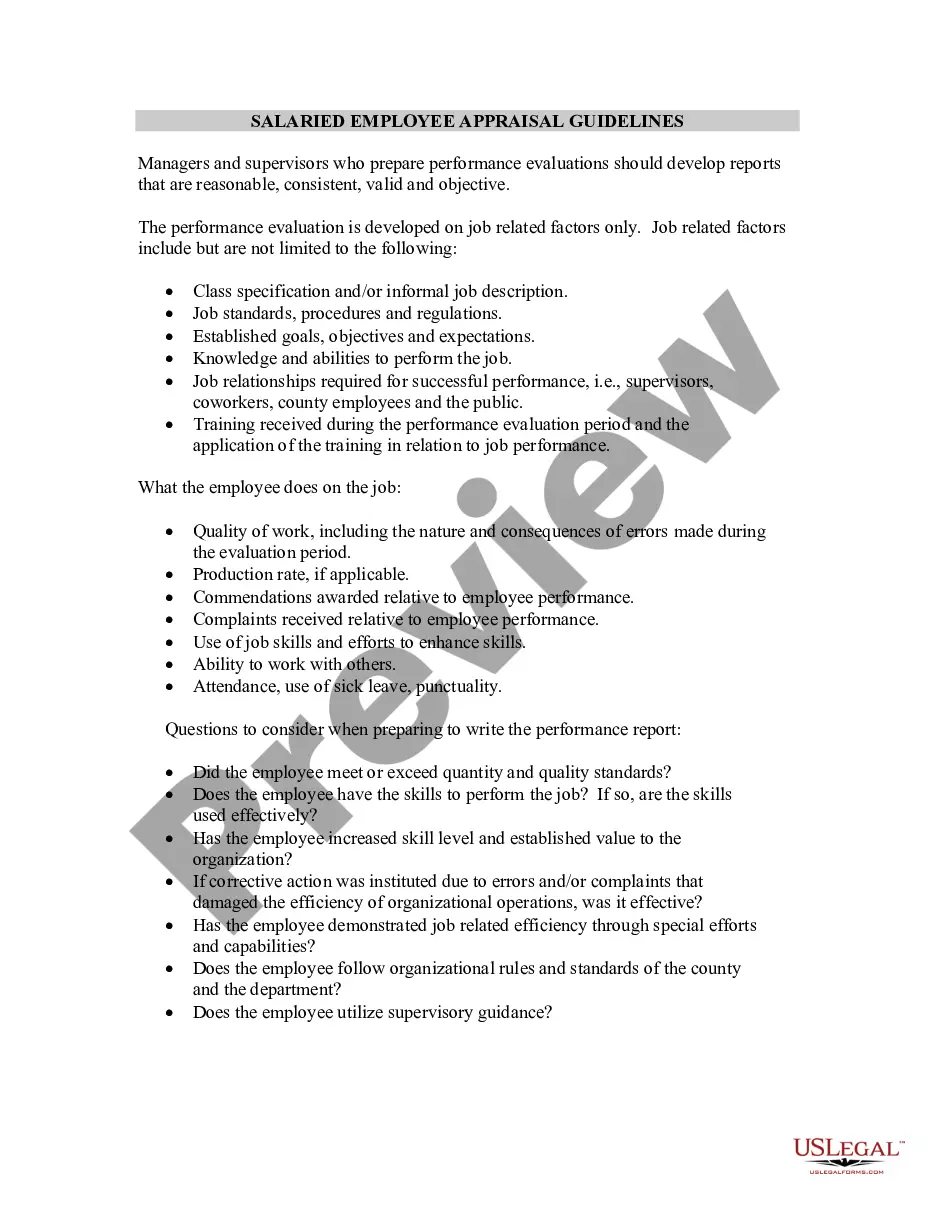
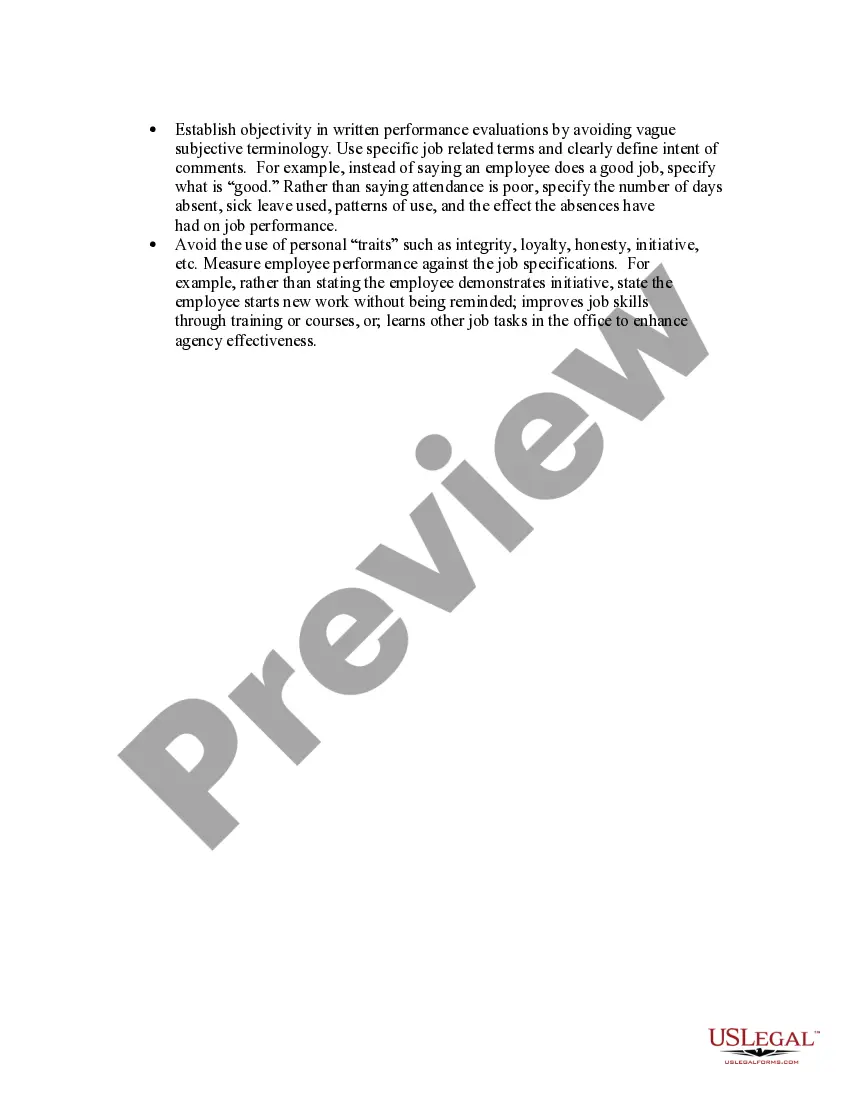
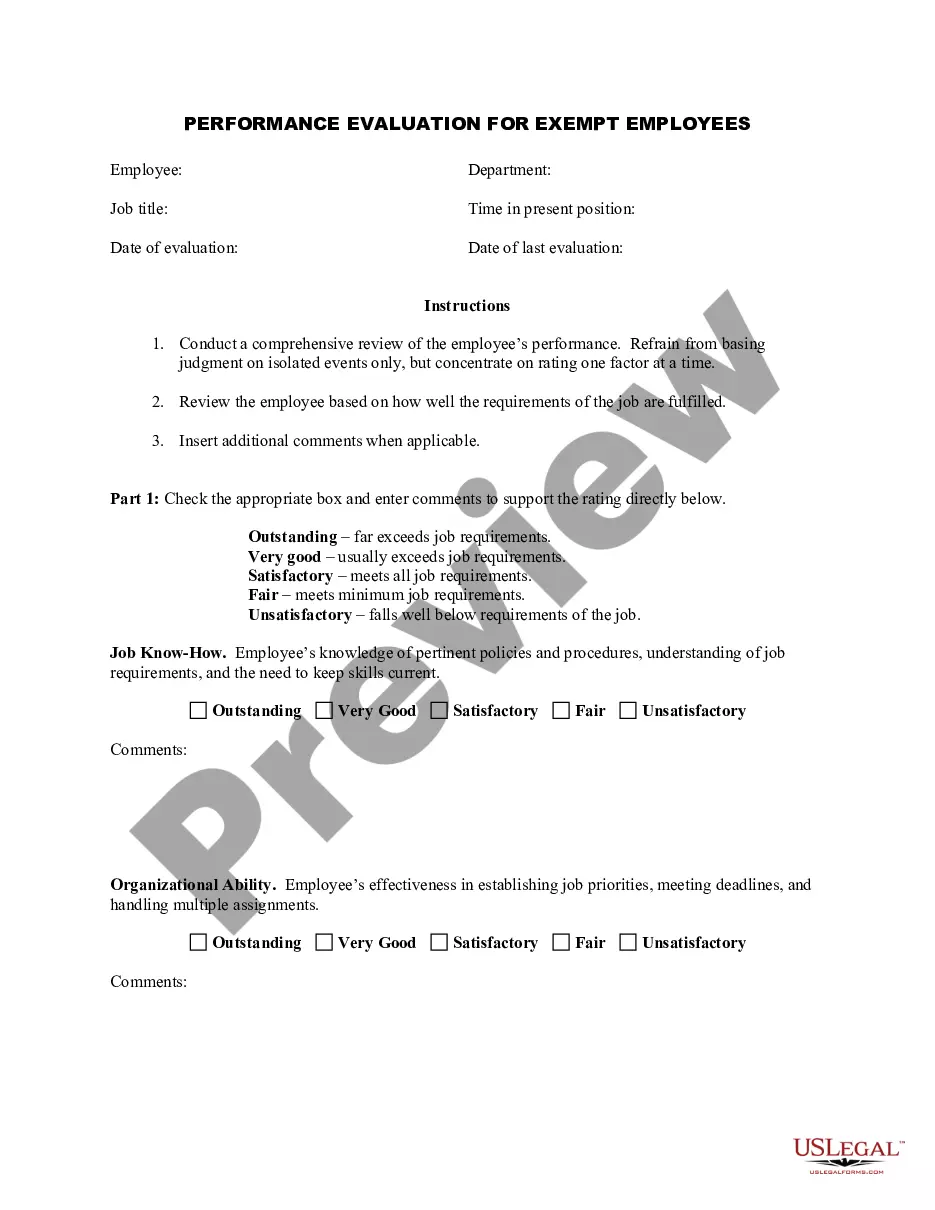
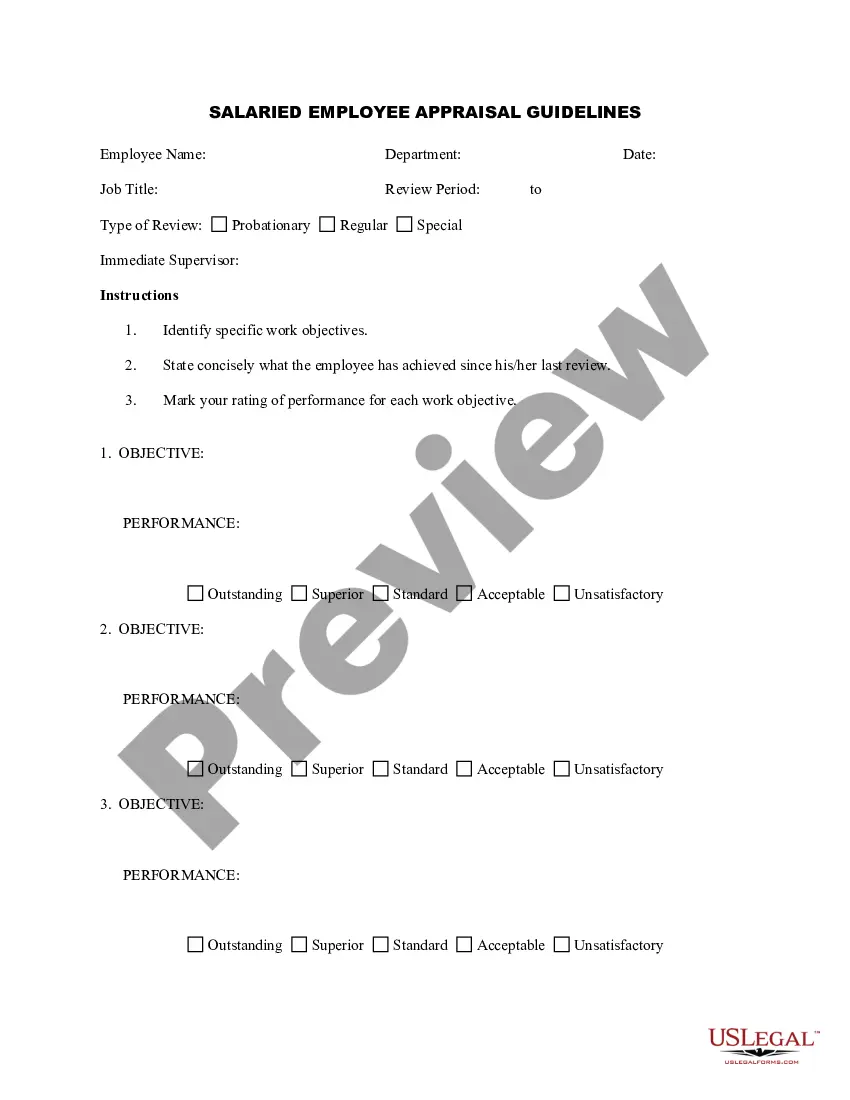
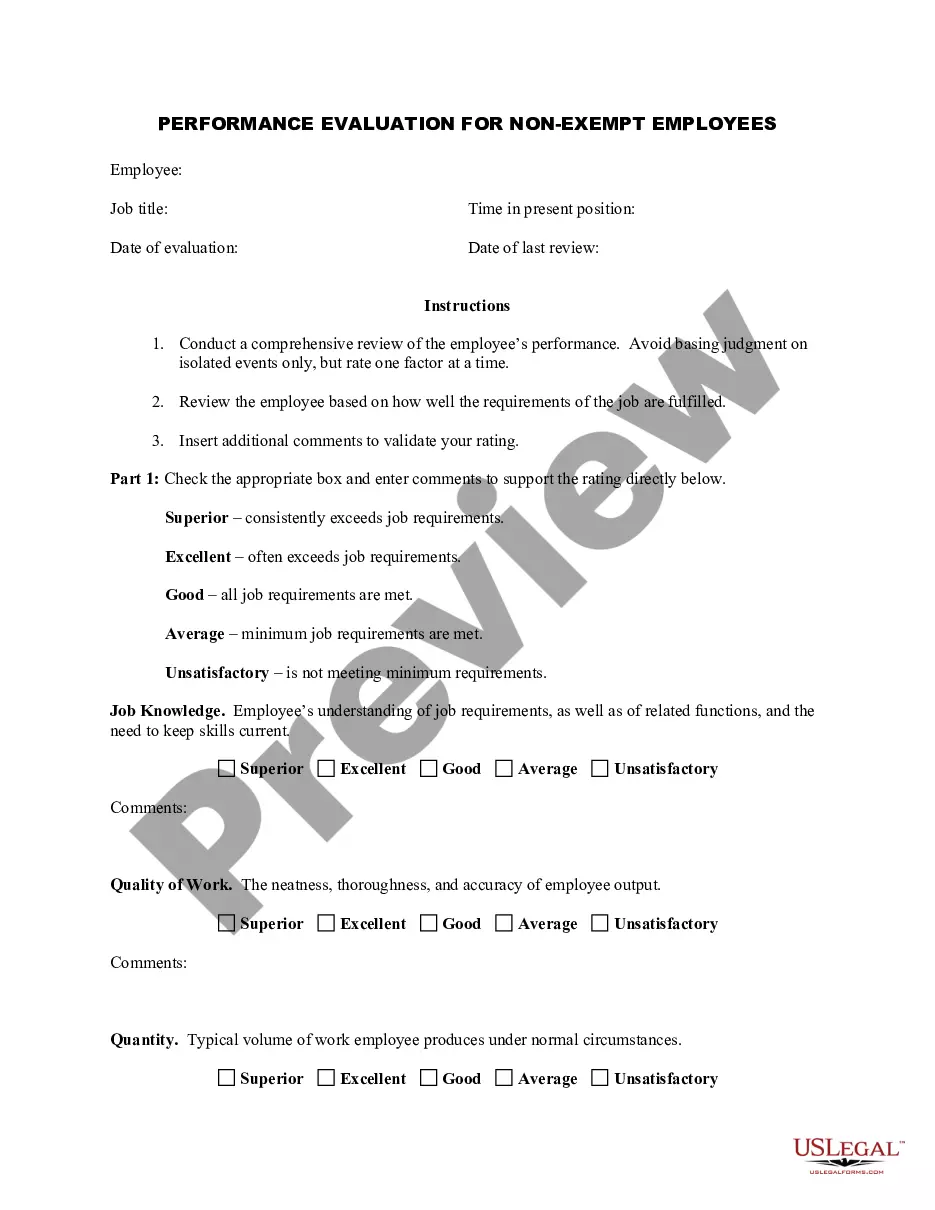





How to fill out Salaried Employee Appraisal Guidelines - General?
- Begin by accessing the US Legal Forms website. If you are a returning user, log into your account to retrieve documents easily. If not, create a new account for access.
- Explore the Preview mode and read form descriptions to ensure you select the correct template that aligns with your local jurisdiction.
- If necessary, leverage the Search tab to find additional templates that fit your requirements perfectly.
- Proceed to purchase the document by clicking the 'Buy Now' button. Select the subscription plan that best suits your needs.
- Complete your purchase by entering your payment information securely, either through credit card or PayPal.
- Download the purchased form onto your device to complete it when you're ready and access it anytime from the 'My Forms' section of your account.
By following these steps, salaried employees can efficiently manage their legal documentation needs. US Legal Forms not only diversifies your options but also ensures that they are legal and compliant with regulations.
Ready to simplify your legal form management? Visit US Legal Forms today and discover how to streamline your documentation process.
Form popularity
FAQ
An employee is considered salaried when they receive a fixed annual payment rather than hourly wages. This format typically applies to roles that require specific skills, responsibilities, and a level of expertise. Employers often offer salaries to attract and retain talent, providing stability and predictability for both the employee and the company. Understanding the characteristics of salaried employees is important, as they may also come with unique benefits and expectations related to job performance.
While the expectation for salaried employees might be around 40 hours a week, the actual hours can vary significantly based on the job and company culture. Many salaried employees may work beyond standard hours to meet project deadlines or other responsibilities. It's essential for both employees and employers to manage workloads effectively. Open discussion about work-life balance can enhance job satisfaction in salaried positions.
Whether salaried employees should fill out timesheets largely depends on the organization’s policies. In some cases, it aids in project evaluation and tracking work hours. While not always mandatory, submitting timesheets can be beneficial in demonstrating workload and productivity to management. As always, it's wise to consult your company’s guidelines for clarity.
Typically, the responsibility for filling out timesheets falls on the employees themselves, including salaried employees if required by the company. Employers should provide clear instructions and support for this process. In environments where tracking is necessary, both the employee and employer share the responsibility to ensure accurate records. Communication is key in managing this task effectively.
A salaried employee typically holds a professional position that offers a consistent paycheck, regardless of hours worked. For example, a project manager overseeing a team of professionals usually receives a set salary. This consistent income allows them to plan and manage their finances effectively. Understanding this can clarify the responsibilities tied to salaried roles.
The primary point of being a salaried employee is the stability and predictability that comes with a steady income. This usually allows for better financial planning and the ability to secure benefits such as retirement plans and health insurance. Additionally, being a salaried employee often aligns with professional growth opportunities, making it easier to advance in your career. Understanding this can help you maximize the benefits of your salaried position.
Taxes for salaried employees and hourly workers are generally calculated based on the income tax brackets. However, salaried employees may see more taxes withheld upfront due to their predictable and consistent income. It is important to manage your tax withholdings effectively, as being a salaried employee can sometimes lead to owing more taxes at year-end if not planned properly. Consulting with tax professionals can provide clarity on your specific situation.
Filing as a salaried employee is straightforward. You will typically use your W-2 form to complete your tax return, using Form 1040. Make sure to gather all your necessary documents and report any additional income or deductions. Platforms like uslegalforms provide guidance on the entire filing process, ensuring you can file with confidence and accuracy.
Setting aside approximately 25-30% of your income for taxes as a 1099 employee is generally a good rule of thumb. This amount accounts for federal income tax as well as self-employment tax. By planning ahead and utilizing resources like uslegalforms, you can manage your finances better and avoid surprises during tax season.
Yes, 1099 employees are responsible for filing their own taxes. Since they work as independent contractors, they must report their earnings directly to the IRS. This process can be complex, but using tools and resources available through uslegalforms can help streamline the paperwork and ensure you're following the correct procedures.