Satisfaction Survey For Therapy
Description
Get your form ready online
Our built-in tools help you complete, sign, share, and store your documents in one place.
Make edits, fill in missing information, and update formatting in US Legal Forms—just like you would in MS Word.
Download a copy, print it, send it by email, or mail it via USPS—whatever works best for your next step.
Sign and collect signatures with our SignNow integration. Send to multiple recipients, set reminders, and more. Go Premium to unlock E-Sign.
If this form requires notarization, complete it online through a secure video call—no need to meet a notary in person or wait for an appointment.
We protect your documents and personal data by following strict security and privacy standards.

Make edits, fill in missing information, and update formatting in US Legal Forms—just like you would in MS Word.

Download a copy, print it, send it by email, or mail it via USPS—whatever works best for your next step.

Sign and collect signatures with our SignNow integration. Send to multiple recipients, set reminders, and more. Go Premium to unlock E-Sign.

If this form requires notarization, complete it online through a secure video call—no need to meet a notary in person or wait for an appointment.

We protect your documents and personal data by following strict security and privacy standards.
Looking for another form?
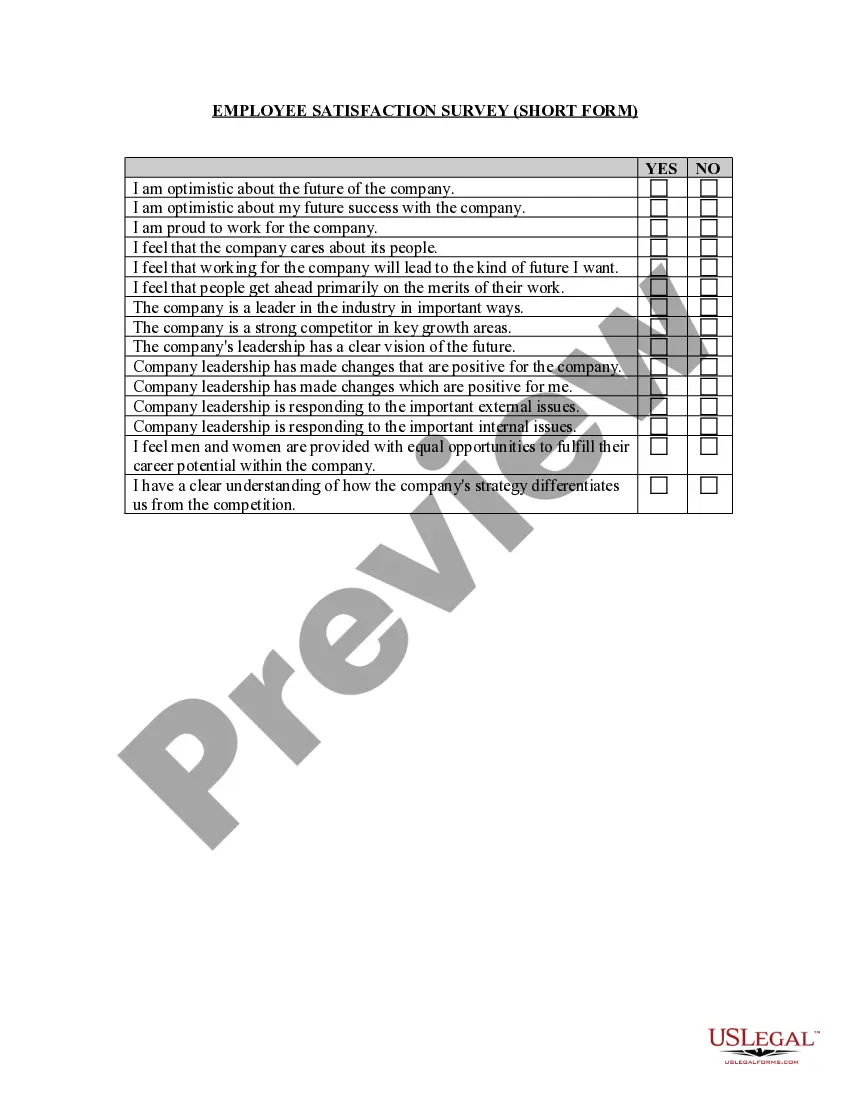
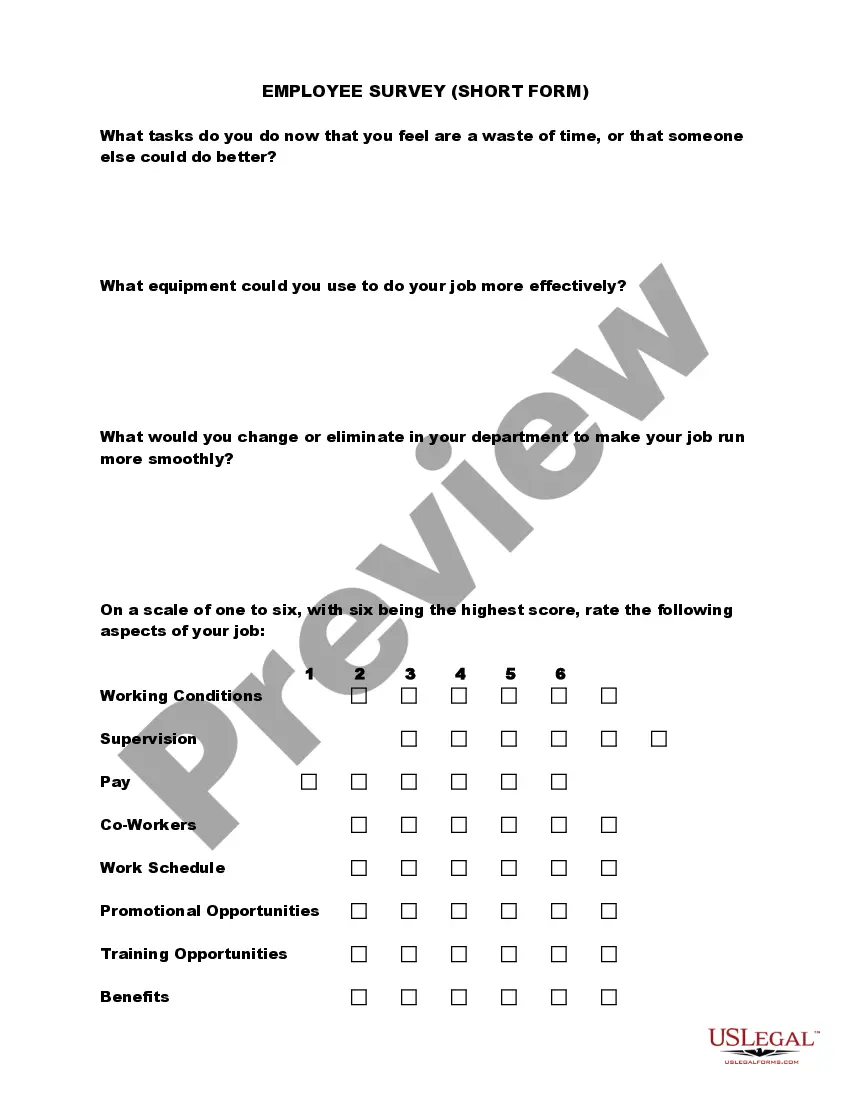
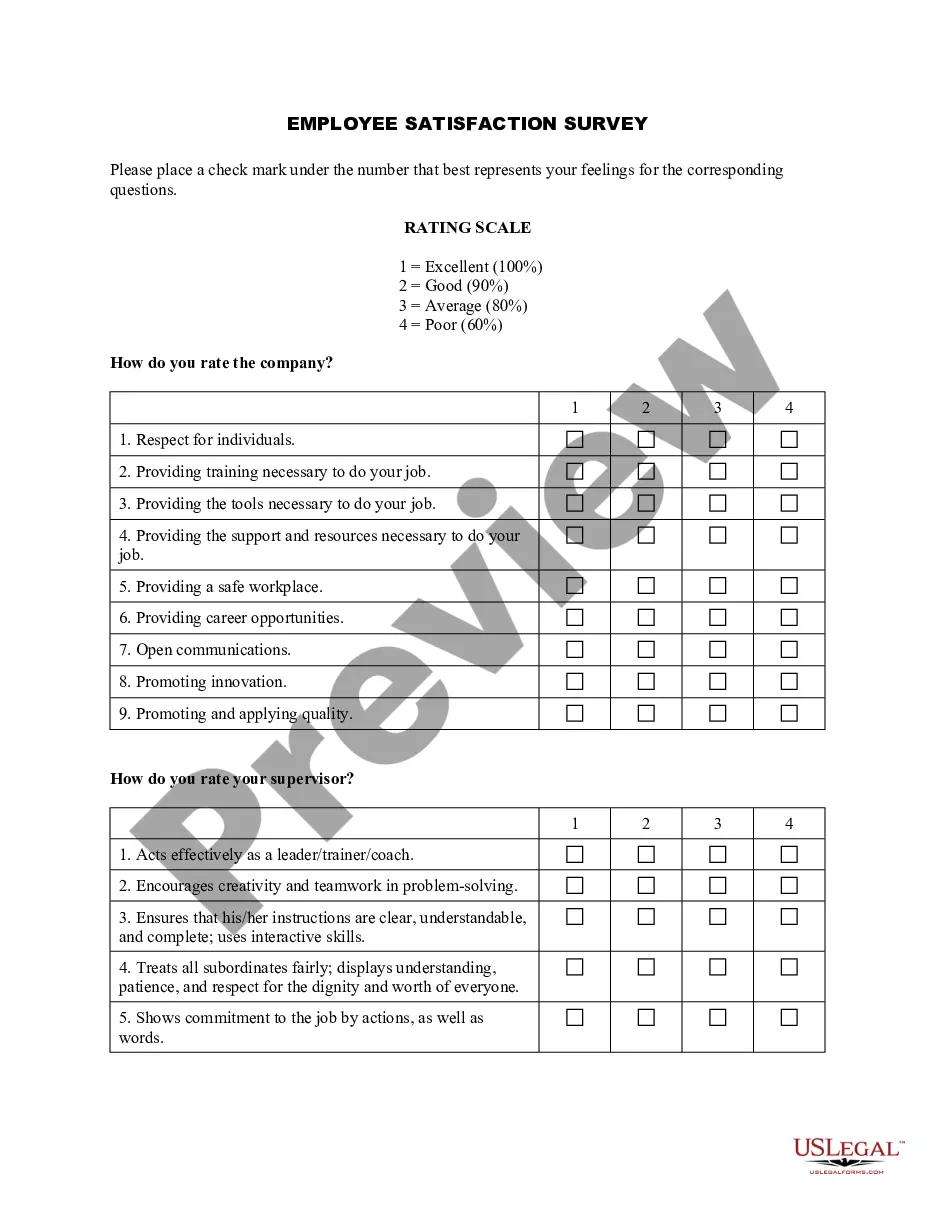
How to fill out Employee Satisfaction Survey - Short Form?
- If you are a returning user, log into your US Legal Forms account and locate the satisfaction survey template for therapy by clicking the Download button, ensuring your subscription is active.
- For new users, begin by exploring the extensive library. Preview the form and its description to confirm it fits your needs and local regulations.
- If the initial template does not meet your requirements, use the search feature to find alternative forms until you identify the correct one.
- Once you find the appropriate document, click 'Buy Now' and select your preferred subscription plan. Registration is required to access the full library.
- Complete your purchase by entering your payment details through credit card or PayPal.
- Finally, download the template to your device. You can re-access the form anytime via your account under the My Forms section.
In conclusion, US Legal Forms offers an unparalleled collection of over 85,000 legal forms, empowering users to efficiently create and manage essential documents.
Start your journey towards easily acquiring legal forms today!
Form popularity
FAQ
An example of a satisfaction survey for therapy could include a mix of rating scales, such as 'Rate your overall satisfaction from 1 to 5', along with open-ended questions like, 'What did you find most beneficial in your therapy sessions?' This format encourages clients to share balanced feedback for ongoing service improvement.
Filling out a satisfaction survey for therapy involves reflecting on your experiences during sessions. Take your time to consider each question carefully, providing specific examples when possible. Your feedback is essential in helping therapists understand what works well and what can be improved in their approach to client care.
An example of a satisfaction questionnaire for therapy could include questions like, 'How satisfied are you with your therapy results?' and 'What areas do you feel need improvement?' Such questions guide clients to express their thoughts candidly, providing you with actionable insights to boost care quality.
Good survey comments in a satisfaction survey for therapy often highlight specific interactions or experiences. For instance, a client might comment on how a therapist's approach made them feel heard and understood. Comments can also include suggestions for improvement, helping you enhance the therapeutic journey for future clients.
A patient satisfaction survey for therapy should focus on aspects like overall satisfaction, quality of care, and therapist empathy. Collaborate with mental health professionals to define key aspects to measure, ensuring comprehensive coverage. Remember to design the survey to facilitate easy completion while obtaining valuable insights into the patient experience.
Writing a good satisfaction survey for therapy involves formulating well-structured questions that encourage honest feedback. Focus on open-ended questions to capture detailed responses, and balance these with closed-ended questions for ease of analysis. Keep the survey concise to respect your clients' time, ensuring they can complete it quickly.
To create a strong satisfaction survey for therapy, start by defining your goals clearly. Understand what feedback you want to gather from clients about their therapy experience. Use simple and straightforward language, and ensure your questions cover various aspects, such as effectiveness, communication, and comfort level during sessions.
Measuring patient satisfaction involves gathering feedback through surveys, interviews, or focus groups. Using a structured satisfaction survey for therapy can help capture comprehensive data on patient experiences and perceptions. Analyze the collected information to identify trends and areas needing improvement. Effective measurement leads to enhanced therapy services and better patient outcomes.
The formula for a satisfaction survey typically involves assessing the relationship between patient feedback and their overall experience. You can sum the weighted responses and divide by the total number of respondents to find the average satisfaction score. A well-structured satisfaction survey for therapy will offer key insights, guiding future improvements in practice.
The formula for assessing how satisfied patients are involves calculating the average score from the responses in your satisfaction survey for therapy. First, gather all patient responses and assign numeric values based on their feedback. Then, divide the total score by the number of responses to obtain the average. This simple method provides a clear picture of overall patient satisfaction.