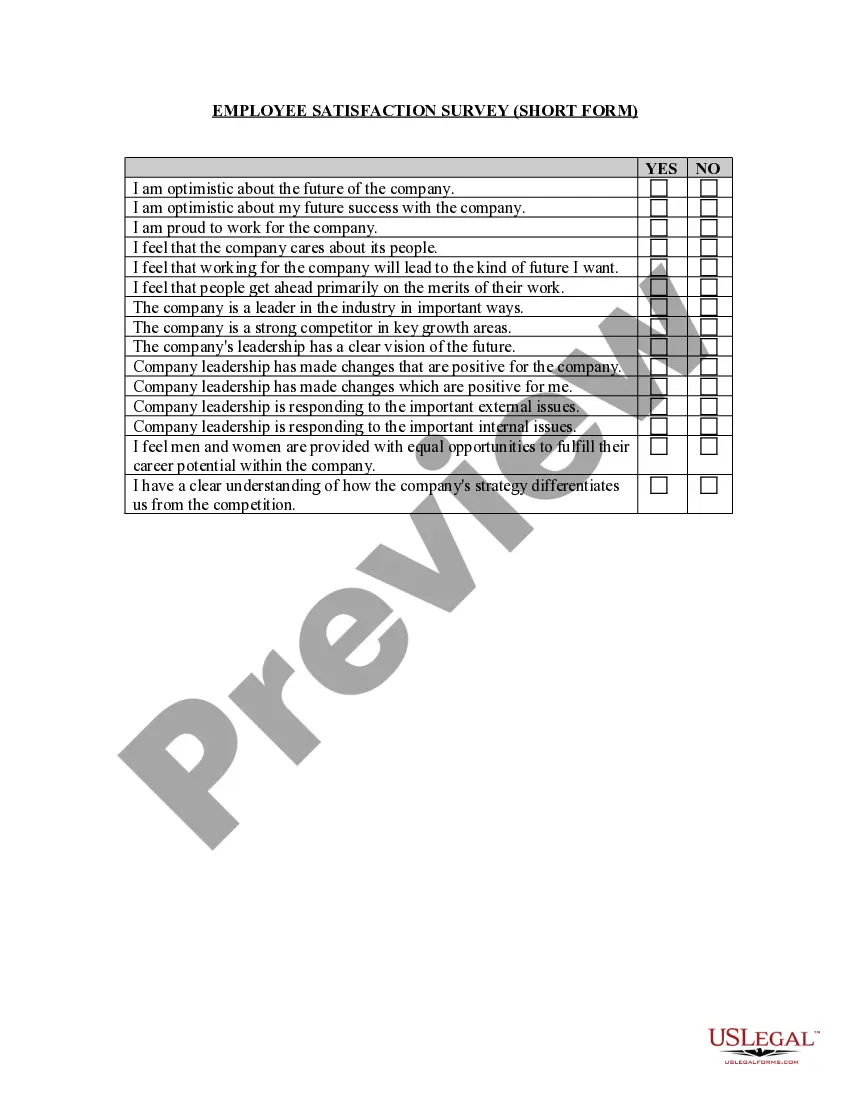
Satisfaction Survey For Group Therapy
Description
Get your form ready online
Our built-in tools help you complete, sign, share, and store your documents in one place.
Make edits, fill in missing information, and update formatting in US Legal Forms—just like you would in MS Word.
Download a copy, print it, send it by email, or mail it via USPS—whatever works best for your next step.
Sign and collect signatures with our SignNow integration. Send to multiple recipients, set reminders, and more. Go Premium to unlock E-Sign.
If this form requires notarization, complete it online through a secure video call—no need to meet a notary in person or wait for an appointment.
We protect your documents and personal data by following strict security and privacy standards.

Make edits, fill in missing information, and update formatting in US Legal Forms—just like you would in MS Word.

Download a copy, print it, send it by email, or mail it via USPS—whatever works best for your next step.

Sign and collect signatures with our SignNow integration. Send to multiple recipients, set reminders, and more. Go Premium to unlock E-Sign.

If this form requires notarization, complete it online through a secure video call—no need to meet a notary in person or wait for an appointment.

We protect your documents and personal data by following strict security and privacy standards.
Looking for another form?
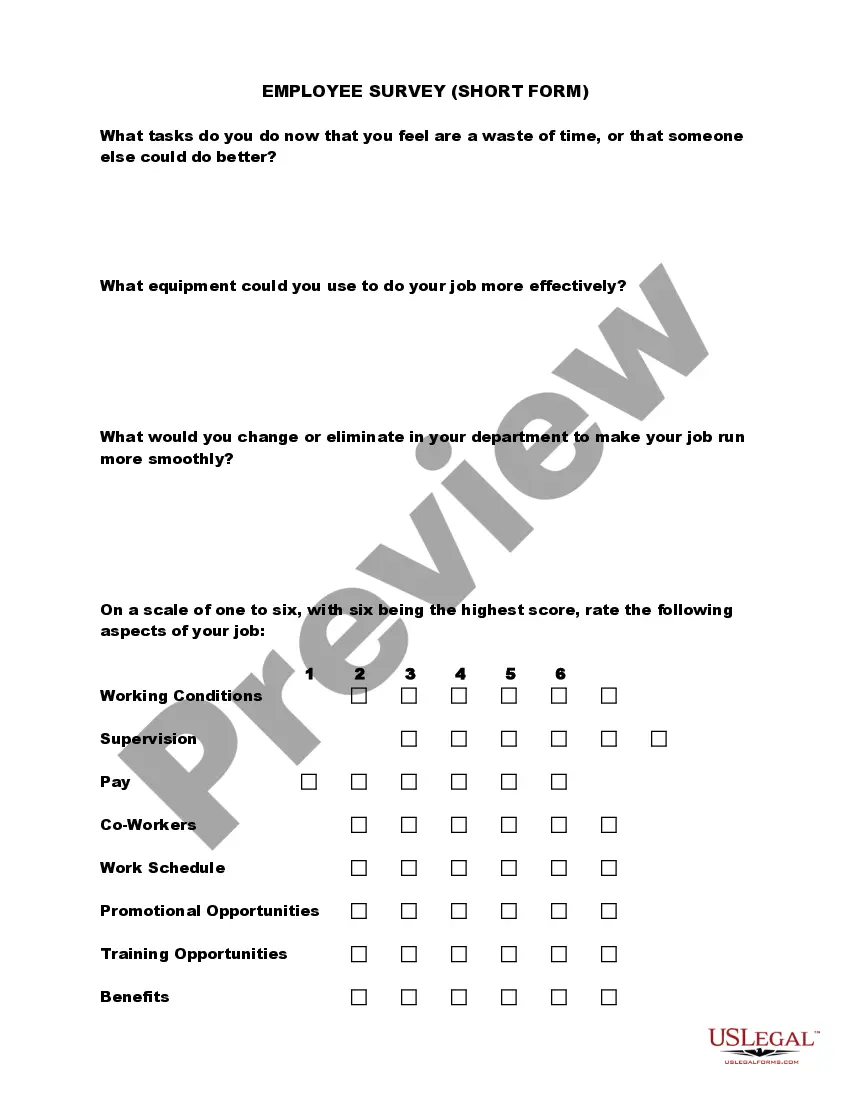
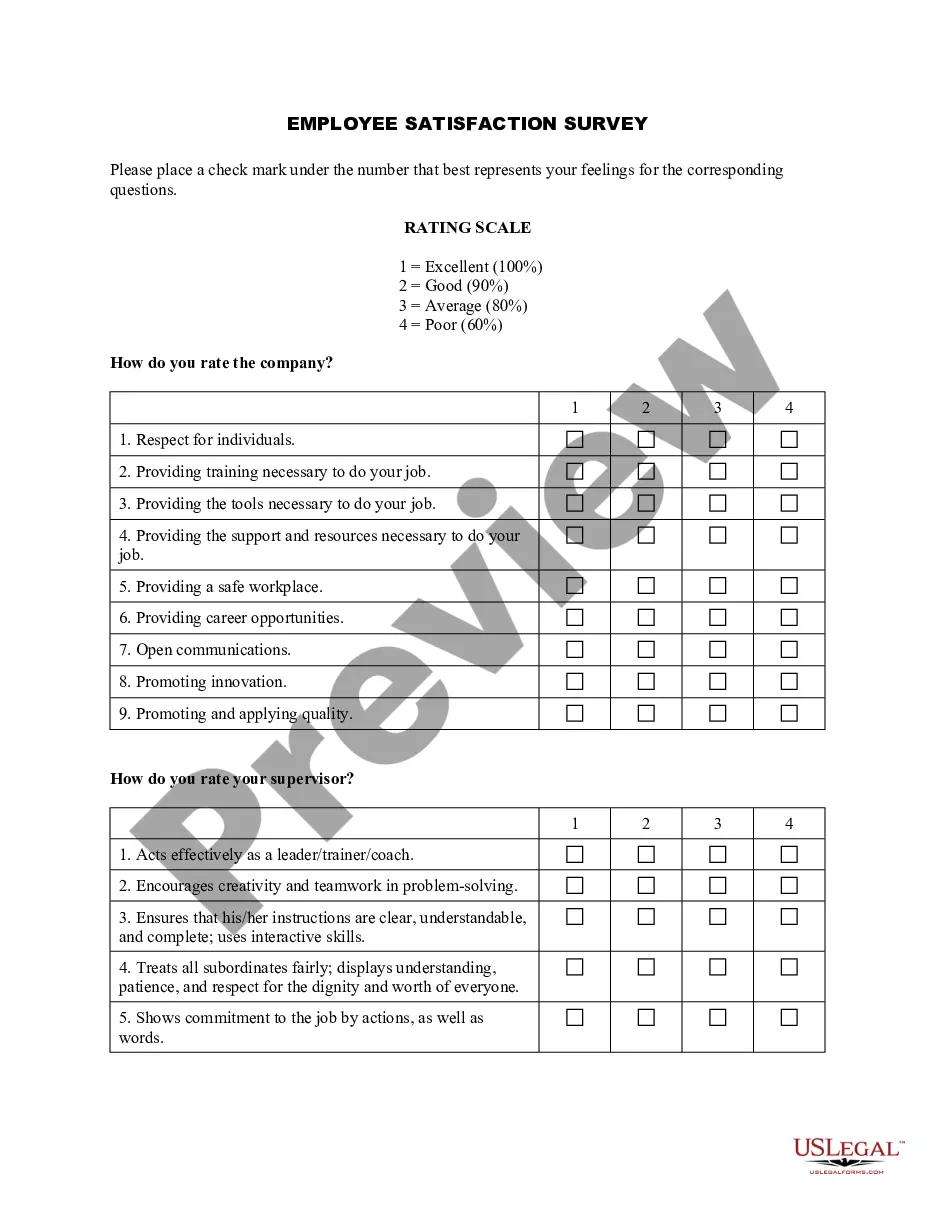
How to fill out Employee Satisfaction Survey - Short Form?
- If you are a returning user, log in to your US Legal Forms account and click Download to retrieve your satisfaction survey for group therapy. Ensure your subscription is active; renew if necessary.
- For first-time users, start by browsing the extensive library of over 85,000 legal forms. Use the Search feature to find the specific satisfaction survey that fits your requirements.
- Once you find the correct form, review its description to ensure it complies with your local jurisdiction.
- If everything looks good, click the Buy Now button and select the subscription plan that best suits your needs. Register an account to access the full range of resources.
- Complete your purchase using your credit card or PayPal to confirm your subscription.
- After your payment, download your satisfaction survey for group therapy directly to your device, allowing you easy access to it through the My Forms section of your profile.
By following these straightforward steps, you can efficiently access and implement the necessary legal documents for your group therapy evaluations.
Start improving your group's feedback process today—explore US Legal Forms for all your legal documentation needs!
Form popularity
FAQ
Conducting a satisfaction survey for group therapy requires a clear plan. Start by deciding on the goals of your survey and the audience you want to target. Develop appropriate questions, distribute the survey, and finally, gather and review the feedback to drive improvements in your program.
Conducting a user satisfaction survey for group therapy involves several steps. First, determine the information you need and design questions that capture user experiences. Choose a format that is easy for participants to use, then collect and analyze the data to understand their needs and satisfaction levels.
To perform a satisfaction survey for group therapy, start by defining what you want to measure. Develop questions that address various aspects of the therapy experience. Use a mix of rating scales and open-ended questions to gather a range of feedback. Finally, analyze the results to identify trends and areas for enhancement.
Examples of satisfaction survey questions for group therapy include inquiries about overall satisfaction, effectiveness of therapy, and the therapist's communication skills. You might ask, "How helpful did you find the group sessions?" or "Was the therapist attentive to your needs?" These questions provide valuable insights into the patient experience.
Creating an effective satisfaction survey for group therapy involves seven key steps. Start by defining the purpose and objectives, then develop clear and concise questions. Next, choose a suitable format, sample your audience, administer the survey, and collect responses. Lastly, analyze the results and implement changes based on feedback.
You can conduct a patient satisfaction survey for group therapy by first identifying your goals and objectives. Next, choose the appropriate survey method, such as online, phone, or paper surveys. After collecting responses, analyze the data to gain insights into patient experiences and areas for improvement.
The 19 item group readiness questionnaire assesses an individual's preparedness to engage in group therapy. It typically covers aspects like willingness to share, openness to feedback, and comfort level within a group setting. By utilizing a satisfaction survey for group therapy alongside this questionnaire, facilitators can ensure participants are ready for meaningful engagement and can maximize the benefits of the sessions.
The therapist response questionnaire is a feedback tool that allows clients to provide input on their therapist’s performance and the therapy process. This comprehensive approach encourages open communication between clients and therapists. Incorporating a satisfaction survey for group therapy can complement this tool, enabling therapists to make informed adjustments based on client feedback.
Evaluating the effectiveness of group therapy involves collecting feedback from participants through tools such as satisfaction surveys. Analyzing responses can help identify strengths and areas for improvement within the group. By consistently implementing a satisfaction survey for group therapy, facilitators can track progress and measure outcomes, ensuring that participant needs are being met.
To create a satisfaction survey, start by identifying key areas you want to assess, such as session content, group dynamics, and overall satisfaction. Draft simple, clear questions that allow participants to express their thoughts freely. Using platforms like US Legal Forms can streamline the process, enabling you to design and distribute a well-structured satisfaction survey for group therapy effectively.