Final Pay For Employee
Description
Get your form ready online
Our built-in tools help you complete, sign, share, and store your documents in one place.
Make edits, fill in missing information, and update formatting in US Legal Forms—just like you would in MS Word.
Download a copy, print it, send it by email, or mail it via USPS—whatever works best for your next step.
Sign and collect signatures with our SignNow integration. Send to multiple recipients, set reminders, and more. Go Premium to unlock E-Sign.
If this form requires notarization, complete it online through a secure video call—no need to meet a notary in person or wait for an appointment.
We protect your documents and personal data by following strict security and privacy standards.

Make edits, fill in missing information, and update formatting in US Legal Forms—just like you would in MS Word.

Download a copy, print it, send it by email, or mail it via USPS—whatever works best for your next step.

Sign and collect signatures with our SignNow integration. Send to multiple recipients, set reminders, and more. Go Premium to unlock E-Sign.

If this form requires notarization, complete it online through a secure video call—no need to meet a notary in person or wait for an appointment.

We protect your documents and personal data by following strict security and privacy standards.
Looking for another form?




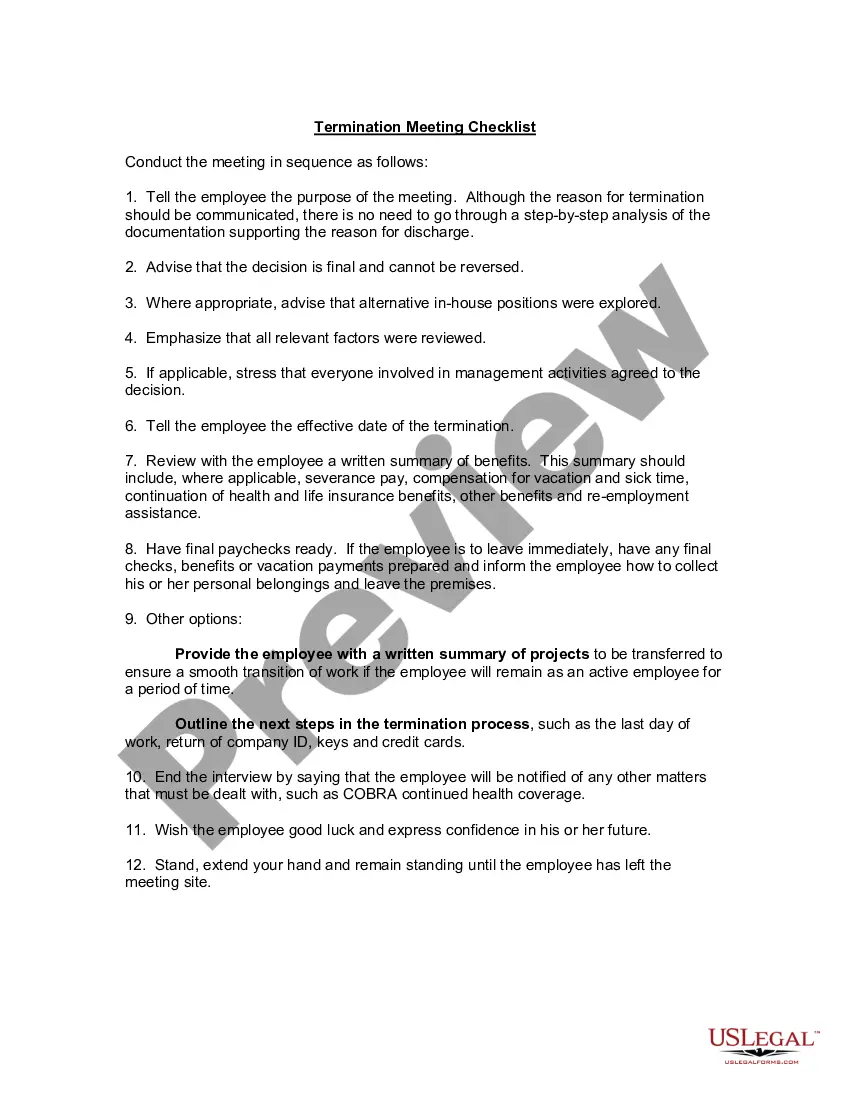
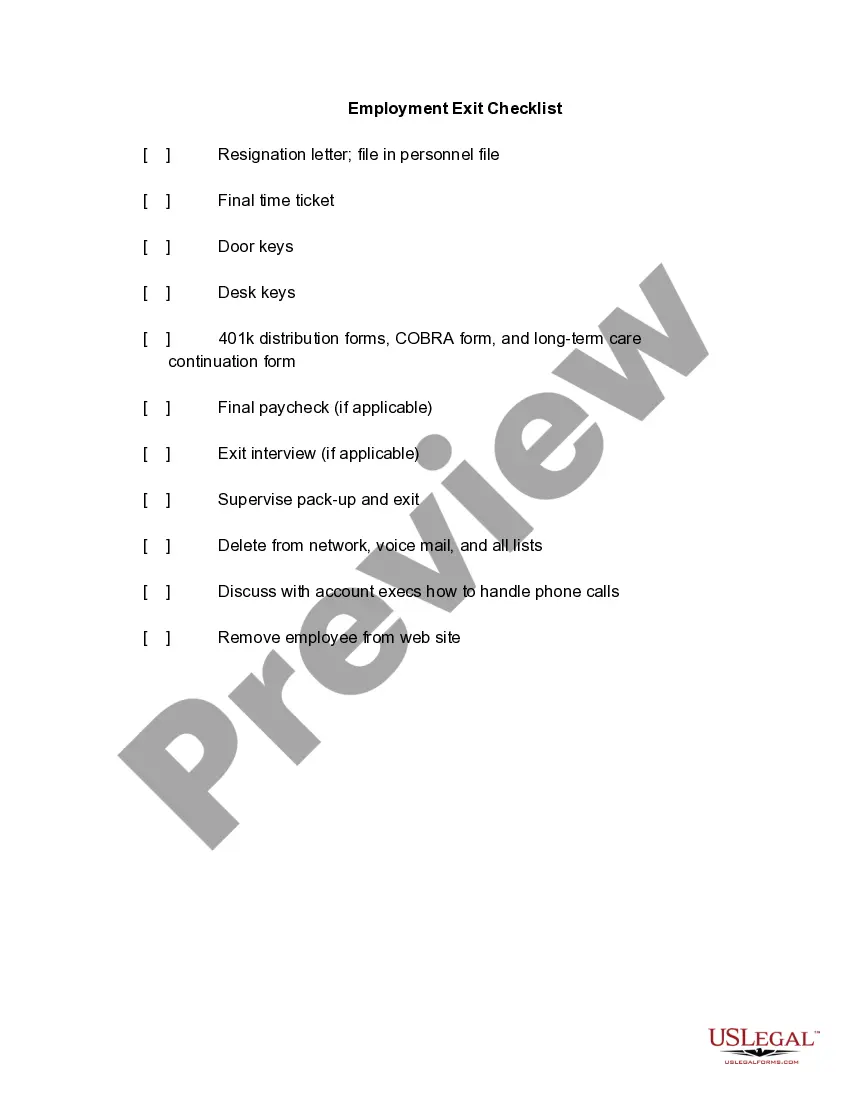
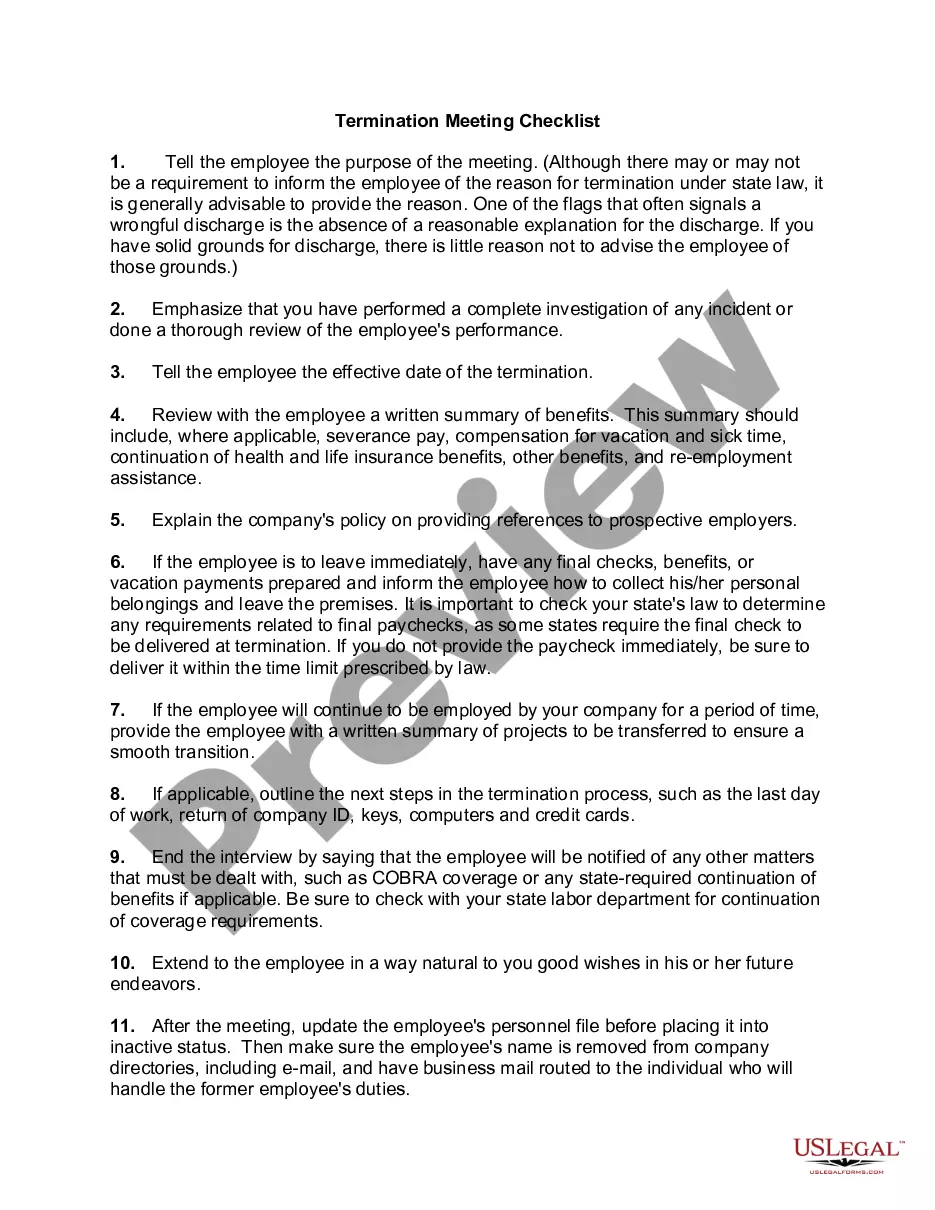
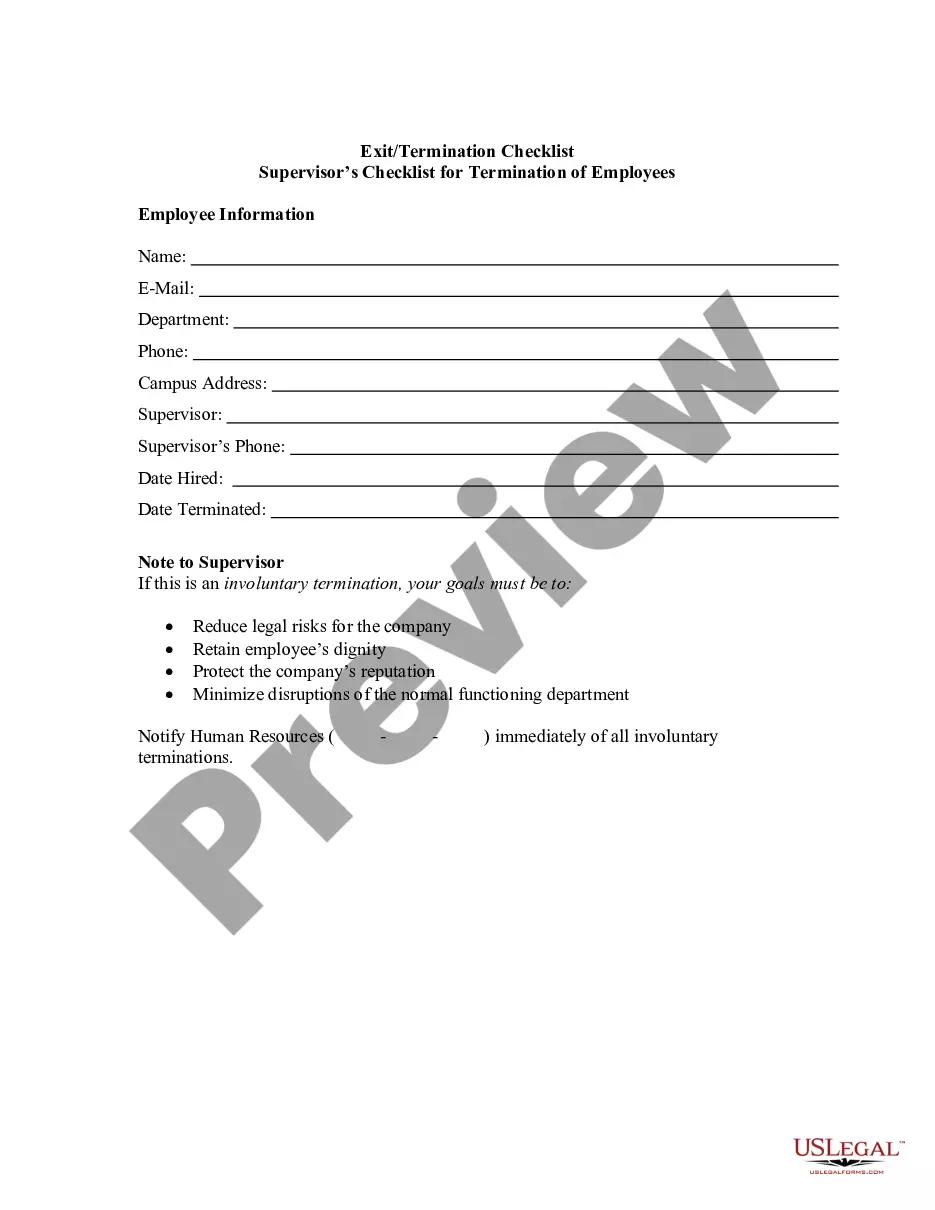
How to fill out Termination Meeting Checklist?
Creating legal documentation from the ground up can frequently feel a bit daunting.
Certain cases may require countless hours of investigation and substantial financial investment.
If you’re seeking a more uncomplicated and cost-effective method of preparing Final Pay For Employee or any other documents without the hassle of navigating through obstacles, US Legal Forms is always available for you.
Our online repository of over 85,000 current legal forms covers nearly every element of your fiscal, legal, and personal matters.
Before diving right into downloading Final Pay For Employee, consider these recommendations: Review the form preview and descriptions to ensure you have located the correct document. Verify that the form you select aligns with the laws and regulations of your state and county. Choose the most appropriate subscription plan to obtain the Final Pay For Employee. Download the document, then fill it out, sign it, and print it. US Legal Forms boasts a stellar reputation and more than 25 years of expertise. Join us today and simplify form completion into a seamless process!
- With just a few clicks, you can seamlessly obtain state- and county-compliant documents meticulously crafted by our legal professionals.
- Utilize our service whenever you require a dependable and trustworthy way to swiftly locate and download the Final Pay For Employee.
- If you’re familiar with our website and have already set up an account, simply Log In, choose the form, and download it instantly or re-download it later from the My documents section.
- Not registered yet? No problem. It requires minimal time to create an account and browse through the library.
Form popularity
FAQ
When terminating an employee, you should begin by reviewing the company’s policies to ensure compliance. Next, hold a meeting with the employee to discuss the final decision clearly and respectfully. Afterward, you need to provide the employee with information about their final pay for employee, including any outstanding wages and benefits. Finally, ensure that all necessary paperwork is completed, as this helps prevent legal issues down the line.
When you leave a job, your final pay for employee typically includes any outstanding wages for the hours you worked, unused vacation days, and potentially severance pay. It's important to know your rights regarding final pay, as these can vary by state. Be sure to request a detailed breakdown of your final paycheck to ensure you receive everything you are owed. If you have questions about your final pay for employee, consider using platforms like US Legal Forms to understand your entitlements better.
Final payout is calculated by summing your last paycheck, accrued vacation time, and any other unpaid amounts. This total may also be subject to taxes, so ensure you account for those deductions. It’s crucial to have an accurate calculation for your final pay for employee. Our resources can assist you in navigating this process seamlessly.
Calculating your final payment involves adding together any outstanding wages, including overtime and bonuses. You should also account for any deductibles like taxes and retirement contributions. A clear breakdown of your earnings helps you understand your final pay for employee. You can use our platform for easy calculations and documentation.
To calculate your final salary, gather your pay information, including your hourly rate or annual salary. Include any unpaid overtime or bonuses you may have earned. Additionally, remember to factor in deductions for taxes and benefits. Accurate calculation ensures you receive the correct final pay for employee.
5 things to do after the death of an employee Contact the employee's family. When an employee dies, reach out to their family. ... Notify employees and customers. ... Issue final paycheck to the employee's beneficiary. ... Take care of the deceased's benefits. ... Update your business to reflect the employee's death.
The final pay is basically the sum of all the wages that companies have to give their outgoing employees, regardless of whether the employees resigned or were terminated. It generally includes: The last salary due (i.e. payment for the hours the employees clocked in since their last pay)
The most common requirement is that you be paid by the next payday when you would have been paid. Some states may require that the employer pay you within a shorter or more specific period of time, either immediately or within a few days of discharge.
How is an Employee's Last Check Calculated? Calculating how much you owe to hourly employees on their final paycheck is quite simple. You just multiply their hourly rate by the number of hours they worked before leaving your company, plus overtime pay.
As a general rule, an uncashed paycheck issued prior to the employee's death should be canceled, and a new check should be issued in the name of the employee's estate or beneficiary. The new check should have the same amount withheld for tax purposes as the old check.