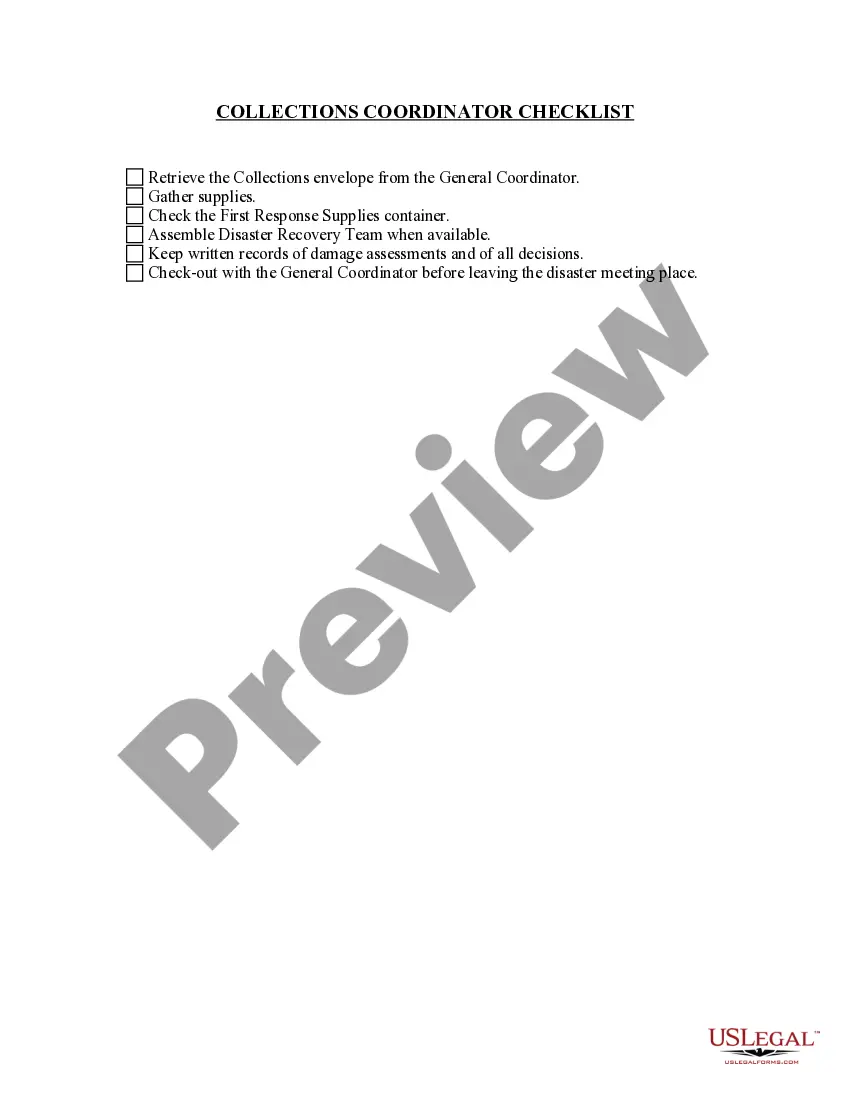
Collections.list Example
Description
Get your form ready online
Our built-in tools help you complete, sign, share, and store your documents in one place.
Make edits, fill in missing information, and update formatting in US Legal Forms—just like you would in MS Word.
Download a copy, print it, send it by email, or mail it via USPS—whatever works best for your next step.
Sign and collect signatures with our SignNow integration. Send to multiple recipients, set reminders, and more. Go Premium to unlock E-Sign.
If this form requires notarization, complete it online through a secure video call—no need to meet a notary in person or wait for an appointment.
We protect your documents and personal data by following strict security and privacy standards.

Make edits, fill in missing information, and update formatting in US Legal Forms—just like you would in MS Word.

Download a copy, print it, send it by email, or mail it via USPS—whatever works best for your next step.

Sign and collect signatures with our SignNow integration. Send to multiple recipients, set reminders, and more. Go Premium to unlock E-Sign.

If this form requires notarization, complete it online through a secure video call—no need to meet a notary in person or wait for an appointment.

We protect your documents and personal data by following strict security and privacy standards.
Looking for another form?
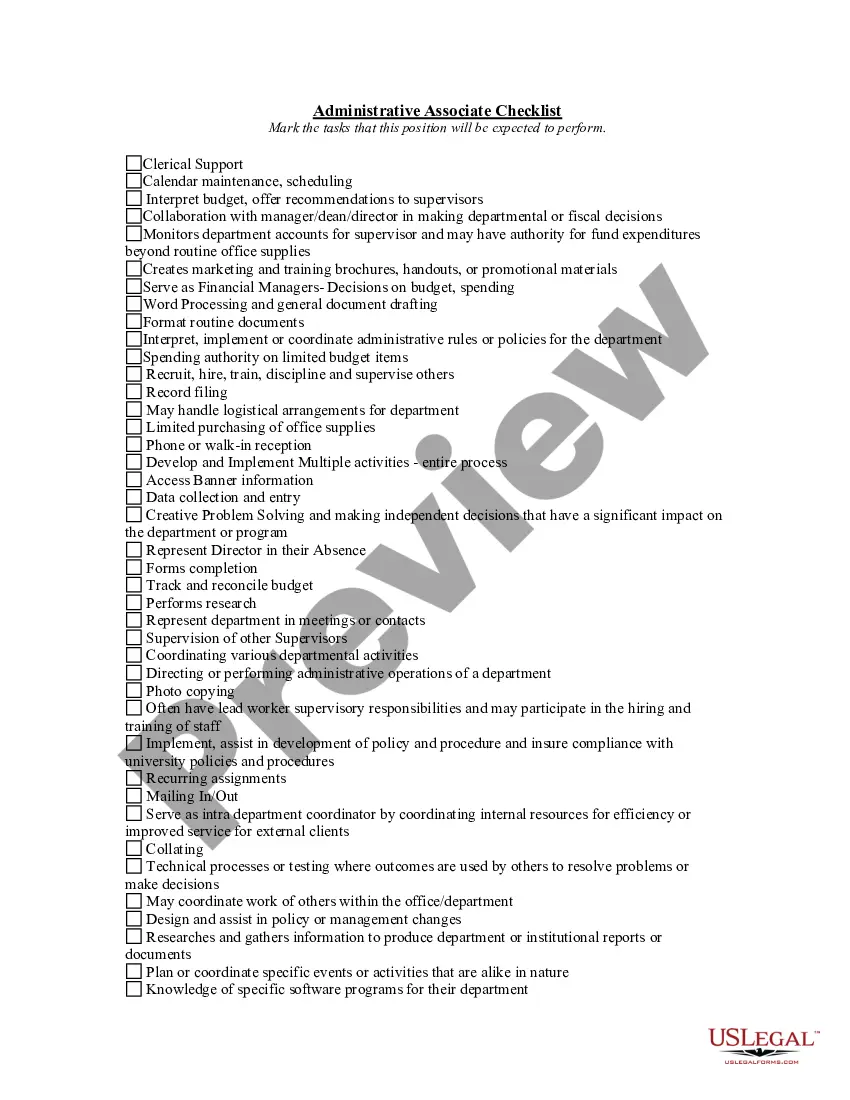
How to fill out Collections Coordinator Checklist?
Legal oversight can be exasperating, even for the most informed professionals.
When searching for a Collections.list Example and lacking the time to allocate to finding the appropriate and current version, the undertakings may be taxing.
Gain entry to a repository of articles, guides, handbooks, and resources related to your circumstances and needs.
Conserve time and energy in locating the forms you require, and utilize the advanced search and Review tool of US Legal Forms to discover the Collections.list Example and obtain it.
Benefit from the US Legal Forms online library, supported by 25 years of expertise and dependability. Streamline your everyday document management into a straightforward and user-friendly task today.
- If you have a subscription, Log In to your US Legal Forms account, search for the document, and download it.
- Check the My documents tab to view saved documents and manage your folders as needed.
- If it is your first experience with US Legal Forms, create an account to gain unlimited access to all library features.
- Upon accessing the desired document, ensure it is the correct version by previewing and reviewing its details.
- Confirm that the form is accepted in your state or area.
- Click Buy Now when you are prepared.
- Select a monthly subscription option.
- Choose your desired format, and Download, fill out, eSign, print, and send your document.
- Access state- or county-specific legal and business documents.
- US Legal Forms addresses any needs you might encounter, from personal to corporate paperwork, all in one location.
- Employ advanced tools to accomplish and manage your Collections.list Example.
Form popularity
FAQ
The three types of list collections are ArrayList, LinkedList, and Vector. Each type has its own strengths; for example, ArrayLists provide quick access to elements, while LinkedLists are excellent for frequent addition and removal of items. Furthermore, Vectors offer synchronized access for multi-threaded applications. Utilizing the Collections.list example can help you understand how to implement these types effectively within your projects.
Some examples of collections are task lists, shopping lists, and contact lists. Each of these allows users to manage related items in one place. The Collections.list example showcases how to create and manage such lists effectively. By using this framework, you can easily add, remove, or rearrange items as needed.
Examples of collections include lists, sets, and maps that organize data in different ways. Lists store elements in sequence, while sets hold unique items without duplicates. Maps, on the other hand, associate keys with values for quick retrieval. The Collections.list example demonstrates how these different types of collections work together within a framework, providing versatility in data management.
The most common collection is often a list, as it provides a straightforward way to store and access sequential data. Users frequently use list collections to manage tasks, contacts, or inventory items. The Collections.list example facilitates creating and manipulating these lists efficiently, making it a popular choice among users. This simplicity is key to its widespread acceptance in various applications.
A collection list is a structured way to organize data or items for easy access and management. It helps users group related information together, making it more manageable and efficient. For example, the Collections.list example allows users to create dynamic lists that evolve based on the data they contain. This feature enhances organization and retrieval, saving time and effort.
To get collection info efficiently, you can utilize the Collections.list example as a comprehensive resource. This example helps you understand how collections work and how they can be beneficial for your specific needs. The example outlines the steps to access and manage your collection data seamlessly. For additional help, consider visiting the US Legal Forms platform, which offers tools and templates to streamline your collection processes.
Writing a collection description involves clearly outlining the purpose and contents of the collection. Start by highlighting the key elements and their relationships. When creating your collection description, consider using a Collections.list example to showcase the structure and components included. A well-crafted description improves understanding and sets clear expectations for users engaging with your collection.
A List in collections is a data structure that allows you to store and organize a sequence of elements. In programming, it helps manage collections of related items, ensuring easy access and modification. When working with a Collections.list example, you observe how data is efficiently stored and can be easily retrieved. This functionality is critical for developing applications that require organization and manipulation of data.