Common Law Relationship In Tagalog
Description
Get your form ready online
Our built-in tools help you complete, sign, share, and store your documents in one place.
Make edits, fill in missing information, and update formatting in US Legal Forms—just like you would in MS Word.
Download a copy, print it, send it by email, or mail it via USPS—whatever works best for your next step.
Sign and collect signatures with our SignNow integration. Send to multiple recipients, set reminders, and more. Go Premium to unlock E-Sign.
If this form requires notarization, complete it online through a secure video call—no need to meet a notary in person or wait for an appointment.
We protect your documents and personal data by following strict security and privacy standards.

Make edits, fill in missing information, and update formatting in US Legal Forms—just like you would in MS Word.

Download a copy, print it, send it by email, or mail it via USPS—whatever works best for your next step.

Sign and collect signatures with our SignNow integration. Send to multiple recipients, set reminders, and more. Go Premium to unlock E-Sign.

If this form requires notarization, complete it online through a secure video call—no need to meet a notary in person or wait for an appointment.

We protect your documents and personal data by following strict security and privacy standards.
Looking for another form?







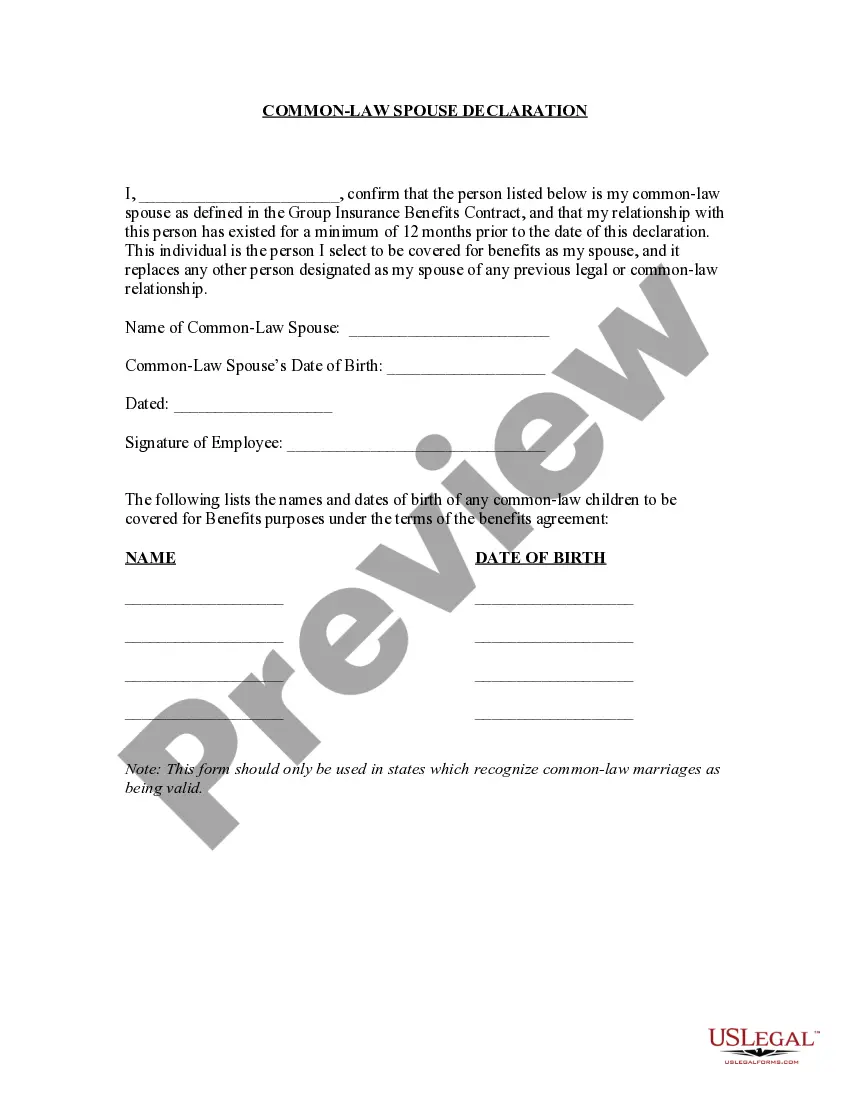
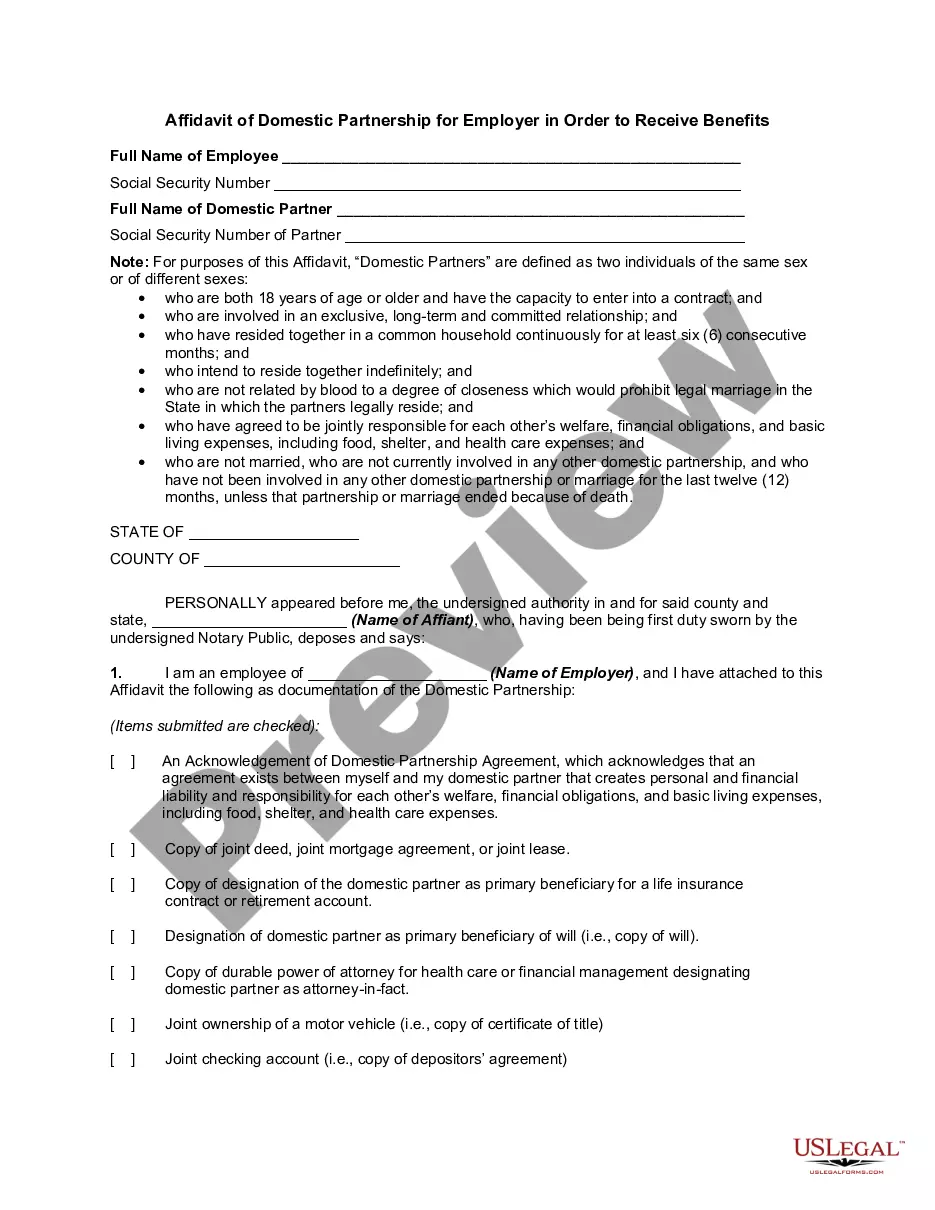
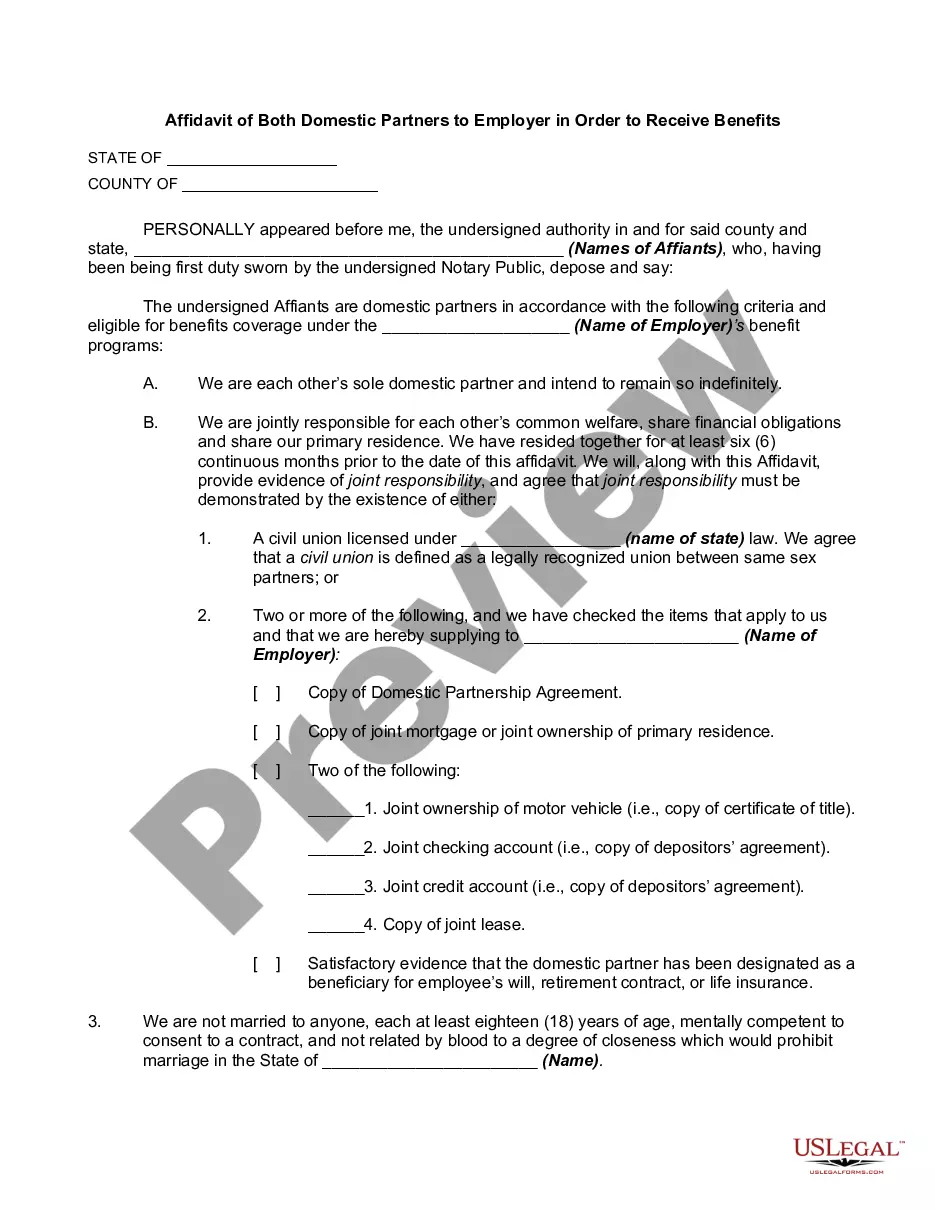
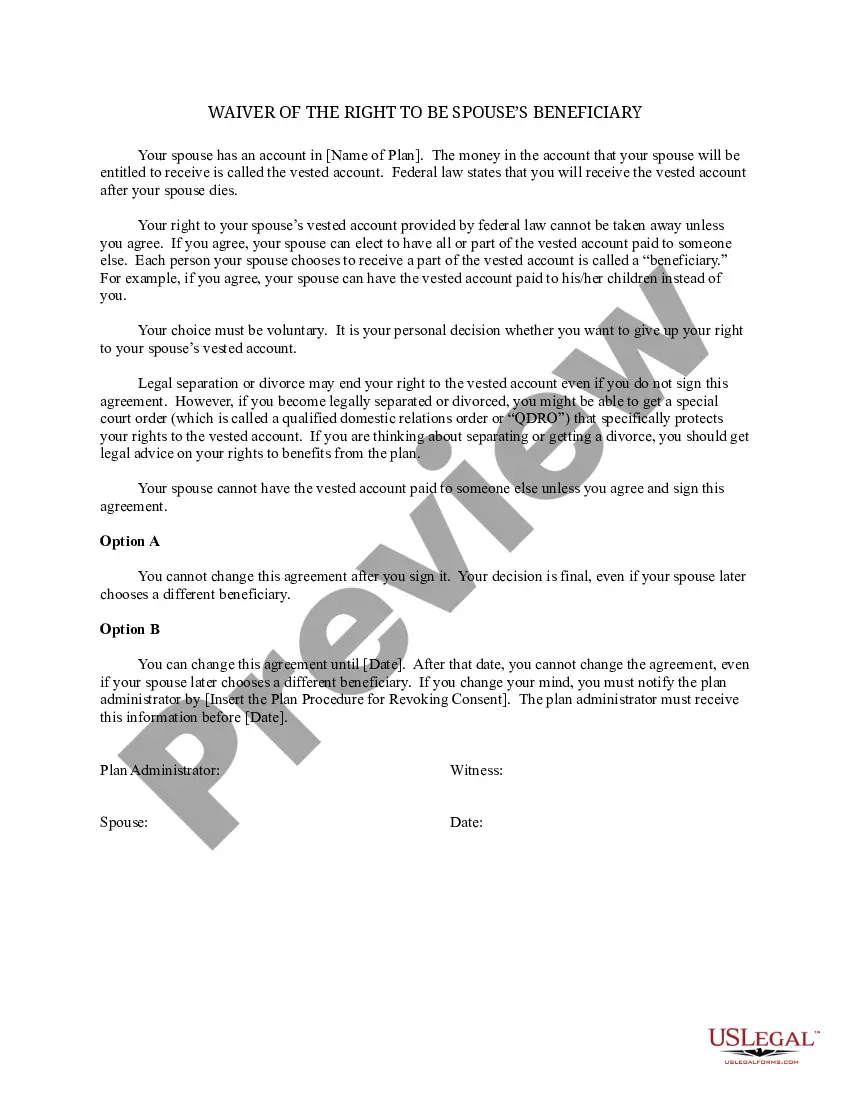
How to fill out Common Law Spouse Or Marriage Declaration Or Affidavit?
Managing legal documents can be perplexing, even for the most seasoned professionals.
When you are looking for a Common Law Relationship In Tagalog and lack the opportunity to dedicate time to find the correct and current version, the tasks may become overwhelming.
US Legal Forms meets any needs you may have, from personal to business documents, all in one place.
Utilize advanced tools to fill out and manage your Common Law Relationship In Tagalog.
Here are the steps to follow after obtaining the form you want: Verify that this is the correct form by previewing it and reviewing its description. Ensure that the template is accepted in your state or county. Click Buy Now when you are prepared. Choose a monthly subscription plan. Select the format you desire, and Download, complete, sign, print, and submit your documents. Take advantage of the US Legal Forms online library, backed by 25 years of experience and reliability. Transform your routine document management into a simple and user-friendly process today.
- Access a library of articles, guides, and resources related to your circumstances and requirements.
- Save time and effort searching for the documents you need, and utilize US Legal Forms' sophisticated search and Review feature to locate Common Law Relationship In Tagalog and download it.
- If you have a membership, Log In to your US Legal Forms account, search for the form, and download it.
- Check your My documents tab to see the documents you have previously downloaded and manage your folders as needed.
- If it's your first time with US Legal Forms, create a free account and gain unlimited access to all the platform's benefits.
- An effective online form archive could revolutionize the way anyone manages these situations.
- US Legal Forms is a leader in online legal forms, offering over 85,000 state-specific legal documents at any time.
- With US Legal Forms, you can access state- or county-specific legal and business forms.
Form popularity
FAQ
To prove a common-law relationship, you need to provide evidence of cohabitation and a shared life. Documents such as joint bank account statements, utility bills in both names, and affidavits from friends or family can support your claim. It is crucial to compile a comprehensive set of proofs that reflect your common law relationship in tagalog. Utilizing resources from platforms like uslegalforms can help you gather and organize necessary documents effectively.
In the Philippines, there is no specific number of years required to be considered a common-law partner. However, living together for at least five years can strengthen your case in proving the relationship's validity. It's important to document your shared life together, as this will help when discussing your common law relationship in tagalog with legal authorities. Always consult with a legal professional for guidance tailored to your situation.
To apply for recognition as a common-law partner in the Philippines, you need to establish that you have lived together for a significant period. It is essential to gather documents proving your relationship, such as joint bills, contracts, and affidavits from friends or relatives. Additionally, you should consult with a legal expert familiar with common law relationship in tagalog to ensure that you meet all requirements. Using platforms like uslegalforms can simplify the documentation process.
The primary difference between a common law marriage and a legal marriage is the lack of formal registration in a common law marriage. In a legal marriage, couples obtain a marriage license and are recognized by the state, granting them specific legal rights. In contrast, common law marriage relies on the couple's cohabitation and mutual agreement to be recognized as married in some jurisdictions. To learn more about the common law relationship in Tagalog, USLegalForms offers resources that clarify these distinctions.
When you live with someone for seven years without marriage, it typically falls under the definition of a common-law relationship. In many jurisdictions, the length of cohabitation can affect legal rights and responsibilities. While this arrangement can offer personal stability, it may not provide the same legal benefits as a formal marriage. For detailed insights on the common law relationship in Tagalog, resources from USLegalForms can guide you in understanding your situation.
law relationship is a type of partnership where two people live together and share a domestic life without being legally married. This relationship often involves mutual commitment and cohabitation, similar to marriage. However, it may lack the formal recognition that comes with legal marriage. To explore the common law relationship in Tagalog further, consider reviewing materials available through USLegalForms.
In the Philippines, a common-law relationship refers to a partnership where two individuals live together and present themselves as a couple without formal marriage. This arrangement is recognized in various cultures but does not provide the same legal protections as marriage. Understanding the common law relationship in Tagalog is essential for those navigating family law or personal circumstances. USLegalForms can provide valuable resources to help you understand your rights and obligations in such relationships.
In the Philippines, there is no specific number of years mandated for a common law relationship in Tagalog to be recognized. Instead, the focus is on the nature of your cohabitation and commitment. Factors such as shared finances, mutual responsibilities, and public perception of your relationship can influence its recognition. If you need further guidance, utilizing platforms like US Legal Forms can provide helpful resources.
Your common-law partner is the person you live with in a committed relationship, resembling a marriage without formal vows. This individual shares your home and life, and you may have joint financial and emotional ties. Understanding who qualifies as a common law partner in Tagalog can help you navigate legal matters and personal responsibilities more effectively. Consider consulting resources for clarity on your relationship status.
law partner in the Philippines refers to someone you live with in a longterm, committed relationship without being legally married. This type of relationship is recognized similarly to marriage under certain conditions. Both partners share a life together, which may include cohabitation and financial responsibilities. It’s essential to know the rights and obligations tied to a common law relationship in Tagalog for clarity.