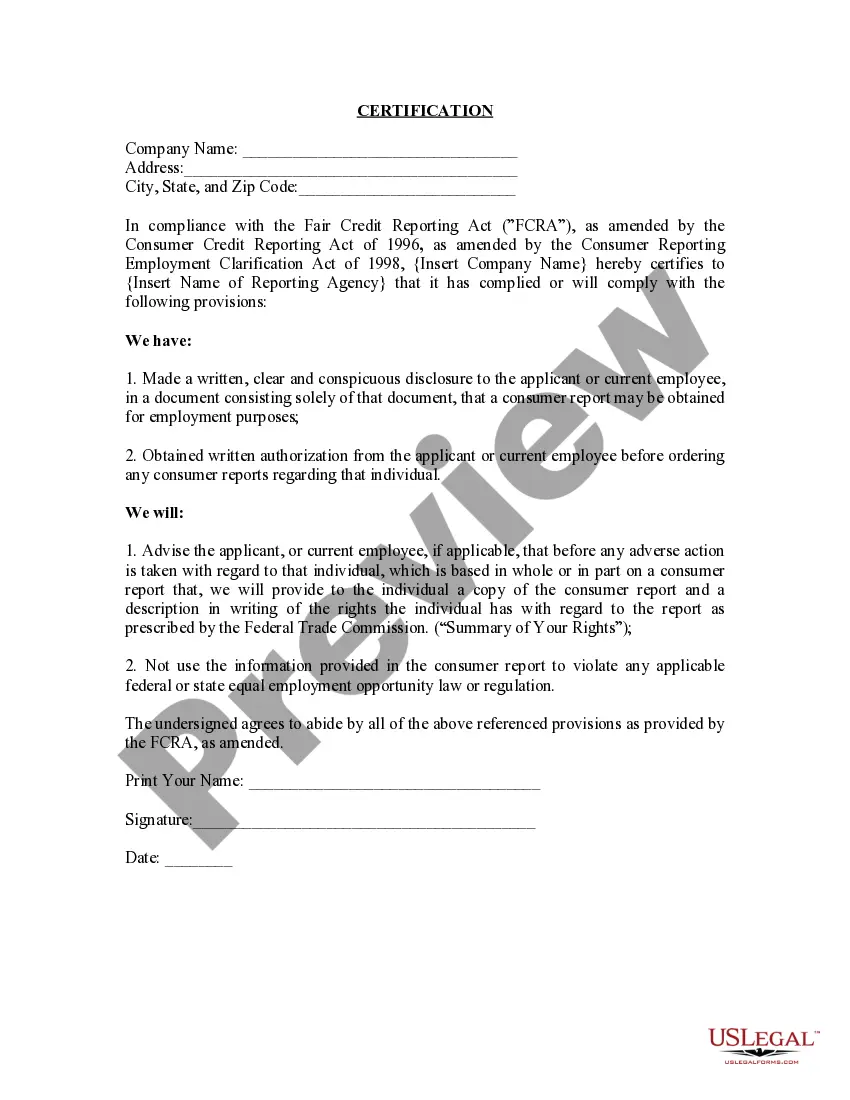
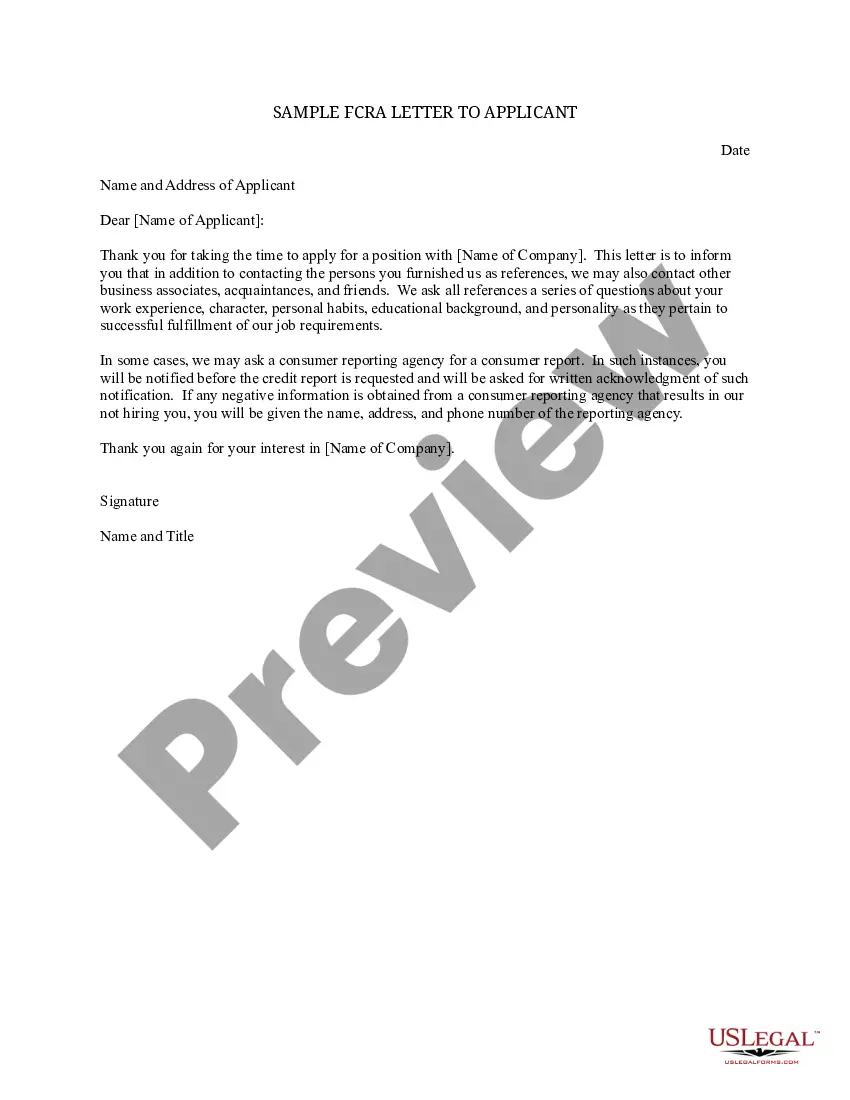
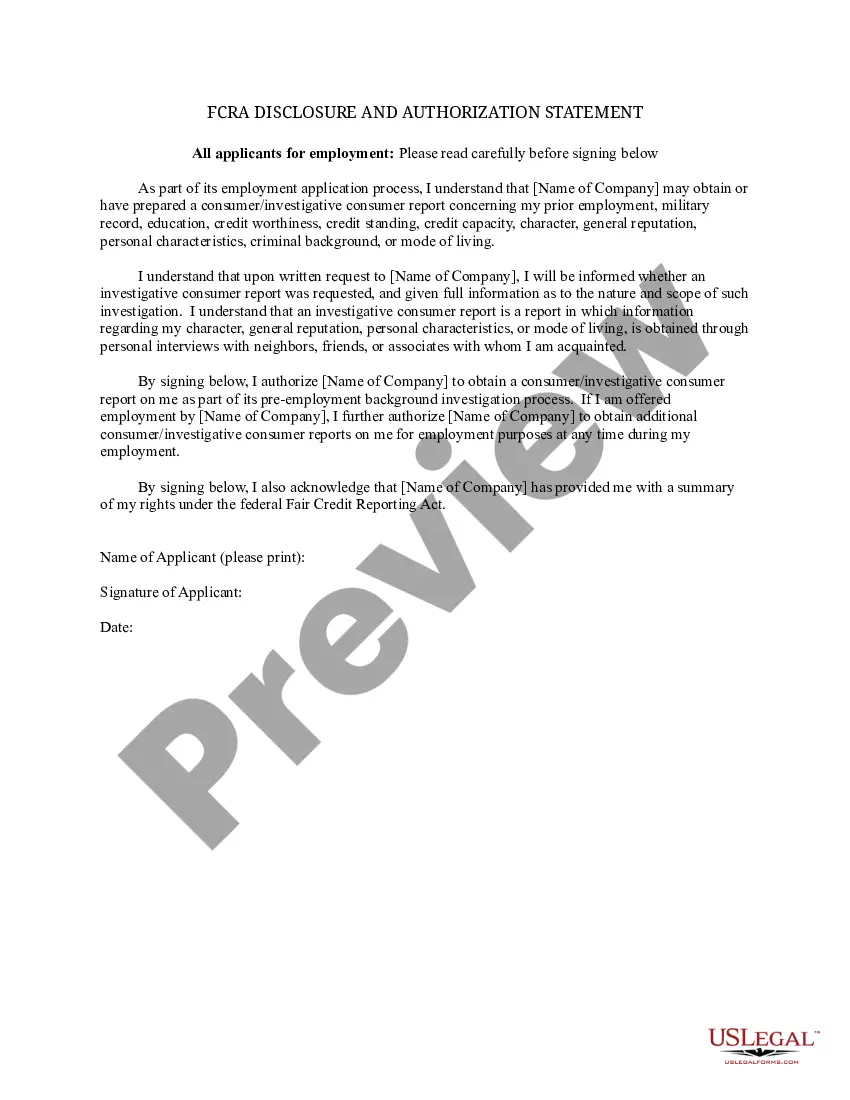
Fair Credit Reporting Act Form 604 With Explanation
Description
Get your form ready online
Our built-in tools help you complete, sign, share, and store your documents in one place.
Make edits, fill in missing information, and update formatting in US Legal Forms—just like you would in MS Word.
Download a copy, print it, send it by email, or mail it via USPS—whatever works best for your next step.
Sign and collect signatures with our SignNow integration. Send to multiple recipients, set reminders, and more. Go Premium to unlock E-Sign.
If this form requires notarization, complete it online through a secure video call—no need to meet a notary in person or wait for an appointment.
We protect your documents and personal data by following strict security and privacy standards.

Make edits, fill in missing information, and update formatting in US Legal Forms—just like you would in MS Word.

Download a copy, print it, send it by email, or mail it via USPS—whatever works best for your next step.

Sign and collect signatures with our SignNow integration. Send to multiple recipients, set reminders, and more. Go Premium to unlock E-Sign.

If this form requires notarization, complete it online through a secure video call—no need to meet a notary in person or wait for an appointment.

We protect your documents and personal data by following strict security and privacy standards.
Looking for another form?








How to fill out FCRA Certification Letter To Consumer Reporting Agency?
The Fair Credit Reporting Act Form 604 With Explanation that you see on this page is a reusable legal template created by professional attorneys in compliance with federal and state regulations.
For over 25 years, US Legal Forms has supplied individuals, businesses, and lawyers with more than 85,000 validated, state-specific documents for any business and personal situation. It’s the quickest, simplest, and most reliable method to secure the paperwork you require since the service ensures the utmost level of data protection and anti-malware safeguards.
Select the format you desire for your Fair Credit Reporting Act Form 604 With Explanation (PDF, Word, RTF) and save the document on your device.
- Search for the document you require and review it.
- Examine the sample you searched for and preview it or check the form description to confirm it meets your requirements. If it doesn’t, utilize the search feature to locate the appropriate one. Click Buy Now once you have identified the form you need.
- Register and Log In.
- Choose the payment plan that fits you and create an account. Use PayPal or a credit card to make a quick payment. If you already possess an account, Log In and review your subscription to continue.
- Obtain the editable template.
Form popularity
FAQ
Information to include in your dispute letter Full name. Date of birth. Current address. Driver's license number. Social Security number (optional). The account number of the tradeline you're disputing (e.g., account number found on your utility bill, student loan bill or mortgage statement).
Hear this out loud PauseBut they have different purposes, and only Section 609 will support a dispute letter. Under the FCRA, Section 604 defines the circumstances under which a consumer reporting agency may furnish a consumer report. This section is titled ?Permissible purposes of consumer reports.?
What is a 604 Dispute Letter? A 604 dispute letter is a great way to get inaccurate information off your credit report. Writing this type of letter can help you ensure that any negative items on your credit report are accurate, which in turn can have a substantial impact on your credit score.
Hear this out loud PauseYour letter should identify each item you dispute, state the facts, explain why you dispute the information, and ask that the business that supplied the information take action to have it removed or corrected. You may want to enclose a copy of your report with the item(s) in question circled.
Hear this out loud PauseFCRA section 604(c) defines when consumer reporting companies may furnish consumer reports in connection with credit and insurance transactions not initiated by the consumer. 15 U.S.C. 1681b(c).