Work Policy Form With Decimals
Description
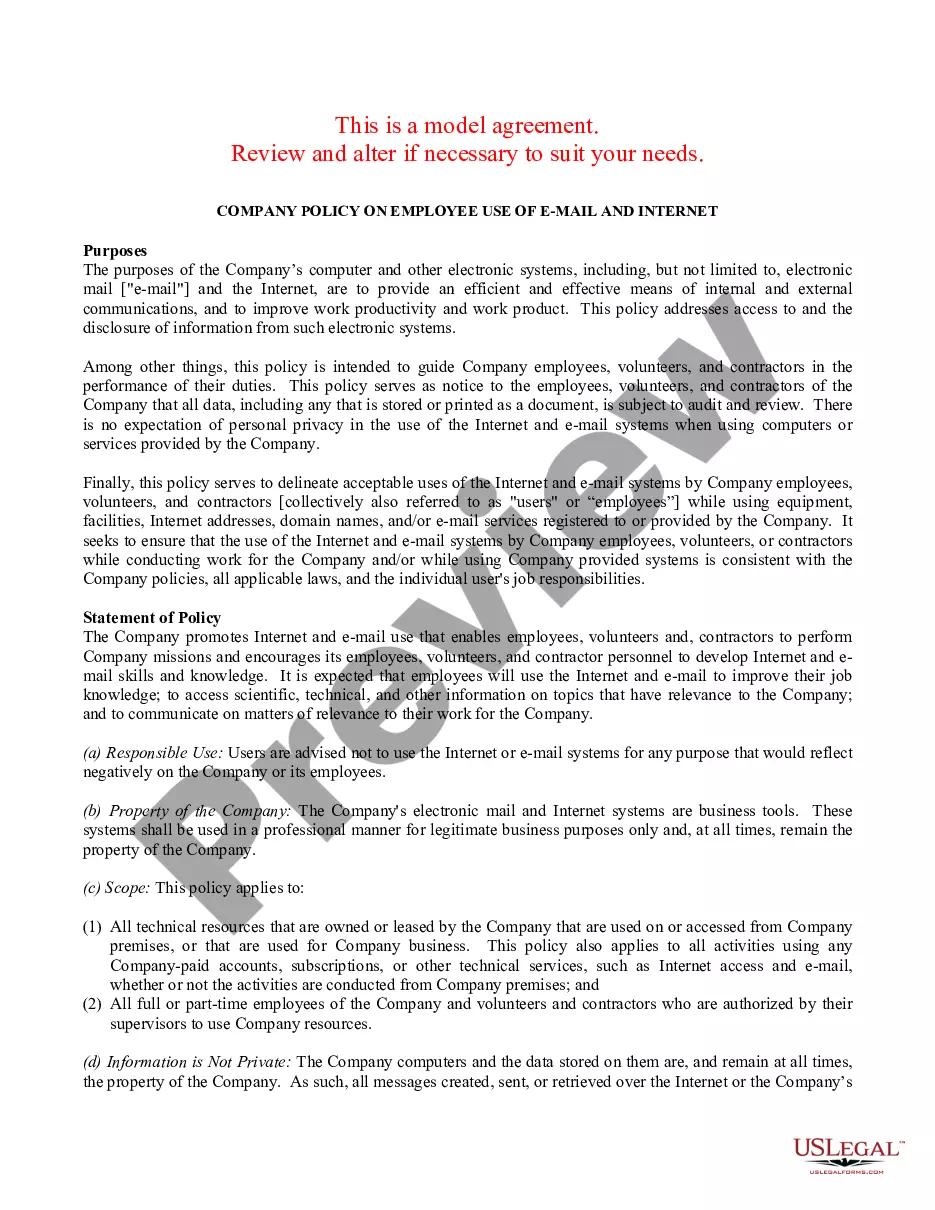
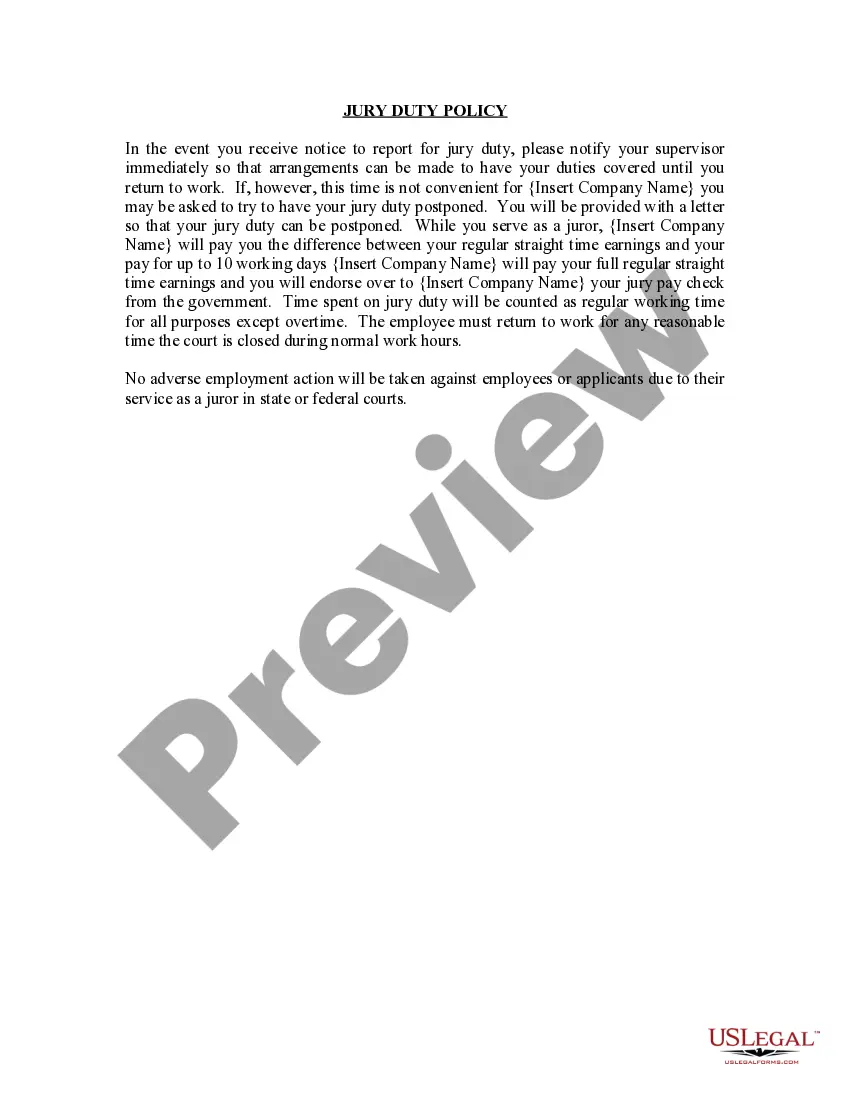
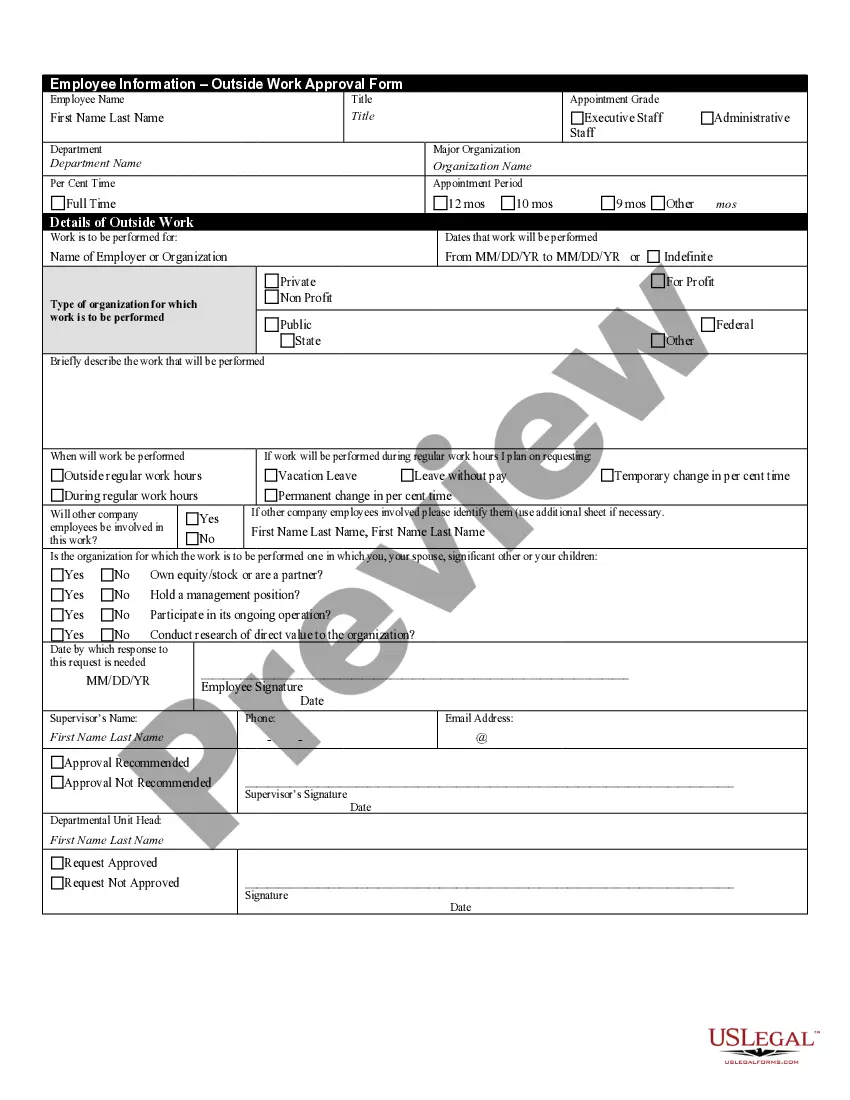
Get your form ready online
Our built-in tools help you complete, sign, share, and store your documents in one place.
Make edits, fill in missing information, and update formatting in US Legal Forms—just like you would in MS Word.
Download a copy, print it, send it by email, or mail it via USPS—whatever works best for your next step.
Sign and collect signatures with our SignNow integration. Send to multiple recipients, set reminders, and more. Go Premium to unlock E-Sign.
If this form requires notarization, complete it online through a secure video call—no need to meet a notary in person or wait for an appointment.
We protect your documents and personal data by following strict security and privacy standards.

Make edits, fill in missing information, and update formatting in US Legal Forms—just like you would in MS Word.

Download a copy, print it, send it by email, or mail it via USPS—whatever works best for your next step.

Sign and collect signatures with our SignNow integration. Send to multiple recipients, set reminders, and more. Go Premium to unlock E-Sign.

If this form requires notarization, complete it online through a secure video call—no need to meet a notary in person or wait for an appointment.

We protect your documents and personal data by following strict security and privacy standards.
Looking for another form?







How to fill out Outside Work - Strict Policy?
Acquiring legal templates that comply with federal and state laws is crucial, and the web provides numerous choices to select from.
However, what’s the benefit of squandering time looking for the suitable Work Policy Form With Decimals example online if the US Legal Forms digital repository already contains such templates gathered in one location.
US Legal Forms is the largest online legal database with over 85,000 editable templates crafted by attorneys for various professional and personal situations. They are straightforward to navigate, with all documents organized by state and purpose of use. Our experts stay informed about legal updates, ensuring that your form is always current and compliant when you acquire a Work Policy Form With Decimals from our site.
- If you already possess an account with an active subscription, Log In and save the document sample you require in the correct format.
- If you are new to our webpage, follow the instructions below.
- Evaluate the template using the Preview function or through the text description to verify it meets your needs.
- Search for a different sample employing the search feature at the top of the page if needed.
- Click Buy Now once you’ve found the appropriate form and select a subscription plan.
Form popularity
FAQ
When working with decimals, it is important to align decimal points when adding or subtracting. For multiplication, you multiply as usual and then count the total number of decimal places in both factors to place the decimal in the product correctly. Division also requires careful placement of the decimal point. A work policy form with decimals can guide you through these rules, ensuring accuracy in your calculations.
To write 42.356 in words, you would say 'forty-two point three five six.' Break down the number into its whole and decimal parts. The whole number is expressed first, followed by 'point,' and then each digit in the decimal part is stated individually. Using a work policy form with decimals can help you accurately document such conversions.
To work out standard form with decimals, start by identifying the decimal number you wish to convert. Move the decimal point to the right until you have a number between 1 and 10. Count how many places you moved the decimal; this number will be your exponent. The final result will be expressed as a product of the number and 10 raised to the power of the exponent. Utilizing a work policy form with decimals can simplify this process.
To convert 3908.78 into standard form, shift the decimal point three places to the left to get 3.90878. Consequently, you write it as 3.90878 times 10 to the power of 3. Mastering this technique helps you maintain accuracy in work policy forms with decimals.
To express 530.7 in standard form, you would move the decimal point two places to the left, resulting in 5.307. Therefore, you write it as 5.307 times 10 to the power of 2. This method is particularly useful when drafting work policy forms with decimals.
To perform standard form with decimals, first, identify the significant figures in your number. Move the decimal point to create a number between 1 and 10, then note how many places you moved it. This process is crucial for creating precise work policy forms with decimals.
Turning decimals into word form involves writing out the whole number and then the decimal part separately. For example, 2.5 becomes 'two and five-tenths.' This skill is essential when filling out any work policy form with decimals, ensuring clarity in communication.
To convert 57.36 into standard form, you identify the first non-zero digit and place the decimal point after it. This results in 5.736 times 10 to the power of 1. Understanding this process can be beneficial for creating accurate work policy forms with decimals.
To write 0.000263 in standard form, you move the decimal point to the right until you reach the first non-zero digit. This gives you 2.63. Then, you express this as 2.63 times 10 to the power of -4. This technique can simplify your work policy form with decimals.
