Work Policy Form For Patients
Description
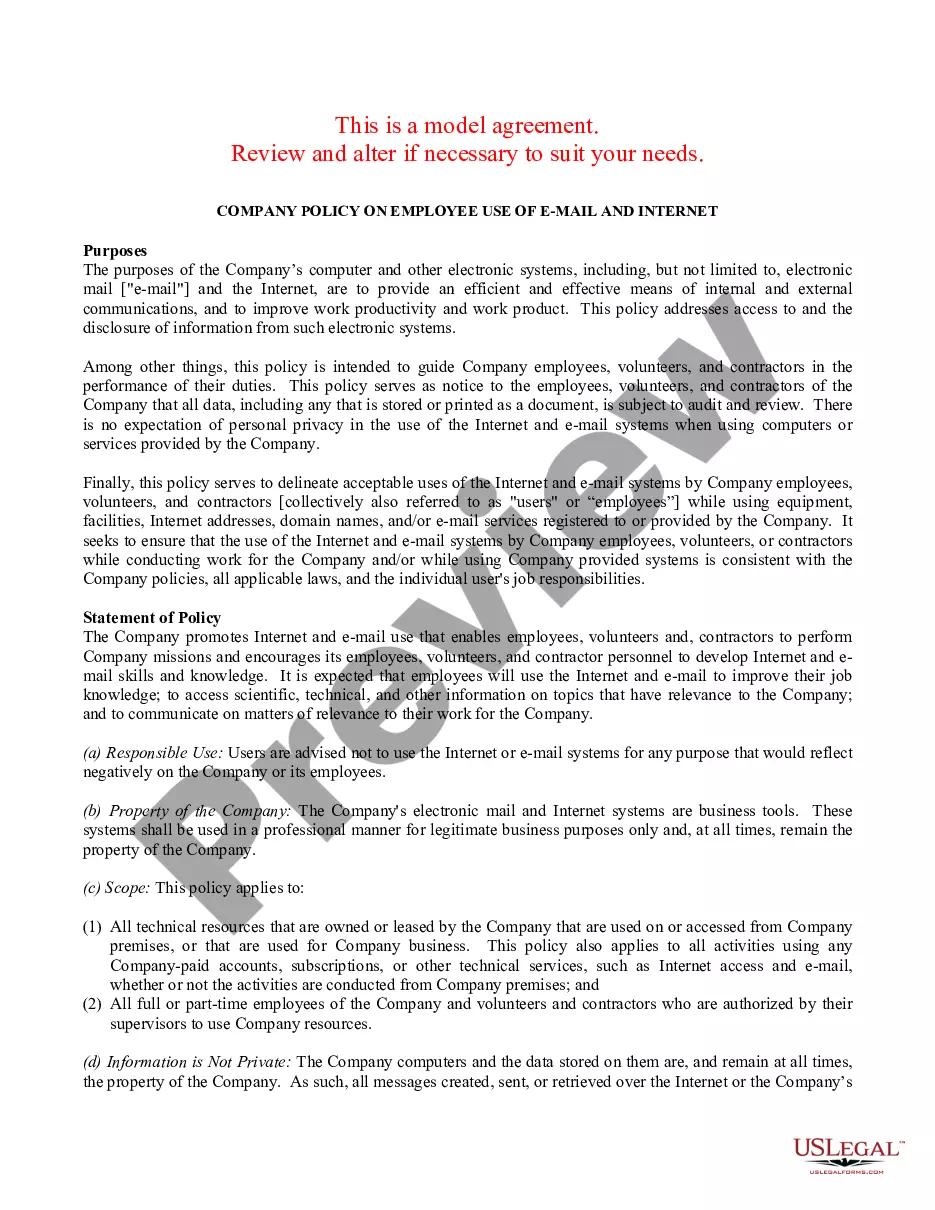
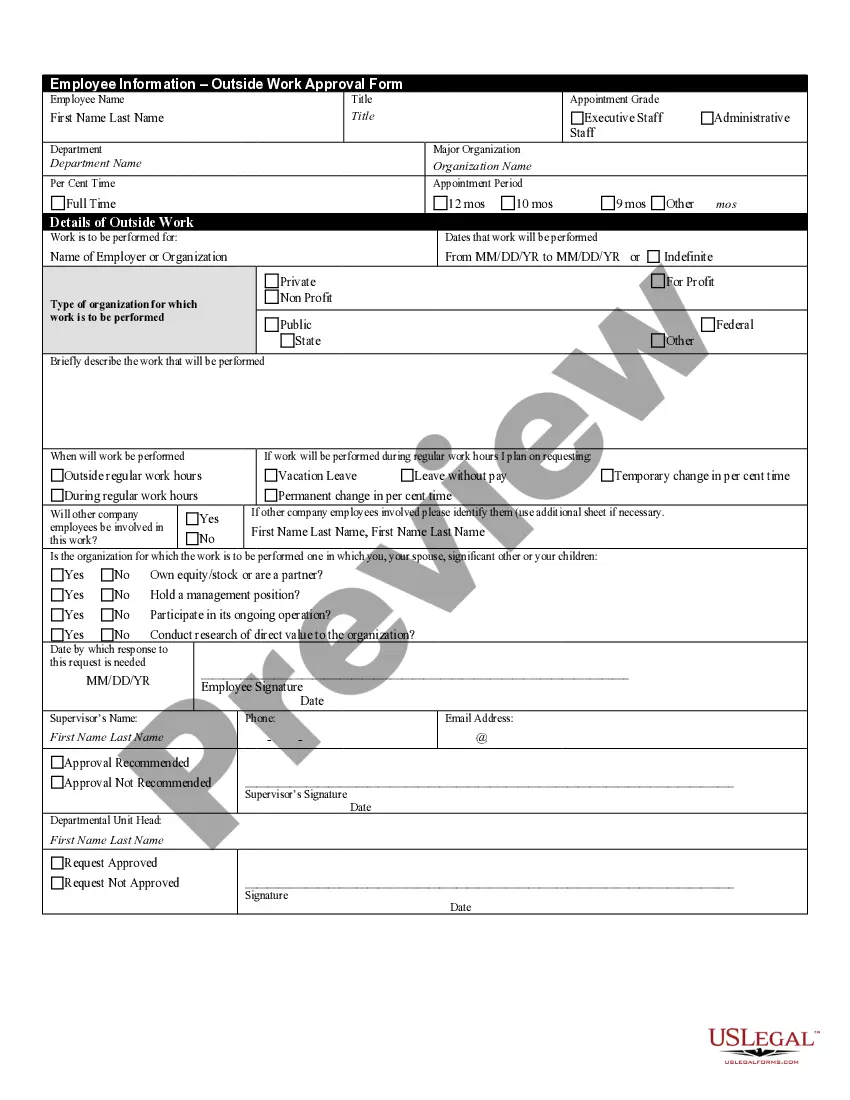
Get your form ready online
Our built-in tools help you complete, sign, share, and store your documents in one place.
Make edits, fill in missing information, and update formatting in US Legal Forms—just like you would in MS Word.
Download a copy, print it, send it by email, or mail it via USPS—whatever works best for your next step.
Sign and collect signatures with our SignNow integration. Send to multiple recipients, set reminders, and more. Go Premium to unlock E-Sign.
If this form requires notarization, complete it online through a secure video call—no need to meet a notary in person or wait for an appointment.
We protect your documents and personal data by following strict security and privacy standards.

Make edits, fill in missing information, and update formatting in US Legal Forms—just like you would in MS Word.

Download a copy, print it, send it by email, or mail it via USPS—whatever works best for your next step.

Sign and collect signatures with our SignNow integration. Send to multiple recipients, set reminders, and more. Go Premium to unlock E-Sign.

If this form requires notarization, complete it online through a secure video call—no need to meet a notary in person or wait for an appointment.

We protect your documents and personal data by following strict security and privacy standards.
Looking for another form?






How to fill out Outside Work - Strict Policy?
It’s widely recognized that you can’t transform into a legal expert in a single night, nor can you quickly produce a Work Policy Form For Patients without having the necessary specialized knowledge.
Formulating legal documents is a lengthy endeavor that necessitates specific training and capabilities.
So why not entrust the drafting of the Work Policy Form For Patients to the professionals.
You can re-access your documents through the My documents section whenever needed. If you’re a returning client, you can simply Log In and find and download the template from the same section.
Regardless of the purpose of your forms—whether it be financial, legal, or personal—our platform caters to your needs. Experience US Legal Forms today!
- Begin by locating the form you need via the search bar at the top of the webpage.
- Preview it (if this option is available) and review the accompanying description to determine if the Work Policy Form For Patients is what you’re looking for.
- Initiate a new search if you require a different form.
- Create a free account and choose a subscription plan to acquire the form.
- Select Buy now. Once the payment is confirmed, you can download the Work Policy Form For Patients, fill it out, print it, and send or mail it to the relevant individuals or organizations.
Form popularity
FAQ
A patient care policy is a framework that outlines the standards and procedures for delivering care to patients. It ensures that all staff members understand their responsibilities in providing quality care. By incorporating a work policy form for patients, healthcare organizations can standardize practices, improve patient outcomes, and enhance overall service delivery. This policy is crucial for building a consistent and reliable healthcare experience.
A common example of a health policy is a vaccination policy in a healthcare setting. This policy establishes guidelines for vaccination protocols, ensuring public health and safety. When utilizing a work policy form for patients, healthcare providers can effectively communicate vaccination requirements and procedures. This not only promotes community health but also enhances patient awareness and compliance.
An example of a policy in healthcare is a patient confidentiality policy. This policy outlines how patient information is handled, ensuring privacy and security. When implementing a work policy form for patients, healthcare facilities can create clear guidelines that protect sensitive information while maintaining trust and transparency. Such policies are essential for fostering a safe healthcare environment.
The 4 P's of patient care are people, purpose, process, and performance. Understanding these elements helps healthcare providers deliver effective care tailored to individual needs. By focusing on the work policy form for patients, organizations can streamline processes and enhance patient interactions. This approach ensures that every patient receives the attention and care they deserve.
Policy Writing Guidance Keep it simple. Policies should be written in plain language ? not legalese. ... Keep it general. Policies cannot contemplate all possible situations. ... Make it relevant. ... Check for accuracy and compliance. ... Ensure the policy can be enforced. ... Clearly state who does what. ... Less is more.
It includes the employee's job role or position, designated department, employee ID (as provided by the company), manager or supervisor, professional work email ID, job location, joining date, and salary.
Examples of company policies include employee conduct policies, dress code, attendance policies, equal opportunity policies, and other areas related to the terms and conditions of employment. Procedures: the processes by which employees should deal with potential breaches of company policies.
Format of a policy document Policy Statement: Clearly states the policy's objectives and the expected behavior or actions. Procedures: Describes the step-by-step process for compliance or implementation. Responsibilities: Outlines the roles and duties of individuals or departments involved.
If you want to write policies and procedures for your own organization or team, here are some steps you can use: Identify your goals. ... Brainstorm tasks and processes. ... Determine a policy format. ... Write policies and procedures. ... Clarify logistics. ... Proofread and revise. ... Publish and distribute.
