Zoning Map Fort Worth
Description

Get your form ready online
Our built-in tools help you complete, sign, share, and store your documents in one place.
Make edits, fill in missing information, and update formatting in US Legal Forms—just like you would in MS Word.
Download a copy, print it, send it by email, or mail it via USPS—whatever works best for your next step.
Sign and collect signatures with our SignNow integration. Send to multiple recipients, set reminders, and more. Go Premium to unlock E-Sign.
If this form requires notarization, complete it online through a secure video call—no need to meet a notary in person or wait for an appointment.
We protect your documents and personal data by following strict security and privacy standards.

Make edits, fill in missing information, and update formatting in US Legal Forms—just like you would in MS Word.

Download a copy, print it, send it by email, or mail it via USPS—whatever works best for your next step.

Sign and collect signatures with our SignNow integration. Send to multiple recipients, set reminders, and more. Go Premium to unlock E-Sign.

If this form requires notarization, complete it online through a secure video call—no need to meet a notary in person or wait for an appointment.

We protect your documents and personal data by following strict security and privacy standards.
Looking for another form?






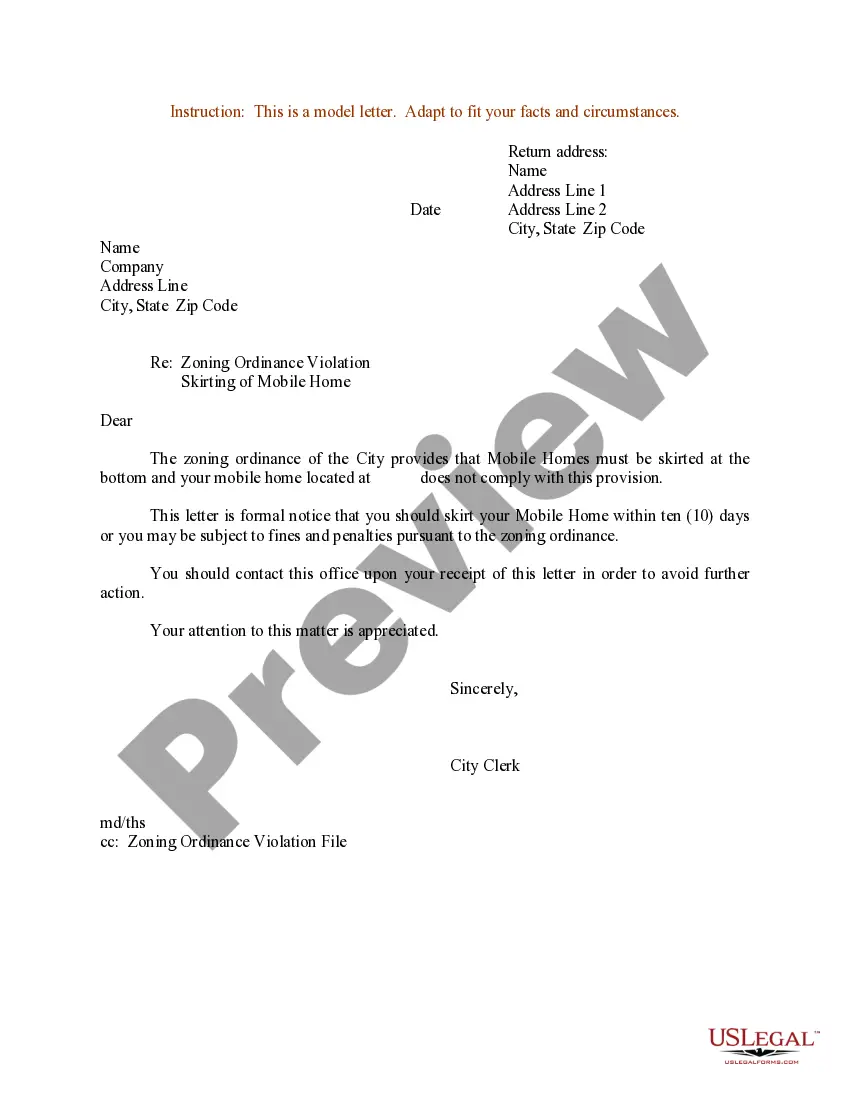
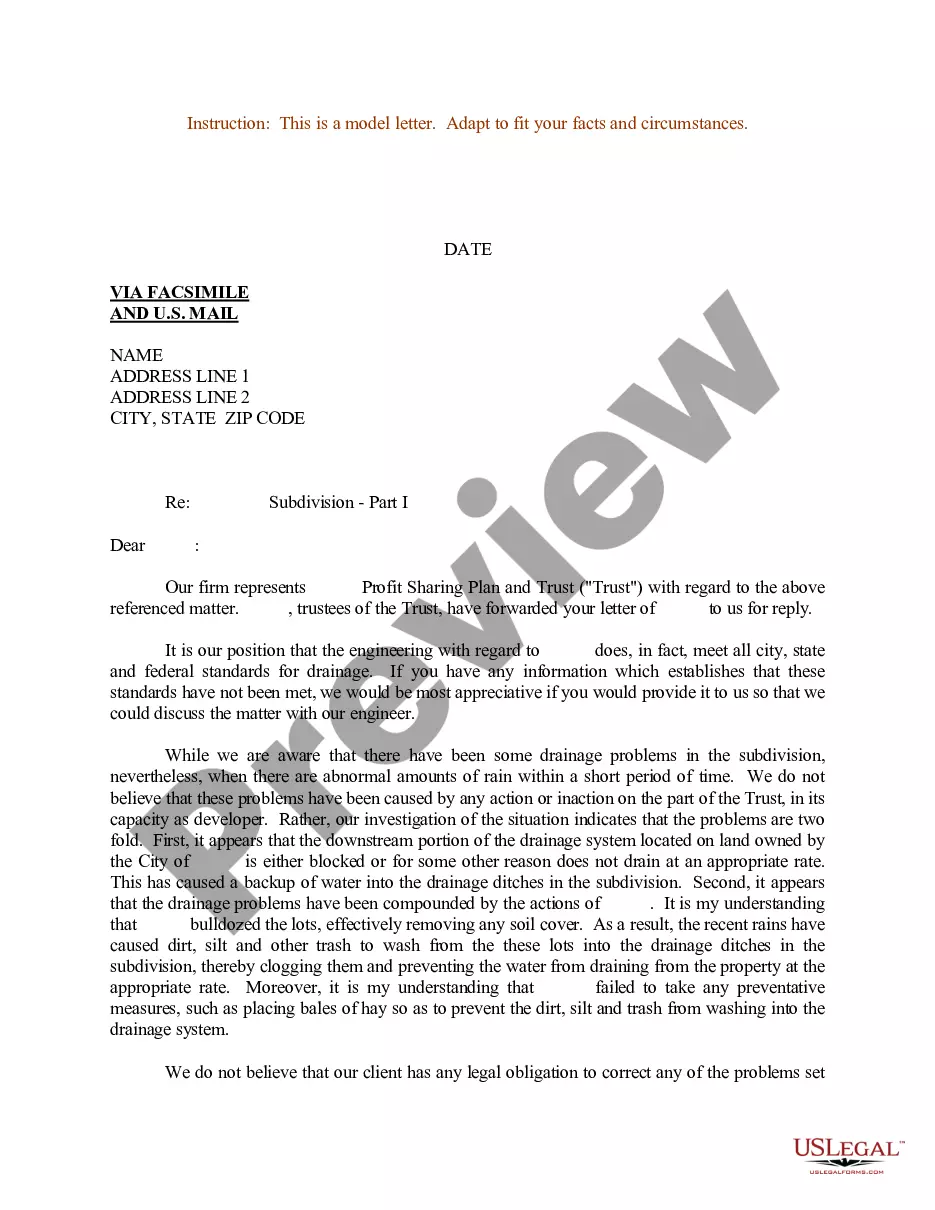
How to fill out Sample Letter For Violation Of Zoning Ordinance?
It’s clear that you cannot instantly become a legal expert, nor can you understand how to swiftly draft Zoning Map Fort Worth without a specialized background.
Drafting legal documents is a labor-intensive process that necessitates specific education and expertise. So why not entrust the creation of the Zoning Map Fort Worth to the professionals.
With US Legal Forms, one of the most extensive libraries of legal documents, you can discover everything from court documents to templates for internal company communications. We understand the significance of compliance and adherence to federal and state laws and regulations.
You can regain access to your documents from the My documents tab at any moment. If you’re an established client, you can simply Log In and find and download the template from the same tab.
Regardless of the nature of your documents—whether they are financial, legal, or personal—our platform has everything you need. Experience US Legal Forms today!
- Locate the document you require by utilizing the search bar at the top of the page.
- Preview it (if this option is available) and read the accompanying description to ascertain if Zoning Map Fort Worth is what you need.
- Restart your search if you require another template.
- Create a free account and select a subscription plan to purchase the form.
- Click Buy now. Once the purchase is finalized, you can acquire the Zoning Map Fort Worth, complete it, print it, and deliver it or send it through the mail to the necessary parties or organizations.
Form popularity
FAQ
A 5 zoning classification in Fort Worth typically allows for single-family residential developments, maintaining a suburban atmosphere. This zoning type restricts density and generally promotes larger lot sizes, focusing on creating a family-friendly neighborhood. If you're considering purchasing or modifying property in this zone, review the zoning map Fort Worth to ensure you comply with local regulations and understand development potentials.
A land use map shows how land in a specific area is utilized, indicating agricultural, commercial, residential, and other uses. In contrast, a zoning map outlines the regulations governing the types of developments allowed on the land, focusing on zoning classifications. Both maps serve different purposes but are essential for understanding urban planning. To simplify this process, access a zoning map Fort Worth for clear delineations of zoning regulations corresponding to land use.
Texas features various types of land zoning, including residential, commercial, industrial, and agricultural zones. Each type serves specific purposes, from providing areas for housing to designating spaces for businesses and manufacturing. Understanding these categories can be crucial for land development projects. A zoning map Fort Worth is an excellent resource for locating the specific zoning type applicable to your property.
In Fort Worth, a 10 zoning classification generally refers to residential zones that allow for higher density development. This designation may permit single-family homes, townhouses, and some multi-family units, catering to a growing urban population. To better understand your property's zoning, consult the zoning map Fort Worth, which provides clear insights into what developments are permissible in each zone.
Changing zoning from agricultural to residential is possible in Fort Worth, but it involves a detailed process. Typically, you need to submit an application to the city zoning board for a zoning change. The zoning board reviews the application, considering factors like neighborhood impact and future land use plans. Utilizing a zoning map Fort Worth can help you understand the current zoning classifications and guide you through this adjustment.
To request a zoning change, you typically need to submit a formal application to your local zoning board or planning department. This process often requires a detailed explanation of why the change is necessary, along with supporting documentation. Utilizing the zoning map Fort Worth can help you identify the current zoning and make your case for the proposed changes.
The zoning system refers to the framework that organizes land use and development through designated zones. Each zone on the zoning map Fort Worth specifies allowable uses, such as residential, commercial, or industrial activities. This system not only ensures safety and order but also promotes sustainable community growth.
Zoning techniques are strategies used to manage land use effectively within a community. These include overlay zoning, where additional requirements apply to specific areas on the zoning map Fort Worth, and downzoning, which restricts land use to more restrictive categories. These techniques help balance development needs with community goals.
Local zoning requirements vary by municipality but generally outline what types of buildings and activities are permitted in each zone. These regulations address aspects like building heights, lot sizes, and land use types. To navigate these regulations, you can refer to the zoning map Fort Worth, which serves as a vital tool for understanding local ordinances.
The most common type of zoning is residential zoning, which primarily governs where people can live. This type of zoning often includes single-family homes, multi-family units, and apartment complexes. In Fort Worth, the zoning map highlights these residential areas to aid families in choosing suitable neighborhoods.