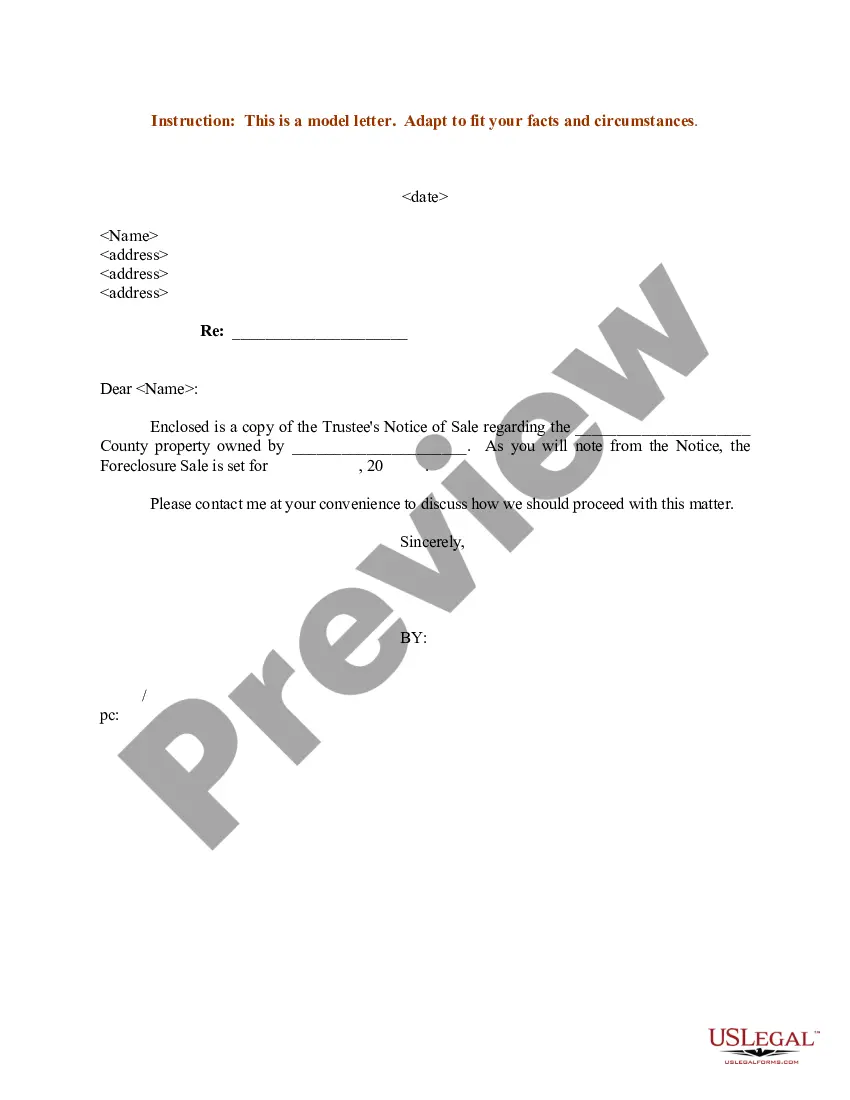
Letter Trustee Sale Foreclosure
Description
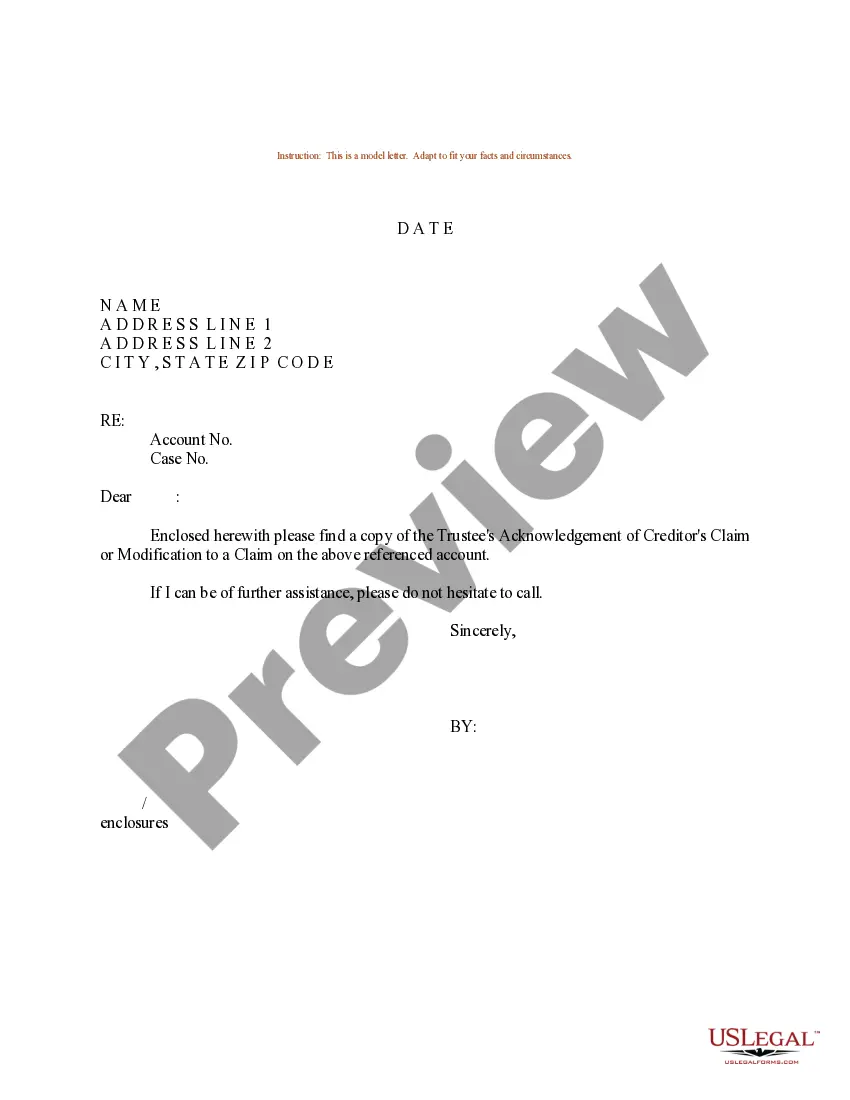
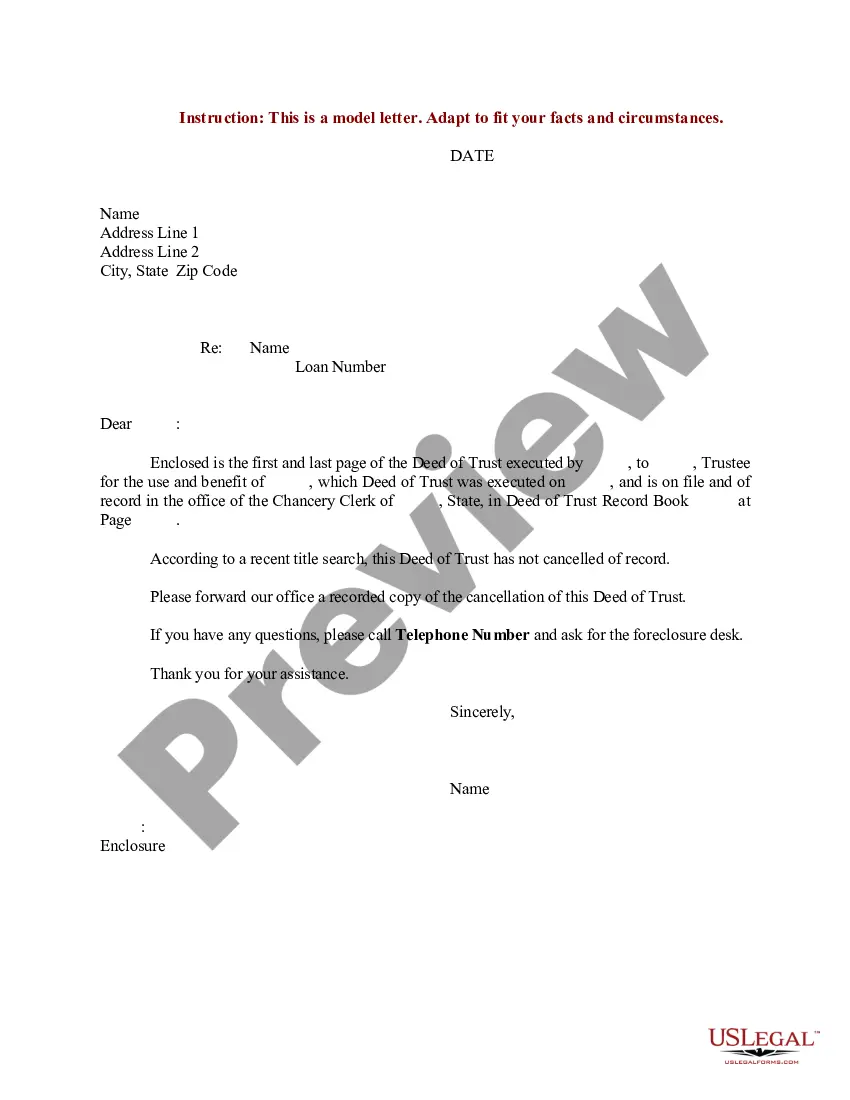
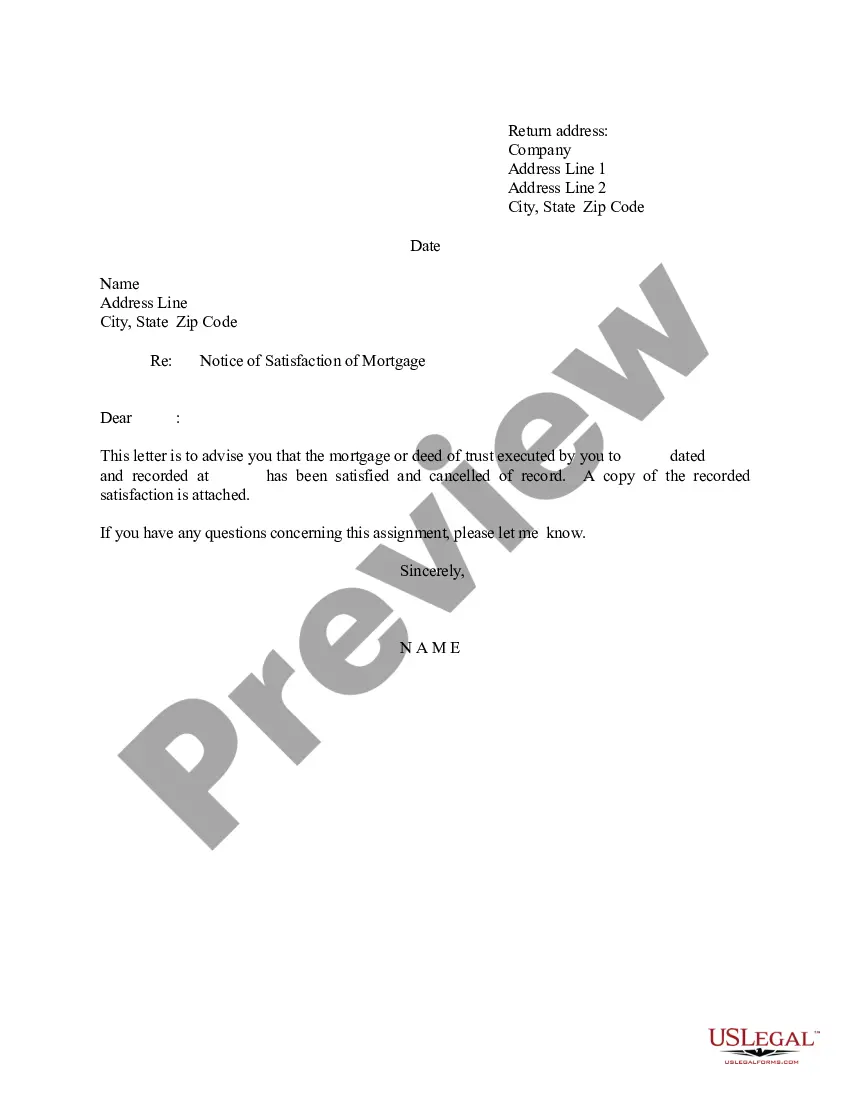
Get your form ready online
Our built-in tools help you complete, sign, share, and store your documents in one place.
Make edits, fill in missing information, and update formatting in US Legal Forms—just like you would in MS Word.
Download a copy, print it, send it by email, or mail it via USPS—whatever works best for your next step.
Sign and collect signatures with our SignNow integration. Send to multiple recipients, set reminders, and more. Go Premium to unlock E-Sign.
If this form requires notarization, complete it online through a secure video call—no need to meet a notary in person or wait for an appointment.
We protect your documents and personal data by following strict security and privacy standards.

Make edits, fill in missing information, and update formatting in US Legal Forms—just like you would in MS Word.

Download a copy, print it, send it by email, or mail it via USPS—whatever works best for your next step.

Sign and collect signatures with our SignNow integration. Send to multiple recipients, set reminders, and more. Go Premium to unlock E-Sign.

If this form requires notarization, complete it online through a secure video call—no need to meet a notary in person or wait for an appointment.

We protect your documents and personal data by following strict security and privacy standards.
Looking for another form?

How to fill out Sample Letter For Trustee's Notice Of Sale Of Property?
Legal management can be daunting, even for the most skilled professionals.
When you are looking for a Letter Trustee Sale Foreclosure and lack the time to search for the correct and current version, the process can be overwhelming.
US Legal Forms caters to any needs you might have, from personal to corporate paperwork, all in one location.
Utilize cutting-edge tools to complete and manage your Letter Trustee Sale Foreclosure.
Here are the steps to follow after downloading the form you need: Verify that this is the correct document by previewing it and reviewing its details. Ensure that the template is accepted in your state or county. Select Buy Now when you are ready. Choose a monthly subscription plan. Select the file format you desire, and Download, complete, sign, print, and send your documents. Leverage the US Legal Forms online library, backed by 25 years of expertise and dependability. Transform your daily document management into a seamless and user-friendly experience today.
- Gain access to a valuable resource hub of articles, guides, and materials related to your circumstances and needs.
- Save time and effort searching for the documents you require, and utilize US Legal Forms’ advanced search and Review feature to find Letter Trustee Sale Foreclosure and obtain it.
- If you possess a subscription, Log In to your US Legal Forms account, search for the form, and download it.
- Check your My documents tab to review the documents you previously acquired and to organize your folders as you see fit.
- If this is your first time using US Legal Forms, create an account and gain unlimited access to the entire library's benefits.
- A robust online form repository could be a game changer for those who wish to navigate these circumstances effectively.
- US Legal Forms stands as a leader in the online legal forms sector, offering over 85,000 state-specific legal documents accessible at any time.
- With US Legal Forms, you can access state- or county-specific legal and business documents.
Form popularity
FAQ
If a property is owned by a trustee, it typically means the property is held in a trust for the benefit of another party, often related to a foreclosure situation. The trustee manages the property and makes decisions regarding its sale or distribution. Understanding the implications of a trustee sale foreclosure can help you navigate your real estate investments more effectively.
A trustee sale is a legal process that occurs when a property is auctioned due to foreclosure. Investors should care about it because these sales can present unique investment opportunities, often at discounted prices. Knowing how to navigate a trustee sale foreclosure can help you make informed decisions and capitalize on potential investments.
In a foreclosure, a trustee acts as an impartial third party responsible for managing the sale of the property. They handle the auction process, ensure all legal requirements are met, and distribute the proceeds to the lender. By understanding the trustee's role, you can better navigate the complexities of a trustee sale foreclosure.
A notice of trustee sale must include crucial information such as the property address, the date and time of the sale, and the name of the trustee overseeing the sale. Additionally, it should outline the reasons for the foreclosure and provide details on how to remedy the situation, if applicable. Ensuring this information is clear can help prevent confusion during the trustee sale foreclosure process.
When writing a letter for foreclosure, it's essential to include key details such as the property address, the borrower's information, and the reasons for the foreclosure. Be sure to express your intent clearly and concisely, while also providing any necessary documentation. If you need assistance, US Legal Forms offers templates to help you create an effective letter for trustee sale foreclosure.
During the initial ninety days of foreclosure of a deed of trust, the Trustor can either pay back the loan entirely or renegotiate with the Beneficiary. This will stop the entire foreclosure process. After ninety days, however, the right to force the sale to stop is limited.
The California foreclosure process can last up to 200 days or longer. Day 1 is when a payment is missed; your loan is officially in default around day 90. After 180 days, you'll receive a notice of trustee sale. About 20 days later, your bank can then set the auction.
The public trustee then has 10 days to file the NED with the country clerk and recorder of the county where the property is located. After filing the NED, the public trustee sets a foreclosure date. For non-agricultural property, the foreclosure date is set for 110-125 days after the NED is recorded.
Power of Sales clauses include language in the deed of trust which states that the lender has the power to sell the real property that secures the agreement should the borrower breach their contract. Deeds of Trusts with Power of Sale clauses attached give lenders the right to foreclose the property nonjudicially.
Guidelines For Writing a Foreclosure Letter Address the letter to the head of the financial institution. ... Subject must be on point. In the body, always mention your name and loan account number. If you don't know the foreclosing procedure, then ask them to guide you.