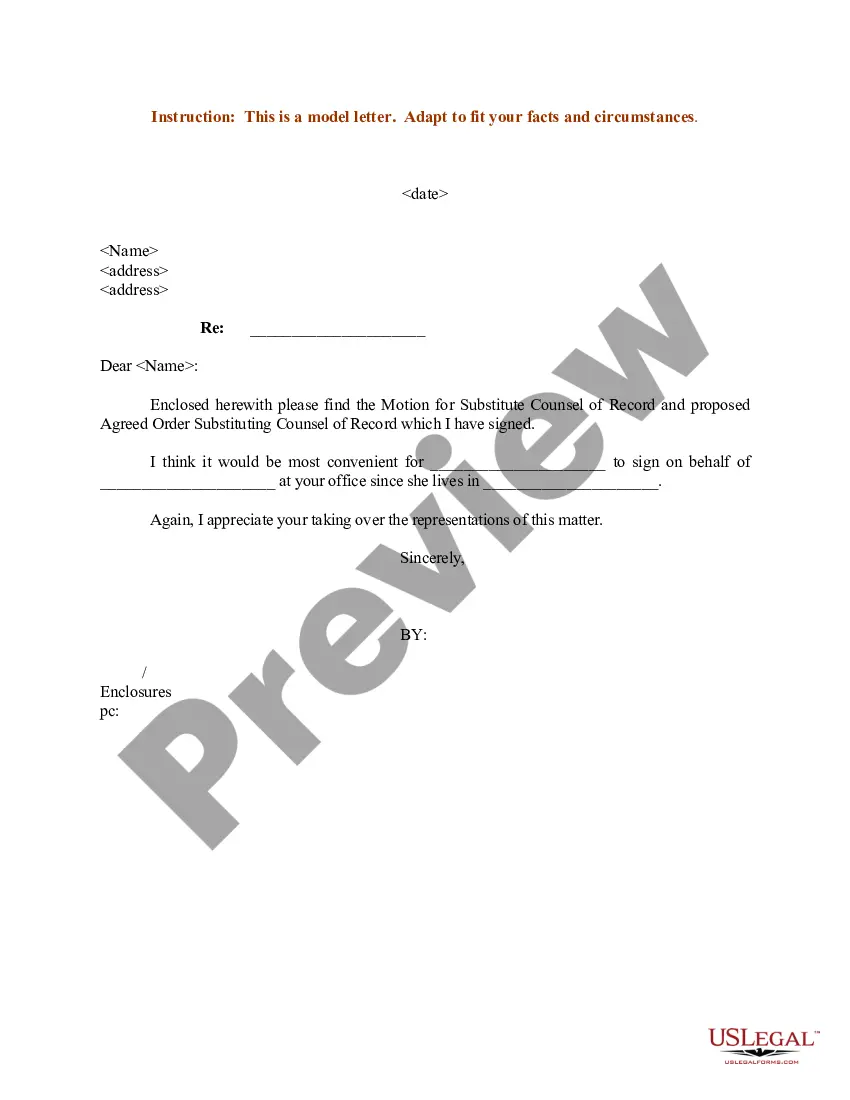
Substitute For Counsel
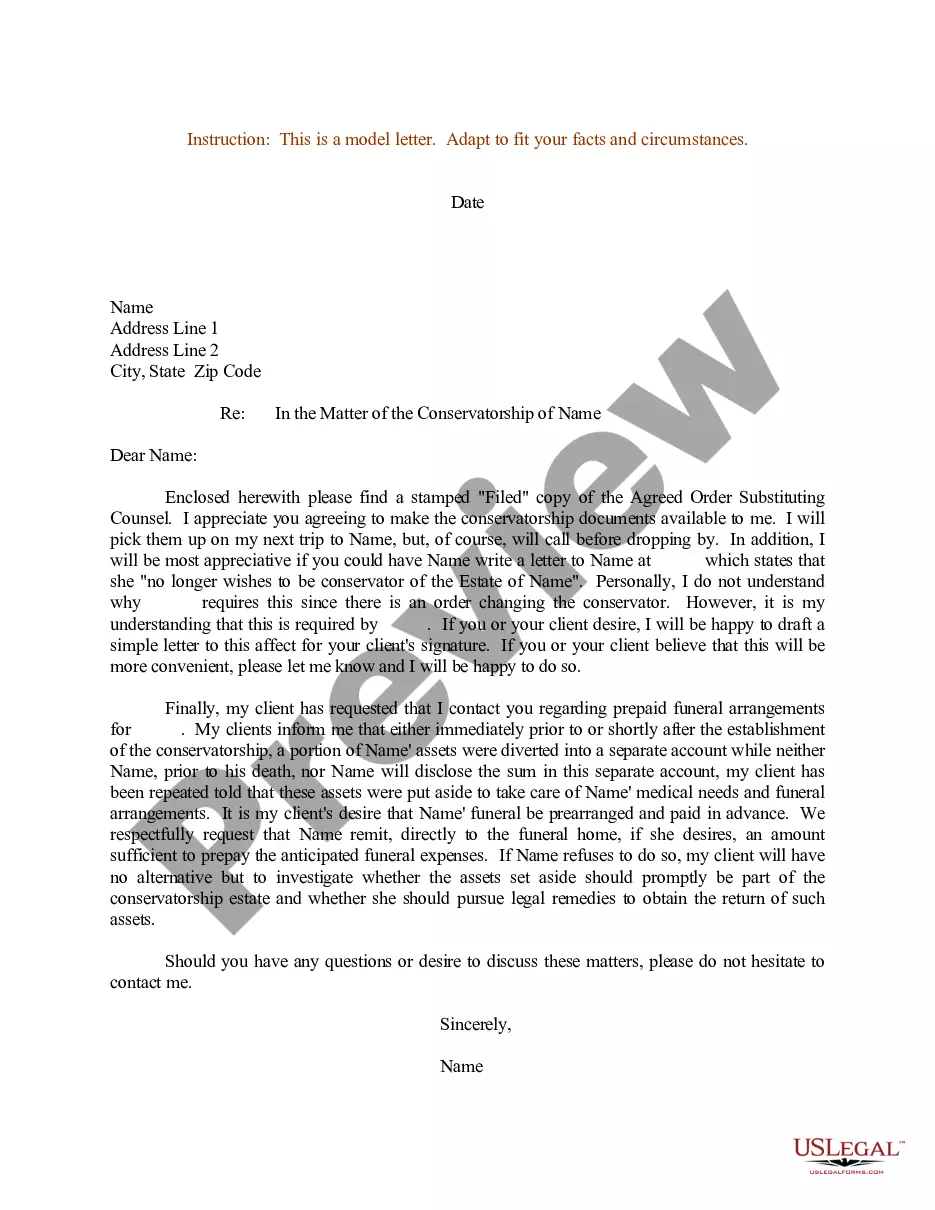
Description
Get your form ready online
Our built-in tools help you complete, sign, share, and store your documents in one place.
Make edits, fill in missing information, and update formatting in US Legal Forms—just like you would in MS Word.
Download a copy, print it, send it by email, or mail it via USPS—whatever works best for your next step.
Sign and collect signatures with our SignNow integration. Send to multiple recipients, set reminders, and more. Go Premium to unlock E-Sign.
If this form requires notarization, complete it online through a secure video call—no need to meet a notary in person or wait for an appointment.
We protect your documents and personal data by following strict security and privacy standards.

Make edits, fill in missing information, and update formatting in US Legal Forms—just like you would in MS Word.

Download a copy, print it, send it by email, or mail it via USPS—whatever works best for your next step.

Sign and collect signatures with our SignNow integration. Send to multiple recipients, set reminders, and more. Go Premium to unlock E-Sign.

If this form requires notarization, complete it online through a secure video call—no need to meet a notary in person or wait for an appointment.

We protect your documents and personal data by following strict security and privacy standards.
Looking for another form?
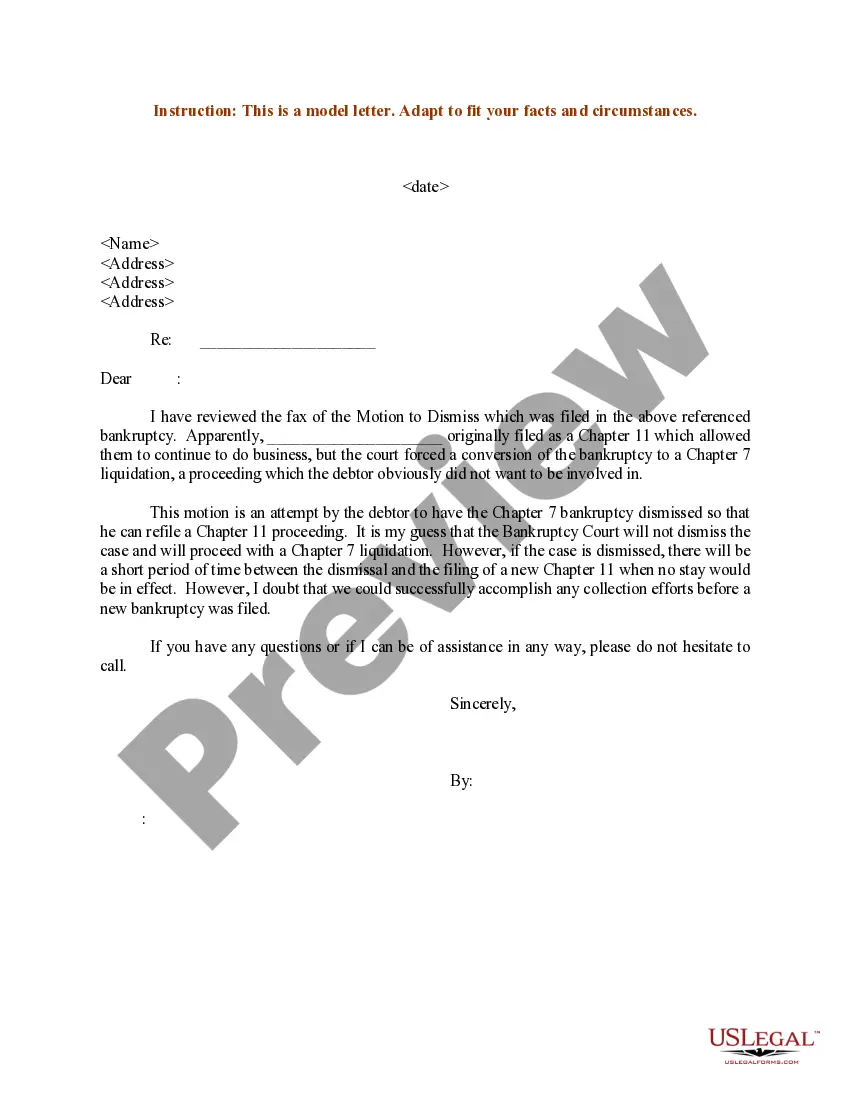
How to fill out Sample Letter For Motion For Substitute Counsel Of Record?
Accessing legal document examples that adhere to federal and state laws is a matter of necessity, and the internet provides numerous options to select from.
But what’s the benefit in spending time looking for the appropriate Substitute For Counsel example online if the US Legal Forms digital library already has such templates gathered in one location.
US Legal Forms is the largest online legal library with over 85,000 editable templates created by attorneys for any professional and personal need.
Review the template using the Preview feature or through the text outline to ensure it meets your requirements.
- They are easy to navigate with all documents organized by state and purpose of use.
- Our experts stay updated with legislative changes, ensuring your documentation is current and compliant when obtaining a Substitute For Counsel from our site.
- Acquiring a Substitute For Counsel is quick and straightforward for both existing and new users.
- If you already have an account with a valid subscription, Log In and save the document sample you require in the preferred format.
- If you are unfamiliar with our website, follow the steps below.
Form popularity
FAQ
A counsel substitute provides an alternative to traditional legal representation, offering you essential guidance when you cannot hire a lawyer. This option is especially useful for individuals who may need legal advice but want to navigate their issues independently. By using a substitute for counsel, you can access crucial information and resources, ensuring you feel informed and confident in your decisions. Platforms like US Legal Forms simplify this process, helping you find the right documentation and guidance without the need for costly legal fees.
There are several ethical reasons for an attorney to withdraw as counsel. If a significant conflict of interest arises, or if the attorney cannot provide competent representation, withdrawal may be necessary. Additionally, a lawyer may need to withdraw if the client engages in illegal conduct or fails to cooperate. In such situations, finding a 'substitute for counsel' can help ensure that the client's legal needs are still met, while upholding ethical standards.
To file a claim regarding insufficient counsel, gather all relevant documentation, including your case history and any communication with your current attorney. Next, create a formal complaint outlining specific reasons for your concern, detailing how your representation fell short. Consider using the 'Substitute for counsel' option to explore alternatives that may better suit your needs. Ensuring you have a clear understanding of your rights will help you navigate this process effectively.
A substitution of counsel refers to the process of replacing one attorney with another during a legal matter. This can happen for various reasons, such as a change in strategy or personal compatibility. It's important to fully understand the implications when pursuing a substitute for counsel to ensure your legal representation meets your needs. Platforms like US Legal Forms can help streamline this process by providing necessary documentation and guidance.
A synonym for the word counsel is advice. When looking for alternatives to guidance, you may also consider terms such as direction or support. It’s essential to find the right substitute for counsel, especially in legal situations. Using clear terminology helps ensure that you communicate your needs effectively.
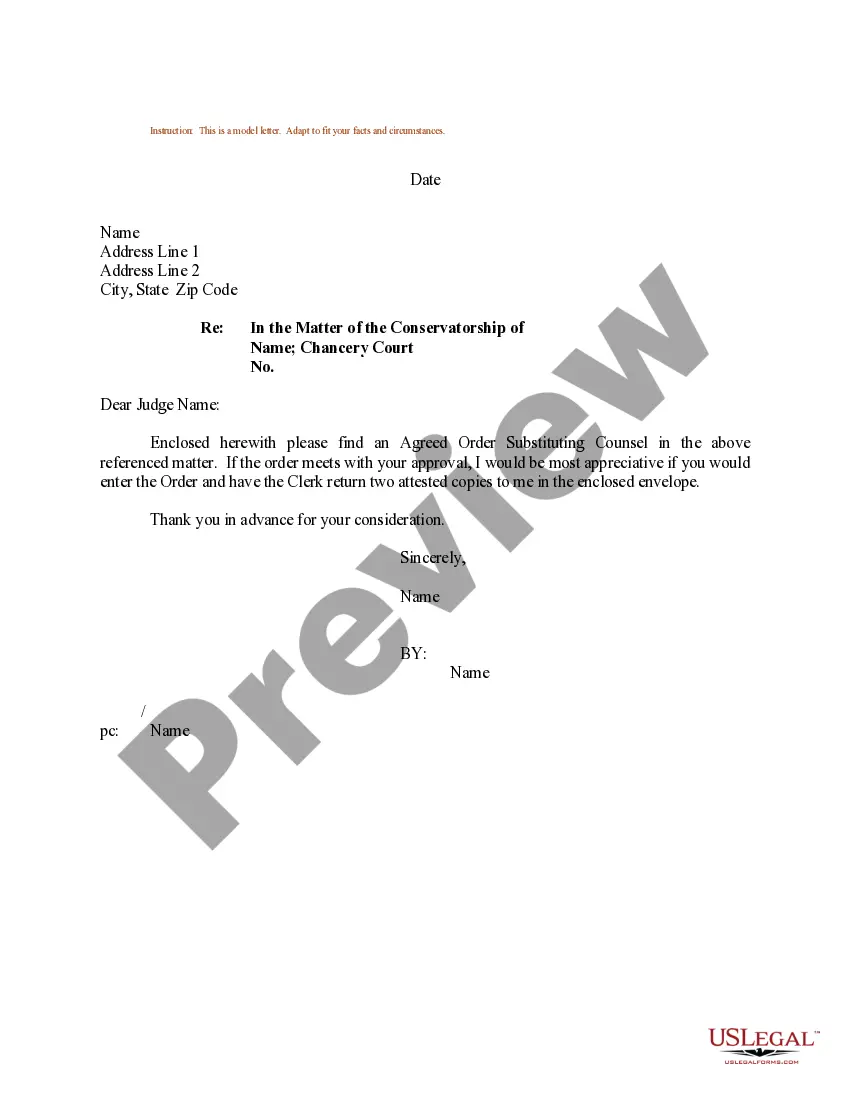
An order granting substitution of counsel is a formal document issued by a court that approves a client's request to change their attorney. This order confirms that the new attorney is officially recognized to represent the client in legal matters. It often follows a successful motion to substitute counsel and ensures that all parties involved are informed of the change. Utilizing resources like USLegalForms can help individuals prepare and manage the required documentation for this process efficiently.
A motion to substitute counsel typically includes a statement from the client expressing their desire to change representation, along with the name of the new attorney. It may also outline reasons for the request and confirm that the current attorney agrees to withdraw from the case. Filing this motion with the court is a crucial step in securing a substitute for counsel. Online platforms like USLegalForms can simplify this process by providing necessary templates for such motions.
There are several reasons a client might seek a substitute for counsel, including a lack of communication or differing strategies in the case. Sometimes, clients may feel that their attorney is not adequately representing their interests or skills may not align with the complexity of the case. Personal issues or professional misconduct can also prompt a change. Assessing these factors can guide clients in deciding if it's time to look for a substitute for counsel.
The federal rule for substitution of counsel allows a party in a legal case to replace their attorney with another. This process typically requires a motion that is filed with the court, detailing the reasons for the change. Both the departing and incoming attorneys usually need to consent to this transition to ensure a smooth process. Understanding the federal rule for substitution of counsel can be essential for clients seeking a better fit for their legal representation.