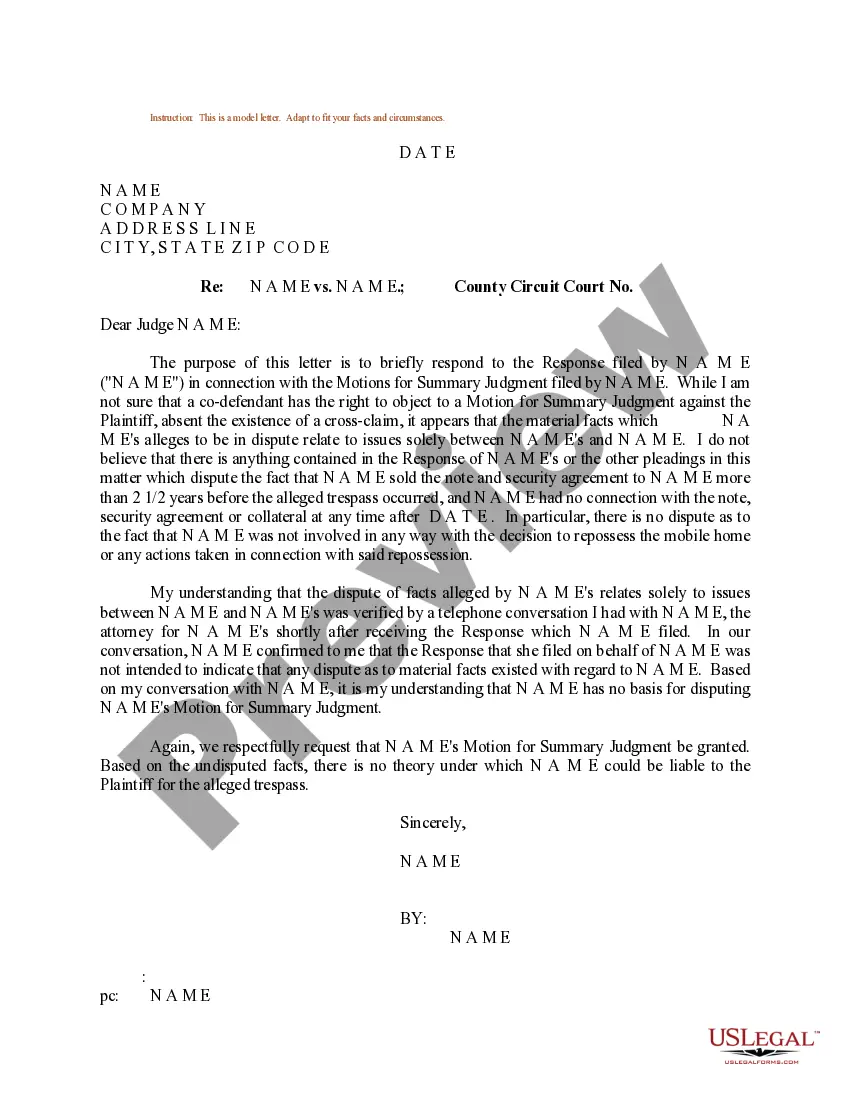
Summary Judgment In Legal Terms
Description
Get your form ready online
Our built-in tools help you complete, sign, share, and store your documents in one place.
Make edits, fill in missing information, and update formatting in US Legal Forms—just like you would in MS Word.
Download a copy, print it, send it by email, or mail it via USPS—whatever works best for your next step.
Sign and collect signatures with our SignNow integration. Send to multiple recipients, set reminders, and more. Go Premium to unlock E-Sign.
If this form requires notarization, complete it online through a secure video call—no need to meet a notary in person or wait for an appointment.
We protect your documents and personal data by following strict security and privacy standards.

Make edits, fill in missing information, and update formatting in US Legal Forms—just like you would in MS Word.

Download a copy, print it, send it by email, or mail it via USPS—whatever works best for your next step.

Sign and collect signatures with our SignNow integration. Send to multiple recipients, set reminders, and more. Go Premium to unlock E-Sign.

If this form requires notarization, complete it online through a secure video call—no need to meet a notary in person or wait for an appointment.

We protect your documents and personal data by following strict security and privacy standards.
Looking for another form?







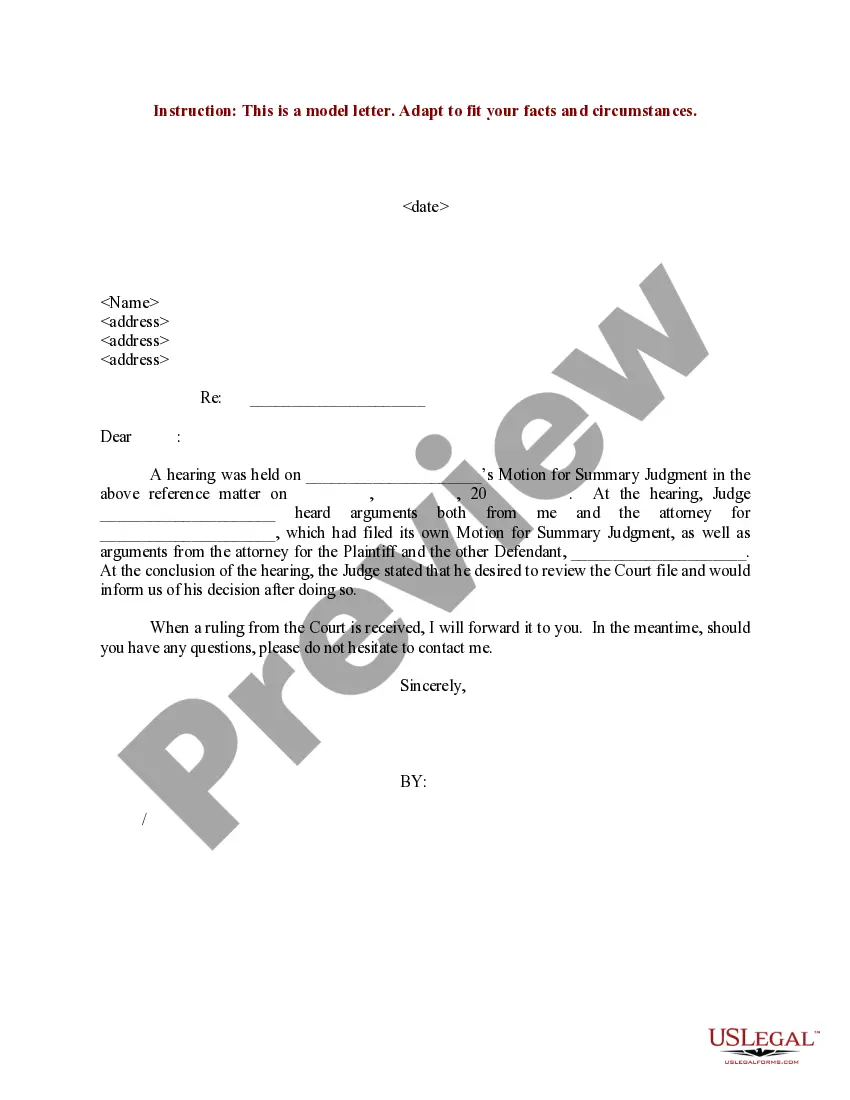
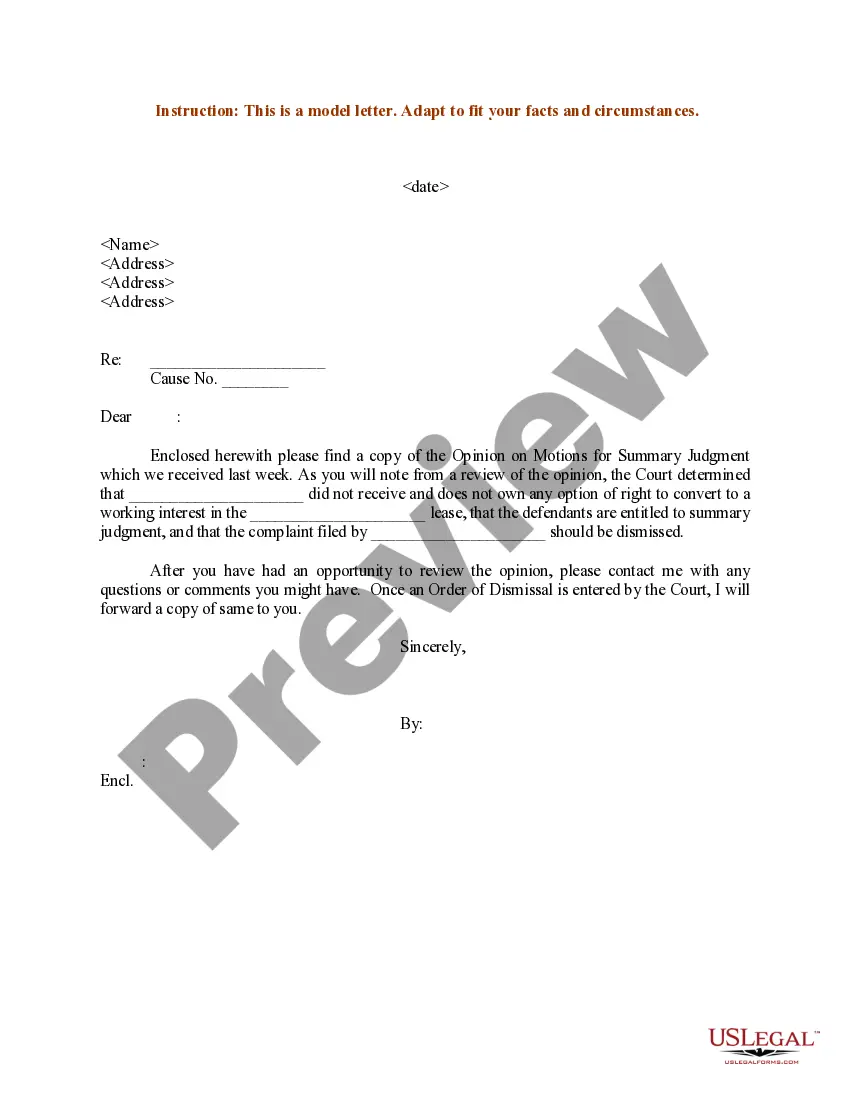
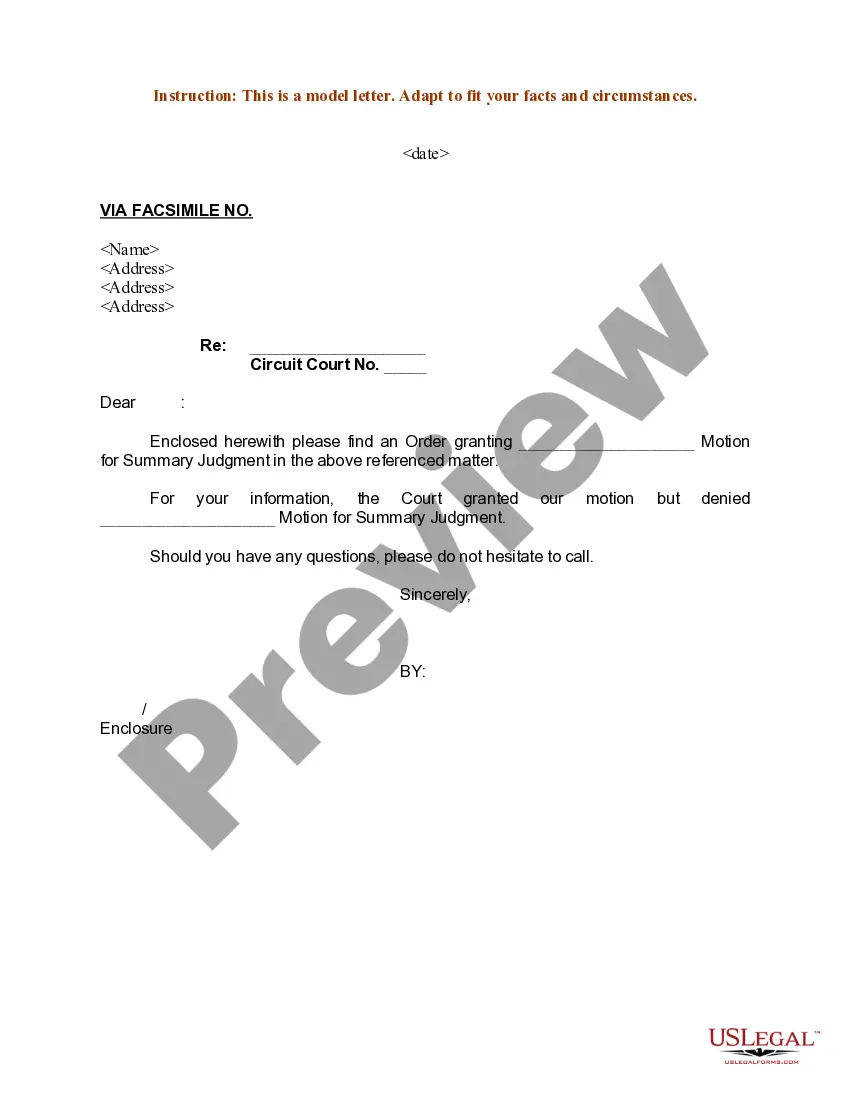
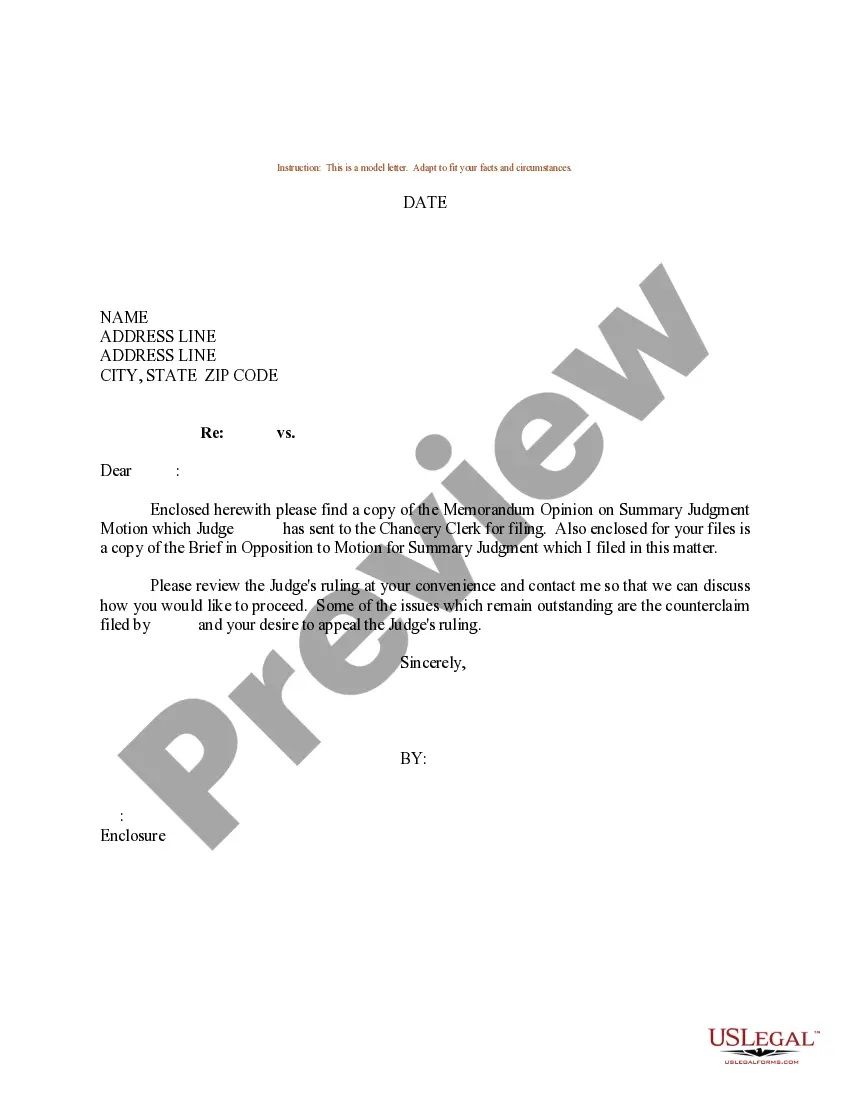
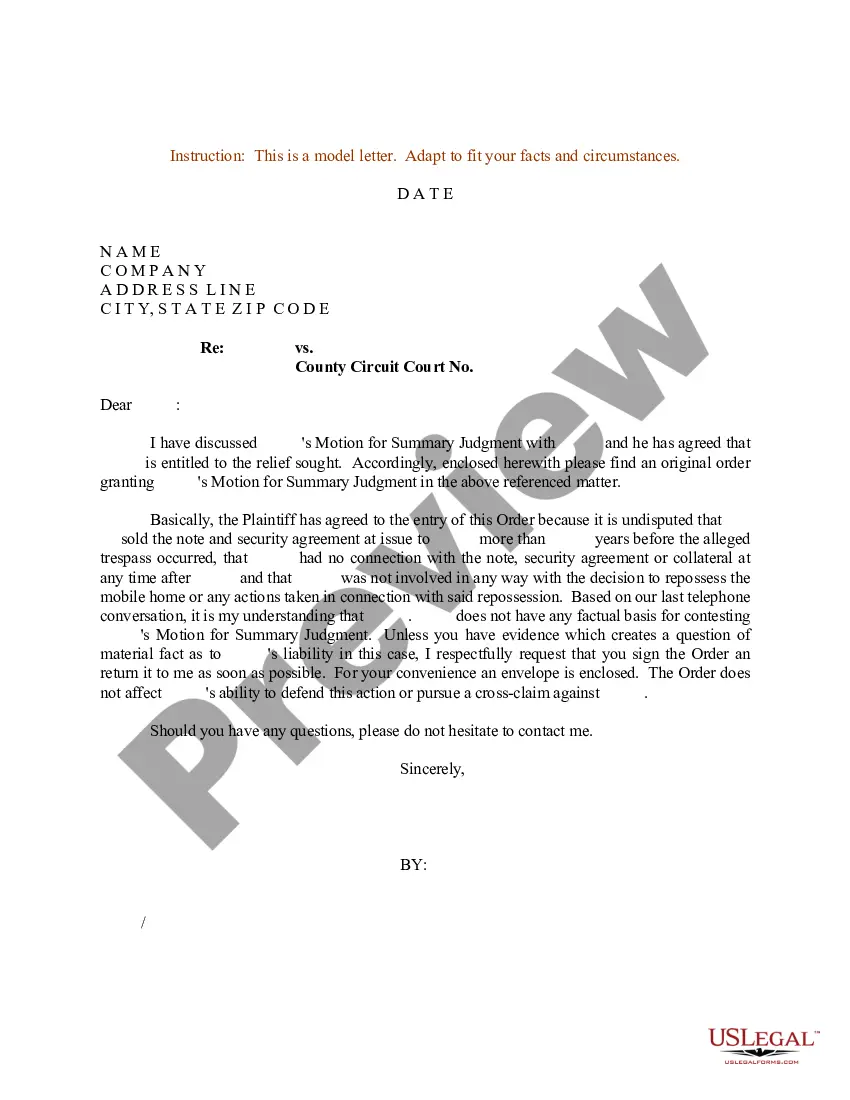
How to fill out Sample Letter For Response In Connection With Motions For Summary Judgment?
The Summary Judgment In Legal Terms that you observe on this page is a versatile legal template crafted by experienced attorneys in accordance with federal and local regulations.
For over 25 years, US Legal Forms has supplied individuals, businesses, and lawyers with more than 85,000 validated, state-specific forms for any business and personal situation. It’s the fastest, simplest, and most dependable method to obtain the documentation you require, as the service assures the utmost level of data security and anti-malware protection.
Subscribe to US Legal Forms to have authenticated legal templates for all of life’s situations at your fingertips.
- Search for the document you require and review it.
- Browse through the file you searched and preview it or examine the form description to verify it meets your needs. If it doesn’t, use the search feature to locate the right one. Click Buy Now once you’ve found the template you need.
- Subscribe and Log In.
- Choose the pricing plan that fits you and create an account. Use PayPal or a credit card for a swift payment. If you already have an account, Log In and check your subscription to continue.
- Obtain the fillable template.
- Select the format you want for your Summary Judgment In Legal Terms (PDF, DOCX, RTF) and save the example on your device.
- Complete and sign the documentation.
- Print the template to fill it out by hand. Alternatively, utilize an online multifunctional PDF editor to quickly and accurately complete and sign your form with an eSignature.
- Download your documents again.
- Reuse the same document whenever necessary. Open the My documents tab in your profile to redownload any previously obtained forms.
Form popularity
FAQ
To request summary judgment, you must file a motion with the court. This document outlines your argument and the evidence supporting your claim for summary judgment. It is important to clearly demonstrate that no genuine dispute exists regarding any material fact. By utilizing platforms like USLegalForms, you can ensure that you file the appropriate documents accurately and efficiently.
Filing for summary judgment may come with several downsides, including the potential for high costs and the risk of public disclosure of sensitive information. Additionally, if your motion is denied, it may weaken your position in later stages of the case. It's essential to weigh these factors when considering summary judgment in legal terms, and consulting legal resources like USLegalForms can provide valuable insights.
To file a summary judgment, you must prepare and submit a motion along with supporting documents to the court. This motion should clearly state your argument, the evidence supporting your claim, and why you believe there are no material facts in dispute. Many individuals find value in using platforms like USLegalForms, which can guide you through the necessary forms and procedures for filing a summary judgment in legal terms.
After a summary judgment is granted, the court will issue a decision in favor of the winning party. The losing party may have limited options, including potentially appealing the ruling. This outcome effectively resolves the dispute without going to trial, leading to a quicker conclusion of the case. In cases where you need help navigating this process, platforms like uslegalforms offer tools to assist you in managing your legal documents and proceedings efficiently.
Winning a summary judgment in legal terms depends on the strength of the evidence presented. If you can clearly demonstrate that there are no material facts in dispute, your chances increase significantly. Typically, cases with strong supporting documentation and clear legal arguments succeed in gaining summary judgment. Thus, understanding the criteria and preparing a solid case can enhance your possibilities of success.
Examples of summary judgement motions John says that Linda ran a red light and caused the crash. John happens to have a video of Linda running the red light and crashing into him. John's attorney files a motion for summary judgment claiming that: There are no material facts that can be reasonably disputed.
Answer each numbered fact proposed by the moving party in separate paragraphs, using the same number. The court strongly prefers that the responding party repeat verbatim the moving party's proposed fact and then respond to it. 2. All responses should be succinctly stated.
Therefore, to win on summary judgment you have to convince a judge that it is a good use of his or her very limited time and resources to write the decision. This means that your written material has to demonstrate that the law and facts support summary judgment, and contain no misstatements of law or fact.
Judges may grant partial summary judgment. For example, a judge might rule on some factual issues, but leave others for trial. Alternately, a judge might grant summary judgment regarding liability, but still hold a trial to determine damages.
Consider the following five approaches: Show that the motion fails to list the specific facts and law supporting summary judgment. ... Show that a dispute exists on a material fact. ... Show that the law does not support judgment on the undisputed facts.