Settlement Agreement Without Prejudice
Description
Get your form ready online
Our built-in tools help you complete, sign, share, and store your documents in one place.
Make edits, fill in missing information, and update formatting in US Legal Forms—just like you would in MS Word.
Download a copy, print it, send it by email, or mail it via USPS—whatever works best for your next step.
Sign and collect signatures with our SignNow integration. Send to multiple recipients, set reminders, and more. Go Premium to unlock E-Sign.
If this form requires notarization, complete it online through a secure video call—no need to meet a notary in person or wait for an appointment.
We protect your documents and personal data by following strict security and privacy standards.

Make edits, fill in missing information, and update formatting in US Legal Forms—just like you would in MS Word.

Download a copy, print it, send it by email, or mail it via USPS—whatever works best for your next step.

Sign and collect signatures with our SignNow integration. Send to multiple recipients, set reminders, and more. Go Premium to unlock E-Sign.

If this form requires notarization, complete it online through a secure video call—no need to meet a notary in person or wait for an appointment.

We protect your documents and personal data by following strict security and privacy standards.
Looking for another form?
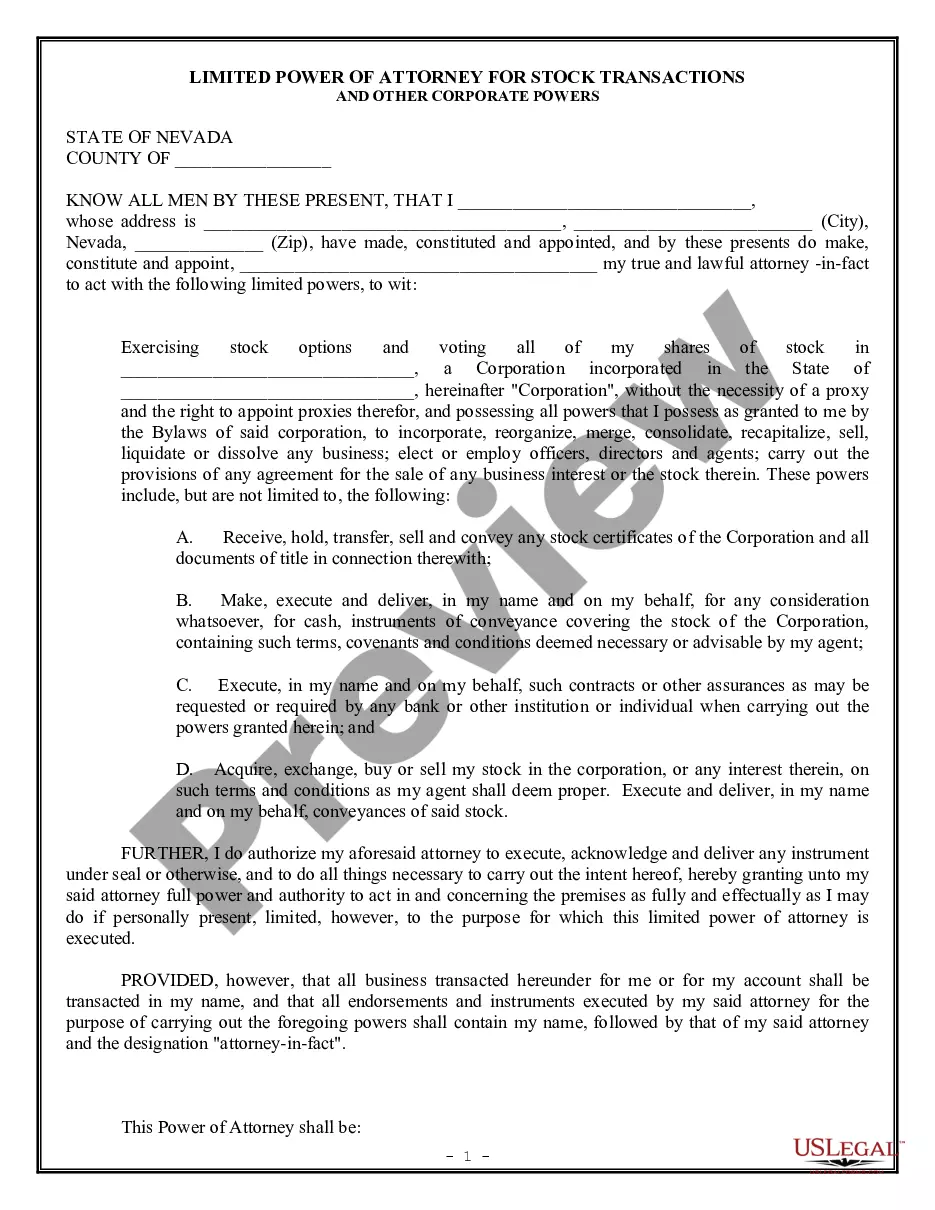



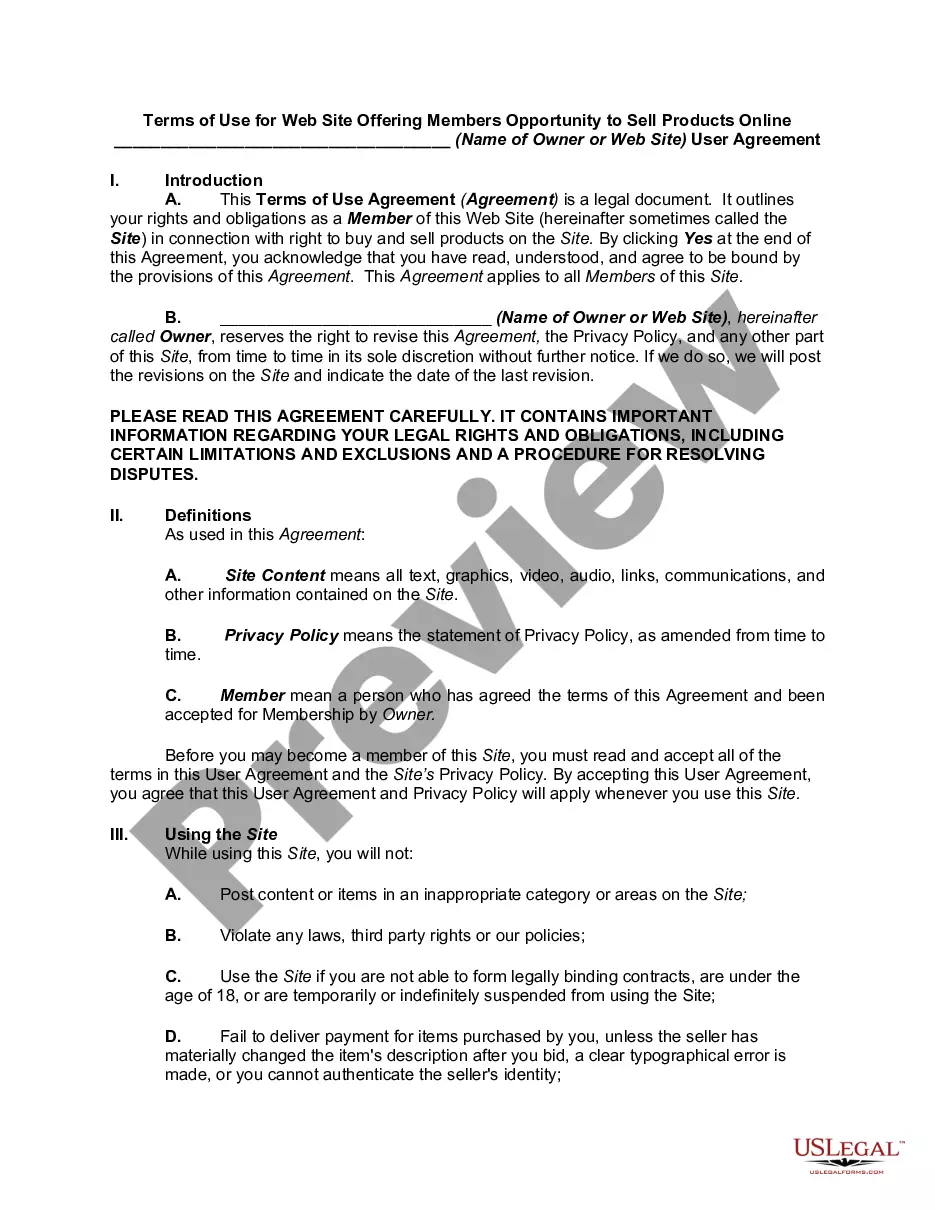
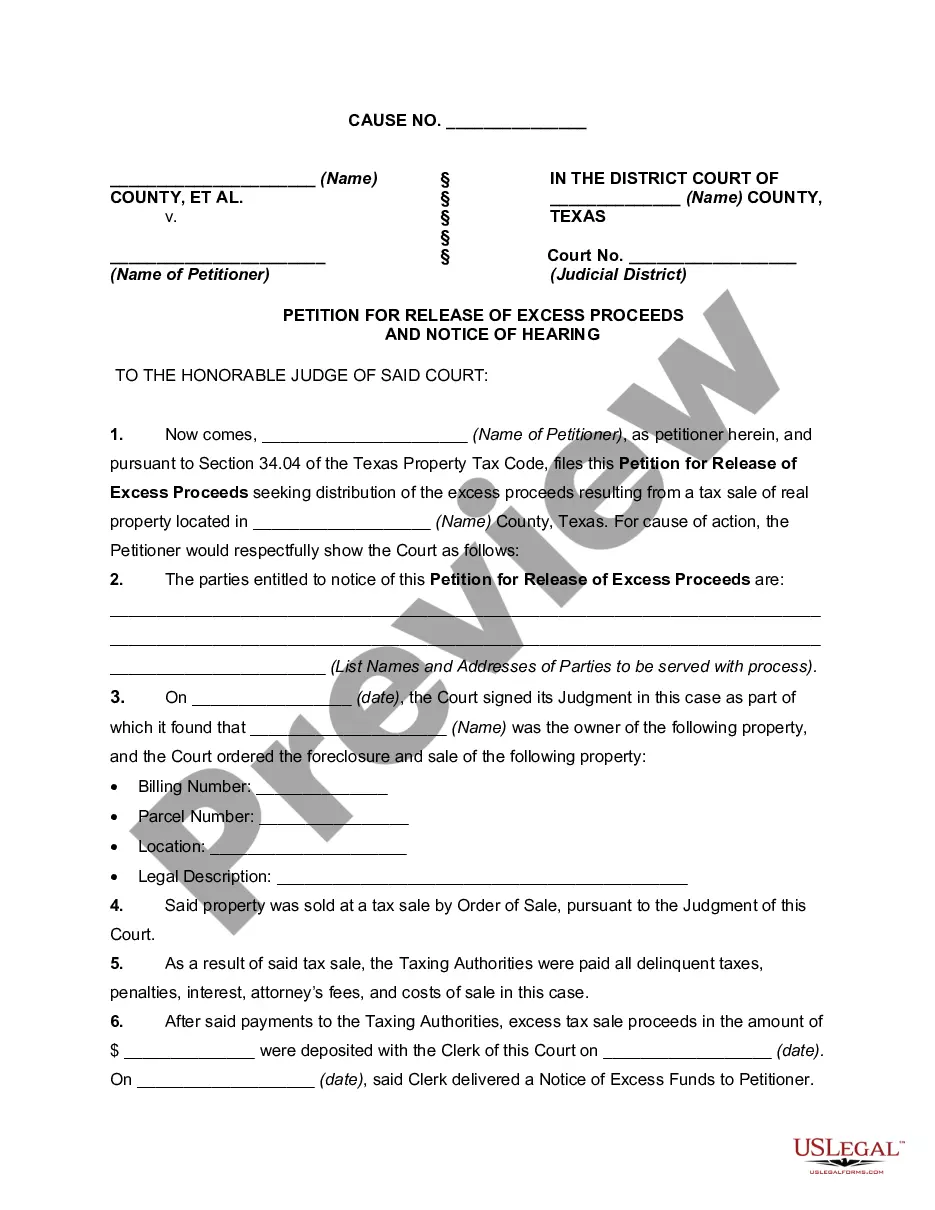



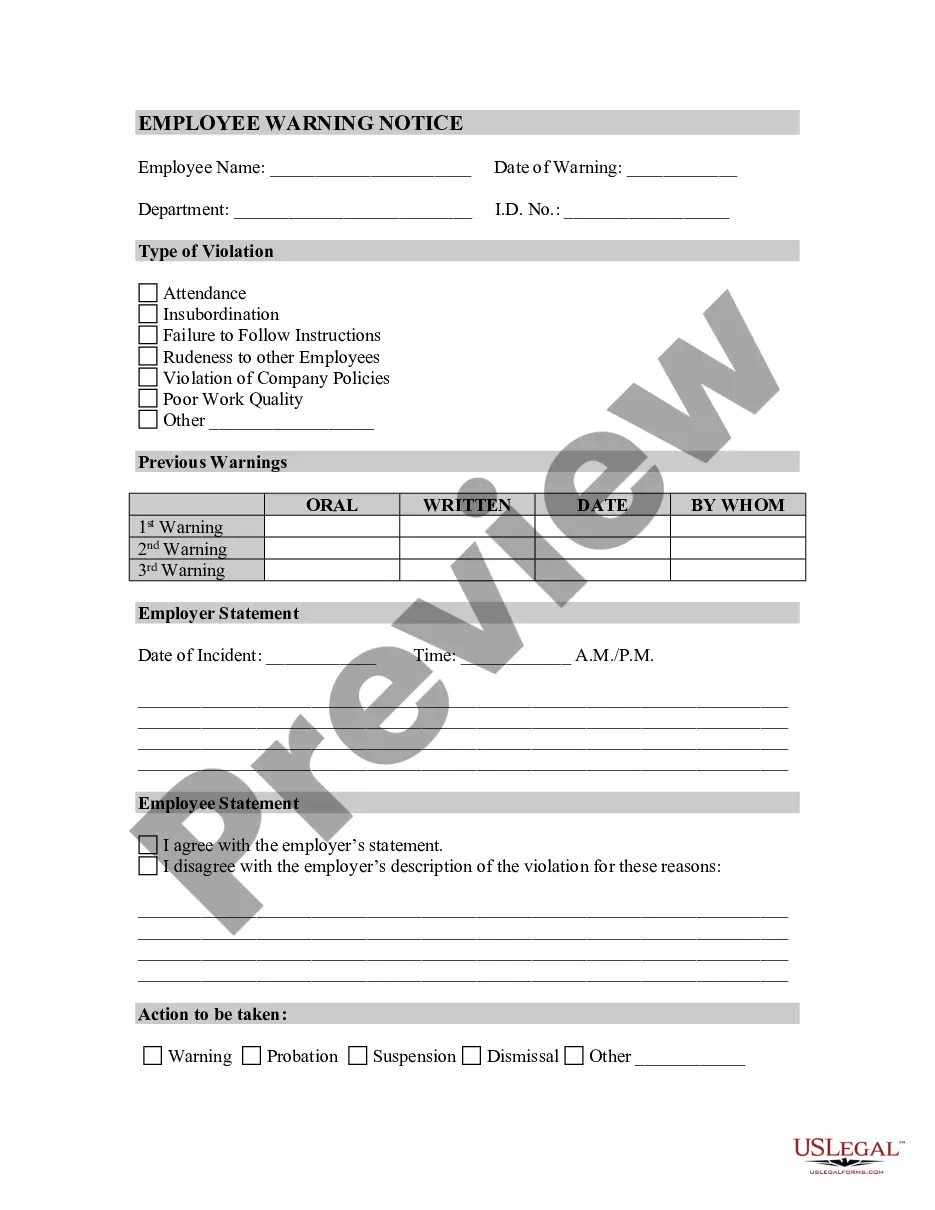
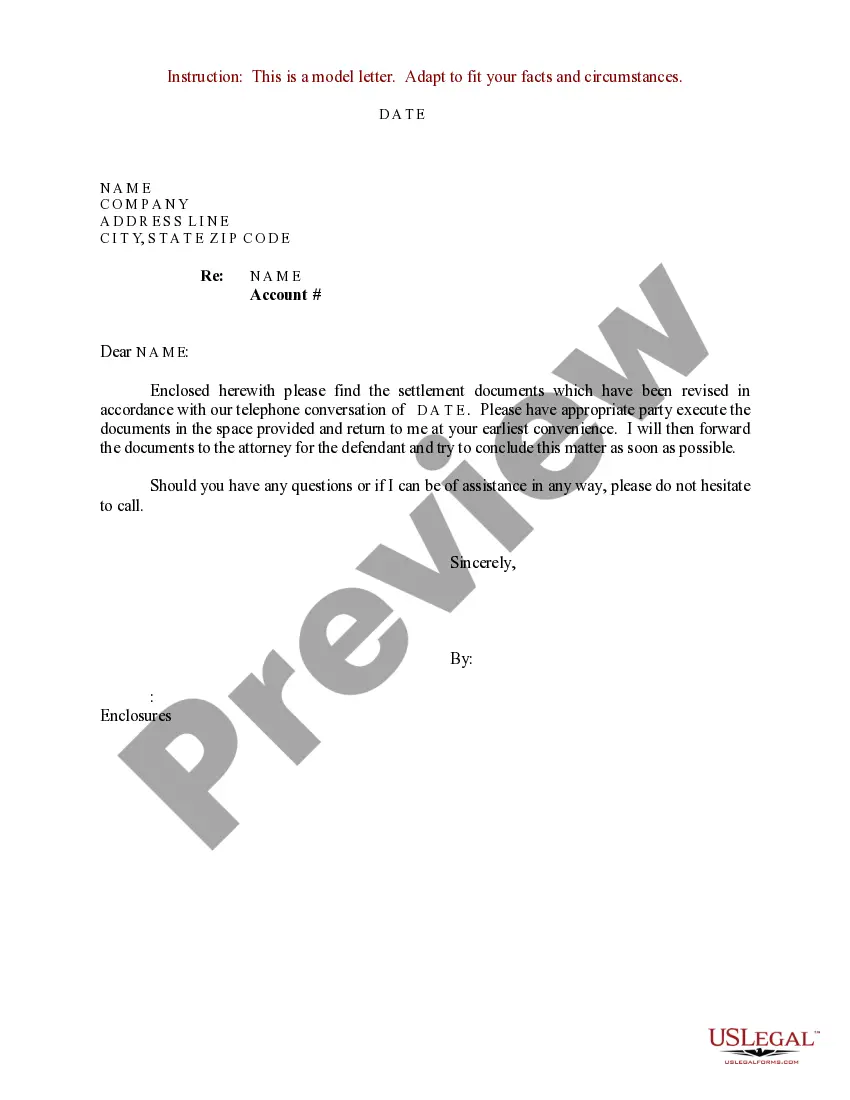
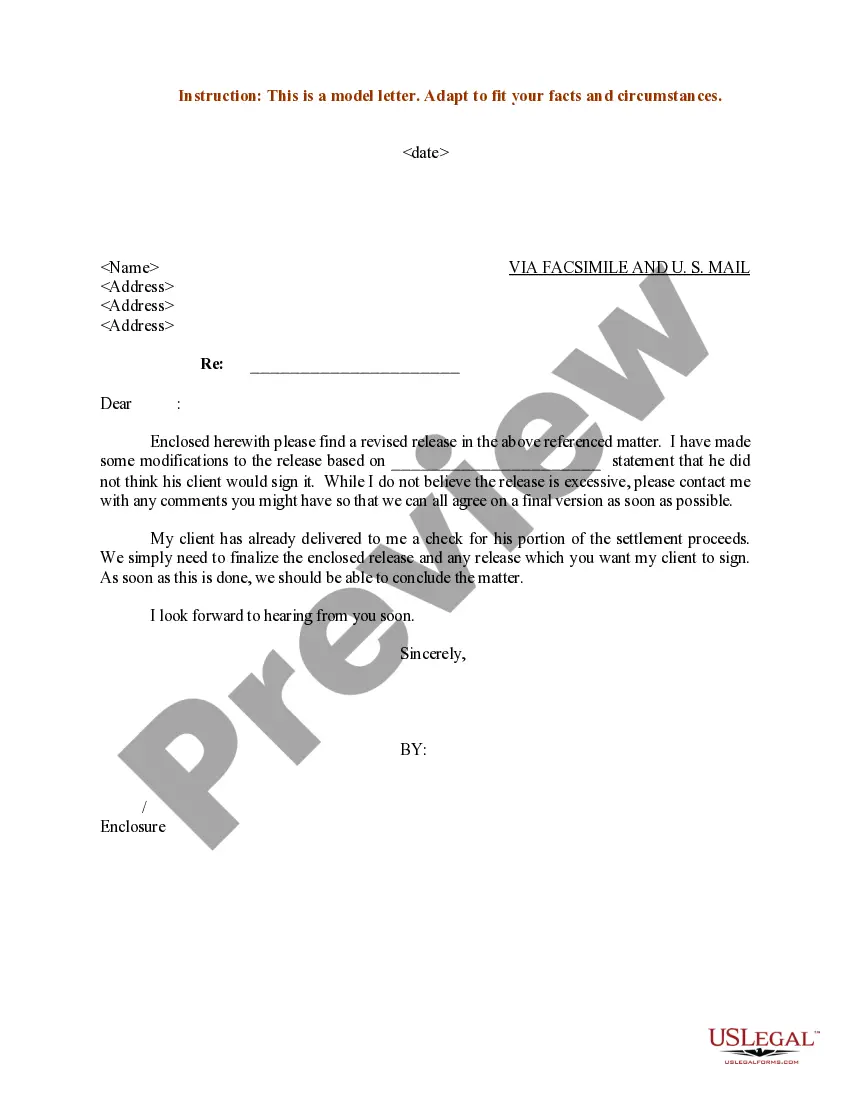
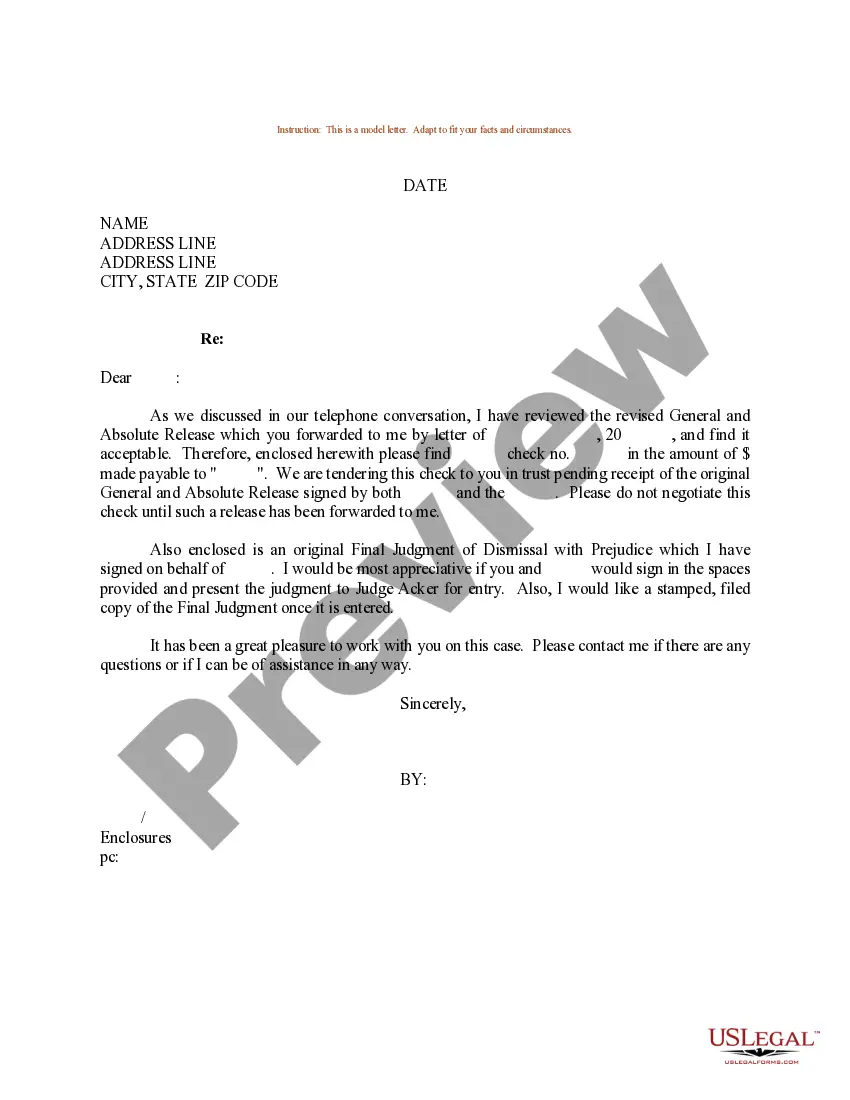
How to fill out Sample Letter For Revised Settlement Documents?
Whether for commercial reasons or personal issues, everyone must handle legal matters at some stage in their life.
Filling out legal documents demands meticulous care, starting with choosing the appropriate form sample.
With an extensive US Legal Forms catalog available, you don’t need to waste time searching for the right template across the web. Utilize the library’s simple navigation to find the suitable template for any situation.
- For example, if you select an incorrect version of a Settlement Agreement Without Prejudice, it will be rejected upon submission.
- It is therefore essential to have a trustworthy source of legal documents like US Legal Forms.
- If you need to acquire a Settlement Agreement Without Prejudice template, follow these straightforward steps.
- Obtain the template you require using the search bar or catalog navigation.
- Review the form’s description to ensure it fits your situation, state, and county.
- Click on the form’s preview to inspect it.
- If it is the wrong form, return to the search feature to find the Settlement Agreement Without Prejudice template you require.
- Download the file once it aligns with your needs.
- If you already possess a US Legal Forms account, simply click Log in to access previously saved documents in My documents.
- If you haven't created an account yet, you can download the form by clicking Buy now.
- Select the appropriate pricing option.
- Complete the profile registration form.
- Choose your payment method: you can utilize a credit card or PayPal account.
- Select the document format you prefer and download the Settlement Agreement Without Prejudice.
- Once downloaded, you can fill out the form using editing software or print it and complete it manually.
Form popularity
FAQ
Settlement agreements can indeed be created without prejudice, allowing parties to negotiate terms without affecting their legal rights. This means that if negotiations fail, individuals can still pursue their claims in court. Utilizing a settlement agreement without prejudice provides a strategic advantage, as it encourages resolution while preserving legal options. US Legal Forms offers templates to help you draft these agreements clearly and confidently.
When a case is settled without prejudice, it indicates that the parties have reached an agreement, but the plaintiff retains the right to bring the same claim again in the future. This type of settlement allows for flexibility, as it does not prevent future legal action. It can be beneficial for parties who want to resolve disputes while keeping their options open. Using a settlement agreement without prejudice ensures that you can navigate your legal matters effectively.
Several factors can invalidate a settlement agreement. If one party was coerced or did not have the capacity to consent, the agreement may be void. Additionally, misrepresentation or a mutual mistake about essential facts can lead to invalidation. Understanding these nuances is crucial, and resources like US Legal Forms can help you create clear, enforceable settlement agreements without prejudice.
A settlement letter without prejudice means that the contents of the letter cannot be used against the sender in court. This type of letter encourages open communication and negotiation between parties. It allows individuals to discuss potential settlements without the fear of compromising their legal position. In the context of a settlement agreement without prejudice, this approach fosters a more amicable resolution.
Yes, a settlement agreement can be without prejudice if both parties agree to this condition. This means that any discussions or terms negotiated during the settlement process cannot be used in court if necessary. Utilizing a settlement agreement without prejudice can create a safer environment for open negotiations and help both parties reach a mutually beneficial resolution.
To write a simple settlement agreement, start by clearly identifying the parties involved and the purpose of the agreement. Outline the terms of the settlement, including any payments, actions, or obligations. Ensure that both parties sign the document to make it legally binding, thereby protecting your interests.
Without prejudice in a settlement letter means that the contents of the letter cannot be used as evidence in court if the negotiations do not lead to an agreement. This legal protection encourages parties to negotiate openly without fear of compromising their positions. It is essential for fostering a constructive dialogue focused on resolving disputes.
A without prejudice negotiation letter is a document that parties exchange during settlement discussions without risking any admissions in court. This letter allows both sides to communicate openly about potential resolutions while protecting their legal rights. Using this approach can facilitate a more honest and effective negotiation process.
When writing a without prejudice settlement letter, start with a clear header indicating its status. Outline the key facts of the case, your position, and the terms you propose for settlement. Be respectful and focused on finding a resolution, making it clear that these discussions are confidential and cannot be used in court.
To write a strong settlement letter, begin by clearly stating your position and the facts of the case. Next, outline your proposed settlement terms in a straightforward manner. Finally, express your willingness to negotiate and reach an agreement that works for both parties, emphasizing the benefits of settling the dispute outside of court.