Settle Form For The Future
Description
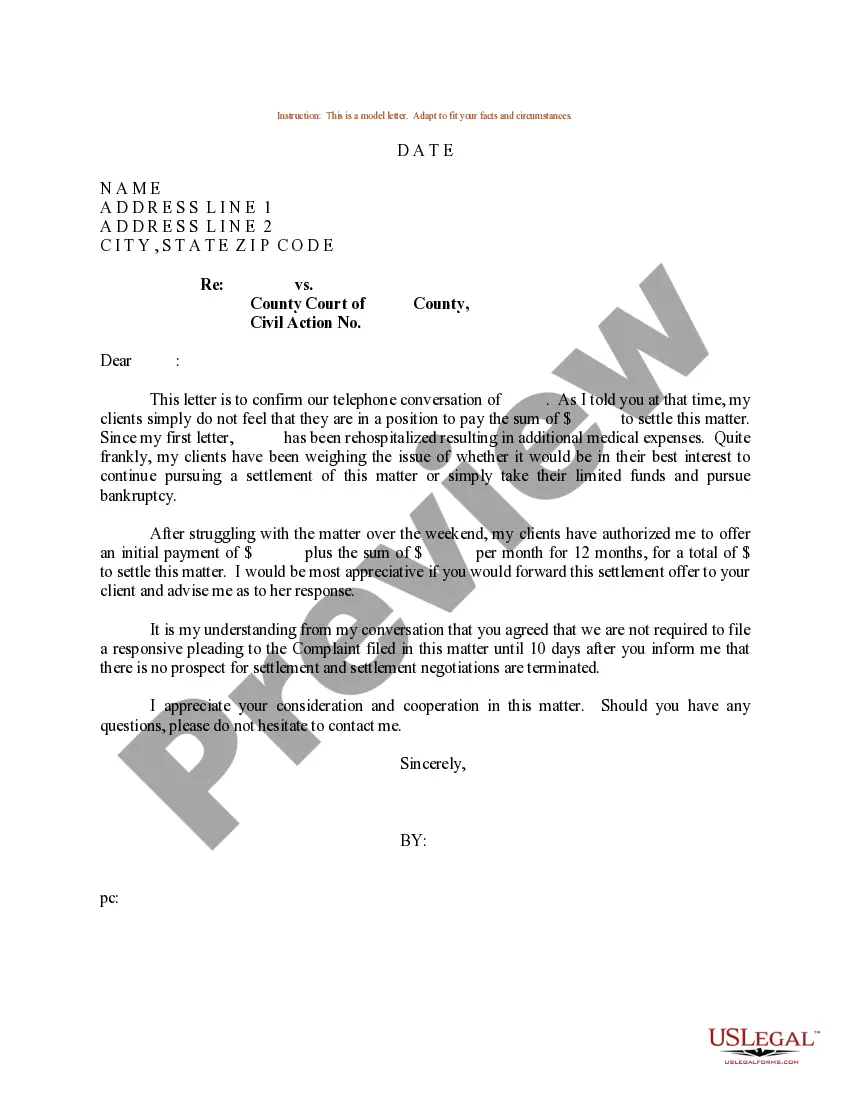
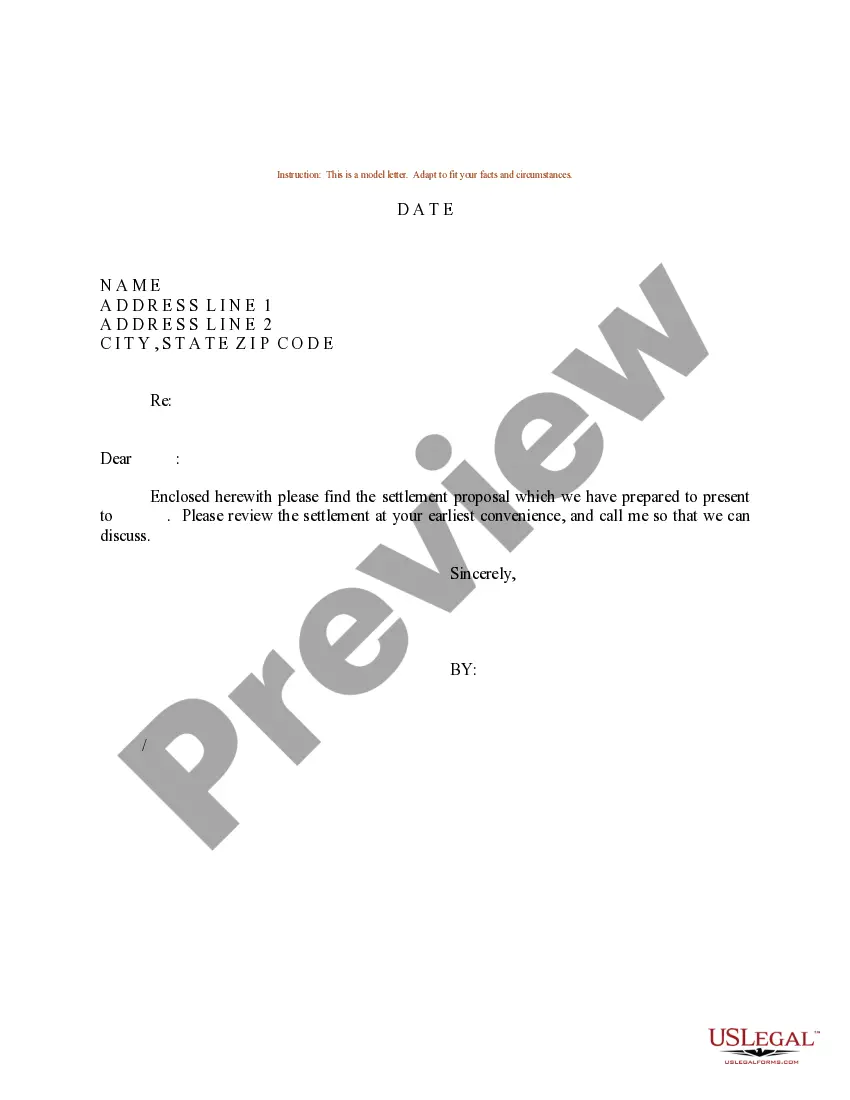
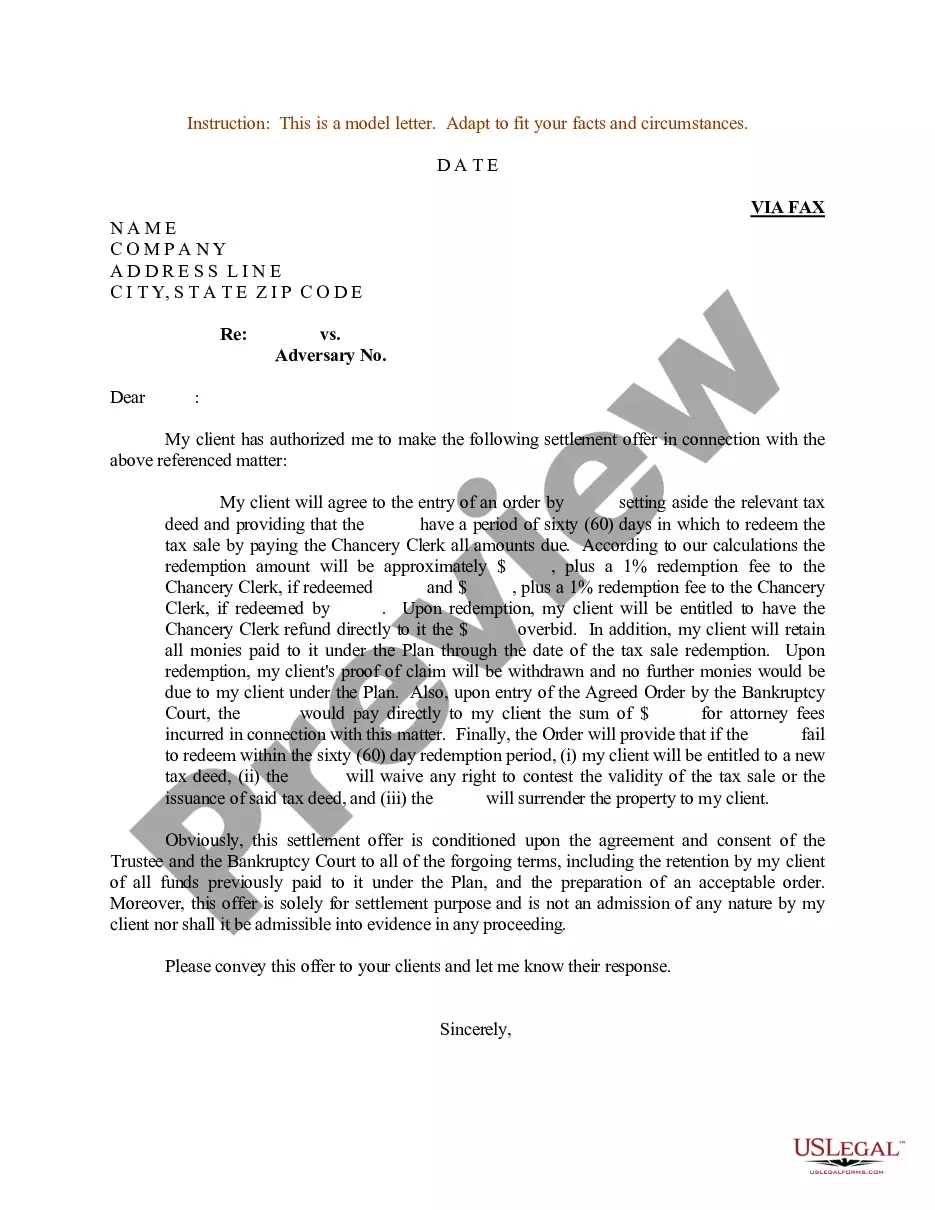
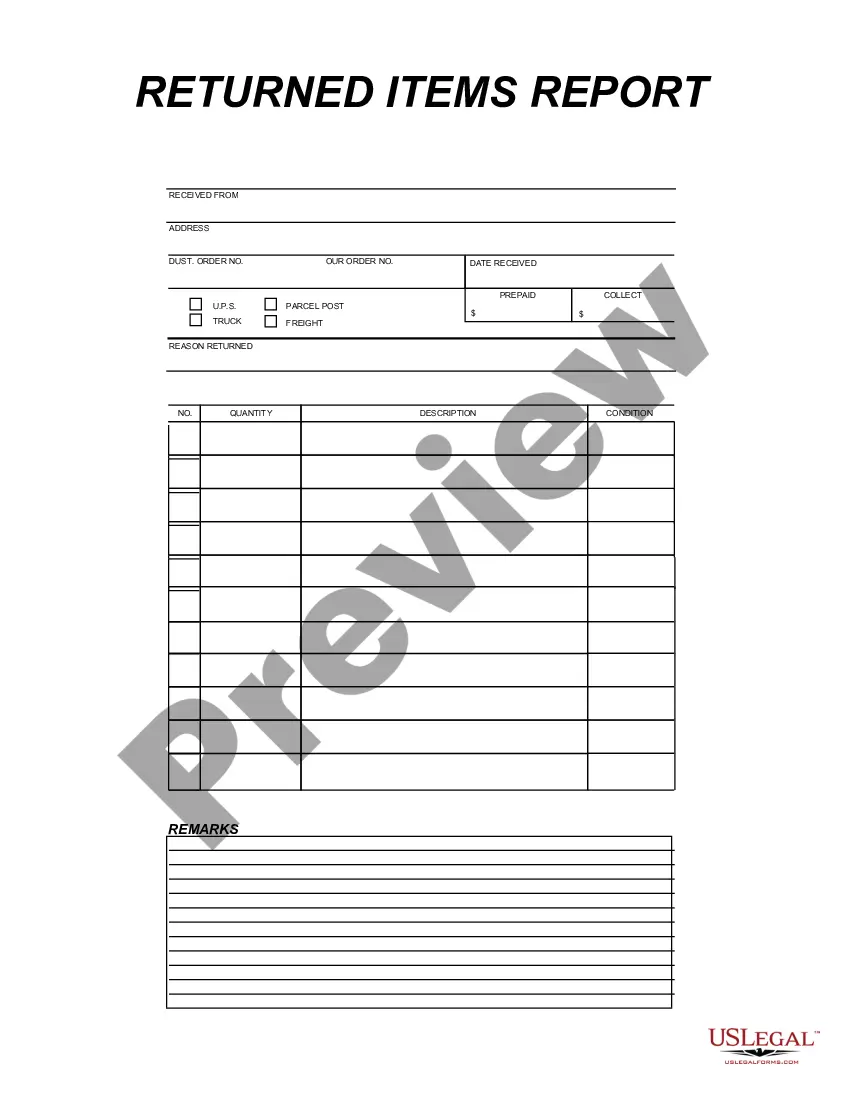
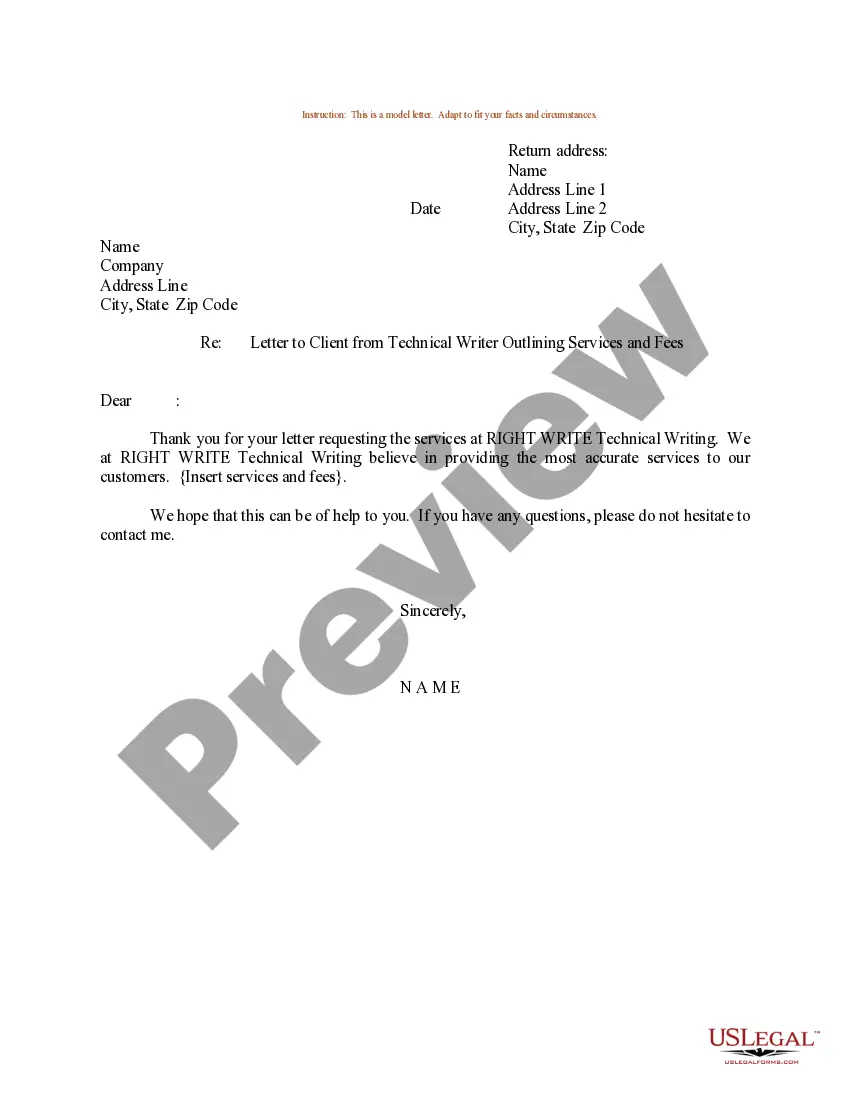
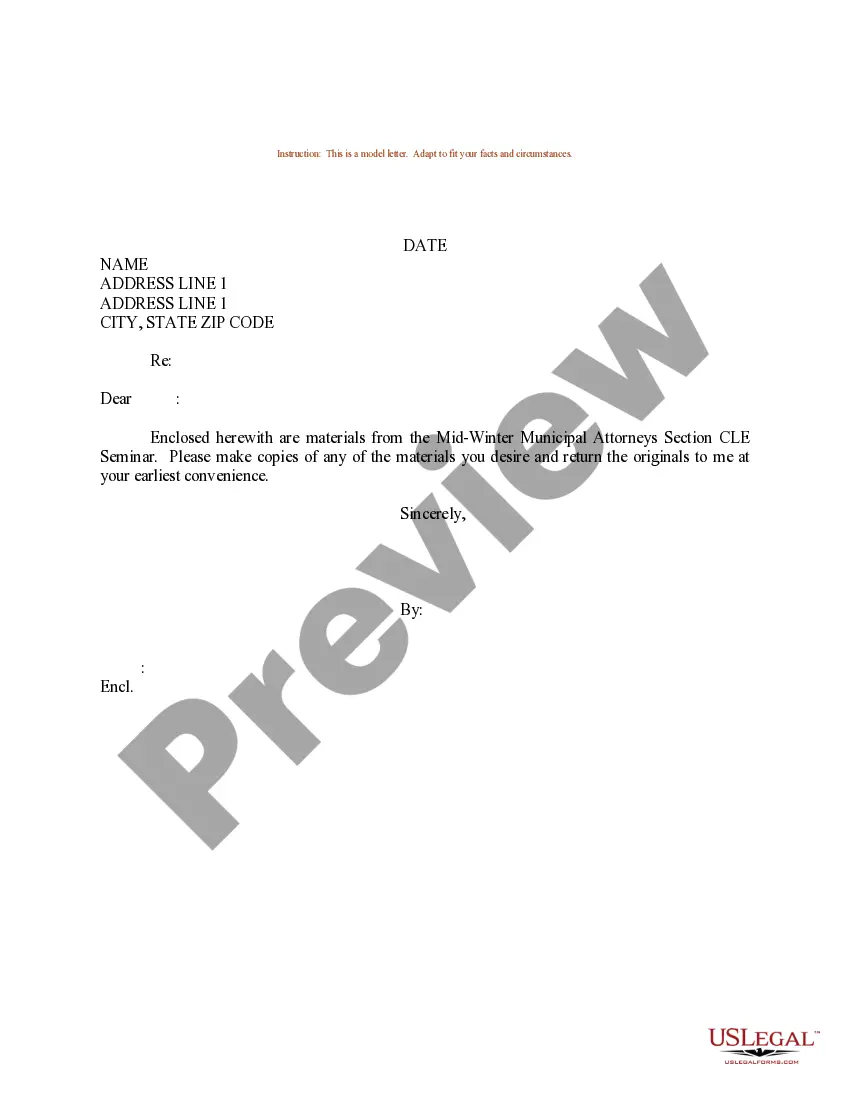
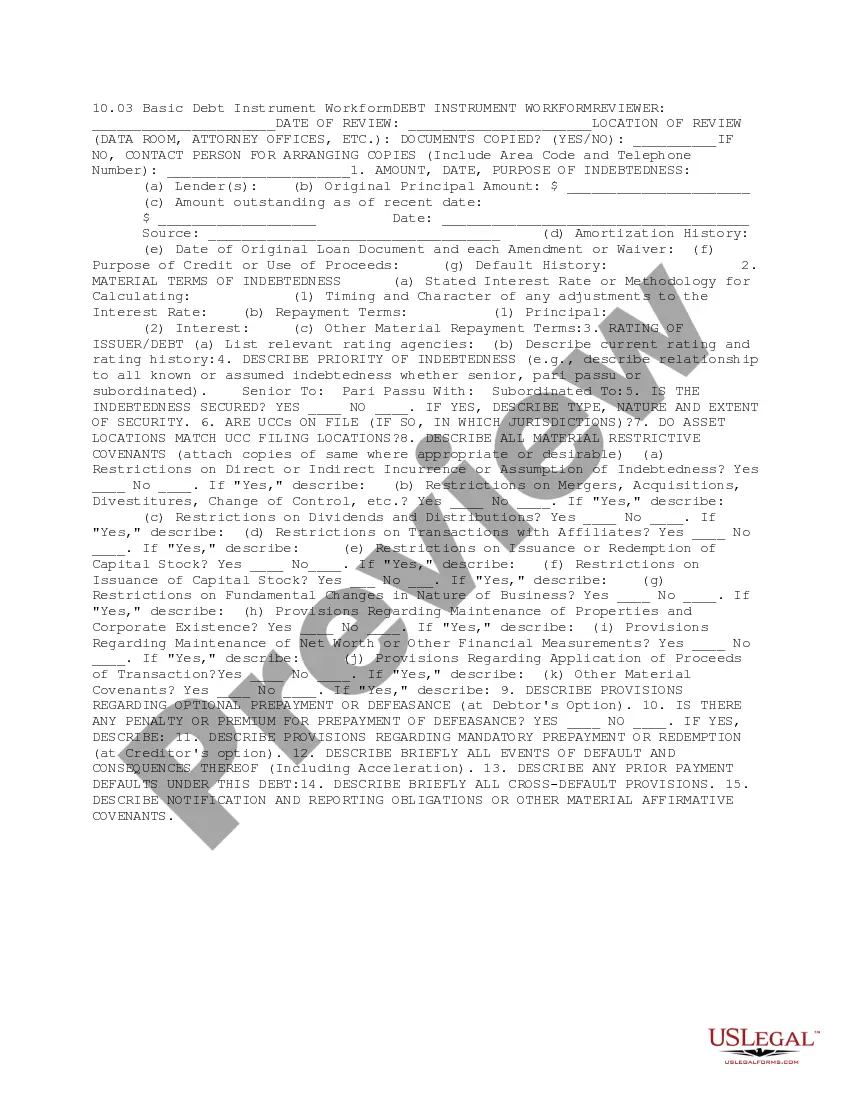
How to fill out Sample Letter For Settlement - Offer To Settle With Condition?
- Log in to your US Legal Forms account if you're a returning user and verify your subscription is active. If your subscription has expired, simply renew it based on your current plan.
- For first-time users, begin by checking the Preview mode and form description to ensure the document meets your local jurisdiction's requirements.
- If you need to explore other templates, use the Search tab above to find the right form that fits your needs.
- Once you find the appropriate document, click on the Buy Now button and select your preferred subscription plan to gain access to the forms library.
- Proceed with your purchase by entering your payment details, either credit card or PayPal, to complete the transaction.
- Finally, download your form to your device, and you can access your document anytime by visiting the My Forms section in your profile.
By utilizing US Legal Forms, you benefit from a robust collection of over 85,000 easily fillable and editable legal forms, ensuring you have access to the right documents when you need them.
Don't wait any longer. Begin your journey to secure your legal documents today with US Legal Forms and settle form for the future!
Form popularity
FAQ
The first notice date for futures is the date on which a seller must notify the buyer of their intention to deliver the underlying asset. This date is crucial for futures traders as it signals the beginning of potential physical delivery. By keeping a close eye on this date and utilizing a settle form for the future, you can make informed decisions about your trading positions and risk management.
To roll over futures in Angel One, you can initiate the process through their trading platform before the expiry of your current contracts. This involves closing your existing position and opening a new one for a later expiration date. With a properly filled settle form for the future, you can manage this transition smoothly and maintain your market presence.
SOFR futures are financial contracts that derive their value from the Secured Overnight Financing Rate. These contracts are designed to take advantage of movements in interest rates, allowing traders to speculate or hedge against rate changes. When you utilize a settle form for the future, you gain clarity in your trading strategy and enhance your decision-making process.
SOFR futures settle based on the average daily SOFR rates during the contract month. Each contract will reflect the average of the SOFR rates from the first to the last day of the month. This settlement process ensures that you can confidently manage your interest rate risks and secure your financial future. Using a settle form for the future can help streamline this process.
The future tense of 'settle' is expressed as 'will settle.' This indicates that the action of settling will take place at some point in time after now. For example, you might say, 'We will settle this matter soon.' Understanding this structure allows you to communicate future intentions clearly, especially when discussing settle forms for the future.
The V3 form, or the past participle form, of 'settle' is 'settled.' This form is often used with auxiliary verbs to indicate completed actions in the perfect tenses. For example, in the phrase 'has settled', it suggests that a resolution has already occurred. Becoming familiar with such forms contributes to a stronger grasp of tense structures, particularly around settle forms for the future.
The correct form of the future tense typically involves using 'will' plus the base form of the verb. For instance, in the sentence 'I will settle the issue', 'will settle' showcases future action. Mastering this form is essential for clear communication about future events. In the context of legal matters, understanding the settle form for the future can facilitate effective resolution.
The second form of a verb is its past simple form, while the third form is the past participle. For instance, the verb 'settle' has the second form 'settled' and the third form is also 'settled.' Knowing these forms can enhance your understanding of verb conjugation and improve your writing clarity. This knowledge becomes crucial when using settle forms for the future.
An example of the future tense can be seen in the sentence, 'I will settle the matter tomorrow.' Here, 'will settle' shows a commitment to take action in the future. This construction is vital for expressing plans, intentions, or predictions. Utilizing settle forms for the future can help you communicate your intent clearly to others.
The four future tenses include: simple future, future continuous, future perfect, and future perfect continuous. Each of these tenses serves a unique purpose in indicating how an action relates to time. For example, a simple future tense indicates an action that will happen, while the perfect tenses describe actions that will be completed at a certain point. Understanding these forms will enhance your familiarity with various settle forms for the future.
