Unlawful Detainer Vs Forcible Entry
Description
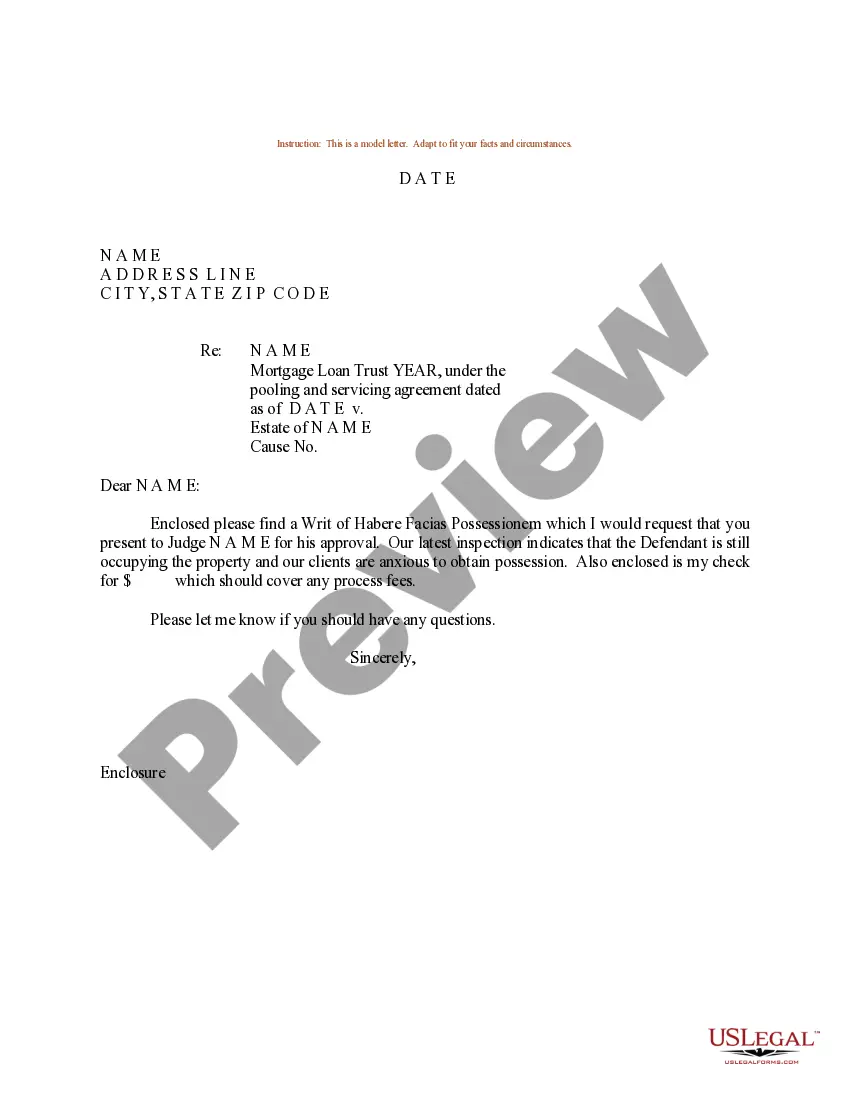
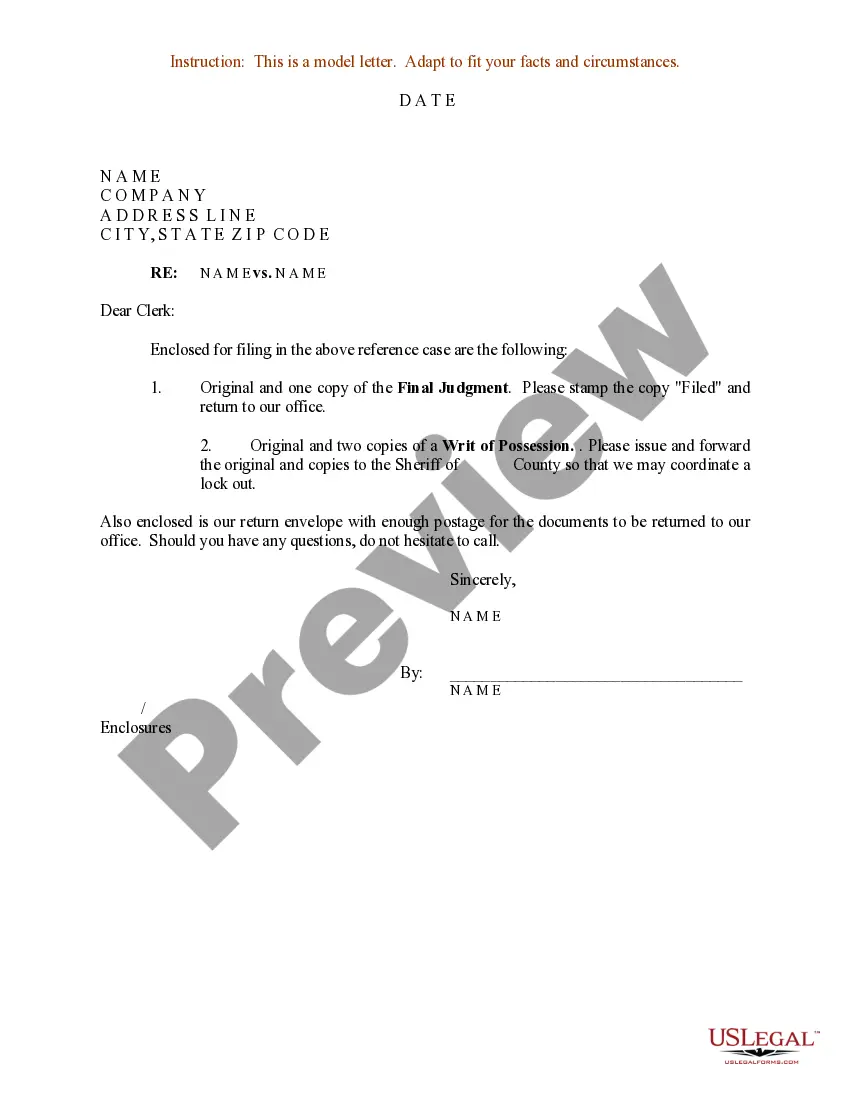
Get your form ready online
Our built-in tools help you complete, sign, share, and store your documents in one place.
Make edits, fill in missing information, and update formatting in US Legal Forms—just like you would in MS Word.
Download a copy, print it, send it by email, or mail it via USPS—whatever works best for your next step.
Sign and collect signatures with our SignNow integration. Send to multiple recipients, set reminders, and more. Go Premium to unlock E-Sign.
If this form requires notarization, complete it online through a secure video call—no need to meet a notary in person or wait for an appointment.
We protect your documents and personal data by following strict security and privacy standards.

Make edits, fill in missing information, and update formatting in US Legal Forms—just like you would in MS Word.

Download a copy, print it, send it by email, or mail it via USPS—whatever works best for your next step.

Sign and collect signatures with our SignNow integration. Send to multiple recipients, set reminders, and more. Go Premium to unlock E-Sign.

If this form requires notarization, complete it online through a secure video call—no need to meet a notary in person or wait for an appointment.

We protect your documents and personal data by following strict security and privacy standards.
Looking for another form?

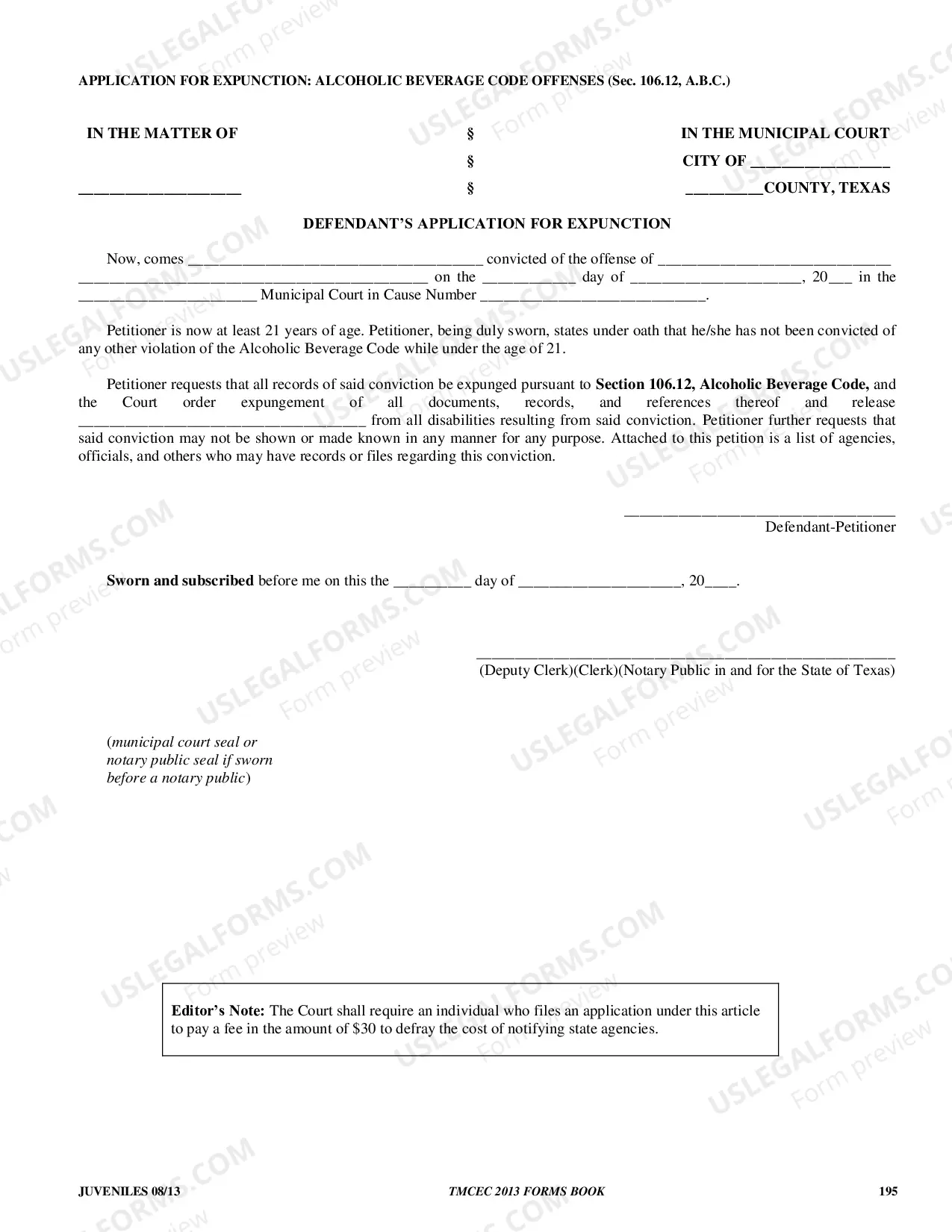


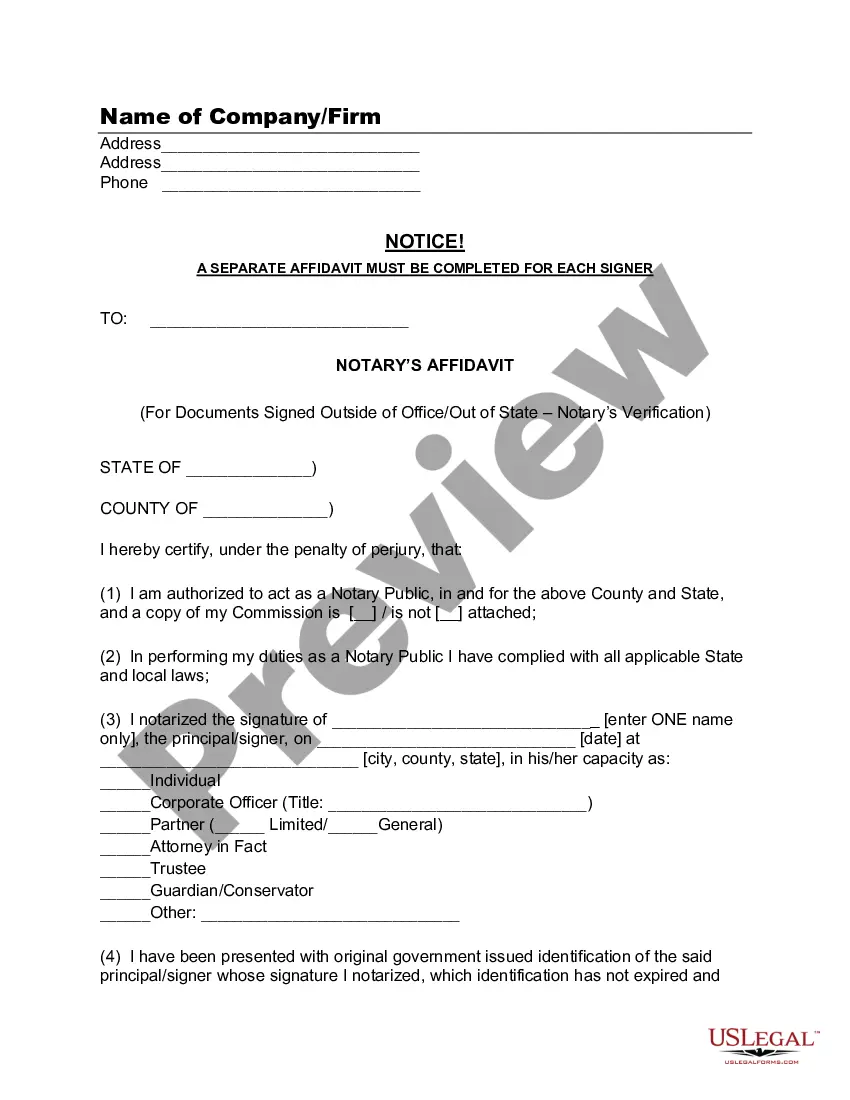




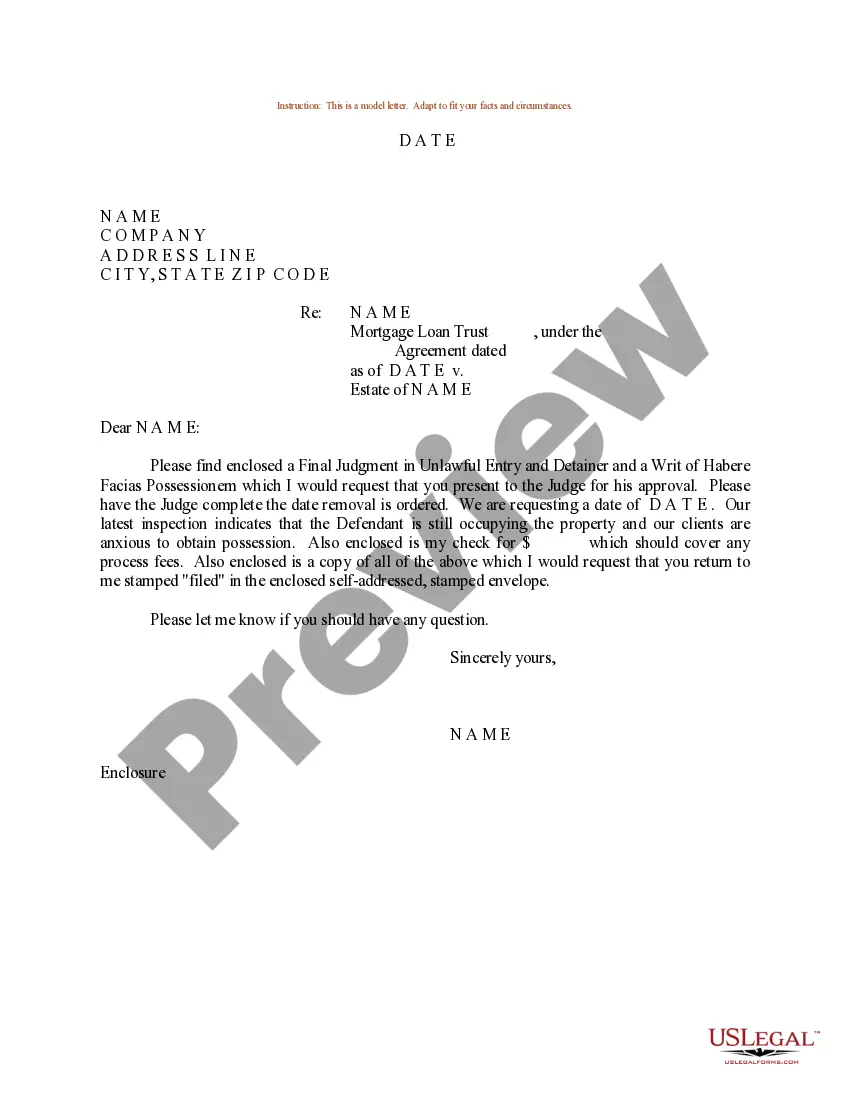
How to fill out Sample Letter For Final Judgment In Unlawful Entry - Detainer - Writ Of Habere Facias Possessionem?
Locating a reliable source to obtain the latest and most suitable legal templates is a significant part of navigating bureaucracy.
Identifying the correct legal documents necessitates accuracy and carefulness, which is why it is essential to source samples of Unlawful Detainer Vs Forcible Entry exclusively from trustworthy providers, such as US Legal Forms. An incorrect template will squander your time and delay your situation.
Once you have the form on your device, you can modify it with the editor or print it out and fill it manually. Eliminate the hassle that comes with your legal documentation. Delve into the extensive US Legal Forms collection where you can discover legal templates, assess their suitability for your circumstances, and download them without delay.
- Utilize the library navigation or search function to locate your template.
- Examine the form’s description to verify if it corresponds to your state's and region's requirements.
- Check the form preview, if available, to confirm that the template is indeed the one you seek.
- Return to the search and find the suitable template if the Unlawful Detainer Vs Forcible Entry does not meet your needs.
- If you are certain about the form’s applicability, download it.
- When you have registered, click Log in to verify your identity and access your chosen forms in My documents.
- If you don’t have an account yet, click Buy now to acquire the form.
- Choose the pricing plan that fits your needs.
- Proceed with the registration to finalize your purchase.
- Complete your transaction by selecting a payment method (credit card or PayPal).
- Choose the document format for downloading Unlawful Detainer Vs Forcible Entry.
Form popularity
FAQ
Forcible entry means entering a property without permission, often involving physical alteration of locks or doors. This action is illegal and can lead to severe legal consequences for the individual attempting the entry. By differentiating between unlawful detainer vs forcible entry, individuals can better understand the legal issues surrounding eviction processes.
An example of an unlawful detainer occurs when a tenant stops paying rent and refuses to vacate the premises. The landlord can then file an unlawful detainer action to regain possession of the property legally. Recognizing the differences in unlawful detainer vs forcible entry helps both landlords and tenants understand their rights and responsibilities.
When a tenant receives an unlawful detainer in California, it means a court has authorized their eviction due to lease violations. The tenant has a limited time to respond to the lawsuit, typically within five days. Understanding the details of unlawful detainer vs forcible entry will equip tenants with the knowledge to make informed decisions during this stressful time.
Winning an eviction lawsuit requires thorough preparation and a solid understanding of local laws. Ensure you have all necessary documentation, including lease agreements and proof of rent payments. As you navigate the complexities of unlawful detainer vs forcible entry, consider using resources available on US Legal Forms to streamline your process and improve your chances of success.
Forced entry refers to the act of entering a property without the owner's consent, often using physical force. In the context of landlord-tenant relationships, it may involve illegal methods of taking possession of the property. Distinguishing between unlawful detainer vs forcible entry helps clarify the legal repercussions for landlords who may consider such actions.
A forcible entry and detainer action is a legal process used to evict a tenant who refuses to leave a property. This type of suit combines elements of unlawful detainer and forcible entry, requiring landlords to prove their right to reclaim possession. Understanding the nuances in unlawful detainer vs forcible entry is essential for landlords navigating the eviction process.
Enforced entry typically refers to a court-sanctioned action allowing a person, usually a landlord, to enter a property following legal procedures. This concept is crucial when understanding the dynamics of unlawful detainer vs forcible entry since enforced entry follows a legal eviction process. Knowing this difference helps prevent potential disputes between landlords and tenants. For guidance on navigating these situations, consider utilizing resources from US Legal Forms, which can offer templates and information on lawful evictions.
Forcible entry includes any situation where an individual uses force to enter a property, disregarding the owner's rights. This can happen without a court order and may vary from breaking locks to pushing past a resisting occupant. When comparing unlawful detainer vs forcible entry, it is important to recognize that not all entries qualify as lawful and that the legality can depend on specific circumstances. Becoming aware of these distinctions is essential for both landlords and tenants.
Forcible entry is a legal term that describes the action of entering a property against the will of its occupants. It often occurs in eviction scenarios, where landlords seek to regain possession of their rental properties. In the context of unlawful detainer vs forcible entry, it is vital to distinguish between lawful eviction processes and unlawful forced entry. Familiarizing yourself with the legal framework surrounding these actions can empower property owners and tenants alike.
Forced entry refers to the act of gaining access to a property without the owner's consent, often through physical means such as breaking down a door or window. In the discussion of unlawful detainer vs forcible entry, understanding this concept is essential, as it addresses the legal implications of entering someone else's property. Forced entry can lead to legal consequences for those who engage in this action. Therefore, knowing your rights and responsibilities is crucial.