Testamentary Trusts For Dummies
Description
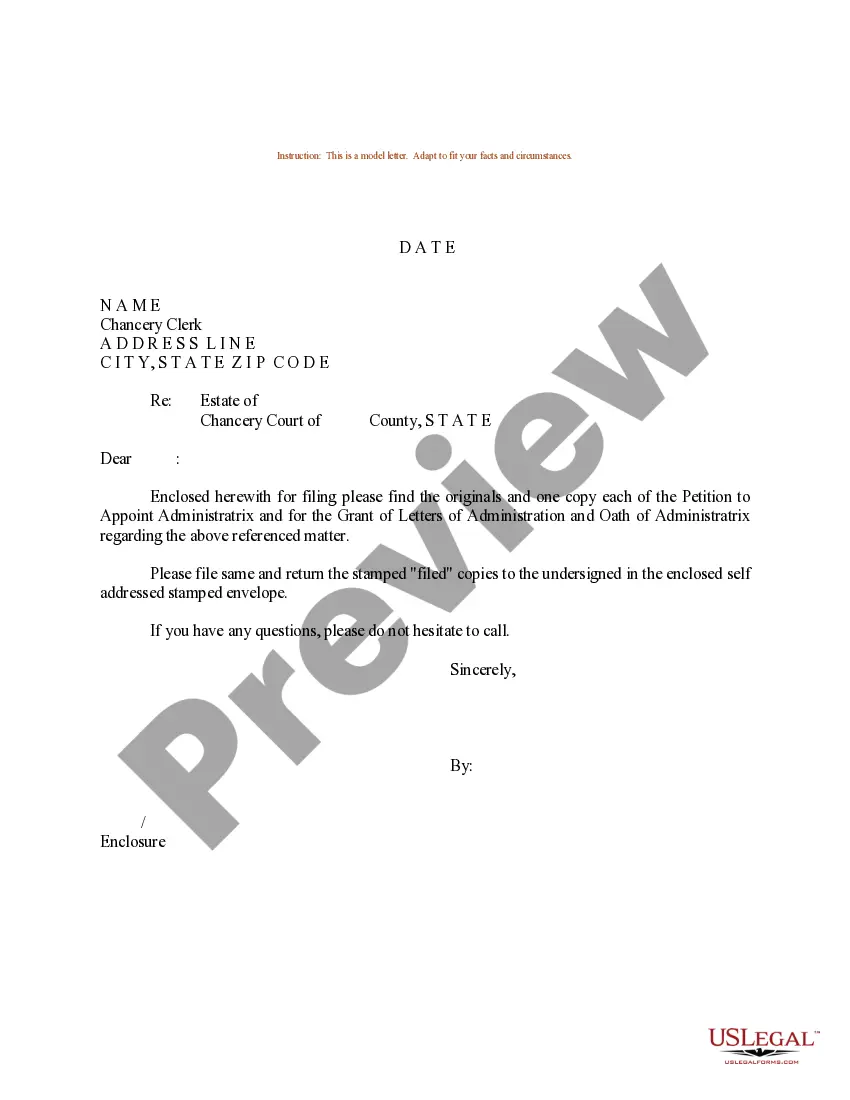
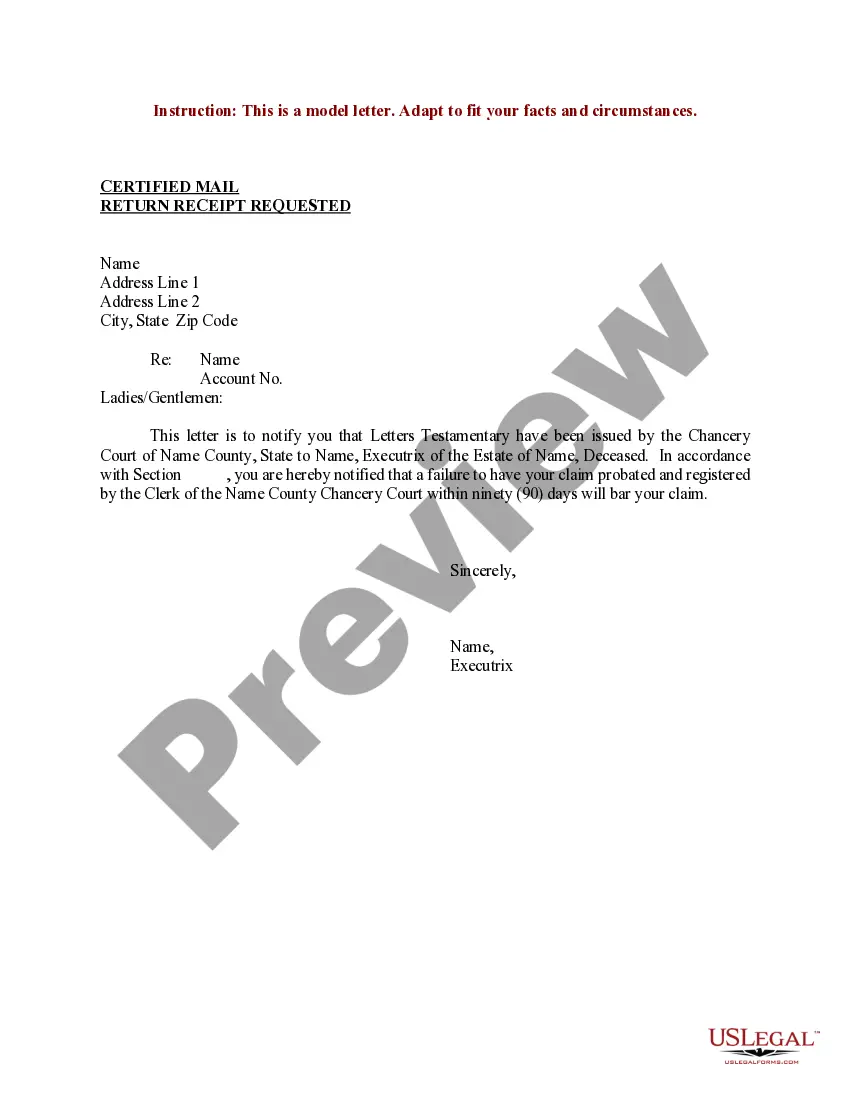
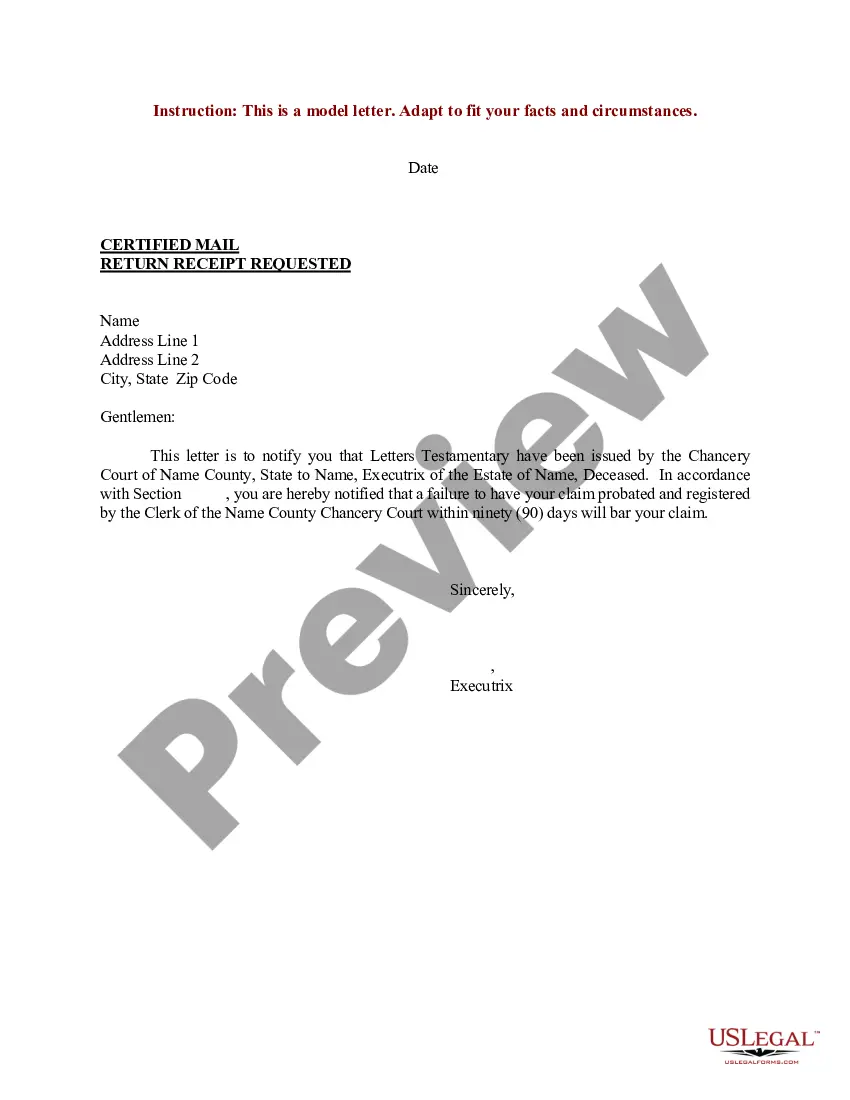
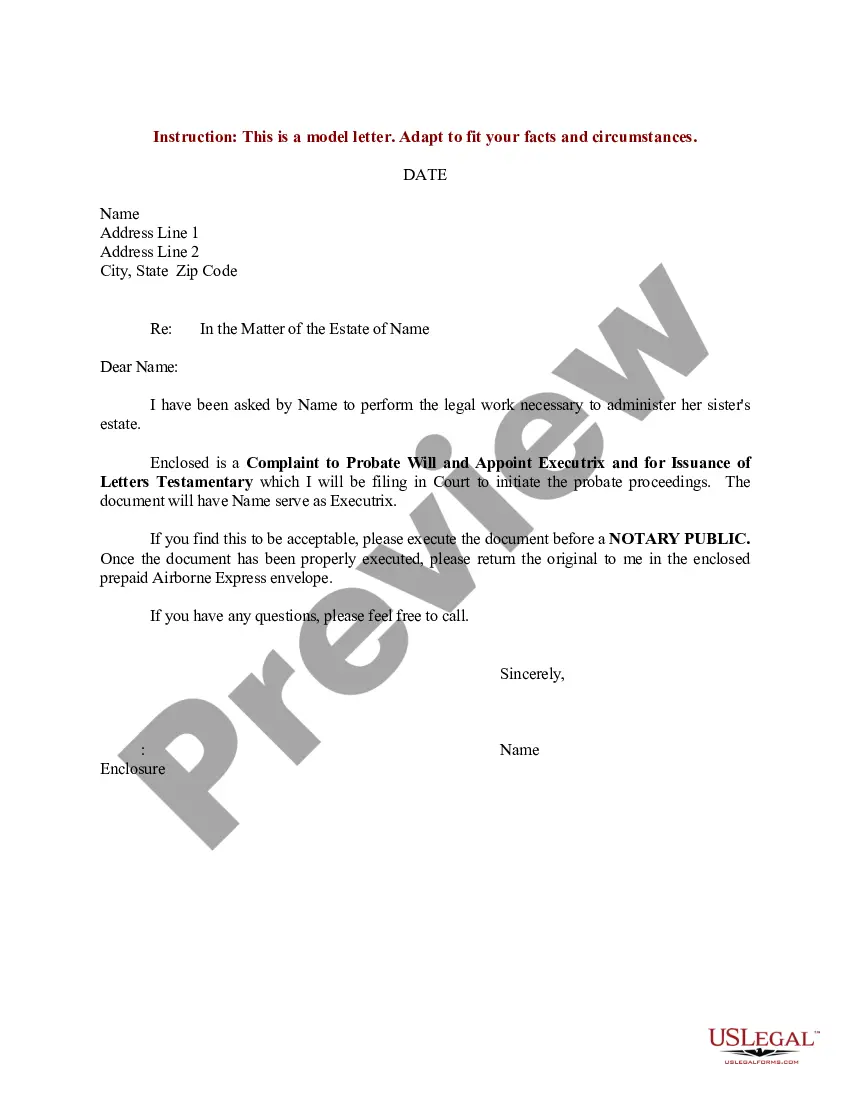







How to fill out Sample Letter For Letters Testamentary?
Regardless of whether it pertains to commercial reasons or personal issues, everyone must confront legal circumstances at some point in their lives.
Filling out legal documents demands meticulous care, starting from choosing the right form specimen.
With an extensive catalog from US Legal Forms available, you do not have to waste time searching for the right template on the internet. Use the library’s straightforward navigation to obtain the suitable template for any circumstance.
- For example, if you choose an incorrect version of a Testamentary Trusts For Dummies, it will be rejected upon submission.
- Hence, it is essential to obtain a reliable source of legal documents such as US Legal Forms.
- If you need to acquire a Testamentary Trusts For Dummies template, follow these straightforward steps.
- Locate the template you require by using the search bar or catalog browsing.
- Examine the form’s details to confirm it aligns with your case, state, and county.
- Select the form’s preview to view it.
- If it is the incorrect document, return to the search option to find the Testamentary Trusts For Dummies template you need.
- Download the template when it fits your requirements.
- If you possess a US Legal Forms account, simply click Log in to access previously saved documents in My documents.
- In case you do not have an account yet, you may download the form by clicking Buy now.
- Select the appropriate pricing option.
- Complete the account registration form.
- Choose your payment method: either a credit card or PayPal account.
- Select the document format you desire and download the Testamentary Trusts For Dummies.
- After saving it, you can fill out the form using editing software or print it and complete it manually.
Form popularity
FAQ
A testamentary trust offers several advantages, such as controlling asset distribution and protecting beneficiaries until they reach maturity. However, it can also take time to activate, as it only becomes effective after the testator's death, potentially delaying access to assets. It's essential to weigh these factors carefully to determine if a testamentary trust aligns with your estate planning goals. For insights tailored to beginners, refer to reliable resources like uslegalforms, which clarify testamentary trusts for dummies.
Writing a testamentary trust involves including specific language in your will that outlines your intentions and the terms of the trust. You should detail who the beneficiaries are and how you want the assets to be managed and distributed. It is often wise to consult legal professionals to ensure that your trust complies with state laws and accurately reflects your wishes. If you need guidance, platforms like uslegalforms can provide helpful resources for creating testamentary trusts for dummies.
In a testamentary trust, the legal ownership of the assets transfers to the trust itself, which is managed by a trustee. The beneficiaries do not have direct ownership until the trust distributes the assets according to its terms. This setup protects the assets from immediate distribution, ensuring responsible management until the beneficiaries are ready to receive them. Understanding this ownership structure is crucial for anyone learning about testamentary trusts for dummies.
The lifespan of a testamentary trust typically begins after the death of the person who creates it, known as the testator. It lasts until the trust fulfills its purpose, which is often defined by the testator's wishes. For example, a testamentary trust may be set to distribute assets to beneficiaries when they reach a certain age. This structure allows for controlled asset distribution, providing clear guidelines even after death, making it easier for those looking to understand testamentary trusts for dummies.
In simple terms, a testamentary trust is a legal arrangement that comes into play after someone dies, as outlined in their will. It allows the deceased to set aside assets for beneficiaries, appointing a trustee to manage those assets. Testamentary trusts for dummies help ensure that the loved ones left behind receive financial support in a structured way. This setup is straightforward yet effective for managing inheritance.
Testamentary trusts for dummies often stem from a will and take effect only after the person passes away. In contrast, a normal trust, or living trust, is created during a person's lifetime. This distinction means that testamentary trusts are subject to probate, whereas normal trusts can help avoid it. Understanding these differences can help you make smarter estate planning decisions.
To set up testamentary trusts for dummies, start by drafting a will that clearly states your intentions regarding the trust. You may also consider consulting with a qualified attorney to help draft necessary documents and ensure they meet legal requirements. Using platforms like USLegalForms can simplify this process by providing templates and guidance tailored to your needs.
Yes, testamentary trusts for dummies are generally required to file a tax return. Once the trust is established, it is treated as a separate tax entity, which means it must report income, deductions, and other taxable matters. Understanding this requirement is crucial to avoid any potential tax issues in the future.
To set up testamentary trusts for dummies, you will need a valid will that specifies the creation of the trust. You may also require a trust document that outlines the terms and conditions of the trust, a death certificate, and any additional forms that your state mandates. Gathering these documents ensures clarity and legality in your testamentary trust arrangements.
To establish a testamentary trust, you must first include it in your will, specifying the terms of the trust and identifying the beneficiaries. Next, it's essential to appoint a trustee who will manage the trust and ensure compliance with its terms. Once you pass away, the trust becomes effective, and assets will be settled through probate. For step-by-step guidance on testamentary trusts for dummies, consider resources like uslegalforms.