Difference Between Testamentary And Non Testamentary Document
Description
Get your form ready online
Our built-in tools help you complete, sign, share, and store your documents in one place.
Make edits, fill in missing information, and update formatting in US Legal Forms—just like you would in MS Word.
Download a copy, print it, send it by email, or mail it via USPS—whatever works best for your next step.
Sign and collect signatures with our SignNow integration. Send to multiple recipients, set reminders, and more. Go Premium to unlock E-Sign.
If this form requires notarization, complete it online through a secure video call—no need to meet a notary in person or wait for an appointment.
We protect your documents and personal data by following strict security and privacy standards.

Make edits, fill in missing information, and update formatting in US Legal Forms—just like you would in MS Word.

Download a copy, print it, send it by email, or mail it via USPS—whatever works best for your next step.

Sign and collect signatures with our SignNow integration. Send to multiple recipients, set reminders, and more. Go Premium to unlock E-Sign.

If this form requires notarization, complete it online through a secure video call—no need to meet a notary in person or wait for an appointment.

We protect your documents and personal data by following strict security and privacy standards.
Looking for another form?
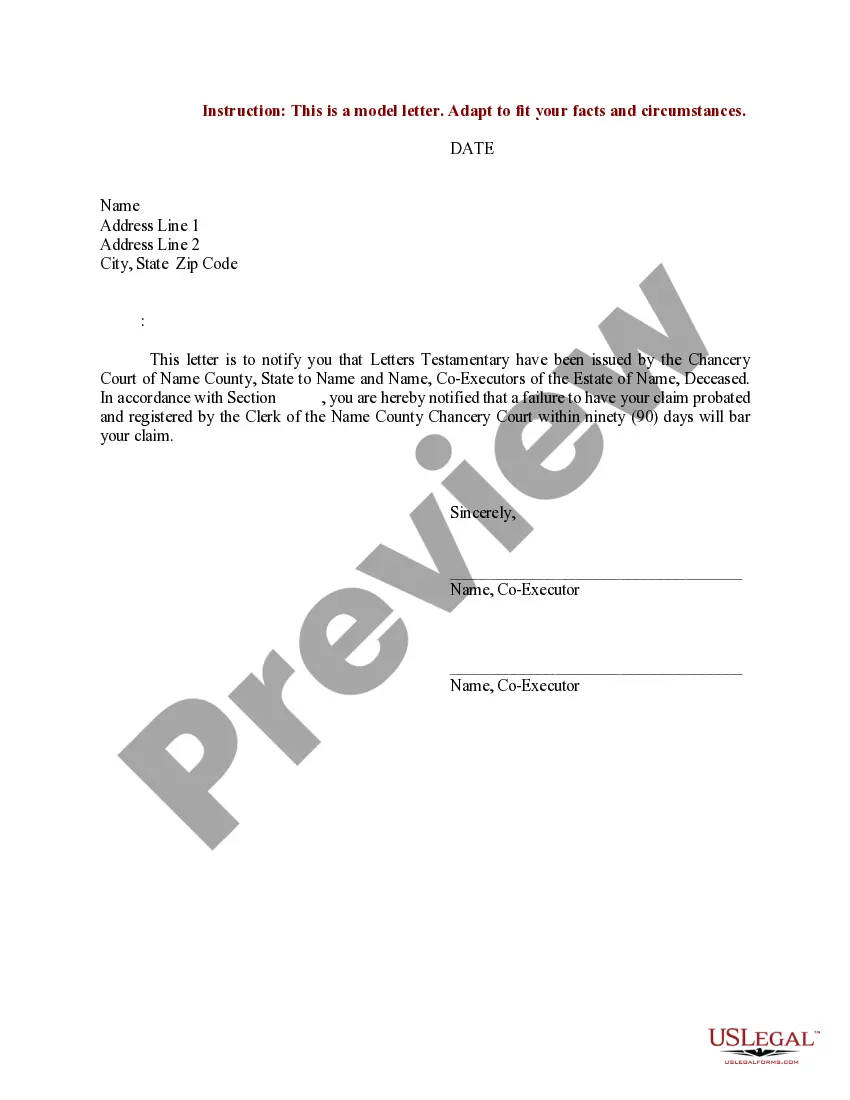
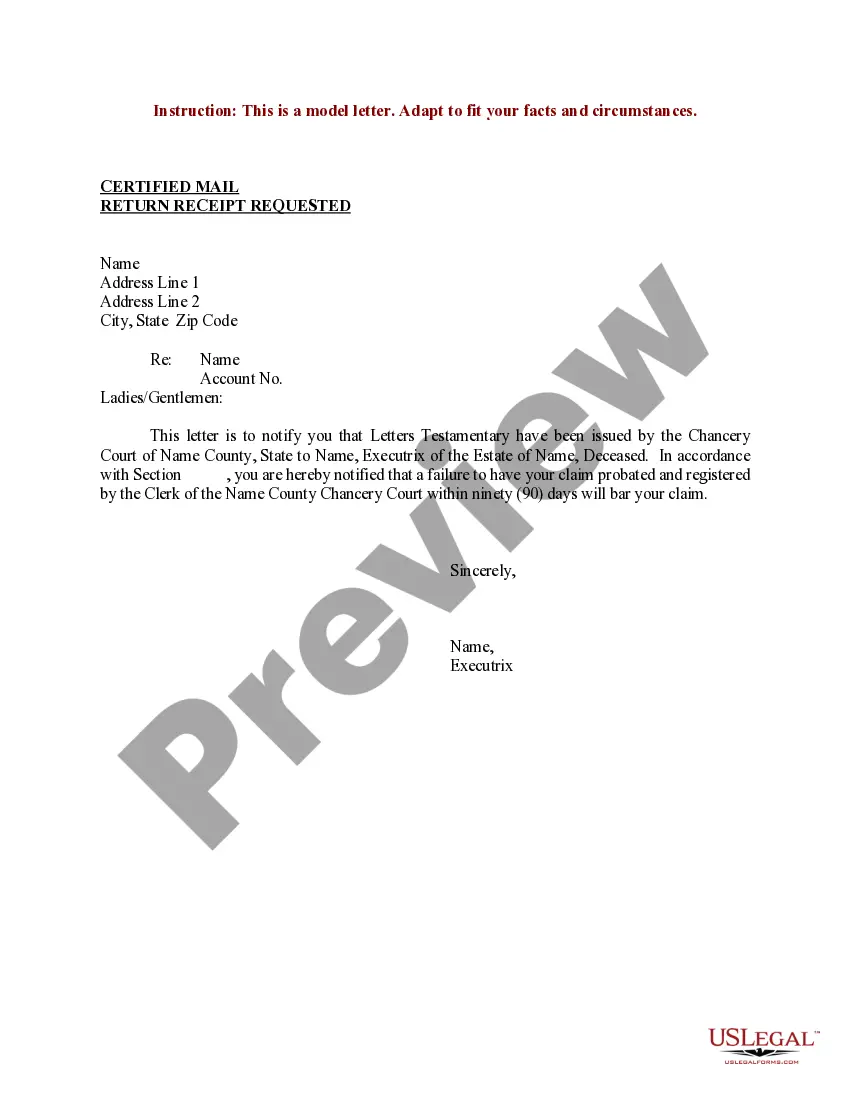
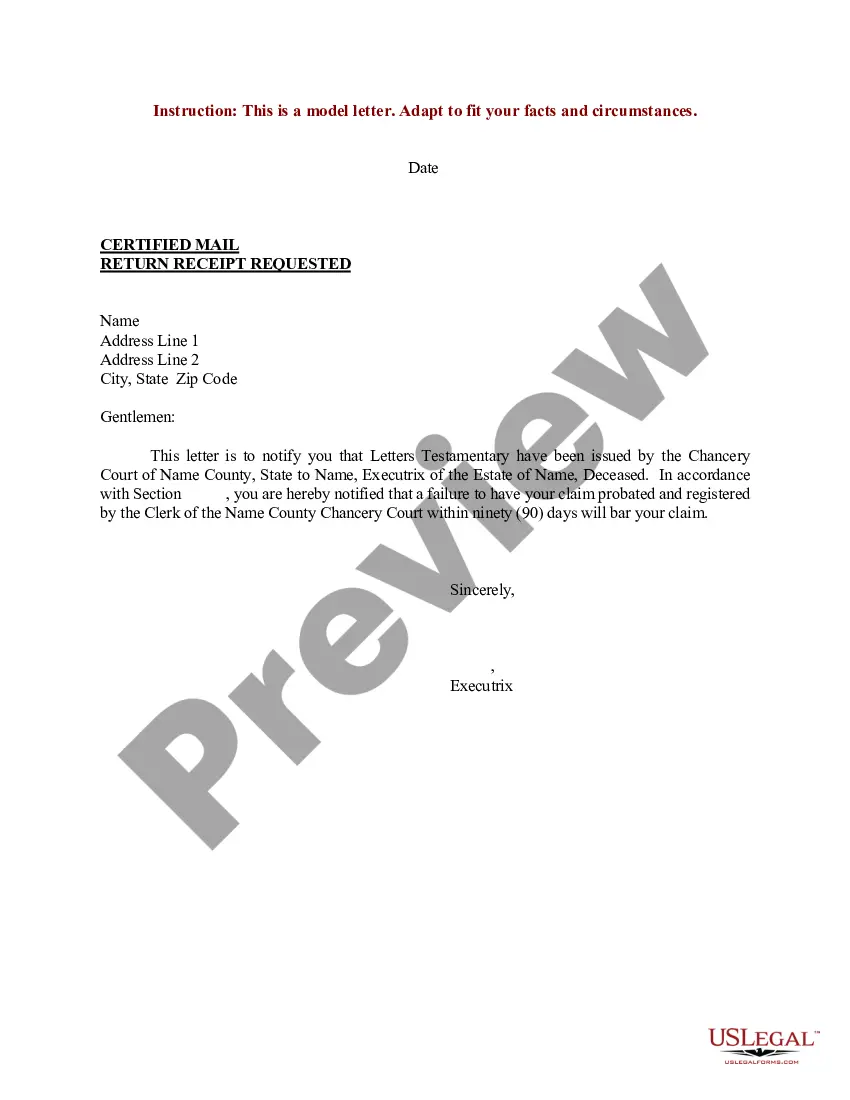
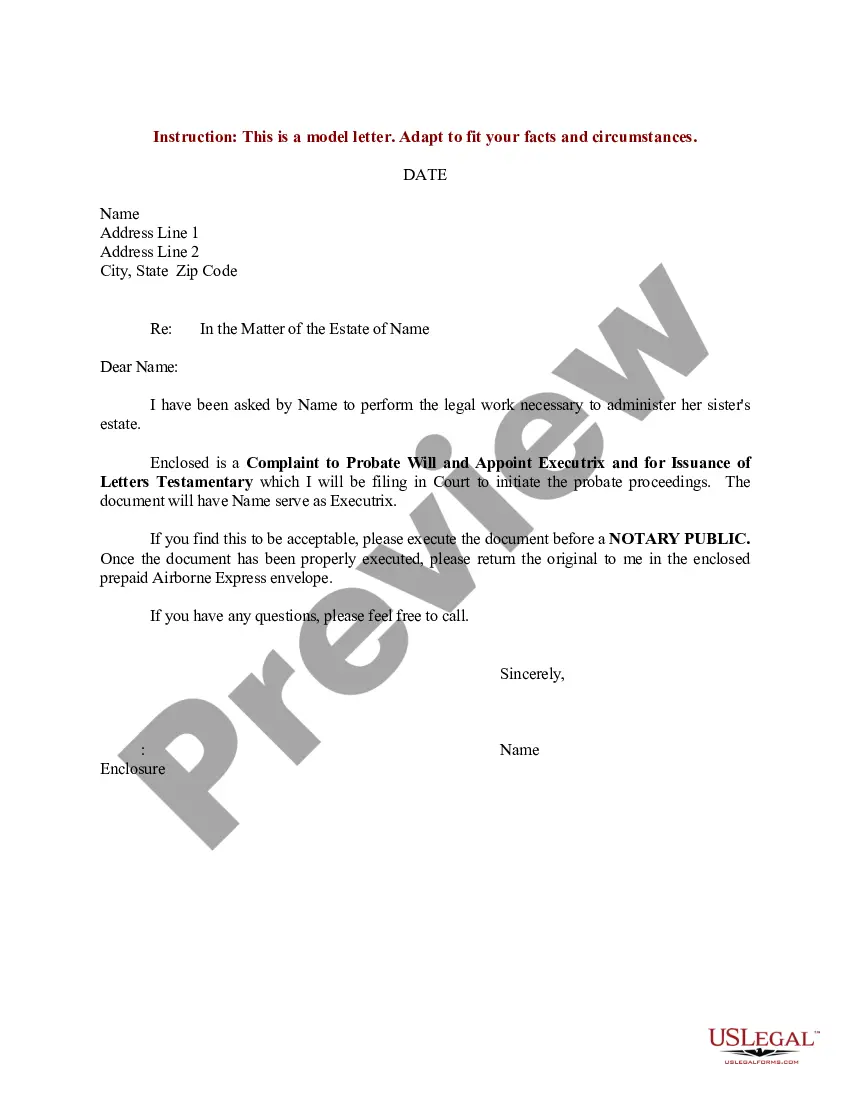
How to fill out Sample Letter For Letters Testamentary?
It’s common knowledge that you can’t turn into a legal authority instantly, nor can you swiftly learn how to draft the Difference Between Testamentary And Non Testamentary Document without possessing a specialized skill set.
Assembling legal documents is a lengthy endeavor that necessitates specific training and expertise. So why not entrust the development of the Difference Between Testamentary And Non Testamentary Document to the experts.
With US Legal Forms, one of the largest libraries of legal templates, you can discover everything from court documents to templates for internal corporate correspondence. We understand how vital it is to comply with federal and local laws and regulations.
Create a free account and select a subscription plan to buy the template.
Click Buy now. Once the purchase is completed, you can obtain the Difference Between Testamentary And Non Testamentary Document, complete it, print it, and deliver it by mail to the necessary parties or organizations.
- That’s why, on our platform, all documents are location-specific and current.
- Here’s how you can begin using our platform and acquire the document you require in just minutes.
- Find the form you need using the search bar at the top of the page.
- Review it (if this option is available) and examine the accompanying description to verify if the Difference Between Testamentary And Non Testamentary Document is what you’re looking for.
- If you require another template, restart your search.
Form popularity
FAQ
With a Letter of Testamentary. A Letter of Testamentary?sometimes called a "Letter of Administration" or "Letter of Representation"?is a document granted by a local court. The document simply states that you are the legal executor for a particular estate and that you have the ability to act as such.
Testamentary trust example Let's say you're planning your estate and have $100,000 you want to leave to your young child. You create instructions for a testamentary trust to be established after your death and choose your best friend as the testamentary trustee.
Testamentary trust example Let's say you're planning your estate and have $100,000 you want to leave to your young child. You create instructions for a testamentary trust to be established after your death and choose your best friend as the testamentary trustee.
In the context of a letter of testamentary, it means a legal document that an executor of an estate needs to have to exercise their authority. In estate planning, a testamentary trust is a trust that's created through a will and takes effect when the willmaker dies.
Of or relating to a will or testament. Often used to denote that something was provided for, appointed by or created by a will.