Testamentary
Description
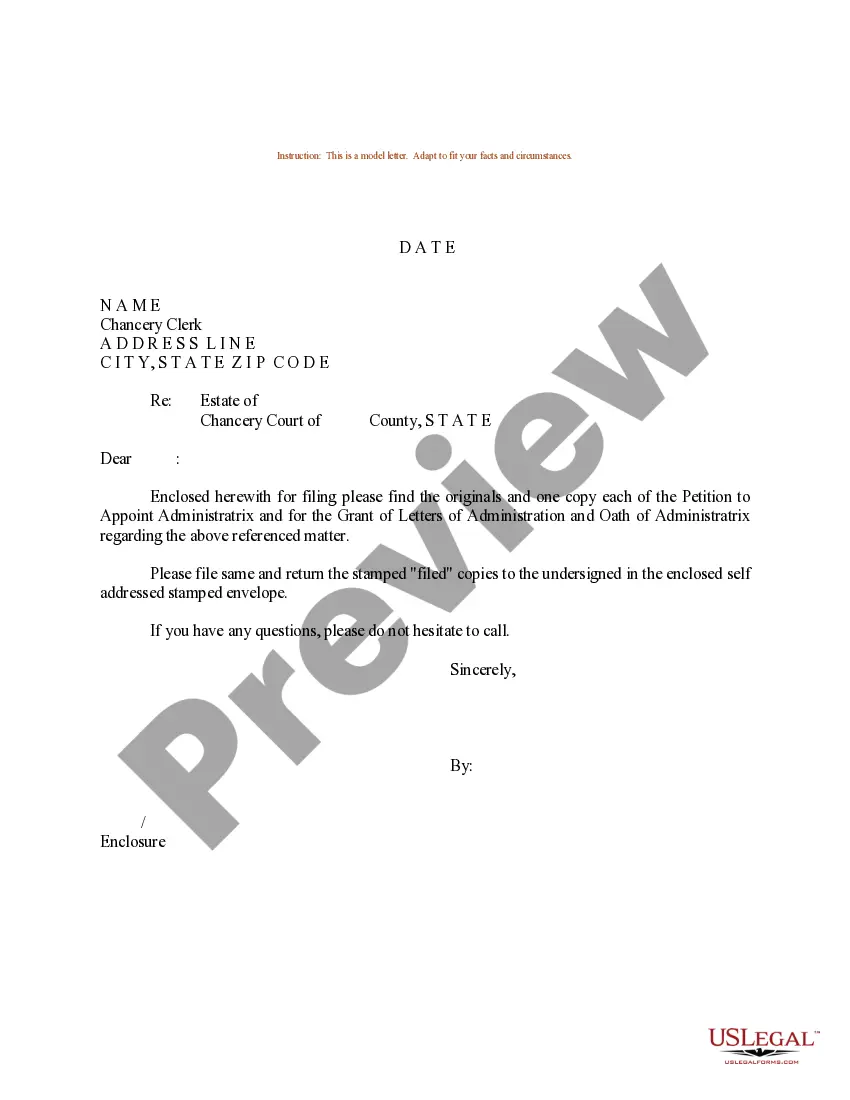
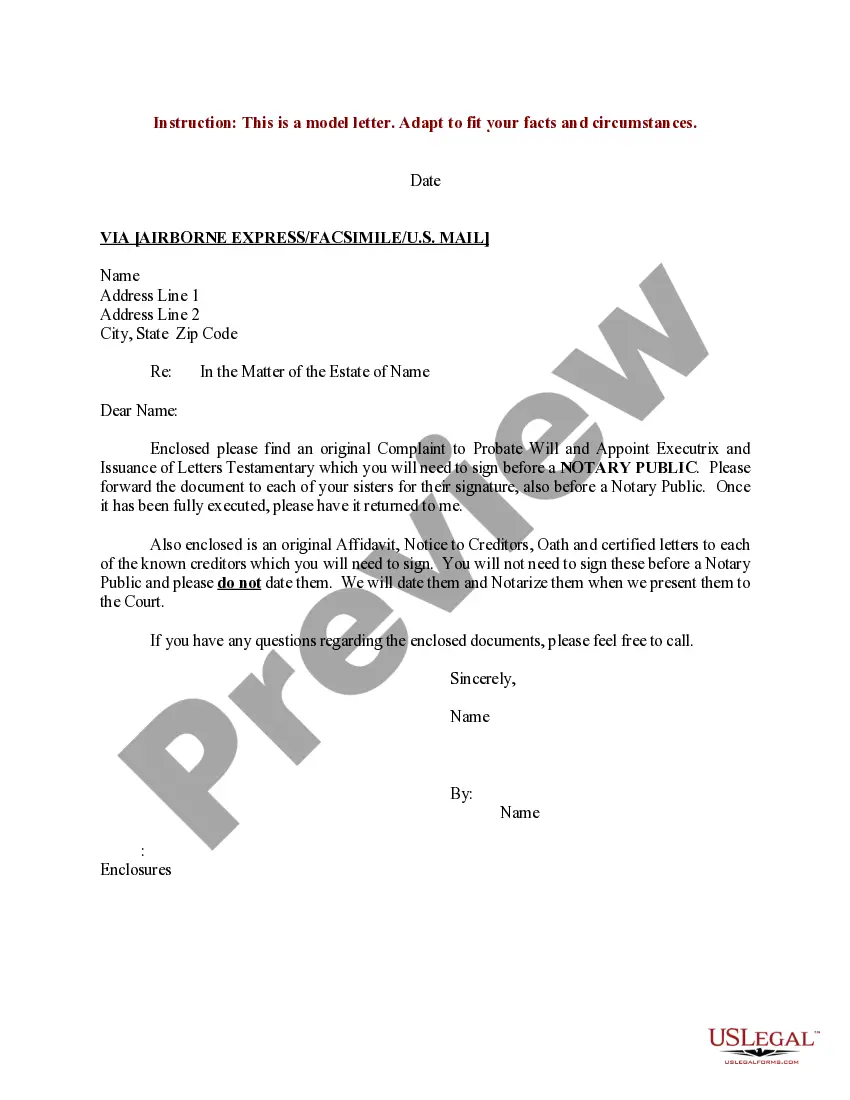
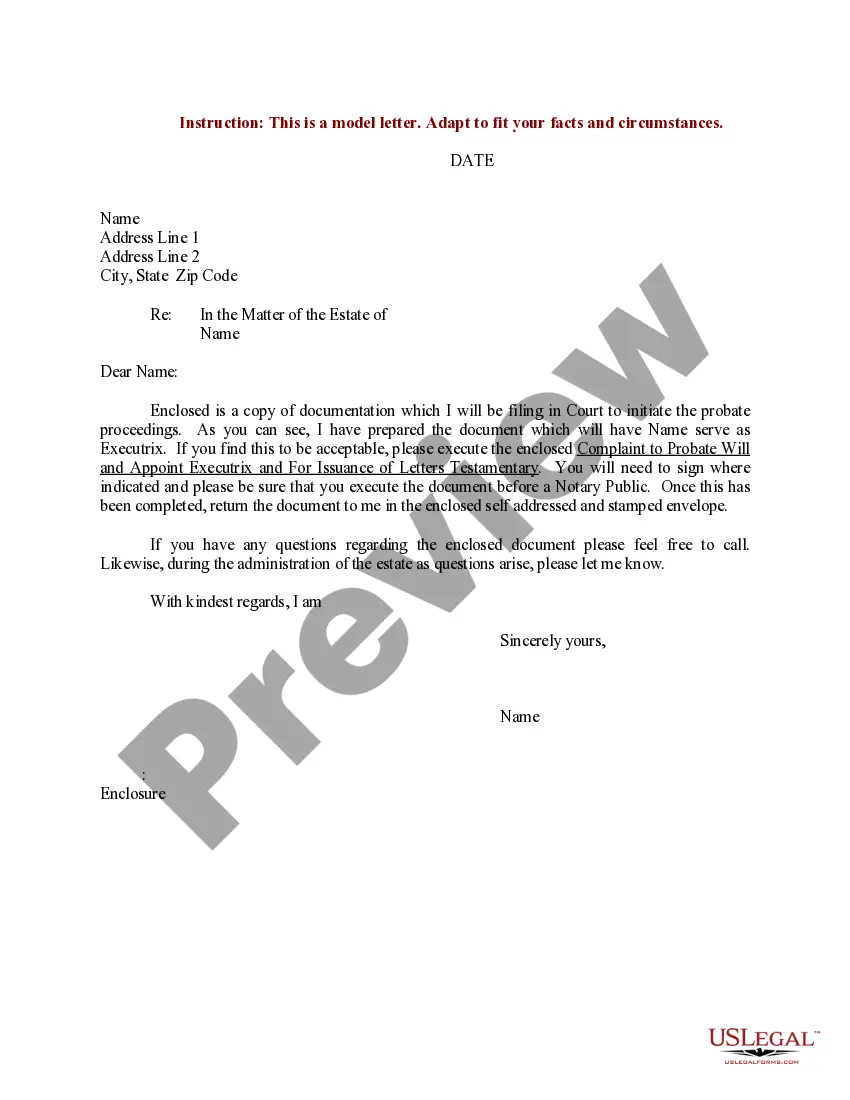
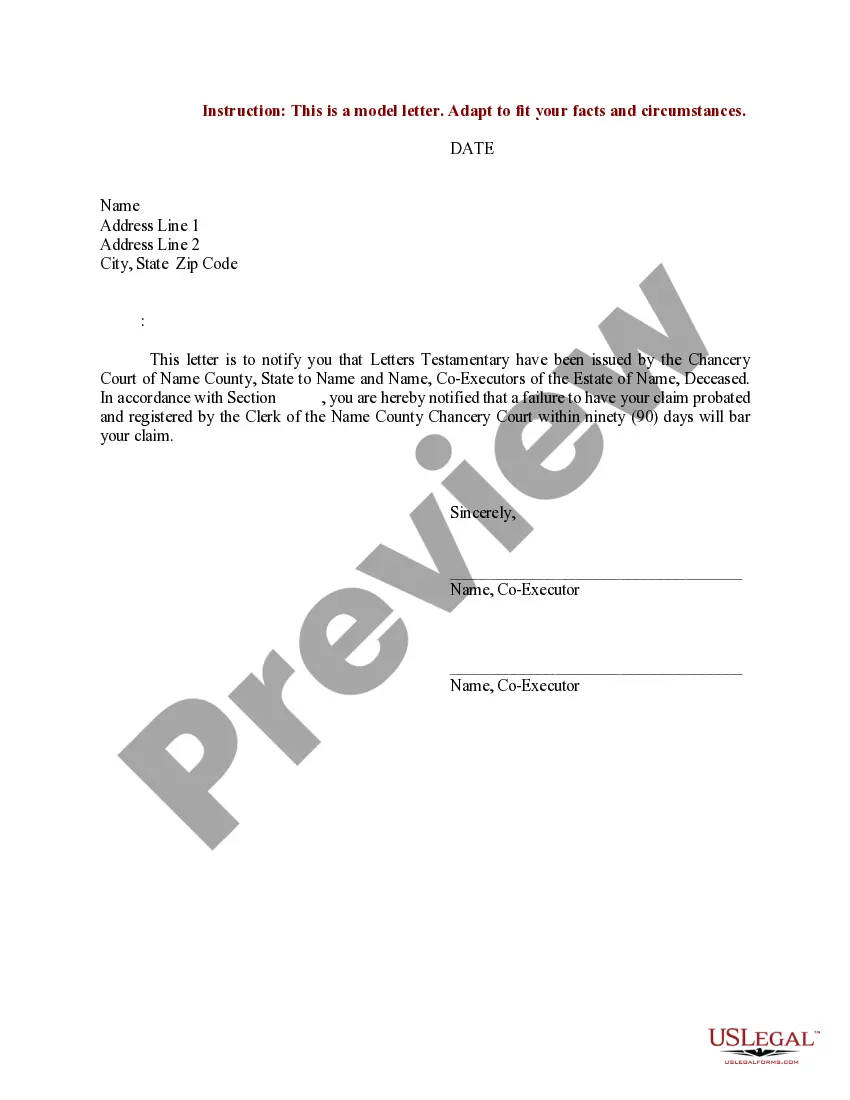
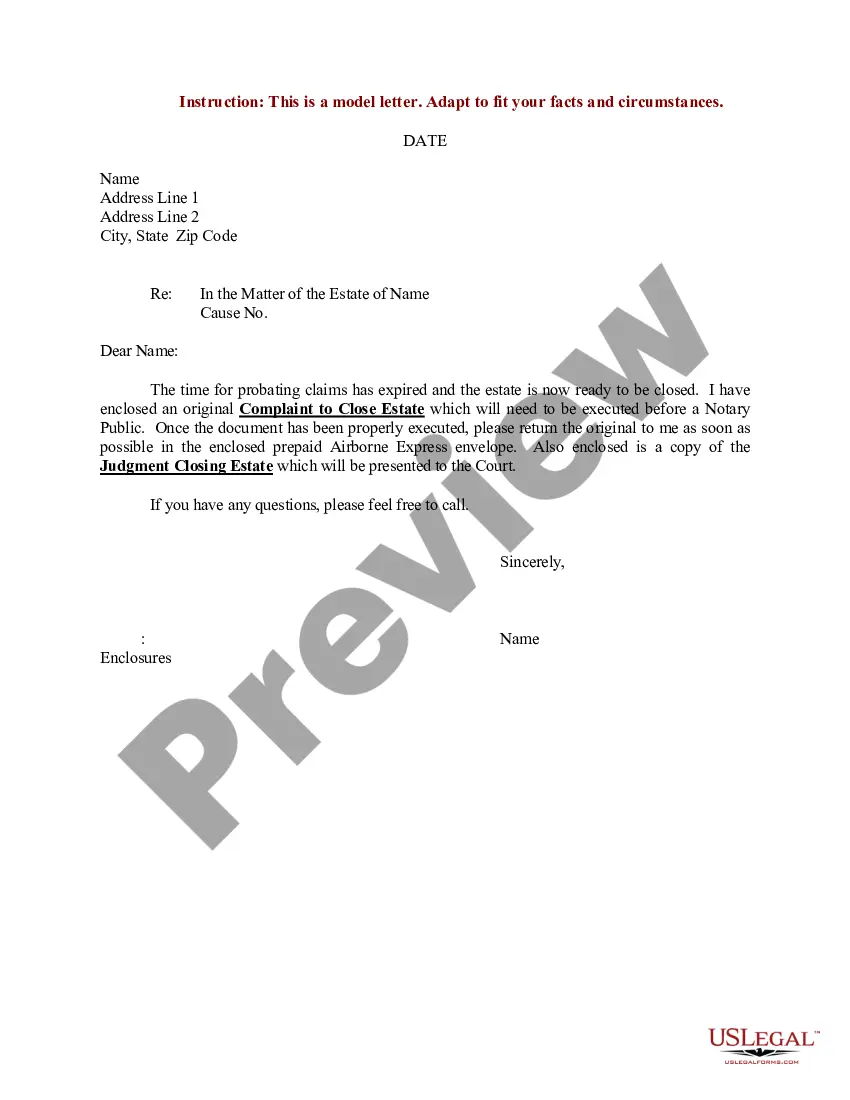


How to fill out Sample Letter For Complaint To Probate Will And Appoint Co-Executrixes And Issuance Of Letters Testamentary?
- If you're a returning user, start by logging in to your account and downloading the relevant testamentary form by clicking the Download button. Ensure your subscription is active; if not, renew it according to your plan.
- For first-time users, begin by exploring the Preview mode and detailed form descriptions. Confirm you've selected the correct testamentary form that meets your specific needs and complies with local laws.
- If the initial form doesn’t meet your needs, utilize the Search tab to find another suitable template. Take your time to ensure it aligns with your requirements.
- Once you find the correct form, proceed to purchase it by clicking the Buy Now button. Select a subscription plan that works for you and register for an account to access the extensive library.
- Complete your transaction by providing your payment details through credit card or PayPal. Once the purchase is confirmed, you'll have access to the form.
- Finally, download your testamentary form to your device. You can access it anytime through the My Forms section of your profile.
In conclusion, US Legal Forms provides an indispensable resource for sourcing testamentary documents efficiently. With its extensive library and user-friendly features, you can ensure your legal forms are accurate and compliant.
Don't wait; start your journey towards easier legal document management today with US Legal Forms!
Form popularity
FAQ
Generally, you must file for probate within a certain time frame after a person dies, which varies by state; this can range from a few weeks to several months. It is essential to adhere to these timelines to ensure that the estate is settled according to the law. If you need assistance with probate filing, US Legal Forms offers resources and templates that simplify this process.
Testamentary documentation includes all legal papers that relate to a person's last wishes, including wills, codicils, and letters of testamentary. These documents are crucial for guiding the administration of an estate and ensuring proper distribution of assets. Accurate testamentary documentation helps reduce confusion and legal challenges during the probate process.
Testamentary evidence refers to proof presented in court that establishes the validity of a will or other testamentary documents. This type of evidence often includes the will itself, witness statements, and the conditions under which the will was created. By providing such evidence, you can help ensure that the deceased's final wishes are honored.
The purpose of testamentary documents, particularly wills, is to outline a person's final wishes regarding the distribution of their assets upon death. They also designate an executor to manage the estate and ensure that the deceased's intentions are fulfilled. Ultimately, testamentary documents provide clarity and reduce potential disputes among heirs.
To obtain a certified letter of testamentary, first, you must initiate the probate process by filing the will and necessary documents with the probate court. After the court approves the will and appoints you as the executor, you can request the letter directly from the court. This document serves as proof of your authority to act on behalf of the deceased in managing their estate.
An example of a testamentary trust is a trust established for a minor child that specifies how the child's inheritance will be managed until they reach adulthood. This trust may detail gradual distributions, ensuring the child receives support for education and living expenses while protecting the assets until they are mature enough to handle them. Such trusts can be crucial for proper asset management and safeguarding your child's future.
To draft a testamentary trust, begin by outlining the objectives for the trust, such as protecting minor children or managing assets for beneficiaries. Include key details like who will act as trustee, how the trust will be funded, and distribution methods for the beneficiaries. Engaging with a resource like USLegalForms can provide essential templates and expert guidance to ensure your testamentary trust meets legal standards.
Drafting a testamentary trust involves creating a trust that takes effect upon the death of the trust creator. You will specify the terms of the trust, including the trustee, beneficiaries, and distribution instructions in your will. A well-structured testamentary trust can protect assets and provide for beneficiaries effectively, ensuring your wishes are fulfilled posthumously.
Filling out paperwork for probate involves completing the necessary forms to initiate the probate process for a deceased person's estate. You’ll typically need to submit a variety of documents, including the original will, death certificate, and an application for probate. Using a reliable platform like USLegalForms can simplify this process by providing templates and guidance tailored to your specific state requirements.
An example of testamentary is a will that outlines how a person wishes to distribute their assets upon passing. This legal document serves as a testamentary instrument, specifying beneficiaries and detailing how property should be divided. Such wills reflect the expressed wishes of the individual and help ensure their desires about asset distribution are honored.