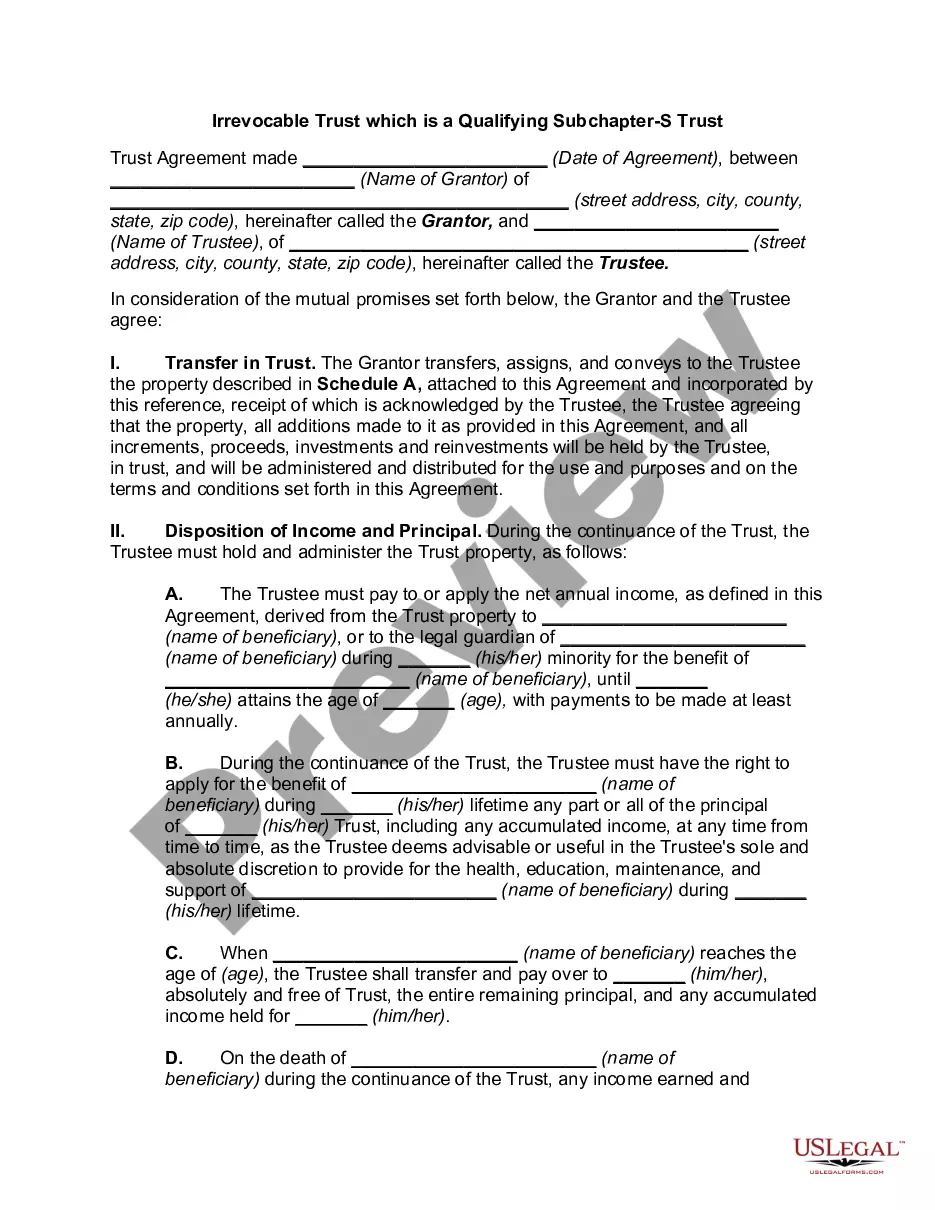
Qualified Subchapter S Trust Withdrawal
Description


Get your form ready online
Our built-in tools help you complete, sign, share, and store your documents in one place.
Make edits, fill in missing information, and update formatting in US Legal Forms—just like you would in MS Word.
Download a copy, print it, send it by email, or mail it via USPS—whatever works best for your next step.
Sign and collect signatures with our SignNow integration. Send to multiple recipients, set reminders, and more. Go Premium to unlock E-Sign.
If this form requires notarization, complete it online through a secure video call—no need to meet a notary in person or wait for an appointment.
We protect your documents and personal data by following strict security and privacy standards.

Make edits, fill in missing information, and update formatting in US Legal Forms—just like you would in MS Word.

Download a copy, print it, send it by email, or mail it via USPS—whatever works best for your next step.

Sign and collect signatures with our SignNow integration. Send to multiple recipients, set reminders, and more. Go Premium to unlock E-Sign.

If this form requires notarization, complete it online through a secure video call—no need to meet a notary in person or wait for an appointment.

We protect your documents and personal data by following strict security and privacy standards.
Looking for another form?





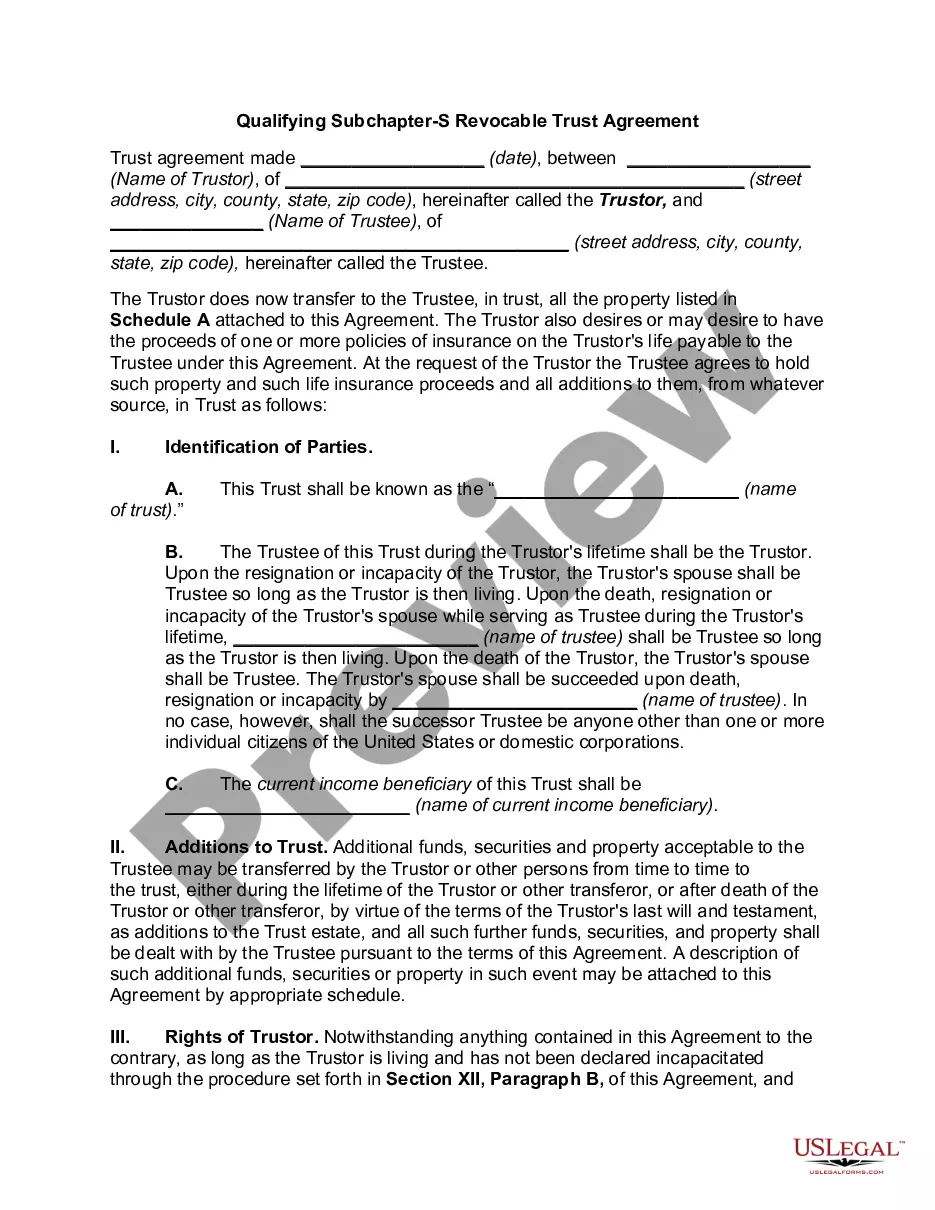
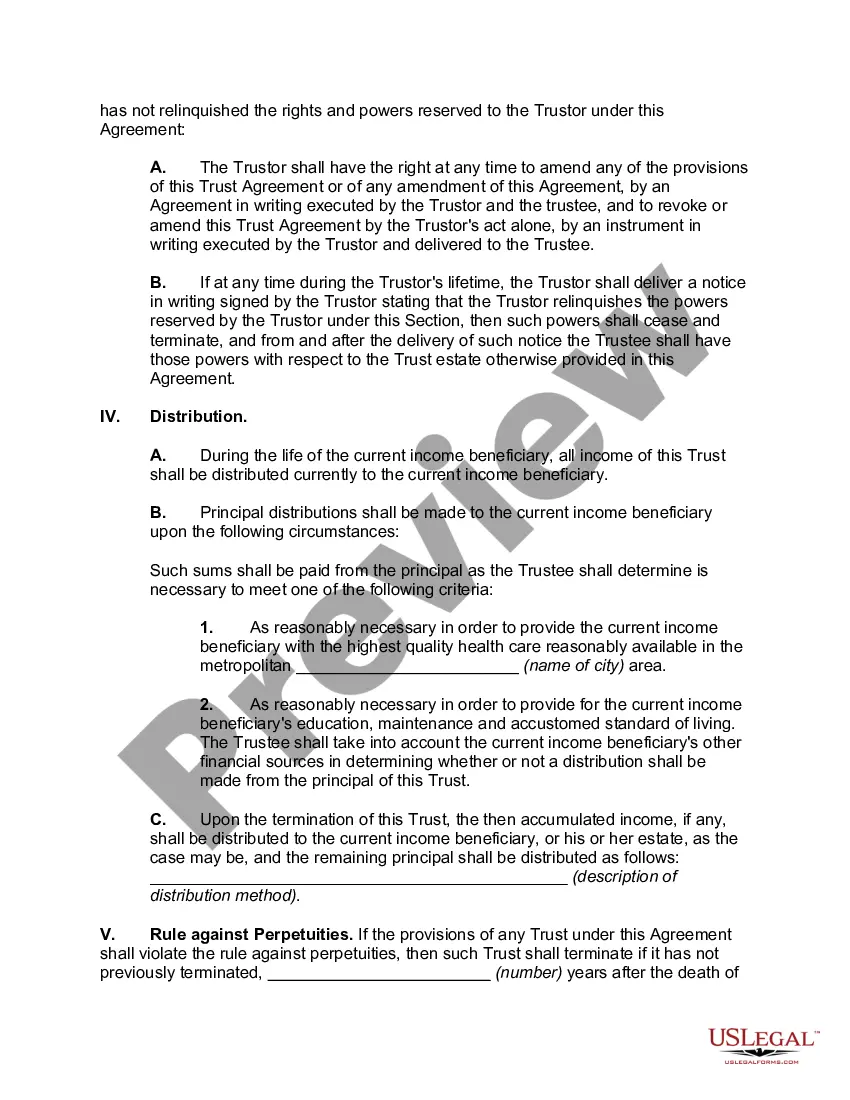
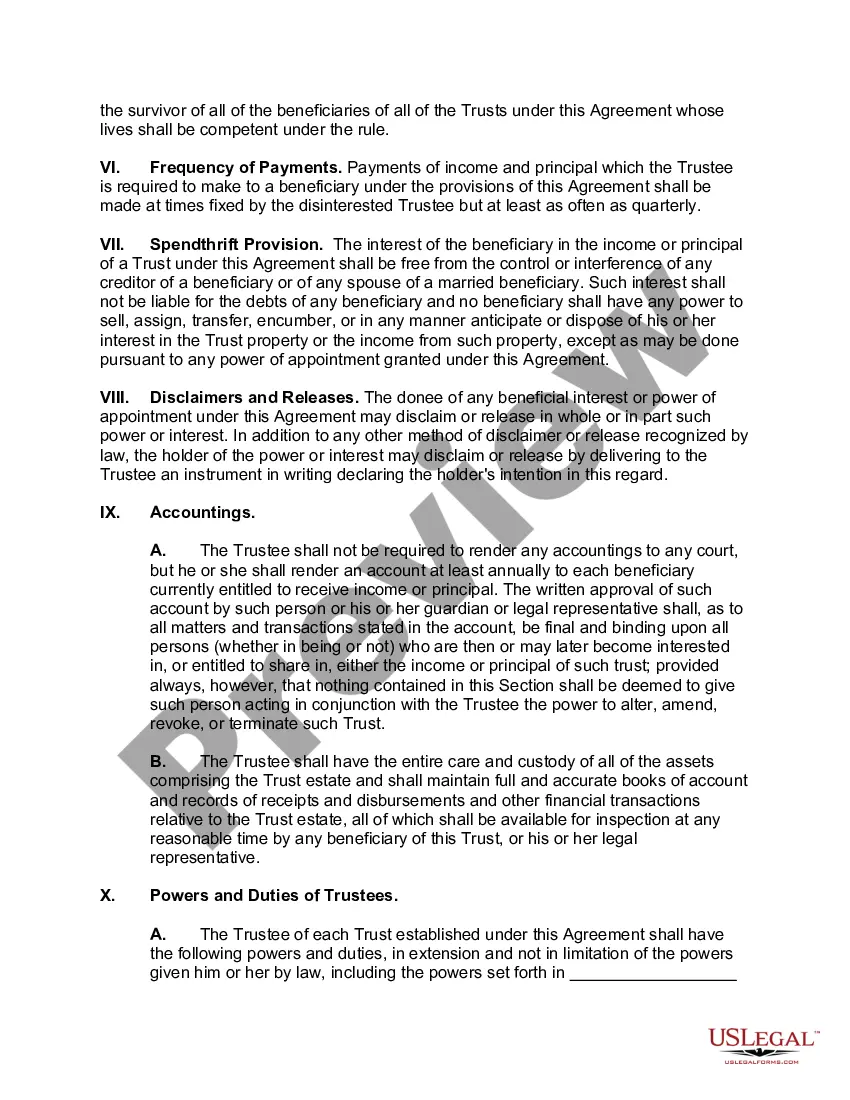
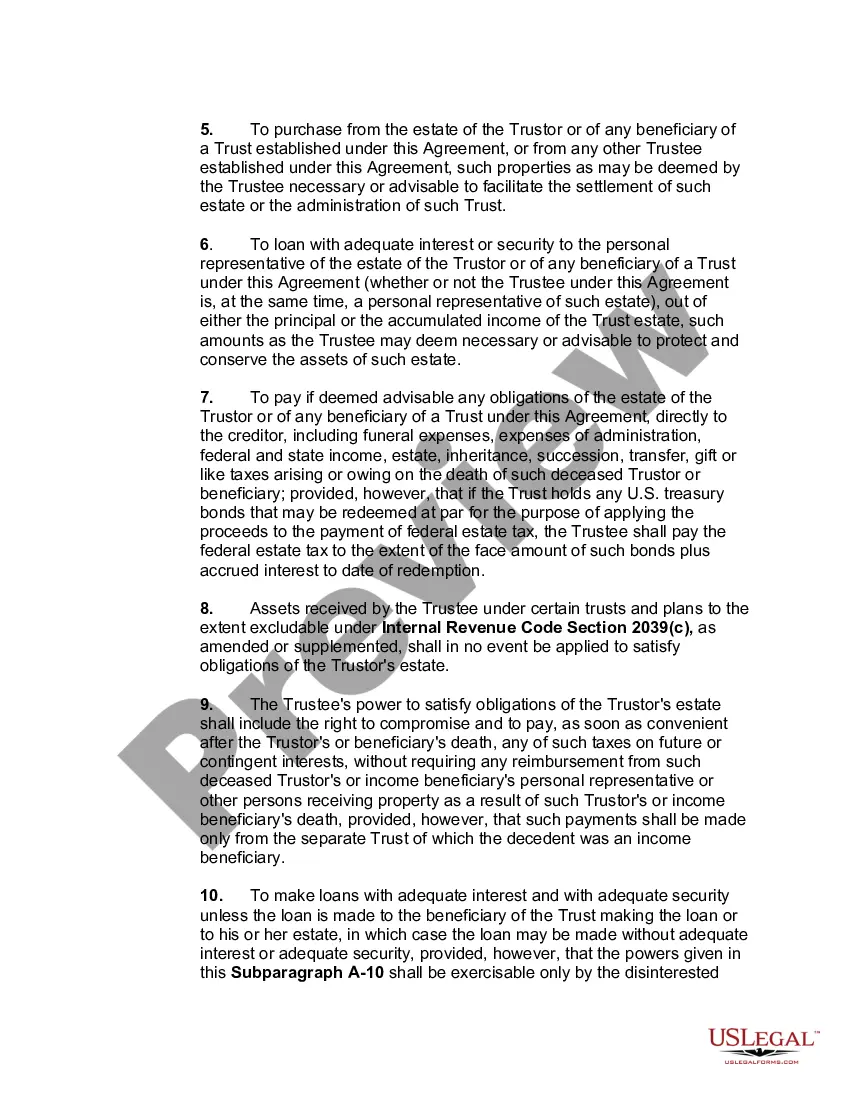
How to fill out Qualifying Subchapter-S Revocable Trust Agreement?
Securing a reliable location to obtain the latest and pertinent legal documents is a major part of tackling bureaucracy. Finding the appropriate legal files requires accuracy and meticulousness, which is why it is essential to obtain samples of Qualified Subchapter S Trust Withdrawal solely from trustworthy sources, such as US Legal Forms. An incorrect template can squander your time and delay your situation.
With US Legal Forms, there's minimal to worry about. You can browse and review all the details regarding the document’s application and significance for your situation and in your local area.
Once the form is on your device, you can modify it using the editor or print it out and complete it by hand. Eliminate the stress that comes with your legal paperwork. Explore the comprehensive US Legal Forms collection to discover legal templates, verify their suitability for your situation, and download them instantly.
- Utilize the catalog navigation or search function to locate your template.
- Examine the form’s details to confirm it aligns with the regulations of your state and county.
- Review the form preview, if available, to ensure the template indeed corresponds to what you need.
- Return to the search to find the appropriate document if the Qualified Subchapter S Trust Withdrawal does not satisfy your requirements.
- Once you are confident about the form’s applicability, download it.
- If you are a registered user, click Log in to verify and access your selected forms in My documents.
- If you haven't created an account yet, click Buy now to receive the template.
- Choose the pricing option that best fits your needs.
- Proceed with registration to complete your purchase.
- Finalize your transaction by selecting a payment method (credit card or PayPal).
- Select the document format for downloading Qualified Subchapter S Trust Withdrawal.
Form popularity
FAQ
A trust becomes a QSST by meeting the IRS requirements and filing the appropriate election form. This includes ensuring that the trust has one beneficiary, distributing all income, and completing IRS Form 2553. By following these steps, the trust can enjoy the benefits associated with a qualified subchapter s trust withdrawal, making tax management more efficient.
To make a QSST election, the trustee must complete IRS Form 2553, stating the trust's eligibility for subchapter S treatment. The form should include details about the trust, its beneficiaries, and the income distribution plan. After filing, the trust can benefit from the advantages of a qualified subchapter s trust withdrawal, provided all conditions are met.
You can file a QSST election by submitting IRS Form 2553 to your local IRS office. This form must be completed accurately and submitted on time to ensure that the trust is recognized as a QSST. Using platforms like uslegalforms can simplify this process by providing the necessary forms and guidance for a successful qualified subchapter s trust withdrawal.
The tax loophole for trusts typically refers to the ability of certain trusts, like QSSTs, to pass through income to beneficiaries. This allows the income to be taxed at the individual beneficiary's tax rate, which may be lower than the trust's tax rate. This strategy can be advantageous for those looking to optimize their qualified subchapter s trust withdrawal and tax obligations.
A trust is considered qualified if it adheres to IRS regulations, particularly regarding beneficiary restrictions and income distribution. If it fails to meet these criteria, it becomes non-qualified, which can lead to complications in tax treatment and disallow a qualified subchapter s trust withdrawal. Ensuring compliance with these regulations is crucial for maintaining the trust's qualified status.
A Qualified Subchapter S Trust (QSST) is a special type of trust that meets specific IRS requirements. To qualify, the trust must have only one current beneficiary who is an individual. Additionally, all income must be distributed to that beneficiary, and the trust must make a QSST election, facilitating a qualified subchapter s trust withdrawal.
QSSTs are different than other other S corporation trusts in that the beneficiary is usually someone other than the grantor of their estate. Grantors/shareholders can use the QSST to make a gift of all or part of S corporation stock and retain voting power while the beneficiary receives the income.
(3) Qualified subchapter S trust For purposes of this subsection, the term ?qualified subchapter S trust? means a trust? (A) the terms of which require that? (i) during the life of the current income beneficiary, there shall be only 1 income beneficiary of the trust, (ii) any corpus distributed during the life of the ...
To qualify, the QSST income beneficiary must make a proper and timely election, and the trust must distribute all income to a single individual beneficiary who is a U.S. citizen or resident. If the trust also distributes corpus, it must be allocated to the same income beneficiary.
To qualify as a QSST, the trust must require that all of the net income be distributed to a single beneficiary. While principal of the QSST may also be distributed to the beneficiary in the discretion of the Trustee, the QSST cannot provide for multiple beneficiaries.