Qualified Subchapter S Trust
Description

Get your form ready online
Our built-in tools help you complete, sign, share, and store your documents in one place.
Make edits, fill in missing information, and update formatting in US Legal Forms—just like you would in MS Word.
Download a copy, print it, send it by email, or mail it via USPS—whatever works best for your next step.
Sign and collect signatures with our SignNow integration. Send to multiple recipients, set reminders, and more. Go Premium to unlock E-Sign.
If this form requires notarization, complete it online through a secure video call—no need to meet a notary in person or wait for an appointment.
We protect your documents and personal data by following strict security and privacy standards.

Make edits, fill in missing information, and update formatting in US Legal Forms—just like you would in MS Word.

Download a copy, print it, send it by email, or mail it via USPS—whatever works best for your next step.

Sign and collect signatures with our SignNow integration. Send to multiple recipients, set reminders, and more. Go Premium to unlock E-Sign.

If this form requires notarization, complete it online through a secure video call—no need to meet a notary in person or wait for an appointment.

We protect your documents and personal data by following strict security and privacy standards.
Looking for another form?
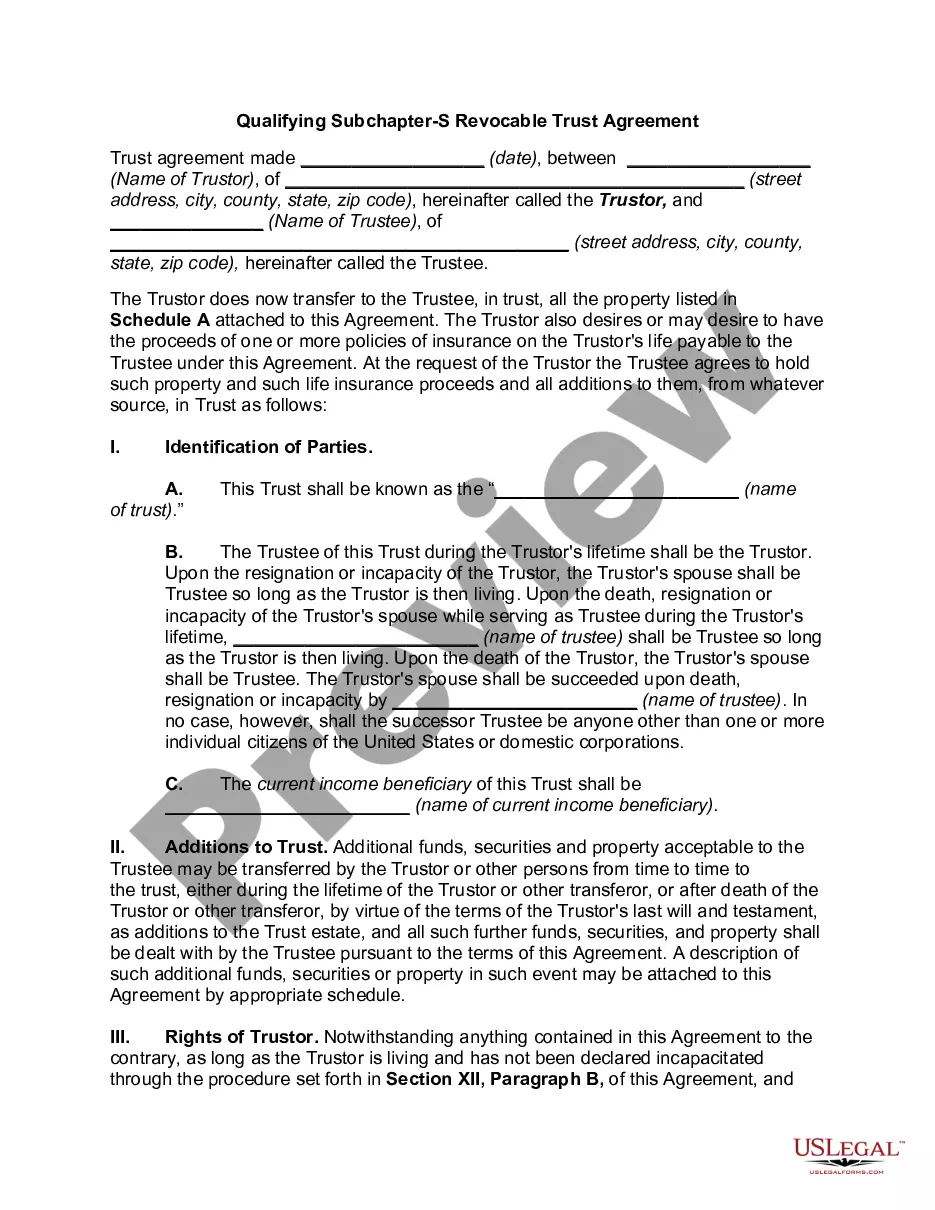
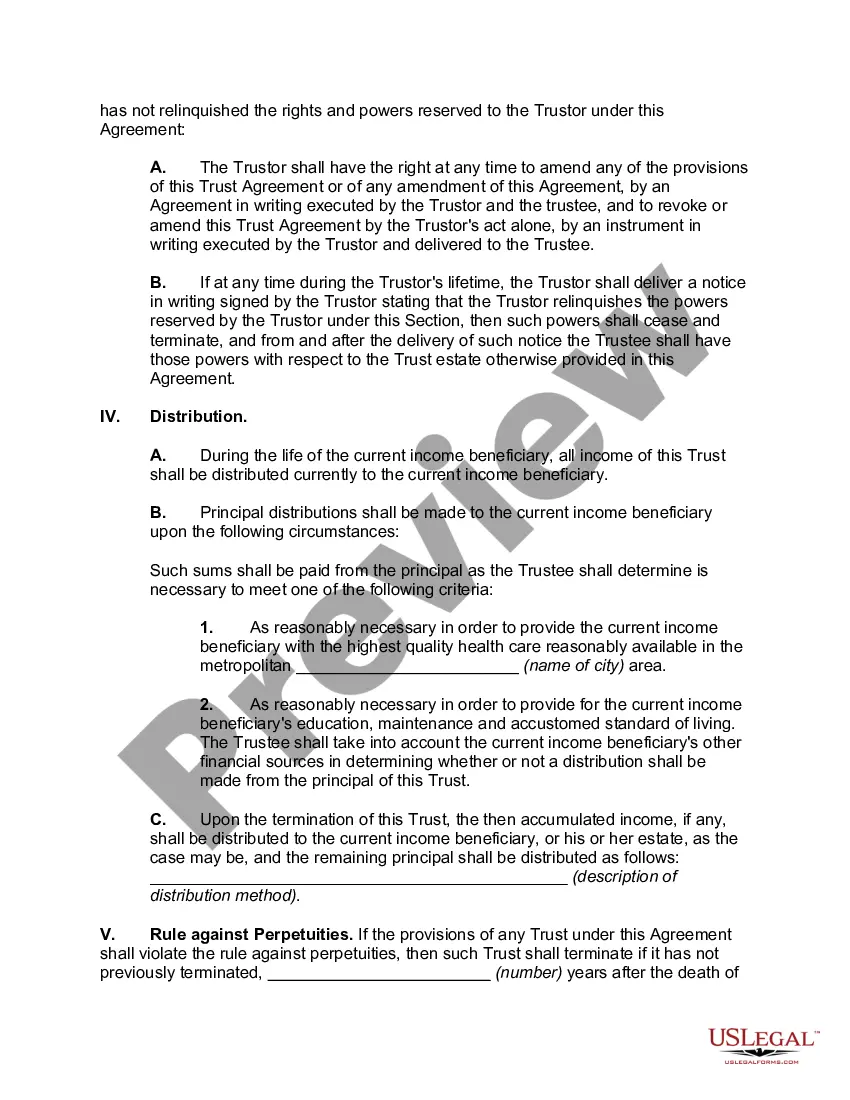
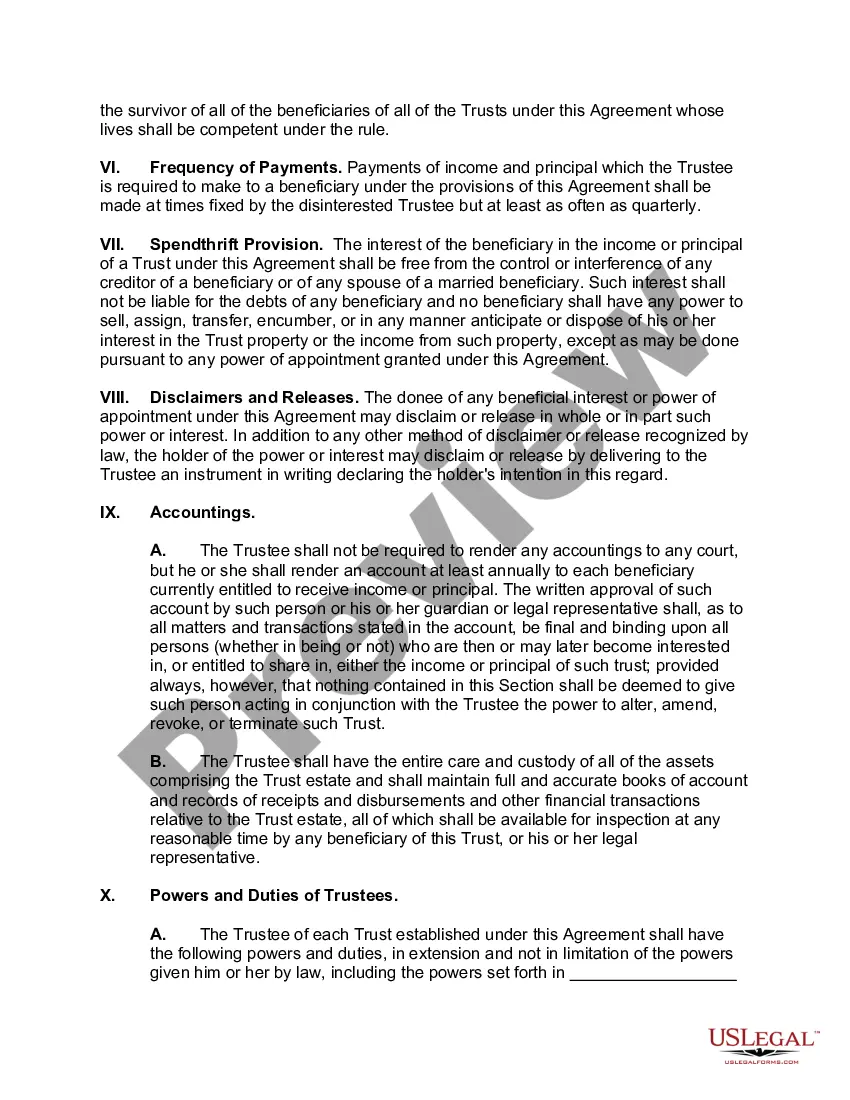
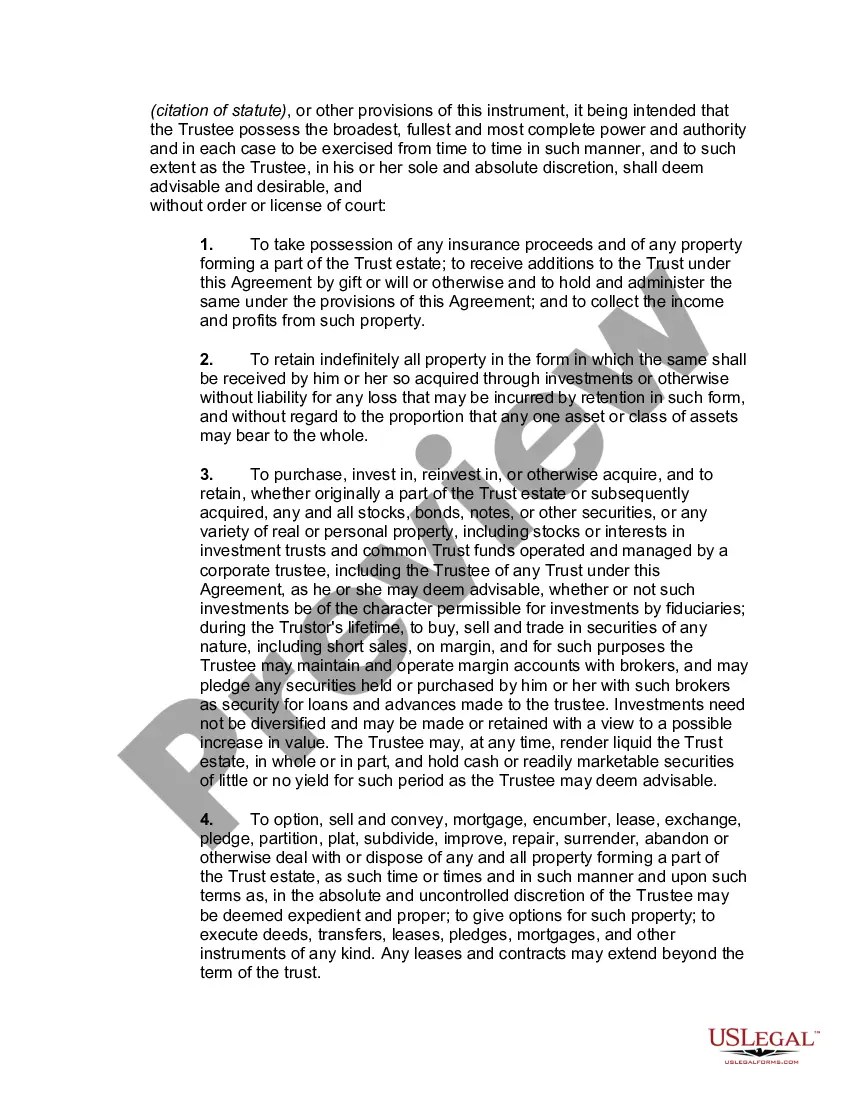
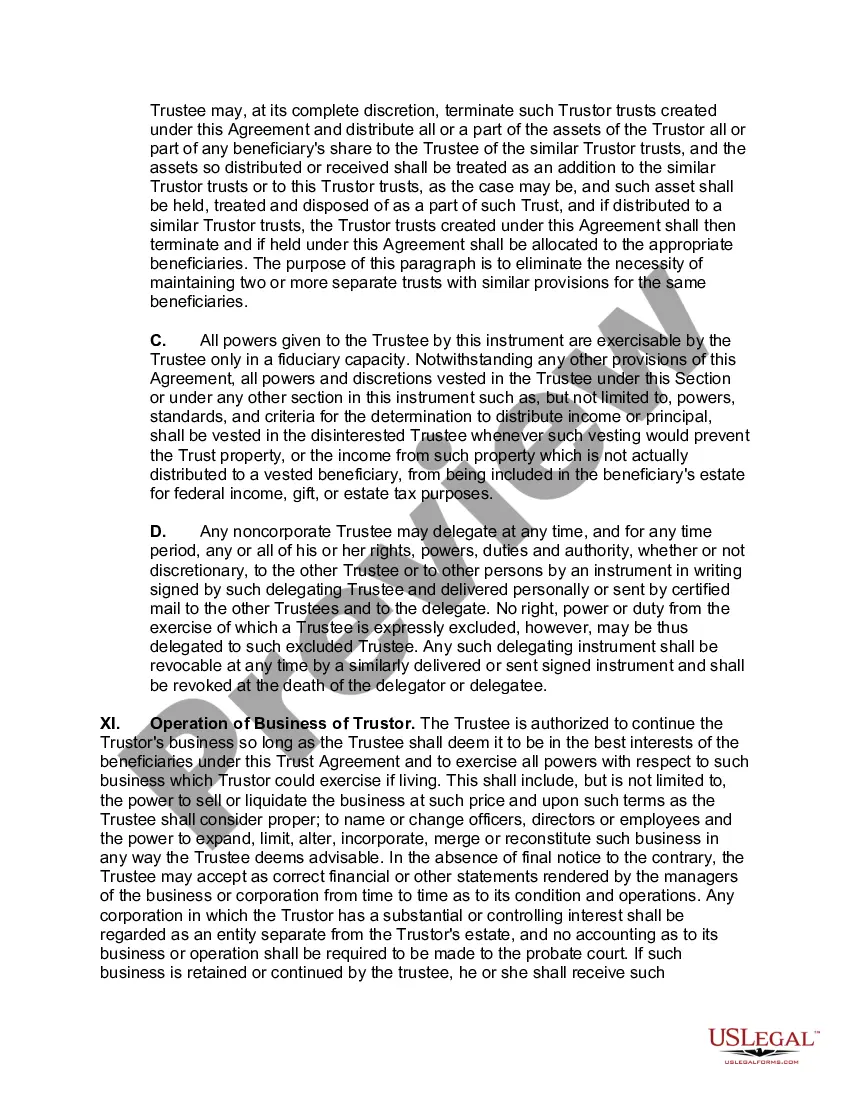
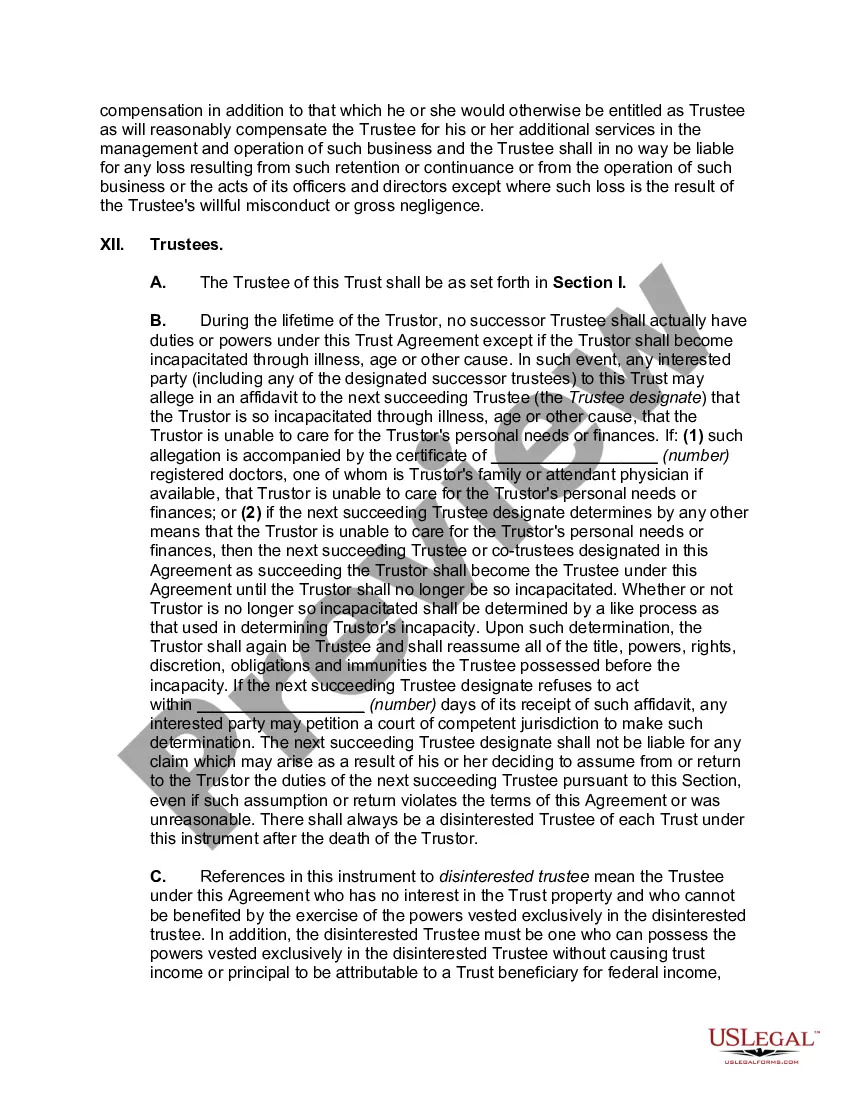
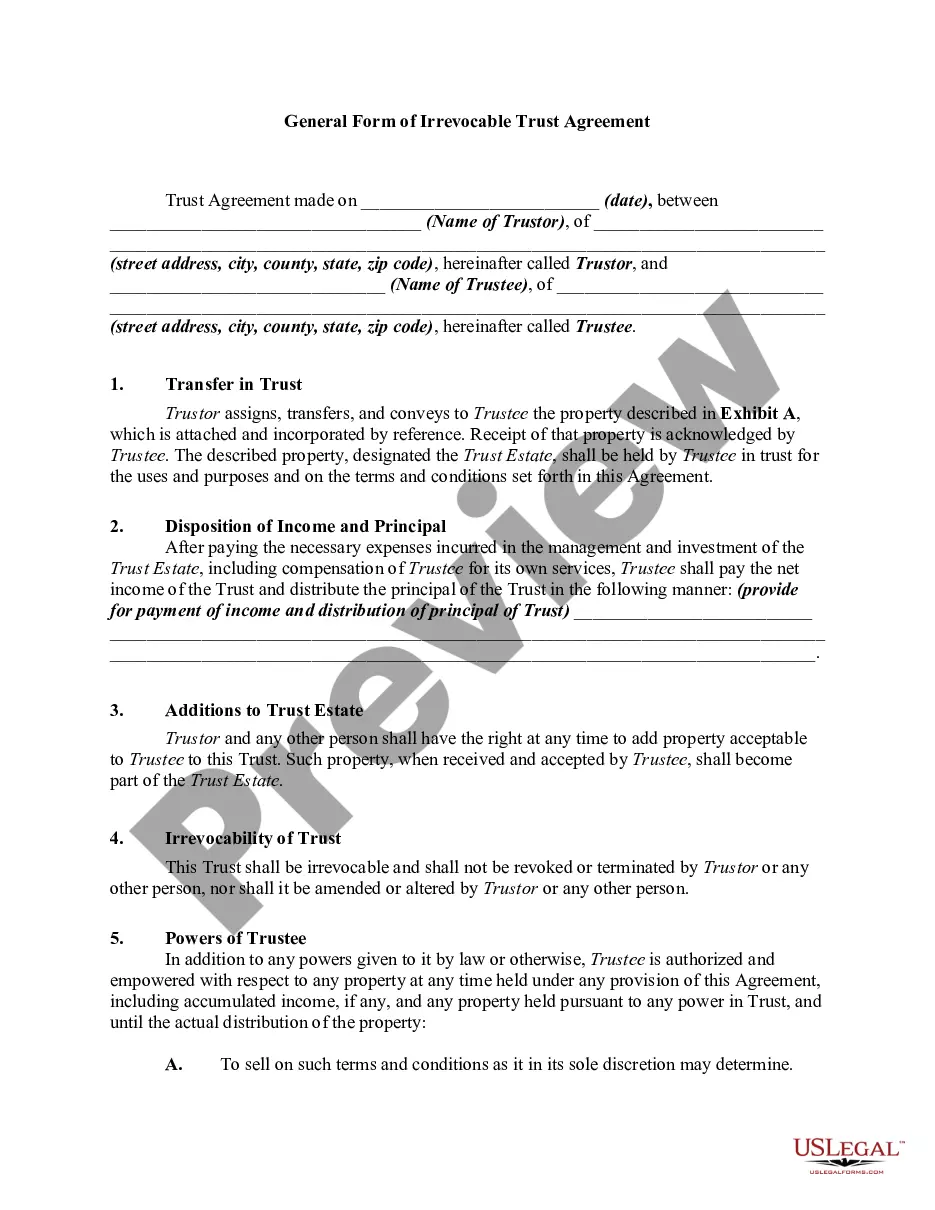
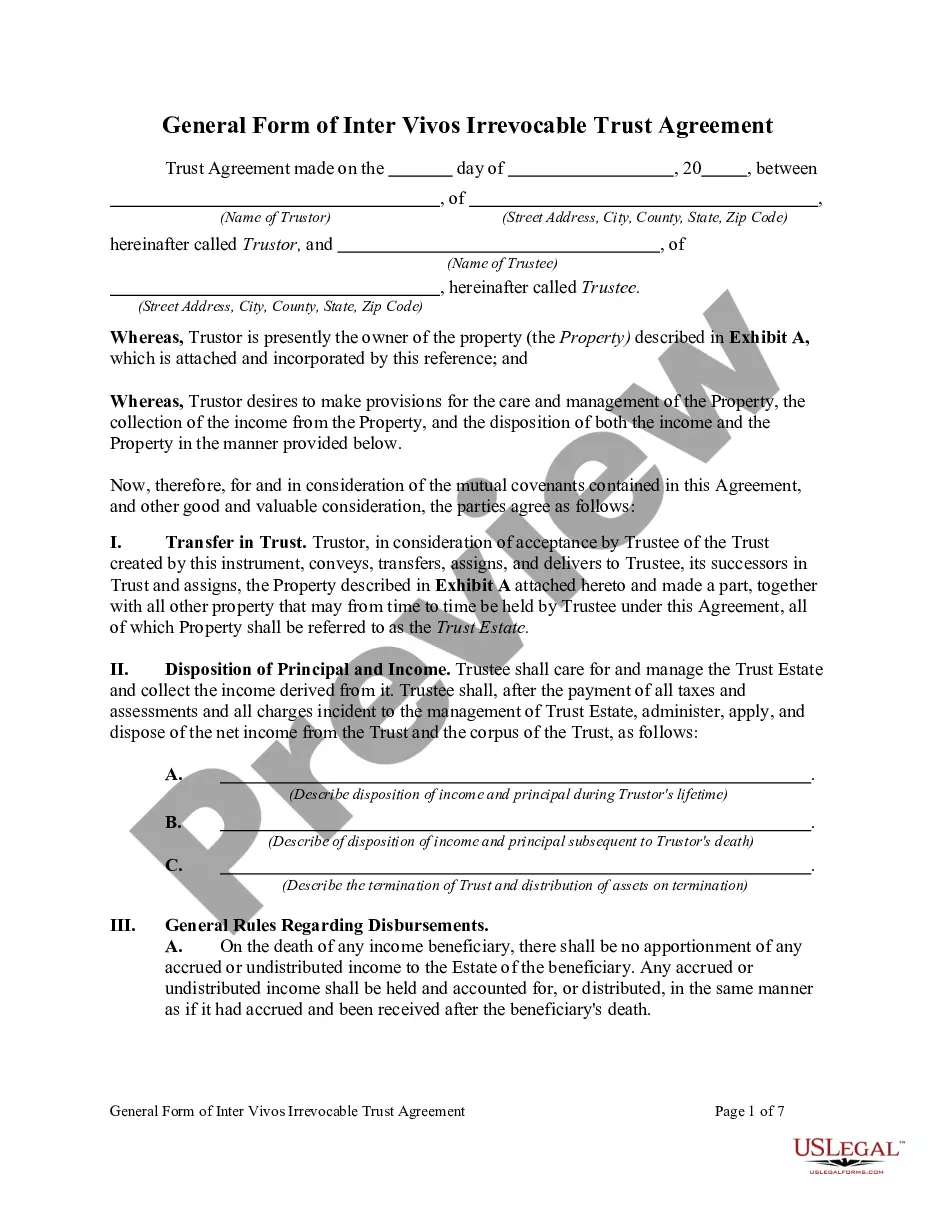
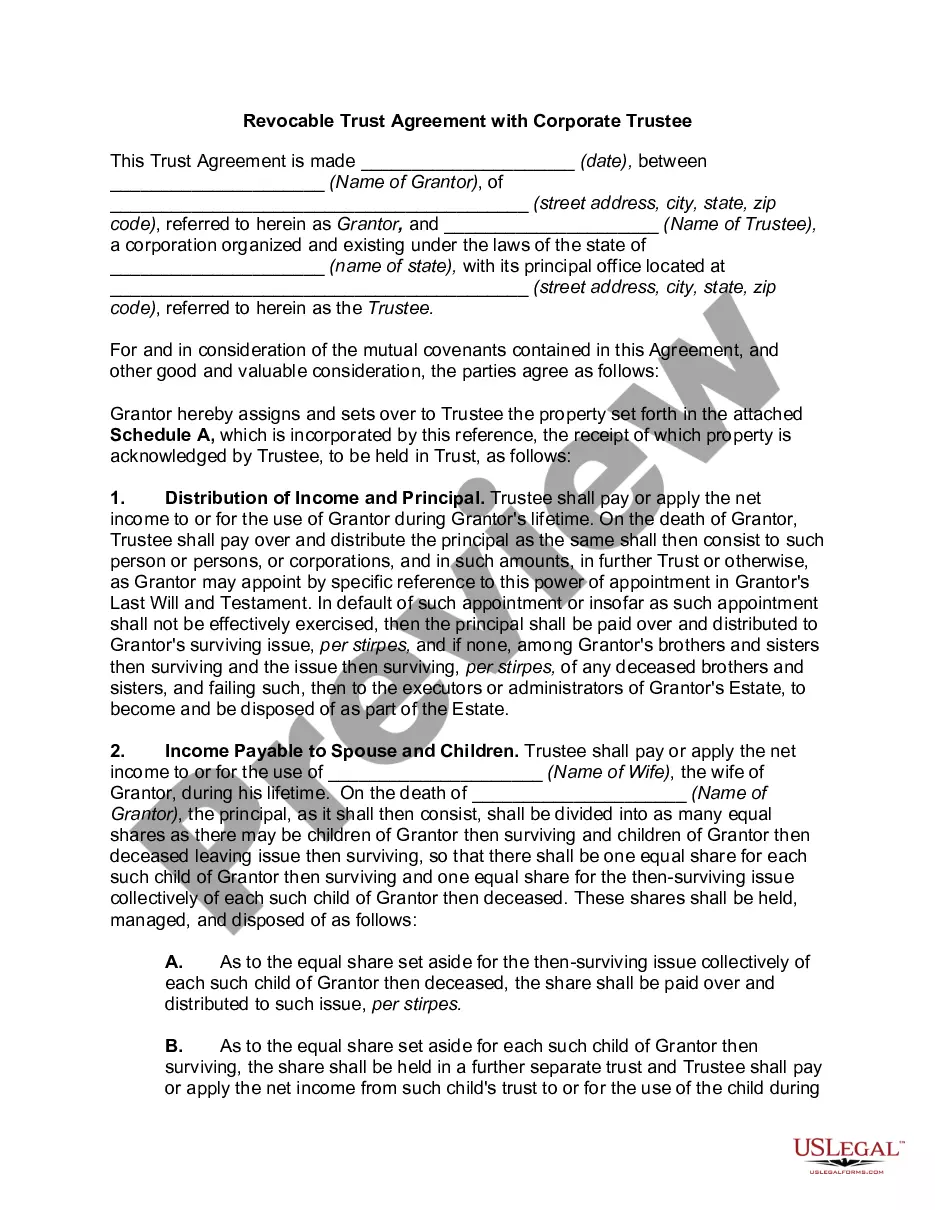
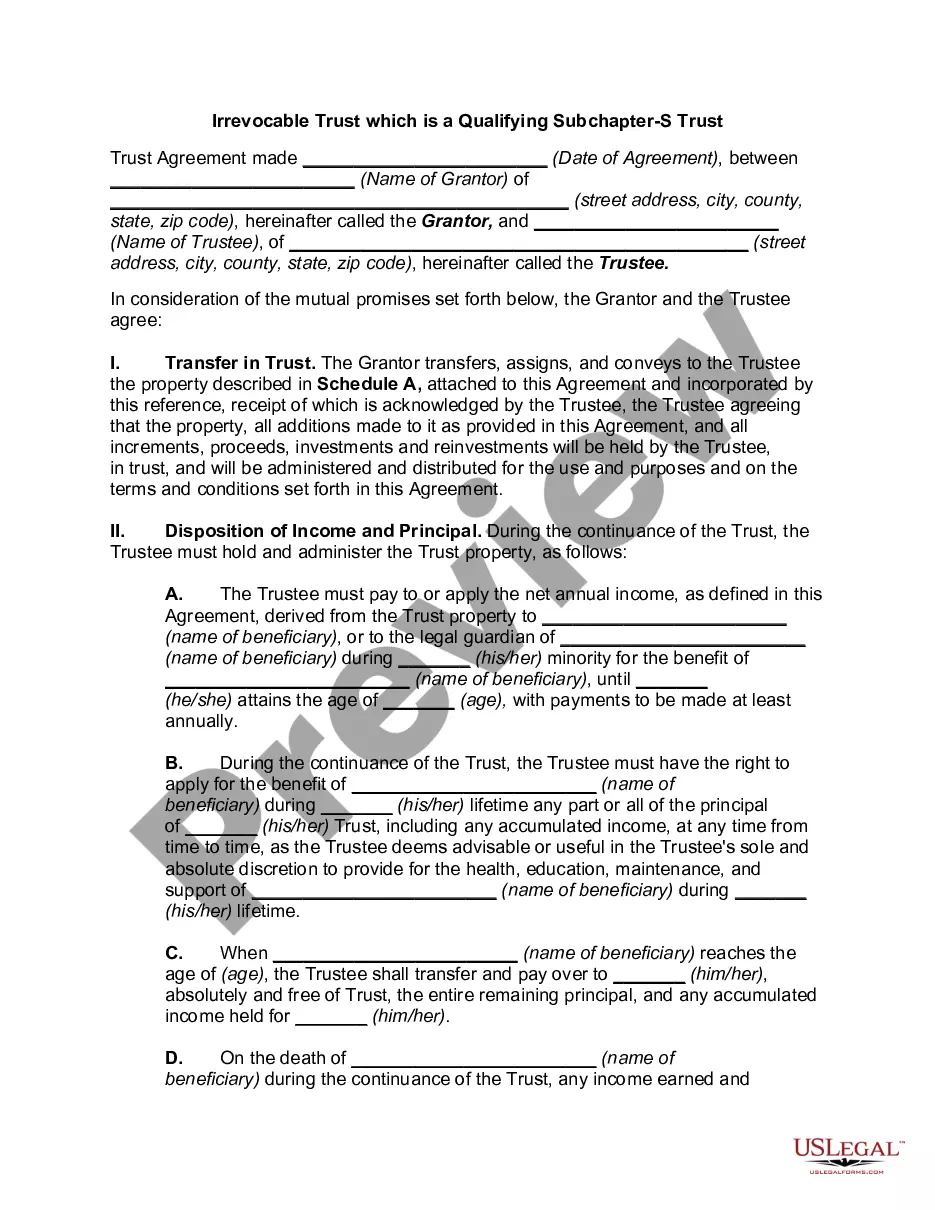
How to fill out Qualifying Subchapter-S Revocable Trust Agreement?
- If you possess an account, go ahead and log in. Confirm your subscription's validity before proceeding to download your form by hitting the Download button.
- For new users, begin by examining the Preview mode and reading the form description to verify compatibility with your requirements.
- If necessary, utilize the Search tab to locate an alternative template that aligns with your needs.
- Proceed to purchase the document by clicking the Buy Now button. Select your desired subscription plan and create an account for library access.
- Complete your purchase by entering your credit card details or opting for PayPal for a seamless transaction.
- Once your payment is confirmed, download the form and save it to your device. You can also access it later through the My Forms section.
US Legal Forms makes the process of acquiring legal documents accessible for everyone. With an extensive library boasting over 85,000 fillable forms, users can efficiently manage their legal needs.
Take the first step toward securing your qualified subchapter S trust today—start your journey with US Legal Forms!
Form popularity
FAQ
A qualified subchapter s trust is one of the specific types of trusts that can own stock in an S corporation. This trust type is designed to meet the detailed IRS criteria, allowing it to funnel corporate income directly to its beneficiaries. By fulfilling the necessary requirements, such a trust can help in asset management while also benefiting from pass-through taxation. To set up this structure correctly, you can rely on expert tools available at USLegalForms.
One significant mistake parents often make when setting up a trust fund is failing to communicate their intentions clearly with their beneficiaries. This can lead to confusion about how the trust operates or how assets should be managed. Additionally, neglecting to regularly review and update the trust can result in legal complications later. Working with professionals from USLegalForms can prevent these pitfalls and ensure a clear understanding among all parties involved.
To create a valid trust, you must include a clear intention to create a trust, identify trust property, name a trustee, designate beneficiaries, and ensure that the trust has a lawful purpose. Each element plays a crucial role in ensuring your trust operates effectively and complies with legal standards. If you're considering a qualified subchapter s trust, confirming these requirements with platforms like USLegalForms can facilitate a smoother process.
The rules governing a qualified subchapter s trust focus on both beneficiary eligibility and trust management. The trust must distribute all income to its beneficiaries and cannot have more than one class of stock within an S corporation. Also, it must be established for a recognized purpose and maintain transparency in its operations. You may find detailed guidelines from USLegalForms helpful in setting up compliance with these rules.
The requirements for a qualified subchapter s trust include having only eligible beneficiaries who are individuals or estates. Additionally, the trust must be irrevocable and not have any nonqualifying stock in its portfolio. It is essential for the trust to follow specific IRS rules to maintain its qualification. Consultation with experts like those at USLegalForms can ensure all criteria are met accurately.
To determine whether a trust is a qualified subchapter s trust, you should examine its structure and compliance with IRS regulations. A trust is considered qualified if it meets specific criteria outlined in the Internal Revenue Code. Validation typically involves ensuring that the trust holds only S corporation stock and qualifies under the provisions that govern its beneficiaries. For clarity, utilizing resources like USLegalForms can provide guidance on trust compliance.
The key differences between an ESBT and a QSST revolve around income distribution and tax responsibilities. A Qualified Subchapter S Trust (QSST) must distribute income to its beneficiaries, who then report it on their tax returns. In contrast, an ESBT retains some flexibility with income distribution and pays taxes at the trust level. Knowing these differences aids in making informed decisions in estate planning.
In an Electing Small Business Trust (ESBT), the trust itself is responsible for paying taxes on its income. This differs from a Qualified Subchapter S Trust (QSST), where beneficiaries are taxed on distributions received. It's important to understand such tax implications when deciding between these two trust types, particularly for effective financial planning.
A qualified sub-S trust allows a trust to hold stock in an S corporation while keeping the S status intact. This trust must meet IRS criteria, ensuring it primarily benefits eligible beneficiaries and distributes all income received. Utilizing a qualified sub-S trust can simplify the management of S corporation shares during estate planning.
A Qualified Subchapter S Trust (QSST) is typically considered an irrevocable trust once established. This means that, generally, the trustee cannot alter the terms or reclaim trust assets after the trust is funded. This characteristic makes it crucial for clients to carefully consider their options before establishing a QSST, as it significantly impacts their estate planning.