Subchapter S Of The Internal Revenue Code
Description
Get your form ready online
Our built-in tools help you complete, sign, share, and store your documents in one place.
Make edits, fill in missing information, and update formatting in US Legal Forms—just like you would in MS Word.
Download a copy, print it, send it by email, or mail it via USPS—whatever works best for your next step.
Sign and collect signatures with our SignNow integration. Send to multiple recipients, set reminders, and more. Go Premium to unlock E-Sign.
If this form requires notarization, complete it online through a secure video call—no need to meet a notary in person or wait for an appointment.
We protect your documents and personal data by following strict security and privacy standards.

Make edits, fill in missing information, and update formatting in US Legal Forms—just like you would in MS Word.

Download a copy, print it, send it by email, or mail it via USPS—whatever works best for your next step.

Sign and collect signatures with our SignNow integration. Send to multiple recipients, set reminders, and more. Go Premium to unlock E-Sign.

If this form requires notarization, complete it online through a secure video call—no need to meet a notary in person or wait for an appointment.

We protect your documents and personal data by following strict security and privacy standards.
Looking for another form?

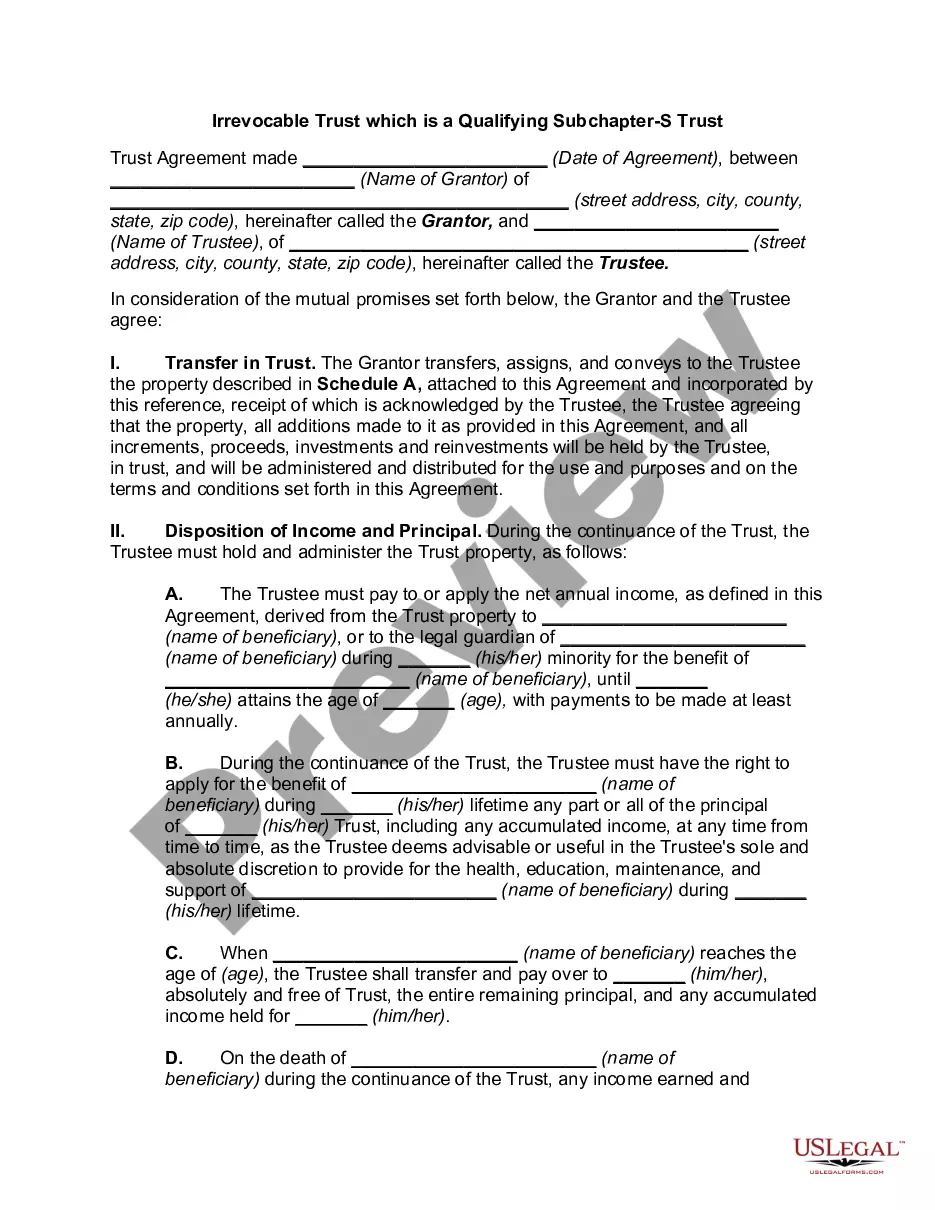
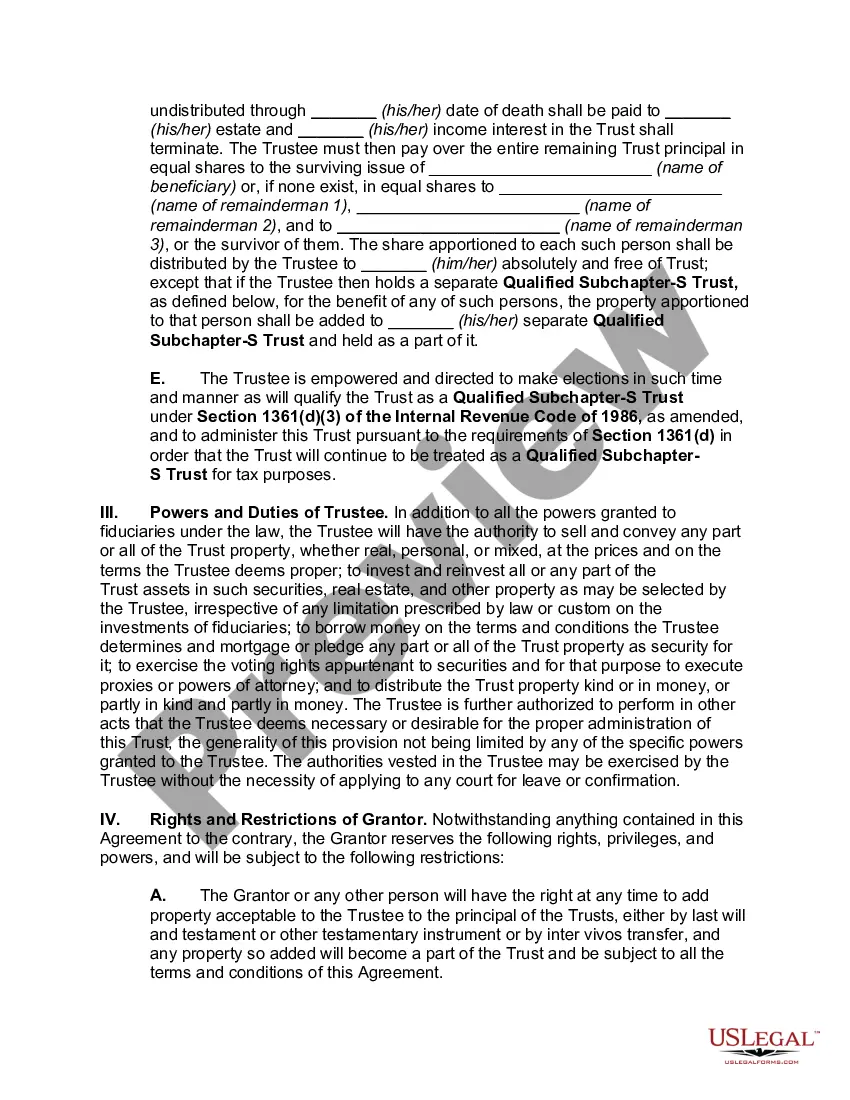
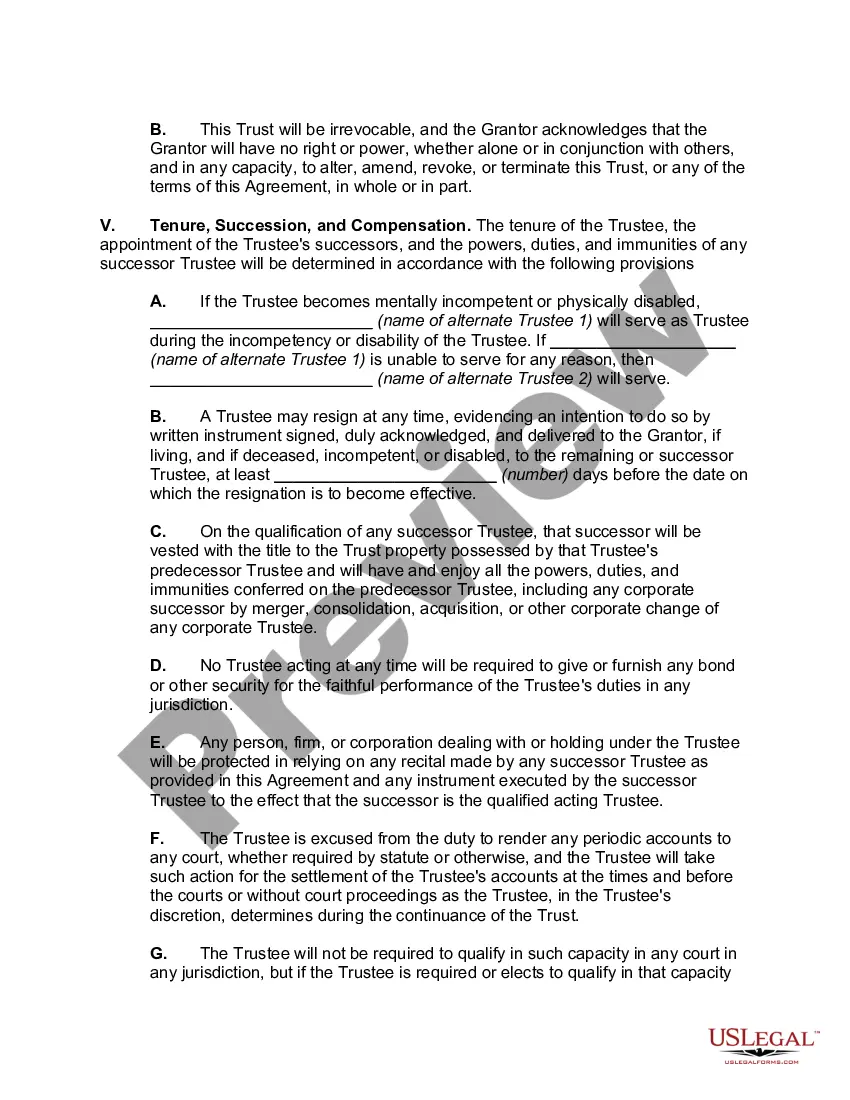
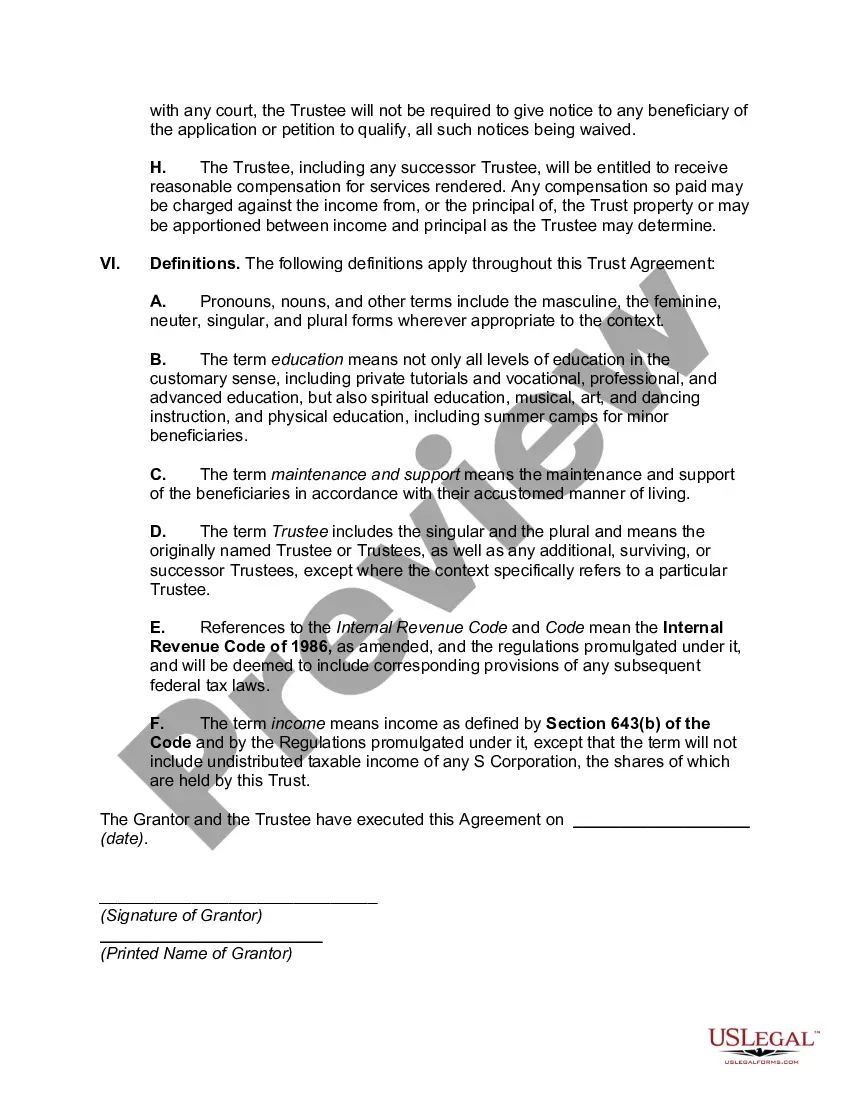
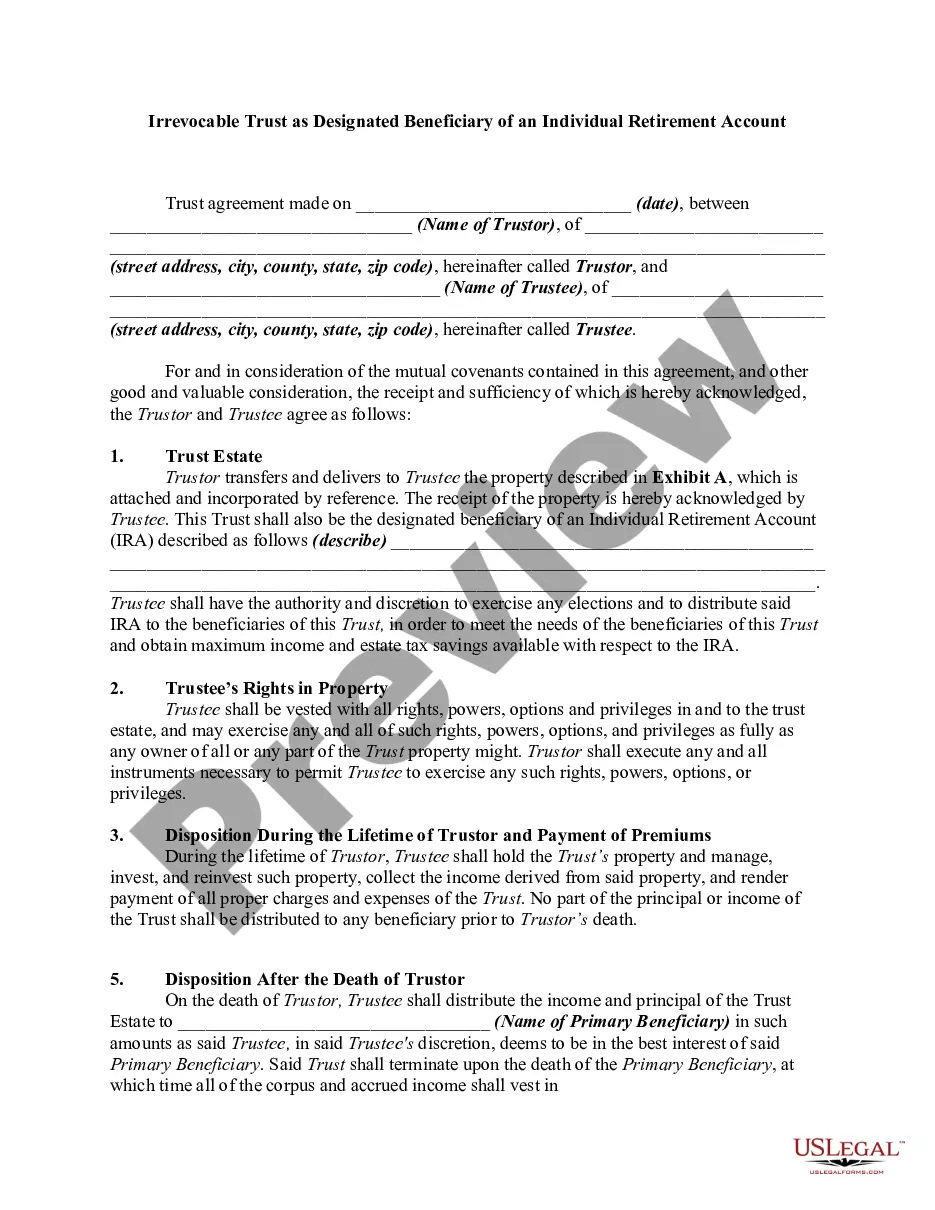
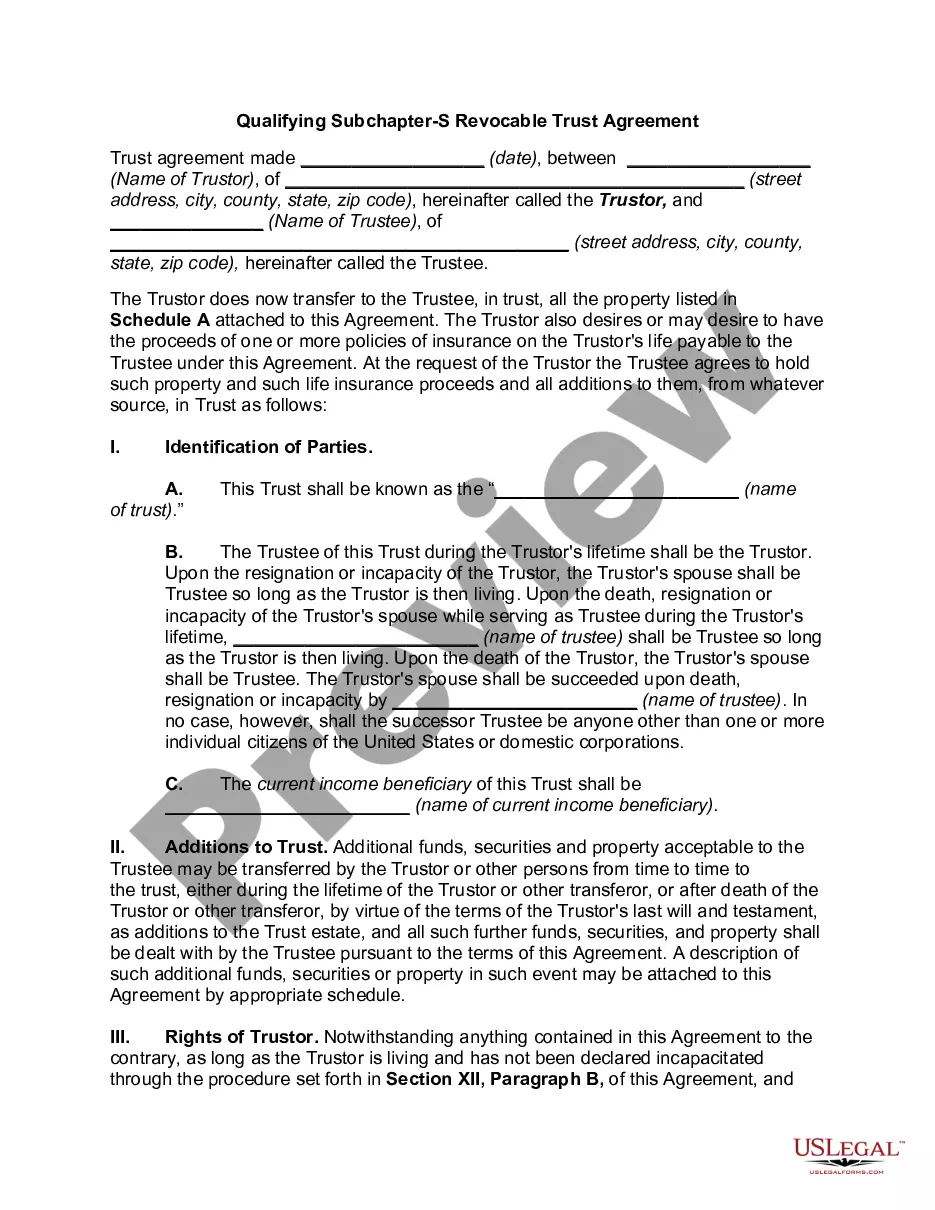
How to fill out Irrevocable Trust Which Is A Qualifying Subchapter-S Trust?
The Subchapter S Of The Internal Revenue Code presented on this page is a versatile legal template created by experienced attorneys in accordance with federal and state laws.
For over 25 years, US Legal Forms has supplied individuals, enterprises, and legal experts with over 85,000 validated, state-specific documents for various business and personal situations. It is the fastest, easiest, and most reliable method to secure the documents you require, as the service ensures bank-level data protection and anti-virus defense.
Subscribe to US Legal Forms to have verified legal templates for all of life's situations at your fingertips.
- Look for the document you require and evaluate it.
- Search through the example you are looking for and preview it or read the form description to confirm it meets your needs. If it does not, use the search feature to locate the correct one. Click Buy Now when you have located the template you want.
- Register and Log In.
- Select the pricing option that works for you and set up an account. Utilize PayPal or a credit card for a swift payment. If you already possess an account, Log In and verify your subscription to proceed.
- Acquire the editable template.
- Choose the format you prefer for your Subchapter S Of The Internal Revenue Code (PDF, DOCX, RTF) and download the example onto your device.
- Fill out and sign the documents.
- Print the template to fill it out manually. Alternatively, use an online multifunctional PDF editor to swiftly and accurately complete and sign your form with a legally-binding electronic signature.
- Download your documents again.
- Access the same document again whenever necessary. Go to the My documents tab in your profile to re-download any previously purchased forms.
Form popularity
FAQ
In South Dakota, the standard parenting guidelines will set out the custody arrangement to be followed by the parents. You can object to the standard guidelines and the judge will order a hearing within thirty days.
South Dakota Court Records They can be accessed online through the South Dakota Unified Judicial System. You need to create an account to access the records. You may also go to the court clerk's office in the county where the case was filed and request the records in person or by mail. Fees will apply.
The small claims court is an informal court which allows people to sue for small losses of money or property. The procedures are simple enough so that an individual can file and handle his own claim in court. The limit set by the law for small claims actions is $12,000.00 or less.
Divorce records can be found by making a request from the Department in person, via post, online or on the phone. To find divorce records in person, interested parties must visit the State Office at 207 E. Missouri, Suite1-A, Pierre, SD 57501.
Records of divorce proceedings since 1905 are kept by the State Department of Health. To order a copy of a divorce record, follow the instructions on the South Dakota Department of Health website. For information about earlier divorce records, write to the clerk of courts in the county where the divorce took place.
CRIMINAL cases are available, unless sealed, on the UJS system from 1989 to present. CIVIL cases, unless confidential or sealed, are available from 2003 to present. Active money judgments are available for the past 20 years and inactive money judgments from April 19, 2004 to present.
For civil record searches and questions regarding criminal and civil record searches, you can send an e-mail to: USJPARupport@ujs.state.sd.us. Criminal and protection order searches are available on the Public Access System or PARS at: . There is a $20 fee for each submitted search.
South Dakota has a statewide record search program. CRIMINAL cases are available, unless sealed, on the UJS system from 1989 to present. CIVIL cases, unless confidential or sealed, are available from 2003 to present.