Irrevocable Trust For Dummies
Description
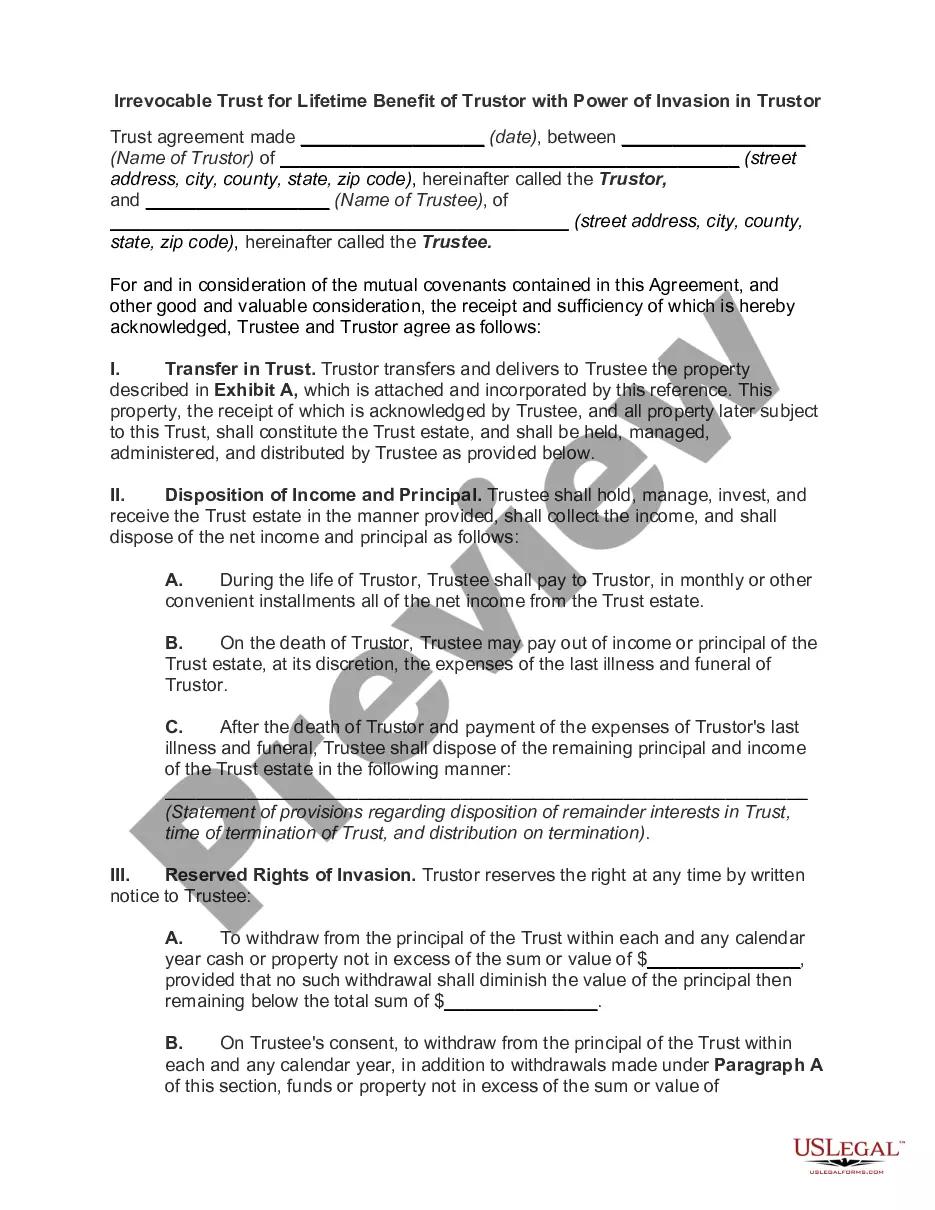
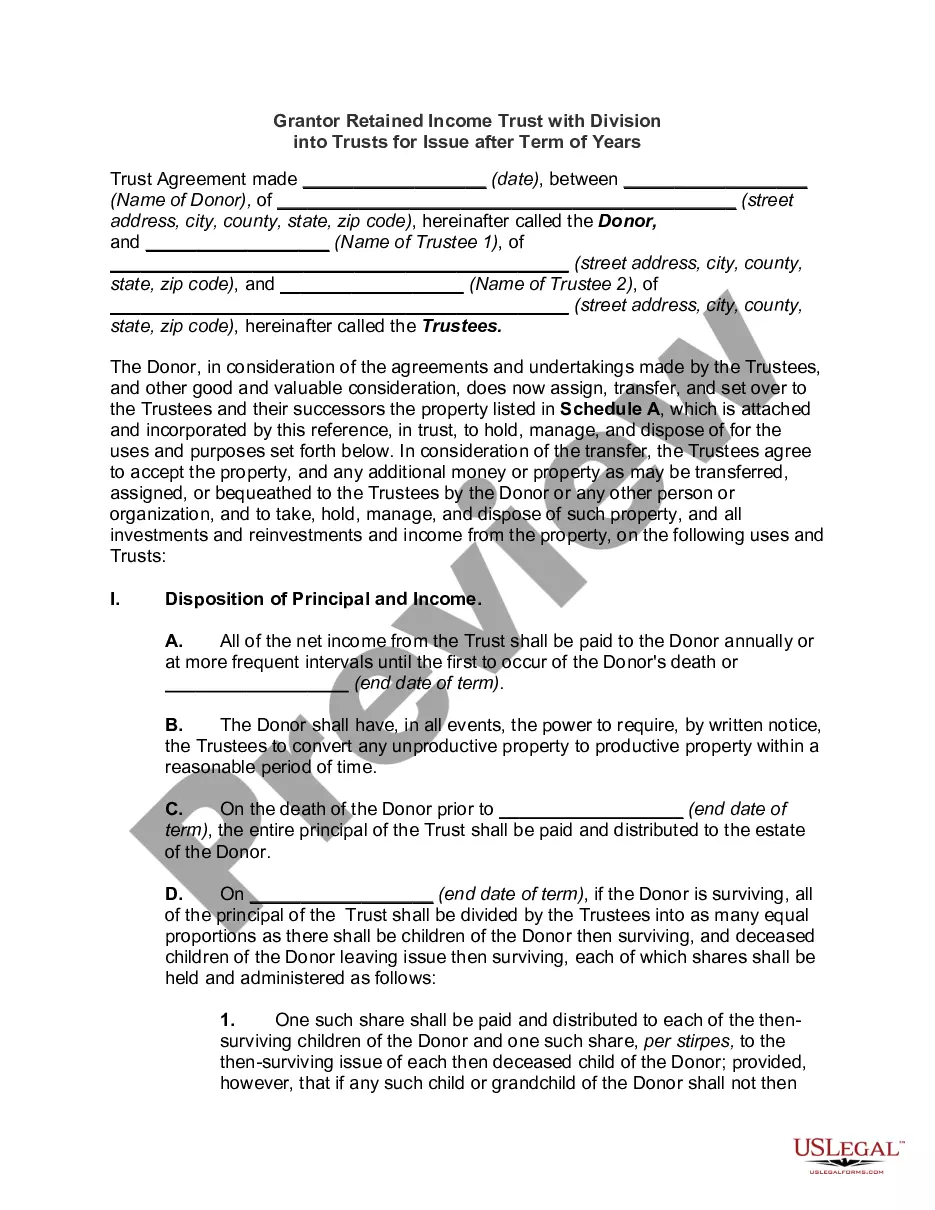
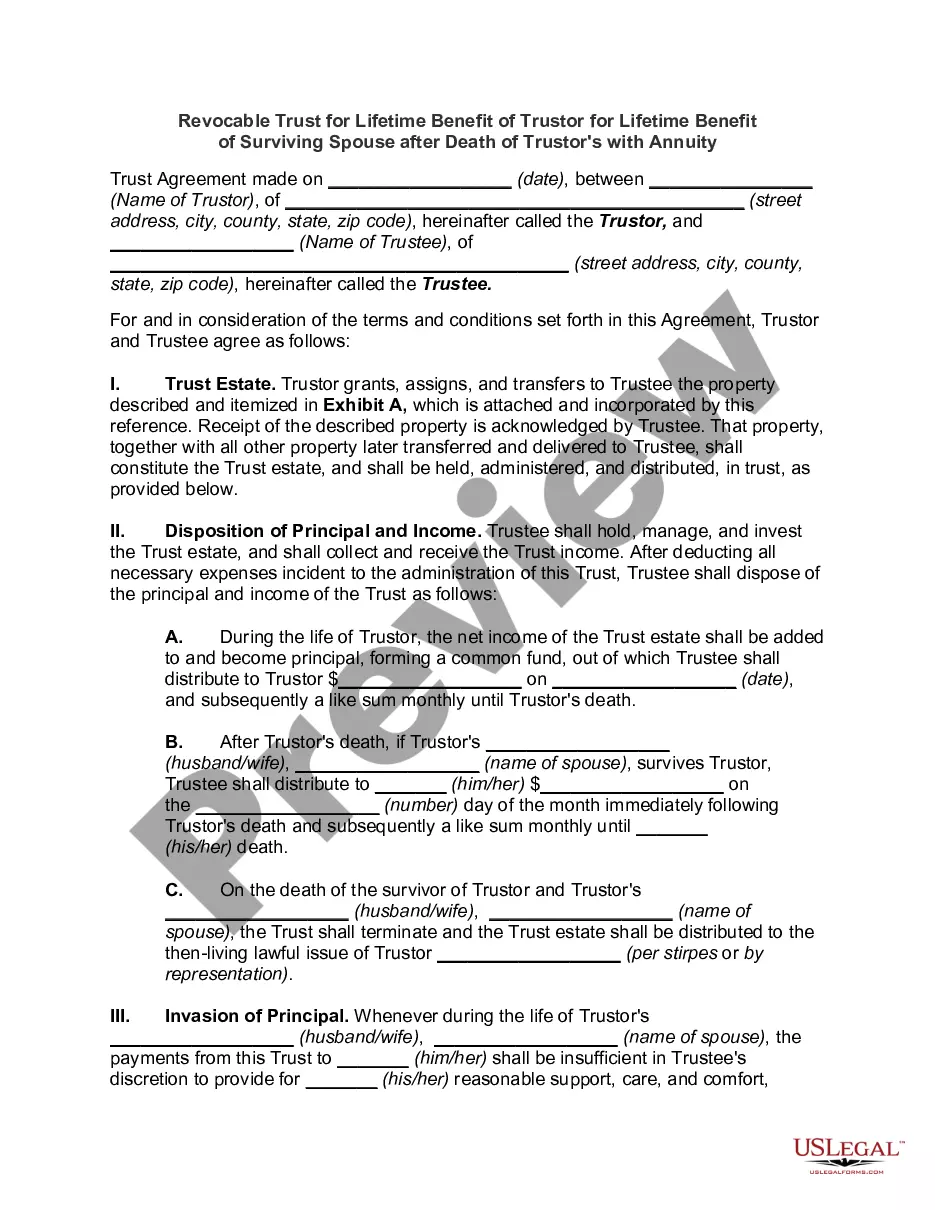
Get your form ready online
Our built-in tools help you complete, sign, share, and store your documents in one place.
Make edits, fill in missing information, and update formatting in US Legal Forms—just like you would in MS Word.
Download a copy, print it, send it by email, or mail it via USPS—whatever works best for your next step.
Sign and collect signatures with our SignNow integration. Send to multiple recipients, set reminders, and more. Go Premium to unlock E-Sign.
If this form requires notarization, complete it online through a secure video call—no need to meet a notary in person or wait for an appointment.
We protect your documents and personal data by following strict security and privacy standards.

Make edits, fill in missing information, and update formatting in US Legal Forms—just like you would in MS Word.

Download a copy, print it, send it by email, or mail it via USPS—whatever works best for your next step.

Sign and collect signatures with our SignNow integration. Send to multiple recipients, set reminders, and more. Go Premium to unlock E-Sign.

If this form requires notarization, complete it online through a secure video call—no need to meet a notary in person or wait for an appointment.

We protect your documents and personal data by following strict security and privacy standards.
Looking for another form?




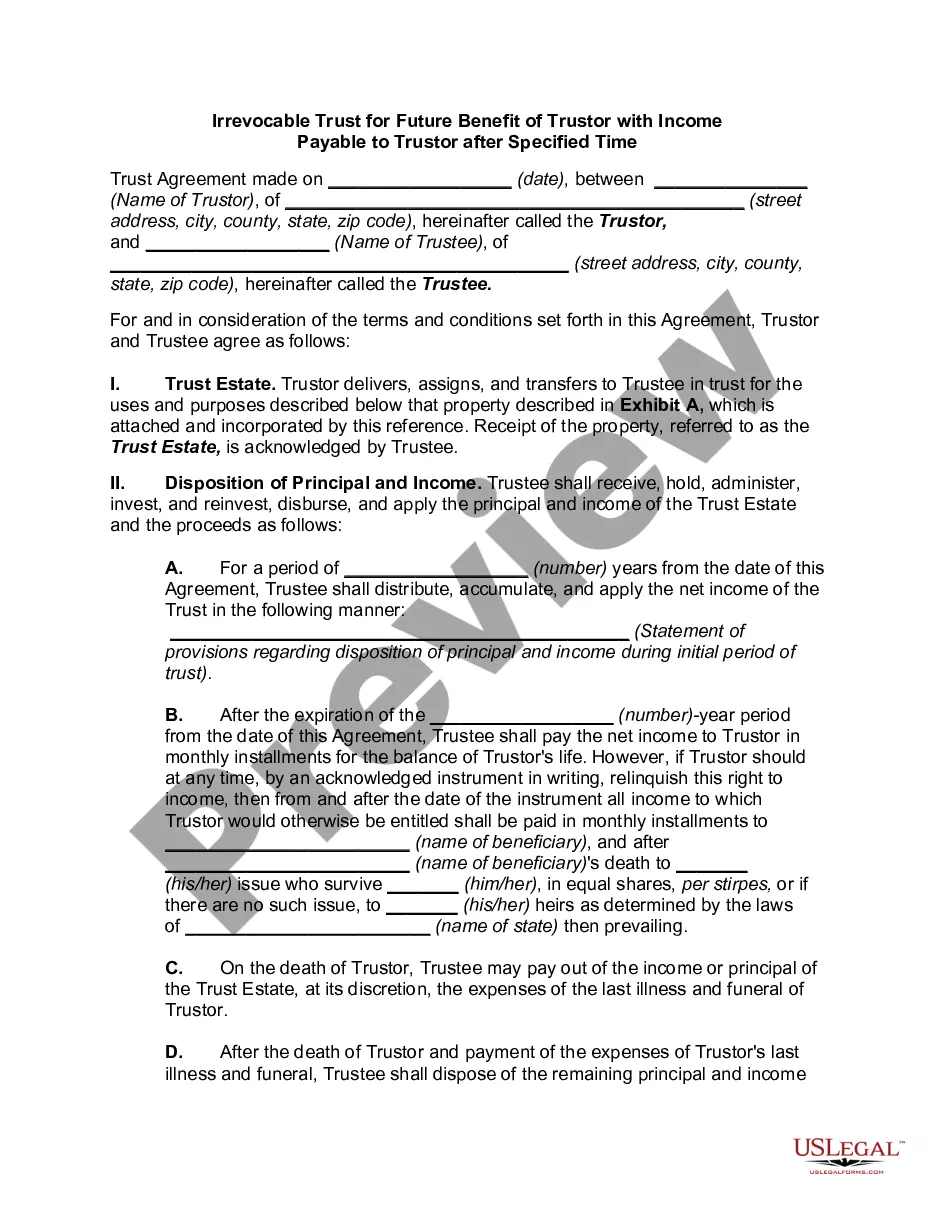
How to fill out Irrevocable Trust For Future Benefit Of Trustor With Income Payable To Trustor After Specified Time?
Securing a reliable source to obtain the latest and pertinent legal templates is a significant part of navigating bureaucracy. Sourcing the appropriate legal documents demands accuracy and meticulousness, which is why it is crucial to obtain samples of Irrevocable Trust For Dummies exclusively from trustworthy providers, such as US Legal Forms. An incorrect template could squander your time and prolong your current situation. With US Legal Forms, your concerns are minimal. You can access and review all the details related to the document's application and suitability for your specific case and location.
Follow the outlined steps to finalize your Irrevocable Trust For Dummies.
Once you have the form on your device, you can edit it using the editor or print it to fill out manually. Eliminate the complications associated with your legal documentation. Explore the extensive US Legal Forms library to locate legal templates, verify their relevance to your situation, and download them instantly.
- Utilize the catalog browsing or search function to find your template.
- Examine the form's details to confirm if it complies with the regulations of your state and county.
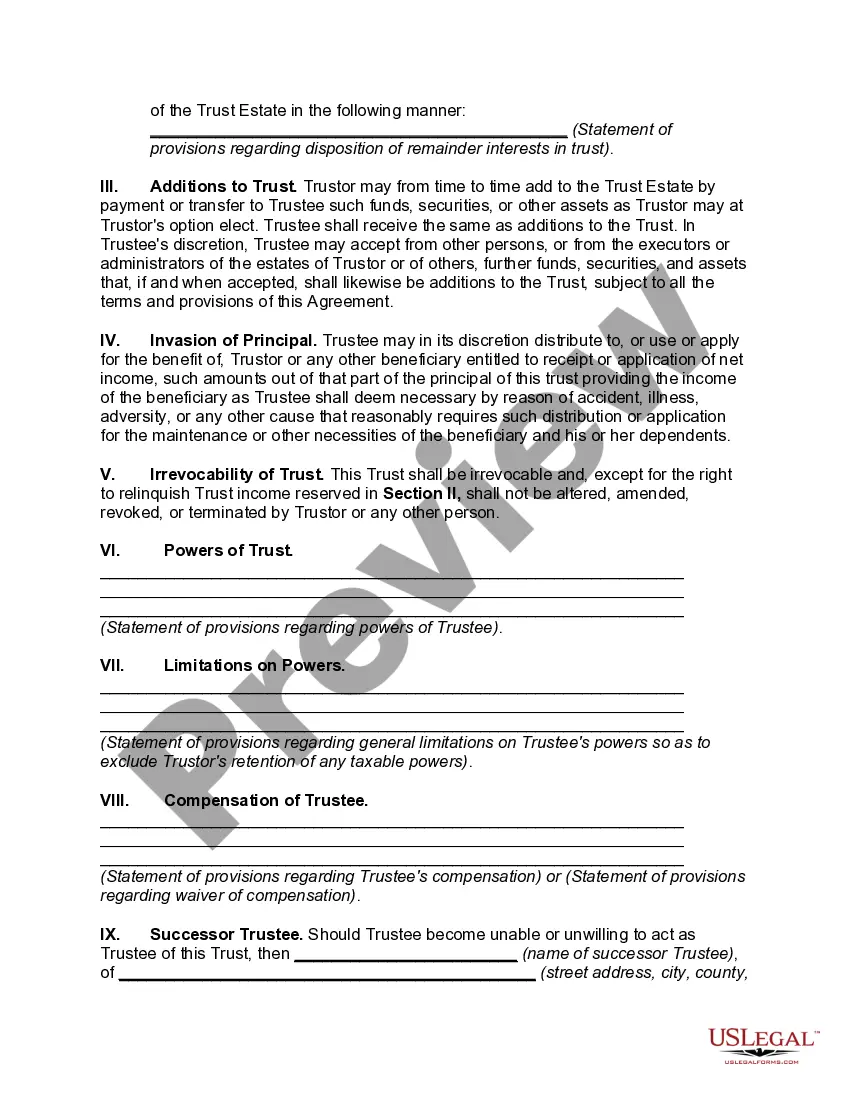
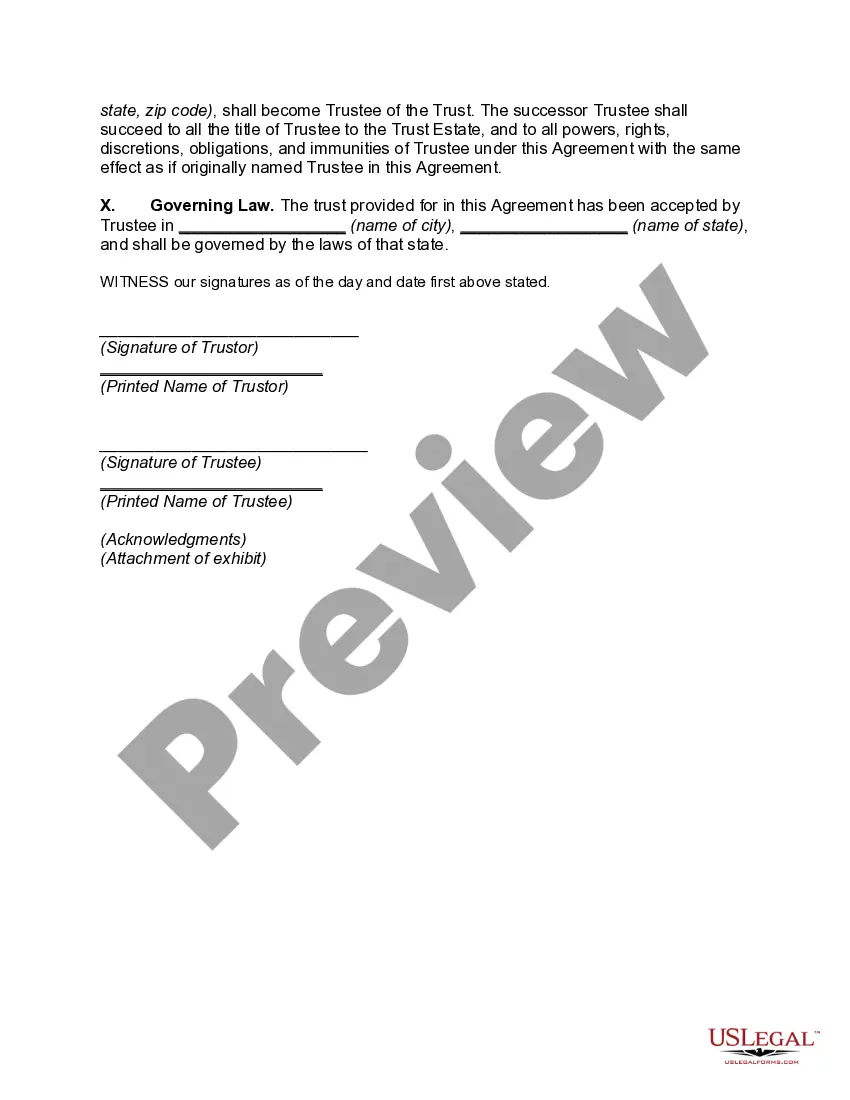
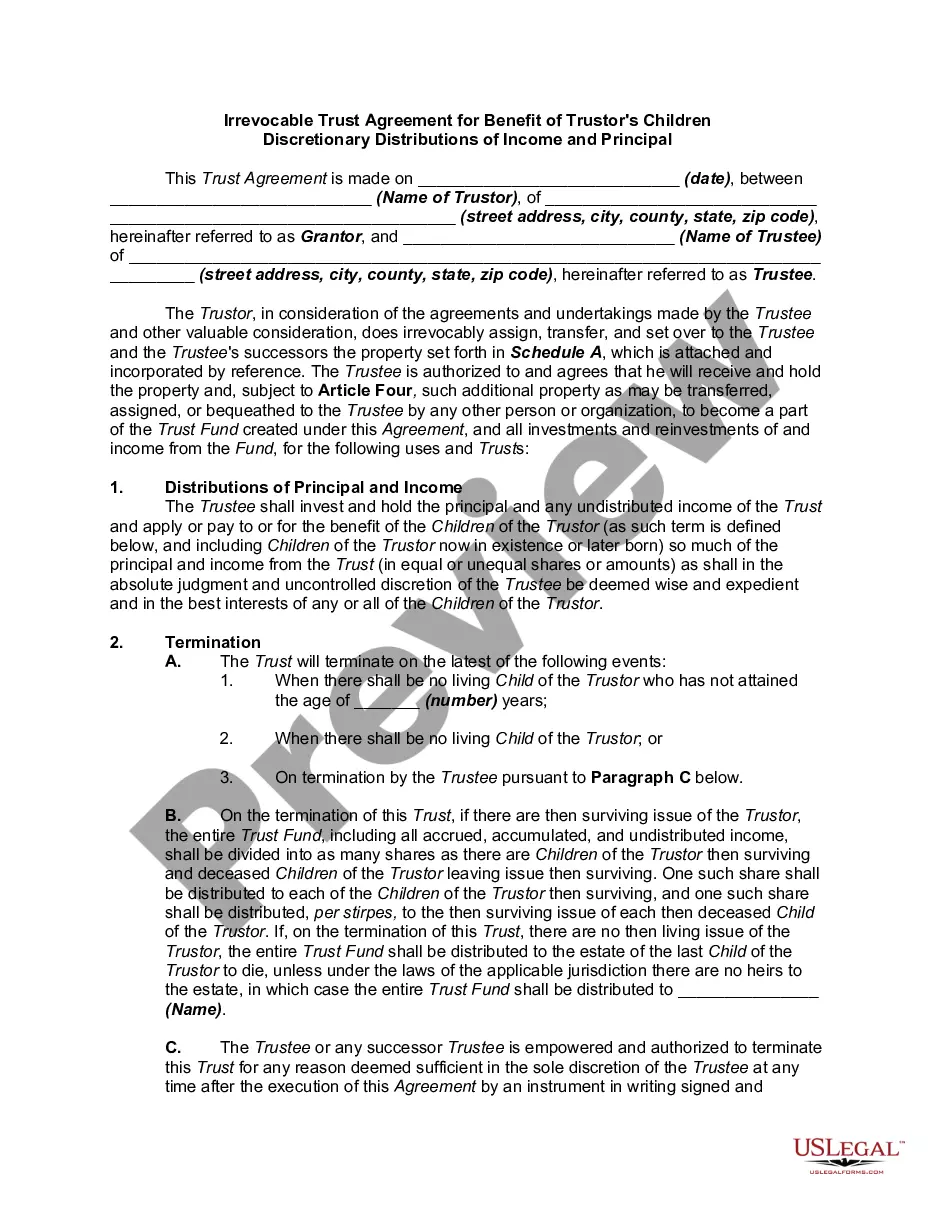
- Check the form preview, if available, to ensure the template is indeed the one you need.
- Return to the search and locate the correct document if the Irrevocable Trust For Dummies does not meet your requirements.
- If you are confident about the form's applicability, download it.
- If you are a registered user, click Log in to verify and access your chosen templates in My documents.
- If you do not have an account yet, click Buy now to purchase the form.
- Select the payment plan that fits your needs.
- Proceed to register to complete your transaction.
- Conclude your purchase by selecting a payment method (credit card or PayPal).
- Choose the file format for downloading Irrevocable Trust For Dummies.
Form popularity
FAQ
An irrevocable trust can serve multiple purposes that may benefit you. First, it protects your assets from creditors, ensuring they remain secure for your beneficiaries. Second, it can help reduce estate taxes, allowing more of your estate to go to your loved ones. Lastly, it enables you to control how and when your assets are distributed, providing peace of mind. Understanding these reasons can clarify why an irrevocable trust for dummies is a valuable tool.
Setting up an irrevocable trust yourself is possible, but it requires careful attention to detail. You need to understand the legal implications and tax consequences associated with this type of trust. For those who find the process overwhelming, US Legal Forms offers templates and guidance to simplify the steps for you. This resource can help you navigate the complexities of an irrevocable trust for dummies.
What Should I Avoid with My Irrevocable Trust? Use trust funds to pay for personal expenses. Use trust funds to pay for monthly bills, such as phone bills or utilities. Use trust assets to purchase vehicles. Gift assets from the trust to beneficiaries. Transfer assets into the trust without consulting your lawyer.
Irrevocable trusts are generally set up to minimize estate taxes, access government benefits, and protect assets. This is in contrast to a revocable trust, which allows the grantor to modify the trust, but loses certain benefits such as creditor protection.
Once established, irrevocable trusts can't be changed or canceled by the grantor (hence the ?irrevocable? in their name). The grantor forfeits ownership and authority over the trust and is unable to make any changes or amendments to the terms of the trust without permission from the beneficiary or a court order.
Unlike a Revocable Trust, which allows for flexibility, you cannot change or revoke this type of trust. Like a Revocable Trust, however, an Irrevocable Trust should be set up with the assistance of a reputable estate planning attorney.
The main reasons to create an Irrevocable Trust include: tax efficiency; controlling money for a beneficiary who is disabled; controlling money for a beneficiary who cannot properly handle money; ensuring funds are used for a certain purpose; and.