Joint Tenancy
Description

Get your form ready online
Our built-in tools help you complete, sign, share, and store your documents in one place.
Make edits, fill in missing information, and update formatting in US Legal Forms—just like you would in MS Word.
Download a copy, print it, send it by email, or mail it via USPS—whatever works best for your next step.
Sign and collect signatures with our SignNow integration. Send to multiple recipients, set reminders, and more. Go Premium to unlock E-Sign.
If this form requires notarization, complete it online through a secure video call—no need to meet a notary in person or wait for an appointment.
We protect your documents and personal data by following strict security and privacy standards.

Make edits, fill in missing information, and update formatting in US Legal Forms—just like you would in MS Word.

Download a copy, print it, send it by email, or mail it via USPS—whatever works best for your next step.

Sign and collect signatures with our SignNow integration. Send to multiple recipients, set reminders, and more. Go Premium to unlock E-Sign.

If this form requires notarization, complete it online through a secure video call—no need to meet a notary in person or wait for an appointment.

We protect your documents and personal data by following strict security and privacy standards.
Looking for another form?

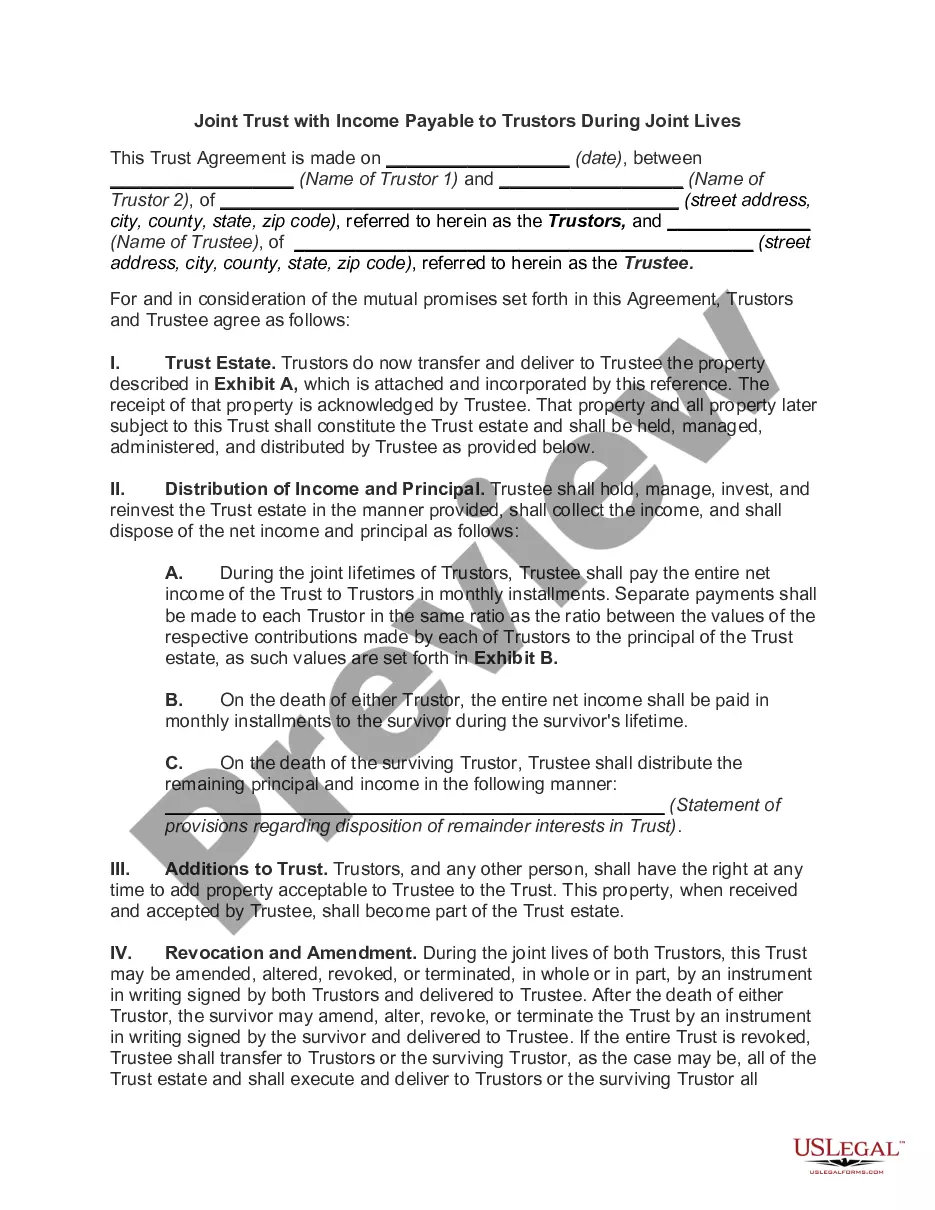
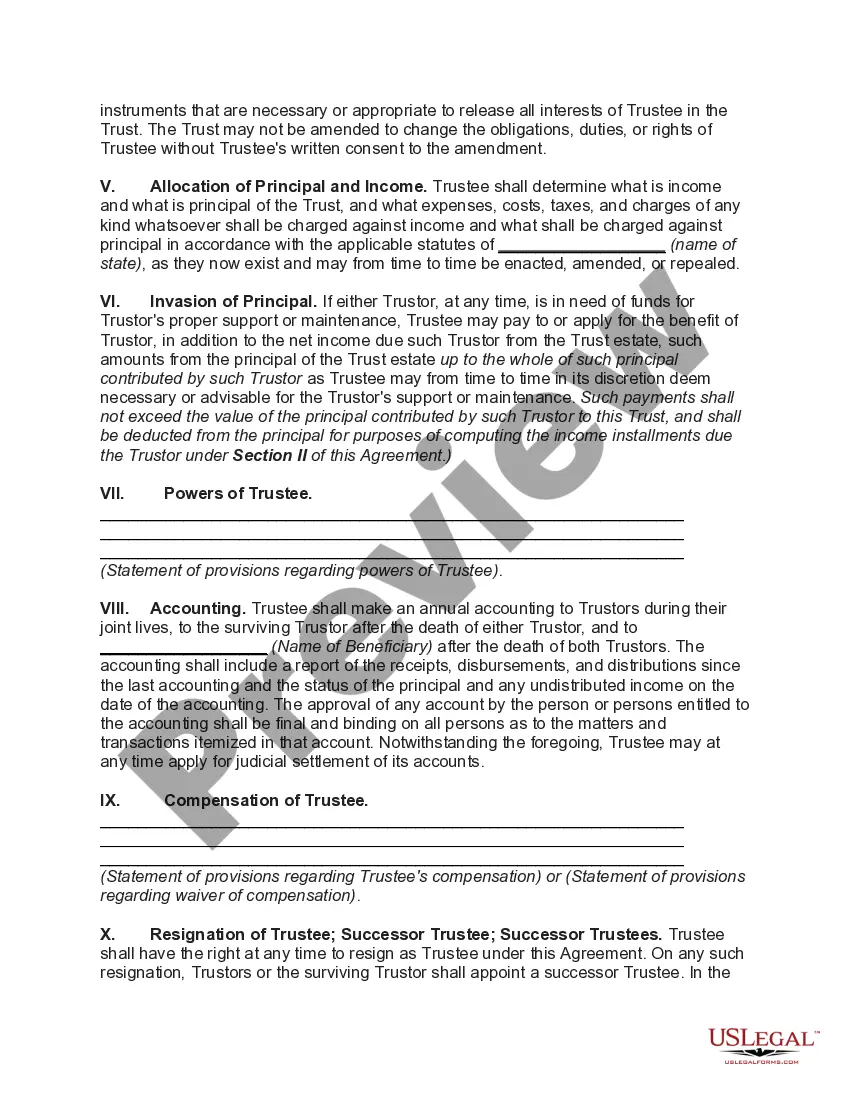
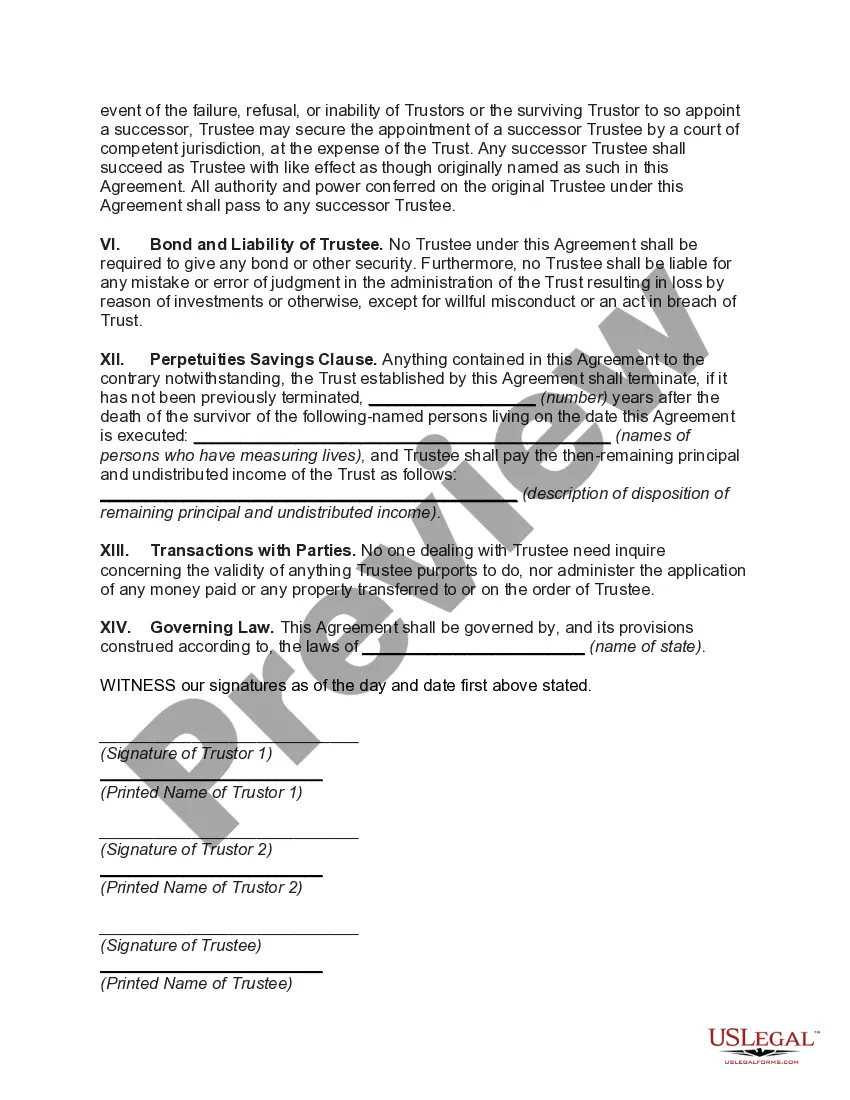
How to fill out Joint Trust With Income Payable To Trustors During Joint Lives?
- If you're a returning user, log into your US Legal Forms account and select the desired joint tenancy form from the library. Ensure that your subscription is active.
- For first-time users, begin by browsing the extensive collection of legal forms. Use the Preview option to confirm that the document suits your needs and complies with local regulations.
- If you can't find the right template, utilize the Search feature to locate alternatives until you find a suitable match.
- Select the joint tenancy document you need, click the 'Buy Now' button, and choose your preferred subscription plan. Note that you will need to create an account to access everything.
- Complete your purchase by entering your payment details, whether through credit card or PayPal.
- After payment, download your completed form to your device. You can also access it anytime via the 'My Forms' section in your profile.
US Legal Forms empowers users, providing an extensive library of over 85,000 legal forms, ensuring that you can find what you need with ease.
Get started on your joint tenancy documentation today—experience the benefits of streamlined legal form access with US Legal Forms!
Form popularity
FAQ
Joint tenancy comes with several pitfalls that can lead to financial and legal troubles. For instance, both owners have equal rights, which means one person can make decisions that impact the other without consent. Furthermore, if a co-owner faces bankruptcy or a lawsuit, your shared asset may be at risk. Exploring options like separate ownership or legal frameworks through US Legal Forms can help you make informed decisions.
Joint tenancy may seem beneficial at first, but it can complicate asset management. If one owner passes away, the ownership automatically transfers to the surviving owner, which can create disputes among heirs. Additionally, joint tenancy can expose your assets to your co-owner's debts or legal issues. It’s essential to consider individual ownership or a trust as safer alternatives.
For married couples, joint tenancy often serves as the best option for property ownership. Joint tenancy allows both partners to hold equal rights to the property, ensuring that in the event of one partner's passing, the other automatically inherits their share. This feature provides a smooth transition of ownership without the need for probate, which can be a lengthy process. By using joint tenancy, you can foster trust and simplify your estate planning, making it an excellent choice for married couples.
To establish a joint tenancy agreement, start by consulting legal resources or professionals to ensure you meet all requirements. You can use platforms like US Legal Forms to access templates and guidance on creating a joint tenancy agreement tailored to your needs. Once completed, ensure that all parties sign the document and properly file it to formalize your joint ownership.
One major disadvantage of joint tenancy is that it requires unanimous agreement between all co-owners for any transactions involving the property. This can lead to conflicts, especially if one party wants to sell their share while the other does not. Additionally, joint tenancy can result in unintentional inheritance issues which may cause distress among family members.
The disadvantages of joint tenancy include the potential for disputes between co-owners and the exposure of the property to creditors. If one joint tenant faces financial trouble, creditors may target the asset. Furthermore, joint tenancy lacks the flexibility of wills or trusts, which can limit your ability to designate heirs according to your preferences.
While joint tenancy offers benefits, it also has downsides that should be considered. For instance, both parties have equal rights to the property, which may create complications if one wishes to sell or refinance. Additionally, creditors of one owner may access the property, impacting the other owner’s interests in a way that can undermine financial security.
Joint tenancy is often referred to as a poor man's will because it allows individuals to pass on assets to a surviving co-owner without going through probate. This can save time and costs involved in transferring property upon death. Many people choose joint tenancy to simplify the transferring of their estate, making it an accessible option for estate planning.
Joint tenant accounts are generally taxed based on the income generated by the account. Each joint tenant must report their share of the account's income on their separate tax returns. This often requires good record-keeping to ensure accuracy in tax filings. Understanding these tax responsibilities can help joint tenants avoid potential surprises during tax season, so be proactive in managing your financial documentation.
In a joint account, all account holders share responsibility for tax obligations. Tax laws typically dictate that each owner must report their share of the income earned from the account. Thus, clarity on ownership percentages is crucial to avoid misunderstandings among joint account holders. If you need help understanding these tax implications, consider utilizing platforms like US Legal Forms, which can provide valuable resources for joint accounts.