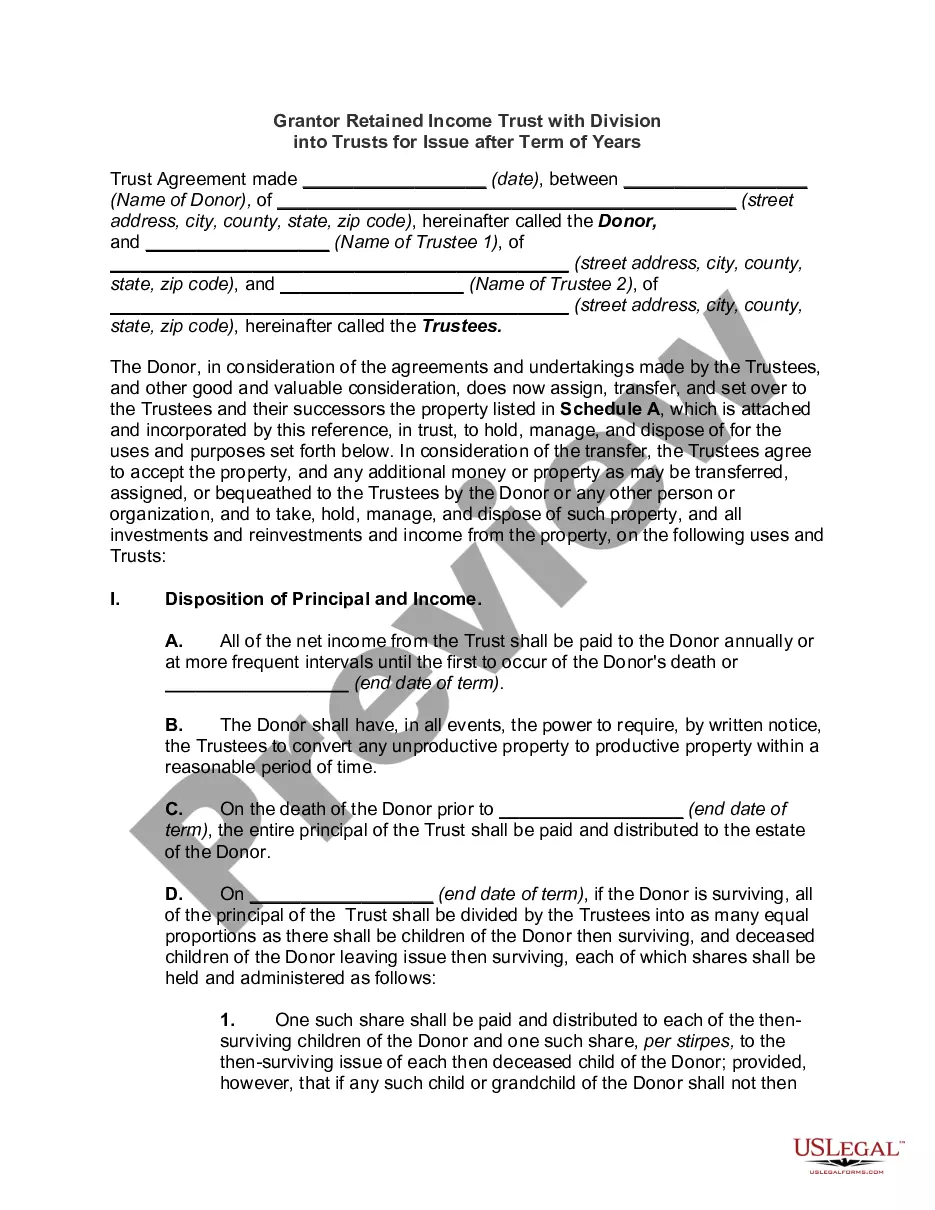
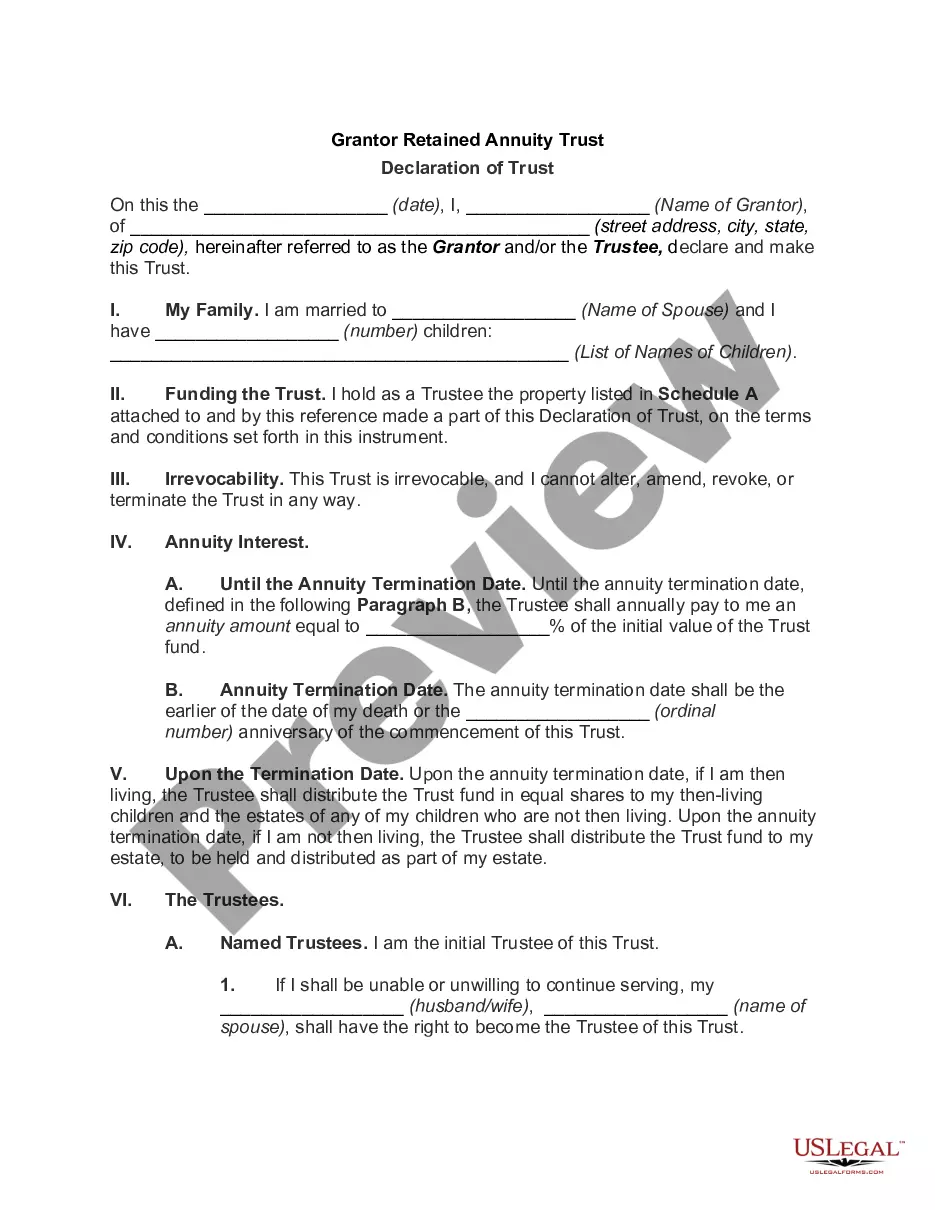
Grantor Retained Annuity Trust
Description
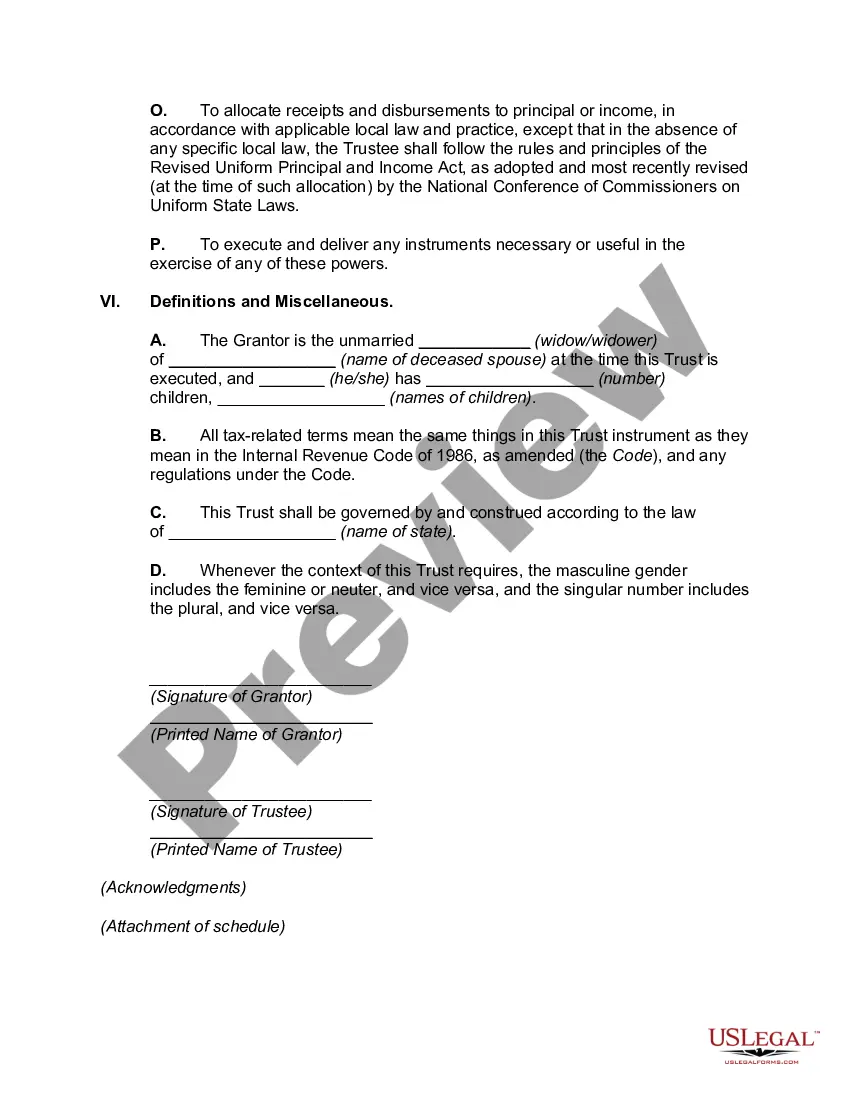
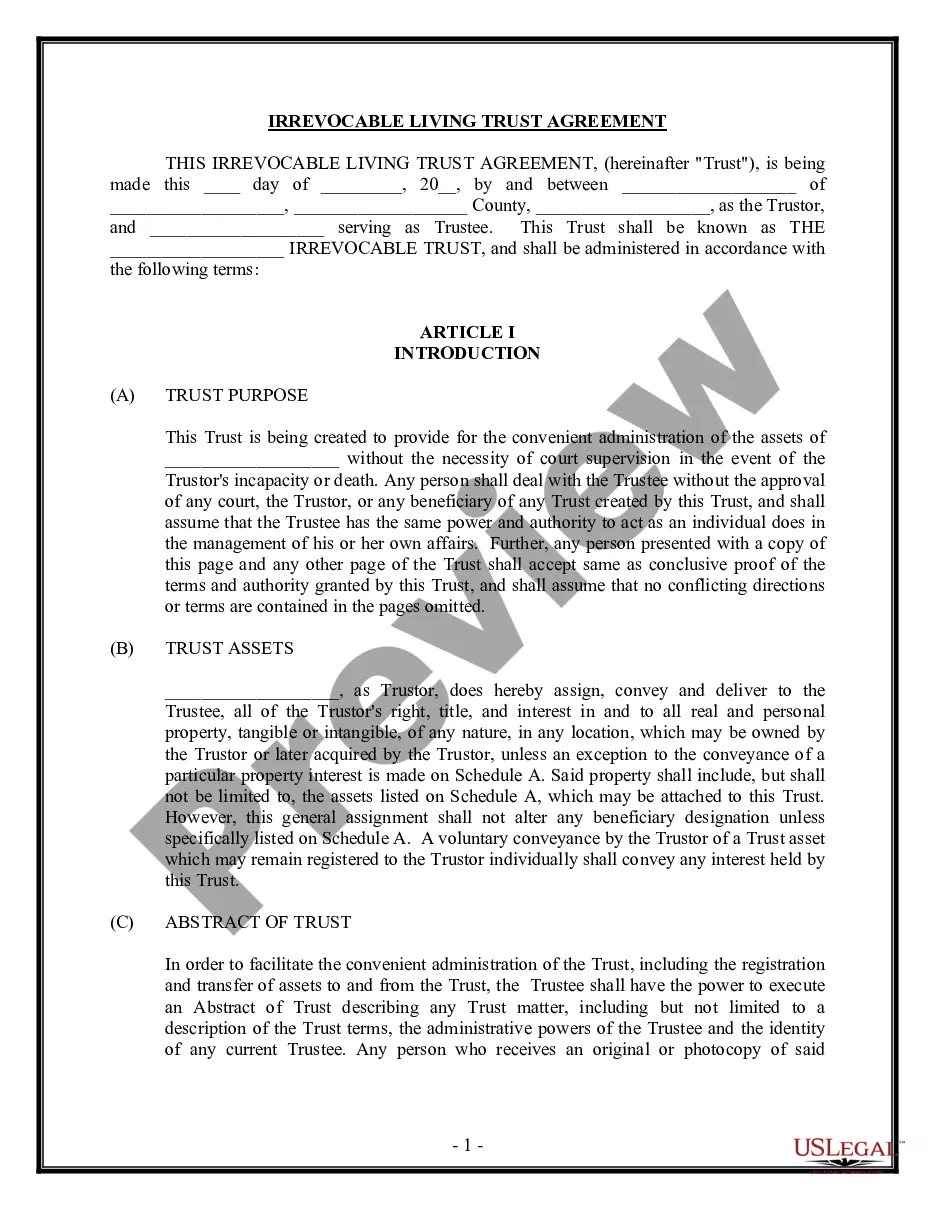
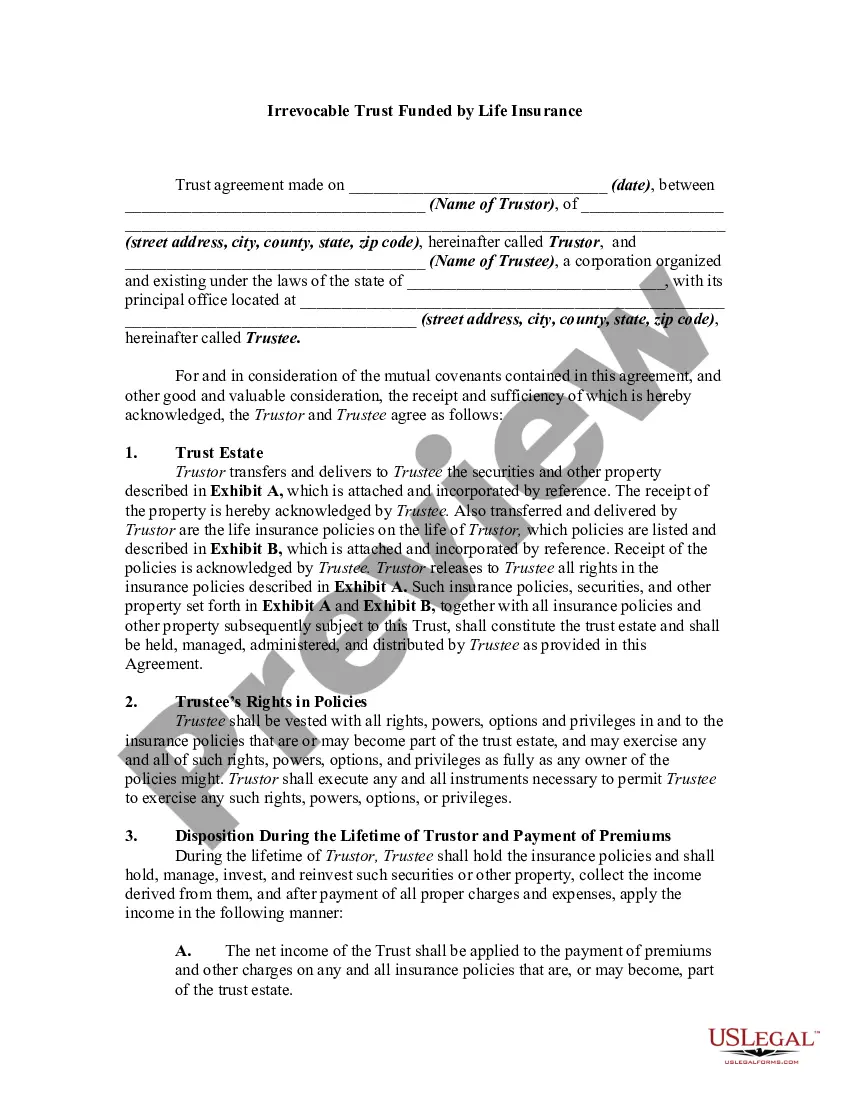
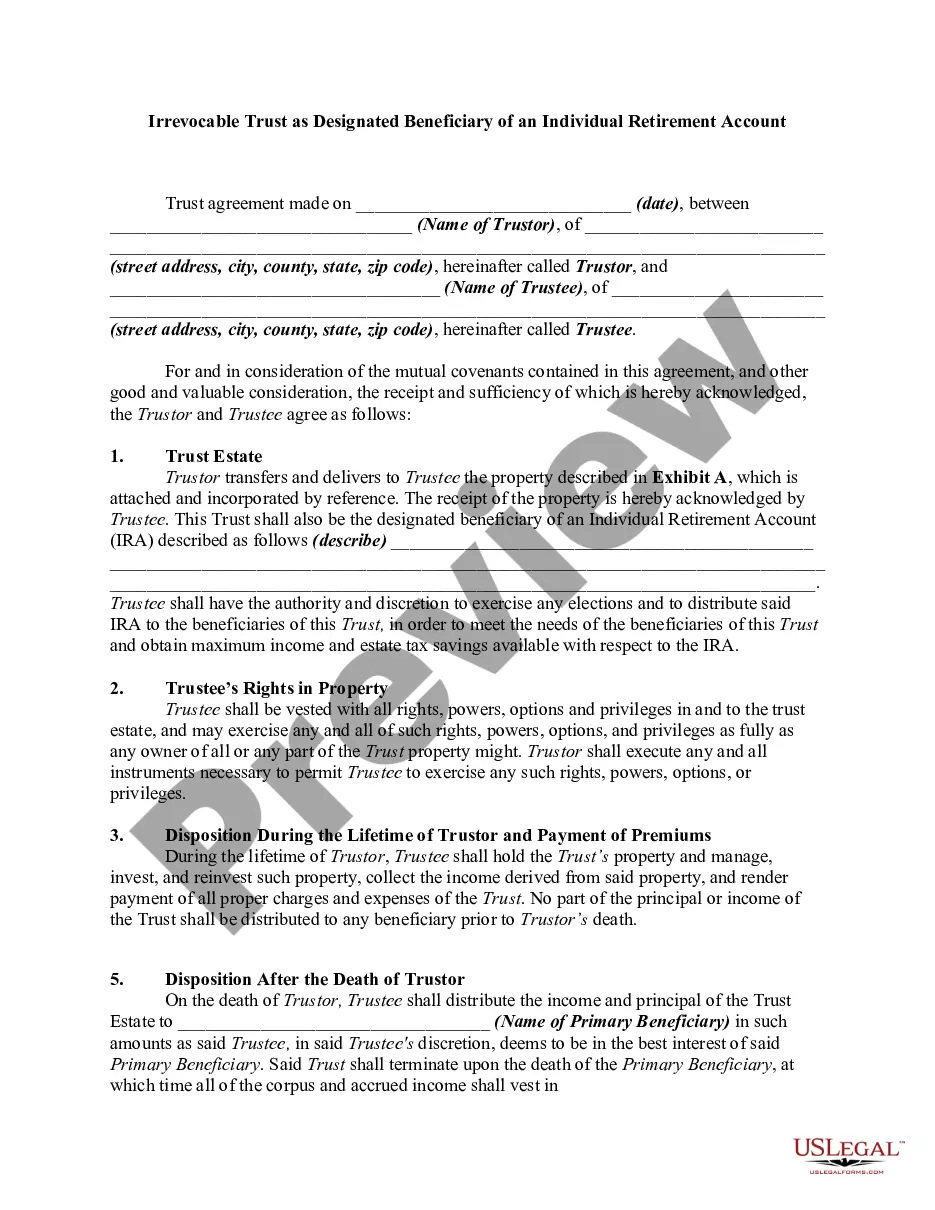
Get your form ready online
Our built-in tools help you complete, sign, share, and store your documents in one place.
Make edits, fill in missing information, and update formatting in US Legal Forms—just like you would in MS Word.
Download a copy, print it, send it by email, or mail it via USPS—whatever works best for your next step.
Sign and collect signatures with our SignNow integration. Send to multiple recipients, set reminders, and more. Go Premium to unlock E-Sign.
If this form requires notarization, complete it online through a secure video call—no need to meet a notary in person or wait for an appointment.
We protect your documents and personal data by following strict security and privacy standards.

Make edits, fill in missing information, and update formatting in US Legal Forms—just like you would in MS Word.

Download a copy, print it, send it by email, or mail it via USPS—whatever works best for your next step.

Sign and collect signatures with our SignNow integration. Send to multiple recipients, set reminders, and more. Go Premium to unlock E-Sign.

If this form requires notarization, complete it online through a secure video call—no need to meet a notary in person or wait for an appointment.

We protect your documents and personal data by following strict security and privacy standards.
Looking for another form?


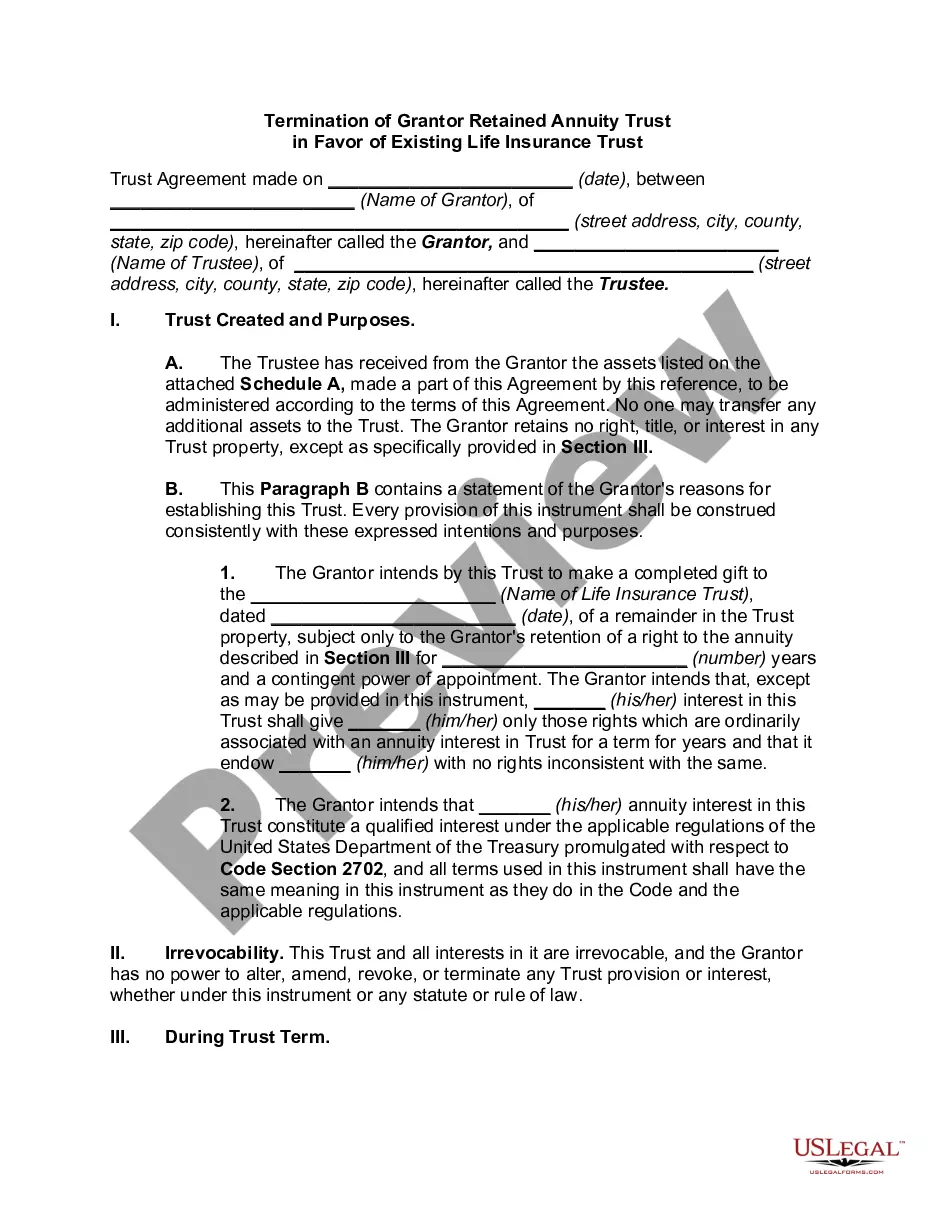
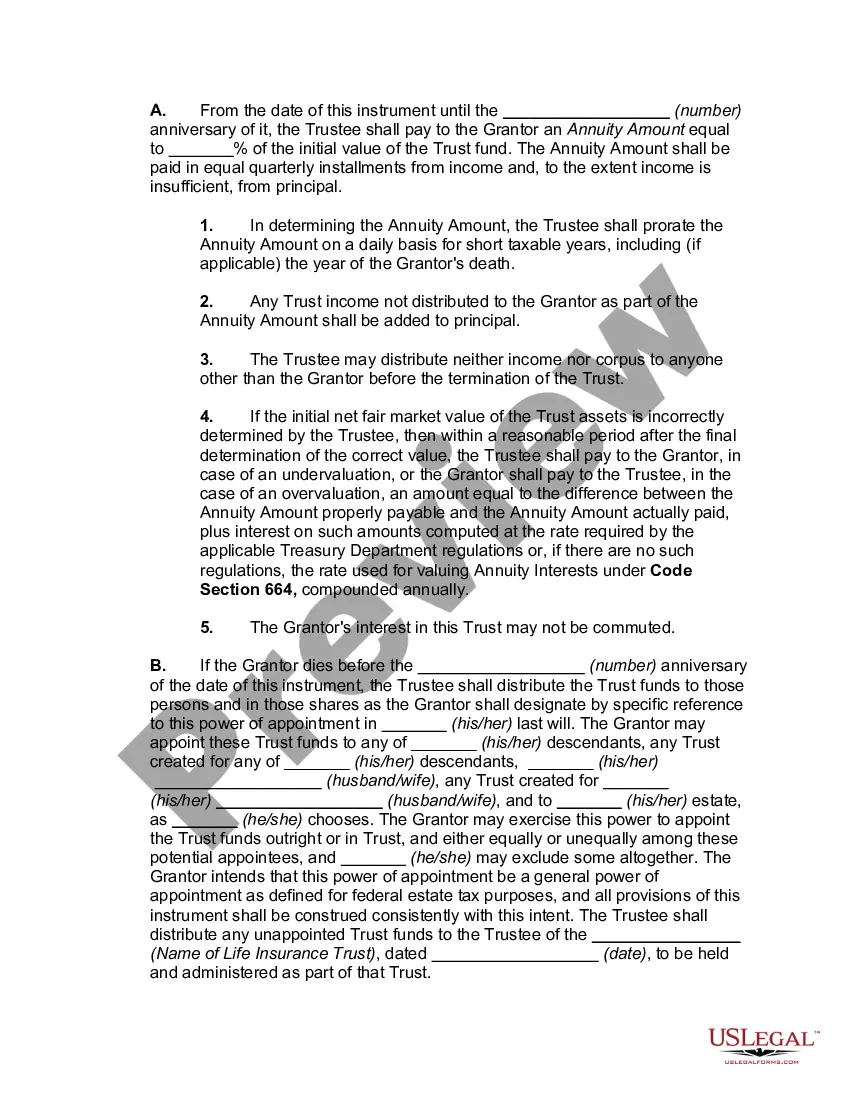
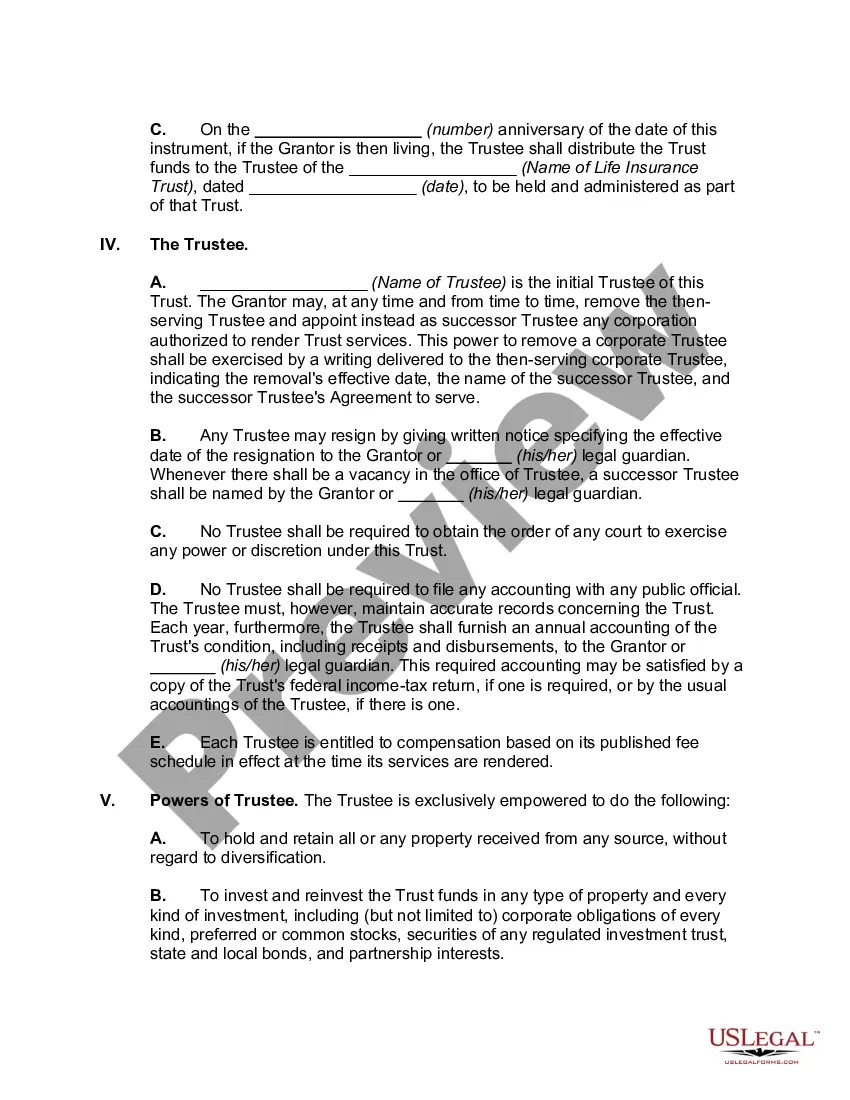
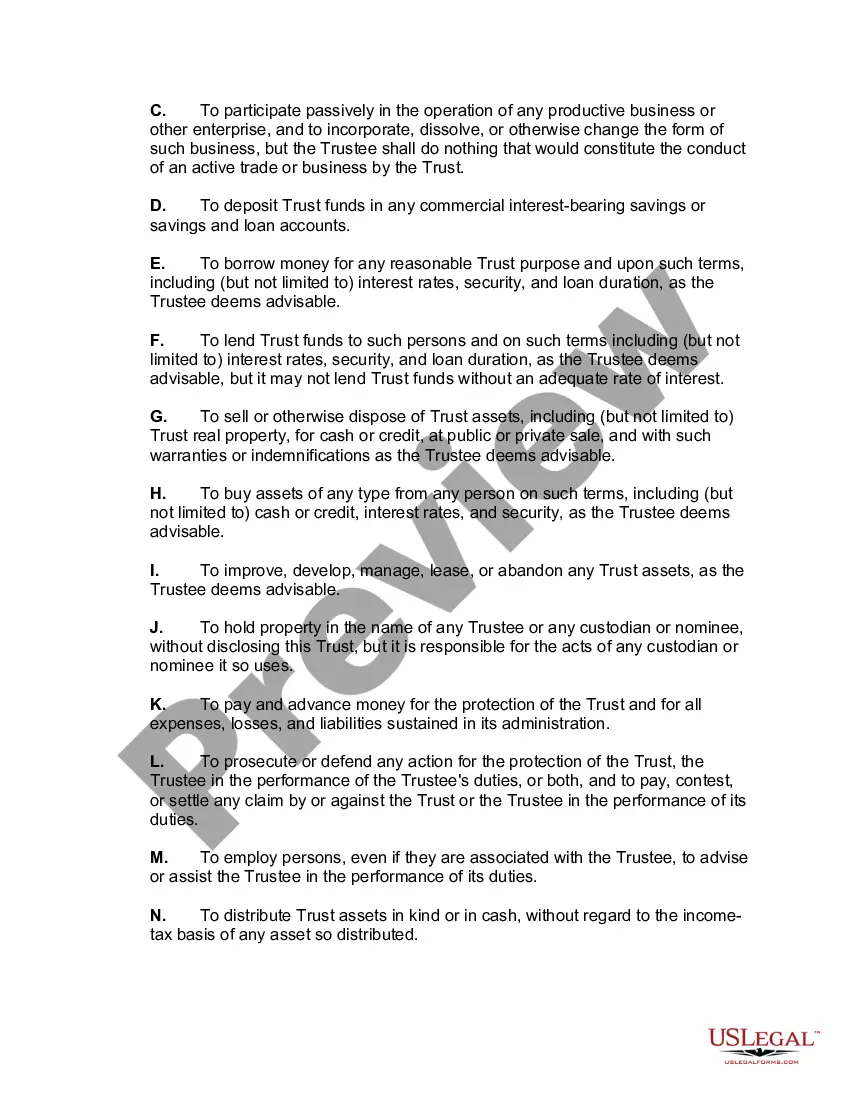
How to fill out Termination Of Grantor Retained Annuity Trust In Favor Of Existing Life Insurance Trust?
- Log in to your US Legal Forms account. Ensure that your subscription is active; if not, renew it based on your plan.
- Explore the extensive form library. Use the Preview mode and description to find the appropriate GRAT template for your specific needs and jurisdiction.
- Search for alternative templates if necessary. If your initial choice doesn't meet your requirements, utilize the Search tab for alternatives.
- Select and purchase the document. Once you find the right form, click on 'Buy Now' and choose your subscription option. Account registration is required for full access.
- Complete your purchase. Enter your payment details via credit card or PayPal to finalize the subscription.
- Download your completed form. Save it to your device and access it later via the 'My Forms' section in your profile.
By following these steps, you can effectively navigate through the process of obtaining a Grantor Retained Annuity Trust with US Legal Forms.
Empower your estate planning today by leveraging the comprehensive resources of US Legal Forms. Get started now!
Form popularity
FAQ
A grantor retained annuity trust (GRAT) is a financial tool used to transfer wealth while minimizing gift taxes. For instance, suppose an individual establishes a GRAT with assets valued at $1 million, retaining an annuity payment for a set period. If the value of the assets increases over that time, the remaining value passes to beneficiaries without incurring significant tax liabilities. This strategy exemplifies how a grantor retained annuity trust can effectively facilitate wealth transfer while also providing ongoing income to the grantor.
To setup a Grantor Retained Annuity Trust (GRAT), start by drafting the trust document that outlines the terms, such as the annuity payments and trust length. Next, transfer your preferred assets into the trust, ensuring compliance with IRS regulations. For assistance with the legal paperwork and easy access to templates, you can explore options on USLegalForms, where you can find resources tailored to help you in setting up your GRAT efficiently.
Setting up a Grantor Retained Annuity Trust (GRAT) involves several crucial steps. First, you must define the trust's terms, including the annuity amount and the duration of the trust. You will also need to transfer assets into the GRAT, which can include investments or property. For a smooth process, consider using platforms like USLegalForms to access the necessary documents and guidance.
The primary purpose of a grantor retained income trust is to facilitate effective wealth transfer while providing you income over a designated period. By setting up a GRAT, you can minimize estate taxes on the assets after your income term ends. This strategic tool becomes invaluable for individuals looking to pass wealth on to future generations while managing taxes efficiently.
The key difference between a grantor retained annuity trust and an irrevocable trust lies in control and flexibility. A GRAT allows you, the grantor, to retain income from the trust assets for a time, while an irrevocable trust typically relinquishes control once assets are transferred. Consequently, a GRAT can provide specific tax benefits while still giving you some level of oversight during the trust term.
A grantor retained annuity trust works by allowing you to place assets into the trust while keeping the right to receive annuity payments for a set duration. Once this period ends, any remaining assets are passed on to your chosen beneficiaries, often with significant tax benefits. This effective strategy encourages wealth transfer without incurring heavy estate taxes, making it a popular choice among individuals seeking smart estate planning solutions.
A grantor retained annuity trust (GRAT) operates by allowing you to transfer assets into the trust while retaining the right to receive income from those assets for a specified term. At the end of that term, the remaining assets pass to your beneficiaries, potentially avoiding estate taxes. This structure not only helps in wealth transfer but also allows you to retain some control over your investments during the trust term.
A Grantor Retained Annuity Trust (GRAT) does not file a tax return in its own right as long as the grantor keeps control of it. The income generated by the GRAT is reported on the grantor's tax return, meaning the trust effectively combines with personal tax filings. This understanding is vital for proper tax planning. If you're unsure about your specific situation, consider resources from uslegalforms to assist with your tax queries.
While a Grantor Retained Annuity Trust (GRAT) can provide significant estate tax advantages, there are some downsides to consider. For one, if you do not survive the term of the GRAT, the trust assets may still be included in your estate, negating the potential tax benefits. Additionally, there are complexities involved in setting up and maintaining a GRAT, which may require ongoing professional assistance. Utilizing platforms like uslegalforms can help streamline this process and address any concerns.
Filing a tax return for a grantor trust, such as a Grantor Retained Annuity Trust (GRAT), involves reporting the income on the grantor's personal tax form. The trust itself typically does not file a separate return, simplifying tax compliance for the grantor. It's advisable to keep detailed records of all income and expenses associated with the trust. For more specific guidance, consider using uslegalforms to ensure you're following the right procedures.