Special Trust Child Statement With Multiple Conditions
Description




Get your form ready online
Our built-in tools help you complete, sign, share, and store your documents in one place.
Make edits, fill in missing information, and update formatting in US Legal Forms—just like you would in MS Word.
Download a copy, print it, send it by email, or mail it via USPS—whatever works best for your next step.
Sign and collect signatures with our SignNow integration. Send to multiple recipients, set reminders, and more. Go Premium to unlock E-Sign.
If this form requires notarization, complete it online through a secure video call—no need to meet a notary in person or wait for an appointment.
We protect your documents and personal data by following strict security and privacy standards.

Make edits, fill in missing information, and update formatting in US Legal Forms—just like you would in MS Word.

Download a copy, print it, send it by email, or mail it via USPS—whatever works best for your next step.

Sign and collect signatures with our SignNow integration. Send to multiple recipients, set reminders, and more. Go Premium to unlock E-Sign.

If this form requires notarization, complete it online through a secure video call—no need to meet a notary in person or wait for an appointment.

We protect your documents and personal data by following strict security and privacy standards.
Looking for another form?



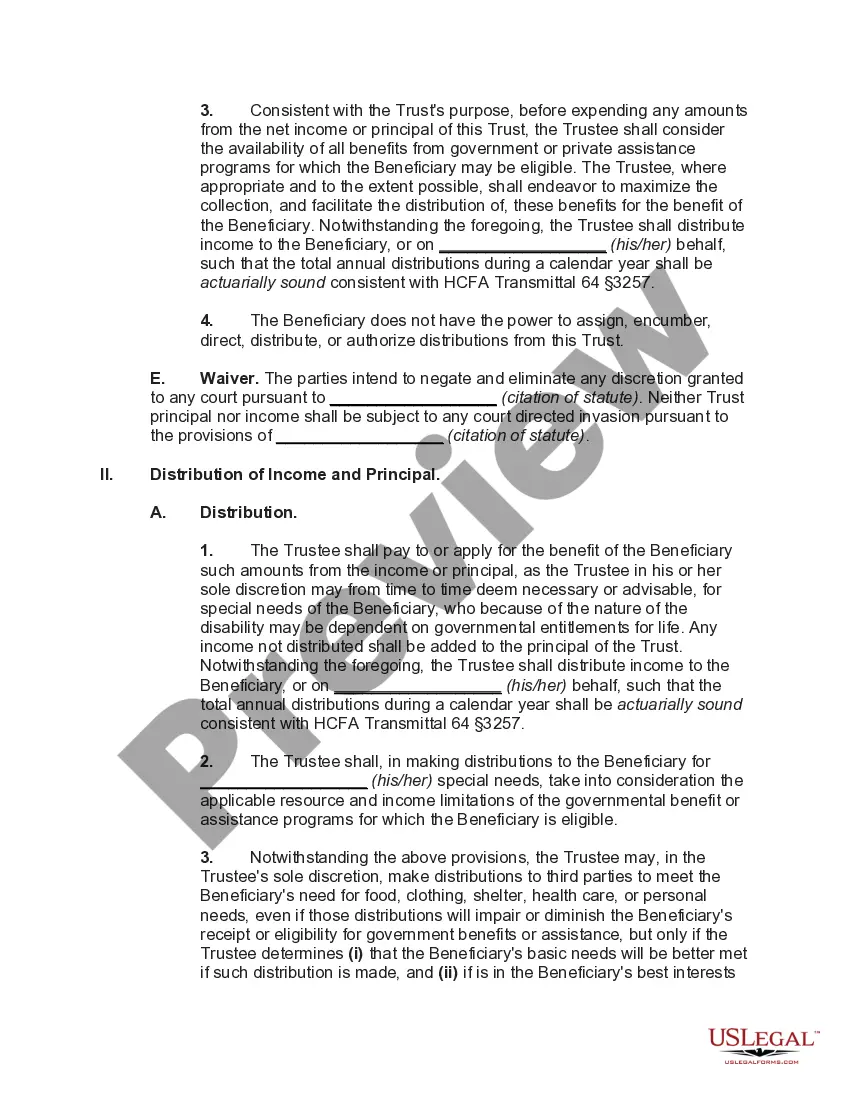
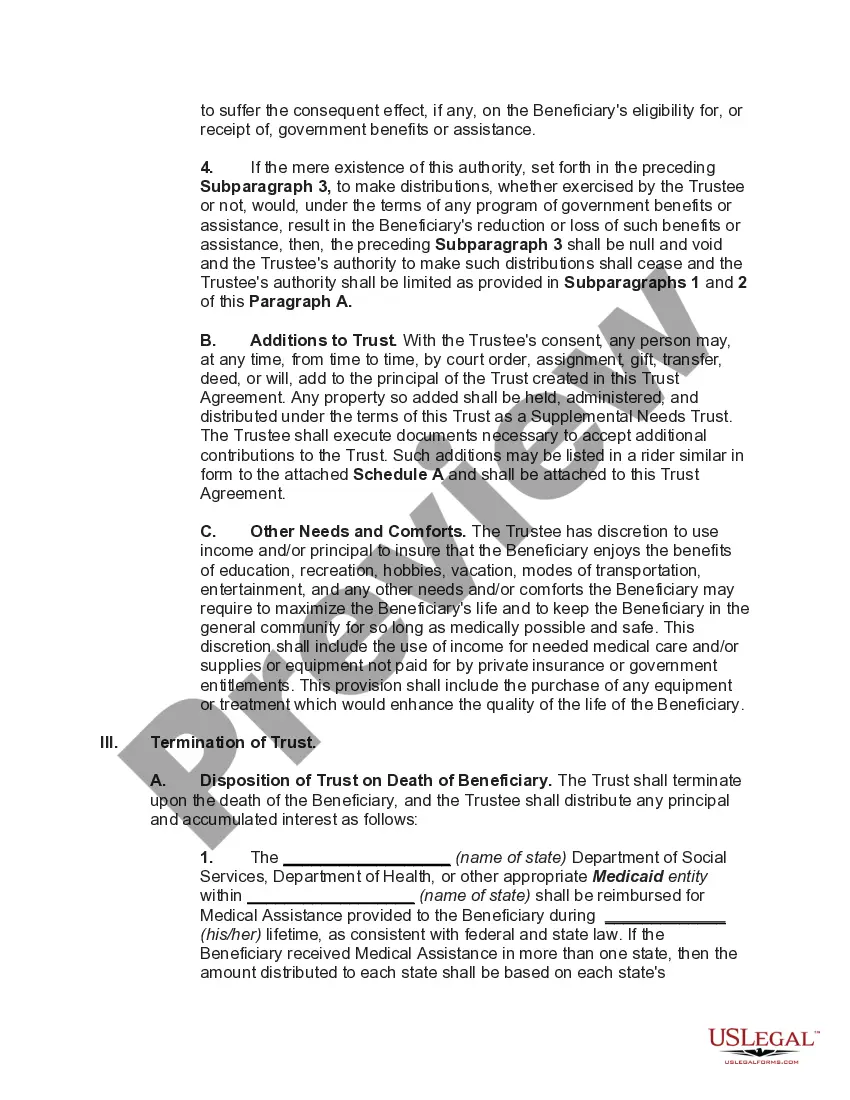
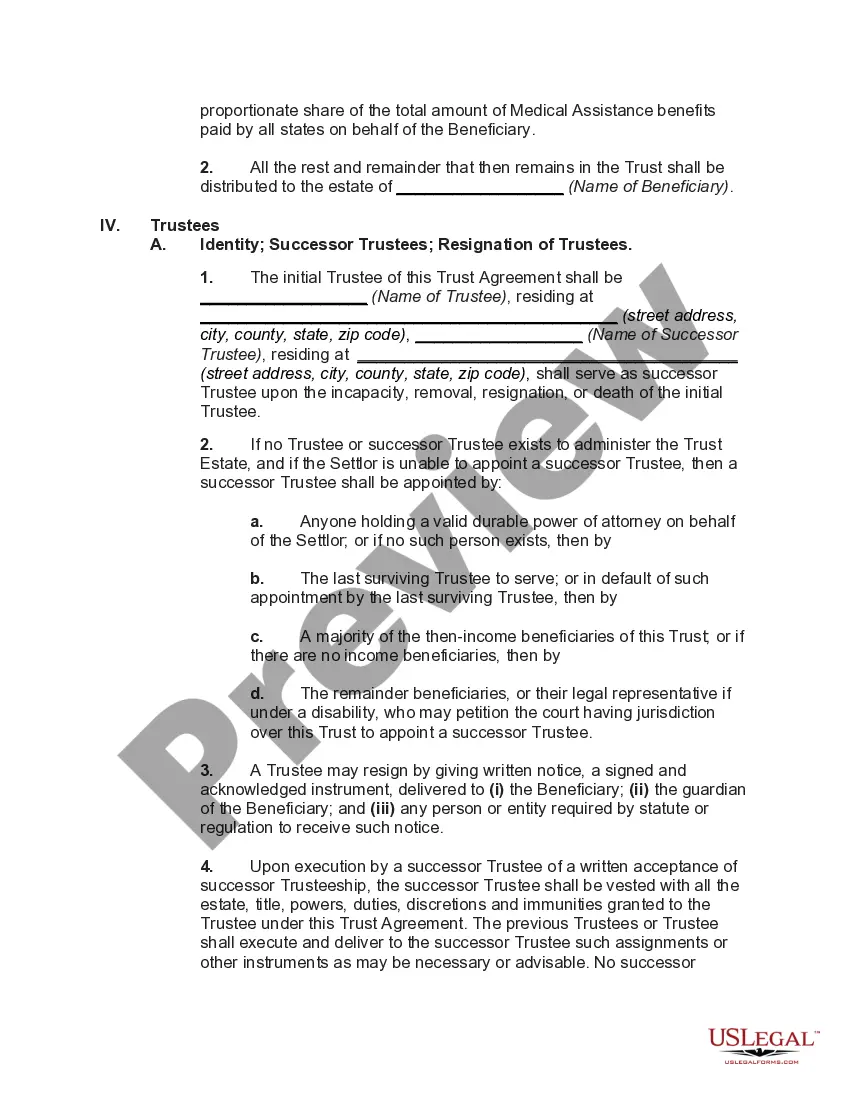
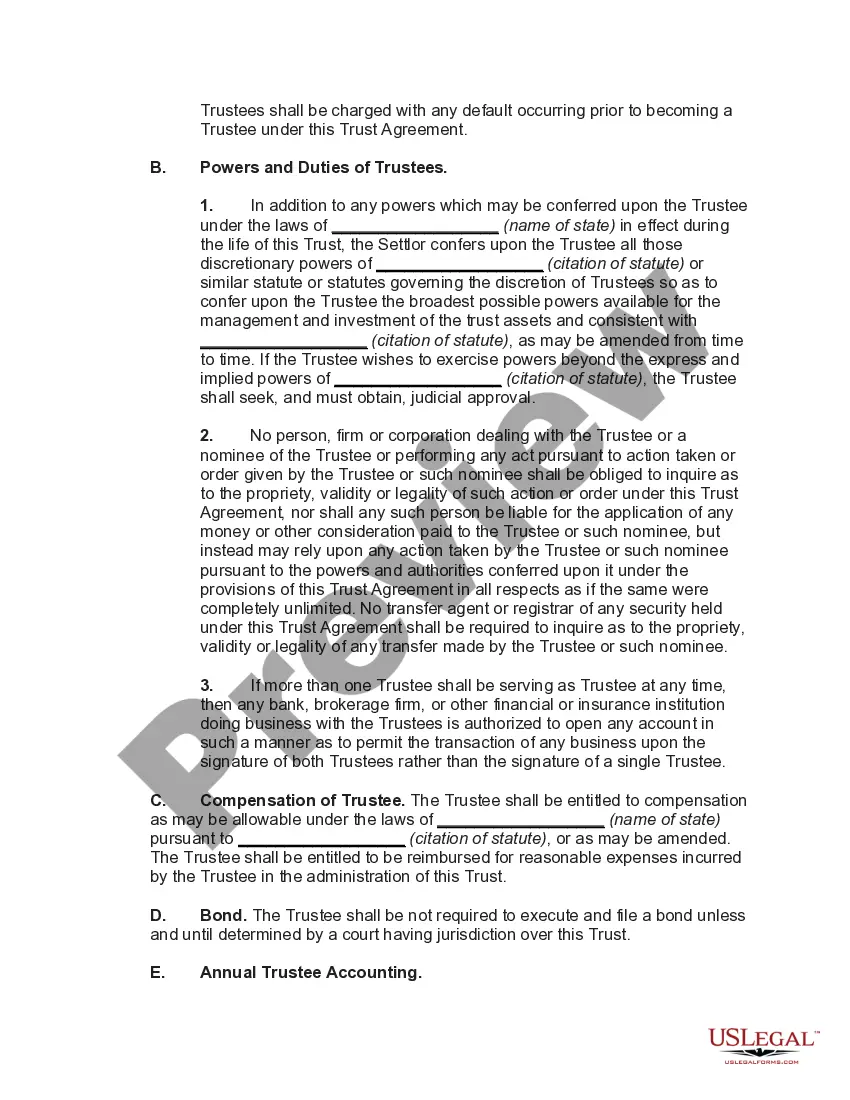
How to fill out Special Needs Irrevocable Trust Agreement For Benefit Of Disabled Child Of Trustor?
- If you're a returning user, log in to your account and download the required form template by clicking the Download button. Ensure your subscription is active; if not, renew it according to your chosen plan.
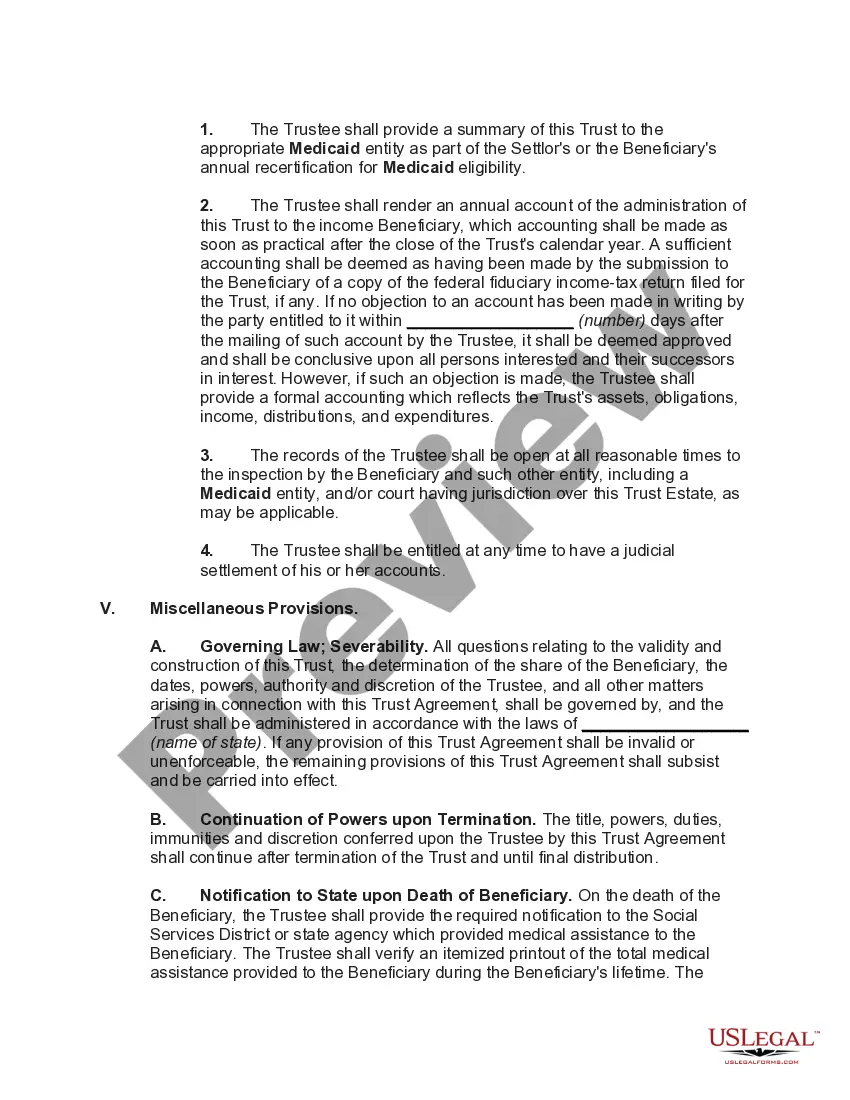
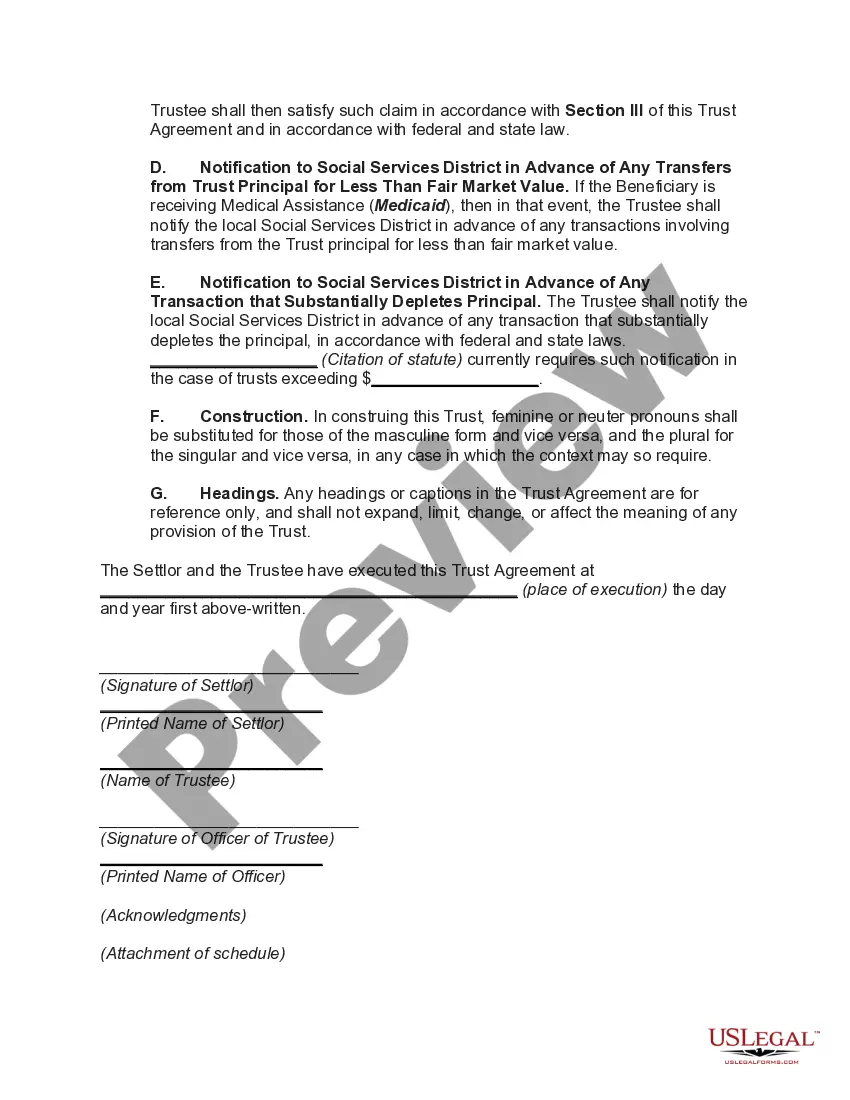
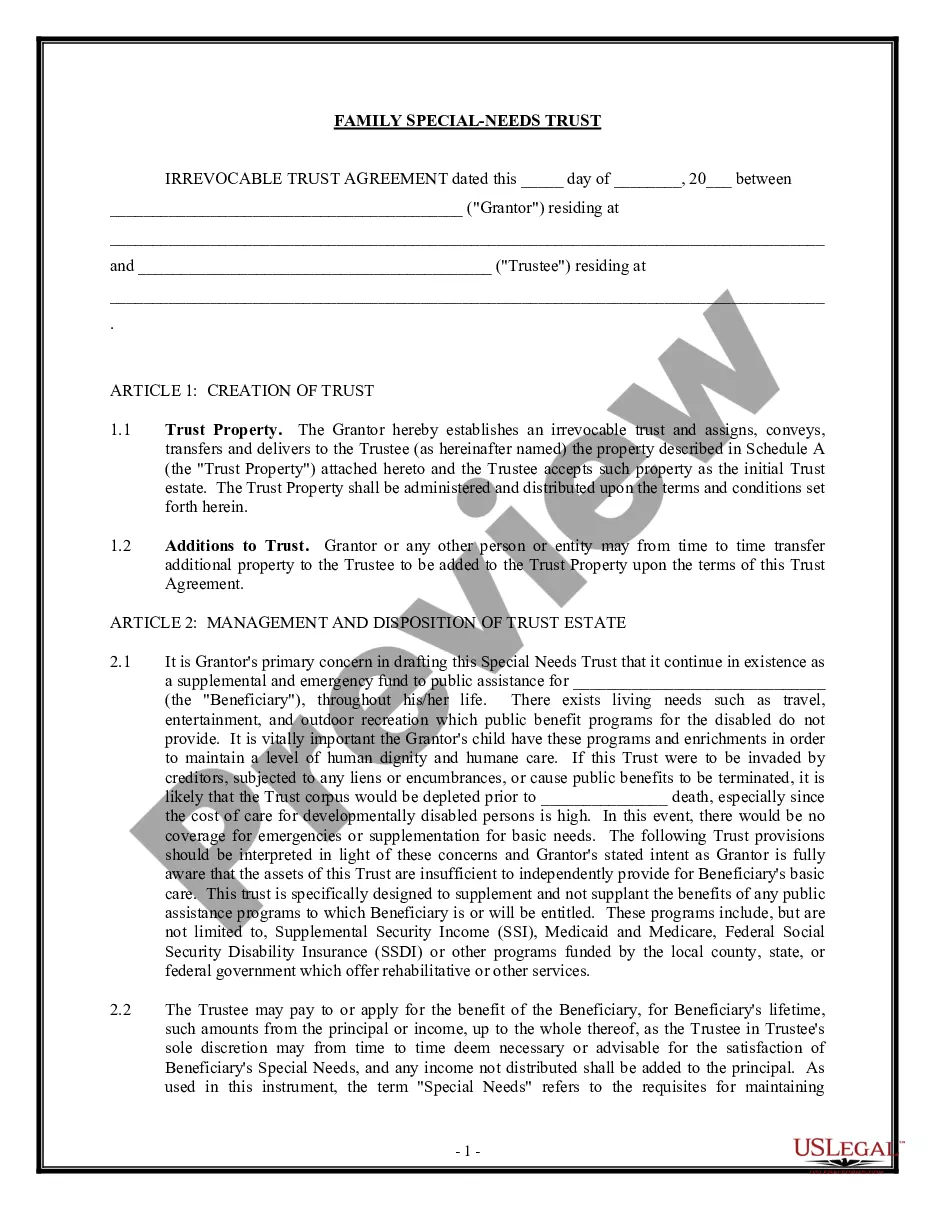
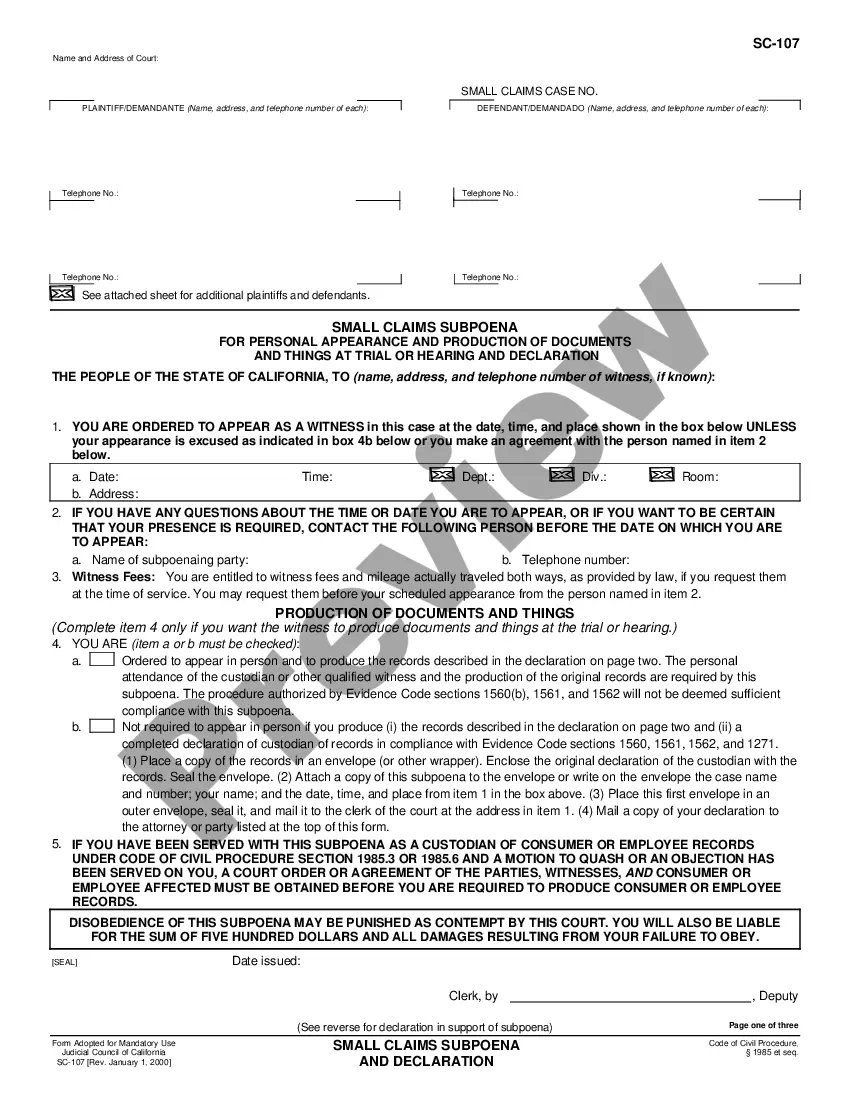
- For first-time users, start by exploring the Preview mode and form description to confirm you've selected the correct form that aligns with your requirements and jurisdiction.
- If the current template doesn't meet your needs, use the Search function to find a more suitable option.
- Once you find the right document, click on the Buy Now button and select your preferred subscription plan. You will need to create an account to access the extensive library.
- Proceed to make your payment through credit card or PayPal to complete the subscription process.
- Download the completed form template to your device, ensuring easy access anytime via the My Forms section of your account.
US Legal Forms provides a comprehensive and easily navigable library of over 85,000 legal templates, making it simple to get the documents you need without hassle.
Don’t hesitate to take advantage of this valuable resource. Start your journey with US Legal Forms today and create your special trust child statement with multiple conditions effortlessly!
Form popularity
FAQ
The maximum amount for a special needs trust varies depending on individual circumstances, including government benefits and the specific needs of the child. Generally, a special trust child statement with multiple conditions allows the trustee to manage funds without jeopardizing eligibility for essential benefits. It’s important to assess the total value of the assets and how they interact with existing programs. For guidance tailored to your situation, consider exploring US Legal Forms, which offers resources and templates to help you navigate this complex process.
A notable downside of putting assets in a trust is the potential loss of control, as the assets are no longer personally owned once transferred. This can create challenges should circumstances change unexpectedly. Therefore, it's important to consider how a special trust child statement with multiple conditions balances control while providing protection.
Yes, you can establish multiple special needs trusts, which can be beneficial for different children or for various purposes. This flexibility allows parents to tailor each trust to meet the unique needs of their children. Additionally, understanding how a special trust child statement with multiple conditions applies can optimize each trust's effectiveness.
Whether or not to put assets in a trust is a personal decision that depends on individual circumstances, including the need for asset protection and estate planning. A trust may also provide peace of mind, ensuring that assets are distributed according to specific wishes. Utilizing a special trust child statement with multiple conditions can further enhance this process.
One significant mistake parents often make is failing to regularly update their trust to reflect changing circumstances, such as the birth of a new child or changes in financial status. Additionally, overlooking the unique needs of each child can lead to inequities. Establishing a special trust child statement with multiple conditions can help clarify intentions and ensure fairness.
A family trust can be inflexible, as it may not easily adapt to changing family dynamics or financial situations. Moreover, certain family members might feel excluded or wrongly treated under the terms of the trust. Awareness of the limitations is crucial, especially in the context of a special trust child statement with multiple conditions.
Yes, filing a tax return for a special needs trust is necessary, particularly when it generates income. The IRS requires that all trust income above a certain threshold be reported. If structured correctly, the special trust child statement with multiple conditions can help minimize taxable income for the beneficiary. Consulting with a tax professional ensures compliance and helps you understand your obligations.
Special needs trusts, especially those associated with a special trust child statement with multiple conditions, can present several problems. One significant issue is the risk of improperly disbursing funds, which may inadvertently lead to a loss of government benefits for the beneficiary. Additional problems may include navigating the complexities of state laws and potential tax implications. Seeking assistance from platforms like USLegalForms can help clarify these issues.
While special needs trusts provide valuable benefits, they also come with downsides. For example, they can incur setup and ongoing maintenance costs, which might affect the overall funds available for the beneficiary. Moreover, if not structured correctly, they can complicate the recipient’s access to essential benefits. It's crucial to understand these challenges to maximize the effectiveness of your special trust child statement with multiple conditions.
Yes, you can establish multiple special needs trusts for a beneficiary, especially when using a special trust child statement with multiple conditions. Different trusts can cater to various needs or be configured to meet changing financial situations. However, managing multiple trusts can be complex, so consult with a legal expert to ensure proper setup and compliance.