Special Needs Trust Tax Benefits
Description



Get your form ready online
Our built-in tools help you complete, sign, share, and store your documents in one place.
Make edits, fill in missing information, and update formatting in US Legal Forms—just like you would in MS Word.
Download a copy, print it, send it by email, or mail it via USPS—whatever works best for your next step.
Sign and collect signatures with our SignNow integration. Send to multiple recipients, set reminders, and more. Go Premium to unlock E-Sign.
If this form requires notarization, complete it online through a secure video call—no need to meet a notary in person or wait for an appointment.
We protect your documents and personal data by following strict security and privacy standards.

Make edits, fill in missing information, and update formatting in US Legal Forms—just like you would in MS Word.

Download a copy, print it, send it by email, or mail it via USPS—whatever works best for your next step.

Sign and collect signatures with our SignNow integration. Send to multiple recipients, set reminders, and more. Go Premium to unlock E-Sign.

If this form requires notarization, complete it online through a secure video call—no need to meet a notary in person or wait for an appointment.

We protect your documents and personal data by following strict security and privacy standards.
Looking for another form?





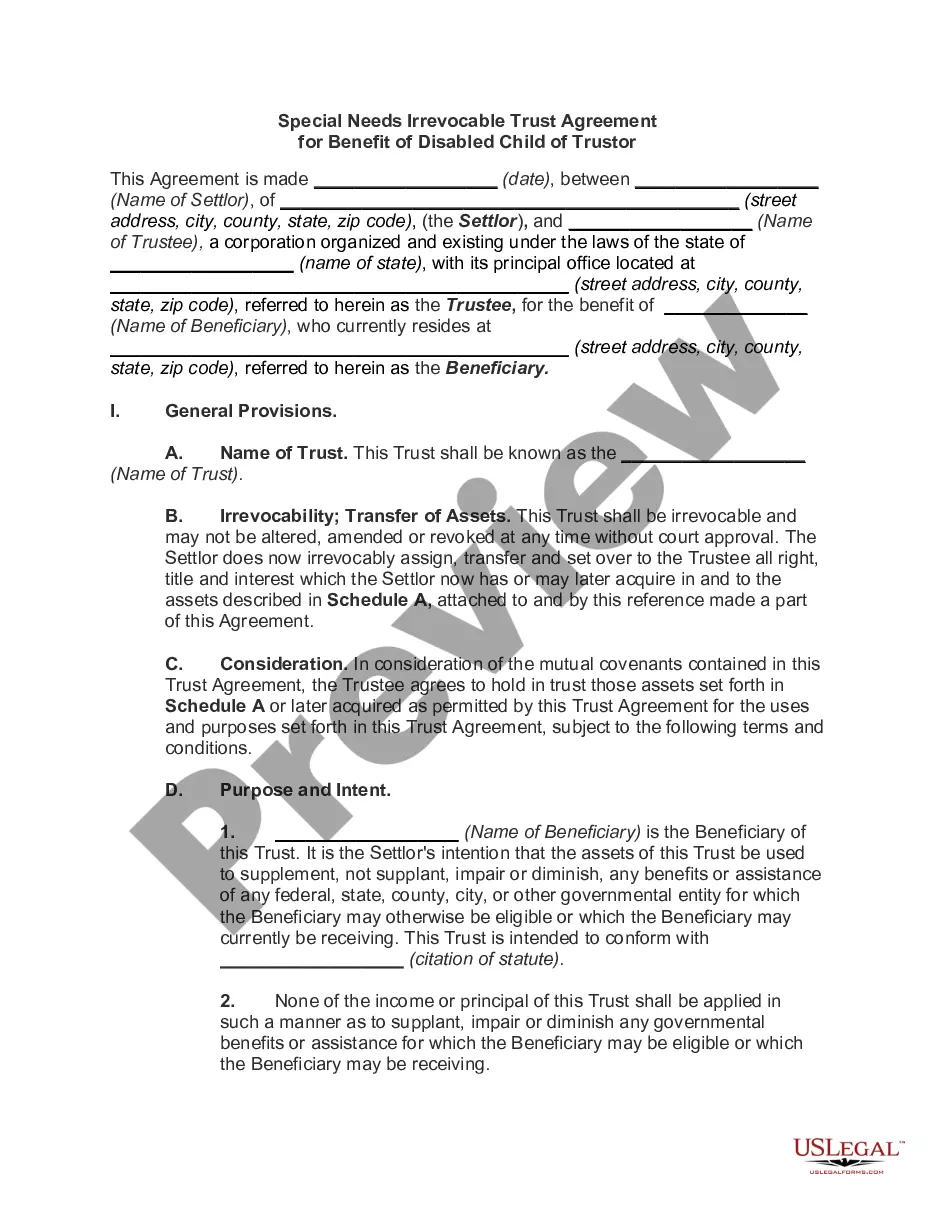
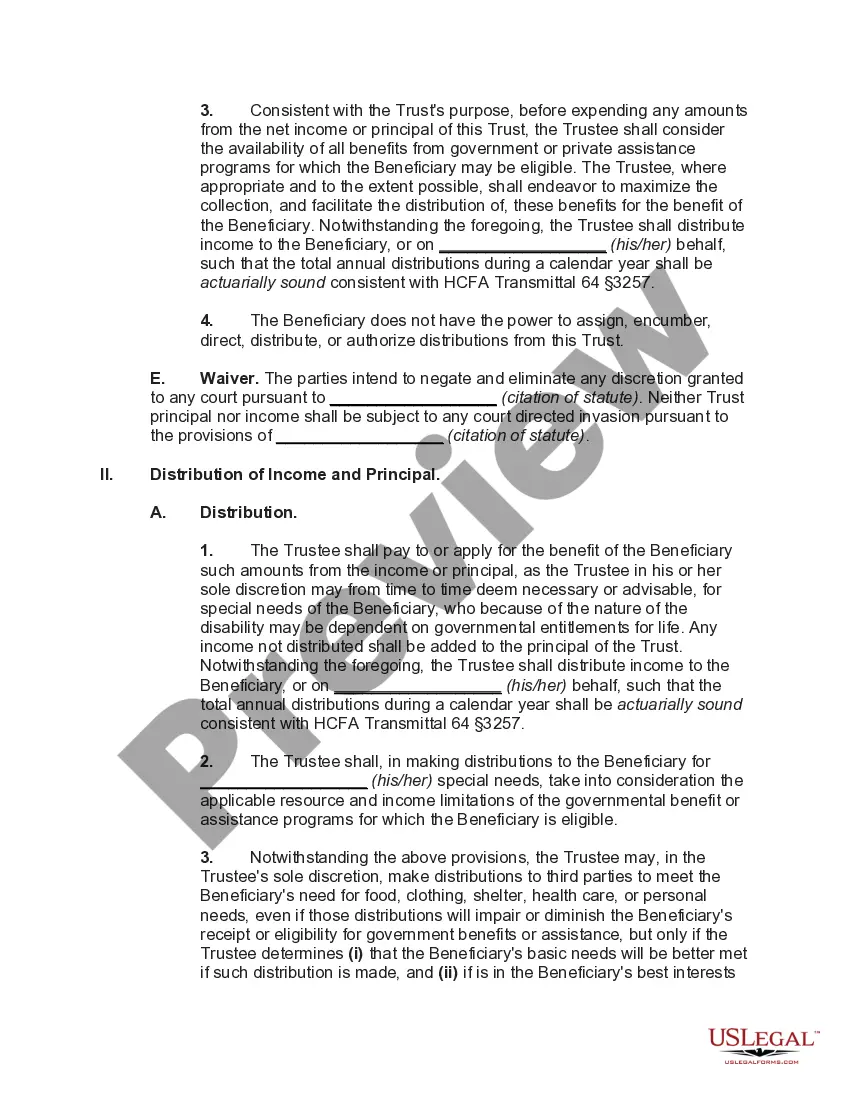
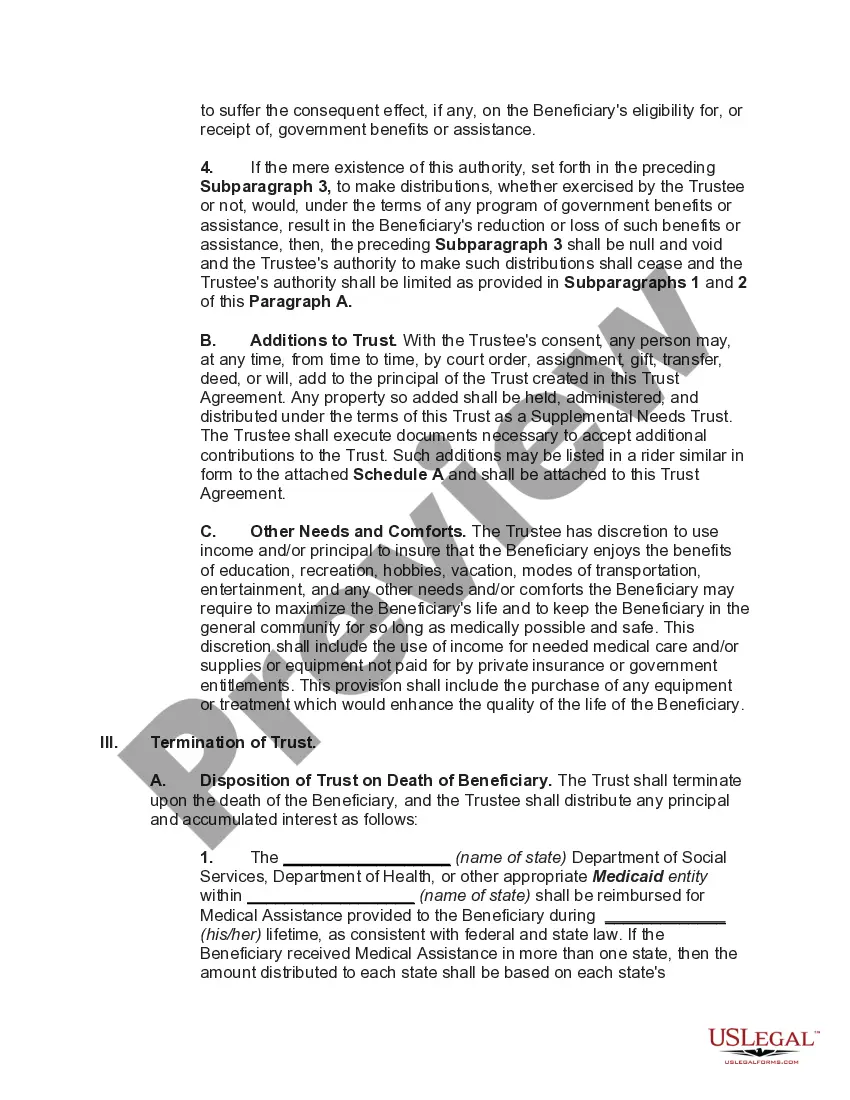
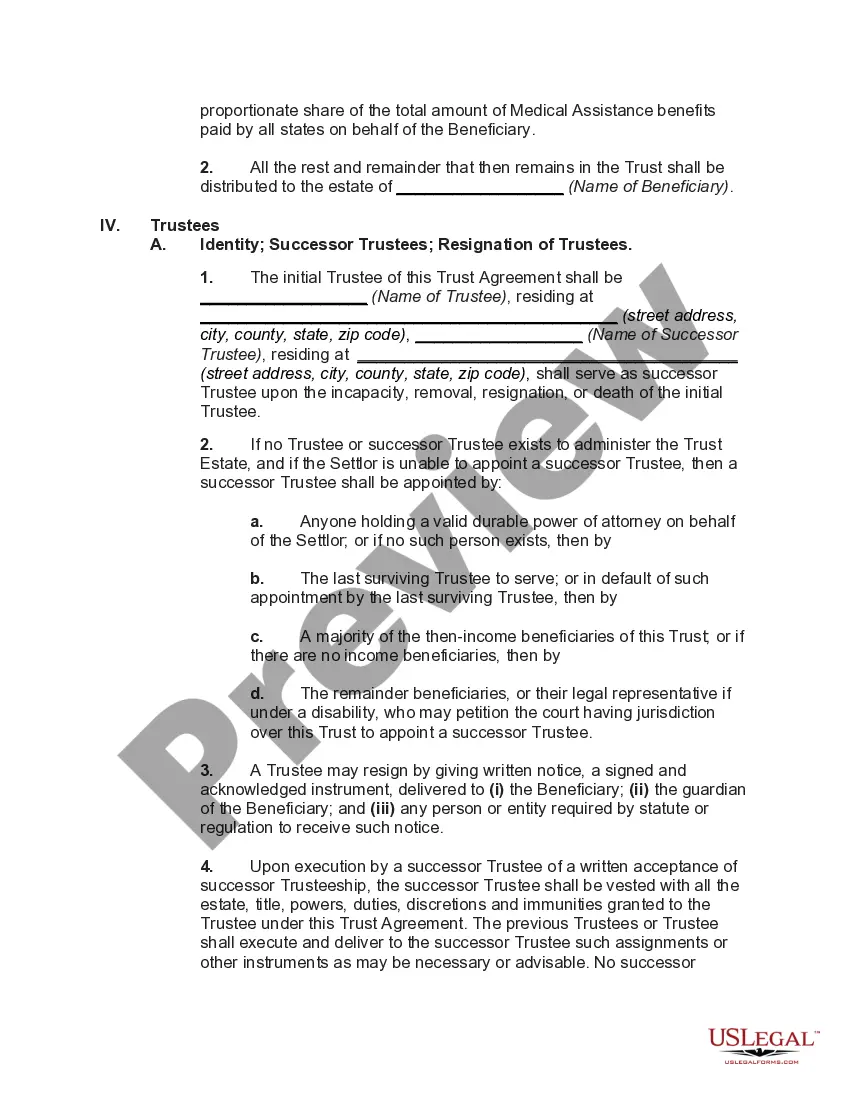
How to fill out Special Needs Irrevocable Trust Agreement For Benefit Of Disabled Child Of Trustor?
Handling legal documents and procedures can be a lengthy addition to your day.
Special Needs Trust Tax Advantages and similar forms typically require you to look for them and figure out how to fill them out properly.
Consequently, whether you are managing financial, legal, or personal affairs, having a comprehensive and accessible online library of documents at your disposal will be extremely beneficial.
US Legal Forms is the leading online platform for legal templates, offering over 85,000 state-specific documents and various resources to assist you in completing your paperwork swiftly.
Is this your first time using US Legal Forms? Sign up and create a free account in just a few minutes, and you’ll gain access to the document library and Special Needs Trust Tax Advantages. Then, follow these steps to complete your document: Ensure you have located the correct document using the Review feature and examining the document details. Click Buy Now when ready, and choose the subscription plan that suits your requirements. Click Download and then fill out, eSign, and print the document. US Legal Forms has twenty-five years of experience assisting clients with their legal documents. Obtain the document you need now and streamline any process effortlessly.
- Explore the collection of relevant documents available to you with just a single click.
- US Legal Forms provides state- and county-specific documents accessible anytime for download.
- Safeguard your document management processes with a premium service that enables you to create any form within minutes without any extra or concealed fees.
- Simply Log In to your account, search for Special Needs Trust Tax Advantages, and obtain it instantly within the My documents section.
- You can also retrieve previously downloaded documents.
Form popularity
FAQ
First-Party or Self-Funded Special Needs Trusts Any income earned on the funds invested in the first-party trust is always taxable to the beneficiary in the year it is earned, regardless of when or if it is distributed to the beneficiary.
It is important to remember that the SNT cannot deduct expenses like rent and food. Deductions can be for medical care, custodial care, support services, and similar care not provided by public benefits programs.
Whether or not you need an EIN for a trust depends on the type of trust. Generally, grantor revocable trusts do not need an EIN. Any income taxes from a revocable trust is reported via the grantor's SSN since the grantor can revoke the trust at any time and regain possession of the property.
The IRS permits trusts to claim a tax deduction for income distributed to beneficiaries, and the beneficiary pays the income tax on the taxable amount rather than the trust. Distributions to beneficiaries come from the current-year income first and then the principal. Distributions from the principal are non-taxable.
A Special Needs Trust must have its own Federal Identification Number (also called an Employer Identification Number, EIN, Tax Identification Number, or TIN) to be valid. This unique number means that the Trust is its own entity, and that it does not belong to anyone but itself.