Special Needs Trust Law For Someone Over 65
Description



Get your form ready online
Our built-in tools help you complete, sign, share, and store your documents in one place.
Make edits, fill in missing information, and update formatting in US Legal Forms—just like you would in MS Word.
Download a copy, print it, send it by email, or mail it via USPS—whatever works best for your next step.
Sign and collect signatures with our SignNow integration. Send to multiple recipients, set reminders, and more. Go Premium to unlock E-Sign.
If this form requires notarization, complete it online through a secure video call—no need to meet a notary in person or wait for an appointment.
We protect your documents and personal data by following strict security and privacy standards.

Make edits, fill in missing information, and update formatting in US Legal Forms—just like you would in MS Word.

Download a copy, print it, send it by email, or mail it via USPS—whatever works best for your next step.

Sign and collect signatures with our SignNow integration. Send to multiple recipients, set reminders, and more. Go Premium to unlock E-Sign.

If this form requires notarization, complete it online through a secure video call—no need to meet a notary in person or wait for an appointment.

We protect your documents and personal data by following strict security and privacy standards.
Looking for another form?


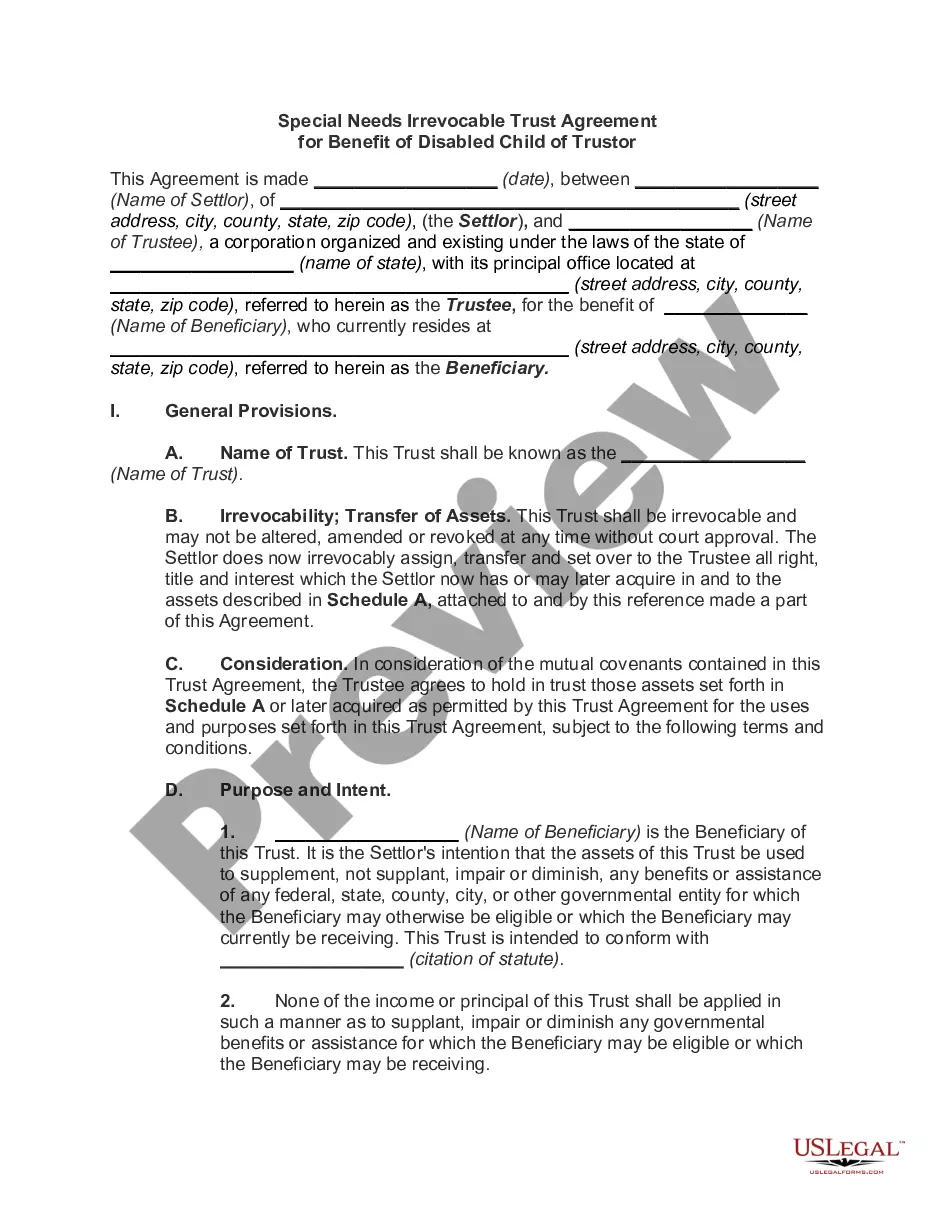
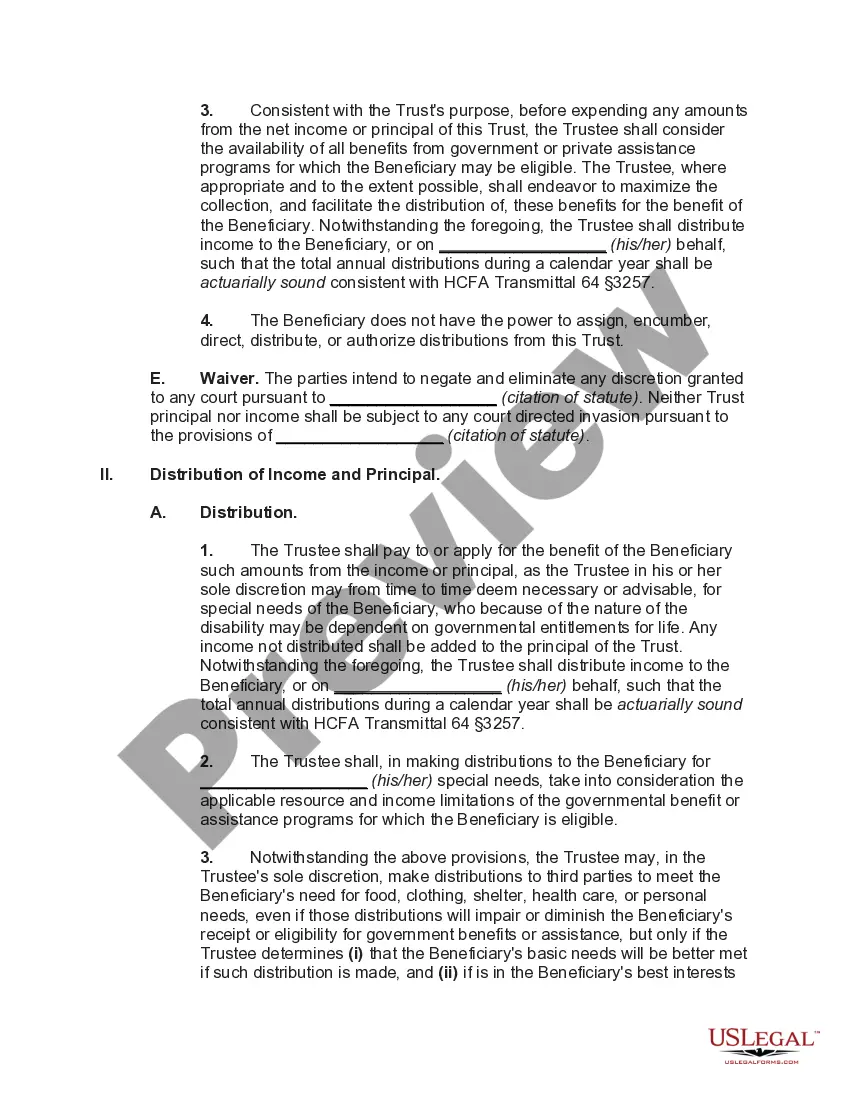
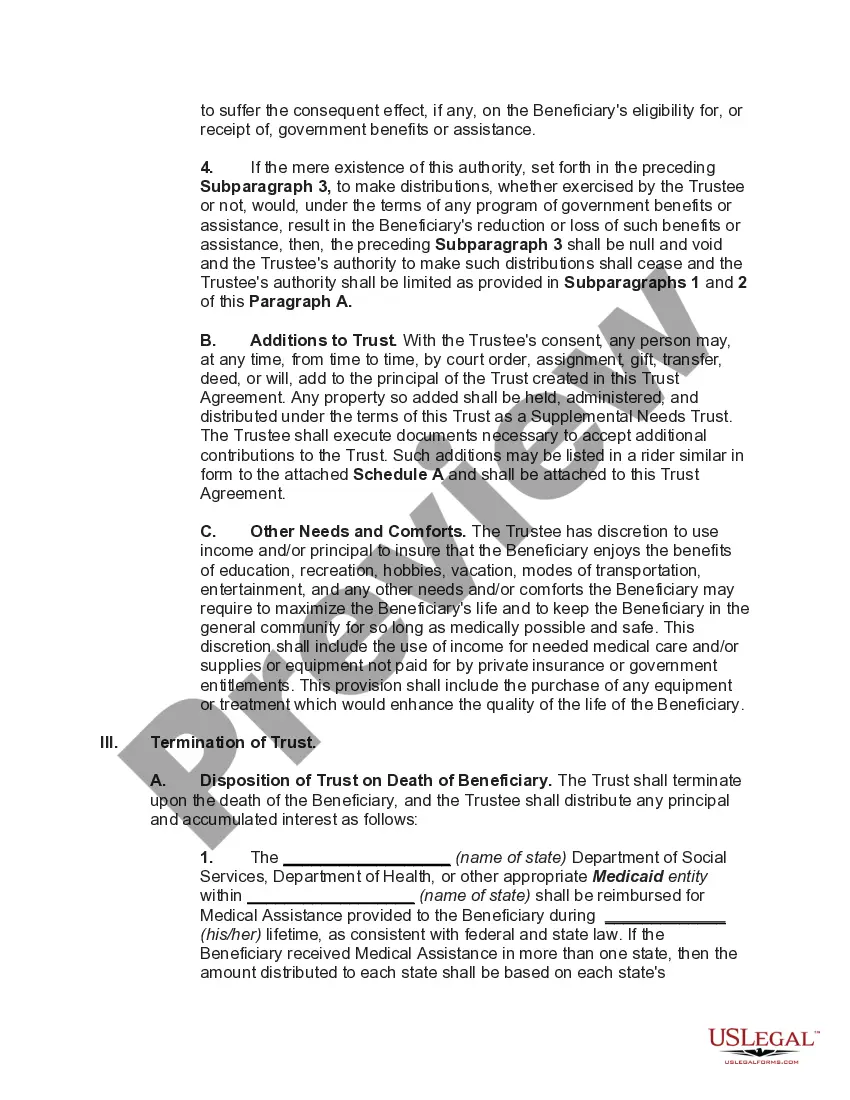
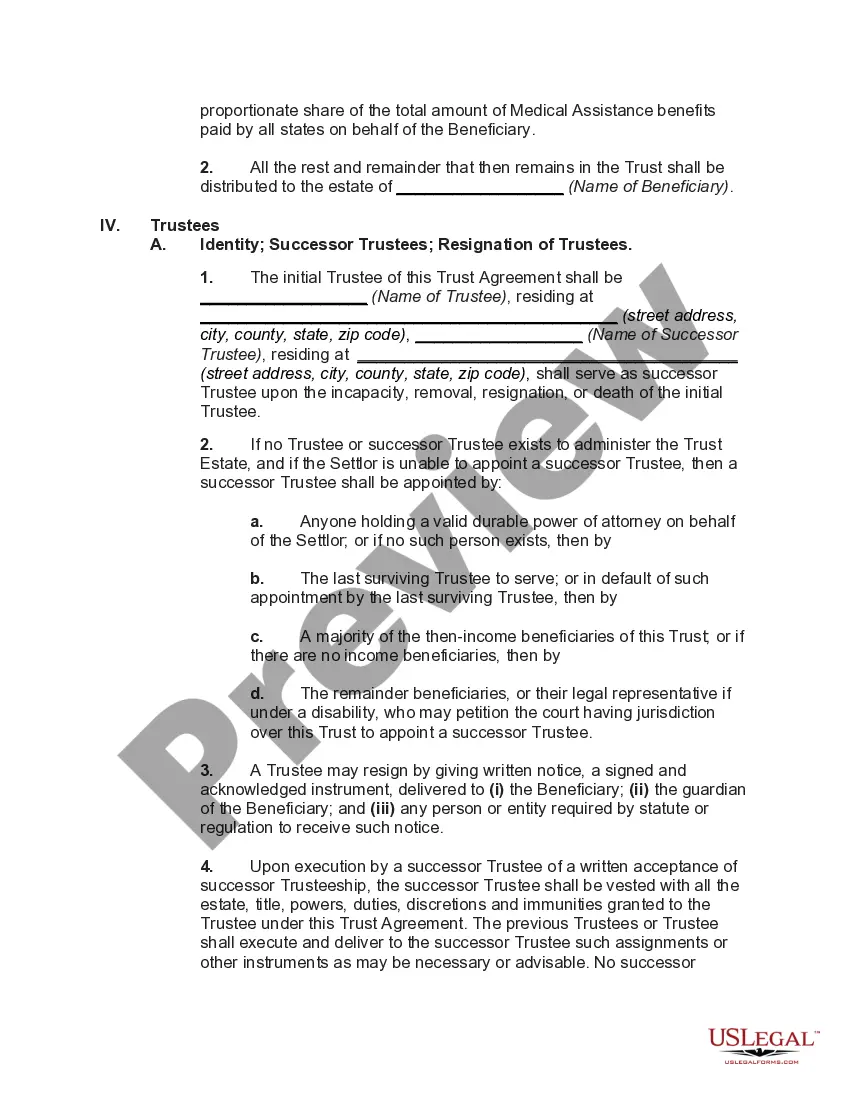
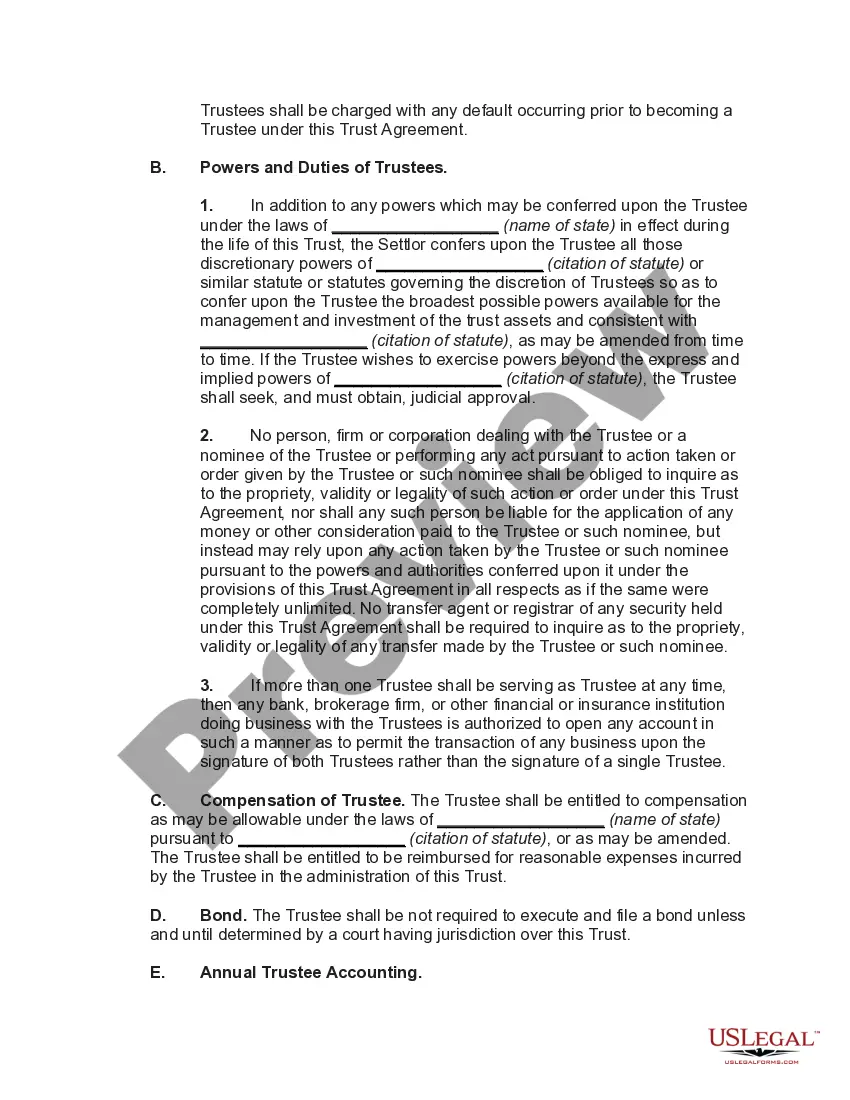
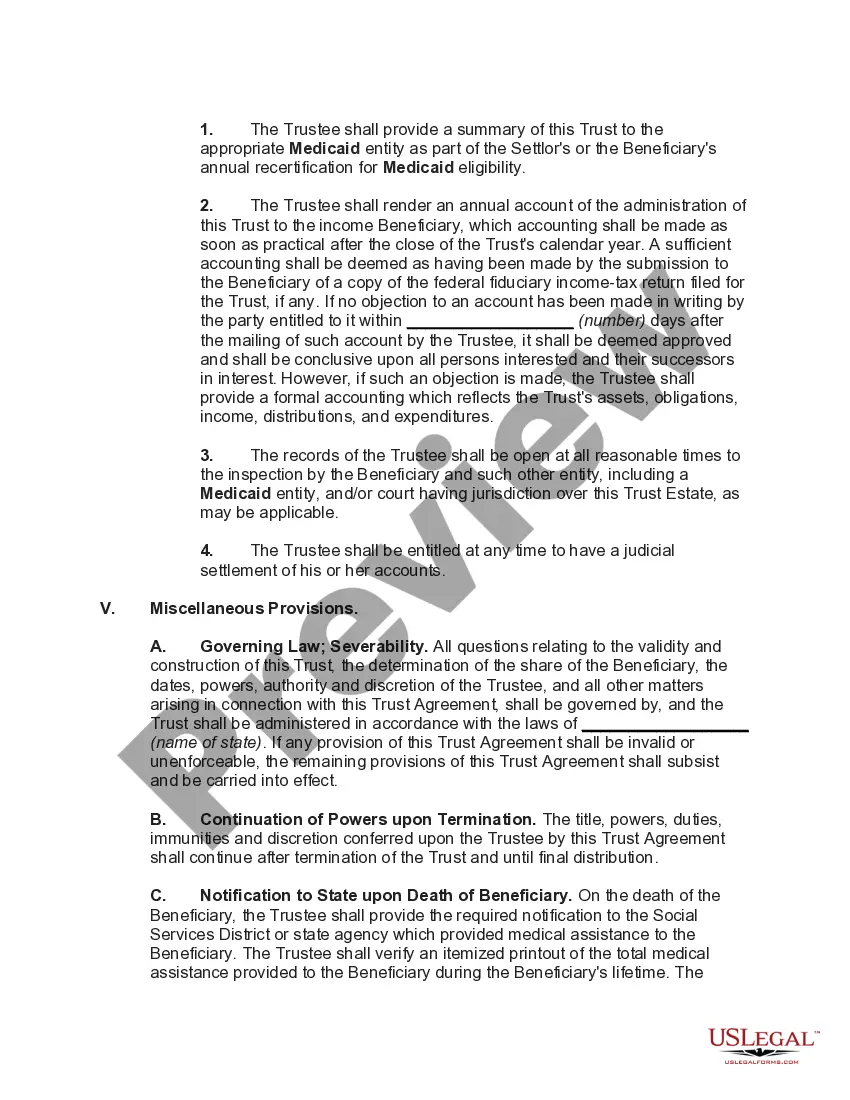
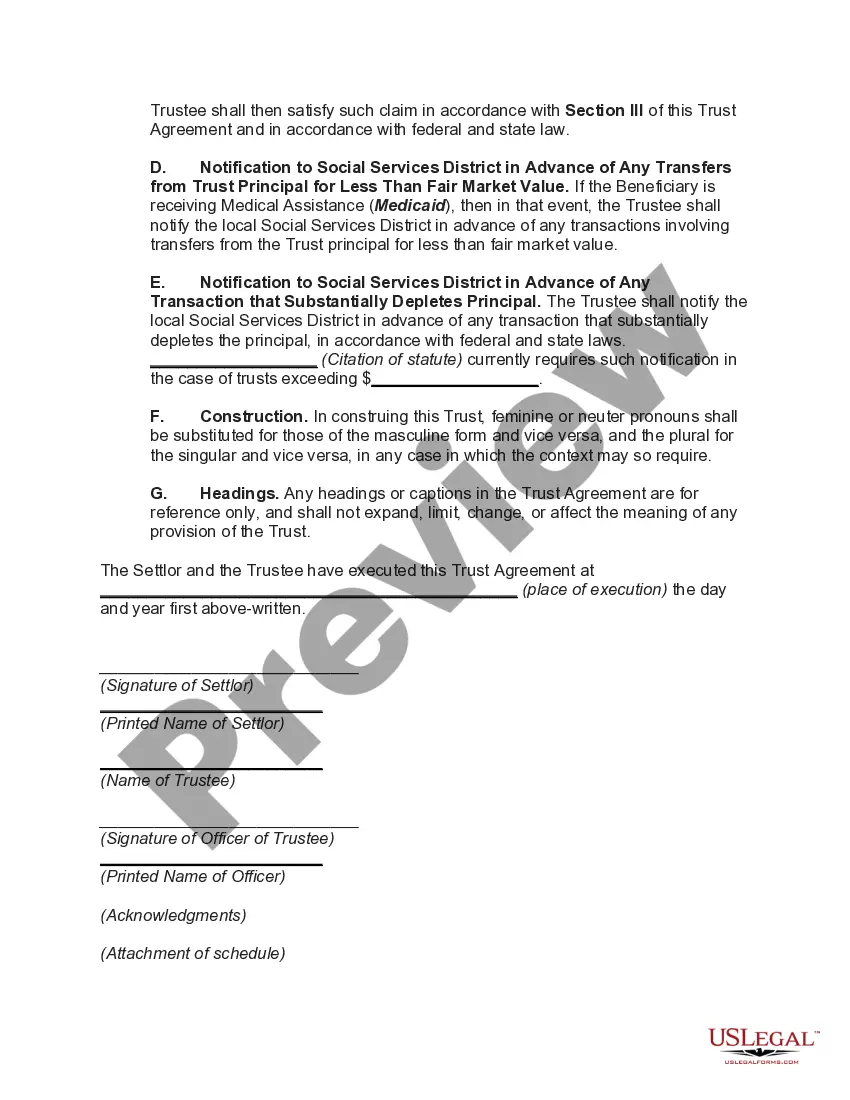
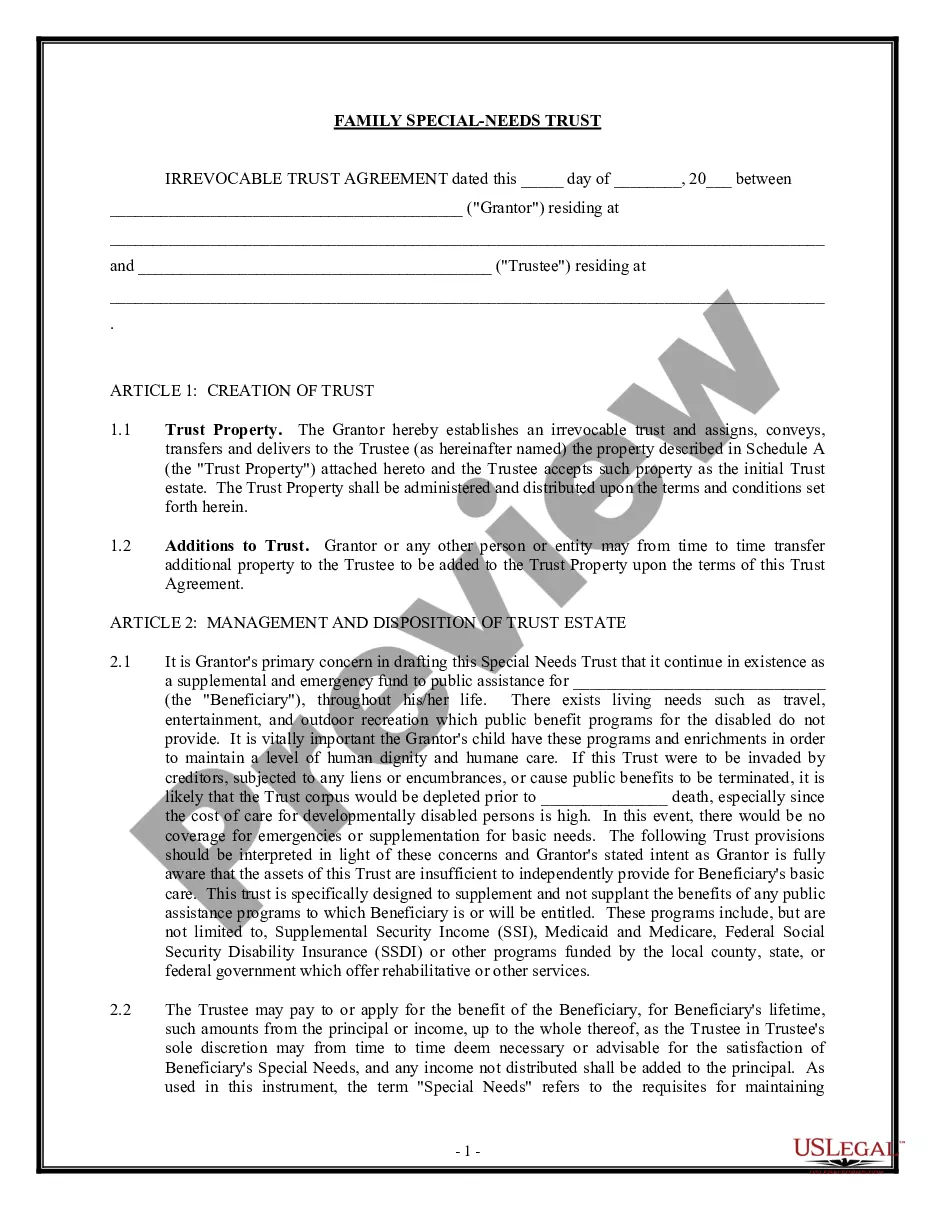
How to fill out Special Needs Irrevocable Trust Agreement For Benefit Of Disabled Child Of Trustor?
Working with legal paperwork and procedures could be a time-consuming addition to the day. Special Needs Trust Law For Someone Over 65 and forms like it typically require that you look for them and navigate how to complete them properly. Consequently, regardless if you are taking care of financial, legal, or personal matters, using a comprehensive and hassle-free web library of forms on hand will significantly help.
US Legal Forms is the best web platform of legal templates, boasting more than 85,000 state-specific forms and a number of tools to assist you to complete your paperwork easily. Check out the library of appropriate documents available to you with just one click.
US Legal Forms offers you state- and county-specific forms offered by any moment for downloading. Shield your papers management processes with a high quality services that allows you to make any form within a few minutes without additional or hidden fees. Simply log in in your account, identify Special Needs Trust Law For Someone Over 65 and acquire it immediately from the My Forms tab. You can also access formerly saved forms.
Could it be the first time utilizing US Legal Forms? Register and set up your account in a few minutes and you will get access to the form library and Special Needs Trust Law For Someone Over 65. Then, adhere to the steps below to complete your form:
- Be sure you have discovered the right form by using the Preview option and looking at the form description.
- Pick Buy Now when ready, and choose the subscription plan that is right for you.
- Choose Download then complete, eSign, and print the form.
US Legal Forms has twenty five years of expertise assisting consumers control their legal paperwork. Find the form you need right now and streamline any operation without breaking a sweat.
Form popularity
FAQ
Pooled trusts give people with disabilities a way to access vital health benefits while utilizing the excess funds they deposit into the trust to pay for items and services not covered by those benefits. In ance with Federal statute, first party pooled trust accounts close upon the death of the beneficiary. What is a Pooled Trust? - NYSARC Trust Services nysarctrustservices.org ? nysarc-trusts ? pool... nysarctrustservices.org ? nysarc-trusts ? pool...
Beneficiaries can include spouses, children, and other relatives. They can also include friends, trusts, charities, and institutions.
What Is a Beneficiary of Trust? A beneficiary of trust is the individual or group of individuals for whom a trust is created. The trust creator or grantor designates beneficiaries and a trustee, who has a fiduciary duty to manage trust assets in the best interests of beneficiaries as outlined in the trust agreement. Beneficiary of Trust: Definition and Role in Estate Planning investopedia.com ? terms ? beneficiary-of-tr... investopedia.com ? terms ? beneficiary-of-tr...
Special needs trust A special needs trust (SNT) is a trust that will preserve the beneficiary's eligibility for needs-based government benefits such as Medicaid and Supplemental Security Income (SSI). Because the beneficiary does not own the assets in the trust, he or she can remain eligible for benefit programs that have an asset limit. Your Special Needs Trust ("SNT") Defined specialneedsalliance.org ? the-voice ? your-s... specialneedsalliance.org ? the-voice ? your-s...
The income beneficiary is the surviving spouse who wants you to make significant distributions to him or her and invest trust assets in his or her business. The remainder beneficiaries want less income to go the surviving spouse and do not want a risky investment to be made in the business of the income beneficiary. Conflicts of Interest Between Income Beneficiaries And Remainder ... stimmel-law.com ? articles ? conflicts-interes... stimmel-law.com ? articles ? conflicts-interes...