Special Needs Trust For Autistic Child
Description




Get your form ready online
Our built-in tools help you complete, sign, share, and store your documents in one place.
Make edits, fill in missing information, and update formatting in US Legal Forms—just like you would in MS Word.
Download a copy, print it, send it by email, or mail it via USPS—whatever works best for your next step.
Sign and collect signatures with our SignNow integration. Send to multiple recipients, set reminders, and more. Go Premium to unlock E-Sign.
If this form requires notarization, complete it online through a secure video call—no need to meet a notary in person or wait for an appointment.
We protect your documents and personal data by following strict security and privacy standards.

Make edits, fill in missing information, and update formatting in US Legal Forms—just like you would in MS Word.

Download a copy, print it, send it by email, or mail it via USPS—whatever works best for your next step.

Sign and collect signatures with our SignNow integration. Send to multiple recipients, set reminders, and more. Go Premium to unlock E-Sign.

If this form requires notarization, complete it online through a secure video call—no need to meet a notary in person or wait for an appointment.

We protect your documents and personal data by following strict security and privacy standards.
Looking for another form?





How to fill out Special Needs Irrevocable Trust Agreement For Benefit Of Disabled Child Of Trustor?
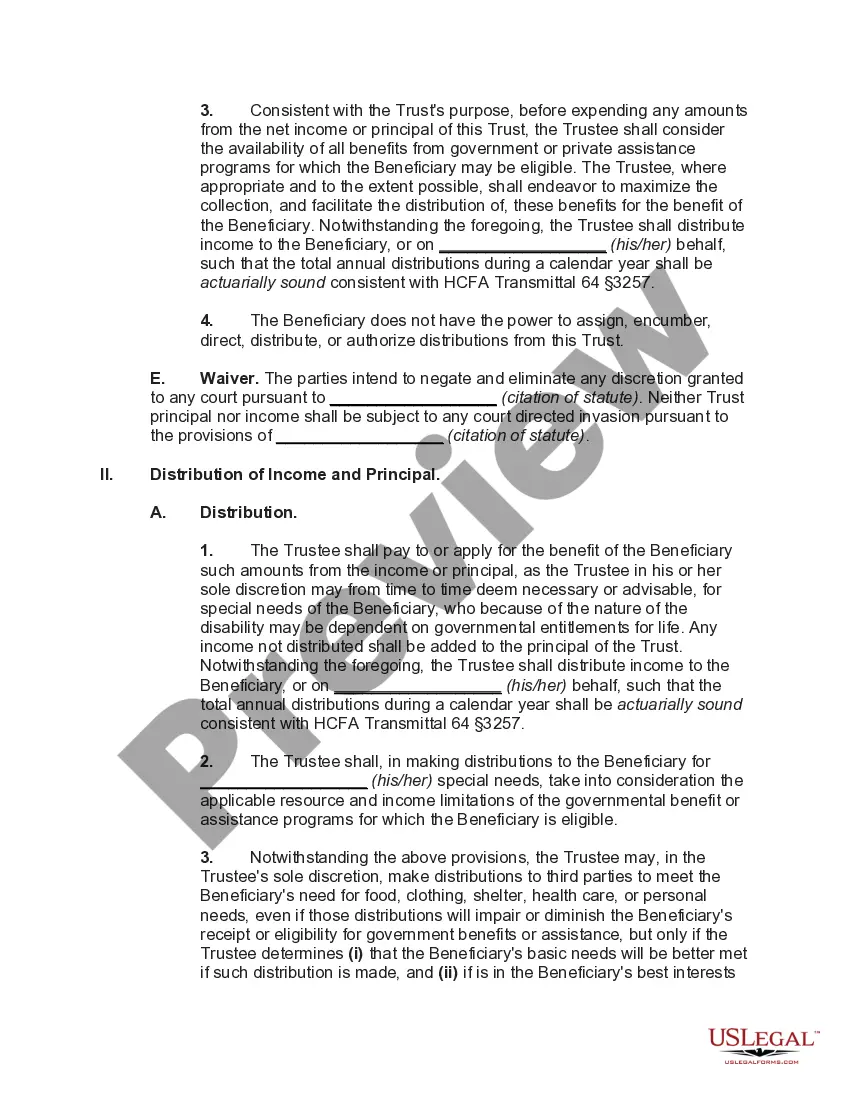
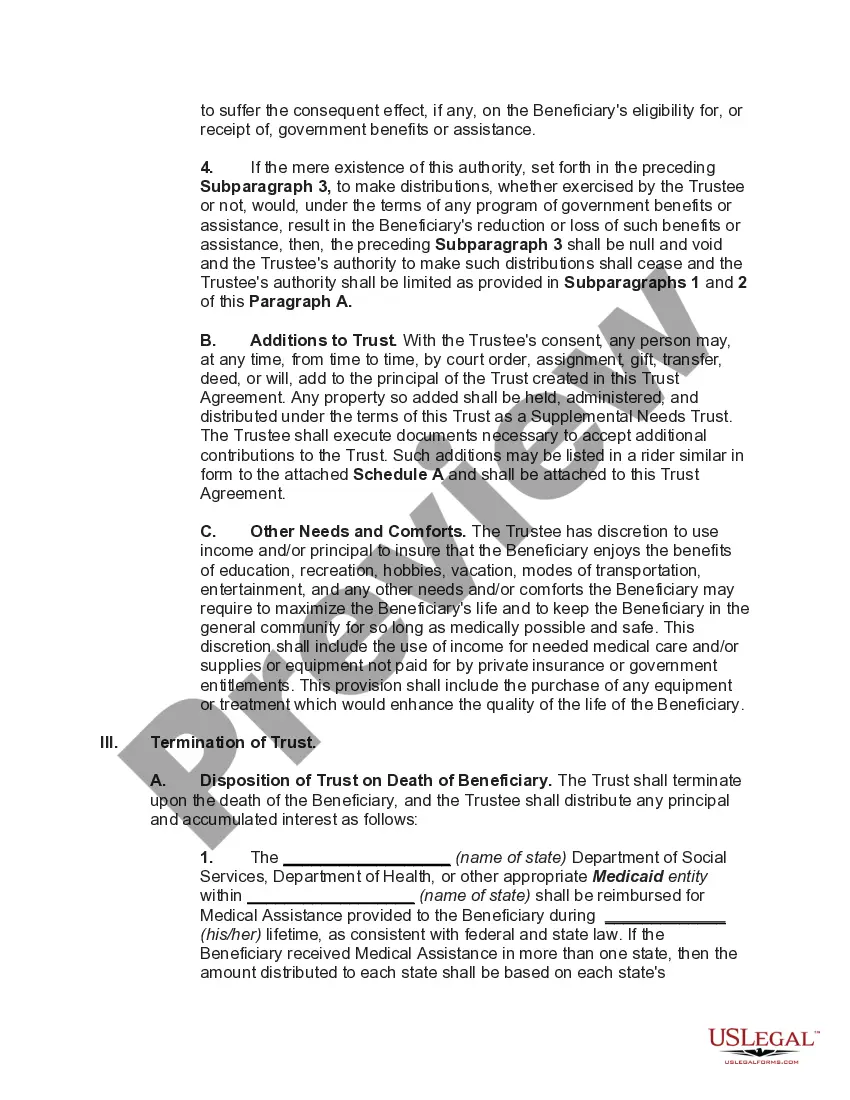
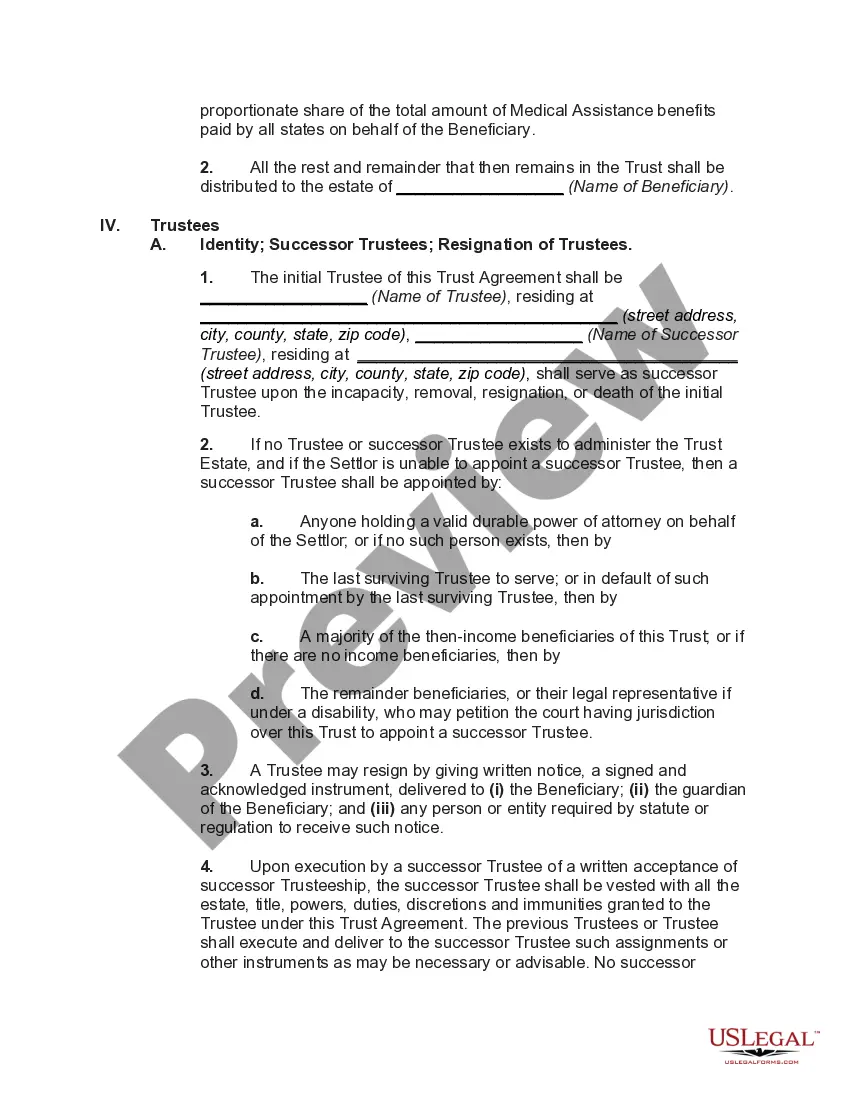
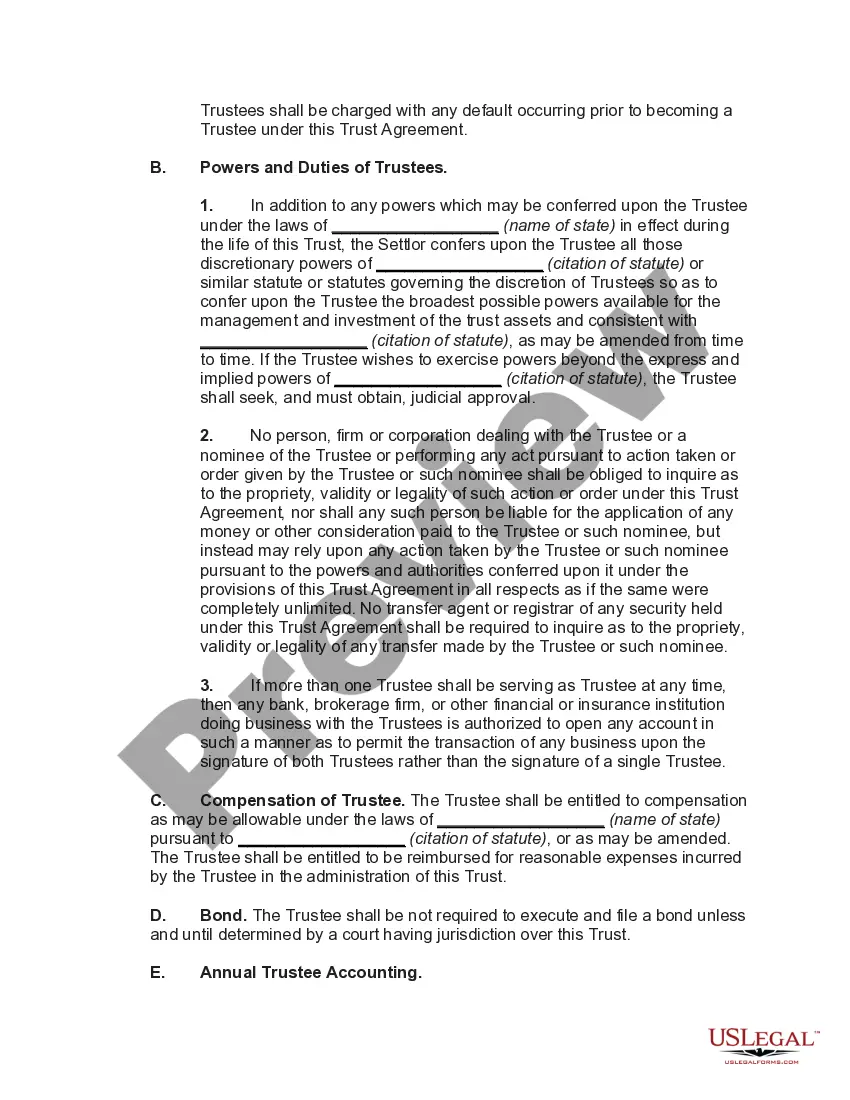
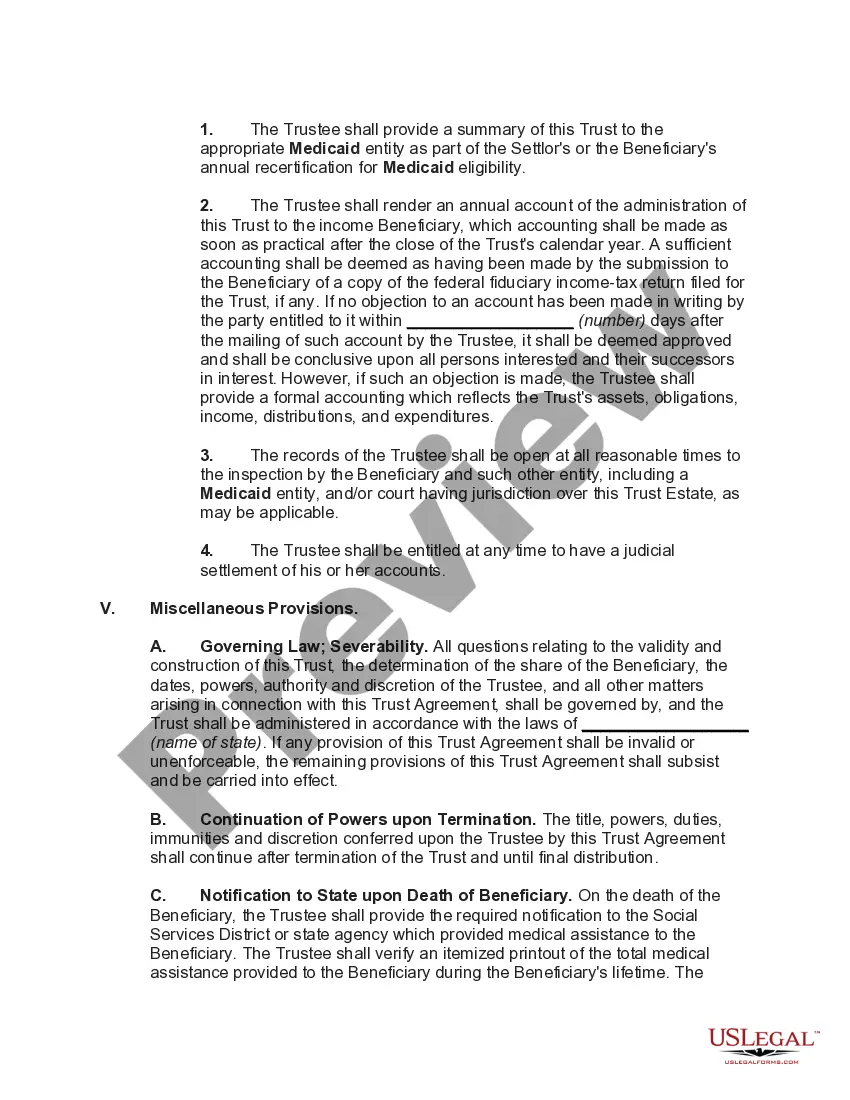
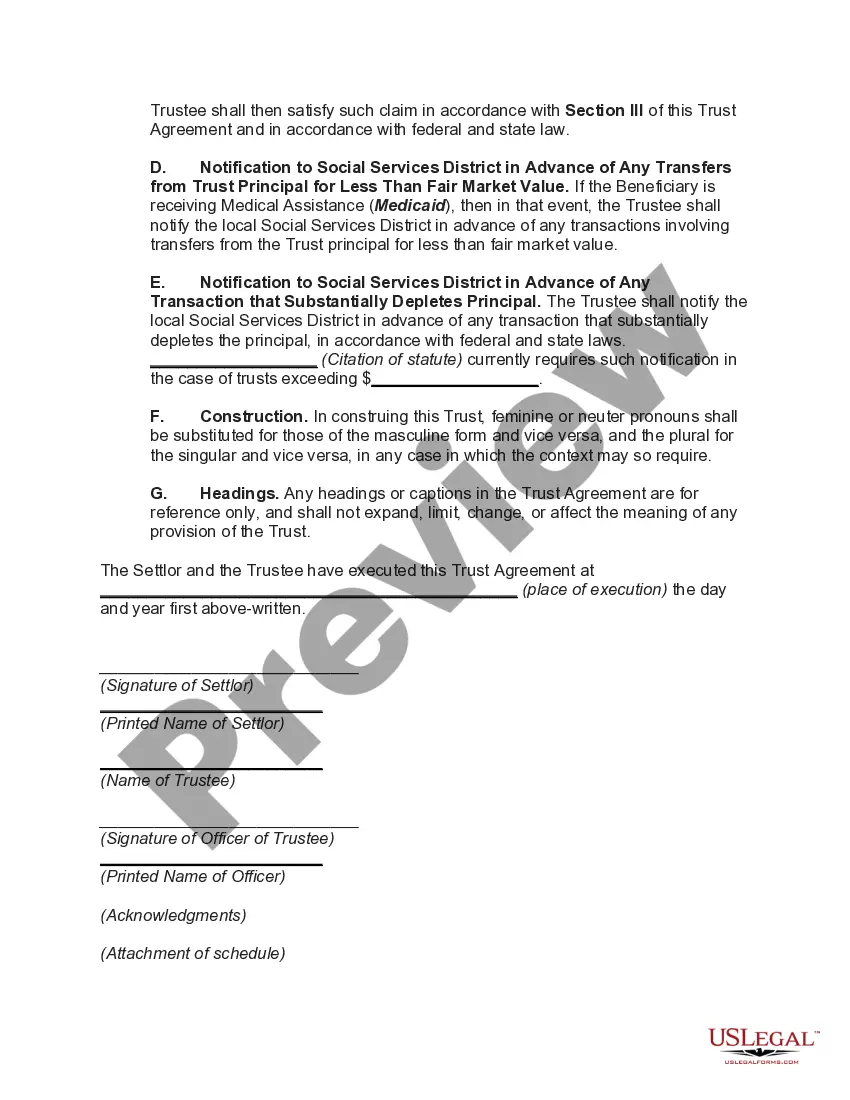
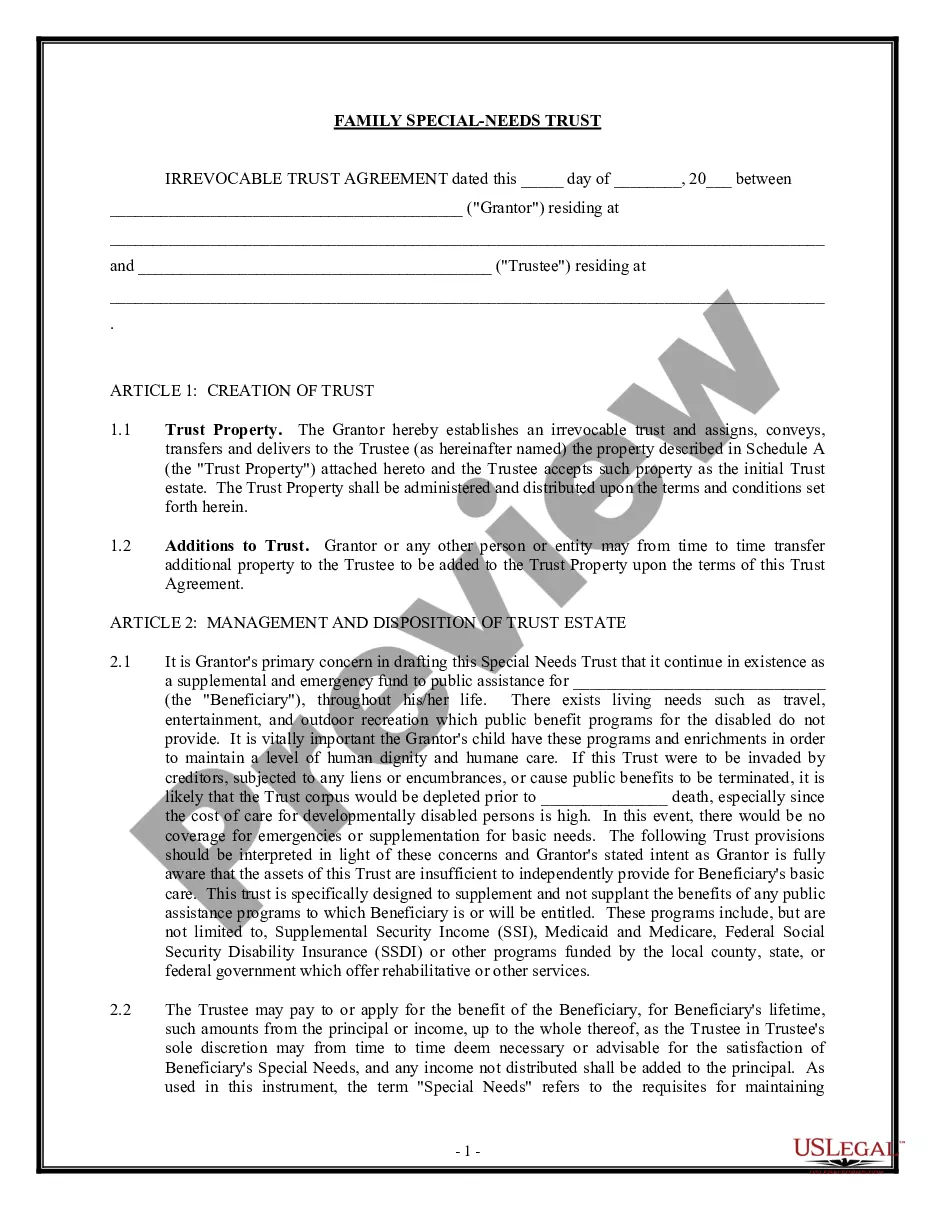
The Special Needs Trust For Autistic Child featured on this page is a versatile legal template created by skilled attorneys in accordance with federal and local laws.
For over 25 years, US Legal Forms has supplied individuals, businesses, and legal experts with more than 85,000 authenticated, state-specific forms for any business and personal situation. It’s the fastest, simplest, and most dependable method to acquire the documents you require, as the service ensures bank-level data security and anti-malware safeguards.
Register for US Legal Forms to access verified legal templates for all of life’s situations.
- Search for the document you require and examine it.
- Sign up and Log In.
- Obtain the editable template.
- Complete and sign the documents.
- Download your forms again.
Form popularity
FAQ
Typically, a parent, family member, or guardian can set up a special disability trust for an autistic child. This trust aims to provide financial support without jeopardizing eligibility for government benefits. It’s essential for the person establishing the trust to understand the legal requirements and implications involved. Platforms like USLegalForms can assist you in creating a trust that meets your child's unique needs.
One downside of a special needs trust for autistic child is the complexity involved in setting it up. It requires careful planning to ensure that the trust complies with federal and state regulations. Additionally, funds in this trust may only be used for specific expenses, which can limit flexibility. It’s crucial to consult with a legal expert to navigate these challenges effectively.
A special needs trust for your autistic child can be essential in ensuring their financial security without affecting their eligibility for government benefits. By establishing this trust, you can manage assets and provide for your child's needs, while still allowing them access to crucial support programs. This trust serves as a way to supplement care, covering expenses that government assistance may not fully address. Consider using resources like US Legal Forms to help you create a trustworthy and compliant special needs trust.
To set up a special needs trust for autistic child, start by identifying the assets you wish to include in the trust. Next, consult with an attorney who specializes in special needs planning to ensure compliance with legal requirements. They will help draft the trust document tailored to your child's needs and outline how funds should be used. Using US Legal Forms can guide you through this process, making it easier to establish a trust that protects your child's future.
A special needs trust for autistic child is designed to hold assets for the benefit of the child without jeopardizing their eligibility for government benefits. For instance, a parent might establish a trust that funds educational resources, medical care, or recreational activities. This allows the child to enjoy a higher quality of life while ensuring they receive necessary support from public programs. Using a legal platform like US Legal Forms can simplify the process of creating this trust.
A Special Needs Trust must have its own Federal Identification Number (also called an Employer Identification Number, EIN, Tax Identification Number, or TIN) to be valid. This unique number means that the Trust is its own entity, and that it does not belong to anyone but itself.
There are two types of special needs trusts: first-party and third-party. Neither can be used to pay for certain basic expenses covered by government programs. ABLE accounts can be funded to help cover basic needs not paid for by government aid.
Acknowledge Feelings All behaviour is a form of communication so don't punish them for trying to express their feelings or emotions. When you understand a child's feelings and respond to their actions, it builds trust and helps your child know that you're a ?safe? person.
Communication and interaction tips for ASD Be patient. ... Teach the child how to express anger without being too aggressive. ... Be persistent but resilient. ... Always stay positive. ... Ignore irritating attention-getting behavior. ... Interact through physical activity. ... Be affectionate and respectful. ... Show your love and interest.
Complexity and Cost: Creating and administering a special needs trust involves legal expertise and ongoing management, which may result in higher costs compared to simpler estate planning options. Families should weigh the benefits against the associated expenses.