Special Needs Trust And Tax Returns
Description
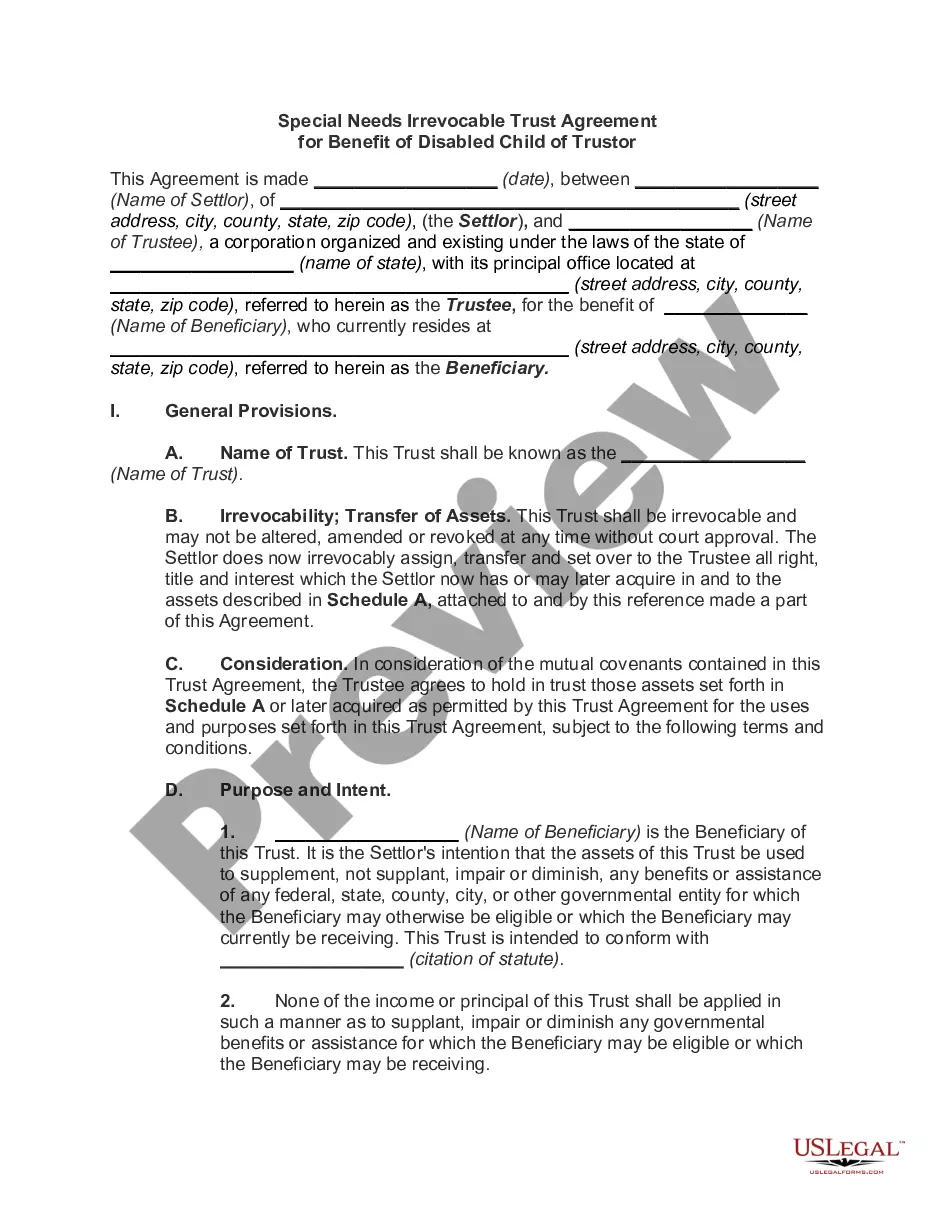
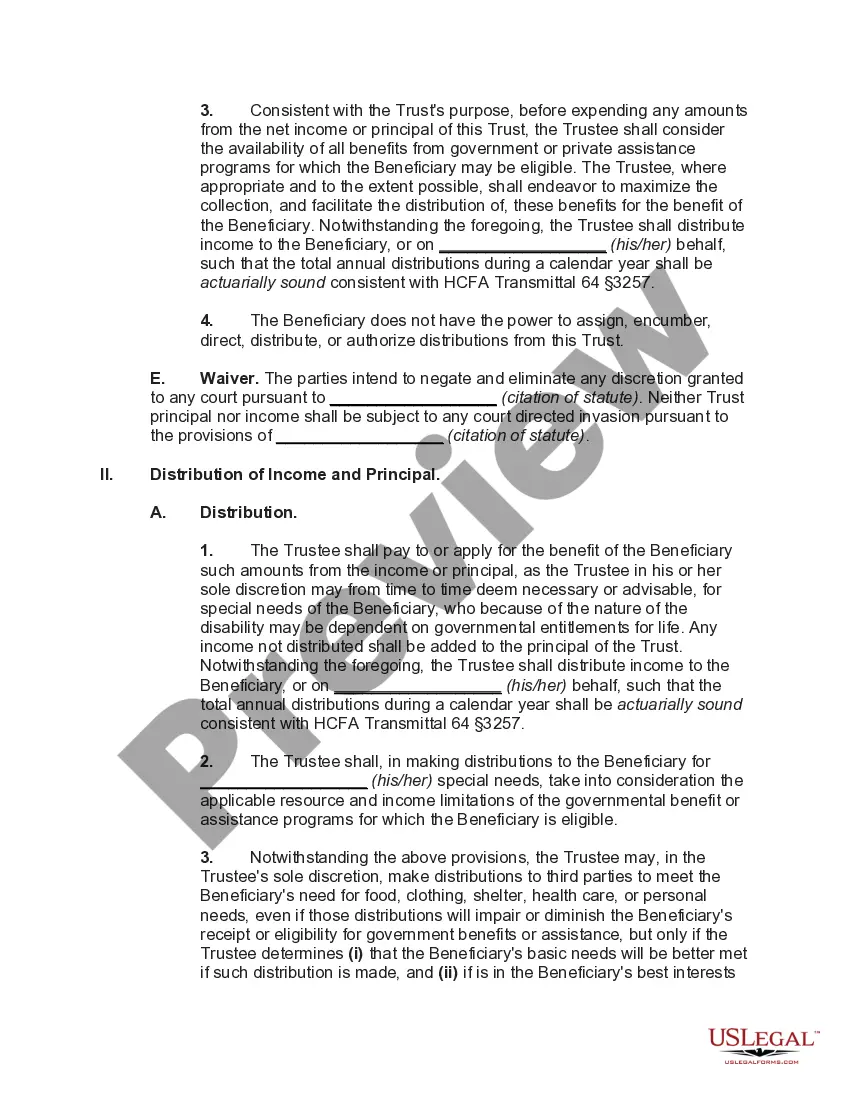
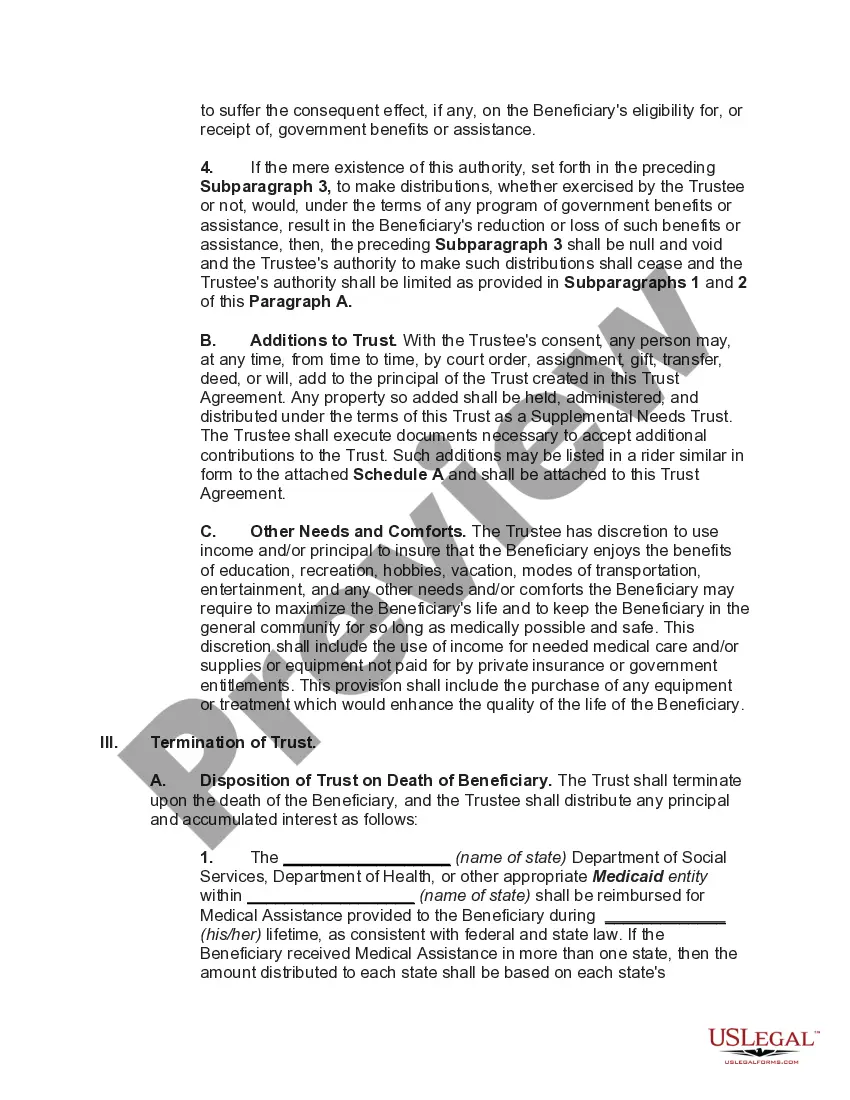
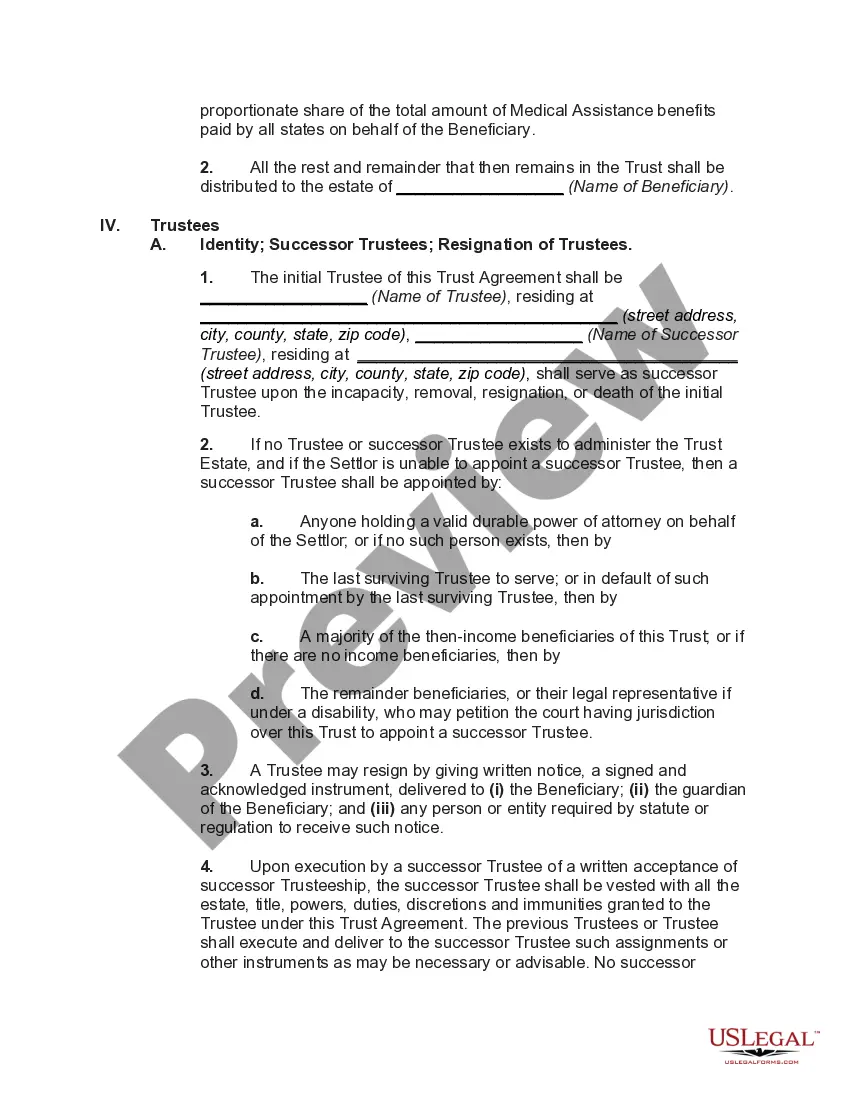
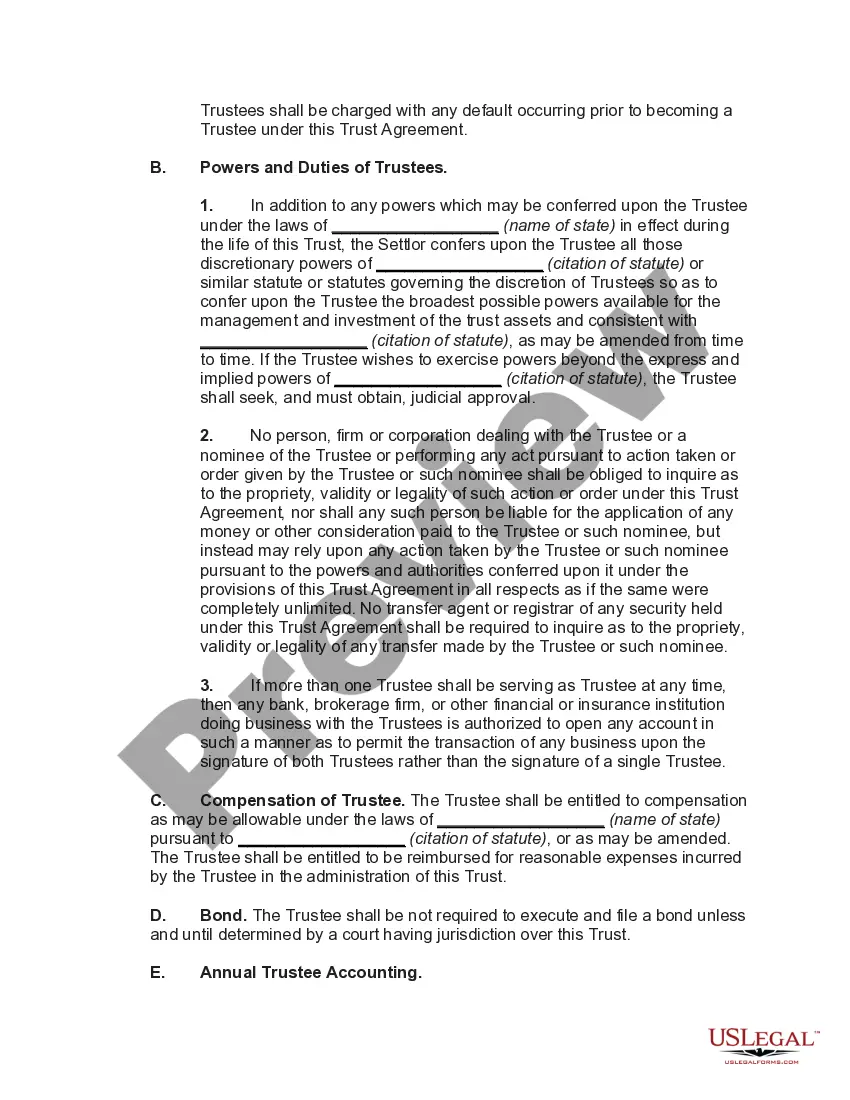
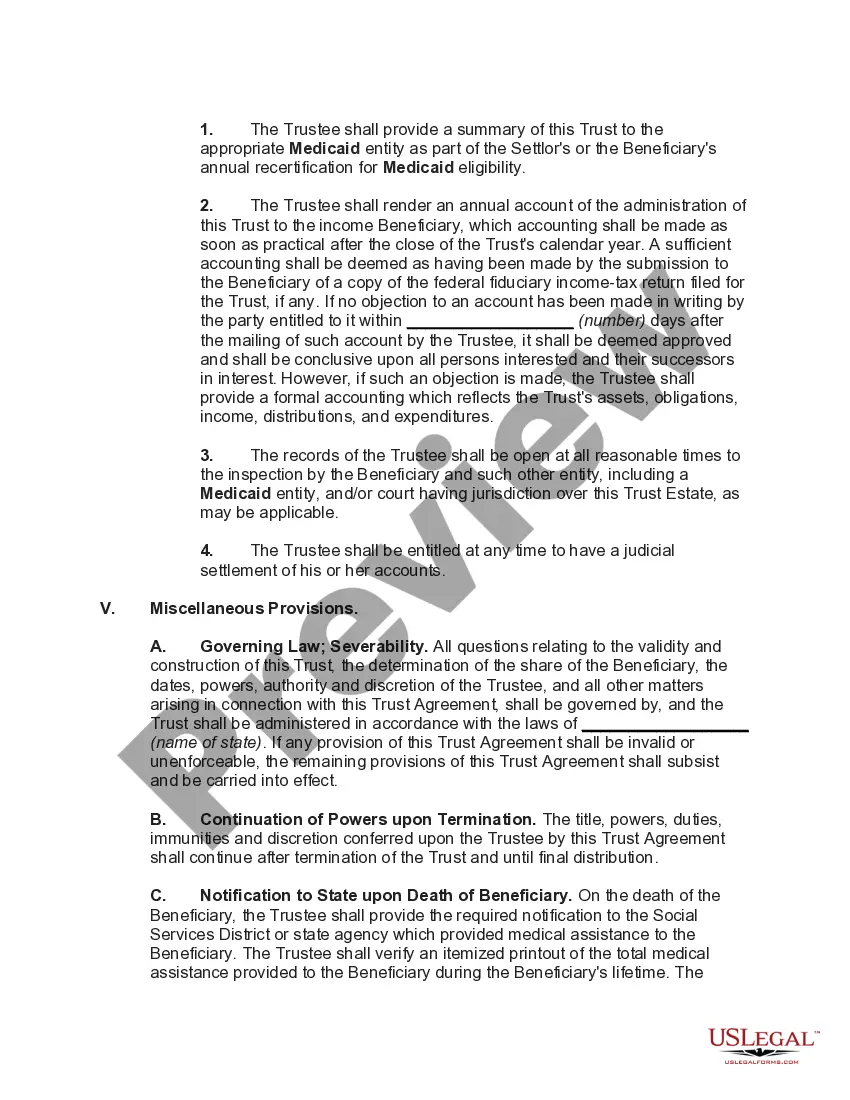
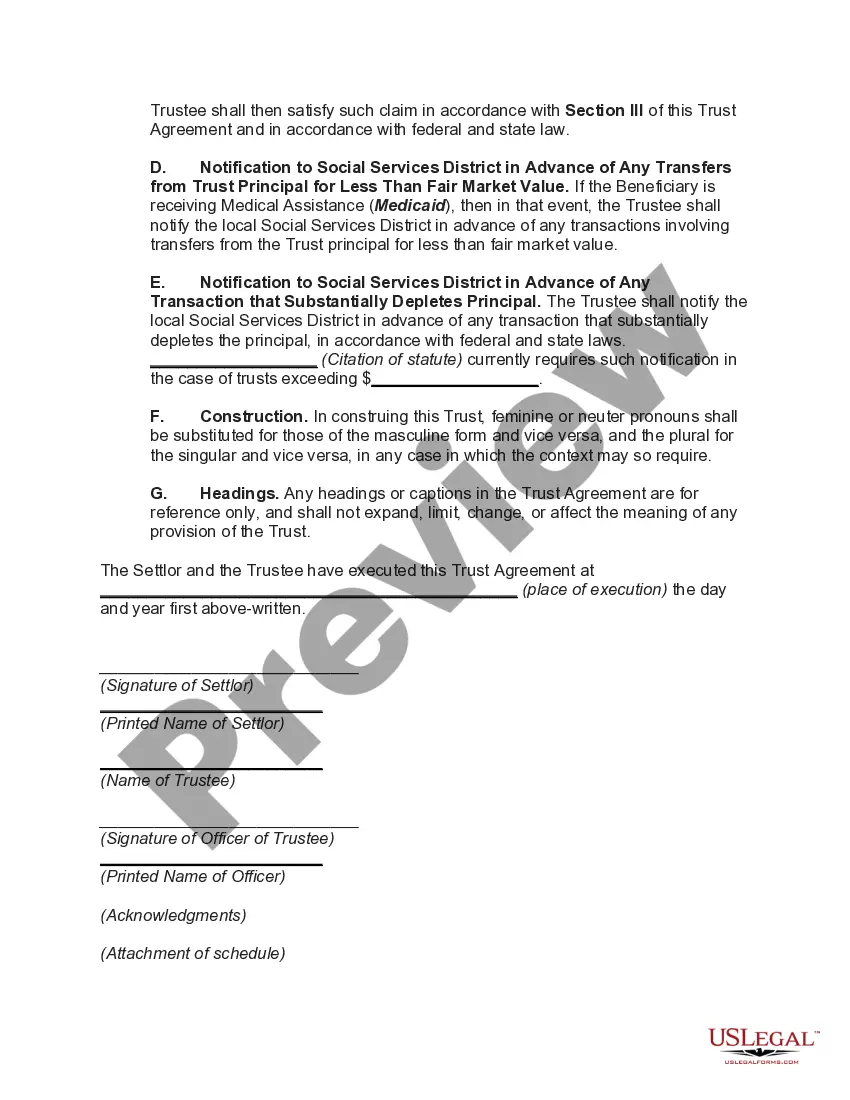
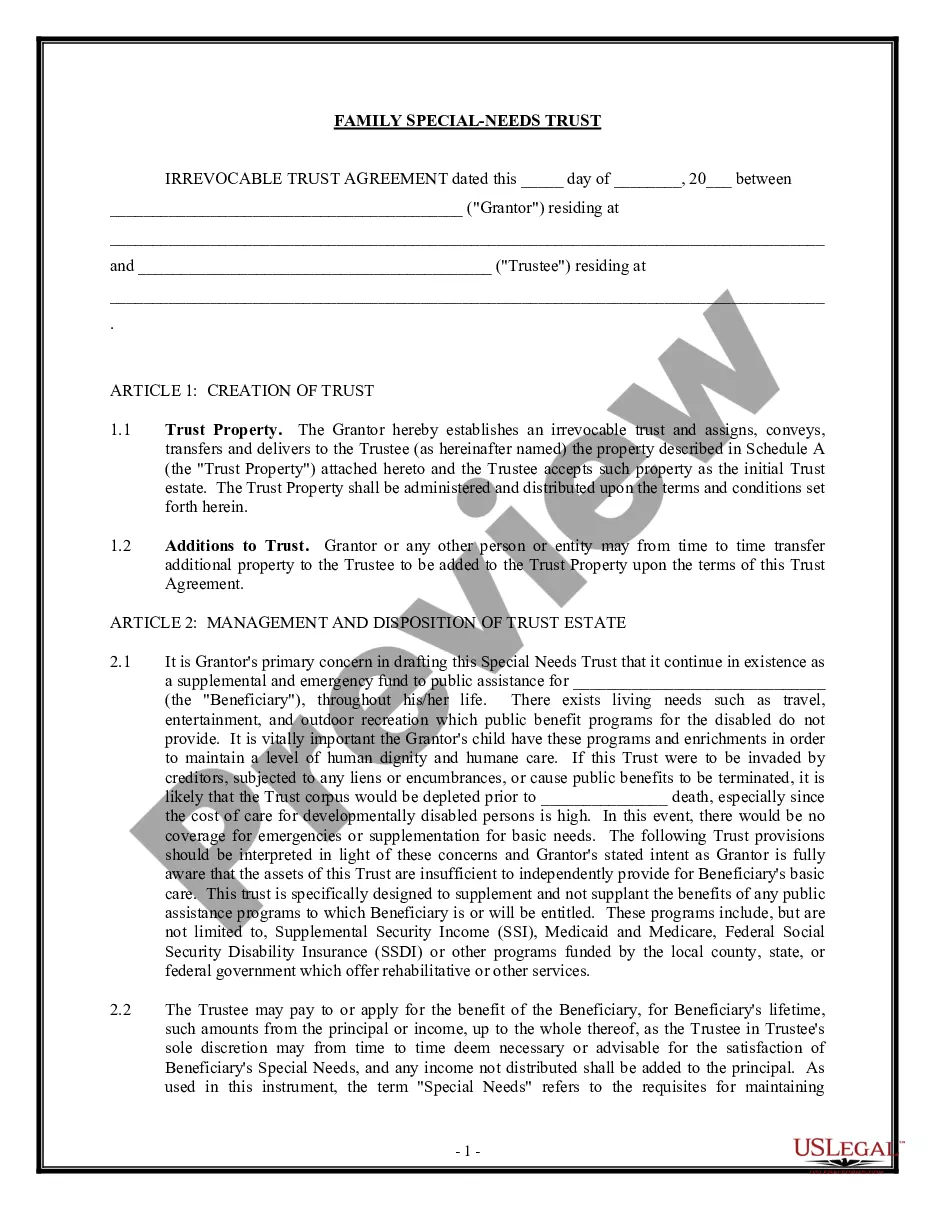

Get your form ready online
Our built-in tools help you complete, sign, share, and store your documents in one place.
Make edits, fill in missing information, and update formatting in US Legal Forms—just like you would in MS Word.
Download a copy, print it, send it by email, or mail it via USPS—whatever works best for your next step.
Sign and collect signatures with our SignNow integration. Send to multiple recipients, set reminders, and more. Go Premium to unlock E-Sign.
If this form requires notarization, complete it online through a secure video call—no need to meet a notary in person or wait for an appointment.
We protect your documents and personal data by following strict security and privacy standards.

Make edits, fill in missing information, and update formatting in US Legal Forms—just like you would in MS Word.

Download a copy, print it, send it by email, or mail it via USPS—whatever works best for your next step.

Sign and collect signatures with our SignNow integration. Send to multiple recipients, set reminders, and more. Go Premium to unlock E-Sign.

If this form requires notarization, complete it online through a secure video call—no need to meet a notary in person or wait for an appointment.

We protect your documents and personal data by following strict security and privacy standards.
Looking for another form?



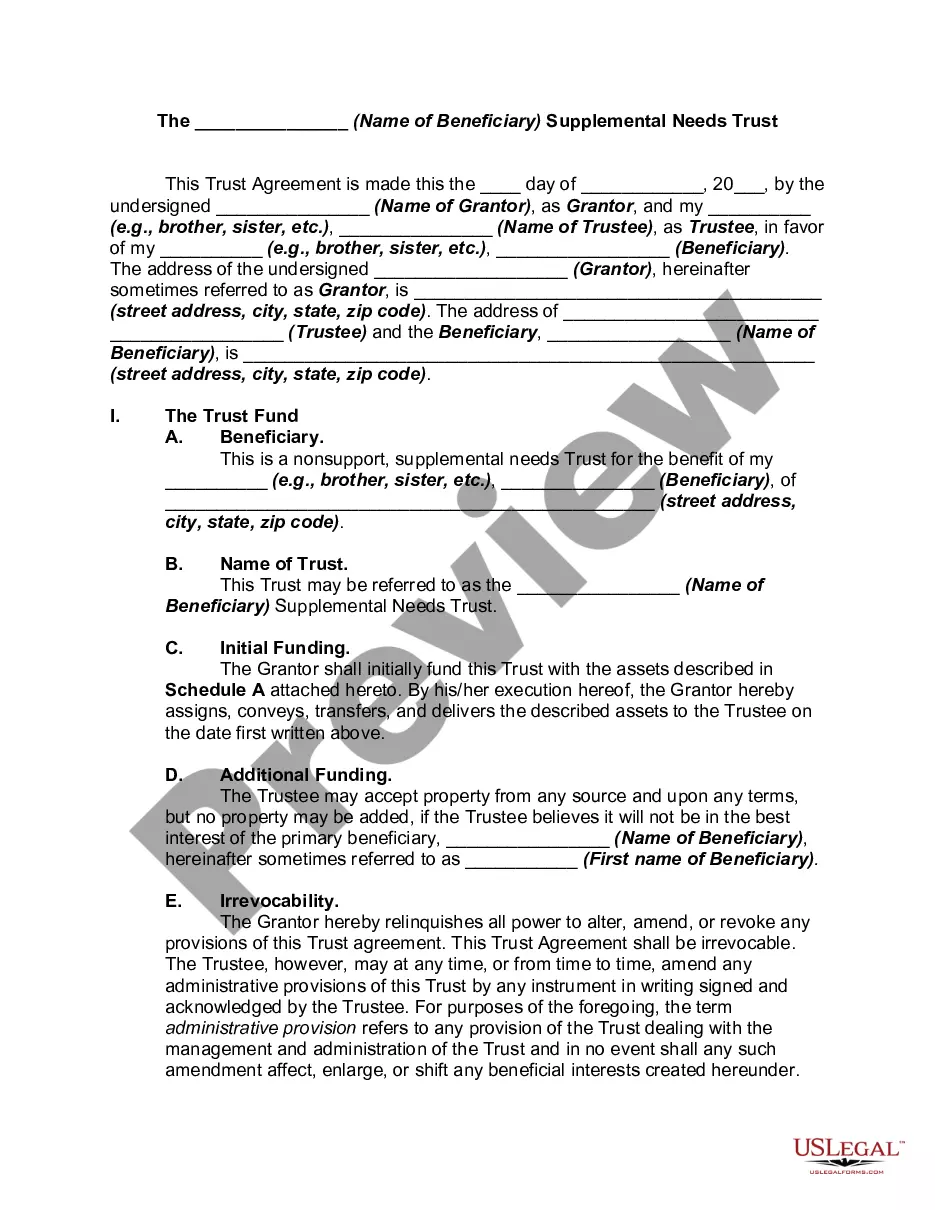
How to fill out Special Needs Irrevocable Trust Agreement For Benefit Of Disabled Child Of Trustor?
Managing legal documents can be perplexing, even for the most experienced professionals.
When you are looking for a Special Needs Trust and Tax Returns and lack the time to search for the correct and current version, the procedures can be overwhelming.
US Legal Forms accommodates all your needs, ranging from personal to business documents, all in one place.
Utilize advanced tools to complete and manage your Special Needs Trust and Tax Returns.
Here are the steps to take after you download the form you need: Verify that it is the correct form by previewing it and reviewing its details. Ensure that the sample is authorized in your state or county. Select Buy Now when you are ready. Choose a monthly subscription plan. Pick the file format you prefer, and Download, complete, sign, print, and send your document. Take advantage of the US Legal Forms web library, backed by 25 years of experience and trustworthiness. Transform your daily document management into a straightforward and user-friendly process today.
- Access a valuable resource library of articles, guides, and materials pertinent to your situation and needs.
- Save time and effort searching for the documents you require, and leverage US Legal Forms’ sophisticated search and Review tool to find Special Needs Trust and Tax Returns.
- If you hold a subscription, Log In to your US Legal Forms account, search for the form, and acquire it.
- Visit the My documents tab to see the documents you have previously saved and manage your folders as you see fit.
- If this is your first experience with US Legal Forms, create a free account and gain unlimited access to all the advantages of the library.
- A robust web form library can be transformative for anyone aiming to handle these matters effectively.
- US Legal Forms is a frontrunner in online legal documentation, offering over 85,000 state-specific legal forms available to you anytime.
- With US Legal Forms, you can access state- or county-specific legal and business forms.
Form popularity
FAQ
Form 1041 is an Internal Revenue Service (IRS) income tax return filed by the trustee or representative of a decedent's estate or trust. The form consists of three pages, requiring basic information about the estate or trust and detailing its income and deductions.
First-Party or Self-Funded Special Needs Trusts Any income earned on the funds invested in the first-party trust is always taxable to the beneficiary in the year it is earned, regardless of when or if it is distributed to the beneficiary.
Trusts generally are considered separate taxable entities for income tax purposes and the trustee must file an income tax return for the trust.
A Special Needs Trust must have its own Federal Identification Number (also called an Employer Identification Number, EIN, Tax Identification Number, or TIN) to be valid. This unique number means that the Trust is its own entity, and that it does not belong to anyone but itself.
Income from a QDisT is reported on Internal Revenue Service (IRS) Form 1041, with a unique Employer Identification Number (EIN), while distributions to the beneficiary will be taxed on their own Form 1040 tax return.