Special Law
Description



Get your form ready online
Our built-in tools help you complete, sign, share, and store your documents in one place.
Make edits, fill in missing information, and update formatting in US Legal Forms—just like you would in MS Word.
Download a copy, print it, send it by email, or mail it via USPS—whatever works best for your next step.
Sign and collect signatures with our SignNow integration. Send to multiple recipients, set reminders, and more. Go Premium to unlock E-Sign.
If this form requires notarization, complete it online through a secure video call—no need to meet a notary in person or wait for an appointment.
We protect your documents and personal data by following strict security and privacy standards.

Make edits, fill in missing information, and update formatting in US Legal Forms—just like you would in MS Word.

Download a copy, print it, send it by email, or mail it via USPS—whatever works best for your next step.

Sign and collect signatures with our SignNow integration. Send to multiple recipients, set reminders, and more. Go Premium to unlock E-Sign.

If this form requires notarization, complete it online through a secure video call—no need to meet a notary in person or wait for an appointment.

We protect your documents and personal data by following strict security and privacy standards.
Looking for another form?





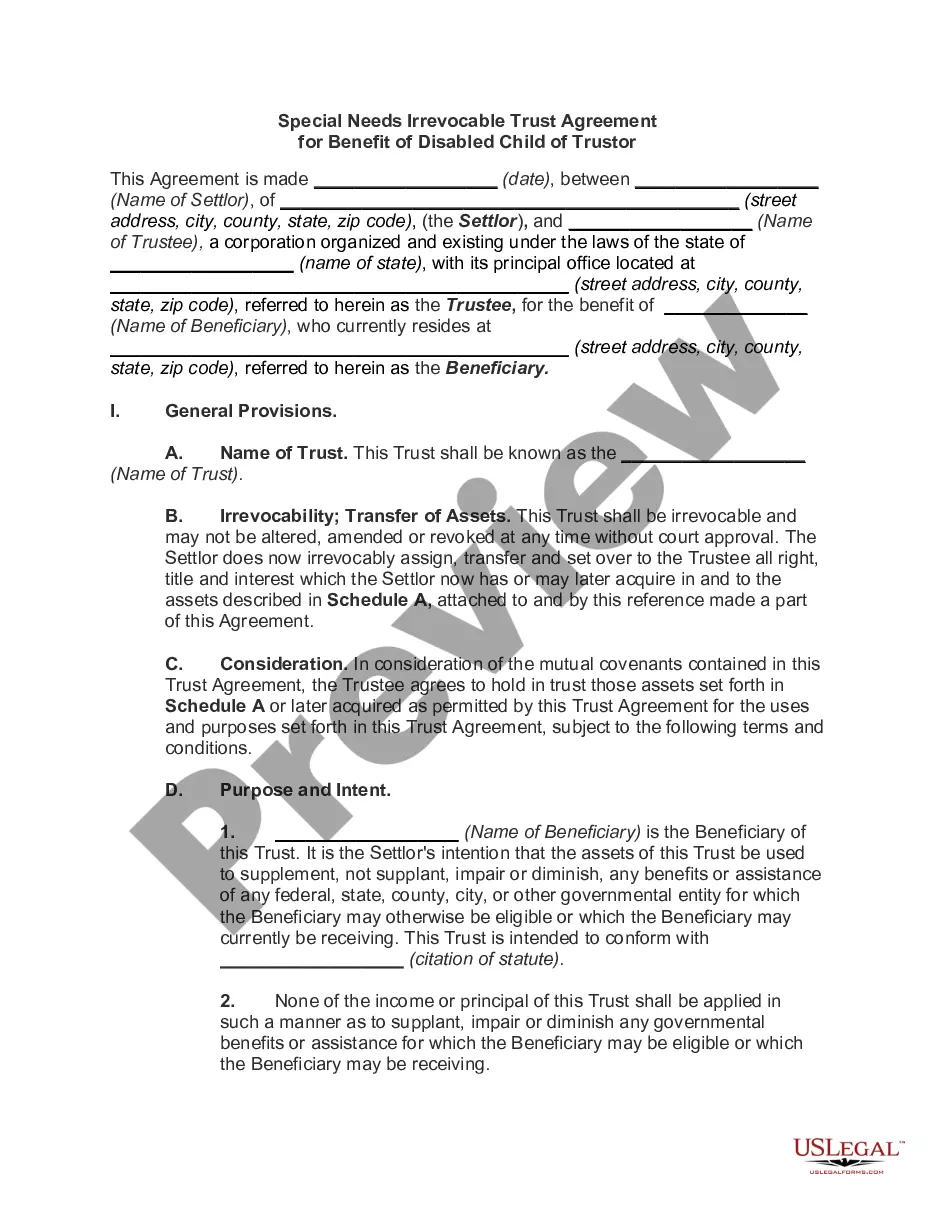
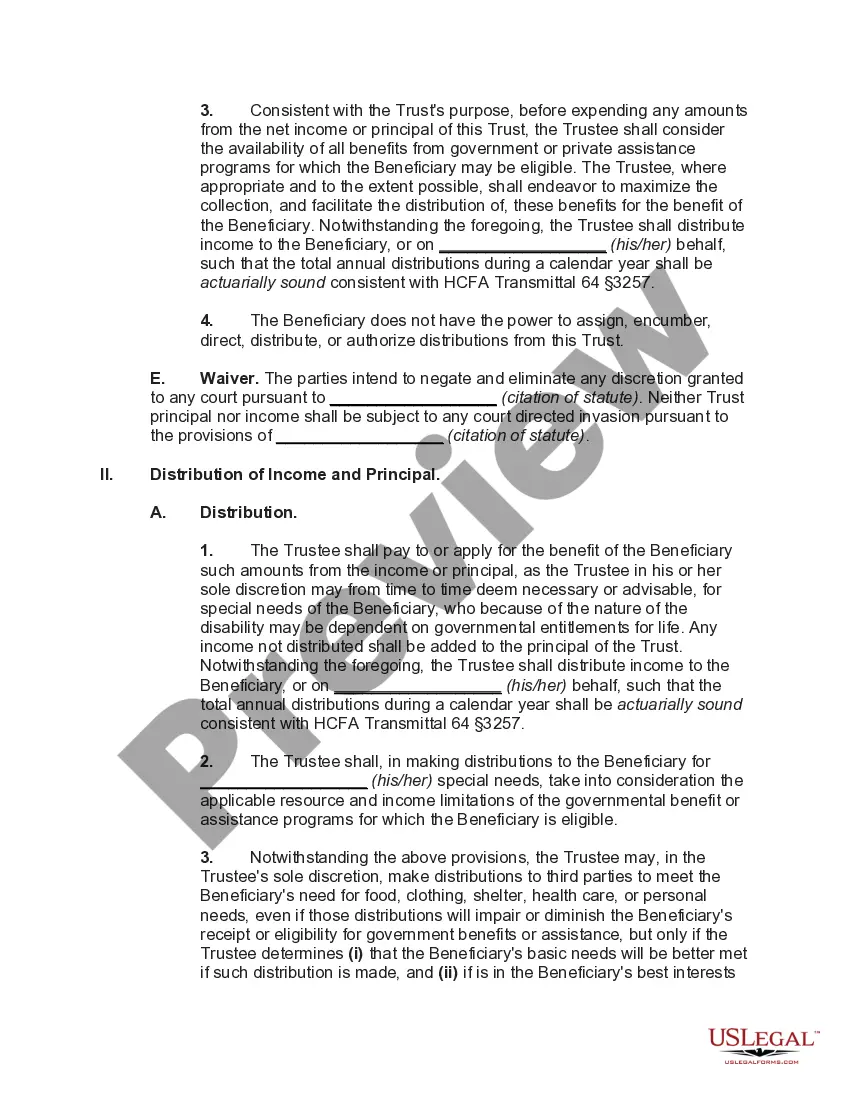
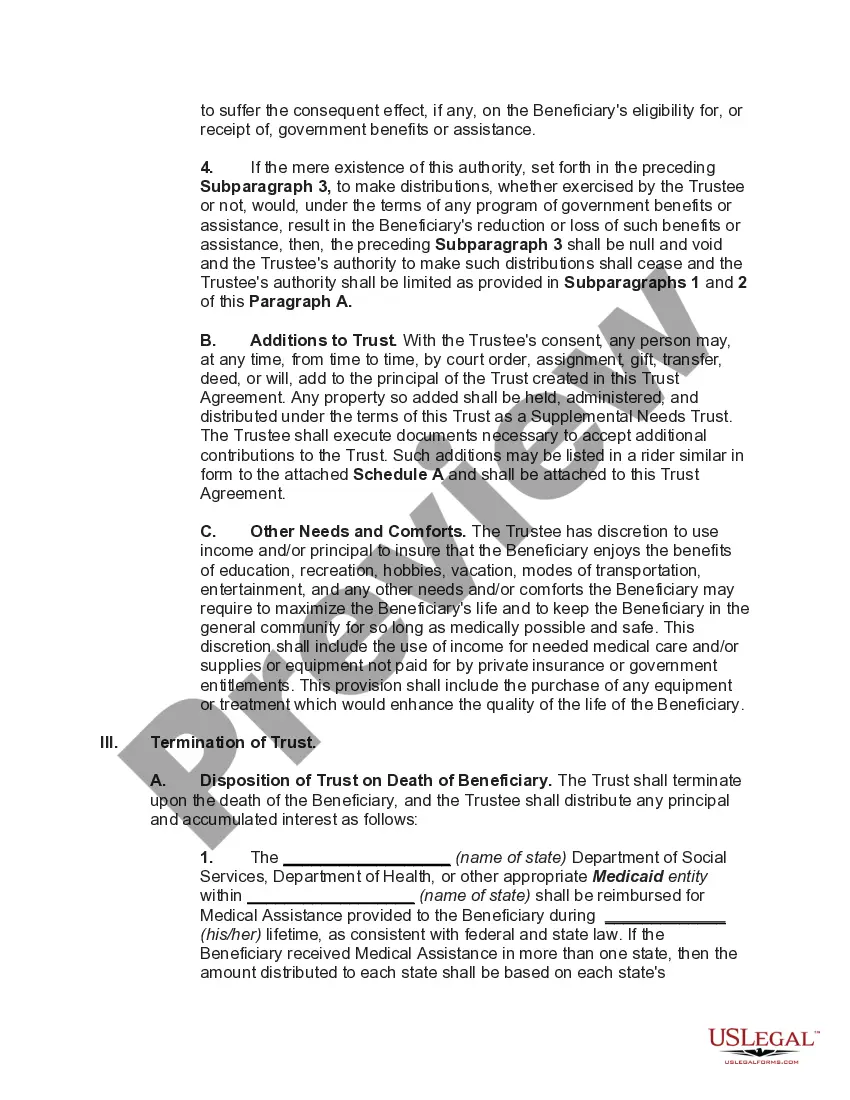
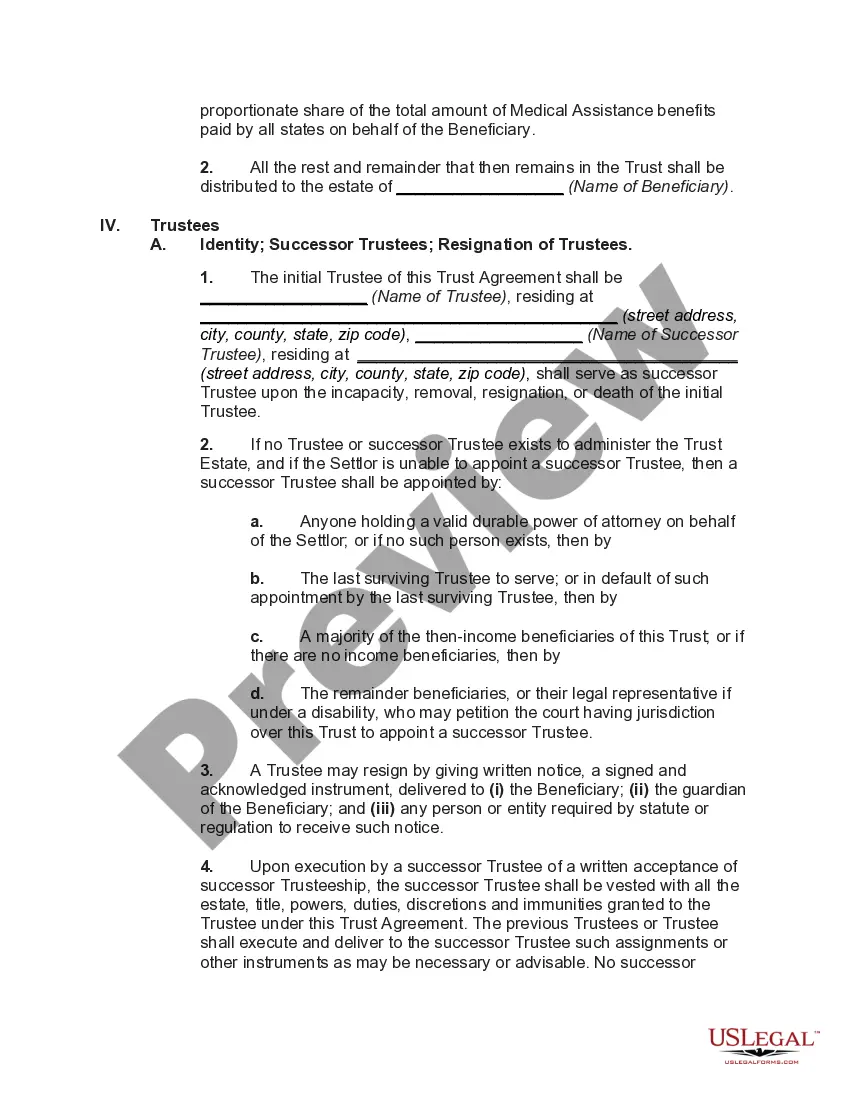
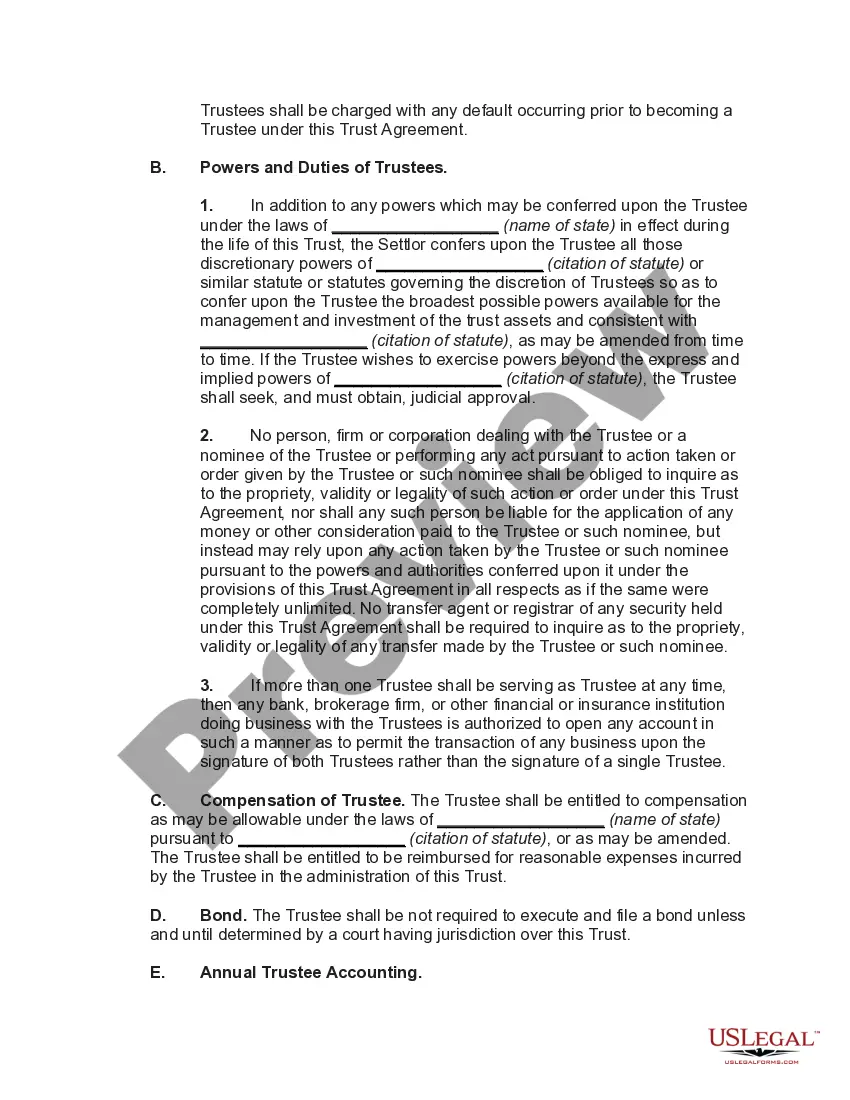
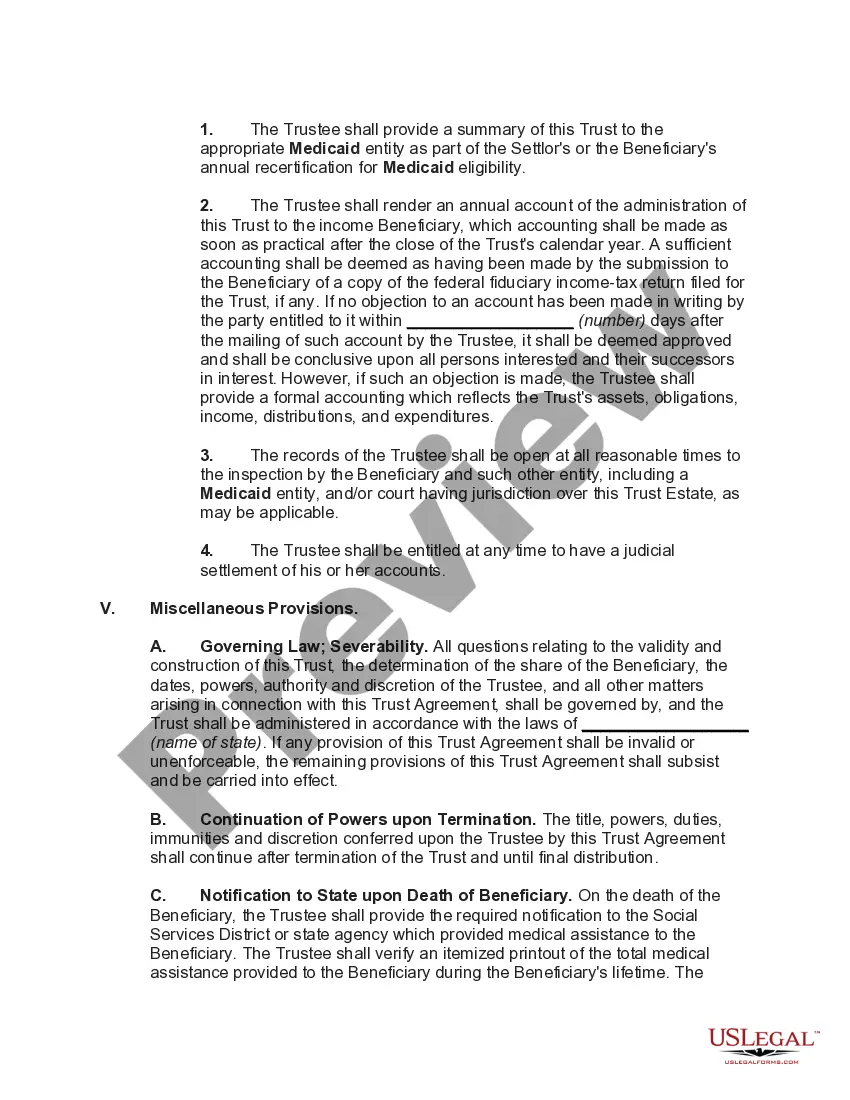
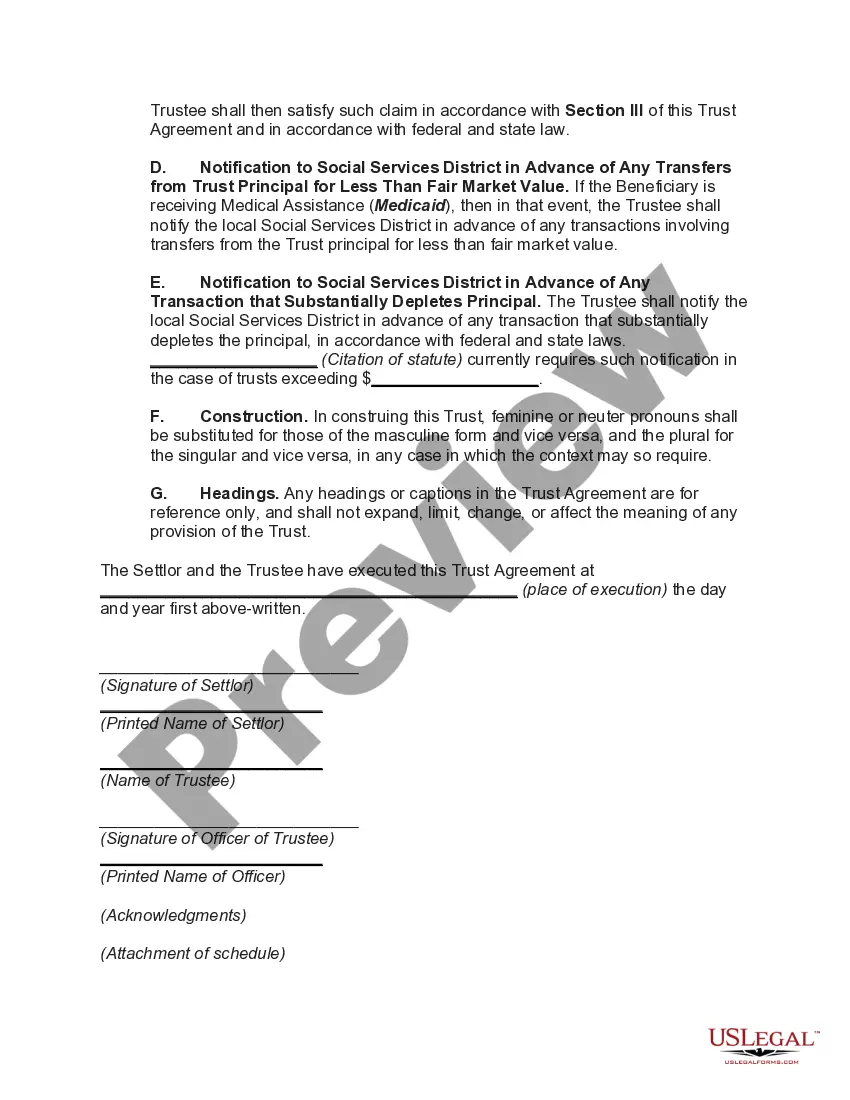
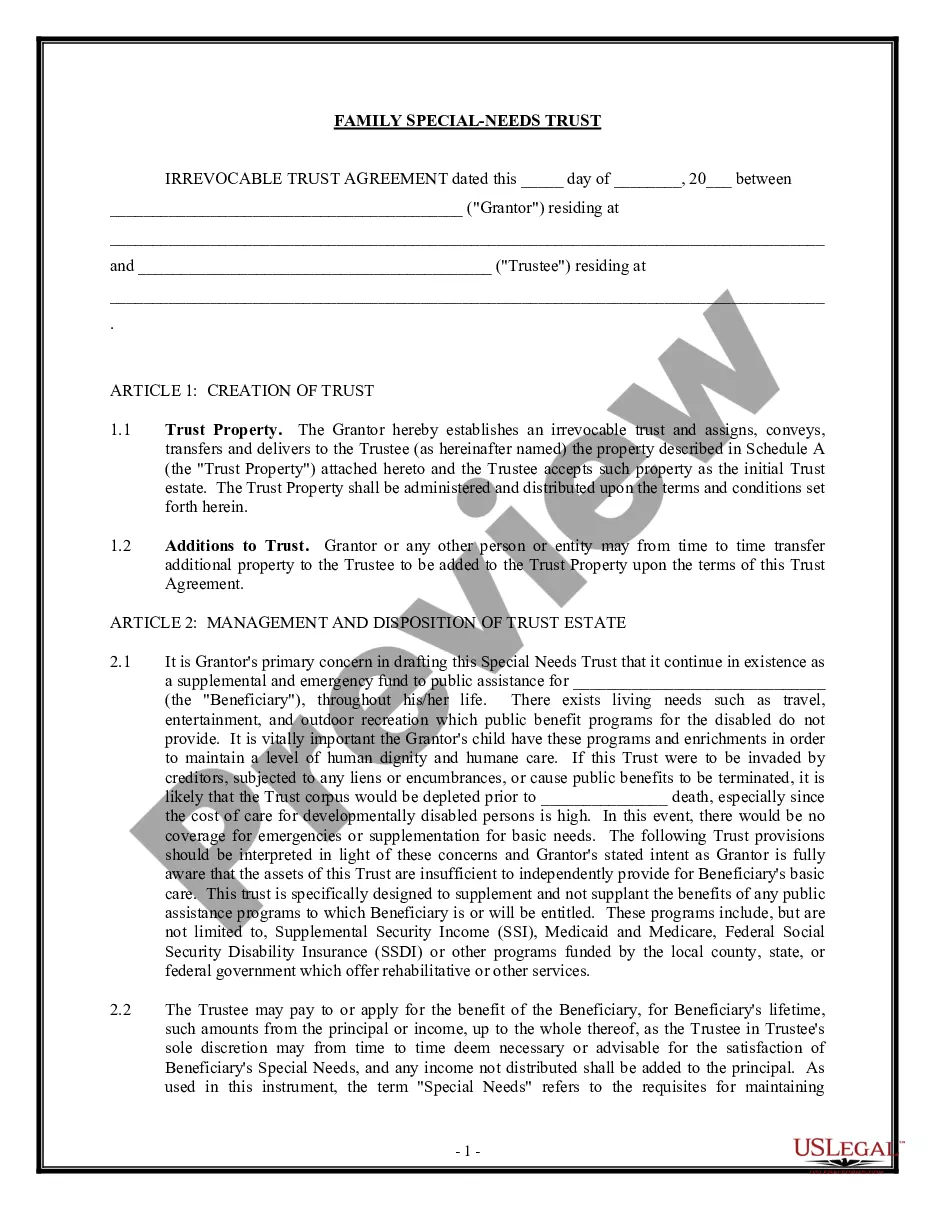
How to fill out Special Needs Irrevocable Trust Agreement For Benefit Of Disabled Child Of Trustor?
- If you have an existing account, log in to download the required form template by clicking on the Download button. Ensure your subscription remains active; if it has lapsed, renew it according to your plan.
- For first-time users, begin by reviewing the Preview mode and form description to confirm that the selected document meets your requirements and is compliant with your local jurisdiction.
- In case of discrepancies, utilize the Search tab to find the suitable template for your needs. Make sure it fits your criteria before proceeding.
- Purchase the document by clicking the Buy Now button and selecting your preferred subscription plan. You will need to create an account for access to the full library.
- Complete your transaction by entering your credit card details or opting for PayPal for an easier payment process.
- Download your chosen form and save it for completion. You can also access it later in the My Forms section of your profile.
By following these steps, you can quickly secure the legal documents you need, tailored to your specific requirements in special law.
Take action today and explore the extensive library of US Legal Forms to simplify your legal document needs.
Form popularity
FAQ
To get a law passed in NYC, you will need to draft the legislation and present it to your local council member. You can work with legal professionals to ensure the special law meets all necessary requirements. Afterward, the proposal must go through various committees, public hearings, and votes before it becomes law. Utilizing resources like USLegalForms can streamline your process with templates and guidance on legal documents.
A special term in law typically refers to specific terminology used within a legal context to describe unique rules or principles. These terms help define and categorize various aspects of law, bringing clarity to complex legal matters. Familiarity with these special terms enhances understanding of legal documents and proceedings.
A special act refers to legislation enacted for a particular purpose or group, usually not covered by general laws. These acts provide tailored solutions for unique situations, such as the creation of a state-funded program or the establishment of a local authority. By leveraging a special act, communities can address specific needs effectively.
Local law governs individuals within a specific jurisdiction, while international law regulates the relationships between nations and global entities. While local laws ensure order and compliance within a community, international law aims to promote peace and cooperation across borders. Understanding both is crucial for grasping the larger legal framework.
The key difference between local and special law lies in their scope and application. Local laws are created to address the needs of a particular geographic area, whereas special laws target specific entities or situations. Each law type serves a distinct purpose, facilitating governance and justice in various contexts.
Local law focuses on the governance of specific communities or regions, while special law deals with unique cases or entities that are not covered by general laws. Local laws affect everyday life in towns or cities, while special laws may target organizations or specific groups, ensuring that they receive tailored regulations. Both play vital roles in maintaining order and facilitating justice.
A local law is legislation enacted by a city, town, or county to manage issues within its jurisdiction. These laws can cover various topics, such as housing regulations, traffic ordinances, and municipal governance. By understanding local laws, residents can ensure they comply with rules specific to their community.
Special laws often pertain to unique entities or situations, such as laws that benefit a particular organization or enable a city to control zoning in its vicinity. On the other hand, local laws focus on regulations specific to a community or municipality, like ordinances related to local businesses or environmental regulations. Both categories demonstrate how laws can be tailored to fit varying contexts.
The primary distinction between special law and general law lies in their applicability. Special laws apply to specific situations or groups, addressing unique circumstances, whereas general laws are broad and govern the population at large. Understanding these differences is crucial for those navigating legal matters, as each serves different purposes.
Article 78 of the New York Civil Practice Law outlines the procedures for challenging the decisions of administrative agencies and local governments. This law provides a mechanism for individuals to seek judicial review when they allege their rights, under special law, have been violated. Understanding this article is vital for anyone considering legal action against an agency.