Irrevocable Trust Trustor For Trustee
Description
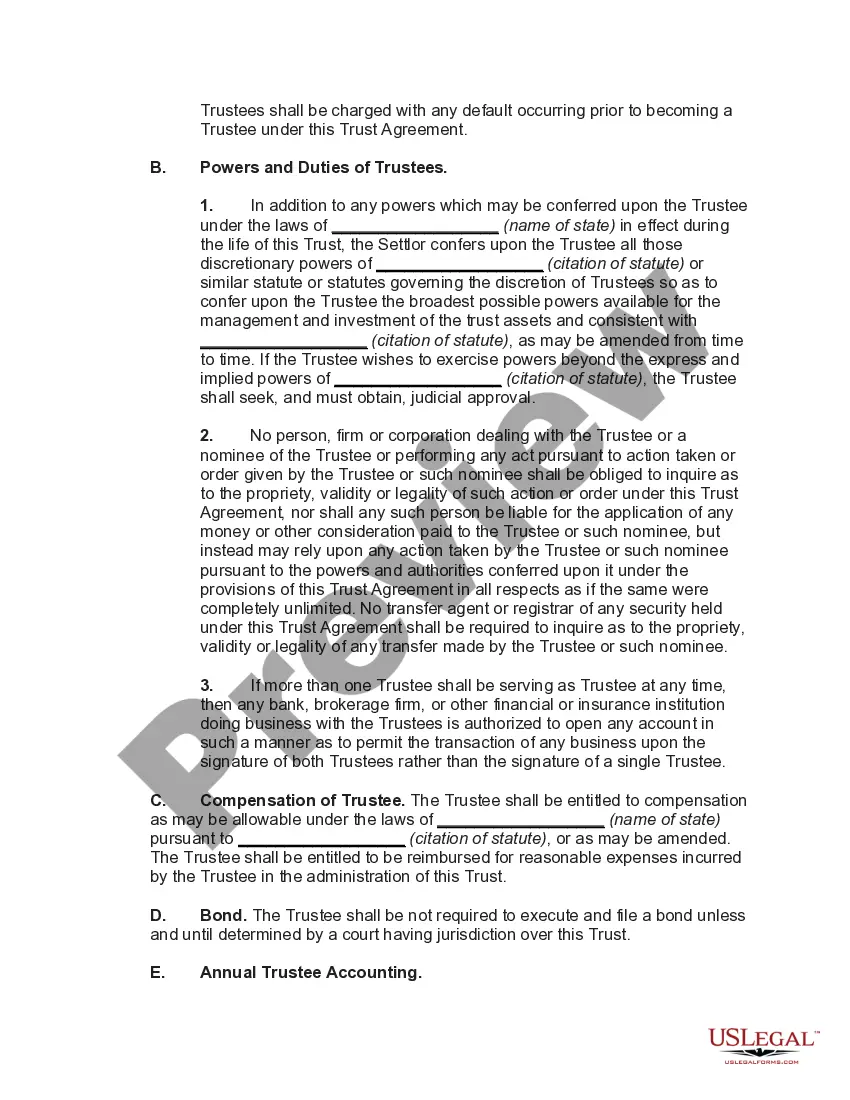
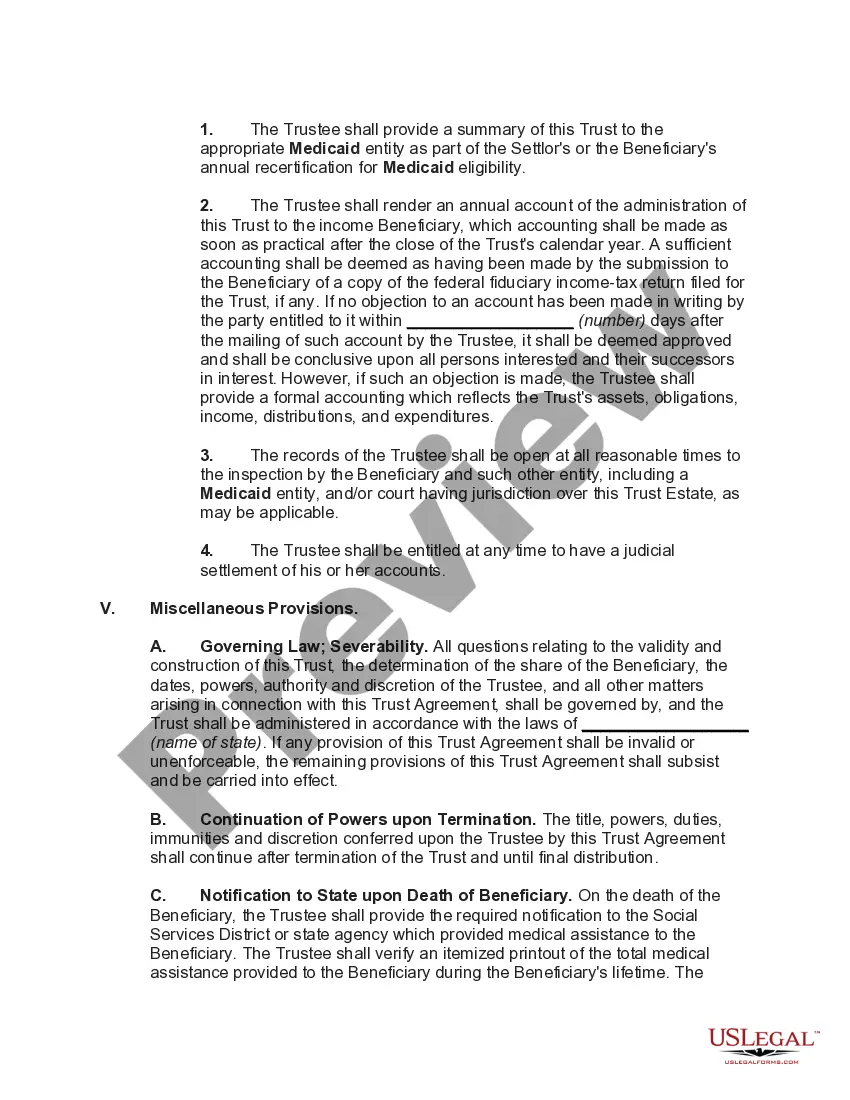
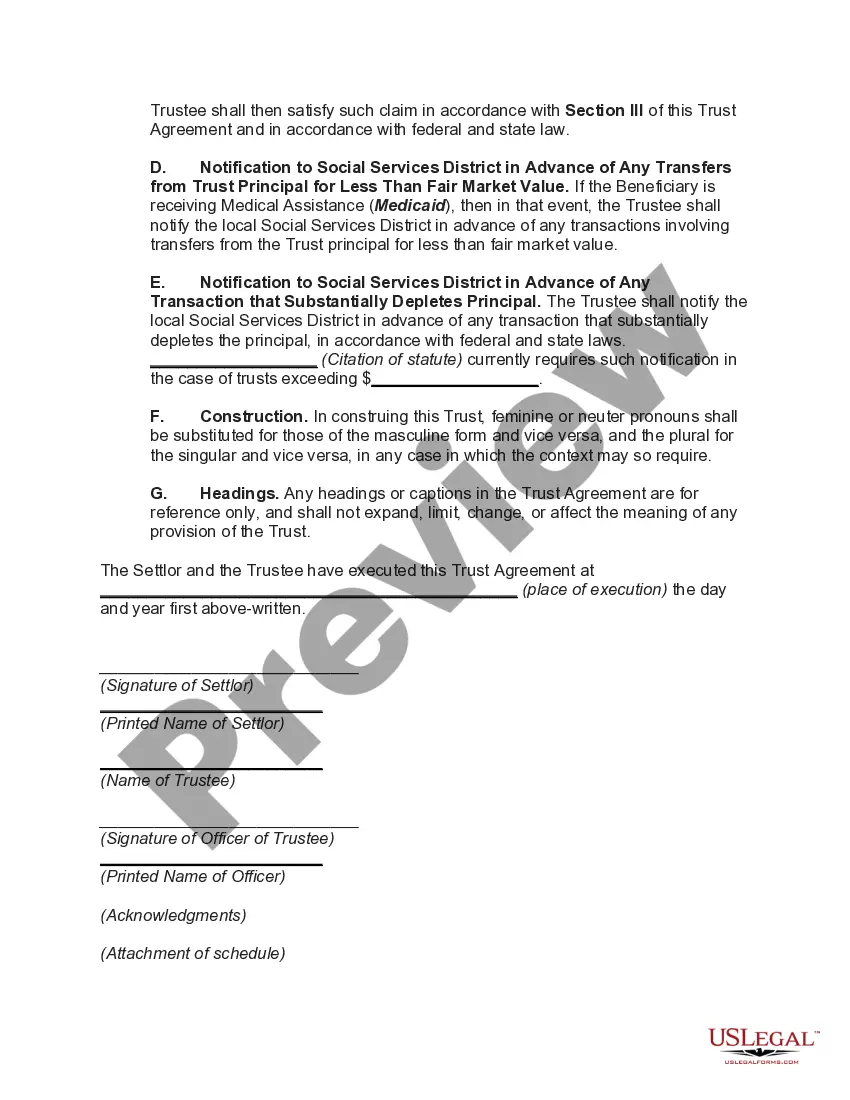
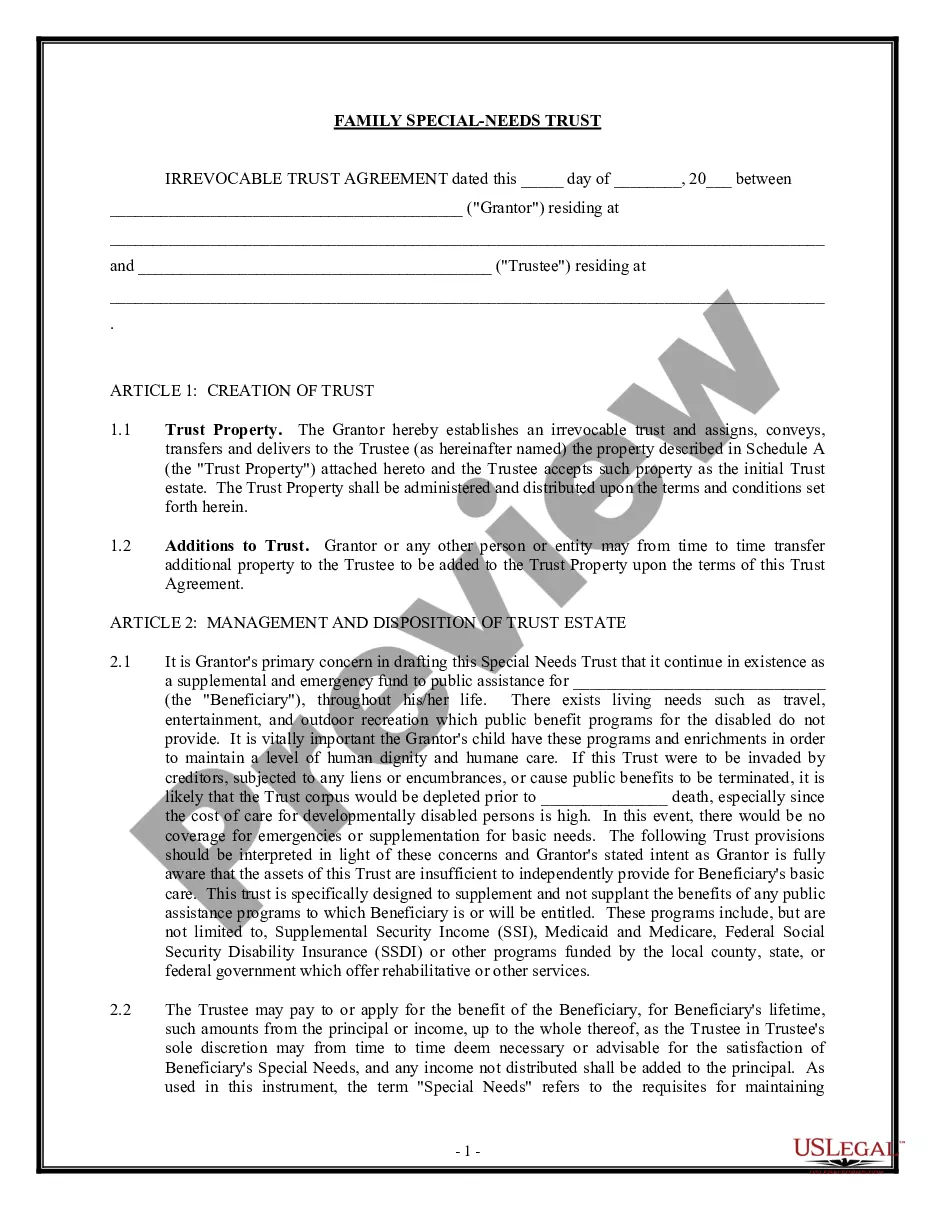
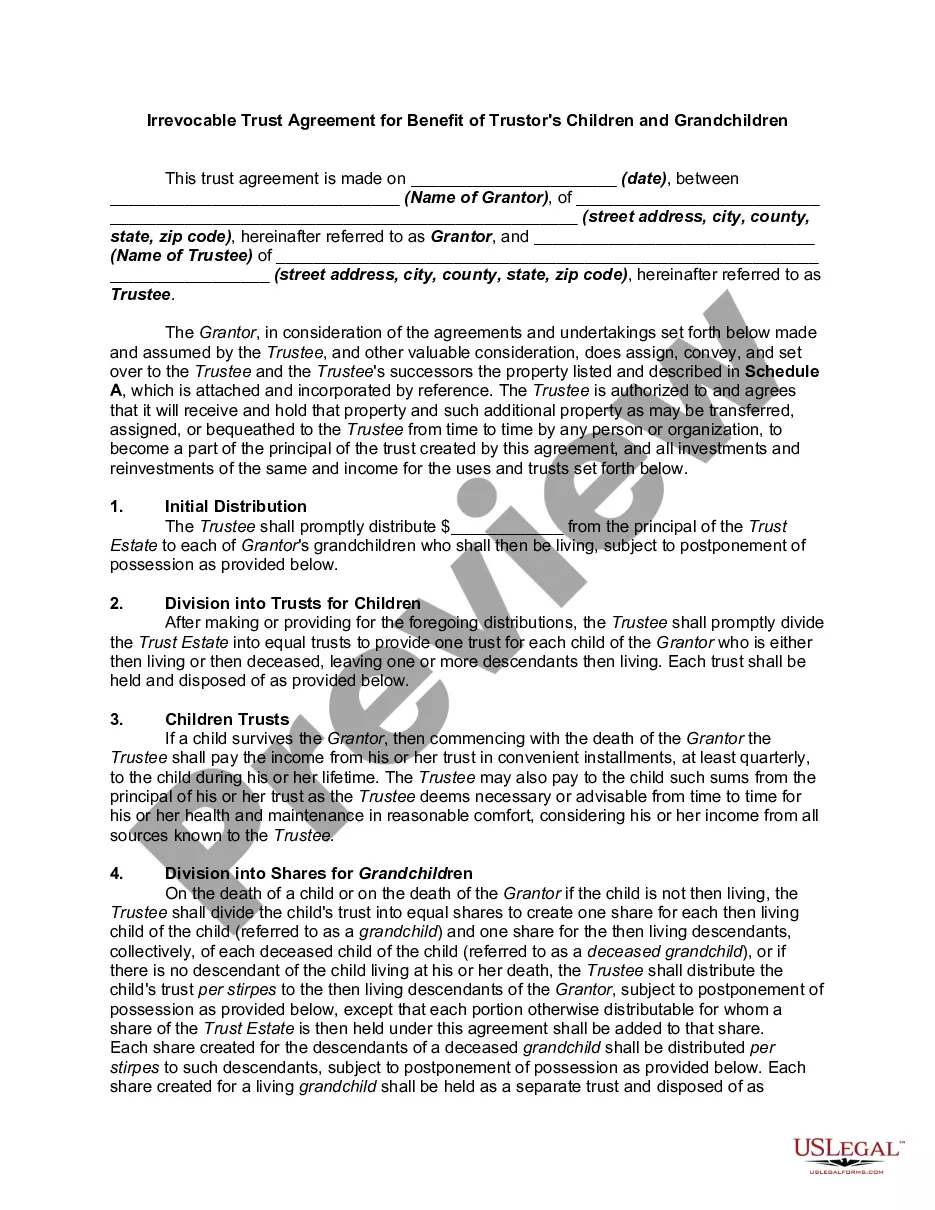
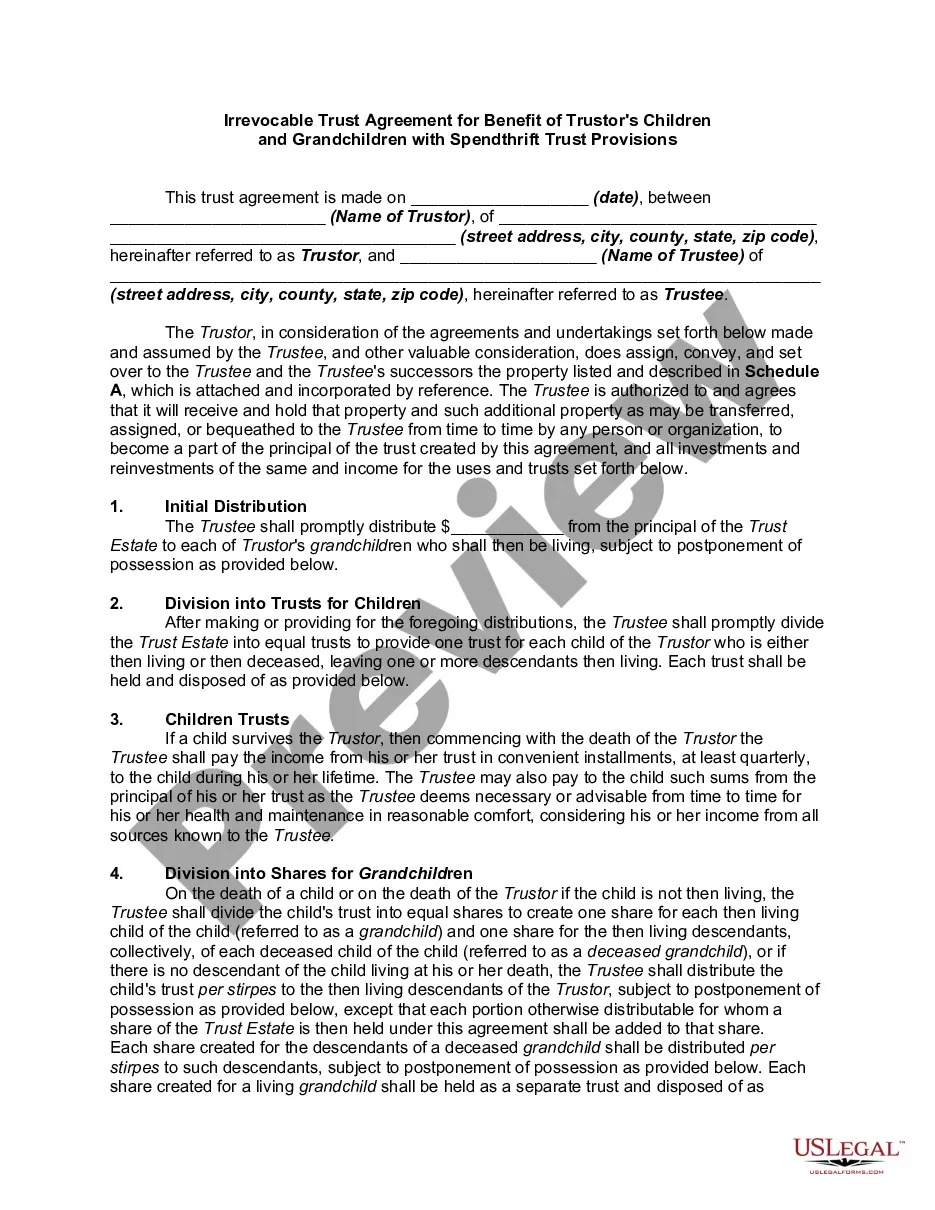
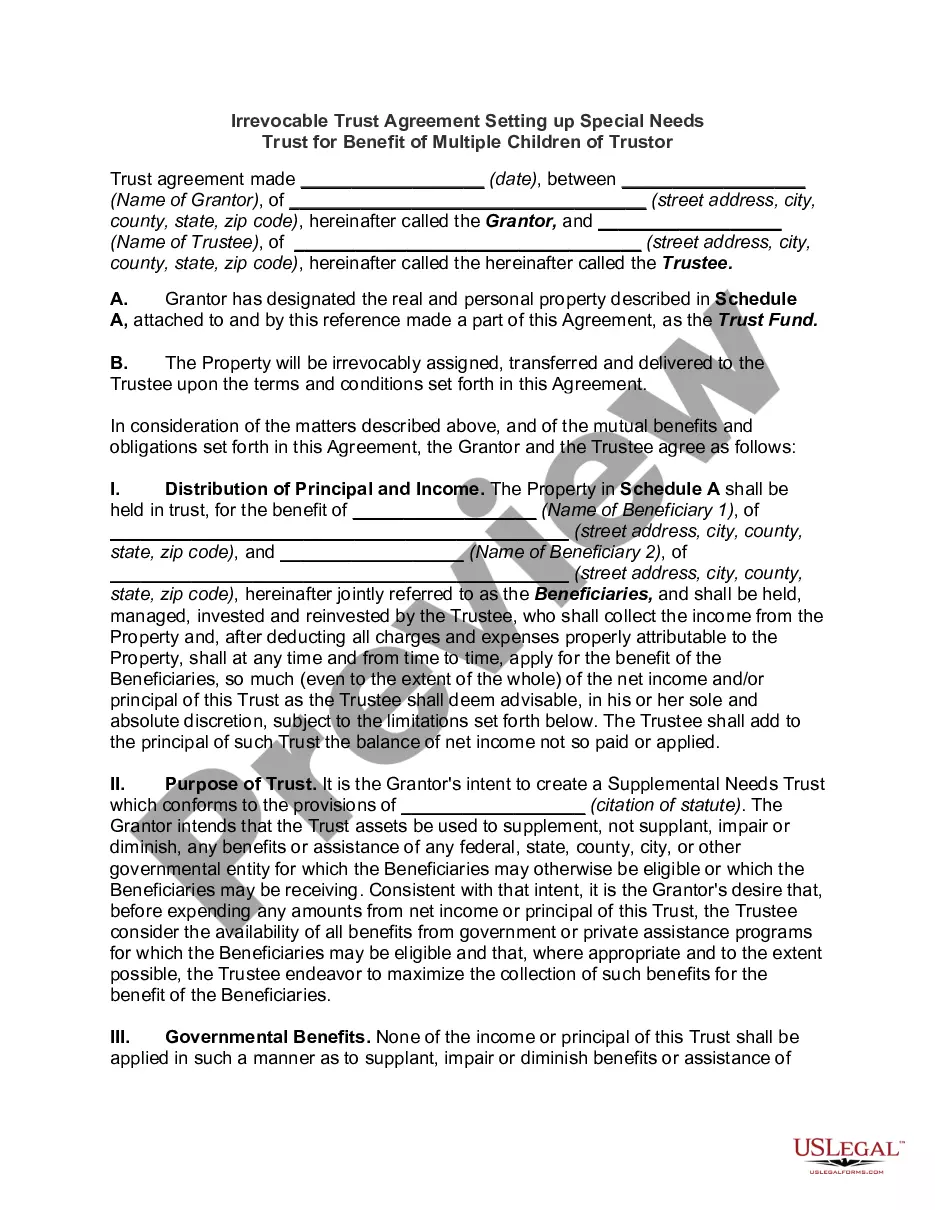
Get your form ready online
Our built-in tools help you complete, sign, share, and store your documents in one place.
Make edits, fill in missing information, and update formatting in US Legal Forms—just like you would in MS Word.
Download a copy, print it, send it by email, or mail it via USPS—whatever works best for your next step.
Sign and collect signatures with our SignNow integration. Send to multiple recipients, set reminders, and more. Go Premium to unlock E-Sign.
If this form requires notarization, complete it online through a secure video call—no need to meet a notary in person or wait for an appointment.
We protect your documents and personal data by following strict security and privacy standards.

Make edits, fill in missing information, and update formatting in US Legal Forms—just like you would in MS Word.

Download a copy, print it, send it by email, or mail it via USPS—whatever works best for your next step.

Sign and collect signatures with our SignNow integration. Send to multiple recipients, set reminders, and more. Go Premium to unlock E-Sign.

If this form requires notarization, complete it online through a secure video call—no need to meet a notary in person or wait for an appointment.

We protect your documents and personal data by following strict security and privacy standards.
Looking for another form?







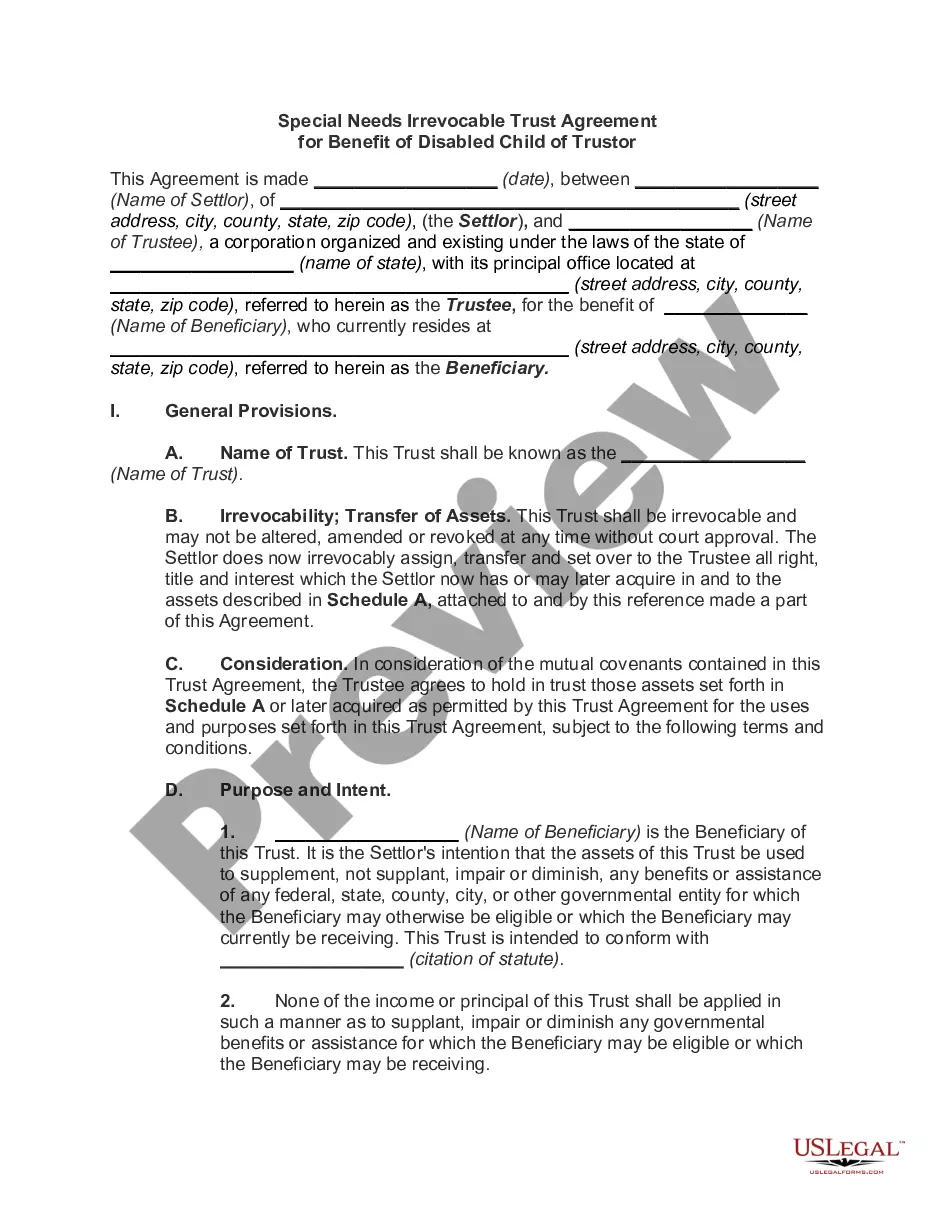
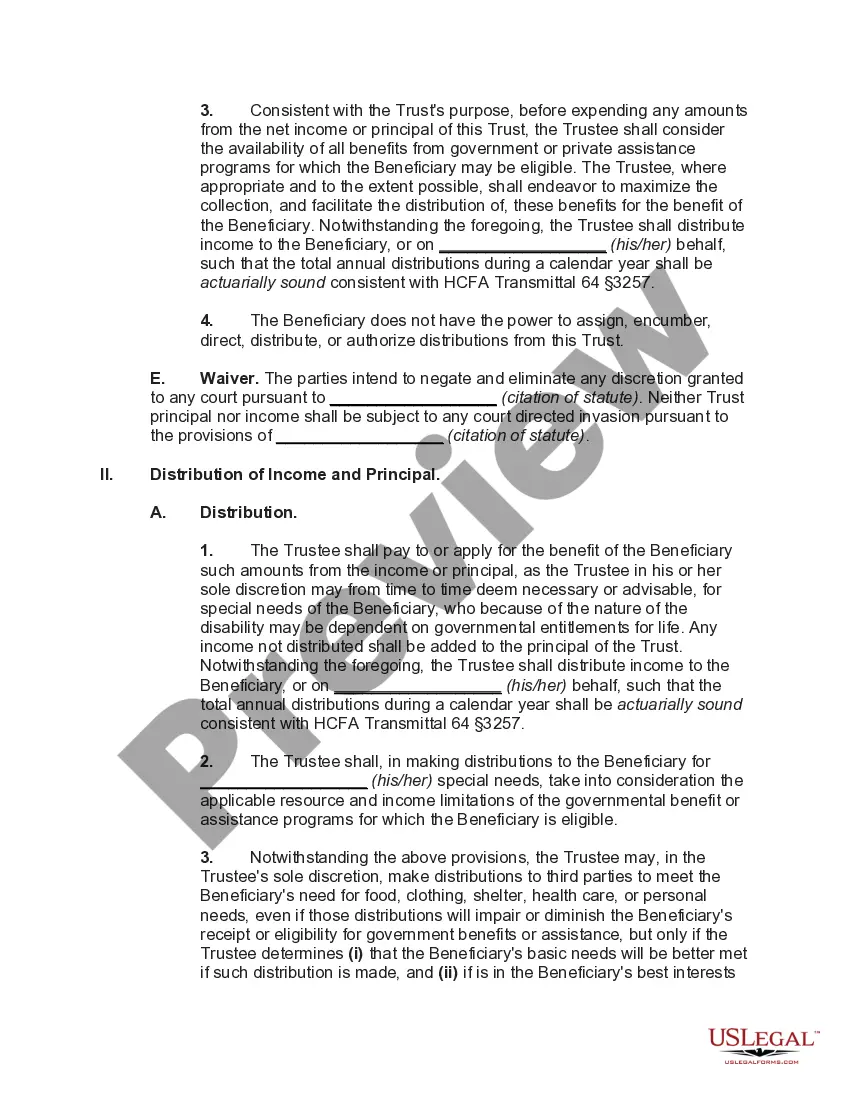
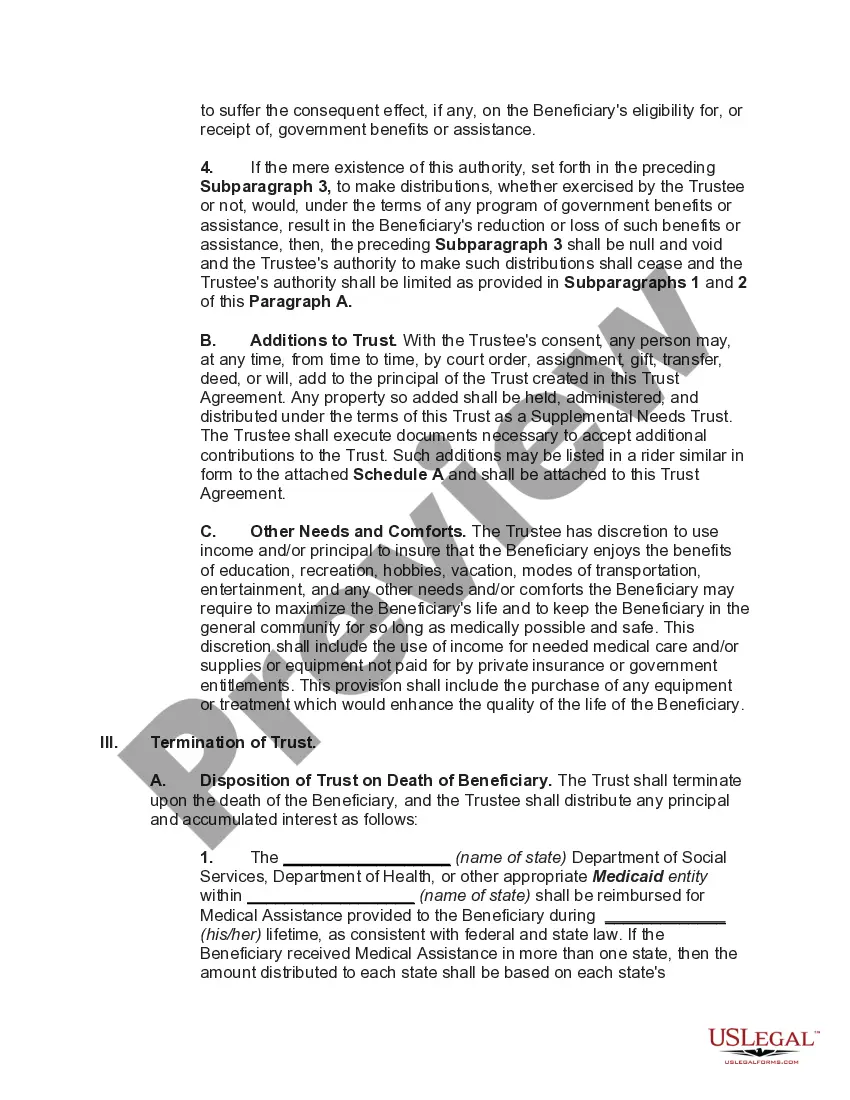
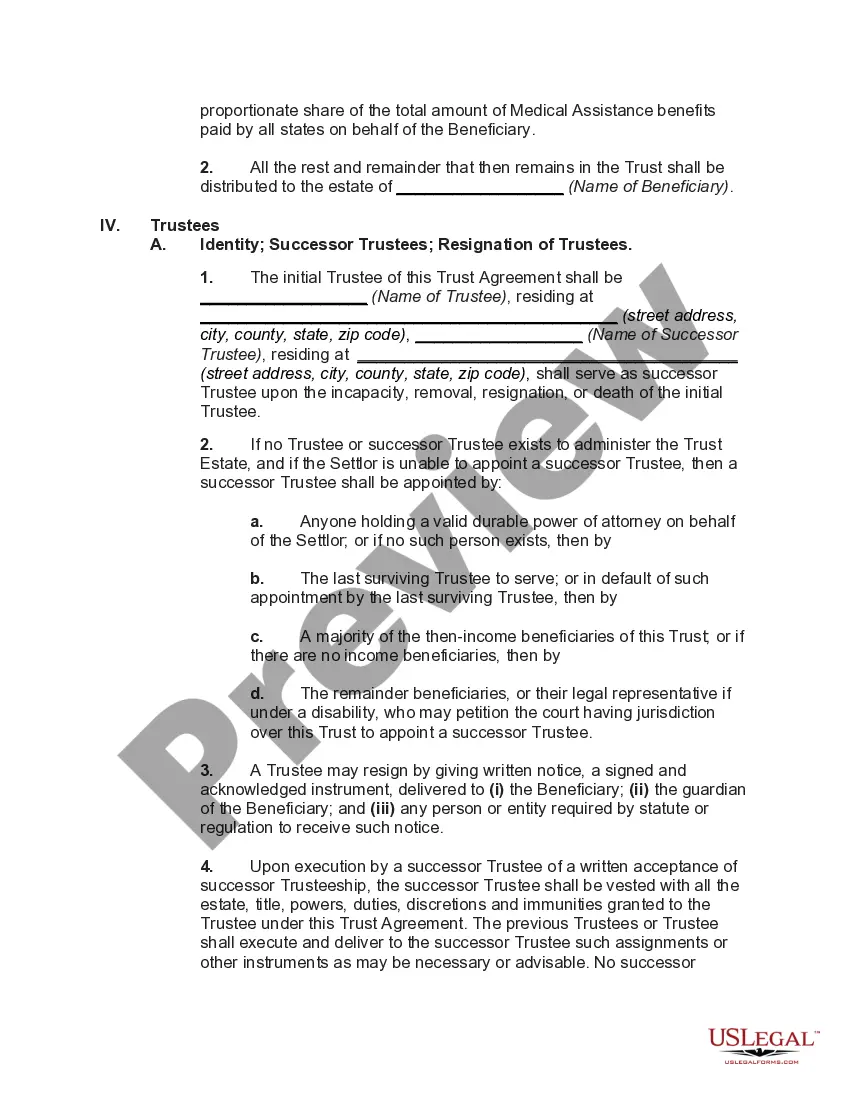
How to fill out Special Needs Irrevocable Trust Agreement For Benefit Of Disabled Child Of Trustor?
- Log in to your existing account on the US Legal Forms website if you have used their services before, ensuring your subscription is active.
- If you are new, start by checking the Preview mode and reviewing the form description carefully to confirm it meets your needs and complies with local laws.
- Utilize the Search tab to find additional templates if necessary, ensuring you select the correct one that fits your requirements.
- Click on the Buy Now button to purchase the document and choose the appropriate subscription plan. You will need to create an account to access the full library.
- Complete your purchase by providing your payment details via credit card or PayPal.
- Download your selected form and save it on your device, allowing you to access it anytime through the My Forms section of your profile.
Following these steps will ensure you can effortlessly create your irrevocable trust. Additionally, US Legal Forms provides access to over 85,000 easily editable legal documents, setting them apart from competitors.
Start simplifying your legal document process today. Visit US Legal Forms and take full advantage of their extensive resources and expert assistance!
Form popularity
FAQ
A trustee and trustor can indeed be the same person in an irrevocable trust, though this arrangement is often not recommended. Having the same individual in both roles may lead to potential conflicts and complicate asset management. To ensure clarity and proper oversight, you might consider designating someone else as the trustee while you maintain the role of trustor, thereby reinforcing the irrevocable trust trustor for trustee structure.
Selecting a trustee for your irrevocable trust is crucial, as they will administer the trust's assets on behalf of the beneficiaries. Ideally, you should choose someone trustworthy, organized, and knowledgeable in financial matters. Sometimes, individuals opt for a professional trustee or a legal service, like US Legal Forms, to ensure that their trust is managed efficiently and in accordance with legal requirements concerning the irrevocable trust trustor for trustee.
Yes, an irrevocable trust can have the same grantor and trustee, but it is essential to consider the implications. While the grantor can serve as the trustee, it may complicate the trust's terms and could affect its ability to achieve certain legal protections. Thus, consulting with a legal expert can help you navigate the dynamics of the irrevocable trust trustor for trustee role effectively.
The procedure for appointing trustees in an irrevocable trust involves selecting individuals who will manage the trust according to its terms. First, the trustor outlines the appointment in the trust document. Moreover, the chosen trustees must accept their role formally, typically by signing a certification of trust or similar paperwork. Ultimately, this process ensures that the irrevocable trust trustor for trustee relationship is clear and legally binding.
The trustee on an irrevocable trust is the individual or institution responsible for managing the trust's assets according to the trust agreement. This role requires a careful balance of legal knowledge and financial acumen. Typically, the trustee acts in the best interests of the beneficiaries while adhering to the trust's terms. For a seamless experience in setting up your irrevocable trust, consider using USLegalForms, which provides resources to help you navigate the roles of the irrevocable trust trustor for trustee effectively.
In an irrevocable trust, the trustor and trustee cannot be the same person due to legal standards. This separation helps maintain the integrity of the trust and ensures that the trustor cannot alter the trust's terms. By having different individuals serve in these roles, it protects assets and provides greater clarity in decision-making. Thus, when selecting an irrevocable trust trustor for trustee, understand the importance of this distinction.
Typically, an irrevocable trust has a trustee who is independent and can manage the trust's assets according to the trust terms. This person can be a family member, friend, or professional trustee such as a bank or law firm. An impartial trustee helps avoid conflicts of interest while ensuring proper asset management. The irrevocable trust trustor for trustee should focus on those who have experience with financial matters and can fulfill fiduciary duties responsibly.
Choosing a trustee for an irrevocable life insurance trust is crucial to ensuring proper management and compliance. The ideal trustee should be trustworthy, organized, and have experience in handling trust assets. Many choose a financial institution or a financial advisor, as they bring expertise and neutrality to the role. Remember, the irrevocable trust trustor for trustee should always prioritize the beneficiaries' best interests.
Changing the trustee of a trust depends on the type of trust established. For most trusts, including irrevocable trusts, a change can only occur if the trust document allows it or under specific legal circumstances. Engaging with the uSlegalforms platform can provide you with the necessary forms and guidance to navigate this change more effectively.
You can only change trustees on an irrevocable trust under certain conditions. The trust document usually contains specific instructions about trustee changes. If these conditions are met, the irrevocable trust trustor can initiate a trustee change. It's crucial to adhere to legal requirements to avoid complications.