Irrevocable Trust Forms For Dummies
Description




Get your form ready online
Our built-in tools help you complete, sign, share, and store your documents in one place.
Make edits, fill in missing information, and update formatting in US Legal Forms—just like you would in MS Word.
Download a copy, print it, send it by email, or mail it via USPS—whatever works best for your next step.
Sign and collect signatures with our SignNow integration. Send to multiple recipients, set reminders, and more. Go Premium to unlock E-Sign.
If this form requires notarization, complete it online through a secure video call—no need to meet a notary in person or wait for an appointment.
We protect your documents and personal data by following strict security and privacy standards.

Make edits, fill in missing information, and update formatting in US Legal Forms—just like you would in MS Word.

Download a copy, print it, send it by email, or mail it via USPS—whatever works best for your next step.

Sign and collect signatures with our SignNow integration. Send to multiple recipients, set reminders, and more. Go Premium to unlock E-Sign.

If this form requires notarization, complete it online through a secure video call—no need to meet a notary in person or wait for an appointment.

We protect your documents and personal data by following strict security and privacy standards.
Looking for another form?


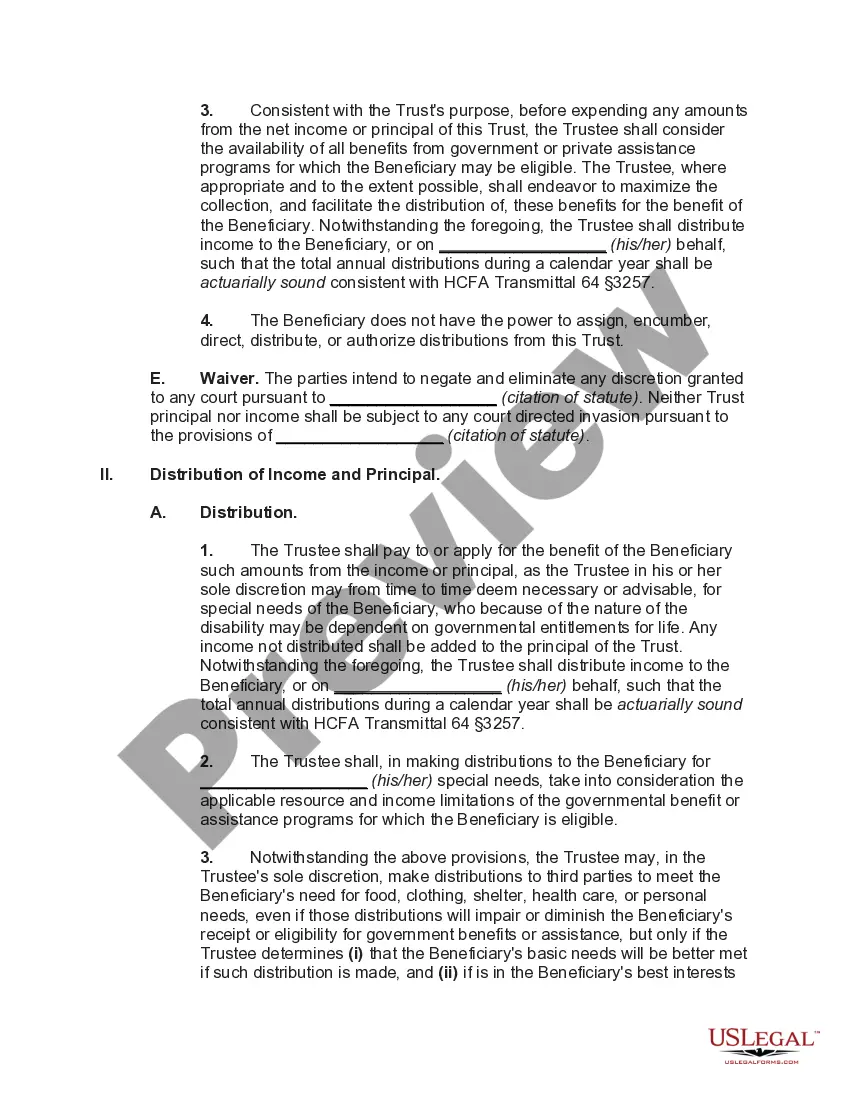
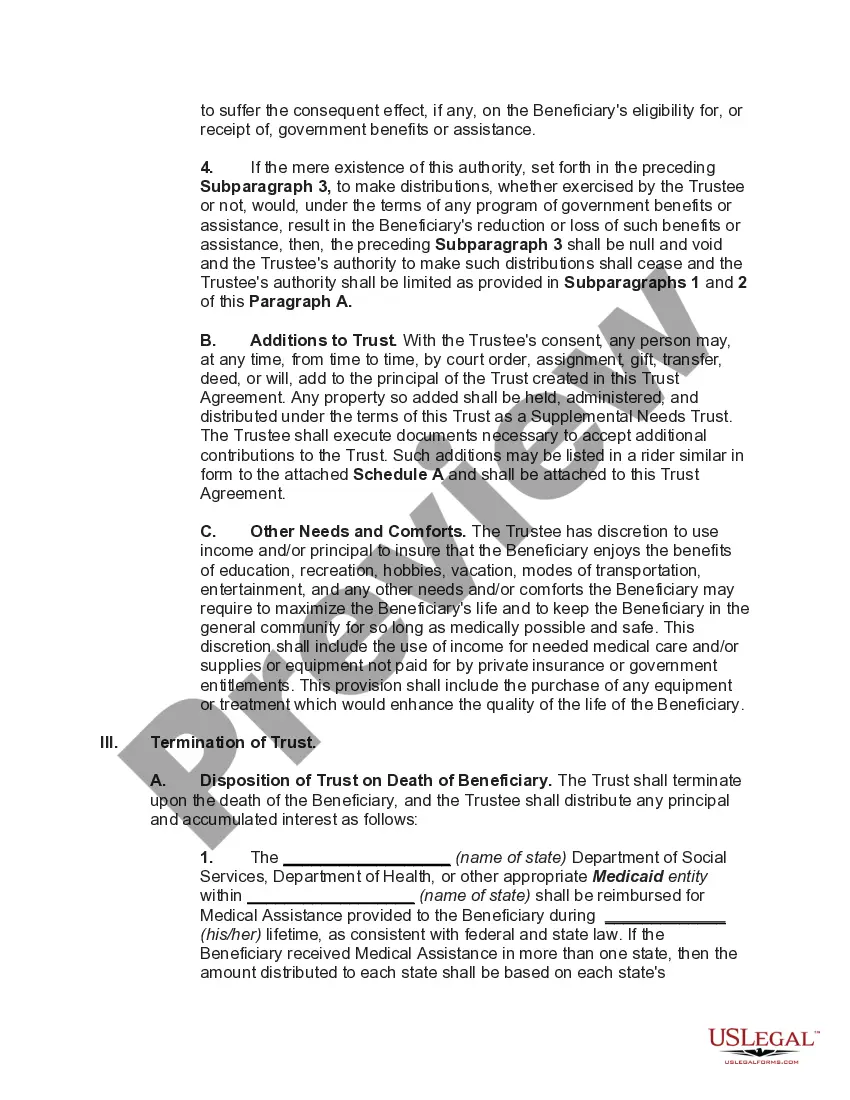
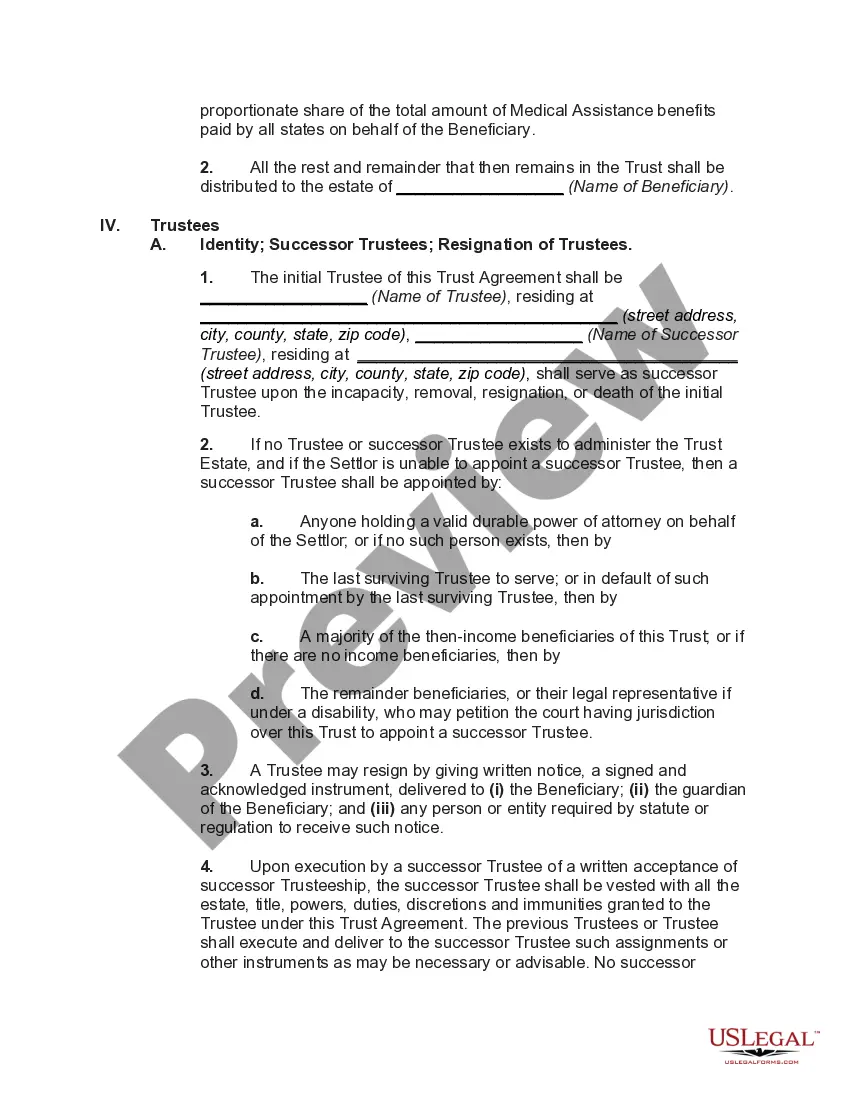
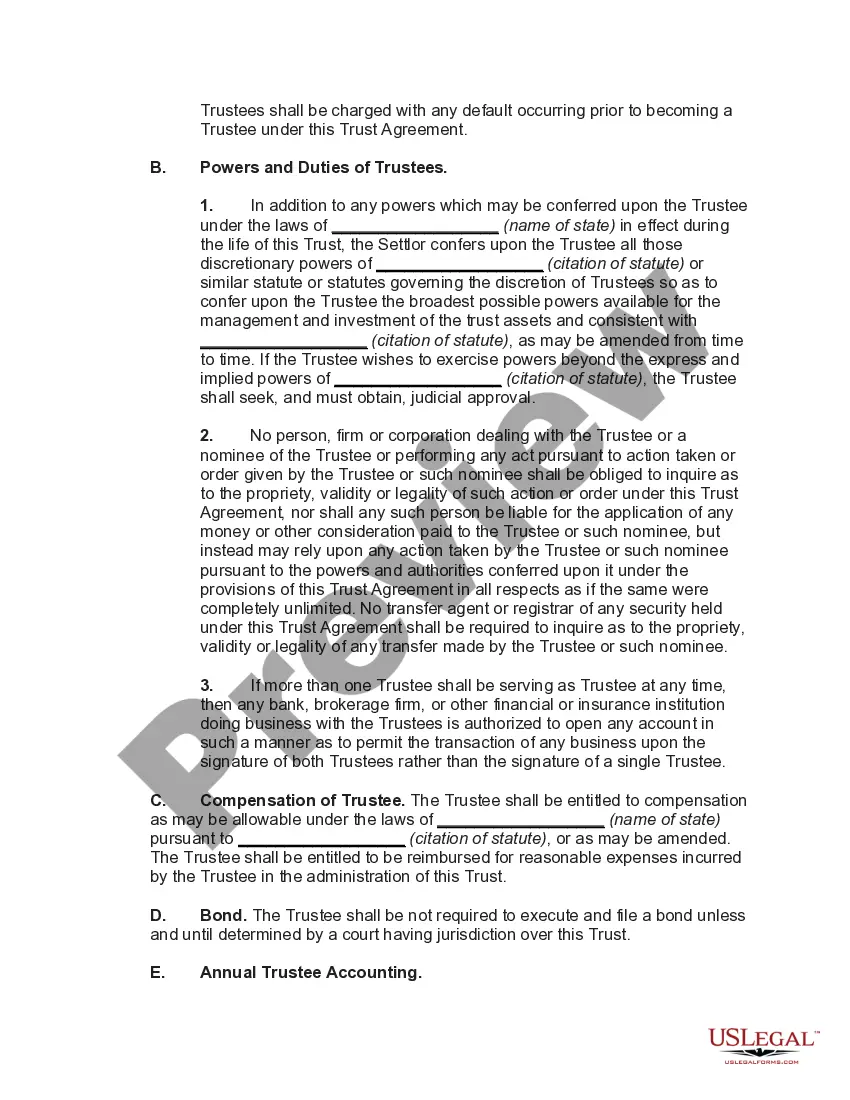
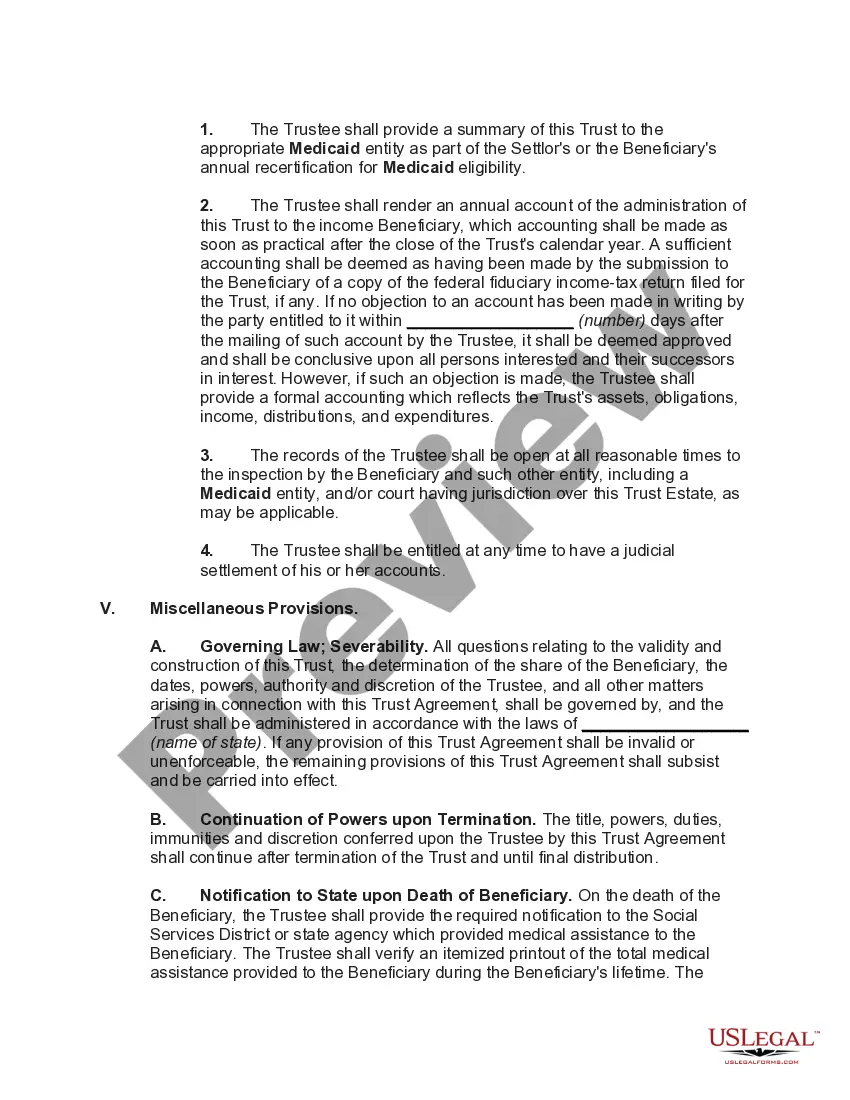
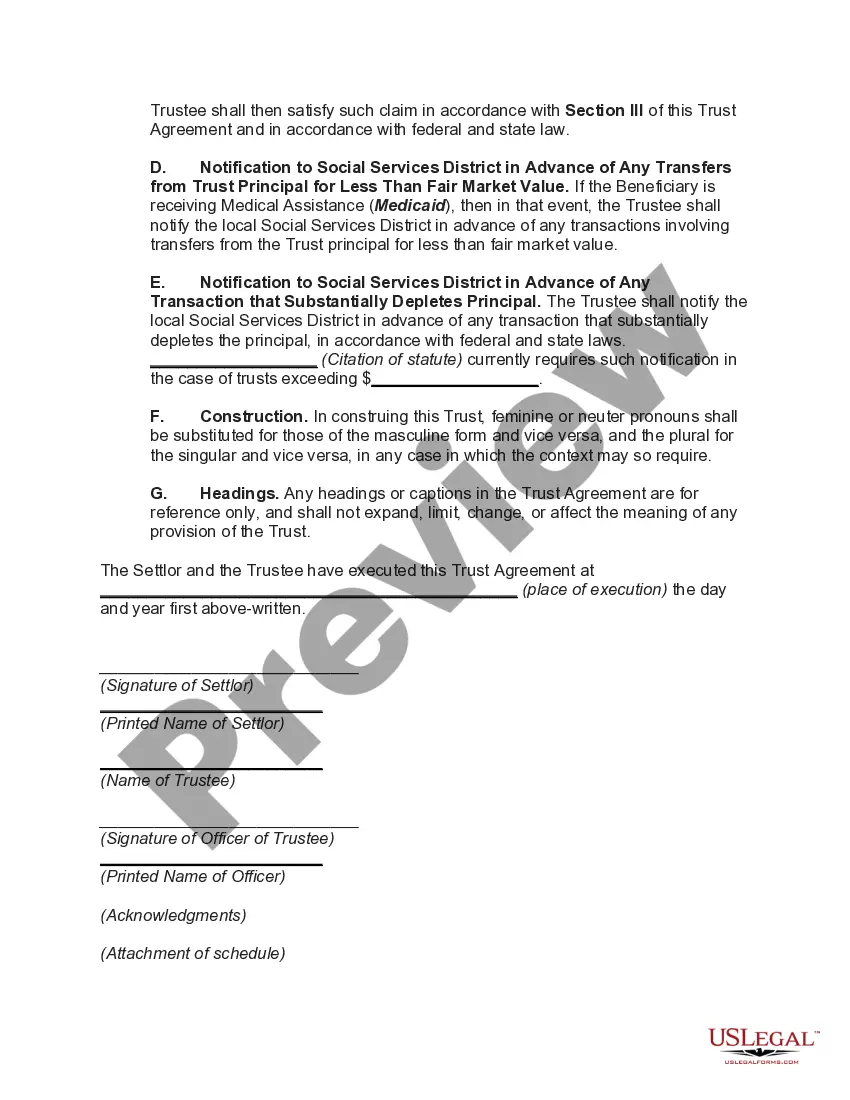
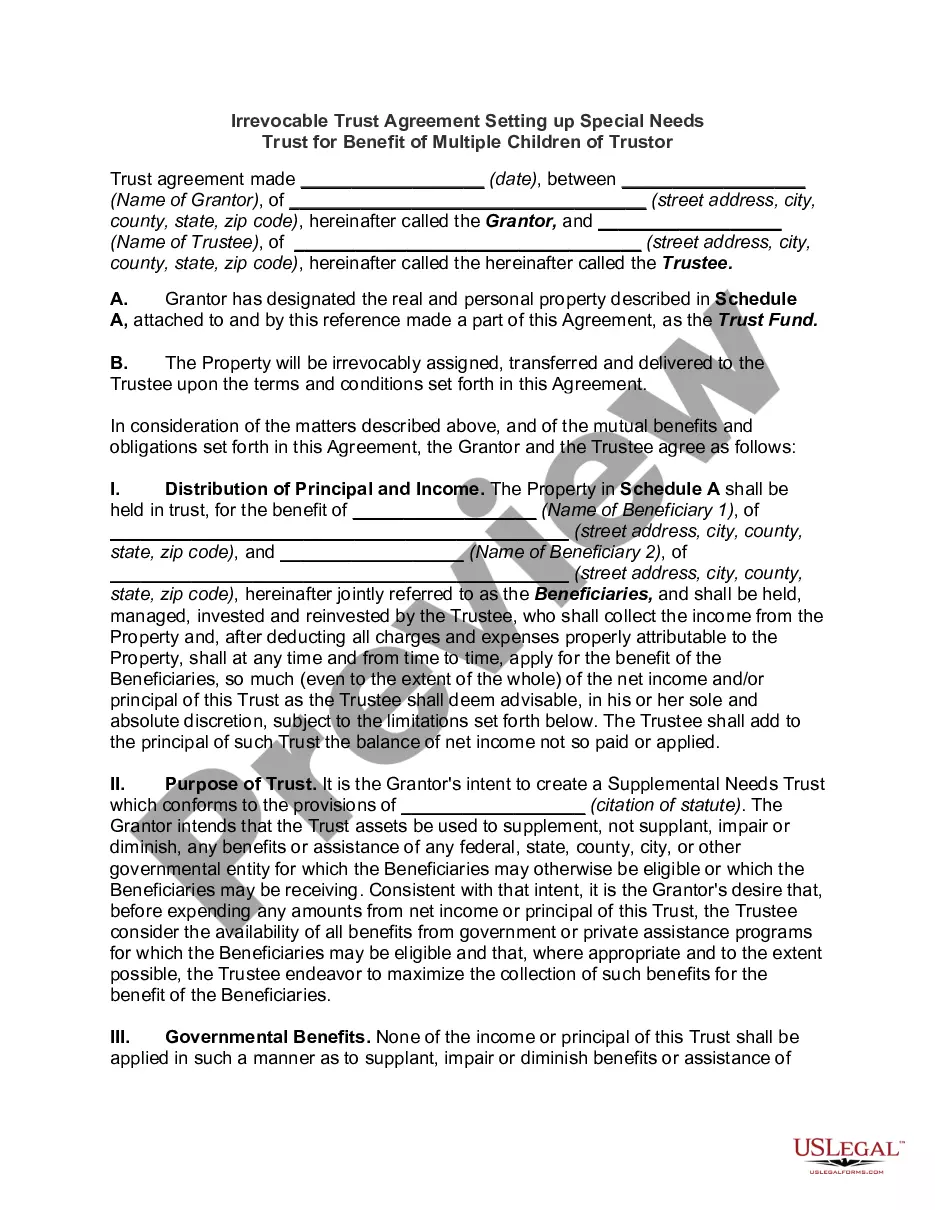
How to fill out Special Needs Irrevocable Trust Agreement For Benefit Of Disabled Child Of Trustor?
- If you're an existing user, simply log in to your account and click the Download button to retrieve your required form. Ensure your subscription is active; if it's expired, renew it based on your chosen payment plan.
- For new users, start by exploring the Preview mode and form description. This ensures you've selected a form that fits your specific requirements and complies with local laws.
- If you can't find the right form, utilize the Search tab to locate alternative templates that suit your needs. Once you find the correct one, you can proceed.
- Purchase your selected document by clicking on the Buy Now button and selecting your desired subscription plan. Registration is necessary to gain full access to the resources available.
- Complete your transaction by entering your payment details via credit card or PayPal, ensuring a smooth purchase.
- Finally, download your form to your device. You’ll also find it later in the My Forms section of your account.
US Legal Forms stands out by offering a robust collection of more forms at a similar cost compared to competitors. The platform also grants access to premium experts who assist with form completion for legally sound results.
In summary, using US Legal Forms for obtaining irrevocable trust forms is efficient and user-friendly. Experience the ease of access today and create your legal documents with confidence!
Form popularity
FAQ
The benefits of an irrevocable trust include asset protection, tax advantages, and the ability to control how and when your assets are distributed. Since you cannot easily modify or dissolve the trust, it provides a level of certainty for your beneficiaries. This can help you achieve long-term financial planning goals. Exploring irrevocable trust forms for dummies can help you better understand how to maximize these benefits.
To properly fill out an irrevocable trust, start by gathering necessary information such as your assets, beneficiaries, and trustee details. Then, follow the structured outline provided within reliable resources or forms designed for this purpose. Ensure that each section is completed accurately to minimize future complications. Irrevocable trust forms for dummies can make this process more straightforward and manageable for you.
A valid irrevocable trust requires a clear intent to create the trust, a specified beneficiary, and identifiable trust assets. Additionally, you must ensure that proper legal language is used in the trust document. Having all sections correctly filled out is crucial for its enforcement. You might find it beneficial to refer to irrevocable trust forms for dummies to ensure completeness and legality.
Recently, changes in tax laws have impacted how irrevocable trusts are treated for estate planning and tax purposes. These updates may alter the taxation of income generated within the trust, potentially affecting your beneficiaries. Staying informed about these rules is vital for effective management of your trust. Utilizing resources like irrevocable trust forms for dummies can help simplify this complex landscape.
Generally, an irrevocable trust does not need to be filed with the court, but it is advisable to create a formal trust document. This document outlines the terms and conditions set by the grantor. By conducting proper documentation, you can avoid future disputes and ensure that your intentions are honored. For easily navigating this process, consider using irrevocable trust forms for dummies to guide you.
Irrevocable trust forms for dummies are best utilized by incorporating specific types of assets, such as life insurance policies and certain types of investment accounts. By placing these assets in the trust, you can protect them from creditors and potentially reduce estate taxes. Real estate can also be a strong candidate if it aligns with your estate planning goals. Using trust forms from reliable sources like US Legal Forms simplifies the process and ensures you're on the right track.
There are specific items you should avoid including in irrevocable trust forms for dummies. High-risk investments or business interests are usually not advisable since they may complicate management and tax responsibilities. Additionally, assets that require active management are better left out to ensure the trust serves its intended purpose. Consulting with a legal professional can help clarify the best approach for your situation.
Yes, you can write your own irrevocable trust using available resources, including irrevocable trust forms for dummies. However, you should exercise caution and ensure that you meet all legal requirements. The trust document should clearly specify terms and conditions to avoid future confusion or disputes. For a more secure setup, consider using platforms like US Legal Forms to access templates and guidance tailored to your needs.
When considering irrevocable trust forms for dummies, it's important to note that certain assets typically cannot be placed in an irrevocable trust. For example, personal assets like your primary residence or cars often require special handling. Additionally, assets that have not been transferred to the trust before it becomes irrevocable cannot be included. Therefore, be sure to consult a professional when determining what assets are suitable.
A common mistake parents make when setting up a trust fund is not clearly defining the terms of the trust. Vague instructions can lead to confusion and disputes among beneficiaries. Furthermore, failing to fund the trust properly can render it ineffective. Using resources like 'Irrevocable trust forms for dummies' from USLegalForms can provide clarity and ensure that parents establish a well-defined trust.