Successor Trustee Vs Trustee Foreclosure
Description

Get your form ready online
Our built-in tools help you complete, sign, share, and store your documents in one place.
Make edits, fill in missing information, and update formatting in US Legal Forms—just like you would in MS Word.
Download a copy, print it, send it by email, or mail it via USPS—whatever works best for your next step.
Sign and collect signatures with our SignNow integration. Send to multiple recipients, set reminders, and more. Go Premium to unlock E-Sign.
If this form requires notarization, complete it online through a secure video call—no need to meet a notary in person or wait for an appointment.
We protect your documents and personal data by following strict security and privacy standards.

Make edits, fill in missing information, and update formatting in US Legal Forms—just like you would in MS Word.

Download a copy, print it, send it by email, or mail it via USPS—whatever works best for your next step.

Sign and collect signatures with our SignNow integration. Send to multiple recipients, set reminders, and more. Go Premium to unlock E-Sign.

If this form requires notarization, complete it online through a secure video call—no need to meet a notary in person or wait for an appointment.

We protect your documents and personal data by following strict security and privacy standards.
Looking for another form?


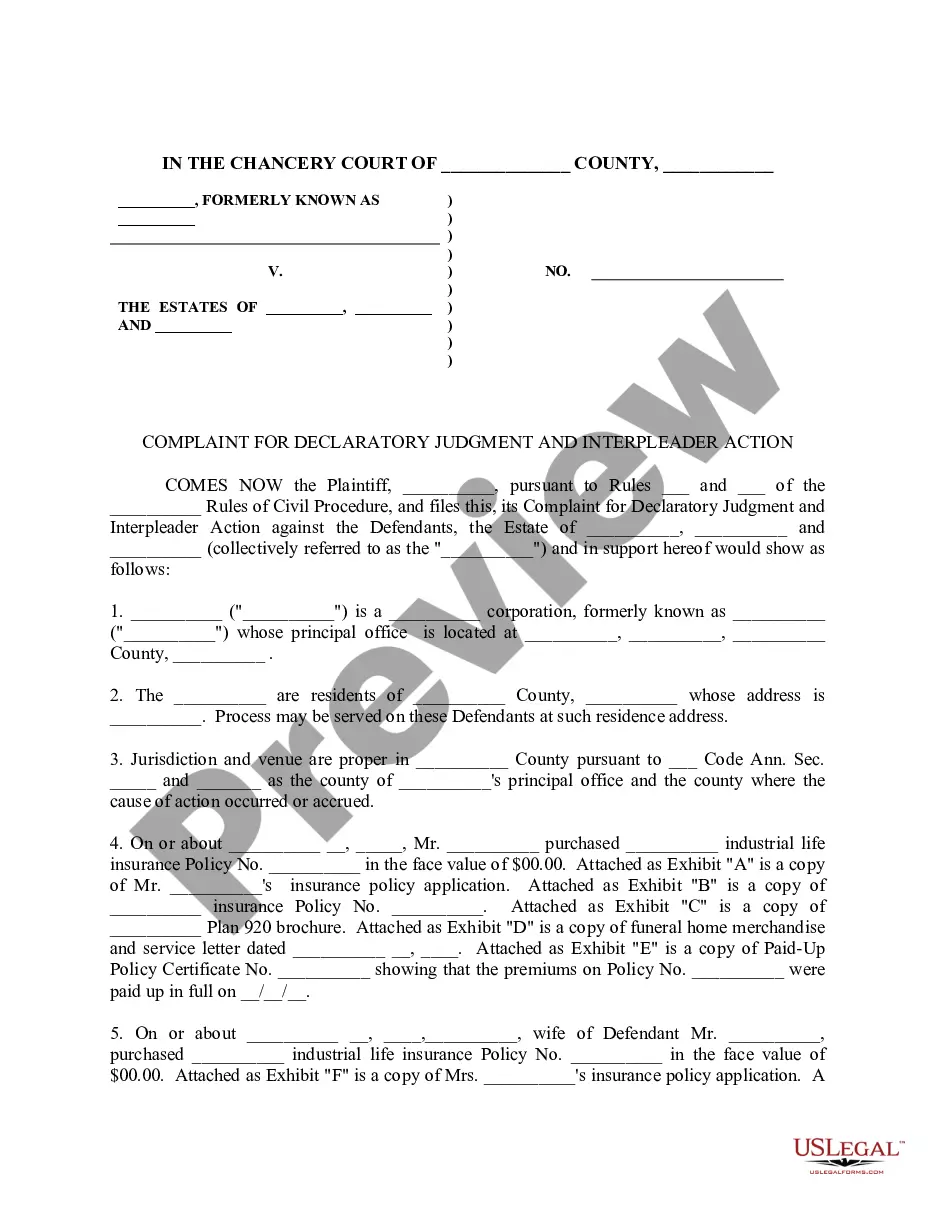





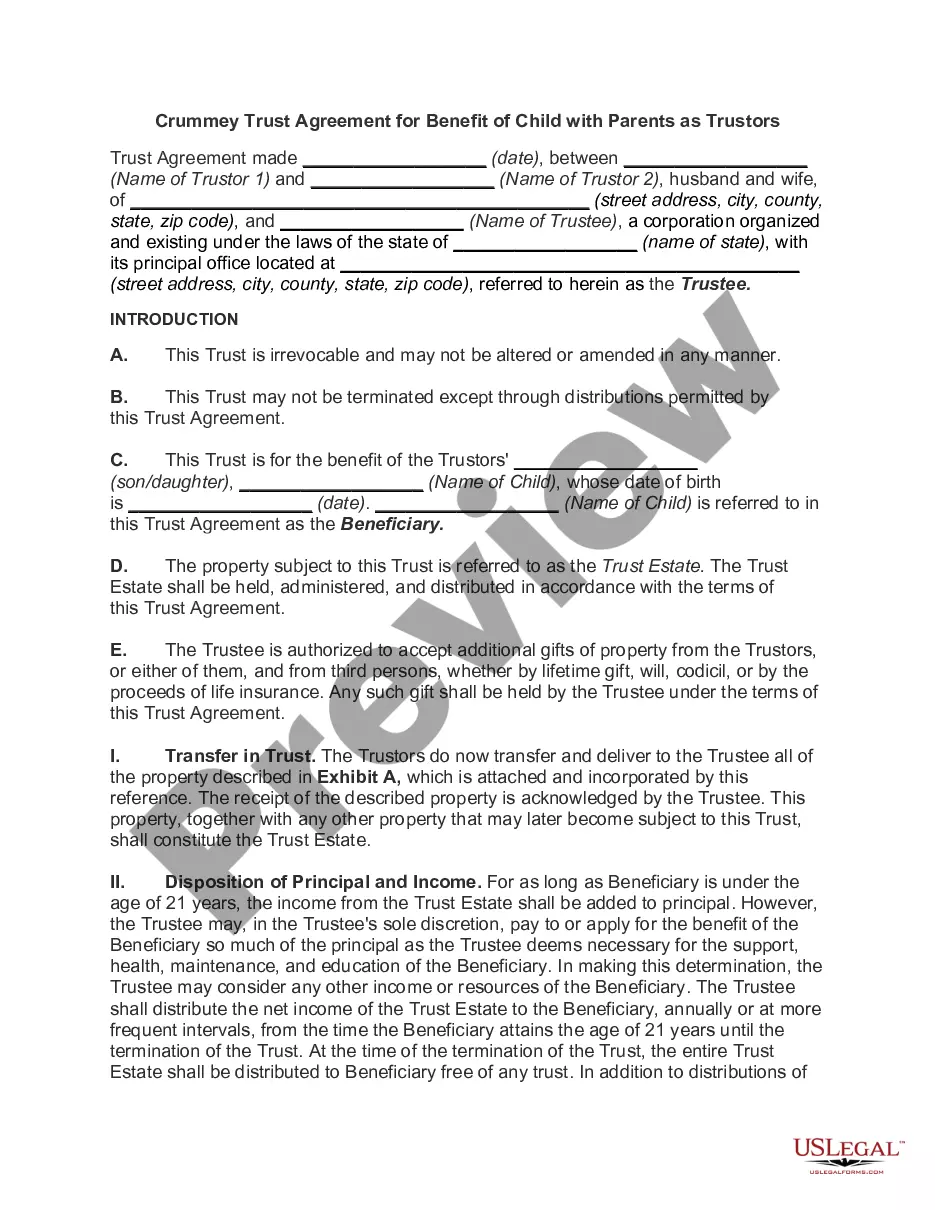
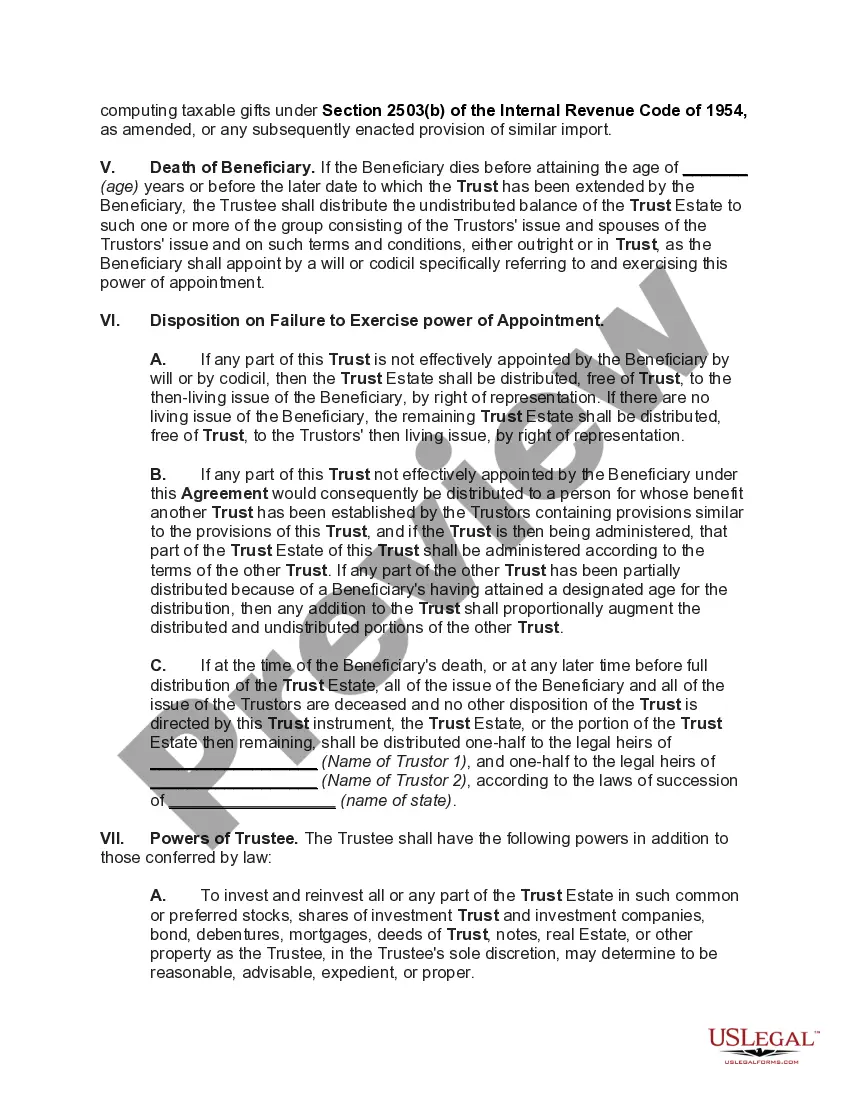
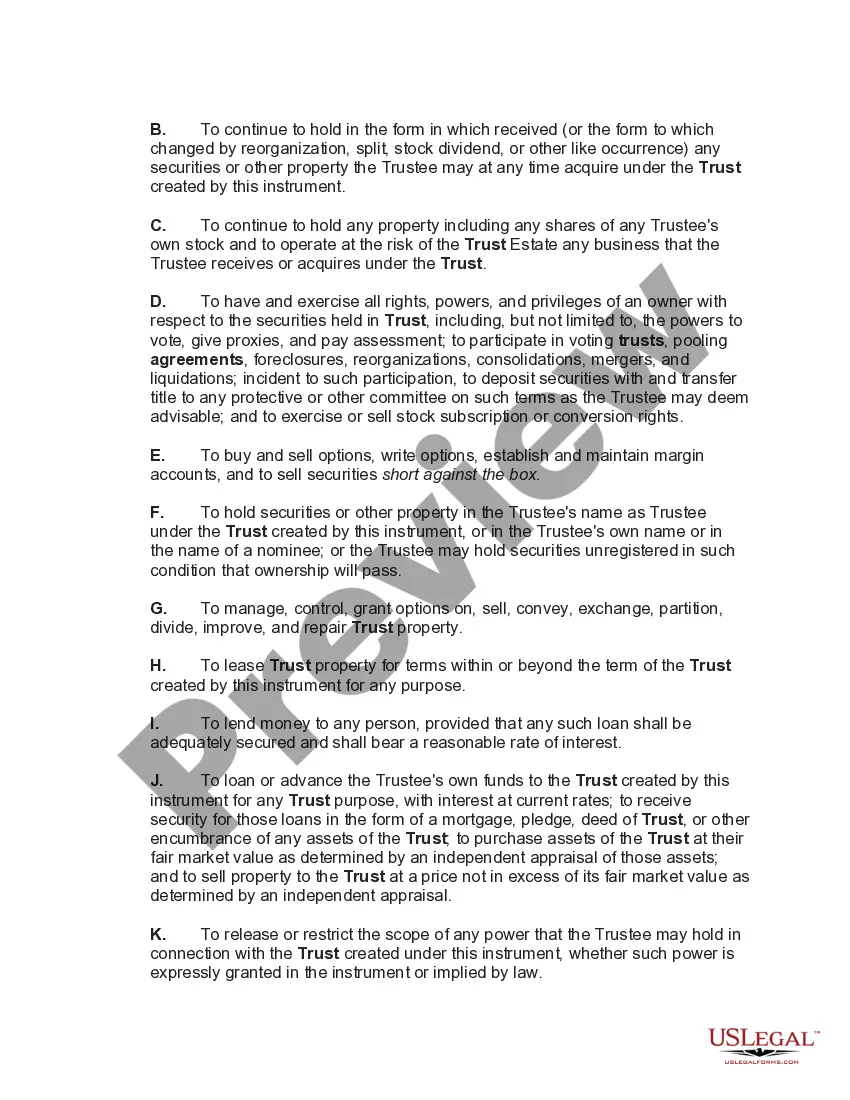
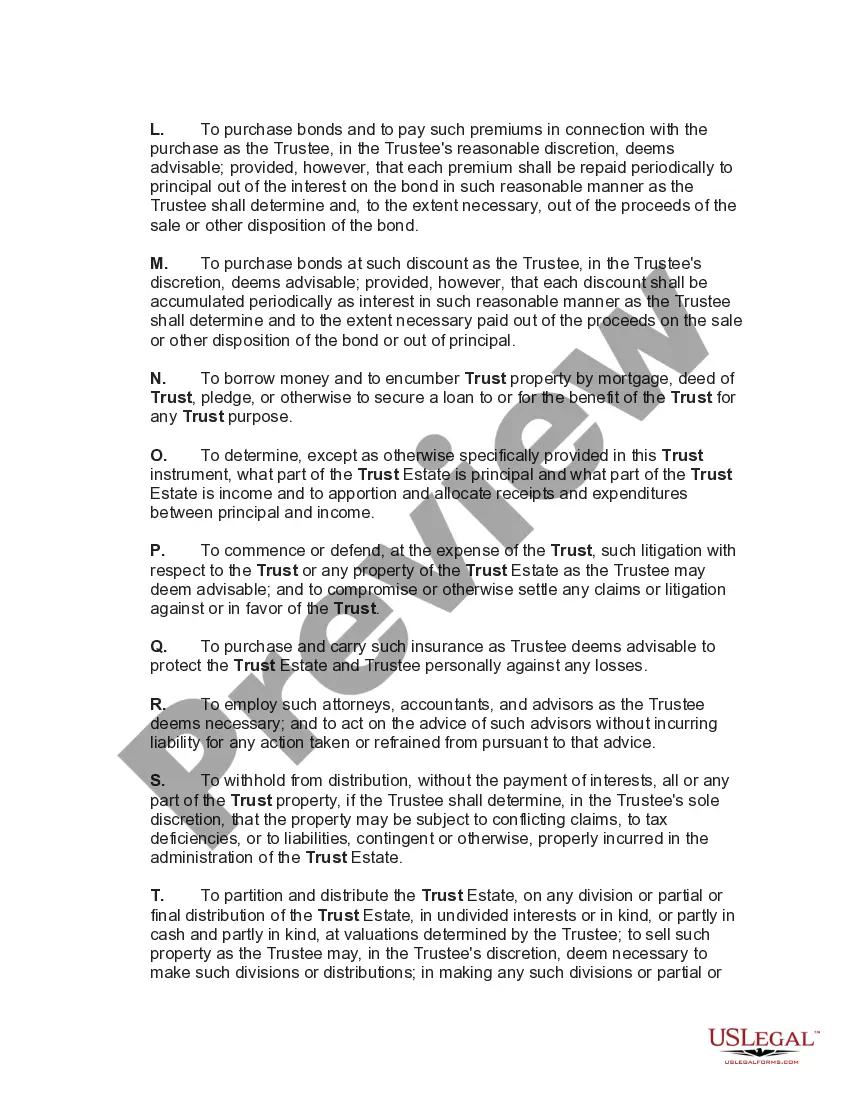
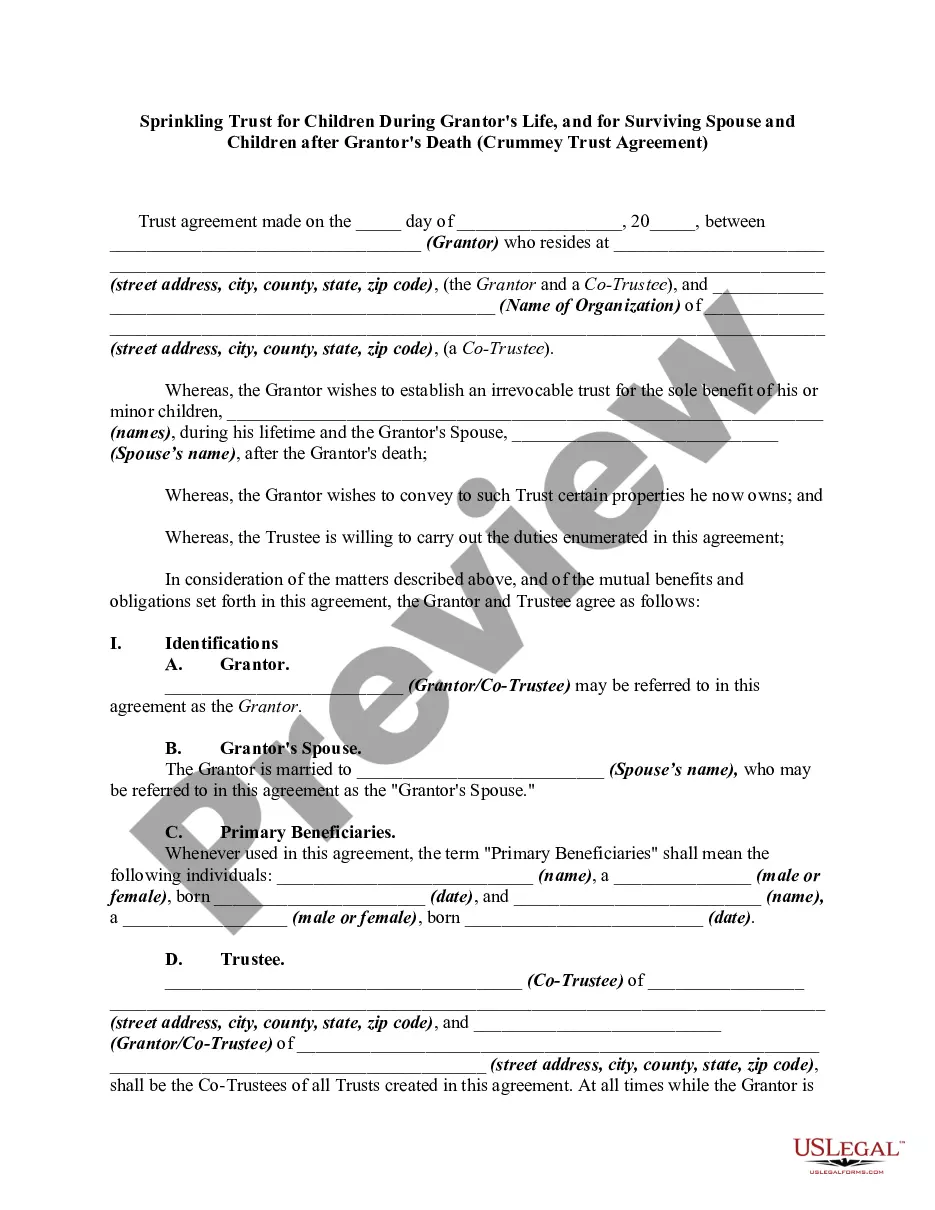
How to fill out Crummey Trust Agreement For Benefit Of Child With Parents As Trustors?
Creating legal documents from the ground up can frequently be overwhelming.
Specific situations may necessitate extensive research and significant financial resources.
If you’re looking for a simpler and more economical method of generating Successor Trustee vs. Trustee Foreclosure or various other forms without the hassle, US Legal Forms is always available to assist you.
Our online repository of over 85,000 current legal documents encompasses nearly every aspect of your financial, legal, and personal matters.
US Legal Forms has a flawless reputation and over 25 years of experience. Join us now and make the process of completing forms something simple and efficient!
- With just a few clicks, you can swiftly acquire state- and county-compliant templates meticulously crafted by our legal experts.
- Utilize our website whenever you need a dependable and trustworthy service through which you can promptly locate and download the Successor Trustee vs. Trustee Foreclosure.
- If you are already familiar with our services and have set up an account with us, simply Log In to your account, choose the form, and download it or re-download it at any time in the My documents section.
- Not registered yet? No problem. Registering takes just a few moments and lets you explore the library.
- But before diving into downloading Successor Trustee vs. Trustee Foreclosure, please consider these suggestions.
Form popularity
FAQ
Summary. A mortgage in trust may be something that you have never previously considered, but it may be appropriate. Anyone who owns property can put their mortgage in a revocable living trust so as to not deal with the probate process after death and utilize other estate planning benefits.
In non-judicial foreclosures, the trustee or a substitute trustee will be the one to conduct the sale. These auctions can sometimes be referred to as a "trustee sale" or "substitute trustee" sale.
Some companies that act as foreclosure trustees have the word "service" or "services" in their company name. But even if a foreclosure trustee company uses the word "services" in its name, trustees are not loan servicers.
In a nutshell, the Substitution of Trustee and Deed of Reconveyance is a legal document that evidences security interest is being release by a lender. In most cases, the document shows that a loan has been paid off. Property owners may even receive this document if they have refinanced a loan.
A document known as a substitution of trustee and full reconveyance identifies the person who has the authority to reconvey the property and remove the lien. Most importantly, a deed of full reconveyance, known as a satisfaction of mortgage in some states, transfers title back to the borrower.