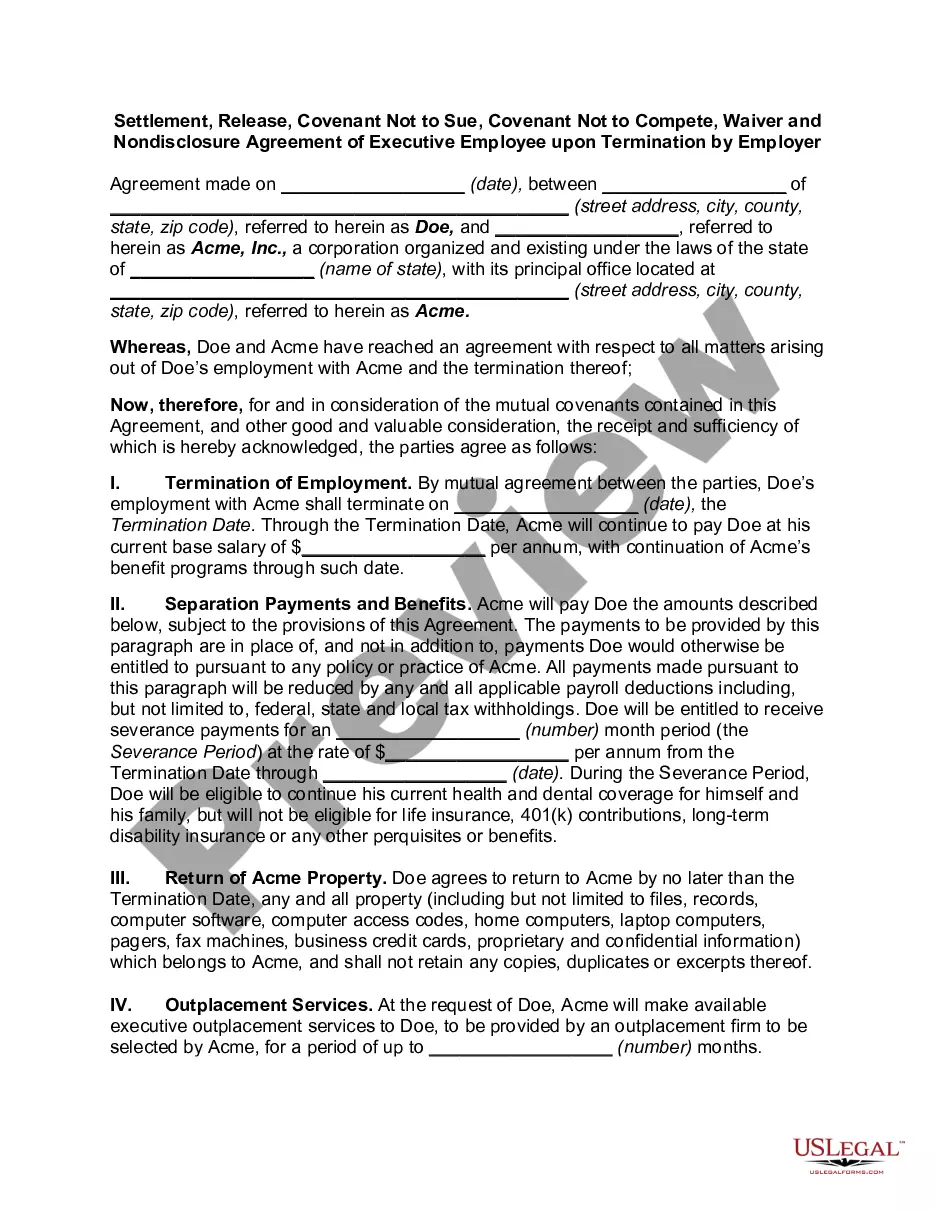
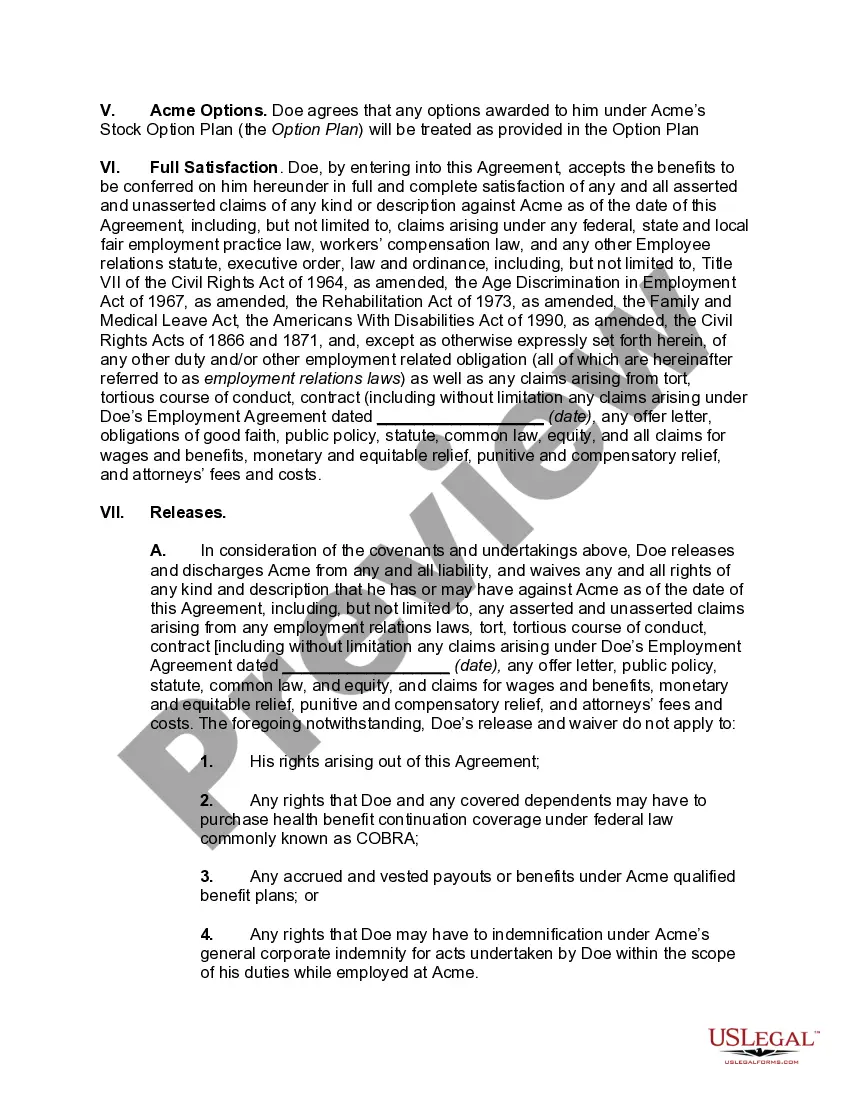
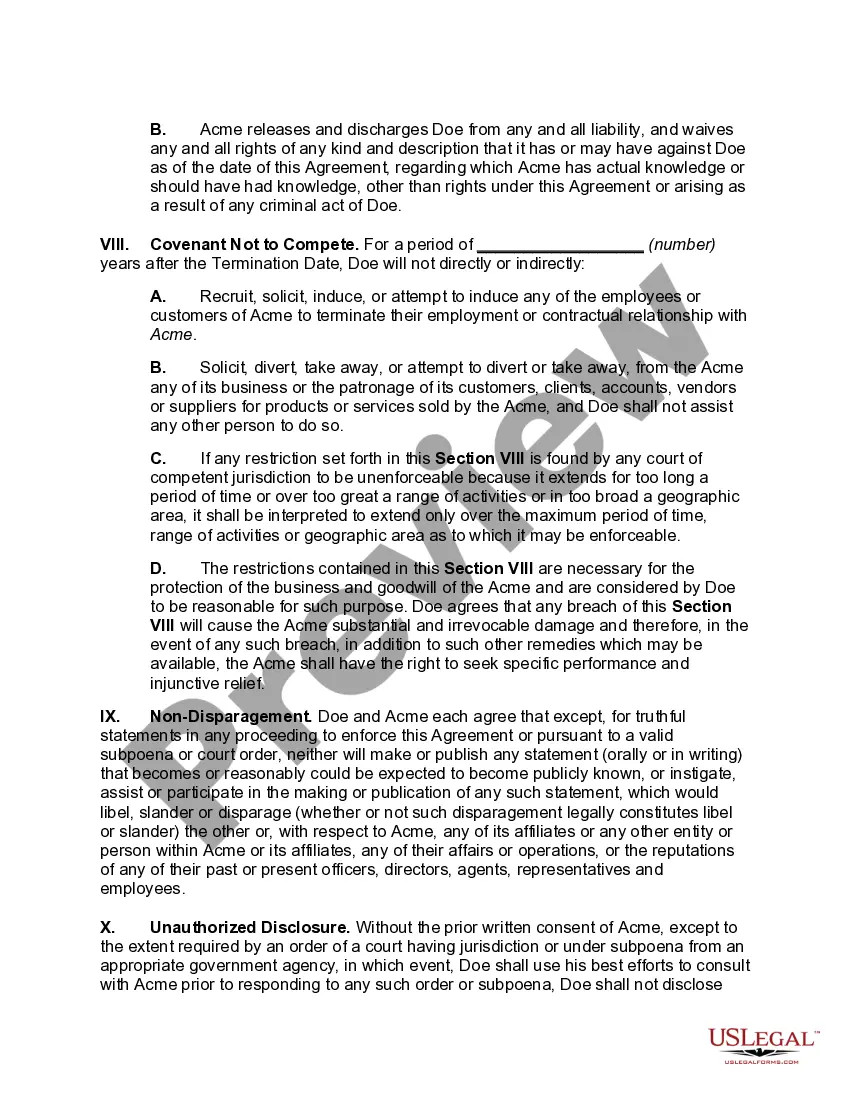
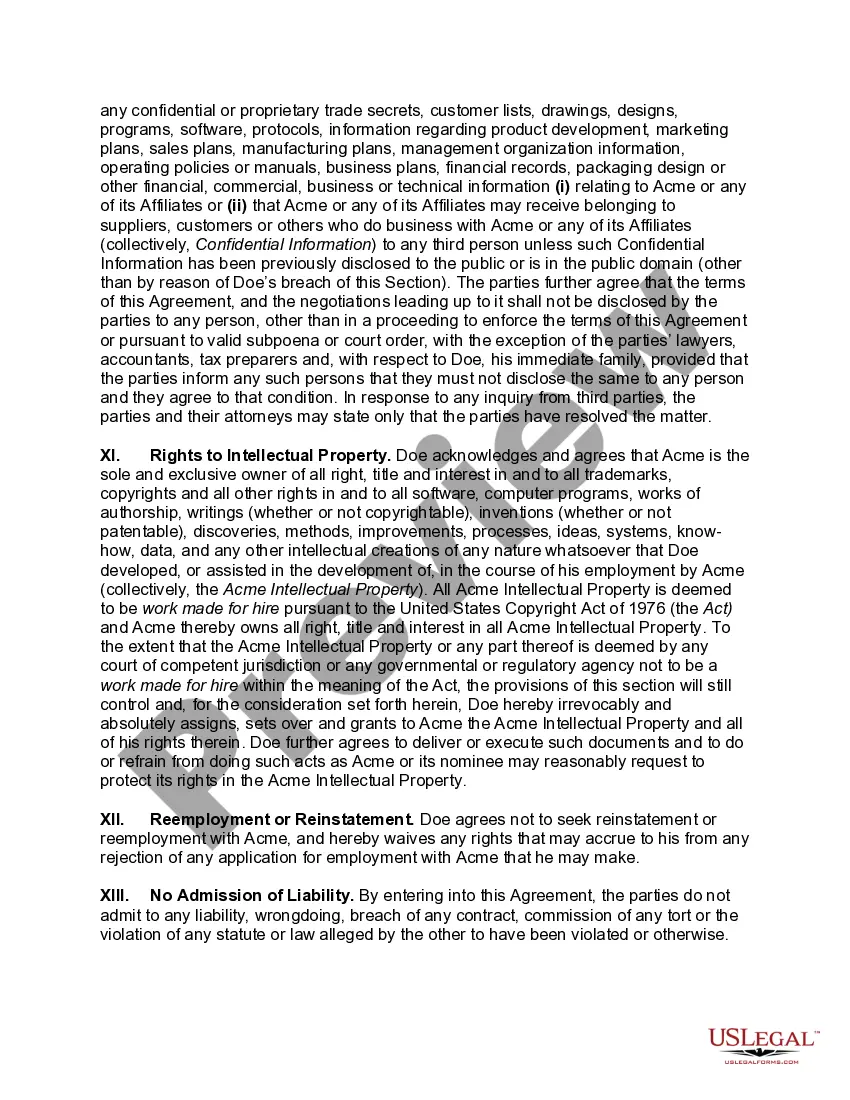
Employee Termination Letter Without Cause
Description
Get your form ready online
Our built-in tools help you complete, sign, share, and store your documents in one place.
Make edits, fill in missing information, and update formatting in US Legal Forms—just like you would in MS Word.
Download a copy, print it, send it by email, or mail it via USPS—whatever works best for your next step.
Sign and collect signatures with our SignNow integration. Send to multiple recipients, set reminders, and more. Go Premium to unlock E-Sign.
If this form requires notarization, complete it online through a secure video call—no need to meet a notary in person or wait for an appointment.
We protect your documents and personal data by following strict security and privacy standards.

Make edits, fill in missing information, and update formatting in US Legal Forms—just like you would in MS Word.

Download a copy, print it, send it by email, or mail it via USPS—whatever works best for your next step.

Sign and collect signatures with our SignNow integration. Send to multiple recipients, set reminders, and more. Go Premium to unlock E-Sign.

If this form requires notarization, complete it online through a secure video call—no need to meet a notary in person or wait for an appointment.

We protect your documents and personal data by following strict security and privacy standards.
Looking for another form?



Form popularity
FAQ
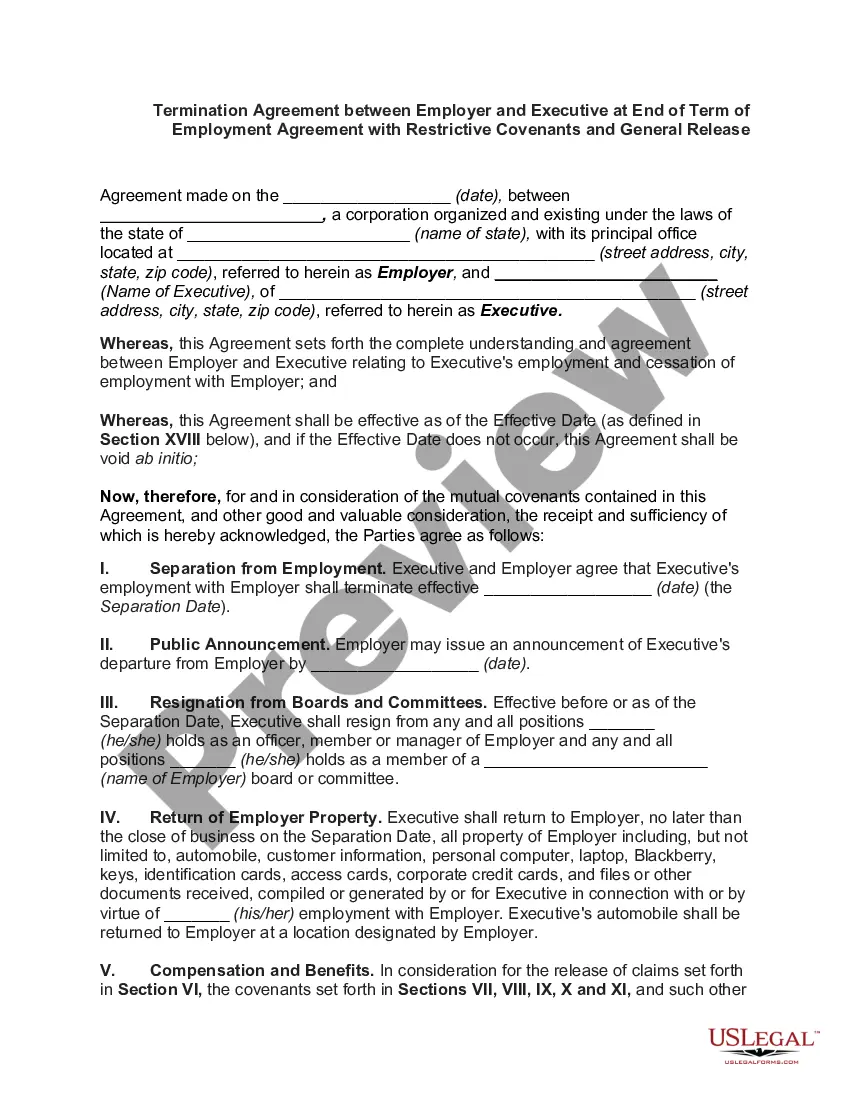
In many cases, you do not need a specific reason to terminate an employee, especially when you opt for an employee termination letter without cause. This allows employers flexibility while avoiding legal complications associated with firing employees for performance issues. It's vital, however, to ensure that such decisions comply with local labor laws and company policies. Clear guidelines can be found through resources like US Legal Forms to help you navigate these decisions with confidence.
To process a termination effectively, employers should gather essential documentation like the employee’s file, performance reviews, and any disciplinary records. It is also important to have a compliant employee termination letter without cause to formalize the decision. This letter serves as a formal record of the termination and helps outline any next steps for the employee. Using a reliable platform like US Legal Forms can simplify this documentation process.
An employee termination letter without cause typically does not require a specific reason. This approach protects both the employer and employee by maintaining clarity in communication. However, it is often beneficial to state that the termination is without cause, as this can help prevent any potential confusion regarding job performance. Clear communication through a well-crafted termination letter can ensure a smoother transition.
Yes, employees have the right to inquire about the reasons for their termination. Open communication can lead to better understanding and resolution, particularly in cases of an employee termination letter without cause. While employers are not obligated to disclose reasons in every situation, sharing information can reflect professionalism and transparency. When in doubt, consider reviewing relevant HR policies or seek guidance from legal resources.
Termination without cause means an employer ends an employee's contract without any specific misconduct or performance issue. Conversely, termination for good reason involves a valid cause, such as breaking company policies. Understanding these terms is crucial in an employment context, especially when preparing an employee termination letter without cause. If you face questions about these terms, platforms like uslegalforms can provide helpful resources.
While not legally required, providing a reason in a termination letter can clarify the context for the employee. A termination letter without cause can be a straightforward document, but including a brief explanation can improve communication. This transparency can help the employee understand the decision and maintain a respectful relationship. Using a professional service like uslegalforms can ensure you create effective termination letters that comply with legal standards.
For an employment termination, several requirements should be met to ensure fairness and compliance with laws. Employers typically need to document the performance issues or other reasons supporting the termination decision. An employee termination letter without cause can serve to formalize this process, providing a clear statement to the employee regarding their termination. Always consult company policy and legal guidelines when making such decisions.
A resignation letter does not legally need to provide a reason. However, including a reason can foster goodwill and maintain a professional relationship. When writing a resignation letter, understand that clarity can help avoid confusion, especially in case of an employee termination letter without cause. Ultimately, the decision is personal and situational.
Unauthorized leave is when an employee is absent from work without prior approval or a valid reason. An example includes an employee not showing up for scheduled shifts without informing the employer. Understanding how to document these instances is important, as it may lead to an employee termination letter without cause if absences are frequent and uncommunicated.
When writing a termination letter for misconduct, it’s essential to be direct and concise. Begin with a clear statement of termination and cite specific incidents of misconduct that warranted the decision. It’s crucial to reference any previous warnings or discussions about the behavior, ensuring that the letter remains factual and professional.