Surety Bond With Bad Credit
Description
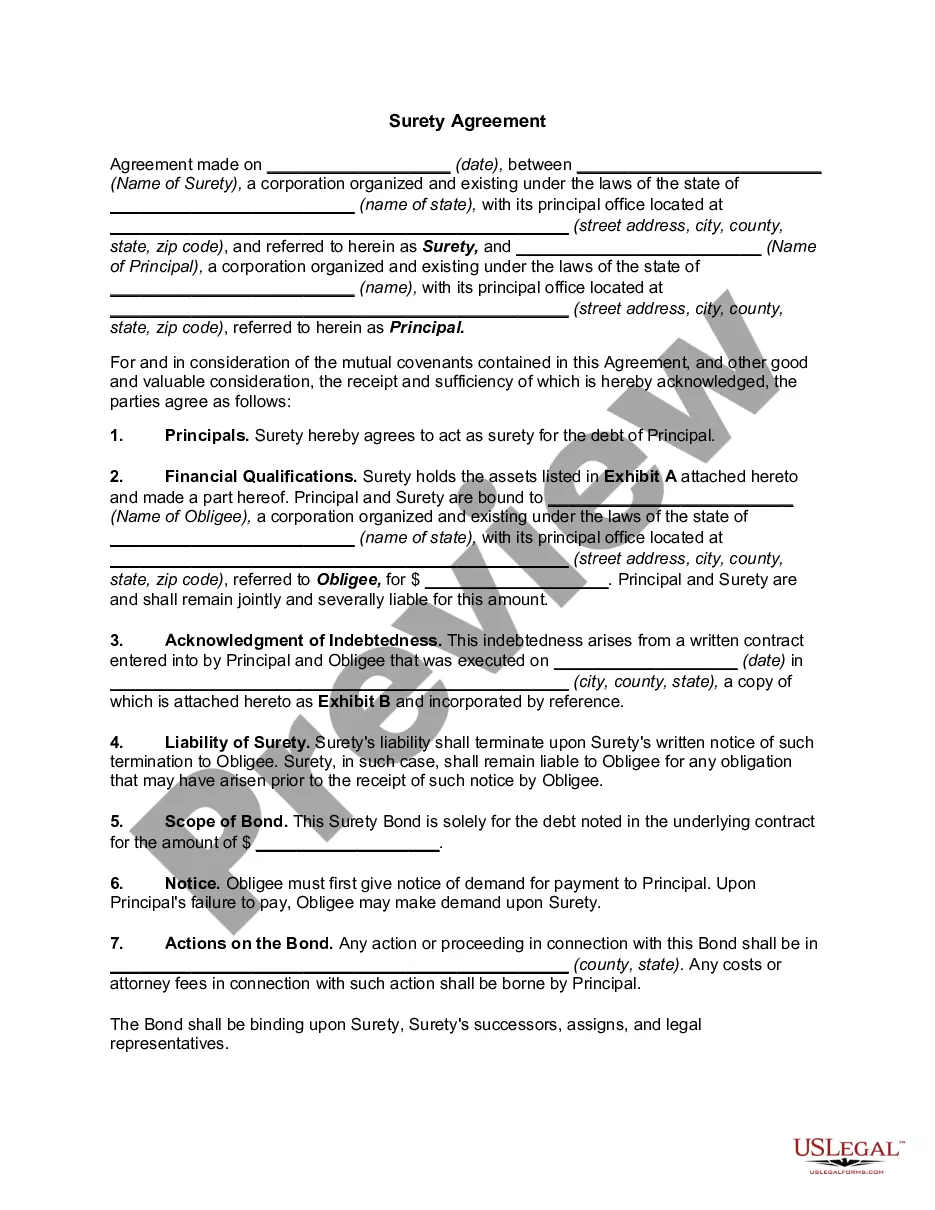
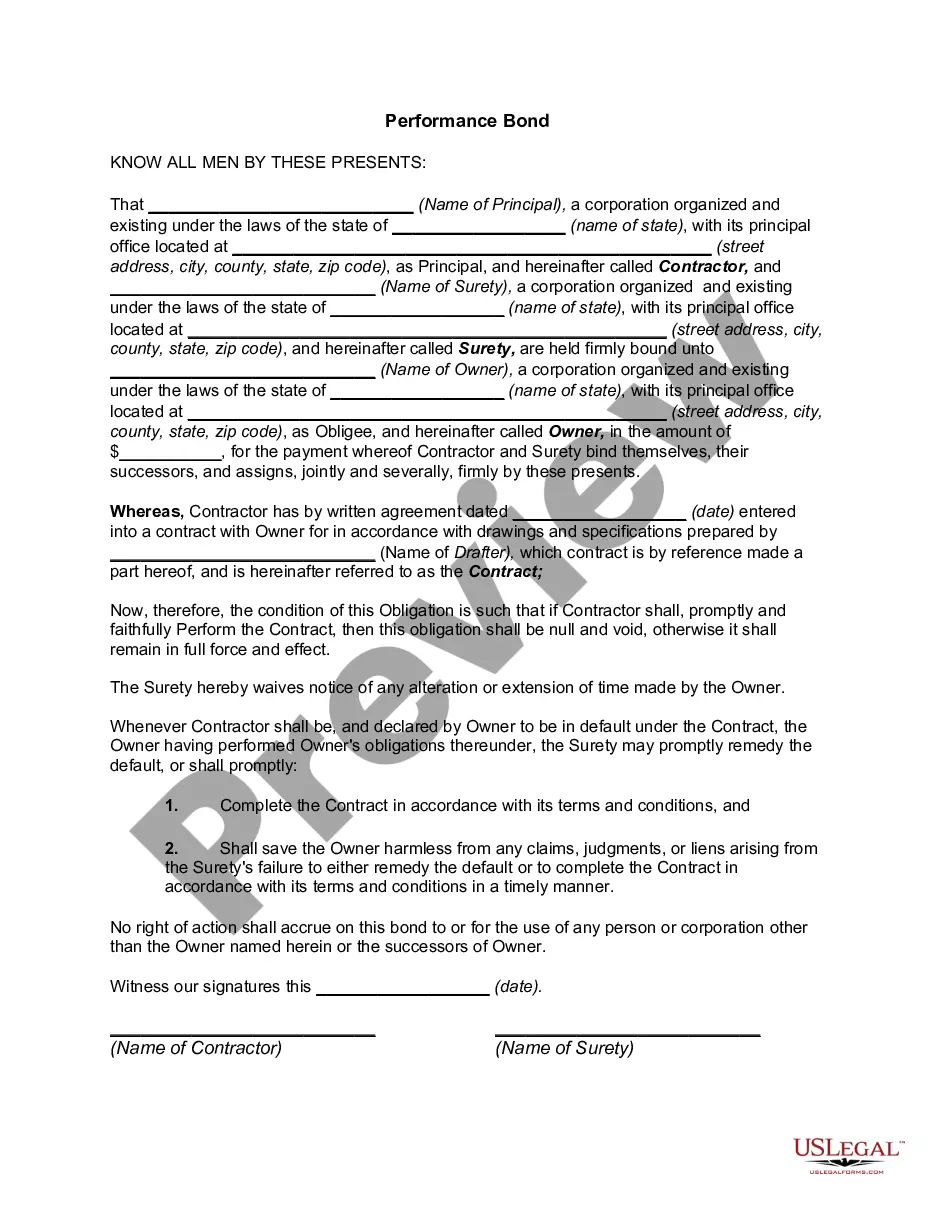



How to fill out Surety Agreement?
Whether for commercial reasons or for personal matters, everyone must confront legal circumstances at some point in their lives.
Filling out legal documents requires meticulous care, starting from choosing the correct form template.
With a vast US Legal Forms collection available, you won't have to waste time searching for the appropriate template online. Utilize the library's straightforward navigation to find the correct template for any situation.
- Obtain the template you require by using the search bar or browsing the catalog.
- Review the form’s details to confirm it aligns with your situation, state, and county.
- Click on the form’s preview to inspect it.
- If it is the wrong form, return to the search feature to locate the Surety Bond With Bad Credit sample needed.
- Download the document if it meets your requirements.
- If you possess a US Legal Forms account, click Log in to access previously saved templates in My documents.
- If you do not yet have an account, you can download the form by clicking Buy now.
- Choose the appropriate pricing option.
- Complete the profile registration form.
- Select your payment method: you can utilize a credit card or PayPal account.
- Choose the document format you desire and download the Surety Bond With Bad Credit.
- Once saved, you can fill out the form using editing software or print it and complete it manually.
Form popularity
FAQ
Yes, it is possible to obtain a surety bond with bad credit, although terms might not be as favorable as those with better credit. Surety companies often review additional factors, like your business background and financial situation, to assess your risk. Platforms such as US Legal Forms simplify this process, helping you navigate your options and improve your chances of securing a surety bond with bad credit.
The required credit score for obtaining a surety bond can vary based on the bond type and the surety company. Generally, a score of 650 or higher is considered favorable. However, if you have bad credit, you may still qualify for a surety bond with bad credit, depending on other factors such as your business’s financial stability and experience. Working with a platform like US Legal Forms can help guide you through the process and find suitable bonding options.
Generally, a credit score of at least 620 is ideal to be considered bondable. However, different surety companies have differing requirements for bond eligibility. If you have a lower score, don't lose hope; many companies evaluated applicants based on their overall financial situation rather than only their credit score.
You may be bondable with bad credit, depending on the surety bond company's criteria. They evaluate your overall financial profile, so having strong personal or professional references can improve your chances. It's essential to reach out to companies experienced in handling bad credit situations for guidance.
While good credit can enhance your chances of obtaining a surety bond, it is not always necessary. Many companies issue surety bonds to applicants with bad credit, considering various factors like professional experience and business type. This inclusivity allows more individuals to become bondable without relying solely on credit scores.
To get bonded with bad credit, start by researching surety bond companies that focus on high-risk clients. Be prepared to provide additional documentation, such as proof of income or relevant experience, to strengthen your application. Online platforms like US Legal Forms can connect you to providers who understand your needs and can help you navigate the process.
Typically, a credit score of 620 is preferred for obtaining a surety bond. However, individuals with bad credit can still apply and may receive approvals depending on the surety company's policies. This flexibility makes it possible for many to secure a surety bond with bad credit.
Yes, you can still be bondable with bad credit. Many surety bond companies specialize in providing bonds to individuals with less-than-perfect credit. They often evaluate other aspects of your financial situation, ensuring you have a strong chance to secure a surety bond despite your credit history.
A surety bond can be denied due to insufficient credit history, past financial judgments, or a general lack of relevant experience. Moreover, inconsistent information on your application can also raise red flags. To enhance your chances, ensure your application is thorough and accurate, and consider improving your financial standing prior to applying.
Denial of a surety bond can stem from various issues, including low credit scores, poor financial stability, or incomplete applications. If you engage with a surety company, they should provide feedback regarding your specific denial reasons. Always check your application for errors, and consider improving your financial profile before reapplying.