Workplace Drug Testing For Workplace
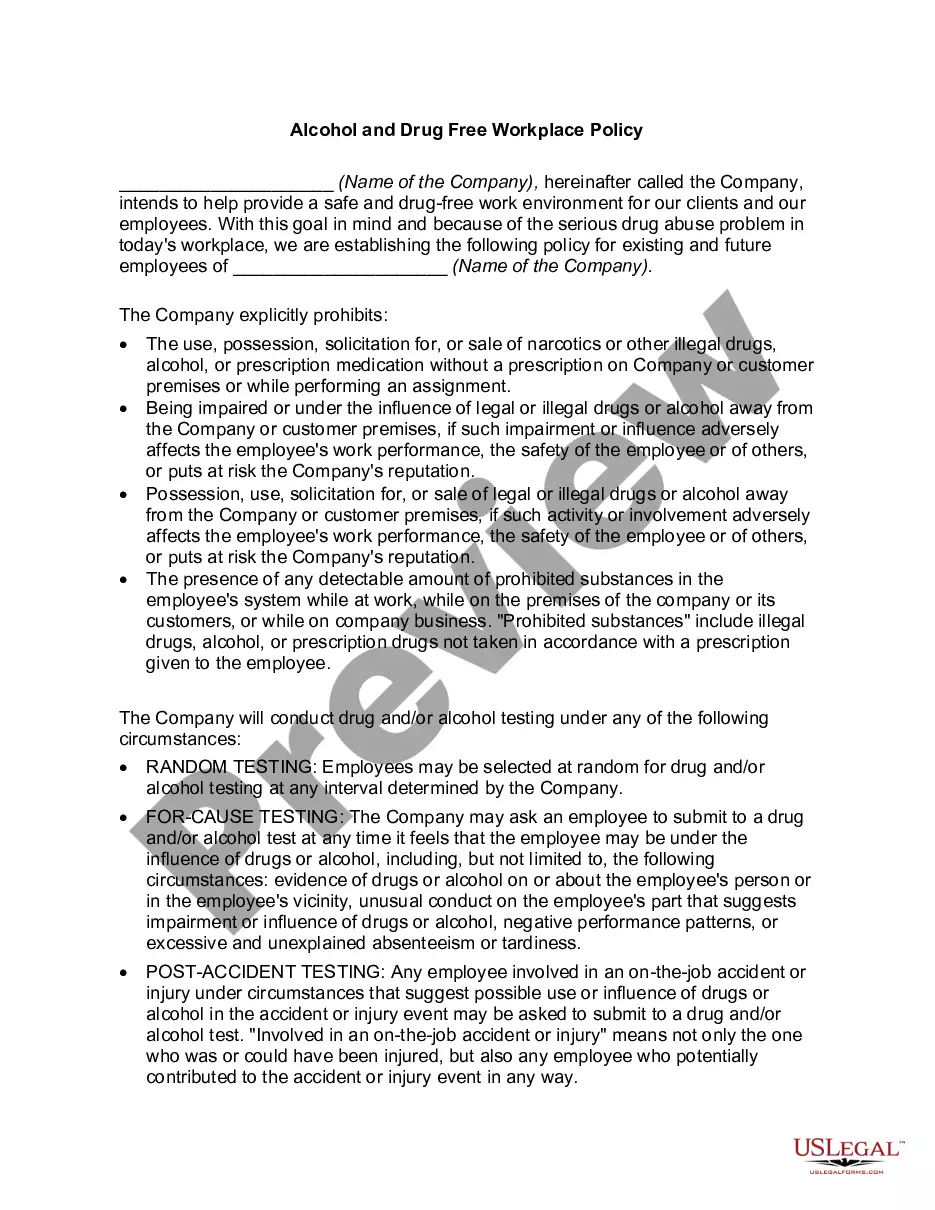
Description
Get your form ready online
Our built-in tools help you complete, sign, share, and store your documents in one place.
Make edits, fill in missing information, and update formatting in US Legal Forms—just like you would in MS Word.
Download a copy, print it, send it by email, or mail it via USPS—whatever works best for your next step.
Sign and collect signatures with our SignNow integration. Send to multiple recipients, set reminders, and more. Go Premium to unlock E-Sign.
If this form requires notarization, complete it online through a secure video call—no need to meet a notary in person or wait for an appointment.
We protect your documents and personal data by following strict security and privacy standards.

Make edits, fill in missing information, and update formatting in US Legal Forms—just like you would in MS Word.

Download a copy, print it, send it by email, or mail it via USPS—whatever works best for your next step.

Sign and collect signatures with our SignNow integration. Send to multiple recipients, set reminders, and more. Go Premium to unlock E-Sign.

If this form requires notarization, complete it online through a secure video call—no need to meet a notary in person or wait for an appointment.

We protect your documents and personal data by following strict security and privacy standards.
Looking for another form?








How to fill out Alcohol And Drug Free Workplace Policy?
- If you're a returning user, log into your account and click the Download button for the required form template, ensuring your subscription is active.
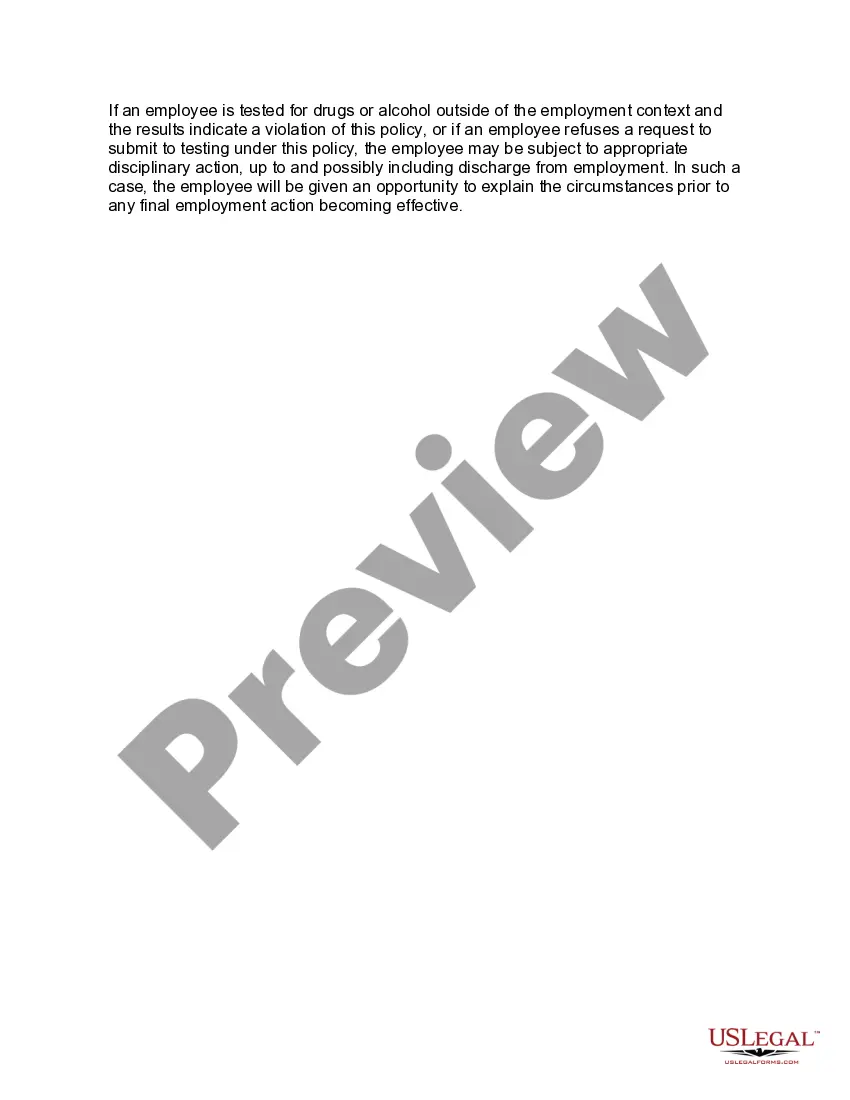
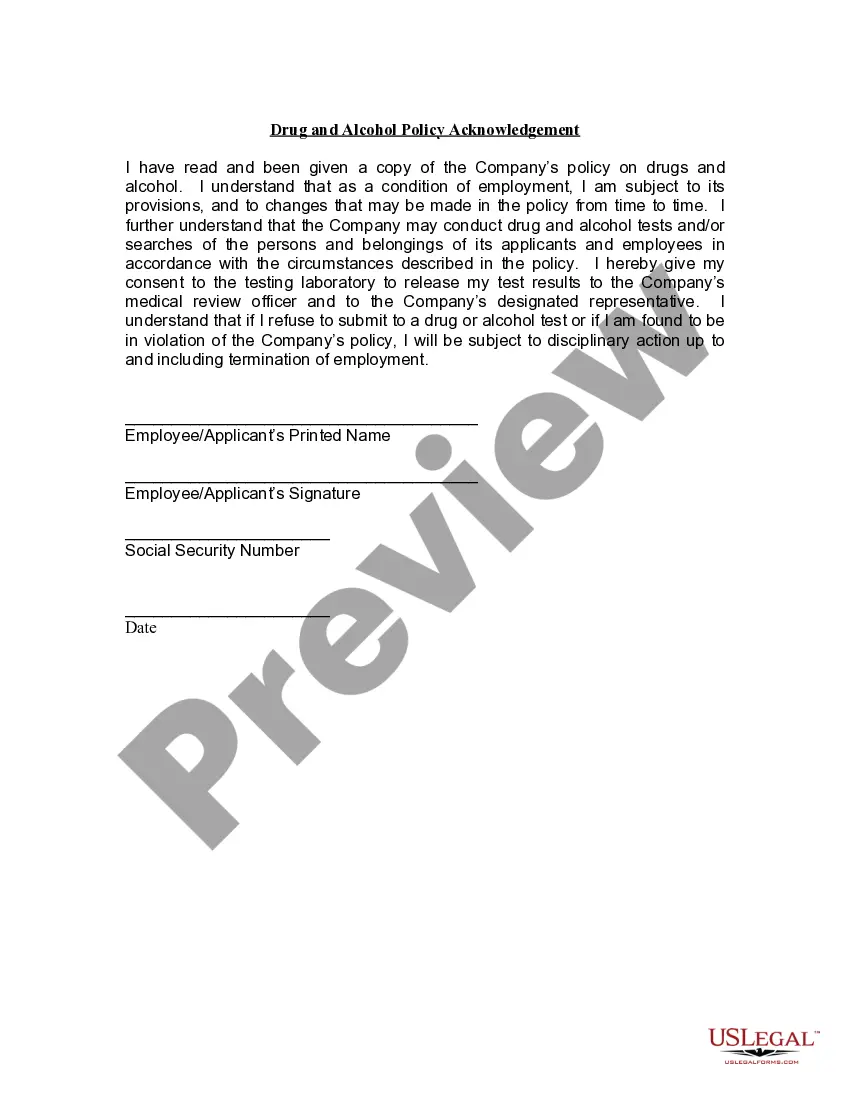
- For new users, start by checking the Preview mode and reading the form description to verify it meets your local jurisdiction requirements.
- If you find the selected form unsuitable, use the Search tab to explore additional templates until you find the right one.
- Once satisfied, hit the Buy Now button and select your preferred subscription plan. You will need to create an account to access the form library.
- Complete your purchase by entering your credit card information or using your PayPal account for the subscription.
- Download the form directly to your device, allowing you to complete it easily and access it later in the My Forms section of your profile.
US Legal Forms not only provides a vast collection of over 85,000 fillable and editable legal forms, but it also connects users with premium experts for assistance, ensuring accuracy and legal compliance.
Empower your legal processes with US Legal Forms today! Explore our extensive library and take the first step towards efficient document management.
Form popularity
FAQ
Before administering a drug test, an employer should notify employees about the testing policy and procedures. You should obtain written consent from the employee prior to the test and ensure they understand the implications of the results. It is crucial to discuss any legal rights and regulations associated with workplace drug testing for workplace. US Legal Forms can assist you in drafting these essential documents and ensuring compliance with relevant laws.
Random selection for workplace drug testing can be done using a computer-based tool or a simple drawing method. Ensure the process is unbiased and transparent to maintain employee trust. You might consider consulting a legal expert to develop a fair method that aligns with your workplace drug testing for workplace policy. Tools offered by US Legal Forms can further help you design a random selection process that meets legal requirements.
Setting up workplace drug testing for your workplace begins with defining your testing policy. You should outline which substances you will test for, establish the testing schedule, and communicate this clearly to your employees. It is essential to ensure your policy complies with state laws and respects employee privacy. Platforms like US Legal Forms provide templates and guidance to help you create a compliant and effective testing policy.
Yes, you can ask an employee to take a drug test as part of your workplace drug testing for workplace policy. However, it is essential to ensure that your testing policy is compliant with local and federal laws to protect both the employee's rights and your company. Clear communication regarding the purpose and process of the drug testing can foster a supportive environment and help in maintaining trust.
Employees should avoid using drugs or alcohol before a pre-employment drug test to prevent any potential issues with results. Additionally, they should steer clear of certain medications and foods that might trigger false positives. By providing clear guidelines through your corporate communication, you can help set employees up for success in the workplace drug testing process.
Before a pre-employment drug test, it’s best to avoid any illegal substances, alcohol, and even over-the-counter medications that may cause a false positive. Ensuring that your employees are aware of these guidelines can help them prepare for the test more effectively. Utilizing tools from the US Legal Forms platform can aid in communicating these crucial points in your pre-employment documentation.
Various substances and behaviors can interfere with a drug test. For example, drinking excessive amounts of water or using detox products can alter test results. Educating employees on what to avoid is essential to maintain the integrity of workplace drug testing, and you can outline these points clearly in your workplace policy.
Drug tests for employment typically involve urine, saliva, blood, or hair samples. Once collected, these samples are sent to a certified laboratory for analysis. It's crucial to follow a consistent and reliable process, which can be supported through the resources available on the US Legal Forms platform to ensure compliance with workplace drug testing standards.
Several factors can influence the results of a drug test. For instance, consuming certain prescription medications or substances like poppy seeds may lead to unexpected outcomes. It is essential for employees to inform the testing staff about any medications beforehand to ensure accurate results during workplace drug testing.
Before a drug test, do communicate clearly with your employees about the testing procedures. Encourage them to arrive well-hydrated and on time. Avoid any discussions that may lead to tampering or cheating, as these actions not only violate trust but can also have serious consequences for the employee’s future.