Workplace Drug Testing For Drugs
Description
Get your form ready online
Our built-in tools help you complete, sign, share, and store your documents in one place.
Make edits, fill in missing information, and update formatting in US Legal Forms—just like you would in MS Word.
Download a copy, print it, send it by email, or mail it via USPS—whatever works best for your next step.
Sign and collect signatures with our SignNow integration. Send to multiple recipients, set reminders, and more. Go Premium to unlock E-Sign.
If this form requires notarization, complete it online through a secure video call—no need to meet a notary in person or wait for an appointment.
We protect your documents and personal data by following strict security and privacy standards.

Make edits, fill in missing information, and update formatting in US Legal Forms—just like you would in MS Word.

Download a copy, print it, send it by email, or mail it via USPS—whatever works best for your next step.

Sign and collect signatures with our SignNow integration. Send to multiple recipients, set reminders, and more. Go Premium to unlock E-Sign.

If this form requires notarization, complete it online through a secure video call—no need to meet a notary in person or wait for an appointment.

We protect your documents and personal data by following strict security and privacy standards.
Looking for another form?








How to fill out Alcohol And Drug Free Workplace Policy?
- For returning users, log in to your account and verify your subscription status. If valid, click the Download button for the needed form template.
- If you're new to US Legal Forms, start by previewing the available forms. Examine the descriptions to ensure they meet your specific local jurisdiction requirements.
- If the selected template doesn't fit your needs, use the Search tab to find alternative forms that address your requirements.
- Once you have identified the appropriate document, click on the Buy Now button to select a subscription plan that works for you. Registration will be necessary for access.
- Complete your purchase by entering your payment information, either via credit card or using your PayPal account.
- Download your chosen form to save it on your device, allowing for easy access anytime through the My Forms menu in your profile.
In conclusion, US Legal Forms empowers both individuals and attorneys to efficiently navigate the complexities of workplace drug testing for drugs. With a robust collection of forms and expert assistance, completing legal documents has never been easier.
Don’t wait any longer—visit US Legal Forms today and simplify your workplace drug testing process!
Form popularity
FAQ
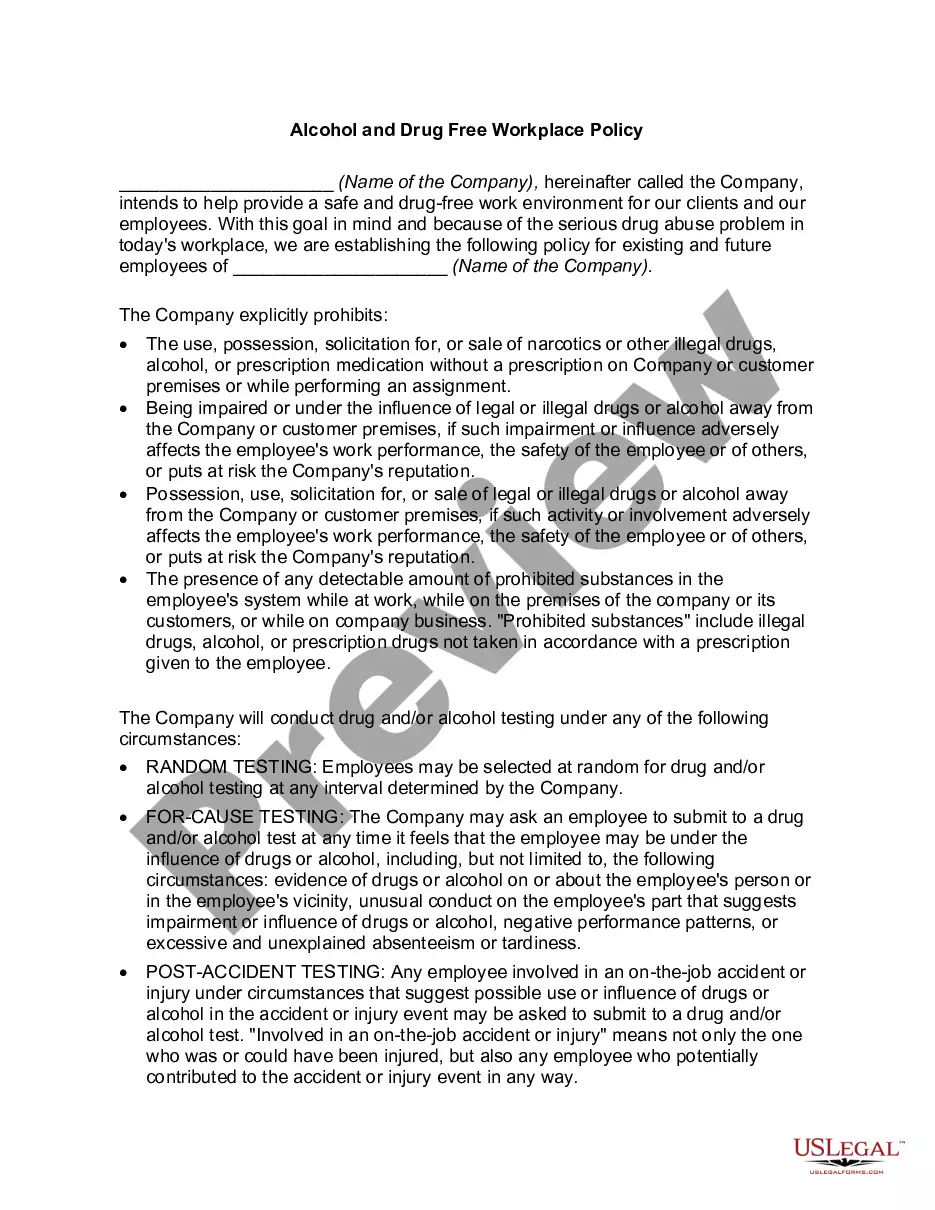
Most companies choose to implement a five-panel drug test as their primary panel for workplace drug testing for drugs. This test effectively screens for the most likely substances employees might misuse, including marijuana and cocaine. The simplicity and reliability of this panel make it a popular choice among employers. To ensure proper protocols are in place, companies can leverage resources from platforms like US Legal Forms.
The standard work drug test typically refers to a five-panel urine test, which screens for the most common substances. This test checks for marijuana, cocaine, opiates, amphetamines, and phencyclidine (PCP). It's a fundamental part of workplace drug testing for drugs and is widely recognized for its reliability. Employers often use this standard to ensure compliance and maintain workplace safety.
Most employers tend to use urine tests as their primary method for workplace drug testing for drugs. This type of test is appreciated for its affordability and effectiveness in detecting a wide range of substances. Employers also value the quick turnaround time for results, which aids in making timely hiring decisions. For additional support, businesses can benefit from using platforms like US Legal Forms to create testing policies.
Drug testing in the workplace usually involves specific procedures that ensure accuracy and confidentiality. Typically, an employee will provide a sample, such as urine or hair, which is then sent to a certified lab for analysis. Results are handled confidentially, and the process is part of an overall strategy for maintaining a safe work environment through workplace drug testing for drugs. It's essential for businesses to follow legal guidelines during this process.
The most common drug test for employment is the urine test, which is widely accepted for its simplicity and accuracy. This test typically screens for various substances, including marijuana, cocaine, opiates, and amphetamines. Many employers choose this method as part of their workplace drug testing for drugs. For a seamless process, consider using platforms like US Legal Forms that offer resources for conducting these tests.
In employment drug tests, employers typically look for illegal substances like marijuana, cocaine, and opioids, as well as other drugs that can impair job performance. The focus is on ensuring a safe work environment and compliance with legal regulations. By utilizing workplace drug testing for drugs, companies can mitigate risks associated with substance use. It's beneficial to familiarize yourself with drug testing policies as you seek employment.
Failing a drug test can complicate your chances of getting hired, but it is not always an automatic disqualification. Policies vary by employer, and some may give candidates a chance to explain or retest. However, understanding the implications of workplace drug testing for drugs is crucial before entering the job market. Staying informed can help you navigate potential obstacles and improve future job opportunities.
Conducting a drug test at work involves selecting a reliable testing method, providing a private space for employees, and ensuring proper documentation. You can choose from urine, hair, saliva, or blood tests, depending on your company's policy. Integrating workplace drug testing for drugs can be streamlined with platforms like US Legal Forms, which provide the necessary forms and procedures. Following legal protocols will ensure the testing process is effective and respectful.
Before a pre-employment drug test, it's wise to avoid using any recreational drugs, as many substances can remain in your system for days or longer. Additionally, avoid anything that could be deemed as an attempt to cheat the test, like synthetic urine or detox drinks. Preparing for workplace drug testing for drugs involves being honest and straightforward. Adhering to these tips often leads to better outcomes in the hiring process.
Employment drug tests typically screen for certain substances, including marijuana, cocaine, opiates, amphetamines, and PCP. These tests can vary by employer, but most focus on the commonly abused drugs. Understanding what shows up in workplace drug testing for drugs can help you prepare for the process. Knowing the potential drugs can prepare you for a healthy and productive work environment.