Workplace Drug Policy With The Help
Description
Get your form ready online
Our built-in tools help you complete, sign, share, and store your documents in one place.
Make edits, fill in missing information, and update formatting in US Legal Forms—just like you would in MS Word.
Download a copy, print it, send it by email, or mail it via USPS—whatever works best for your next step.
Sign and collect signatures with our SignNow integration. Send to multiple recipients, set reminders, and more. Go Premium to unlock E-Sign.
If this form requires notarization, complete it online through a secure video call—no need to meet a notary in person or wait for an appointment.
We protect your documents and personal data by following strict security and privacy standards.

Make edits, fill in missing information, and update formatting in US Legal Forms—just like you would in MS Word.

Download a copy, print it, send it by email, or mail it via USPS—whatever works best for your next step.

Sign and collect signatures with our SignNow integration. Send to multiple recipients, set reminders, and more. Go Premium to unlock E-Sign.

If this form requires notarization, complete it online through a secure video call—no need to meet a notary in person or wait for an appointment.

We protect your documents and personal data by following strict security and privacy standards.
Looking for another form?










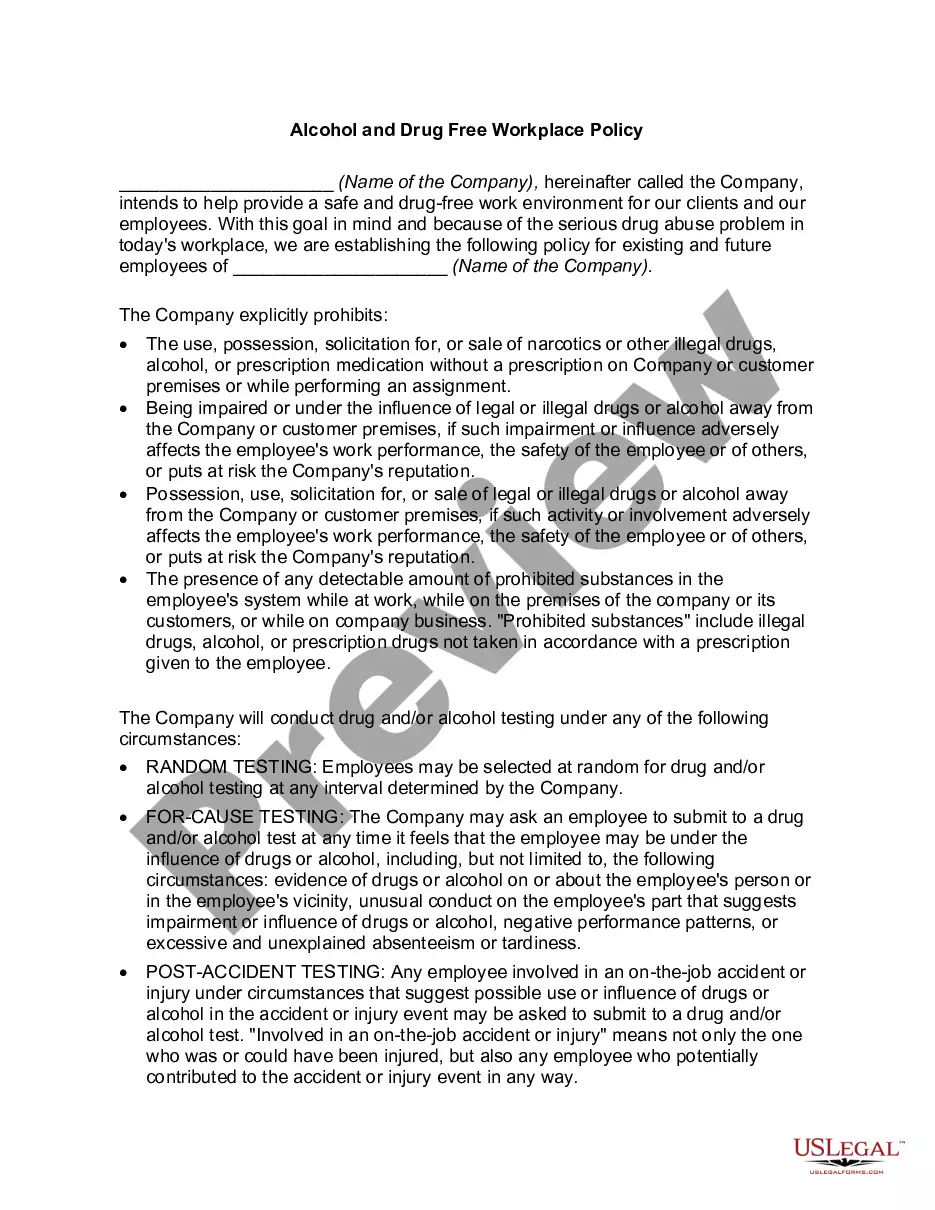
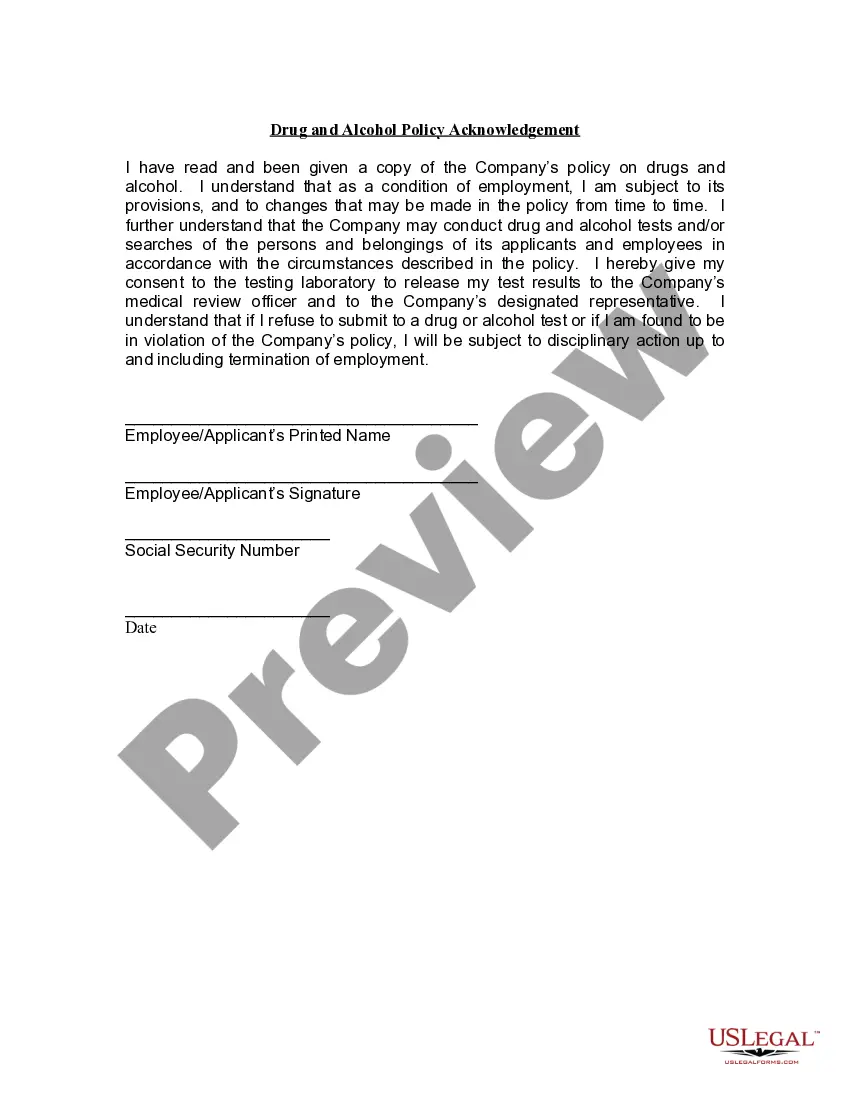
How to fill out Alcohol And Drug Free Workplace Policy?
- Log into your US Legal Forms account if you're an existing user. Ensure your subscription is active; if not, renew your plan.
- Browse the preview mode to review form descriptions. Confirm that the selected policy matches your specific jurisdiction and company requirements.
- If the document isn't quite right, utilize the Search function to find a better match for your needs.
- Choose and purchase the desired document by clicking on the 'Buy Now' button. Select a subscription plan that fits your requirements and create your account if you're a new user.
- Complete your purchase by entering your payment details, using either a credit card or your PayPal account.
- Finally, download your workplace drug policy and save it to your device. You can also access it anytime in the 'My Forms' section of your profile.
With US Legal Forms, you can benefit from their extensive collection of over 85,000 editable legal forms and packages, ensuring you have all the necessary documents at your fingertips.
Don't wait any longer; take control of your workplace drug policy today! Visit US Legal Forms to access a wealth of legal resources and expert assistance.
Form popularity
FAQ
While there are no direct financial rewards for reporting OSHA violations, your actions contribute to safer workplaces. Reporting may lead to enforcement of necessary changes, including updates to the workplace drug policy. Additionally, in some cases, federal law protects whistleblowers, allowing them to regain peace of mind in their environment. Utilize US Legal Forms to navigate these procedures effectively.
Filing an OSHA complaint triggers an investigation where officials review your concerns. They consider the severity of the issue and may prioritize the complaint based on potential risks to employees. It is essential for companies to follow established workplace drug policies, and you may win assurance of a safer work environment through this process. Use US Legal Forms to help develop policies that meet OSHA standards.
When a company is reported to OSHA, an investigation is typically initiated to assess the validity of the claim. OSHA may conduct inspections or follow up with the employer to ensure compliance with laws and workplace regulations. Depending on the findings, the company may need to revise its workplace drug policy with the help of legal resources. For further assistance, US Legal Forms can provide templates for creating compliant and effective workplace policies.
You cannot be legally fired for reporting unsafe working conditions to OSHA. Whistleblower protections exist to guard employees who speak up about hazards or violations. However, if your workplace drug policy is not adequately enforced or if there's retaliation, it's crucial to document your complaint and seek assistance. Consider using resources available through US Legal Forms for guidance on how to protect your rights.
An example of a substance abuse policy includes provisions for education, prevention programs, and protocols for reporting and dealing with substance abuse issues. It emphasizes support for employees seeking help, balancing accountability with assistance. Crafting a robust substance abuse policy with the help of experienced legal resources can enhance workplace safety and encourage a healthy work culture.
Creating a workplace drug policy involves several key steps, including assessing the specific needs of your business and consulting with legal guidelines. Start by defining the purpose of the policy, detailing the types of testing, and clearly outlining consequences for violations. Utilizing tools like USLegalForms can simplify the drafting process and ensure that your workplace drug policy aligns with legal standards.
The most effective workplace drug policy combines clear communication, employee support, and consistent enforcement. It addresses prevention, education, and rehabilitation, ensuring that employees understand the policy and can seek help if needed. A well-crafted workplace drug policy with the help of expert resources significantly reduces risks and fosters a culture of safety.
A clear example of a workplace drug policy is one that outlines the company's stance on drug use and testing. It typically specifies the types of drugs tested for, the circumstances under which testing occurs, and the consequences for violations. By implementing a workplace drug policy with the help of a comprehensive guide, employers can maintain a safe and productive work environment.
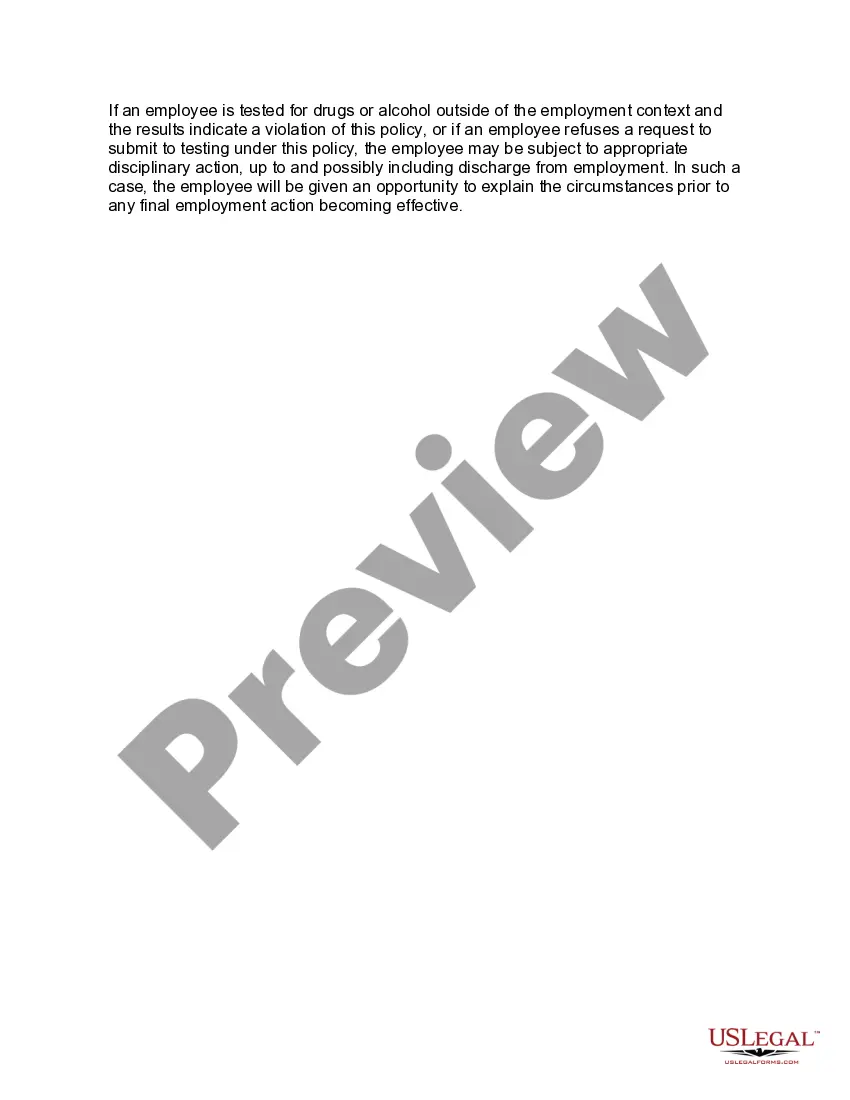
The best defense against a positive drug test is to be fully aware of the workplace drug policy with the help. Employees should understand what substances are tested for and avoid them before testing. If an employee believes the test was inaccurate, they may request a confirmation test or provide documentation regarding current medications that may have affected the results.
An employer has the responsibility to establish a safe workplace by implementing a clear drug policy. This includes educating employees about the risks of substance abuse, providing access to support and rehabilitation programs, and ensuring fair enforcement of the policy. By doing this, employers help to foster a healthier work environment and reduce potential liabilities.