Employee Stock Options Vs Warrants
Description

Get your form ready online
Our built-in tools help you complete, sign, share, and store your documents in one place.
Make edits, fill in missing information, and update formatting in US Legal Forms—just like you would in MS Word.
Download a copy, print it, send it by email, or mail it via USPS—whatever works best for your next step.
Sign and collect signatures with our SignNow integration. Send to multiple recipients, set reminders, and more. Go Premium to unlock E-Sign.
If this form requires notarization, complete it online through a secure video call—no need to meet a notary in person or wait for an appointment.
We protect your documents and personal data by following strict security and privacy standards.

Make edits, fill in missing information, and update formatting in US Legal Forms—just like you would in MS Word.

Download a copy, print it, send it by email, or mail it via USPS—whatever works best for your next step.

Sign and collect signatures with our SignNow integration. Send to multiple recipients, set reminders, and more. Go Premium to unlock E-Sign.

If this form requires notarization, complete it online through a secure video call—no need to meet a notary in person or wait for an appointment.

We protect your documents and personal data by following strict security and privacy standards.
Looking for another form?





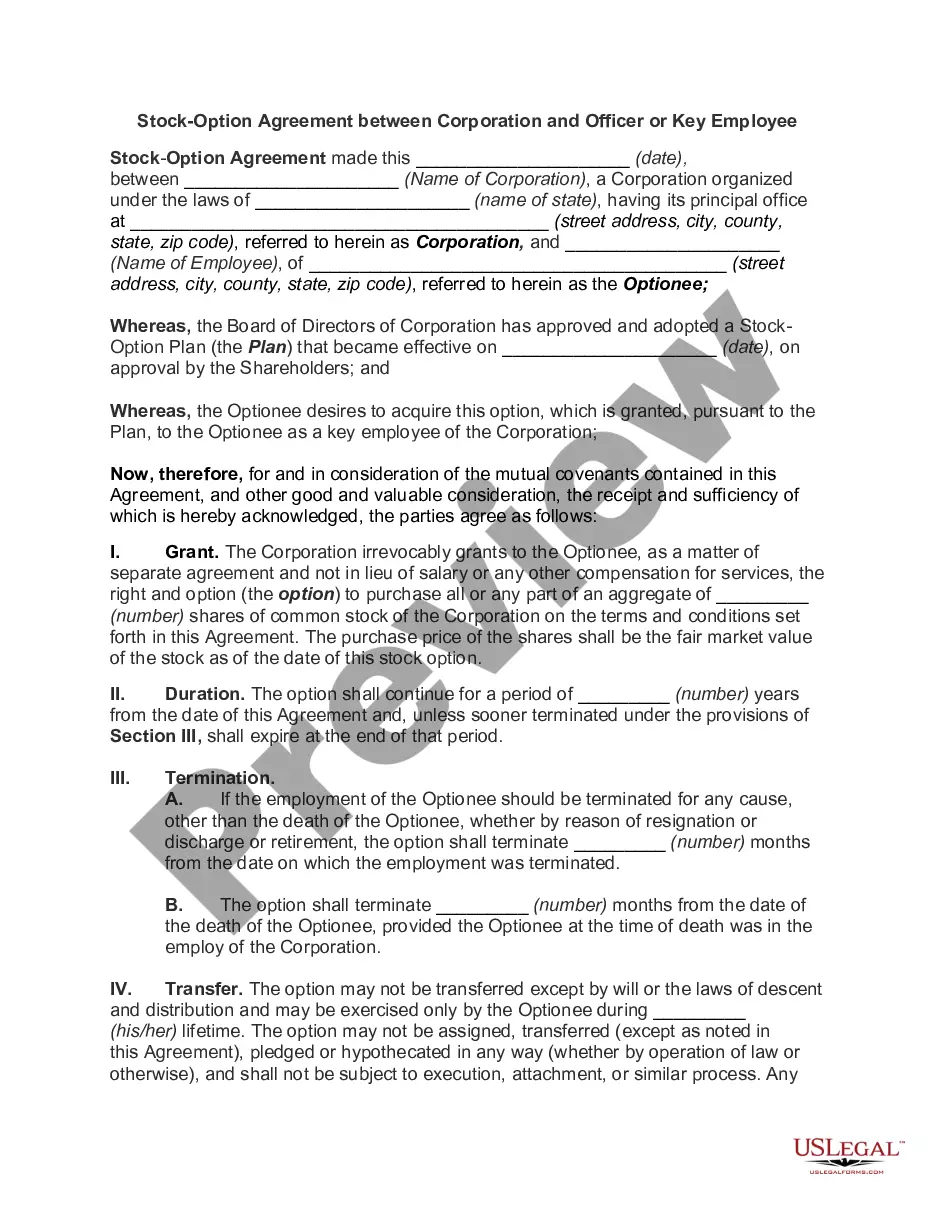
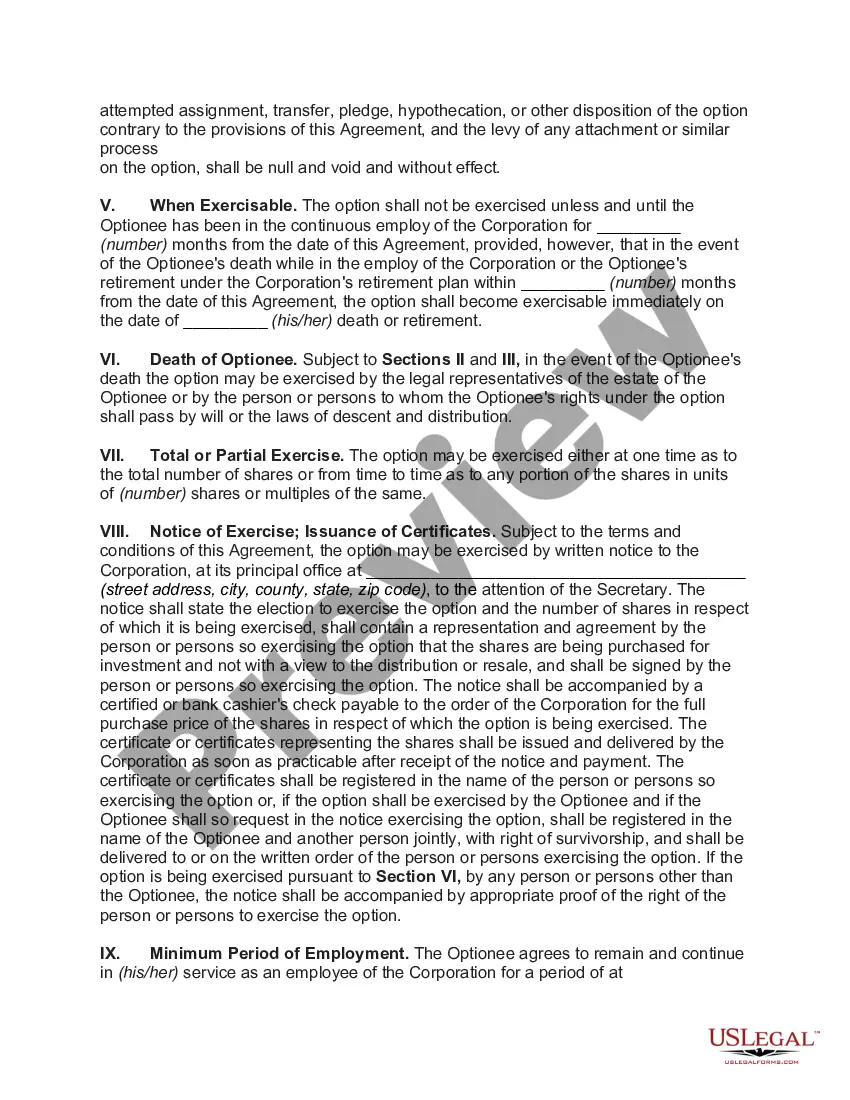
How to fill out Stock Option Agreement Between Corporation And Officer Or Key Employee?
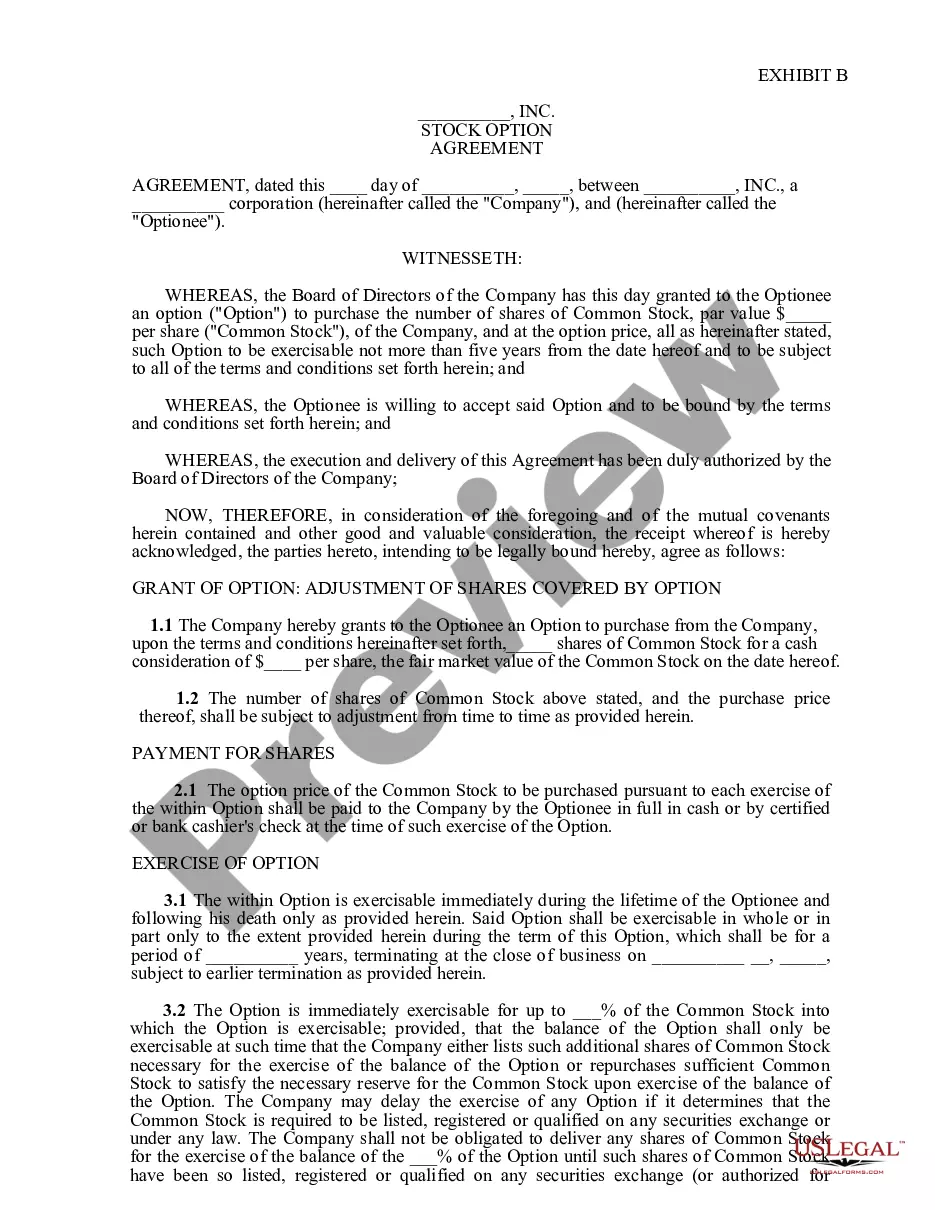
Securing a reliable source for the latest and pertinent legal documents is a significant part of navigating bureaucracy. Acquiring the appropriate legal paperwork requires precision and careful attention, which is why it's crucial to obtain samples of Employee Stock Options Vs Warrants exclusively from trustworthy providers like US Legal Forms. An incorrect template can lead to wasted time and prolong your current situation. With US Legal Forms, your concerns are minimal. You can access and review all the specifics regarding the document's applicability and significance for your circumstances and in your locality.
Follow these steps to complete your Employee Stock Options Vs Warrants.
Eliminate the stress associated with your legal documentation. Navigate the extensive US Legal Forms library to seek legal templates, assess their relevance to your needs, and download them instantly.
- Utilize the library navigation or search tool to find your document.
- Check the form's description to ensure it meets the standards for your state and locality.
- Look at the form preview, if available, to confirm the template is precisely what you require.
- Return to the search results and find the appropriate document if the Employee Stock Options Vs Warrants does not fulfill your needs.
- If you are confident about the relevance of the form, proceed to download it.
- As an authenticated customer, click Log in to verify your identity and access your selected forms in My documents.
- If you have not created an account yet, click Buy now to acquire the form.
- Choose the pricing plan that meets your needs.
- Continue with the registration to complete your purchase.
- Conclude your transaction by selecting a payment method (credit card or PayPal).
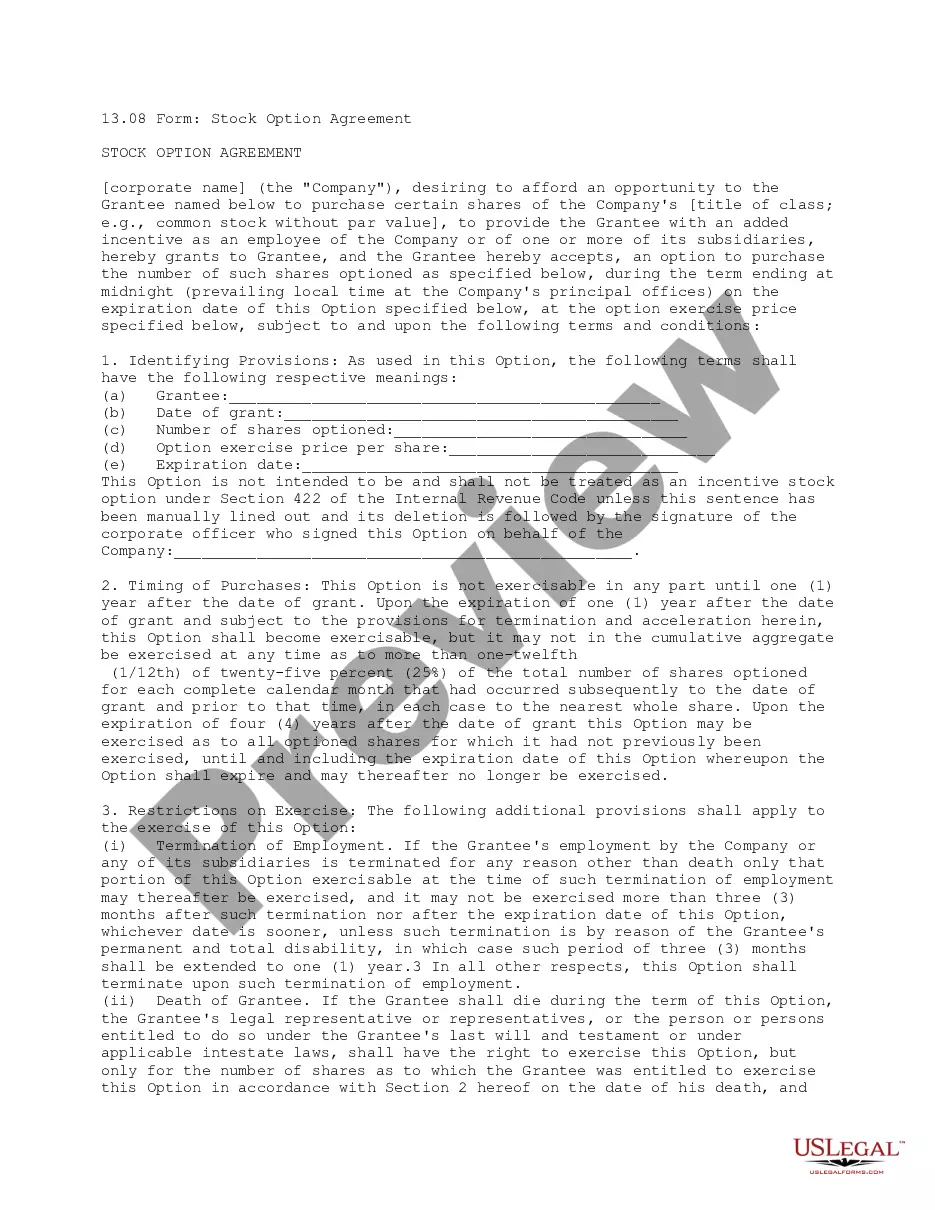
- Choose the file format for downloading Employee Stock Options Vs Warrants.
- After obtaining the form on your device, you can modify it using the editor or print it out and complete it by hand.
Form popularity
FAQ
The two main rules to account for stock warrants are that the issuer must recognize the fair value of the equity instruments issued or the fair value of the consideration received, whichever can be more reliably measured; and recognize the asset or expense related to the provided goods or services at the same time.
Unlike options, which investors trade on an exchange, companies issue warrants. If investors exercise the put warrants, they sell them back to the companies. Another fundamental difference between a put warrant and a put option is that the term for a warrant can last up to 15 years.
Warrants are typically issued to outside parties such as investors and banks. Stock options, on the other hand, are typically issued to employees, consultants, or other service providers.
When an employee exercises stock options, you'll credit Common Stock for the number of shares x par value, debit Cash for the number of shares x the exercise price, then debit Additional Paid-In Capital for the difference, representing the increase in value of the shares during the service period.
One of the most common journal entries for an ESOP is the initial purchase of company stock. The ESOP plan administrator will create a journal entry to record the transaction, which will include the amount paid for the shares, the number of shares acquired, and any associated fees or expenses.