Exempt Vs Non Exempt Employees For Hire
Description
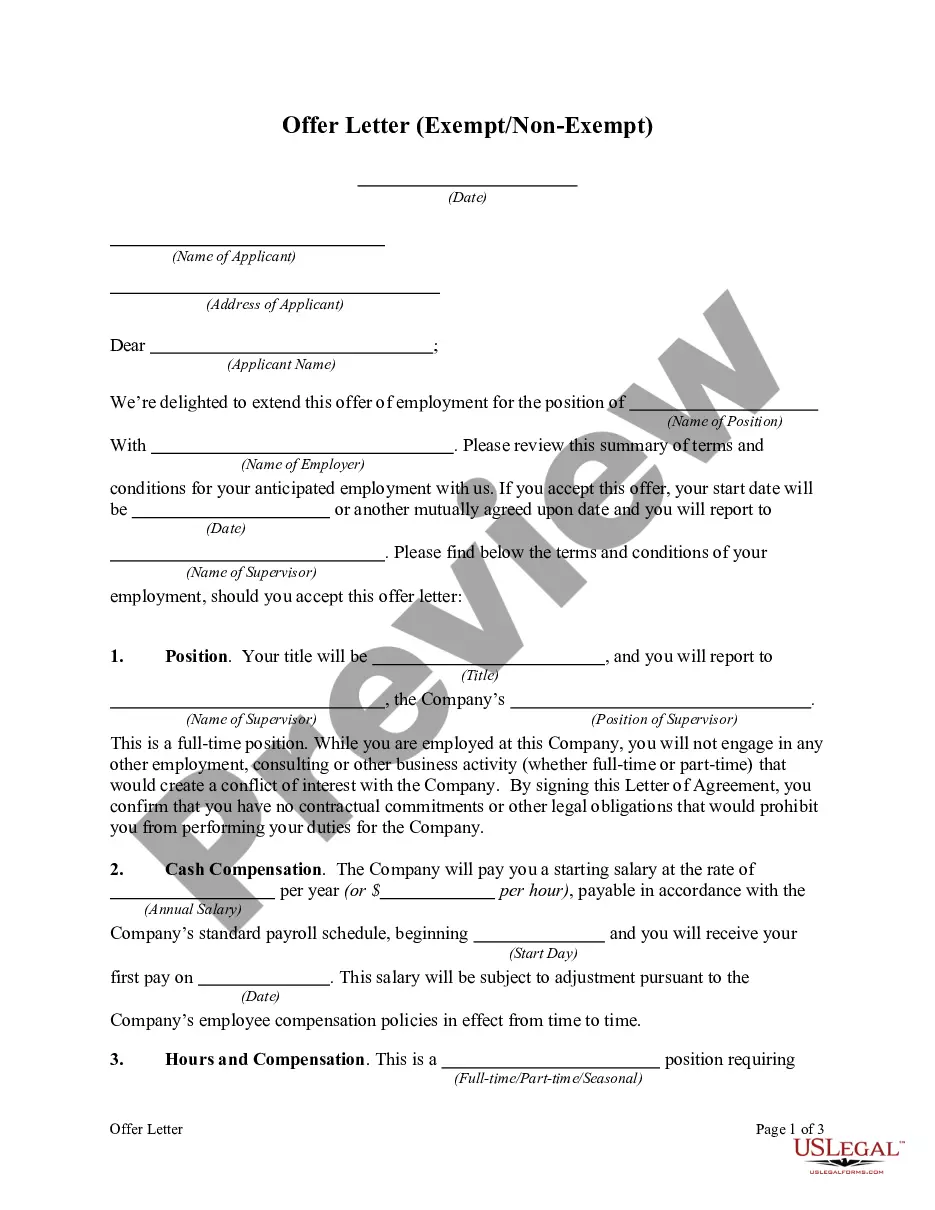


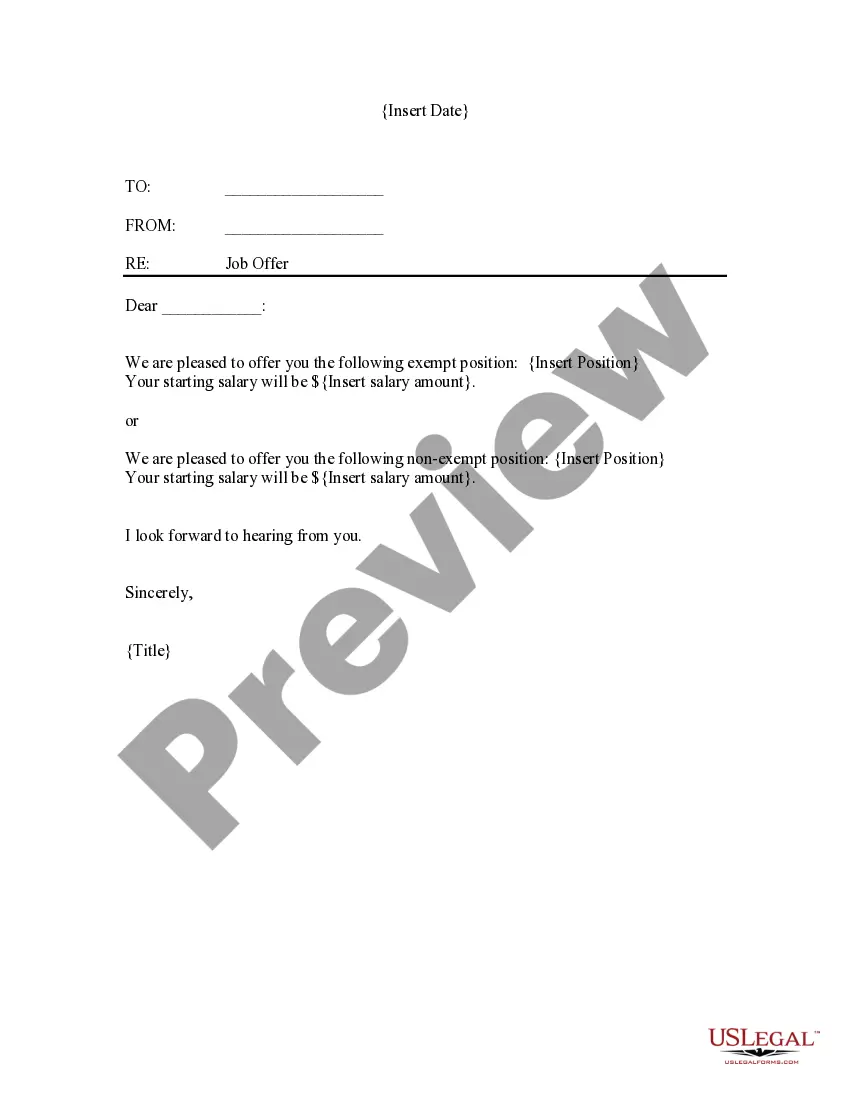
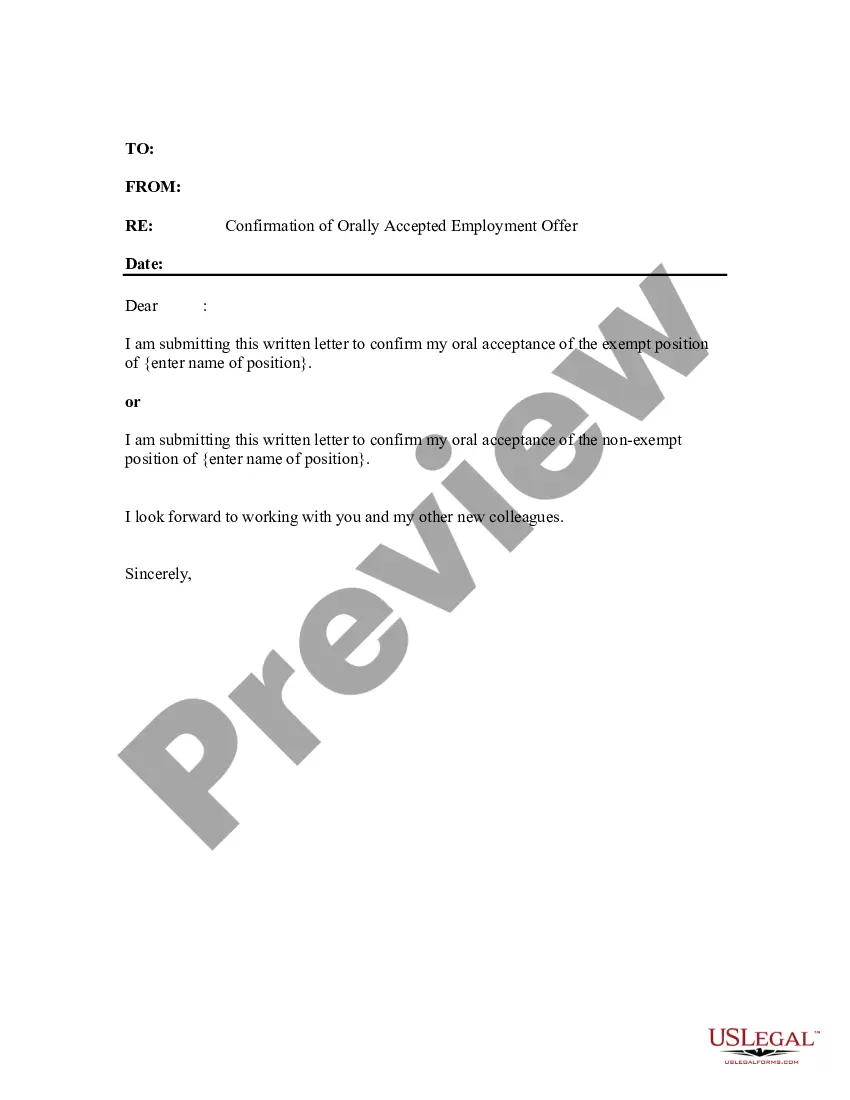
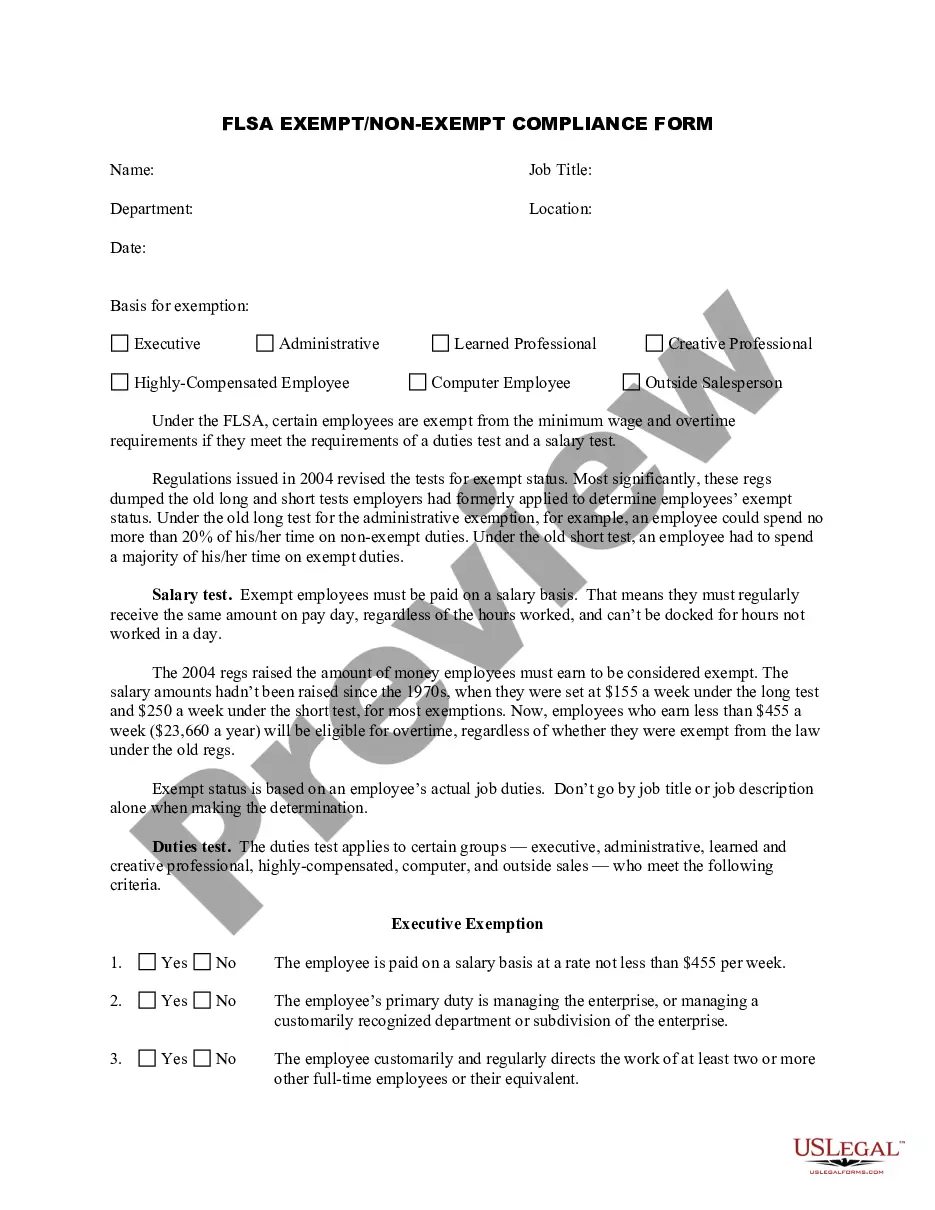
Get your form ready online
Our built-in tools help you complete, sign, share, and store your documents in one place.
Make edits, fill in missing information, and update formatting in US Legal Forms—just like you would in MS Word.
Download a copy, print it, send it by email, or mail it via USPS—whatever works best for your next step.
Sign and collect signatures with our SignNow integration. Send to multiple recipients, set reminders, and more. Go Premium to unlock E-Sign.
If this form requires notarization, complete it online through a secure video call—no need to meet a notary in person or wait for an appointment.
We protect your documents and personal data by following strict security and privacy standards.

Make edits, fill in missing information, and update formatting in US Legal Forms—just like you would in MS Word.

Download a copy, print it, send it by email, or mail it via USPS—whatever works best for your next step.

Sign and collect signatures with our SignNow integration. Send to multiple recipients, set reminders, and more. Go Premium to unlock E-Sign.

If this form requires notarization, complete it online through a secure video call—no need to meet a notary in person or wait for an appointment.

We protect your documents and personal data by following strict security and privacy standards.
Looking for another form?








Form popularity
FAQ
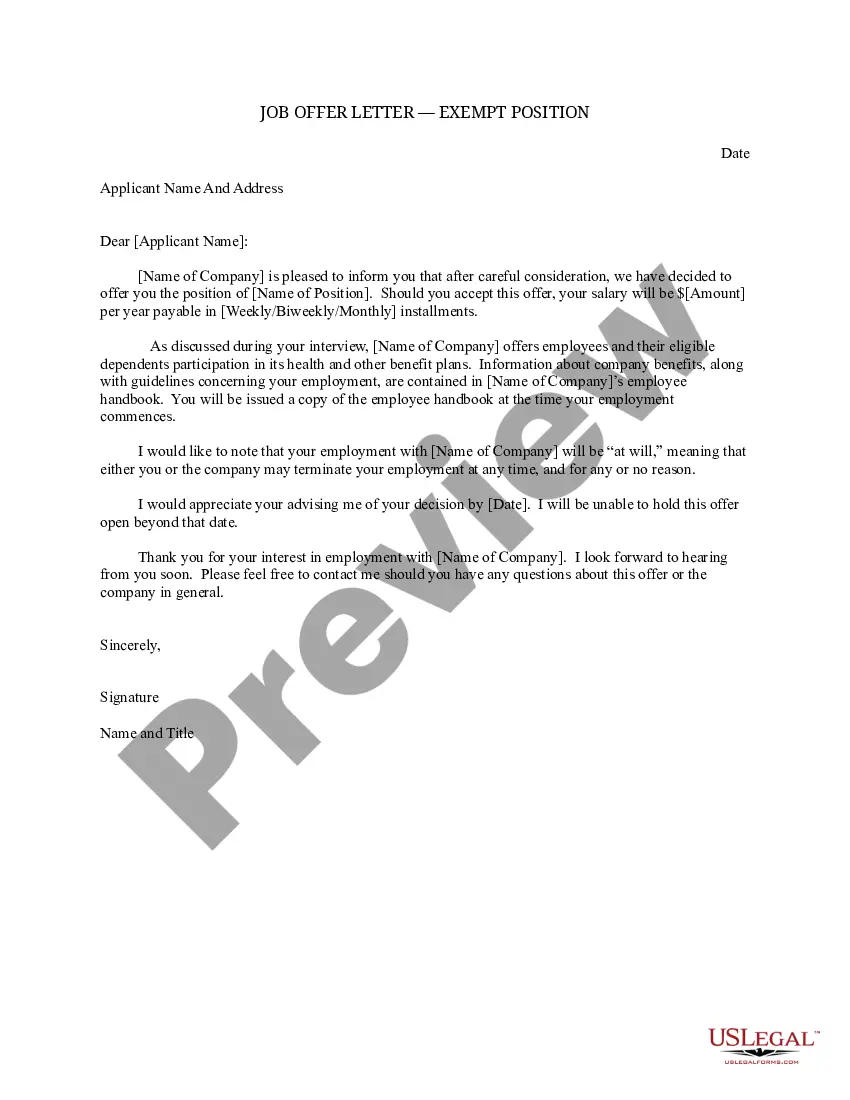
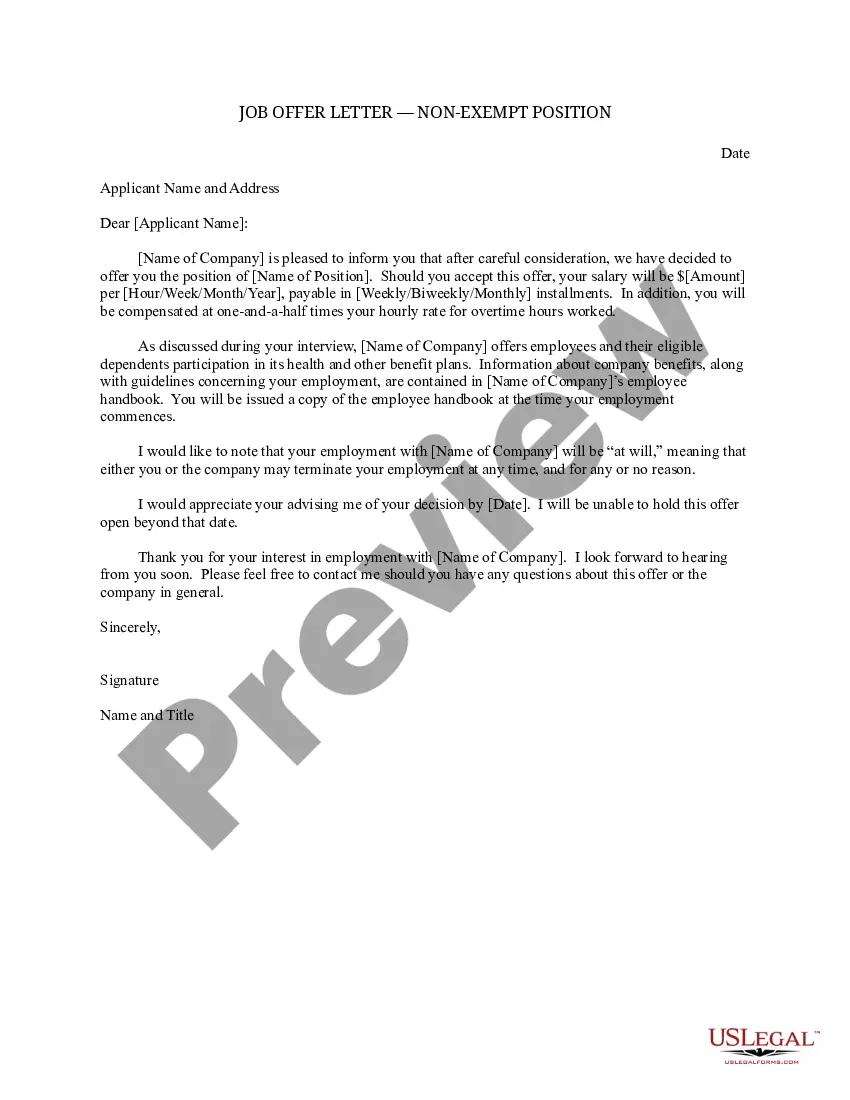
The Department of Labor (DOL) rule for 2025 focuses on defining the criteria that determine exempt and non exempt employees for hire. This includes updates on salary thresholds and job duties associated with exemptions. Businesses should keep abreast of these regulations to ensure compliance and avoid potential penalties.
The minimum salary for exempt employees generally varies by state, but there is a federal standard that sets a baseline. To ensure compliance, it’s crucial to stay informed about both federal and state laws surrounding exempt vs non exempt employees for hire. This helps create a fair work environment and protects businesses from legal issues.
The salary rule for 2025 aims to clarify the criteria for classifying exempt and non exempt employees for hire. It establishes a clear minimum salary threshold that employers must meet to classify employees as exempt. Understanding this rule is essential for managing payroll and compliance with federal regulations.
In 2025, the minimum salary for exempt employees is set to increase, reflecting ongoing adjustments in labor laws. Employers will need to comply with these changes to ensure they are classifying employees correctly under exempt vs non exempt employees for hire. This adjustment is critical for both employers and employees, ensuring fair compensation.
In Canada, the concepts of exempt and non-exempt employees mirror those in the US, but with some differences. Exempt employees often fall under specific categories determined by provincial employment standards, whereas non-exempt employees are generally entitled to overtime compensation. This distinction is important for employers who are navigating the complexities of labor laws pertaining to exempt vs non exempt employees for hire in different jurisdictions.
Yes, you can switch from exempt to nonexempt status under certain conditions. Employers often adjust the classification based on the nature of the work, job duties, or changes in regulations. If you are considering this change, it is advisable to consult your HR department or legal advisor to understand your rights and any implications. This change is vital in the context of exempt vs non exempt employees for hire.
An employee typically cannot choose to be classified as exempt if their job duties and salary do not meet the required criteria. Employers must also adhere to state regulations regarding employee classification and cannot arbitrarily designate someone as exempt. If you seek clarity on these classifications, using tools from US Legal Forms can provide detailed information tailored to your situation.
To classify a position correctly in California, review both job duties and salary. Positions that meet specific criteria, such as executive or administrative roles, may be deemed exempt. Evaluating these classifications can be daunting, but resources from US Legal Forms can simplify the determination process.
In California, the classification hinges on specific criteria defined by state law. Evaluating your job description, salary level, and the nature of your work will help distinguish between exempt and non-exempt roles. For a clearer understanding, consider consulting employment legal resources or platforms that provide guidance on these classifications, like US Legal Forms.
To determine if you should be classified as exempt, consider your job duties and salary. Generally, exempt employees perform tasks that require specialized skills or managerial duties and earn a salary above a certain threshold. Identifying your role within these categories can clarify whether you fall under exempt or non-exempt classifications. Using resources like US Legal Forms can help guide you through this process.
