Opposing Counsel Regarding Forces
Description
Get your form ready online
Our built-in tools help you complete, sign, share, and store your documents in one place.
Make edits, fill in missing information, and update formatting in US Legal Forms—just like you would in MS Word.
Download a copy, print it, send it by email, or mail it via USPS—whatever works best for your next step.
Sign and collect signatures with our SignNow integration. Send to multiple recipients, set reminders, and more. Go Premium to unlock E-Sign.
If this form requires notarization, complete it online through a secure video call—no need to meet a notary in person or wait for an appointment.
We protect your documents and personal data by following strict security and privacy standards.

Make edits, fill in missing information, and update formatting in US Legal Forms—just like you would in MS Word.

Download a copy, print it, send it by email, or mail it via USPS—whatever works best for your next step.

Sign and collect signatures with our SignNow integration. Send to multiple recipients, set reminders, and more. Go Premium to unlock E-Sign.

If this form requires notarization, complete it online through a secure video call—no need to meet a notary in person or wait for an appointment.

We protect your documents and personal data by following strict security and privacy standards.
Looking for another form?








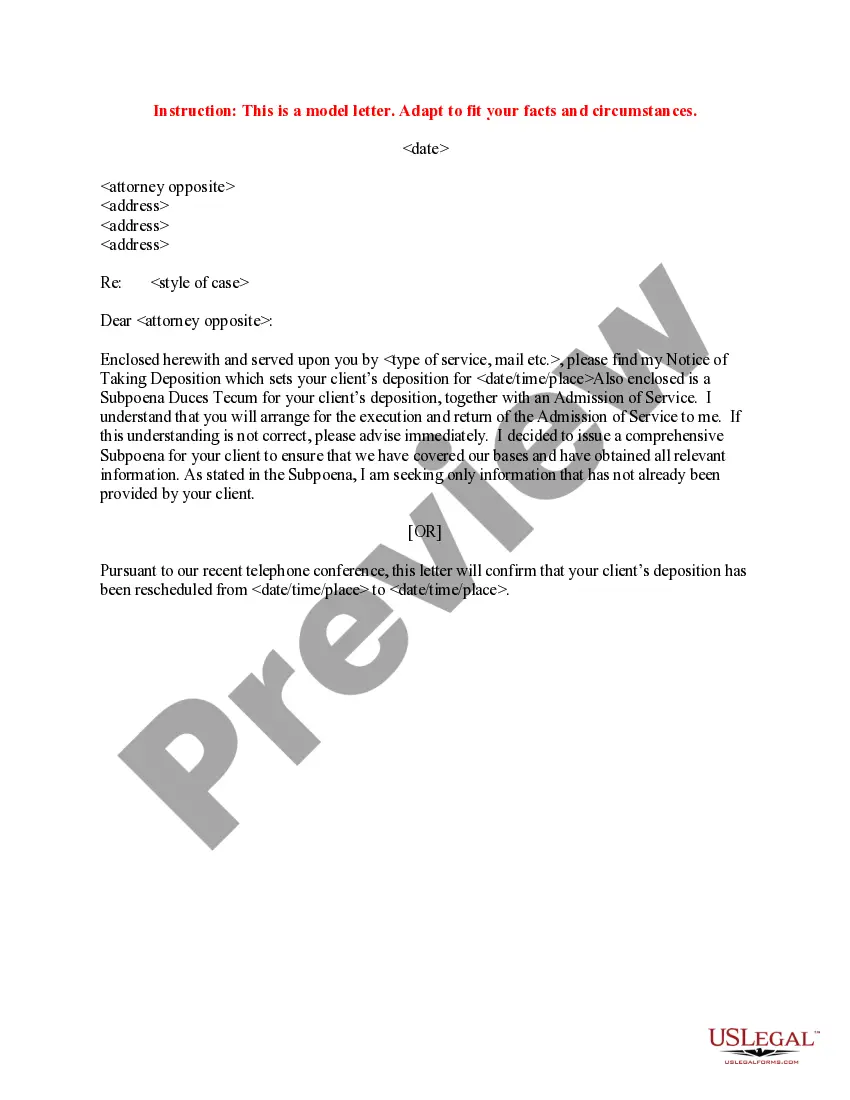
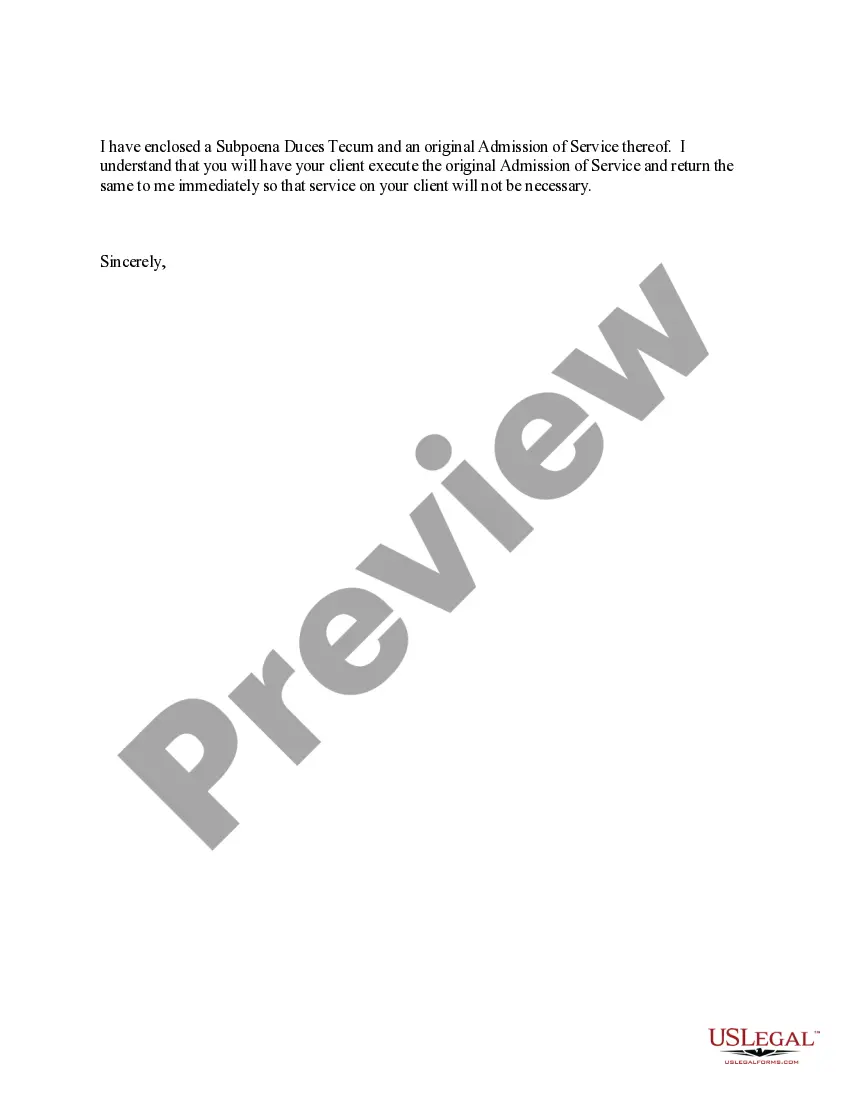
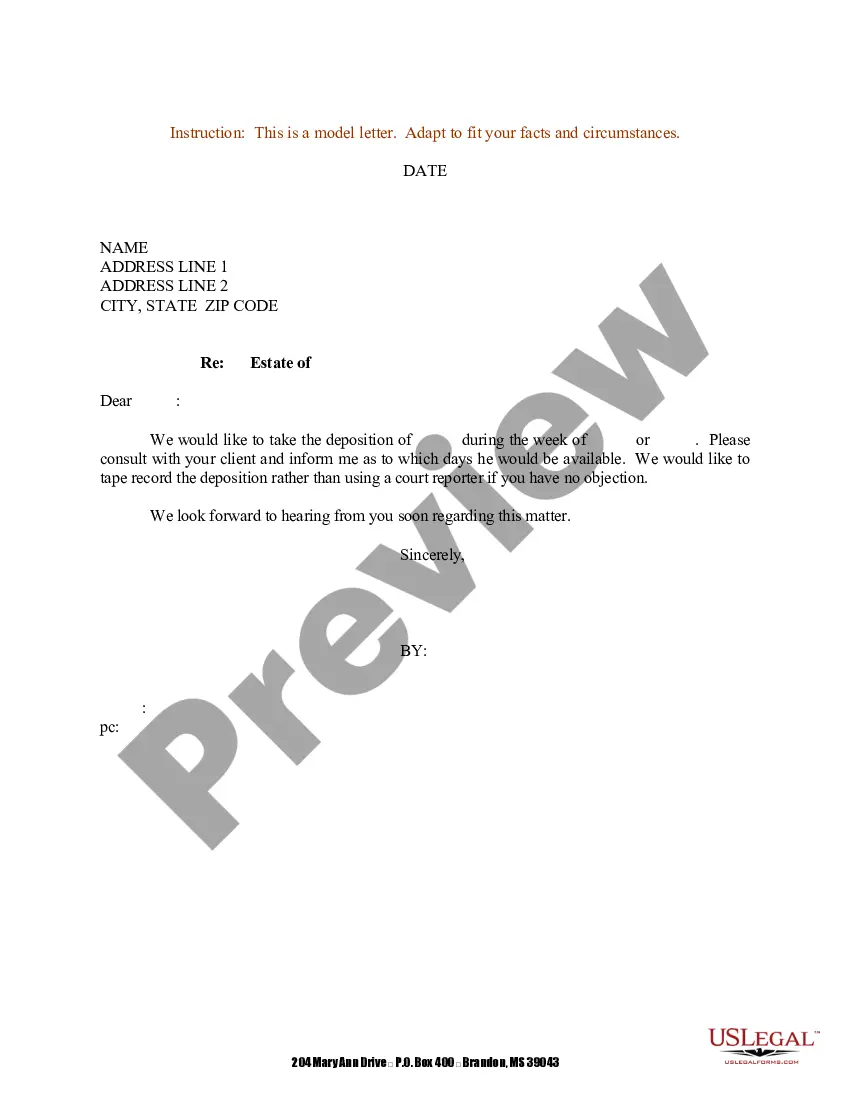
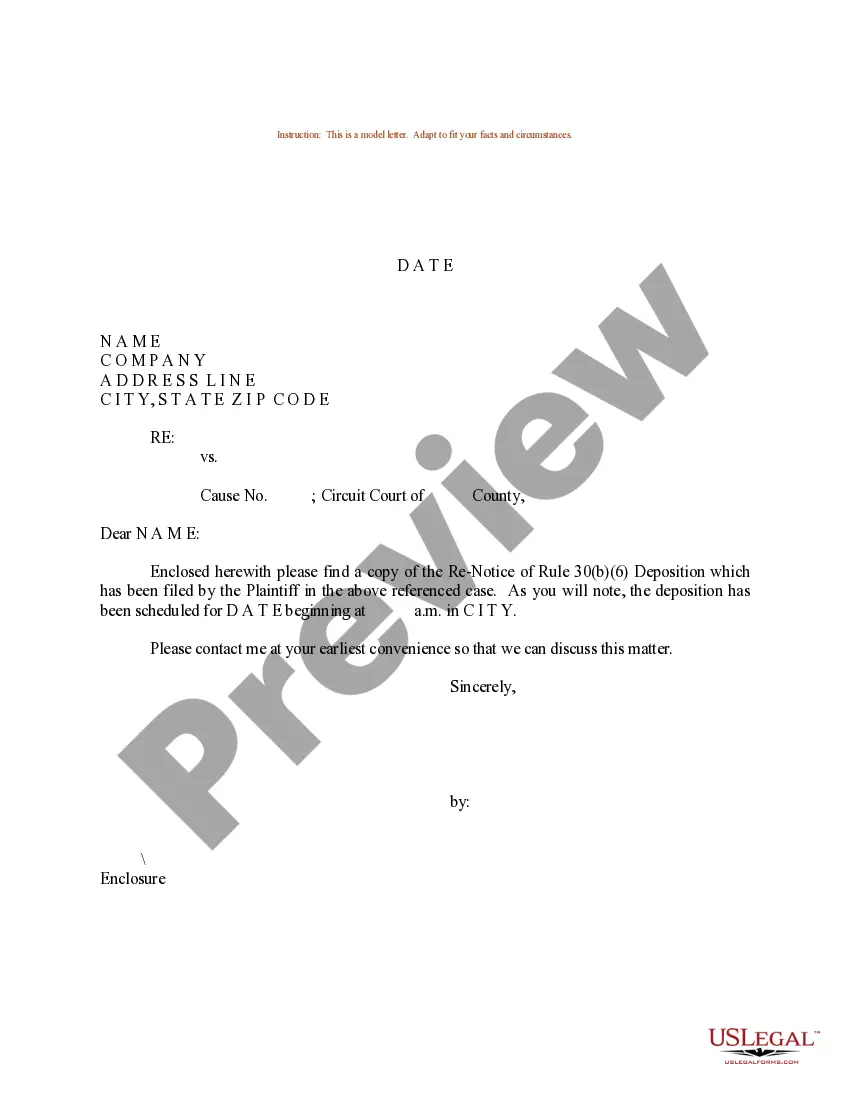
How to fill out Discovery - Sample Letter To Opposing Counsel Regarding Deposition And Subpoena Duces Tecum?
It’s obvious that you can’t become a law expert immediately, nor can you figure out how to quickly prepare Opposing Counsel Regarding Forces without the need of a specialized set of skills. Putting together legal documents is a long venture requiring a particular training and skills. So why not leave the preparation of the Opposing Counsel Regarding Forces to the pros?
With US Legal Forms, one of the most extensive legal document libraries, you can find anything from court papers to templates for in-office communication. We know how important compliance and adherence to federal and state laws and regulations are. That’s why, on our platform, all forms are location specific and up to date.
Here’s how you can get started with our website and get the form you need in mere minutes:
- Find the form you need with the search bar at the top of the page.
- Preview it (if this option available) and check the supporting description to figure out whether Opposing Counsel Regarding Forces is what you’re looking for.
- Start your search again if you need any other form.
- Set up a free account and choose a subscription option to purchase the template.
- Pick Buy now. Once the transaction is through, you can download the Opposing Counsel Regarding Forces, complete it, print it, and send or mail it to the designated people or entities.
You can re-access your forms from the My Forms tab at any time. If you’re an existing customer, you can simply log in, and locate and download the template from the same tab.
Regardless of the purpose of your documents-whether it’s financial and legal, or personal-our website has you covered. Try US Legal Forms now!
Form popularity
FAQ
For example, a lawyer may not represent multiple parties to a negotiation whose interests are fundamentally antagonistic to each other, but common representation is permissible where the clients are generally aligned in interest even though there is some difference in interest among them.
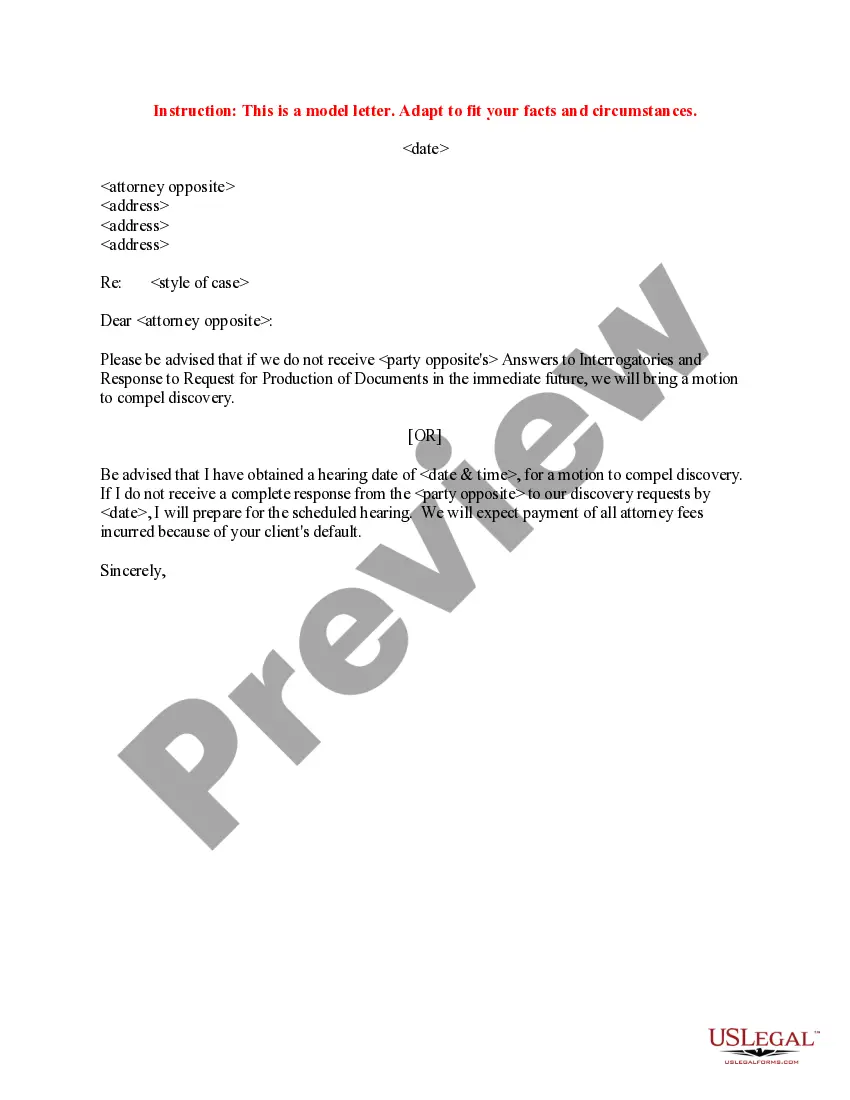
Dear [Opposing Counsel Name], I am writing to follow up on our recent communication regarding [case name]. I have not yet received a response from you regarding [list the specific issue or question]. Please let me know your thoughts as soon as possible so that we can continue to move forward with the case.
We don't like Motions to Compel. Judges don't like them, and neither do the opposing parties we bring them against. But they are, sometimes, required to be brought in cases where you need information to make sure you know what facts, witnesses and documents are in a case prior to going to going to trial.
You must fill out an Answer, serve the plaintiff, and file your Answer form with the court. Generally, this is due within 30 days after you were served. If you don't, the plaintiff can ask for a default. If there's a default, the court won't let you file an Answer and can decide the case without you.
The conventions for addressing opposing counsel may vary by jurisdiction and court rules, but here are some common practices and guidelines: Use of Titles and Last Names: Lawyers often address each other by their last names and may include a professional title, such as "Mr. Smith" or "Ms.